Outline: a typical theropod
Timurlengia
- Lived
- 94 to 90 million years ago, Late Cretaceous
- Diet
- Carnivore
- Group
- Theropods
- Found in
- Uzbekistan
- Named by
- Brusatte et al. 2016
Where its fossils were found
The evidence
Today
90 million years ago
Field notes
About Timurlengia
What it was like
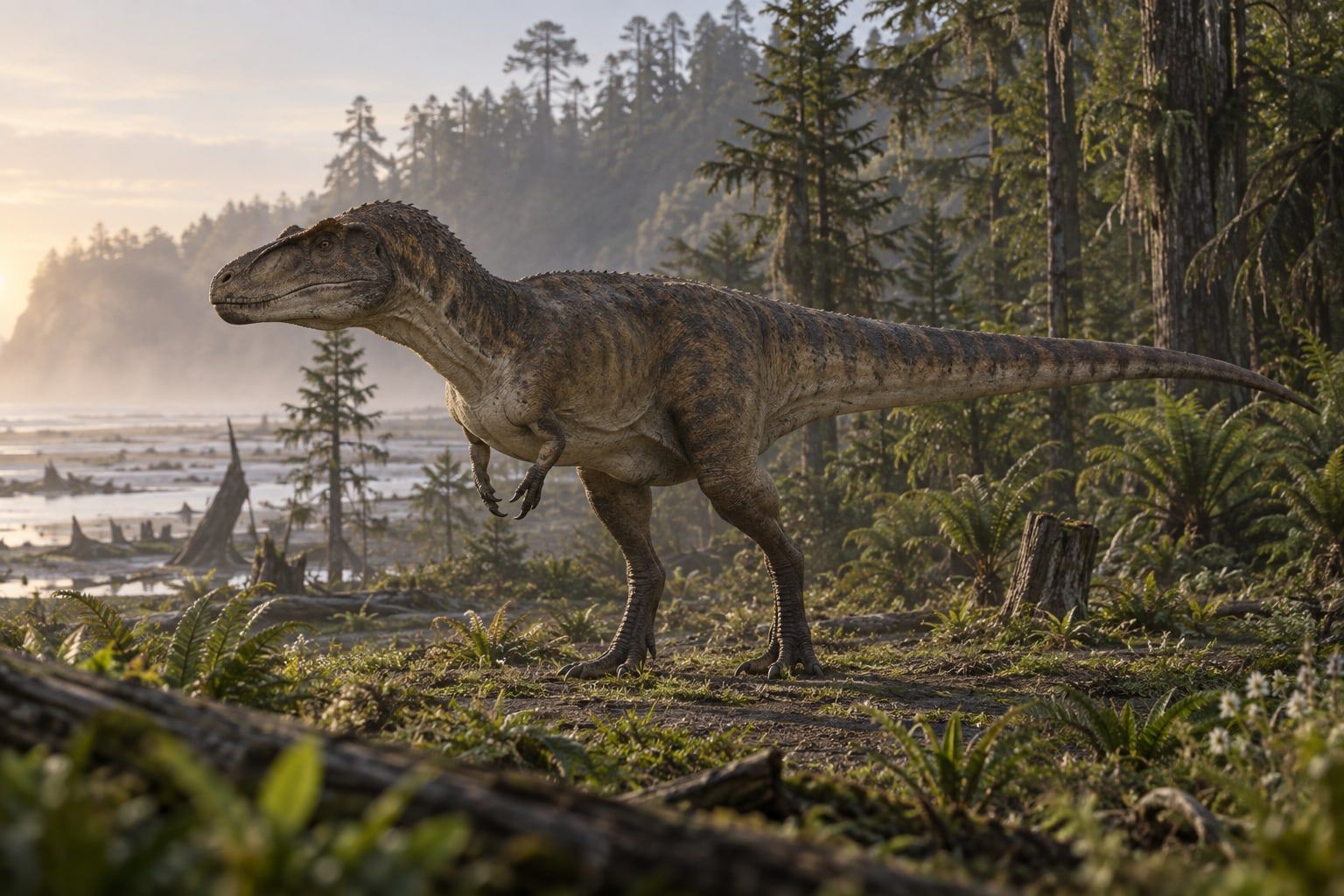
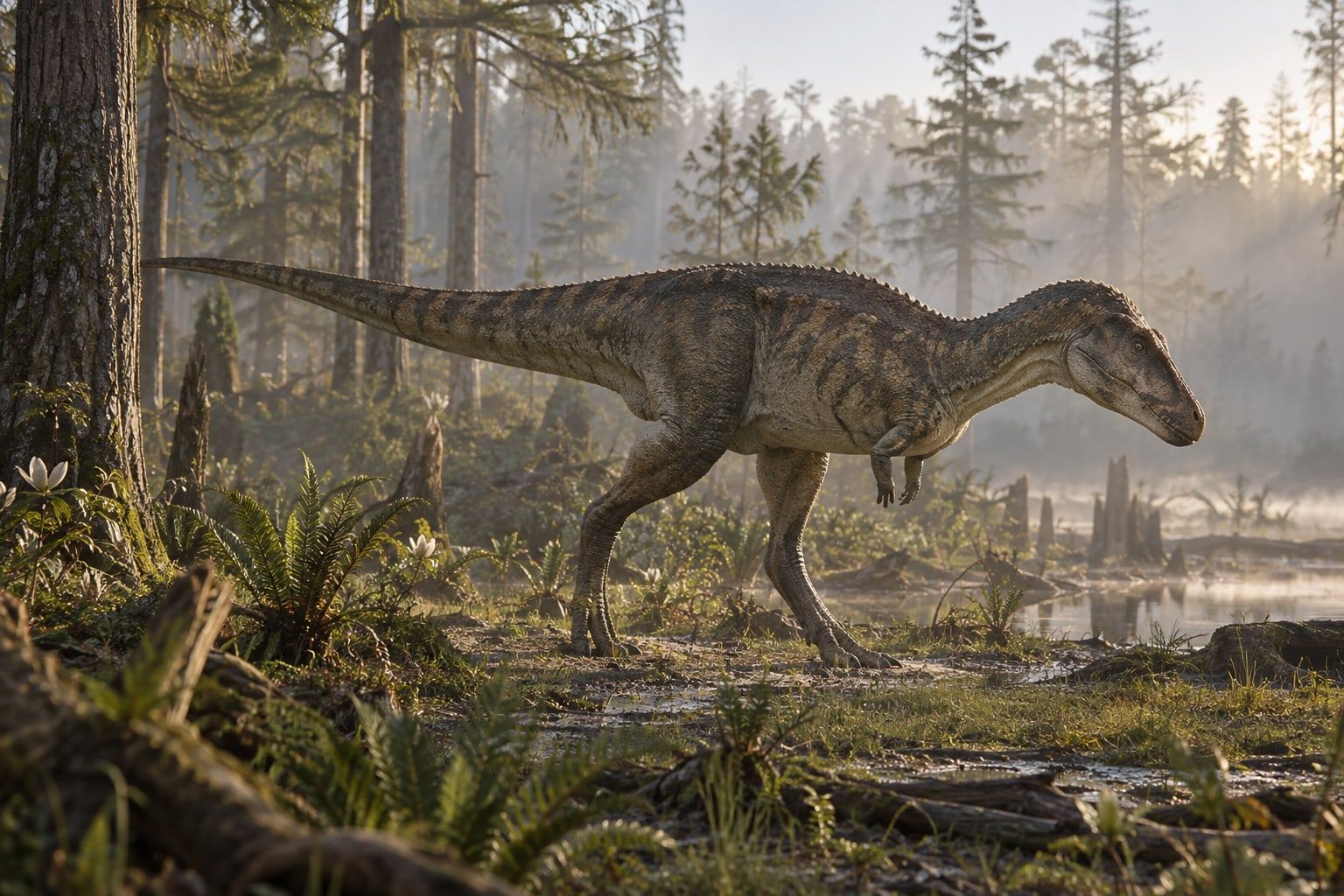
Timurlengia was a horse-sized relative of the tyrannosaurs, known from a braincase and scattered bones of several animals. Its braincase shows that it already had the large inner ear of later tyrannosaurs, tuned to hear low sounds.
It suggests that tyrannosaurs developed their keen senses first and grew huge only later.
Its world
It lived about 94 to 90 million years ago, in the Late Cretaceous, in what is now Uzbekistan. Its bones come from the Bissekty Formation, where it shared the land with the larger hunter Ulughbegsaurus and the horned Turanoceratops.
How it was found
Brusatte and colleagues named Timurlengia in 2016, after a famous conqueror from Central Asia.
Lived alongside
Found in the same rock formations
Close relatives
Other members of Tyrannosauroidea
Sources: WikidataNamed in: S. L. Brusatte, A. Averianov, and H. Sues, A. Muir, I. B. Butler. 2016. New tyrannosaur from the mid-Cretaceous of Uzbekistan clarifies evolution of giant body sizes and advanced senses in tyrant dinosaurs. Proceedings of the National Academy of Sciences 113(13):3447-3452