Eotyrannus
EE-oh-tie-RAN-us
"dawn tyrant"
- Lived
- 133 to 121 million years ago, Early Cretaceous
- Diet
- Carnivore
- Length
- about 5 m (16 ft)
- Group
- Theropods
- Found in
- United Kingdom
- Named by
- Hutt et al. 2001
Size comparison
To scale


Scale in metersOutline: typical theropod shape
Where its fossils were found
The evidence
Today

125 million years ago
Habitat
Rivers crossed the Wessex Formation floodplains, where vegetation included conifers and ferns. Mantellisaurus, Hypsilophodon and Neovenator also lived in the region.
Field notes
About Eotyrannus
What it was like
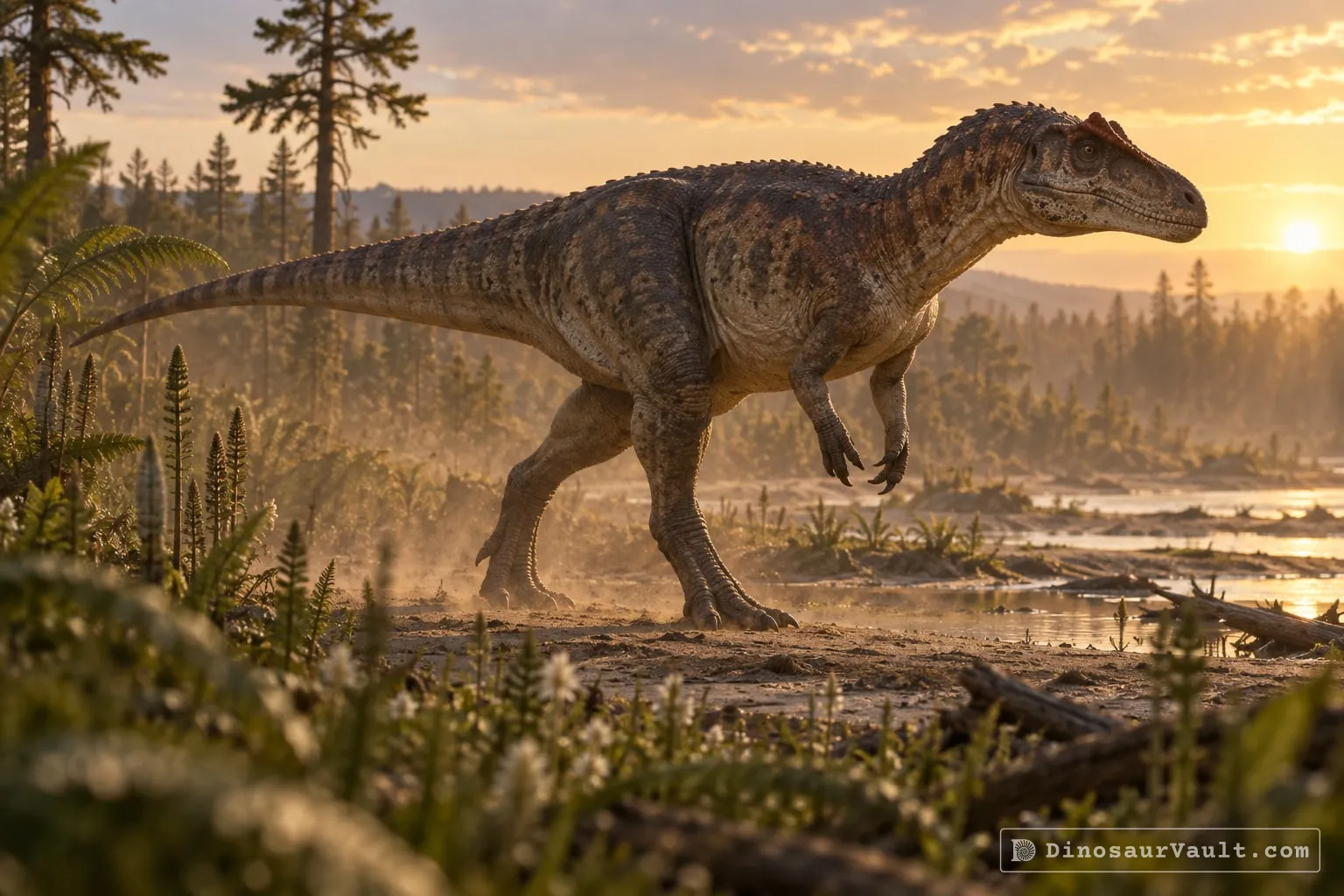
Eotyrannus was an early relative of the tyrannosaurs, about 5 meters (16 feet) long. Unlike later giants such as Tyrannosaurus, it was lightly built, with long legs and fairly long arms ending in three grasping fingers. It was probably a fast hunter of small and medium prey.
Its world
It lived in the Early Cretaceous in what is now England. Its bones come from the Wessex Formation, a land of rivers and floodplains. There it shared its world with the fish-eating Baryonyx, the predator Neovenator, the armored Polacanthus and plant eaters such as Mantellisaurus and Hypsilophodon.
How it was found
Hutt and colleagues named Eotyrannus in 2001. It is known from one partial skeleton of a young animal, with pieces of the skull, backbone and limbs.
Field gallery
More views of Eotyrannus
Scenes reconstructed from the available fossil evidence.
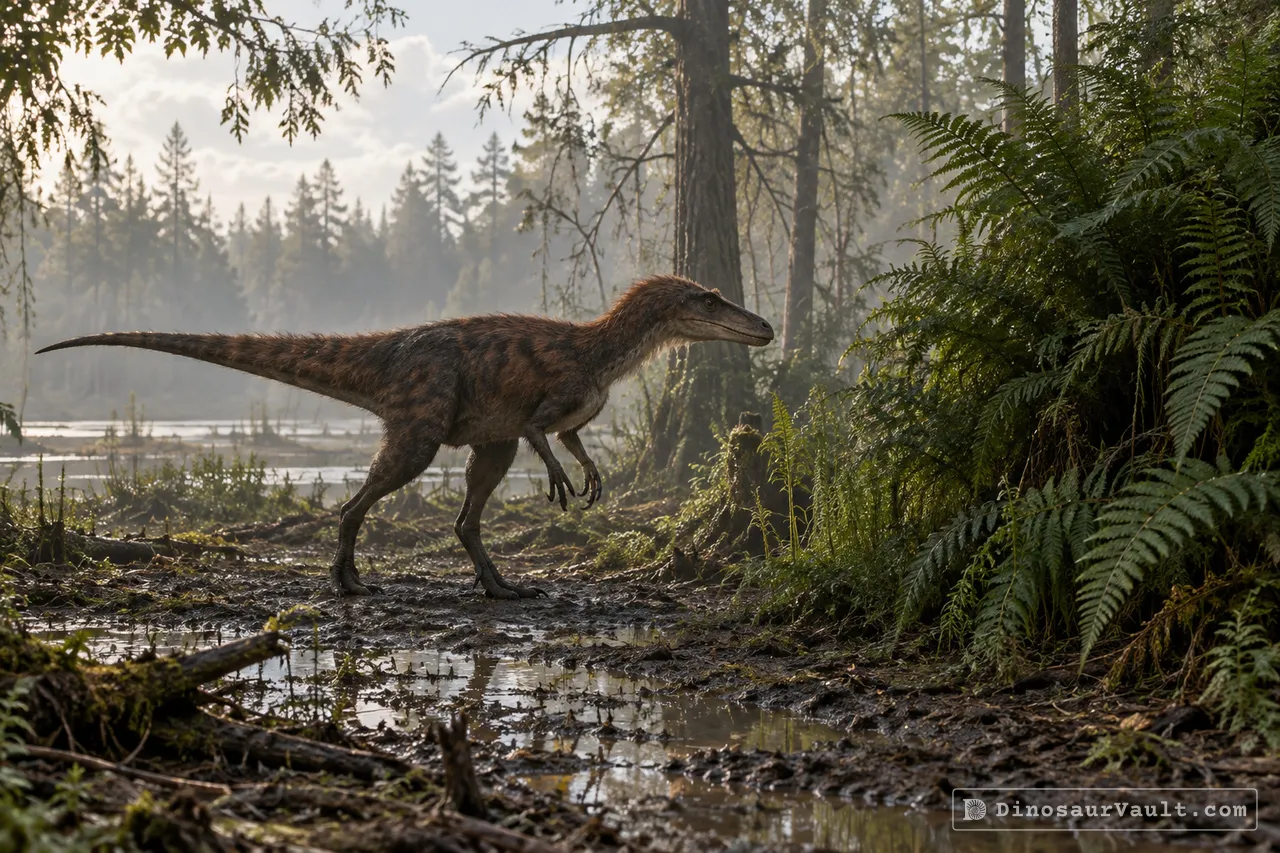
1 of 3
Lived alongside
Found in the same rock formations
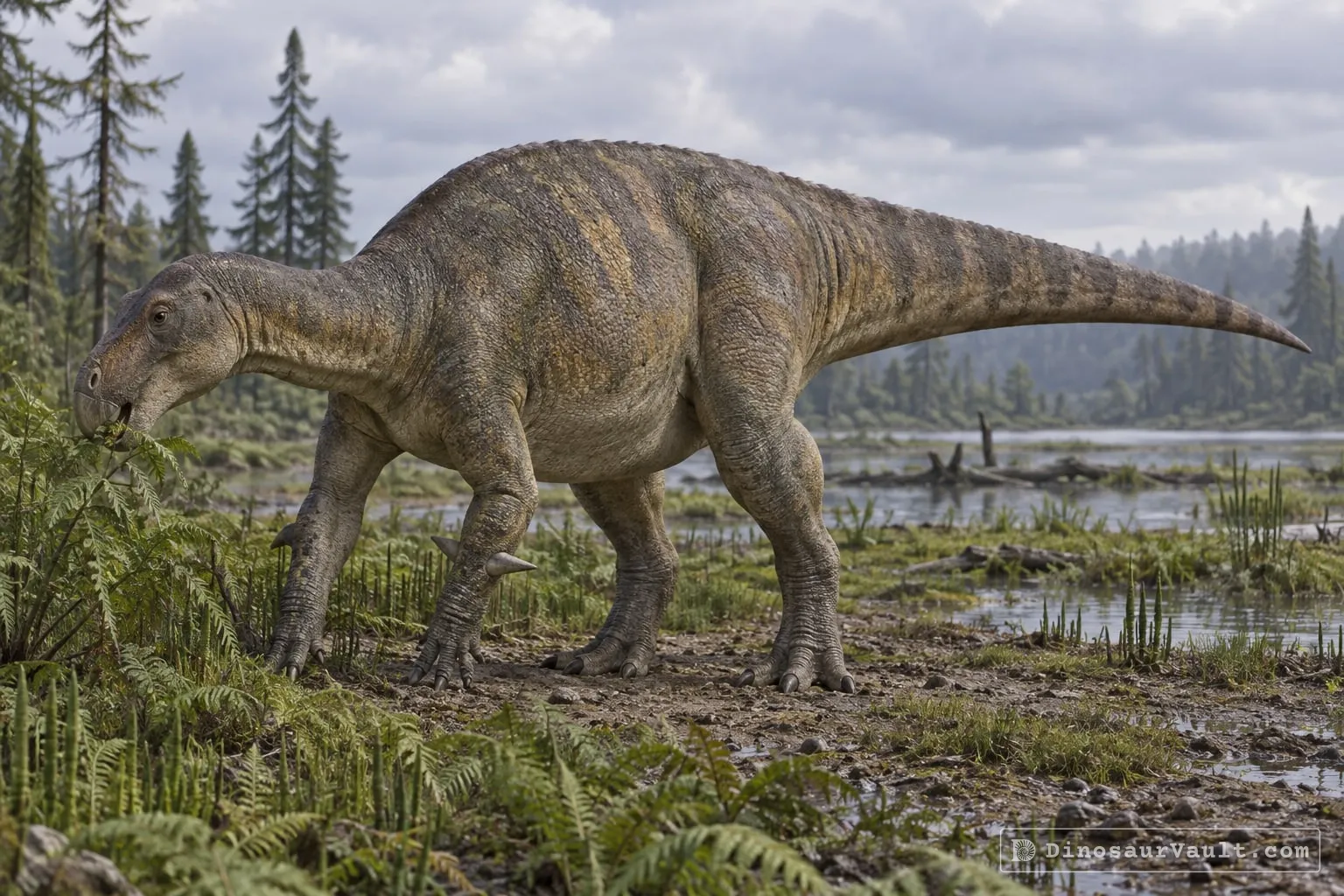
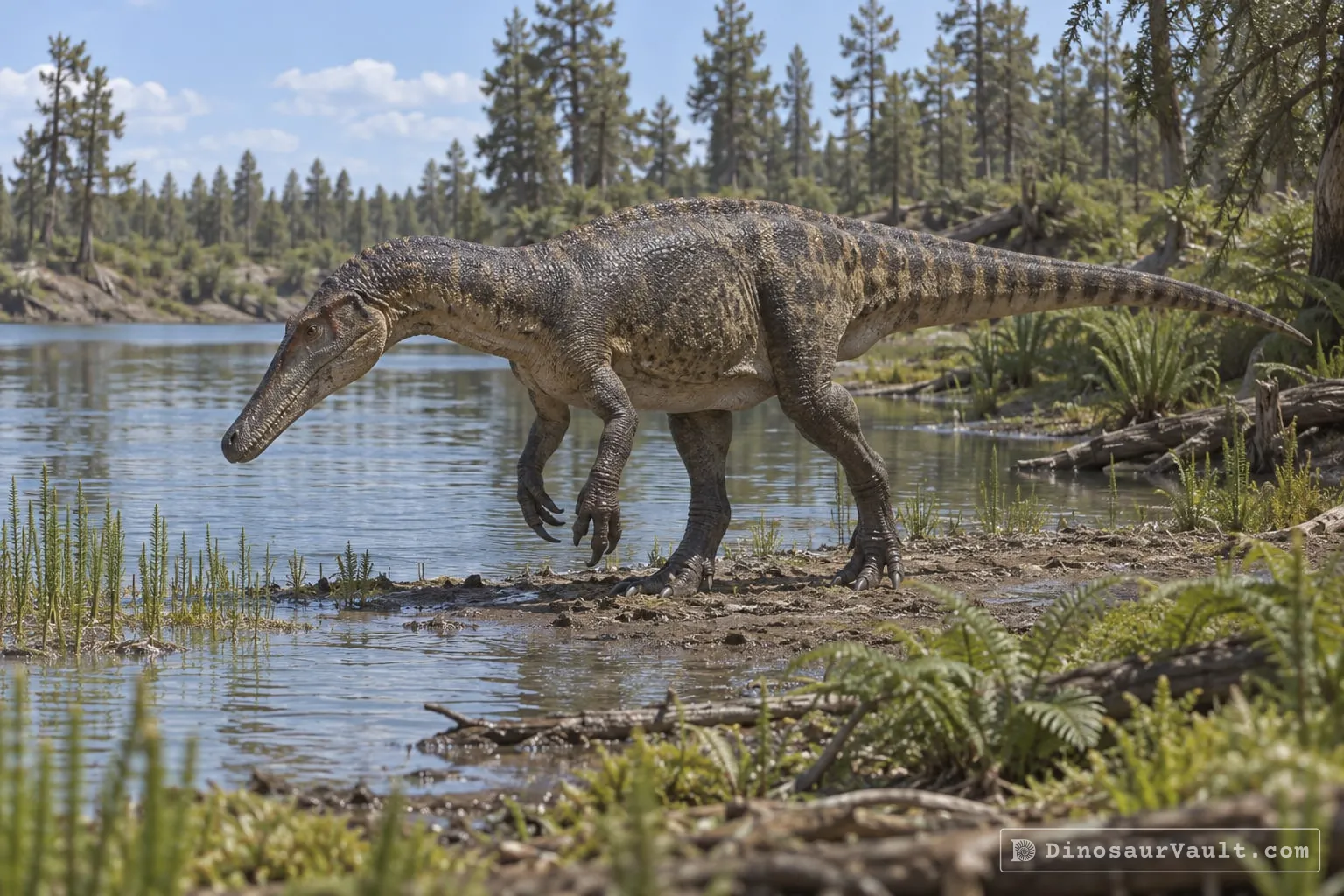
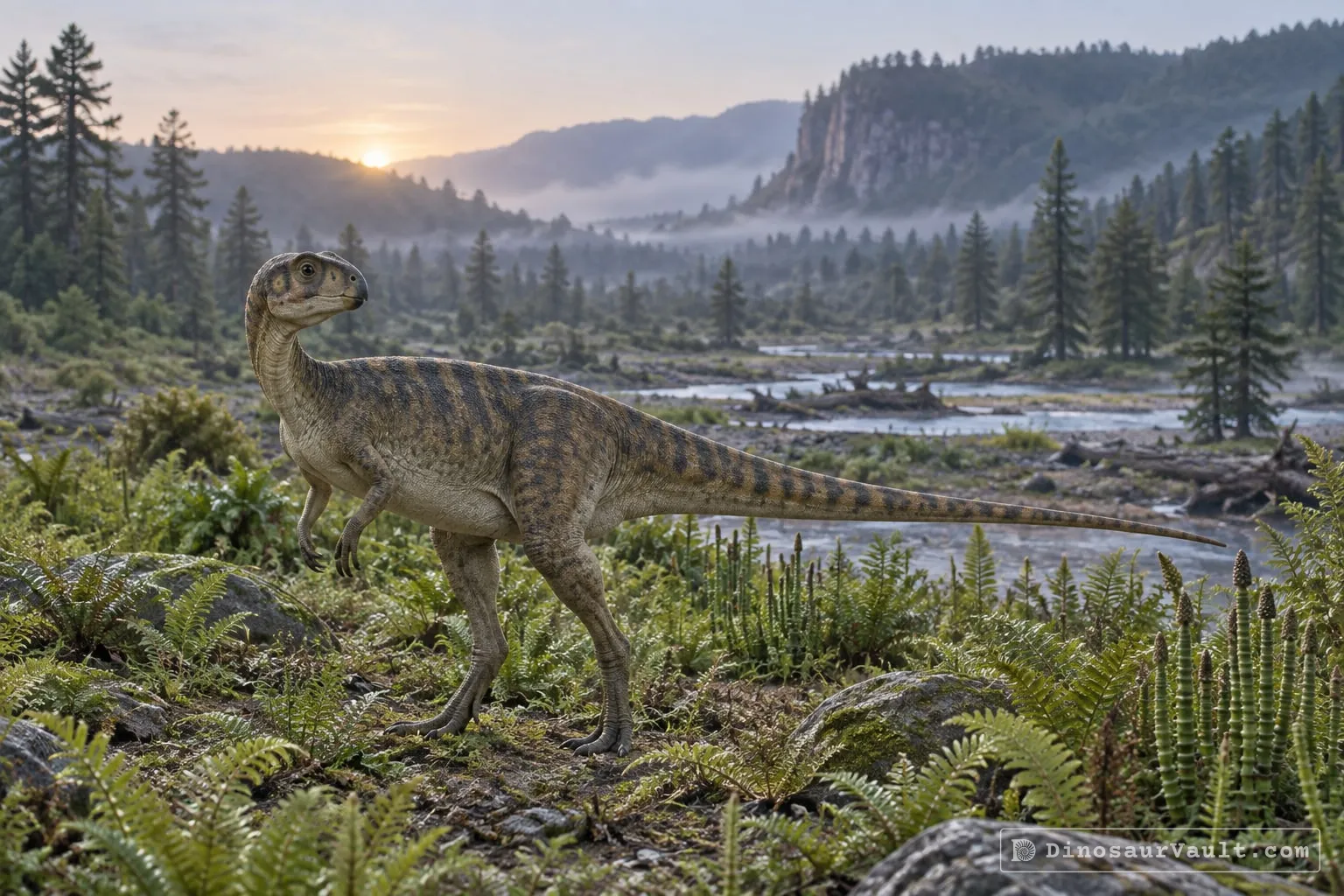
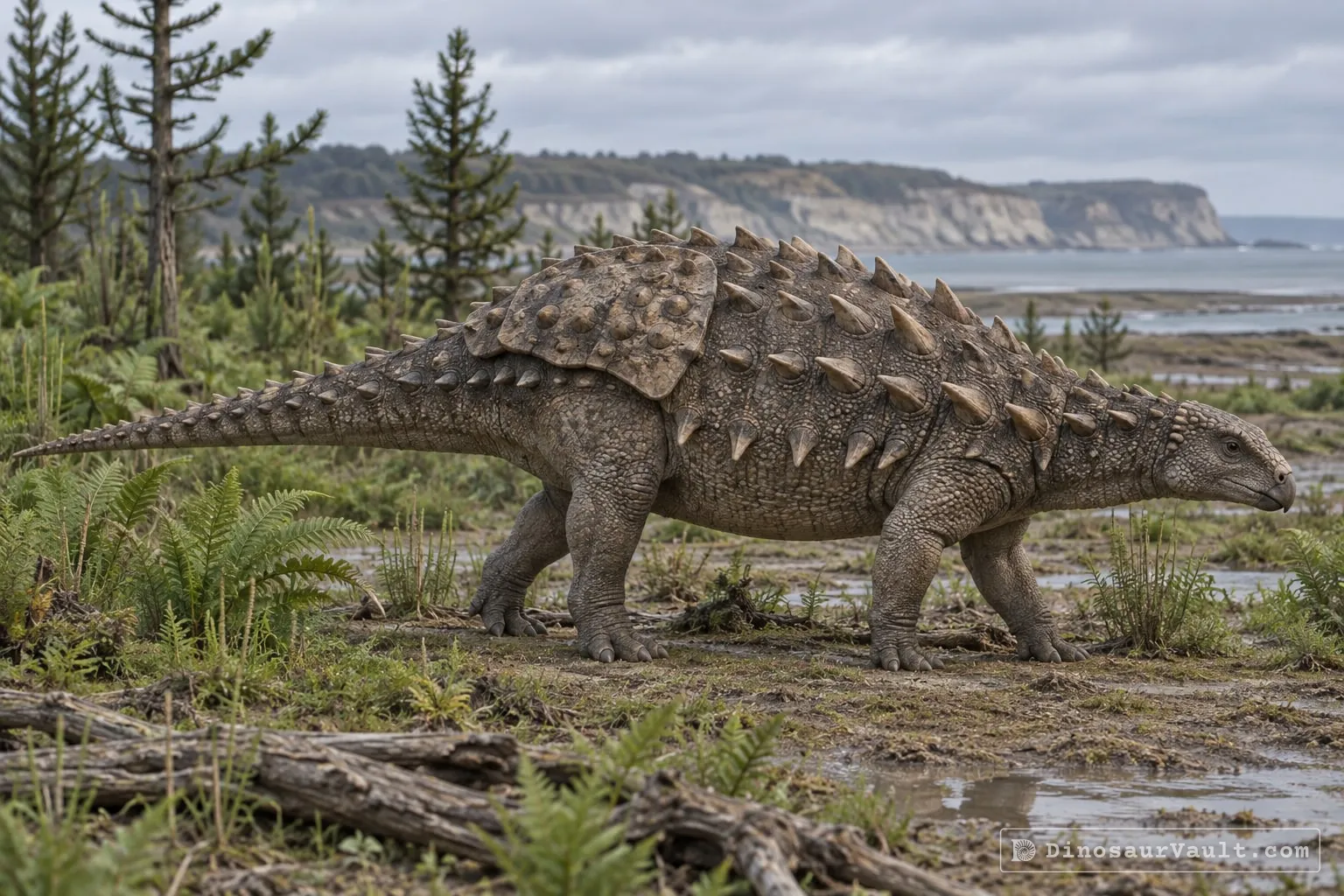
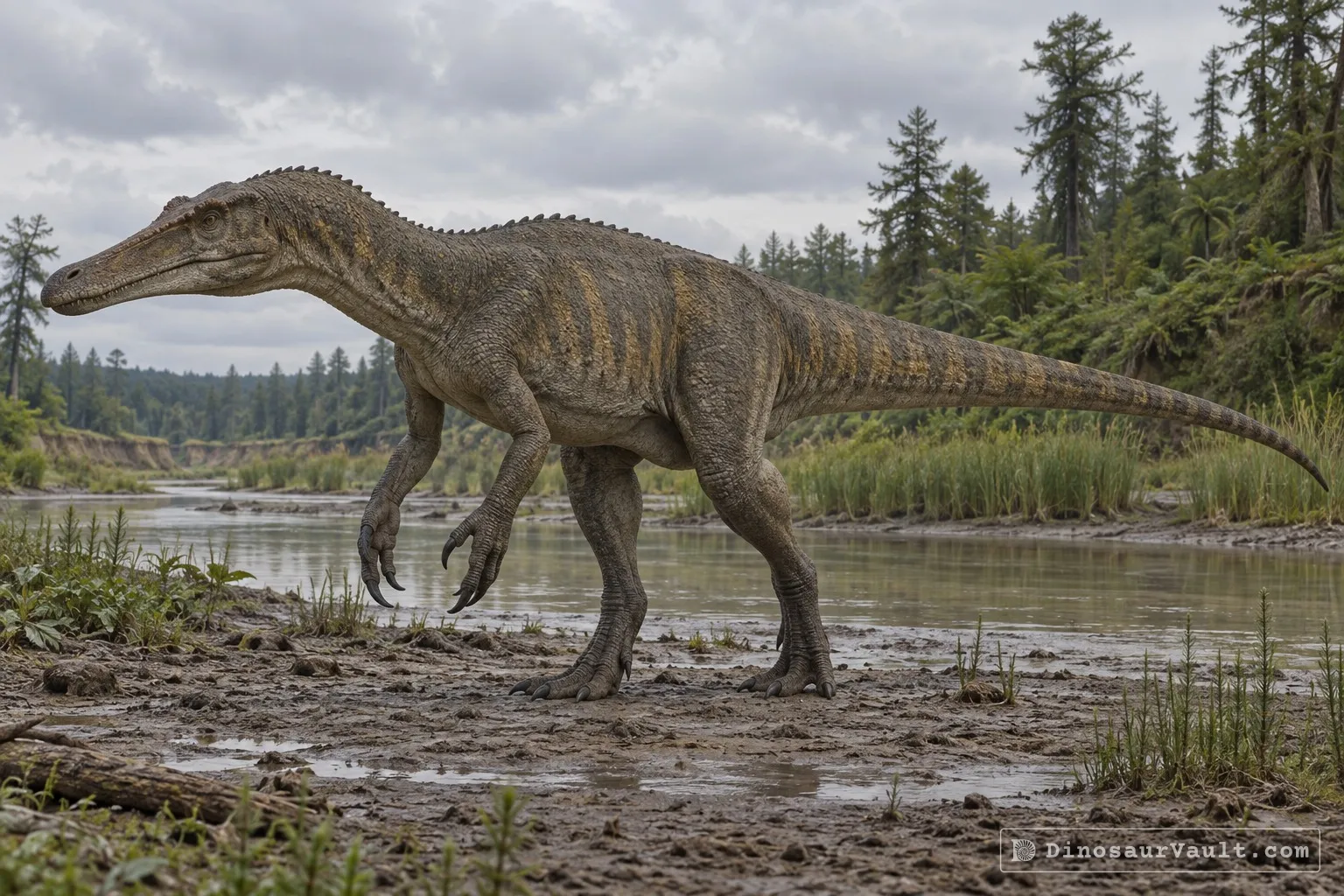
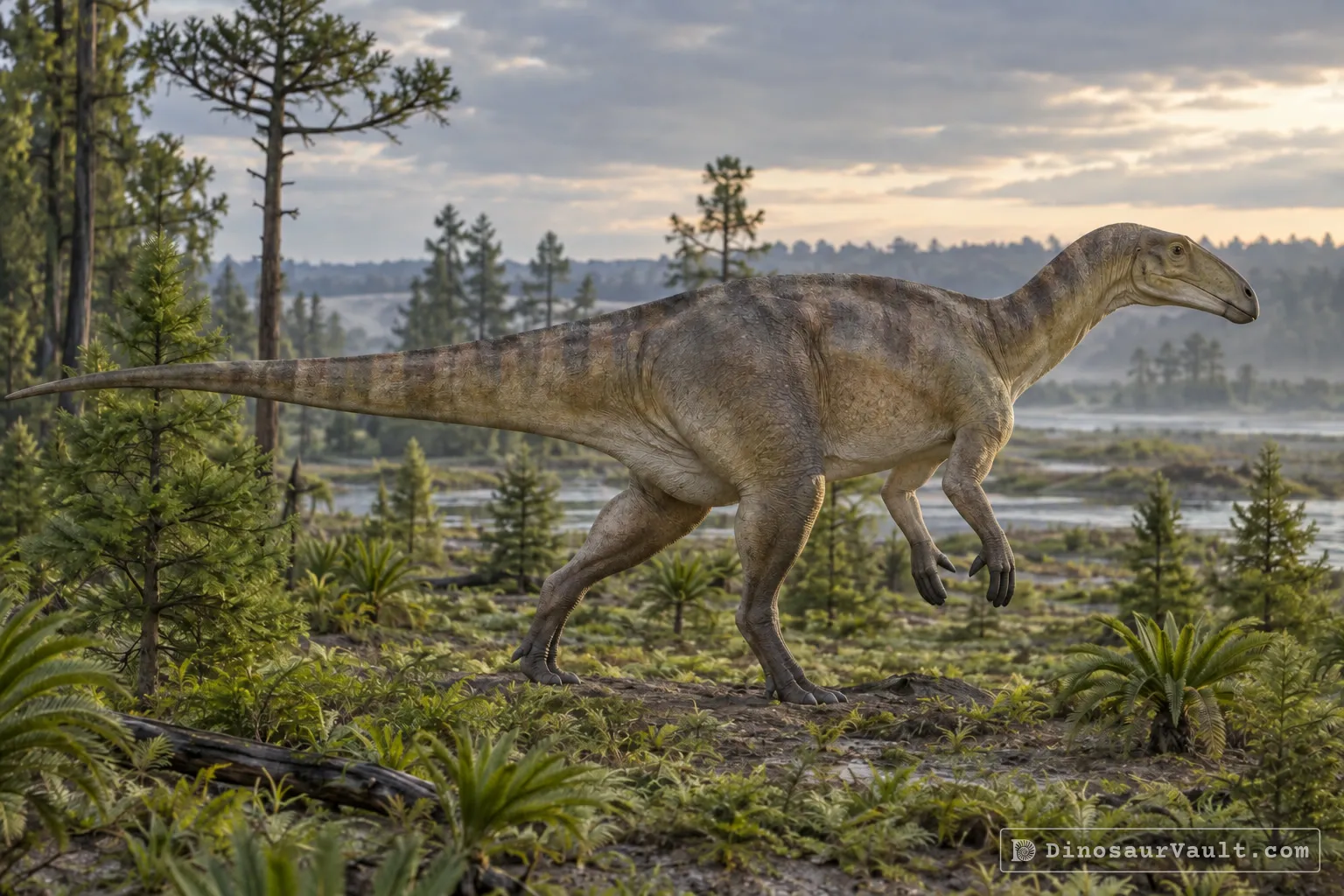
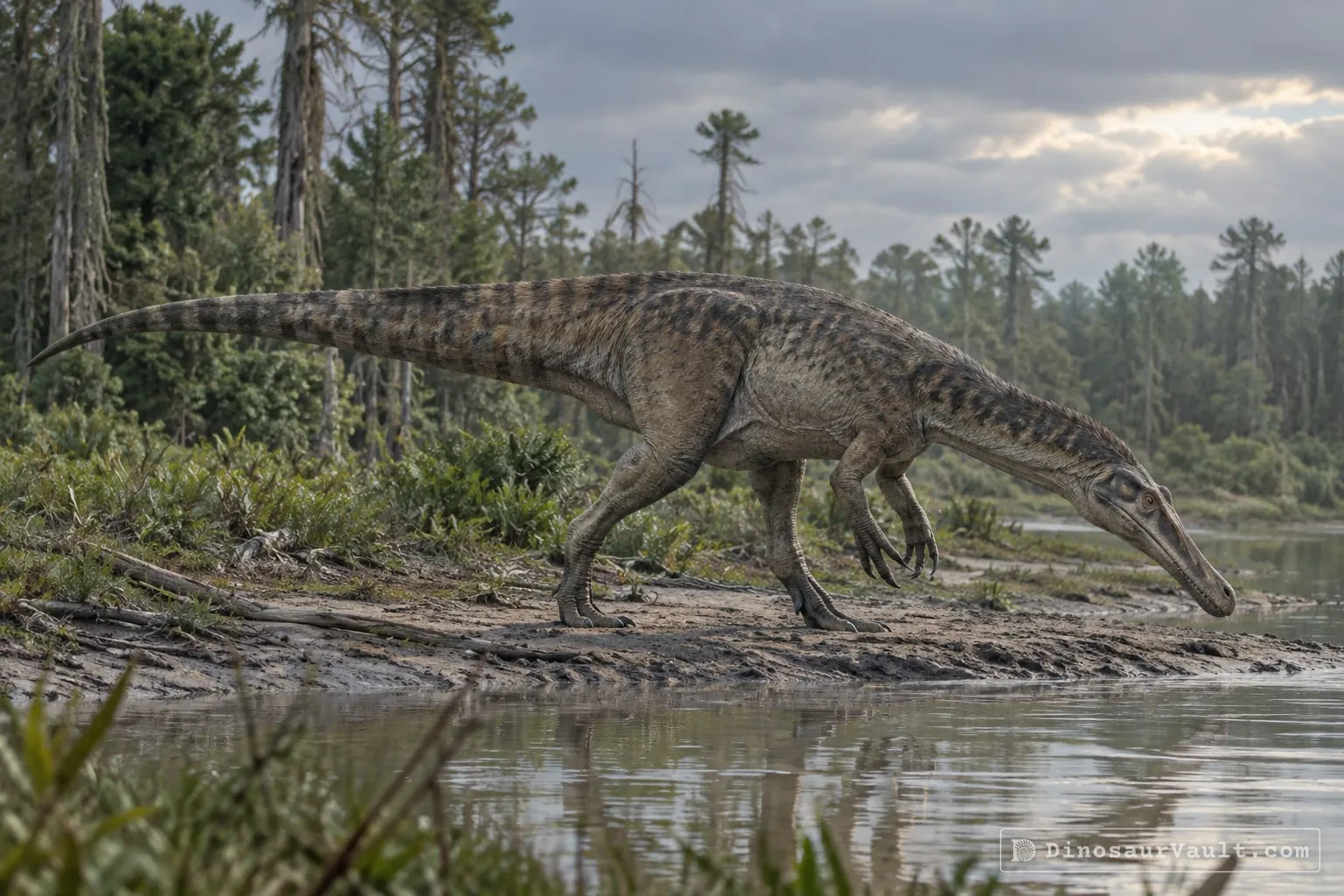


A rock formation can hold fossils laid down millions of years apart, so not every animal here met Eotyrannus.
The evidence
The science behind Eotyrannus
Which parts of the picture come from its own bones, and which come from its relatives.
From its own fossils
- A partial skeleton preserves the front of the skull and parts of the backbone, shoulders and limbs.
- Long arms ended in grasping hands with three fingers, and the lower legs were slender and elongated.
- The front of the skull is compact, with low ridges along the nasal bones.
Borrowed from relatives
- The missing back of the head, parts of the hips and the tail are restored by comparison with early tyrannosauroids such as Dilong.
- Simple feathers are plausible because Dilong and Yutyrannus preserve filamentous coverings.
Still unknown
- Its adult size and how its proportions changed during growth.
- Whether it had feathers, and how much of its body they covered.
- Its color.
Often drawn wrong
- Short arms with only two fingers copy Tyrannosaurus rather than the long, grasping hands of Eotyrannus.
- A large horn above the eye replaces the modest skull relief supported by its bones.
Discovery timeline
- 2001Named itHutt et al.
- 2004Close relativeXu et al.
- 2012Close relativeXu et al.
- 2022Full descriptionNaish & Cau
Key papers
The research behind what we know of Eotyrannus
Named it
Introduced an early tyrannosauroid from a partial skeleton with long arms and grasping hands.
A preliminary account of a new tyrannosauroid theropod from the Wessex Formation (Early Cretaceous) of southern England. Cretaceous Research 22: 227-242
Read the paper : A preliminary account of a new tyrannosauroid theropod from the Wessex Formation (Early Cretaceous) of southern England (opens in a new tab)Close relative
Described Dilong with a filamentous covering, showing that feathers occurred in early tyrannosauroids.
Basal tyrannosauroids from China and evidence for protofeathers in tyrannosauroids. Nature 431: 680-684
Read the paper : Basal tyrannosauroids from China and evidence for protofeathers in tyrannosauroids (opens in a new tab)Close relative
Described Yutyrannus with long filamentous feathers, extending direct evidence of feather coverings to a much larger early tyrannosauroid.
A gigantic feathered dinosaur from the Lower Cretaceous of China. Nature 484: 92-95
Read the paper : A gigantic feathered dinosaur from the Lower Cretaceous of China (opens in a new tab)Full description
Detailed the skull and skeleton and supported Eotyrannus as an early tyrannosauroid outside the family of the later giant tyrannosaurs.
The osteology and affinities of Eotyrannus lengi , a tyrannosauroid theropod from the Wealden Supergroup of southern England. PeerJ 10: e12727
Read the paper : The osteology and affinities of Eotyrannus lengi , a tyrannosauroid theropod from the Wealden Supergroup of southern England (opens in a new tab)
Close relatives
Other members of Tyrannosauroidea


Sources: Wikidata