Outline: a typical theropod
Caenagnathasia
"recent jaw from Asia"
- Lived
- 94 to 72 million years ago, Late Cretaceous
- Diet
- Omnivore
- Group
- Theropods, Caenagnathidae
- Found in
- Uzbekistan and China
- Named by
- Currie et al. 1994
Where its fossils were found
The evidence
Today
80 million years ago
Field notes
About Caenagnathasia
What it was like
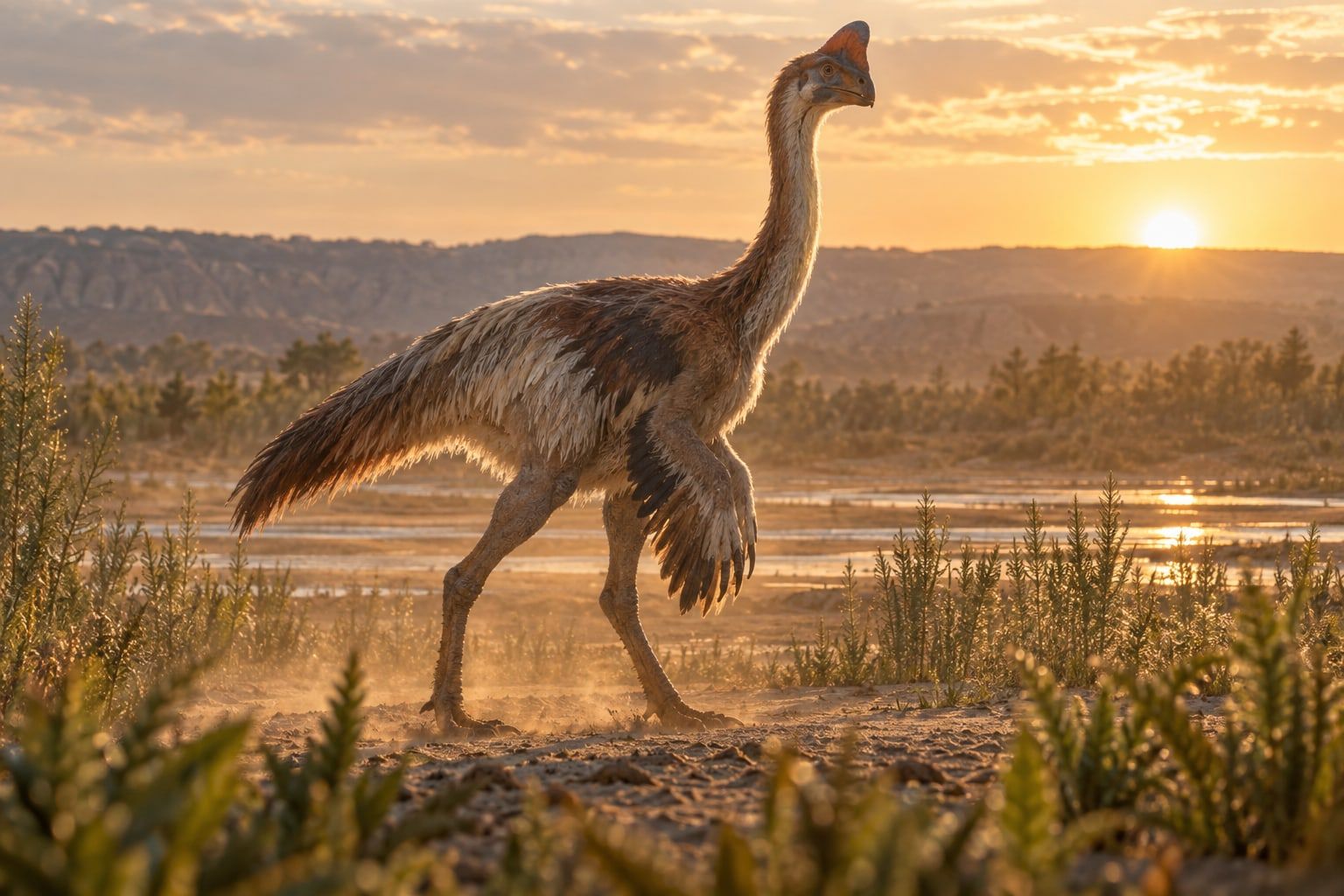
Caenagnathasia was a small feathered oviraptor relative, known from toothless lower jaws and other bones. It was one of the smallest members of its family.
Its world
It lived in the Late Cretaceous in what is now Uzbekistan, with more finds from China. Its bones come from the Bissekty Formation, where it shared the land with the tyrannosaur relative Timurlengia and the horned Turanoceratops.
How it was found
Currie and colleagues named Caenagnathasia in 1994. Seven finds are known.
Lived alongside
Found in the same rock formations
Close relatives
Other members of Caenagnathidae
Sources: WikidataNamed in: P. J. Currie, S. J. Godfrey, and L. Nessov. 1994. New caenagnathid (Dinosauria, Theropoda) specimens from the Upper Cretaceous of North America and Asia. Canadian Journal of Earth Sciences 30(10-11):2255-2272