Dilong
DEE-long
"emperor dragon"
- Lived
- 126 to 120 million years ago, Early Cretaceous
- Diet
- Carnivore
- Group
- Theropods
- Found in
- China
- Named by
- Xu et al. 2004
Where its fossils were found
The evidence
Today

125 million years ago
Habitat
It lived among lakes and forests in what is now China, where volcanic ash helped bury animals. Psittacosaurus, Sinosauropteryx and Caudipteryx inhabited the same region.
Field notes
About Dilong
What it was like
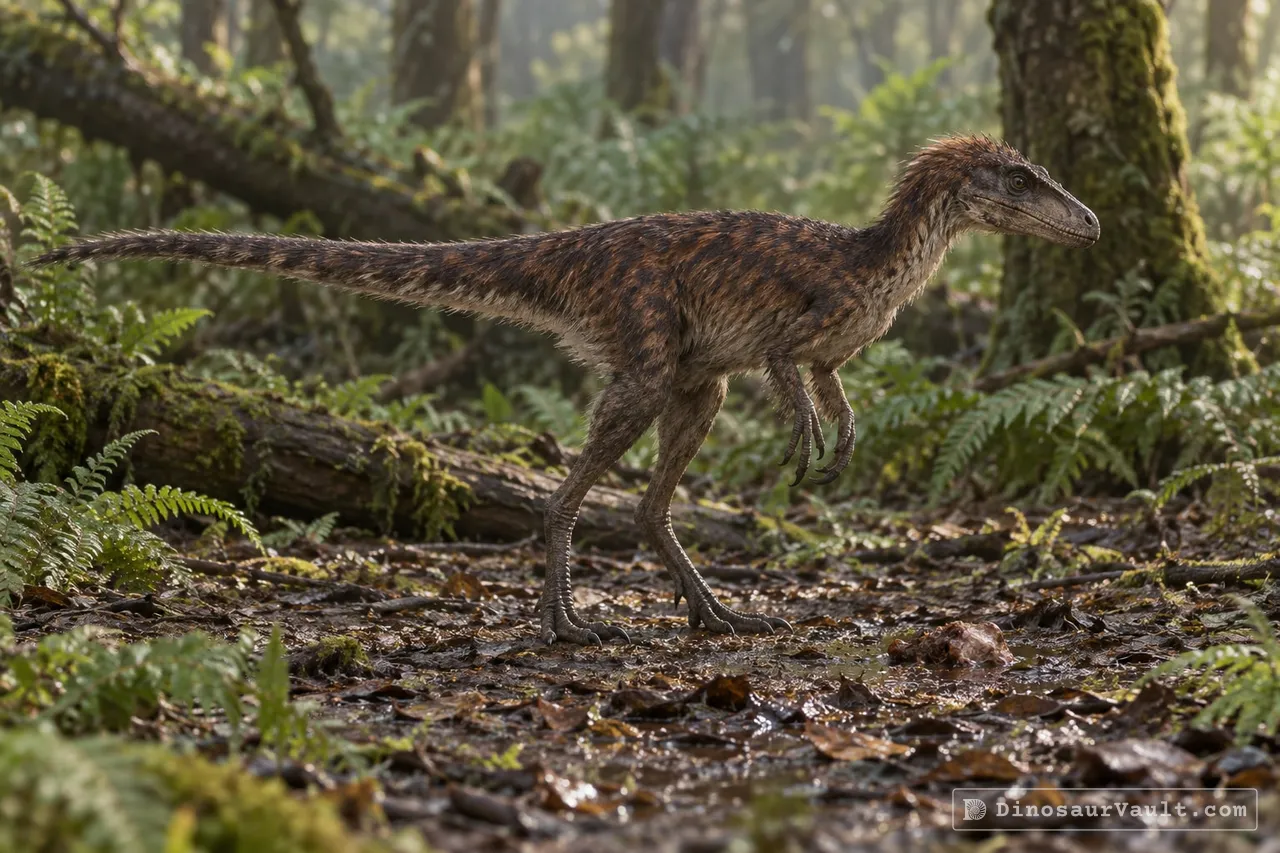
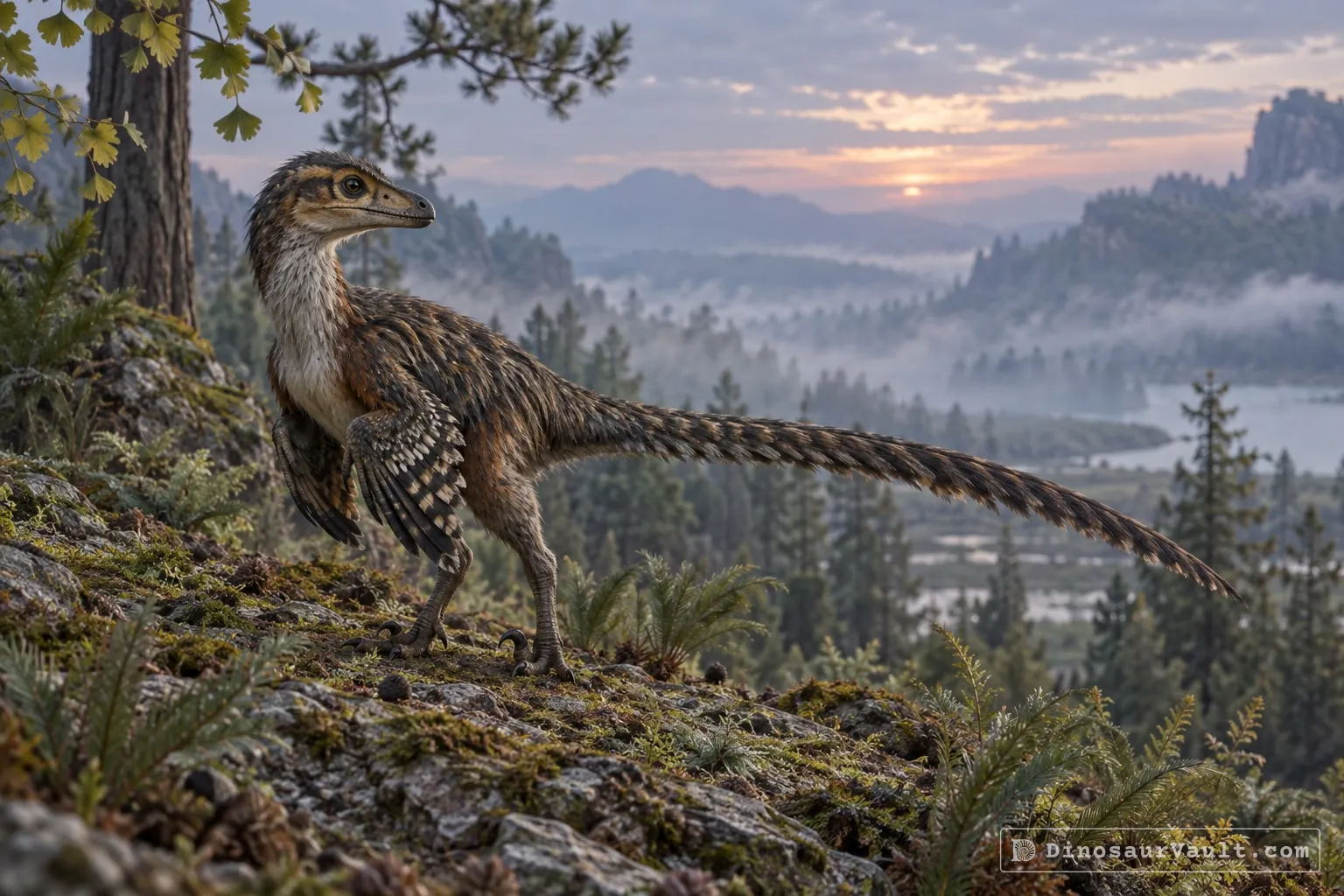
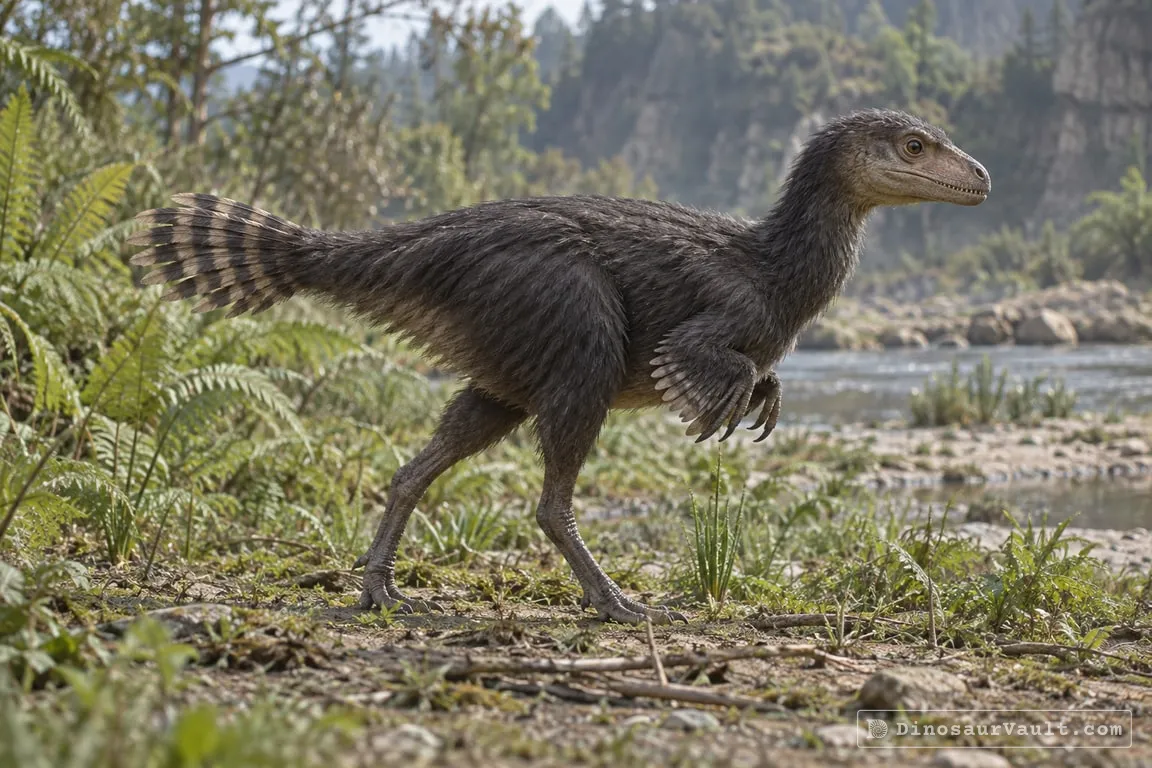
Dilong was a small, early relative of Tyrannosaurus. It ran on two legs, had three-fingered hands and a long, low skull, and was covered in simple, hair-like feathers.
Those feathers were the first clear sign that the tyrannosaur family had feathers, at least in its smaller, earlier members.
Its world
It lived about 126 to 120 million years ago, in the Early Cretaceous, in what is now China. Its fossils come from the Yixian Formation, a land of lakes and forests where ash from volcanoes preserved animals in fine detail.
It shared that world with Yutyrannus, Sinosauropteryx, Psittacosaurus and Caudipteryx.
How it was found
Xu and colleagues named Dilong in 2004. Two finds are known.
Field gallery
More views of Dilong
Scenes reconstructed from the available fossil evidence.
1 of 3
Lived alongside
Found in the same rock formations
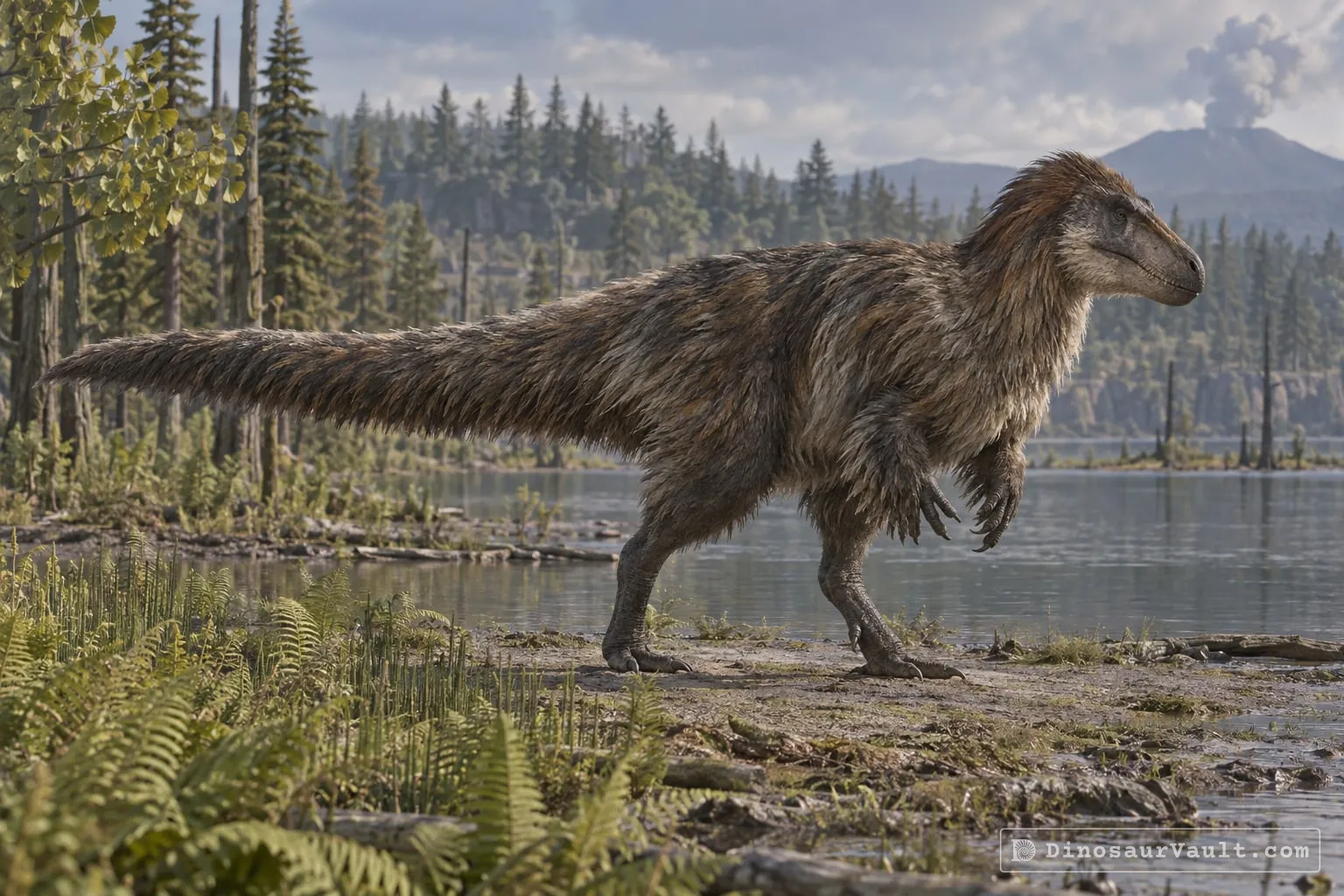
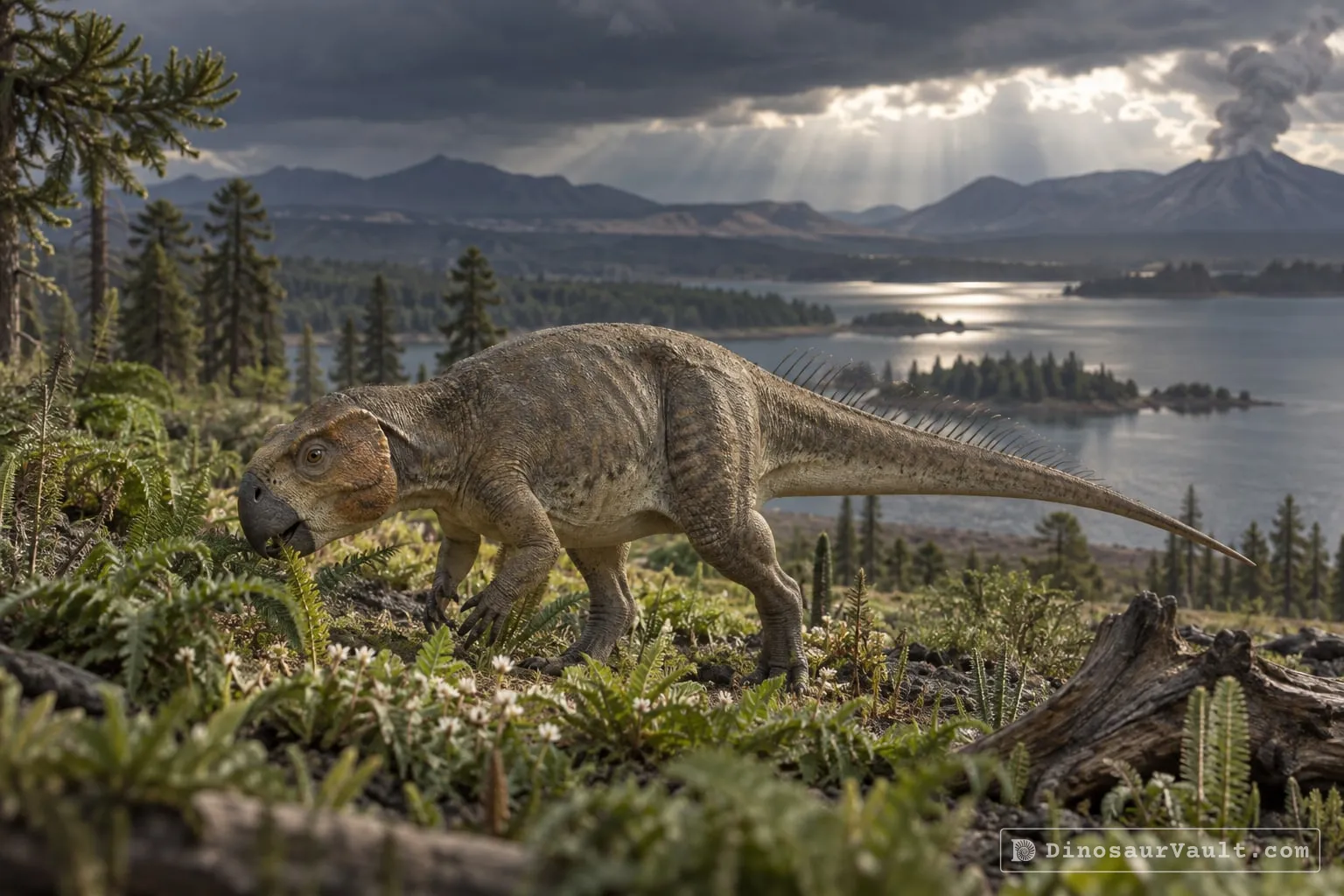
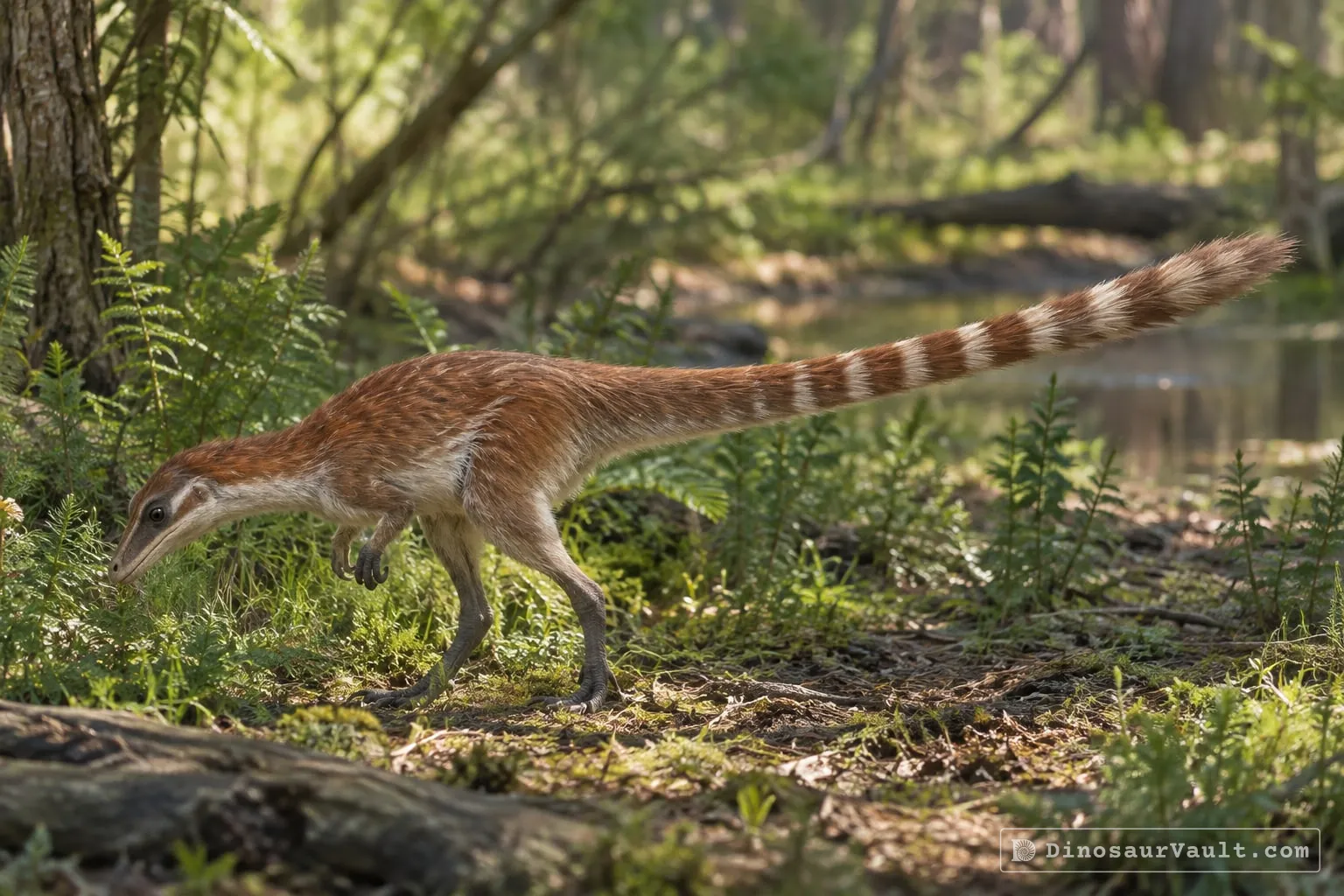
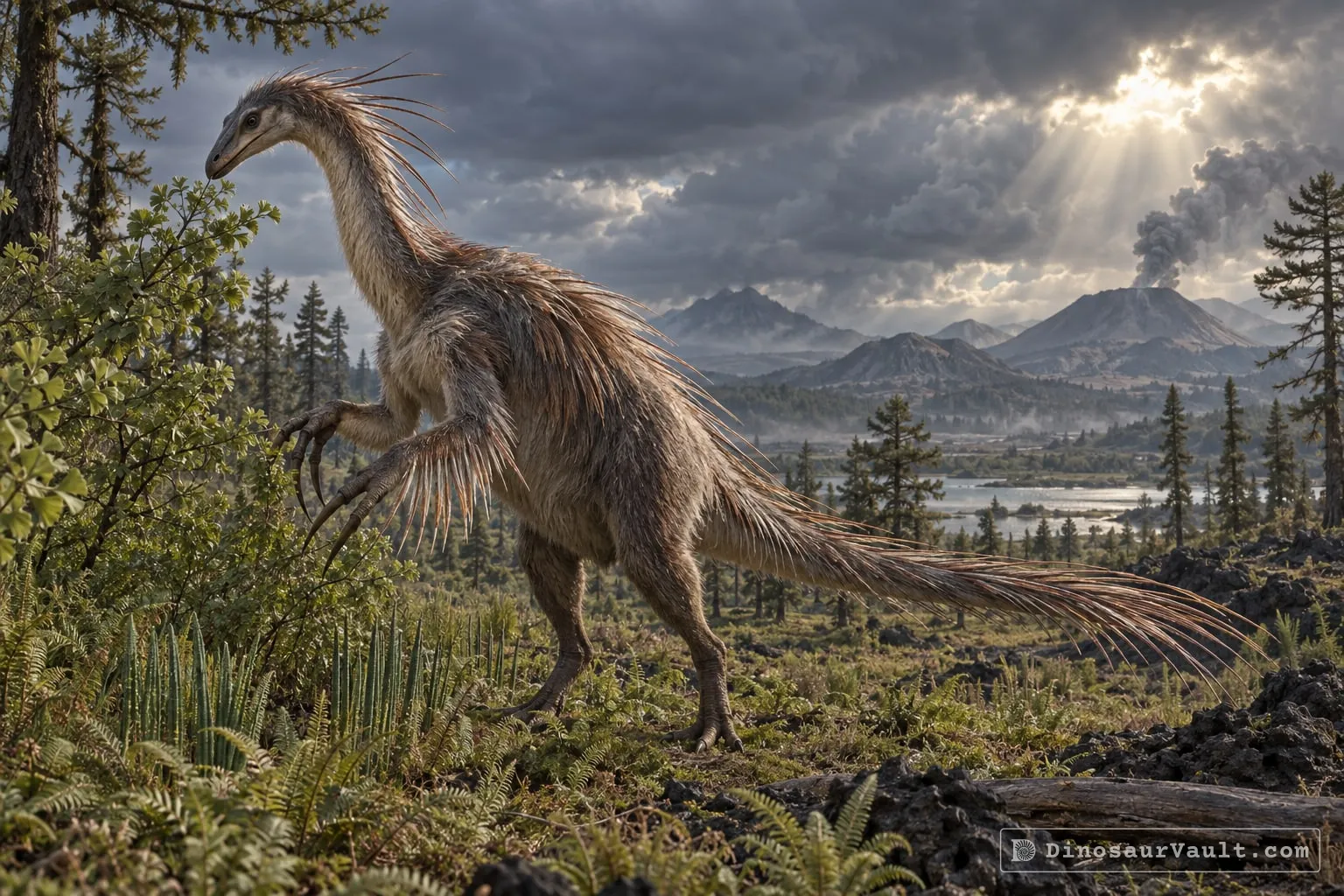
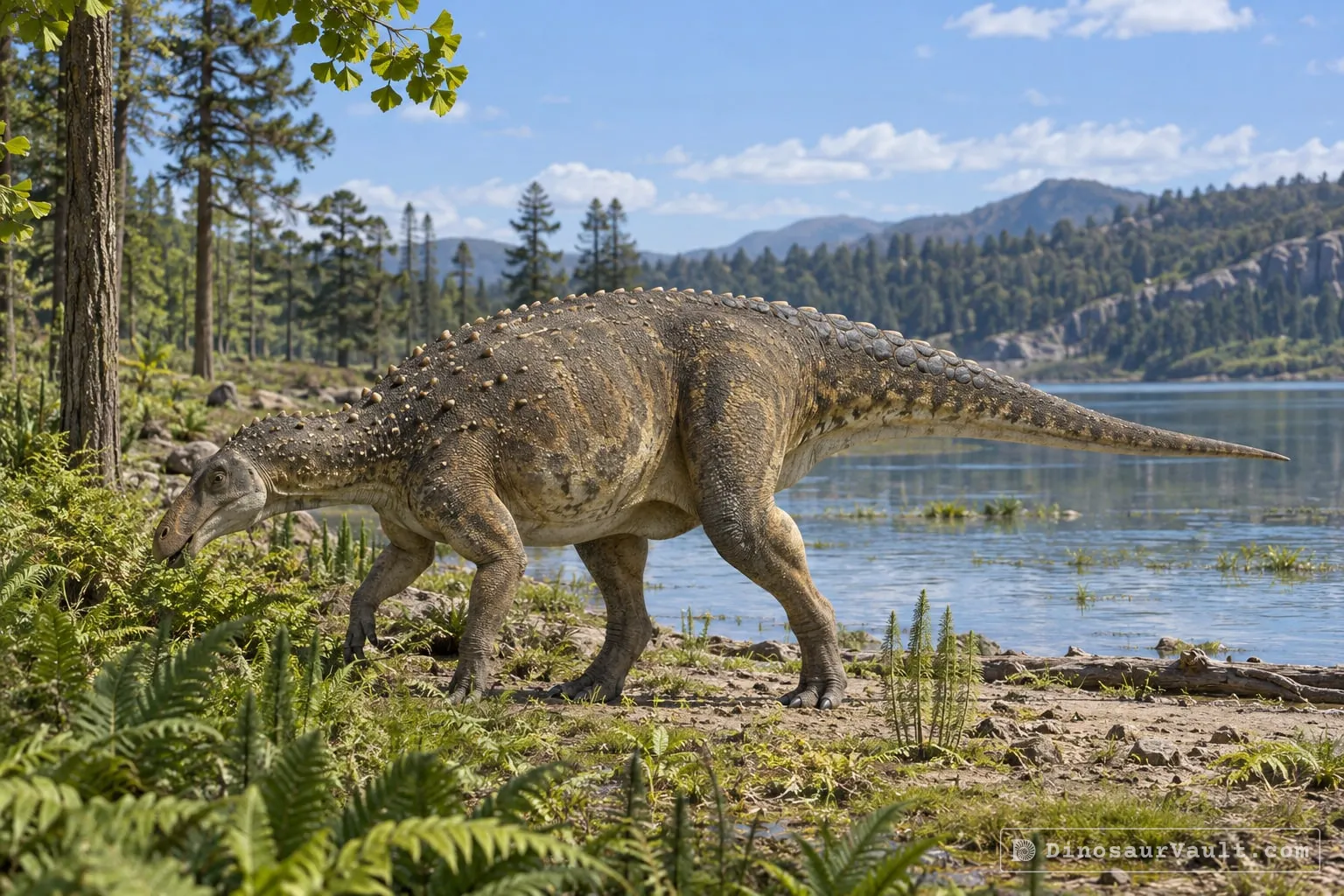
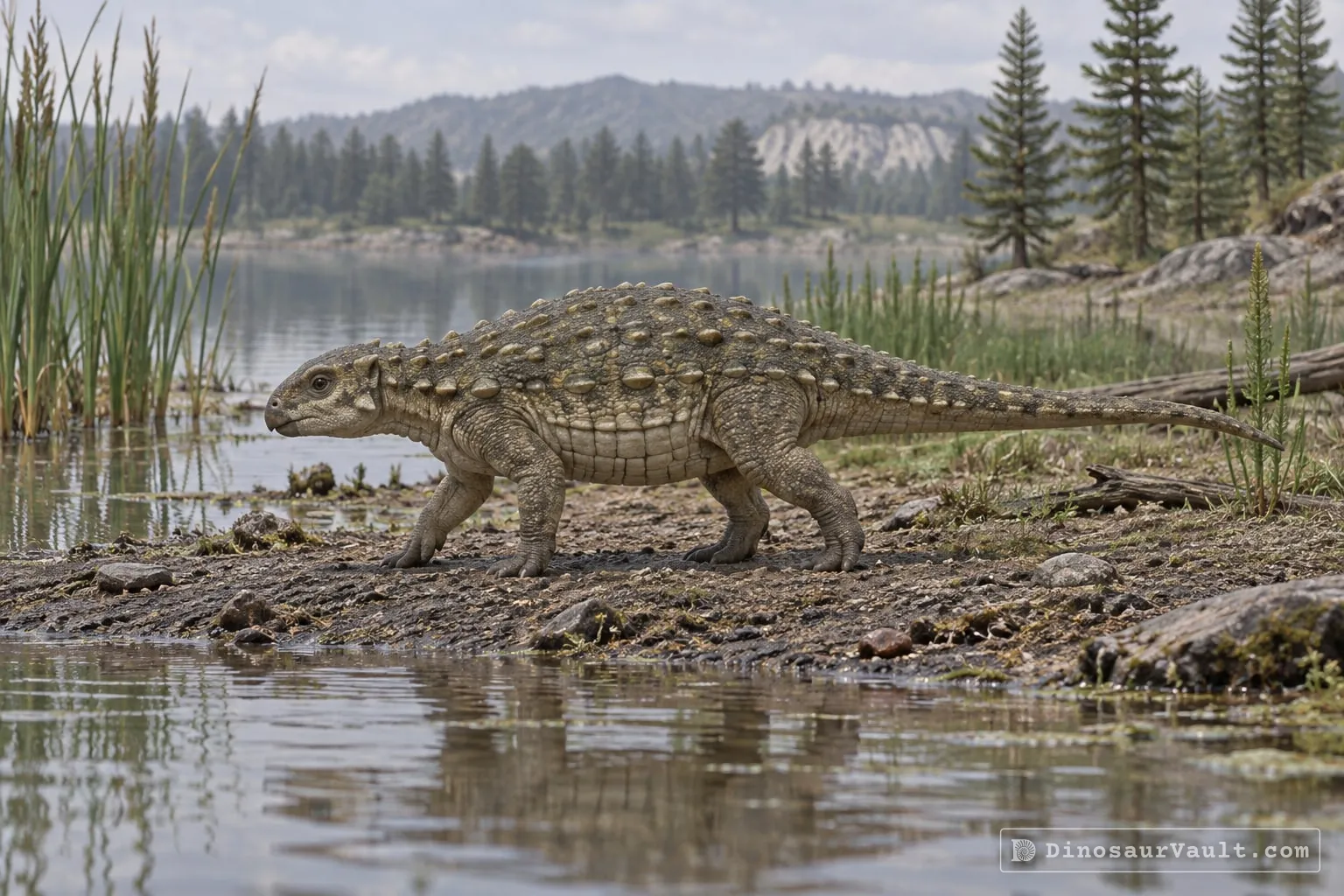


A rock formation can hold fossils laid down millions of years apart, so not every animal here met Dilong.
The evidence
The science behind Dilong
Which parts of the picture come from its own bones, and which come from its relatives.
From its own fossils
- Skulls and partial skeletons show a lightly built animal with long arms and three-fingered hands.
- A fossil preserves fine, branching feathers beside the lower jaw and along the tail.
- A low crest on the top of the skull branches toward the eyes.
Borrowed from relatives
- A fuller coat of feathers is probably restored by comparison with feathered relatives such as Yutyrannus.
Still unknown
- Its feather color.
- The full distribution of feathers across its body.
- Whether the feather-bearing specimen belongs to the same species as the original skeleton.
Discovery timeline
- 2004Named itXu et al.
- 2012Close relativeXu et al.
- 2016Family treeBrusatte & Carr
Key papers
The research behind what we know of Dilong
Named it
Described a small tyrannosaur relative and the first direct fossil evidence of feathers in the group.
Basal tyrannosauroids from China and evidence for protofeathers in tyrannosauroids. Nature 431: 680-684
Read the paper : Basal tyrannosauroids from China and evidence for protofeathers in tyrannosauroids (opens in a new tab)Close relative
Described Yutyrannus with long feathers, showing that a feather coat also occurred in much larger tyrannosaur relatives.
A gigantic feathered dinosaur from the Lower Cretaceous of China. Nature 484: 92-95
Read the paper : A gigantic feathered dinosaur from the Lower Cretaceous of China (opens in a new tab)Family tree
Included Dilong in a revised family tree showing how giant tyrannosaurs acquired their body plan in stages.
The phylogeny and evolutionary history of tyrannosauroid dinosaurs. Scientific Reports 6
Read the paper : The phylogeny and evolutionary history of tyrannosauroid dinosaurs (opens in a new tab)
Close relatives
Other members of Tyrannosauroidea


Sources: Wikidata