Talarurus
TAL-ah-ROOR-us
"wicker tail"
Type species Talarurus plicatospineus
- Lived
- 101 to 84 million years ago, Late Cretaceous
- Diet
- Herbivore
- Length
- about 6 m (20 ft)
- Group
- Ankylosaurs, Ankylosauridae
- Found in
- Mongolia
- Named by
- Maleev 1952
Size comparison
To scale

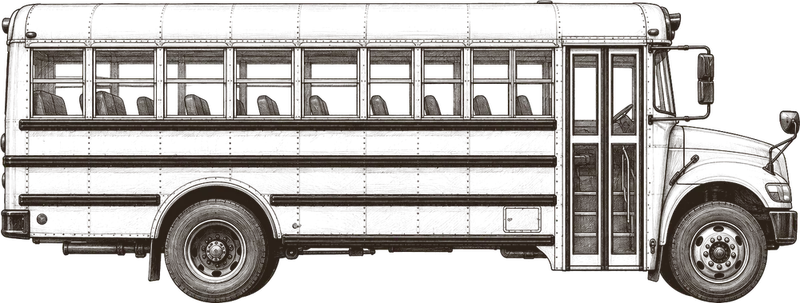
Scale in metersOutline: typical ankylosaur shape
Where its fossils were found
The evidence
Today

90 million years ago
Habitat
Rivers crossed the lowlands where Talarurus lived. Segnosaurus, Erlikosaurus and Achillobator inhabited the same region.
Field notes
About Talarurus
What it was like
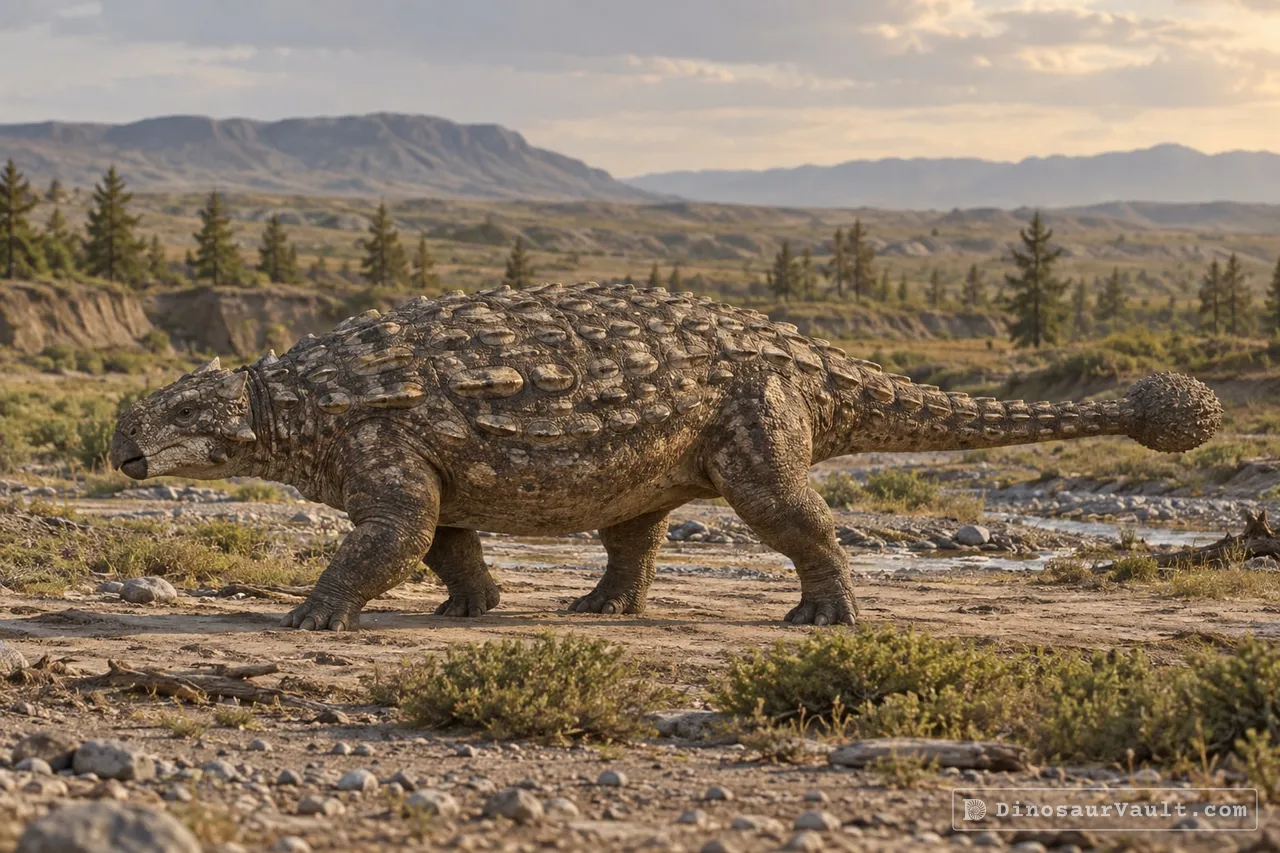
Talarurus was a club-tailed ankylosaur about 6 meters (20 feet) long. Its back was covered in rows of bony plates and spikes, and its tail ended in a heavy club.
The tendons in its tail were turned to bone and woven together, which kept the tail stiff and gave it its name.
Its world
It lived in the Late Cretaceous in what is now Mongolia. Its bones come from the Baynshire Formation, where it shared the land with the therizinosaurs Segnosaurus and Erlikosaurus, the raptor Achillobator and the plant eater Bactrosaurus.
How it was found
Maleev named Talarurus in 1952. With three finds, it is one of the better known ankylosaurs from Asia.
Field gallery
More views of Talarurus
Scenes reconstructed from the available fossil evidence.
1 of 3
Lived alongside
Found in the same rock formations
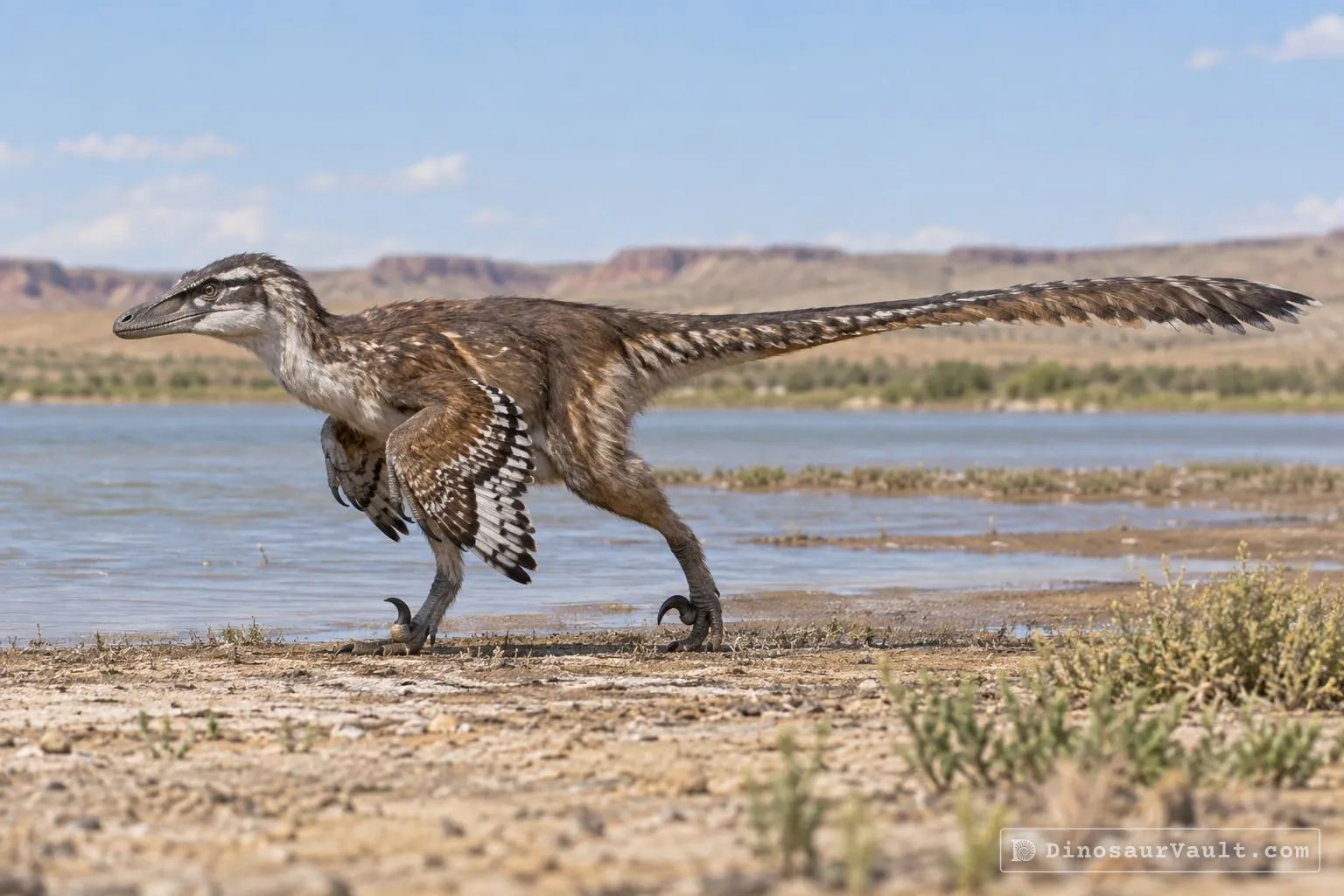
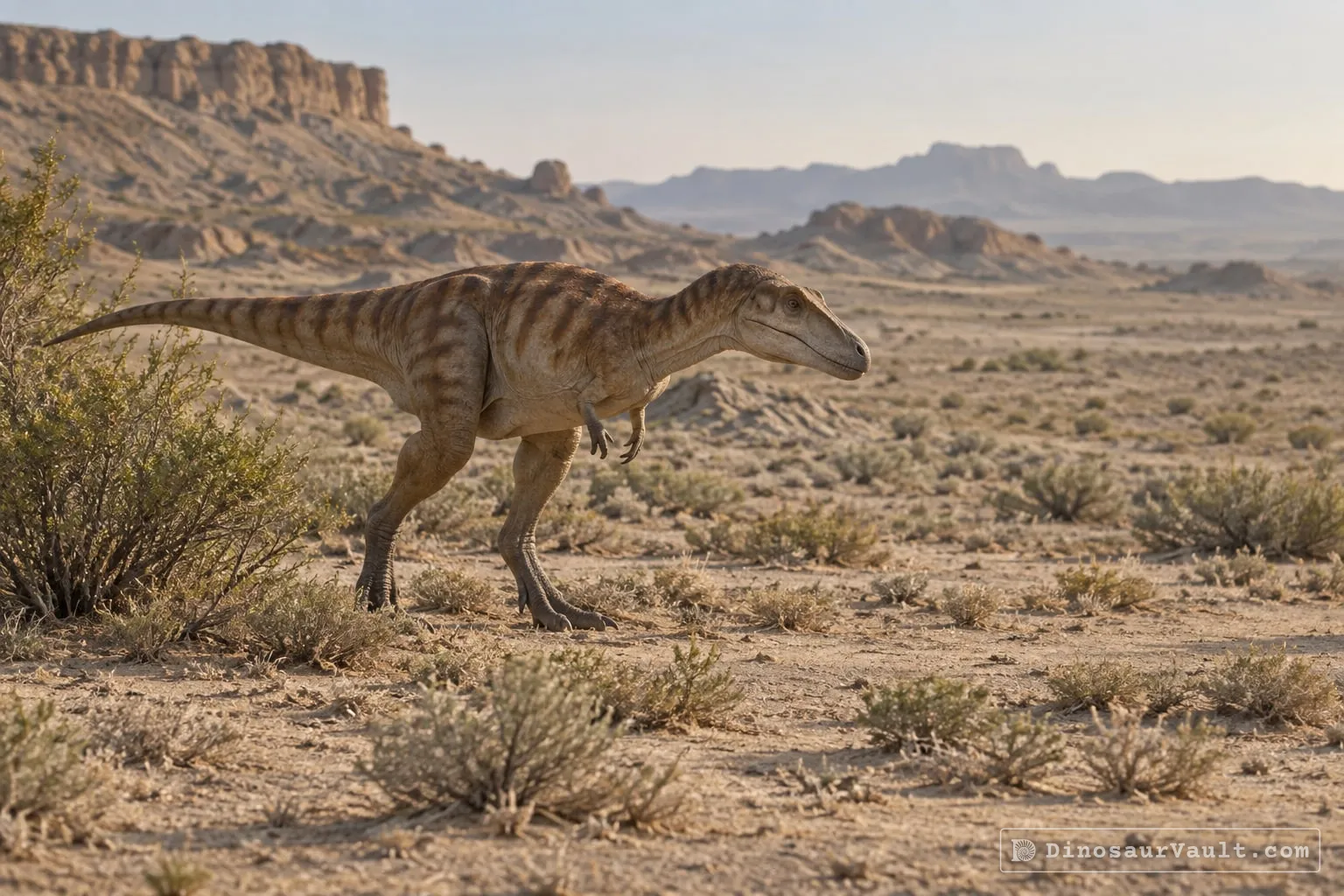
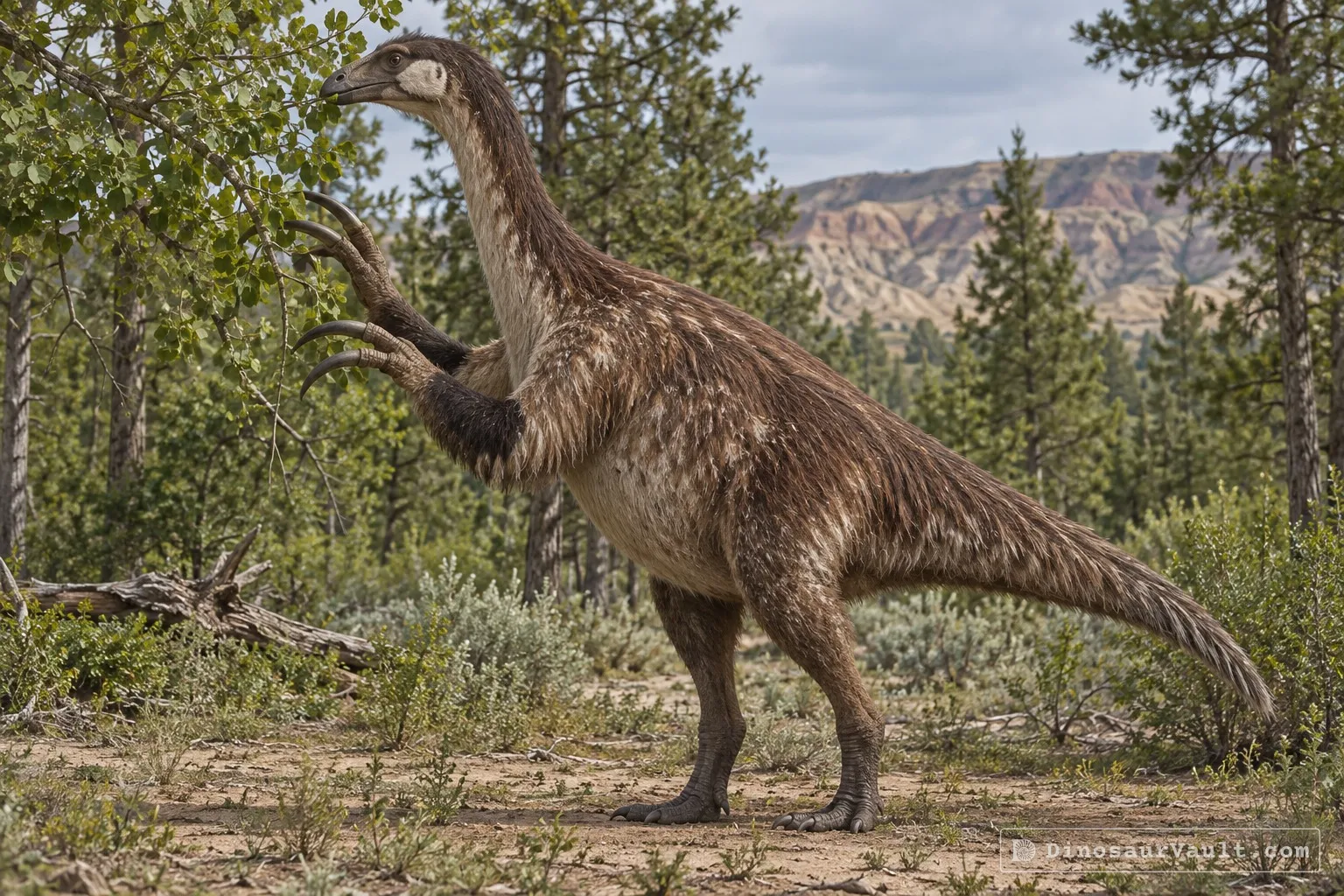
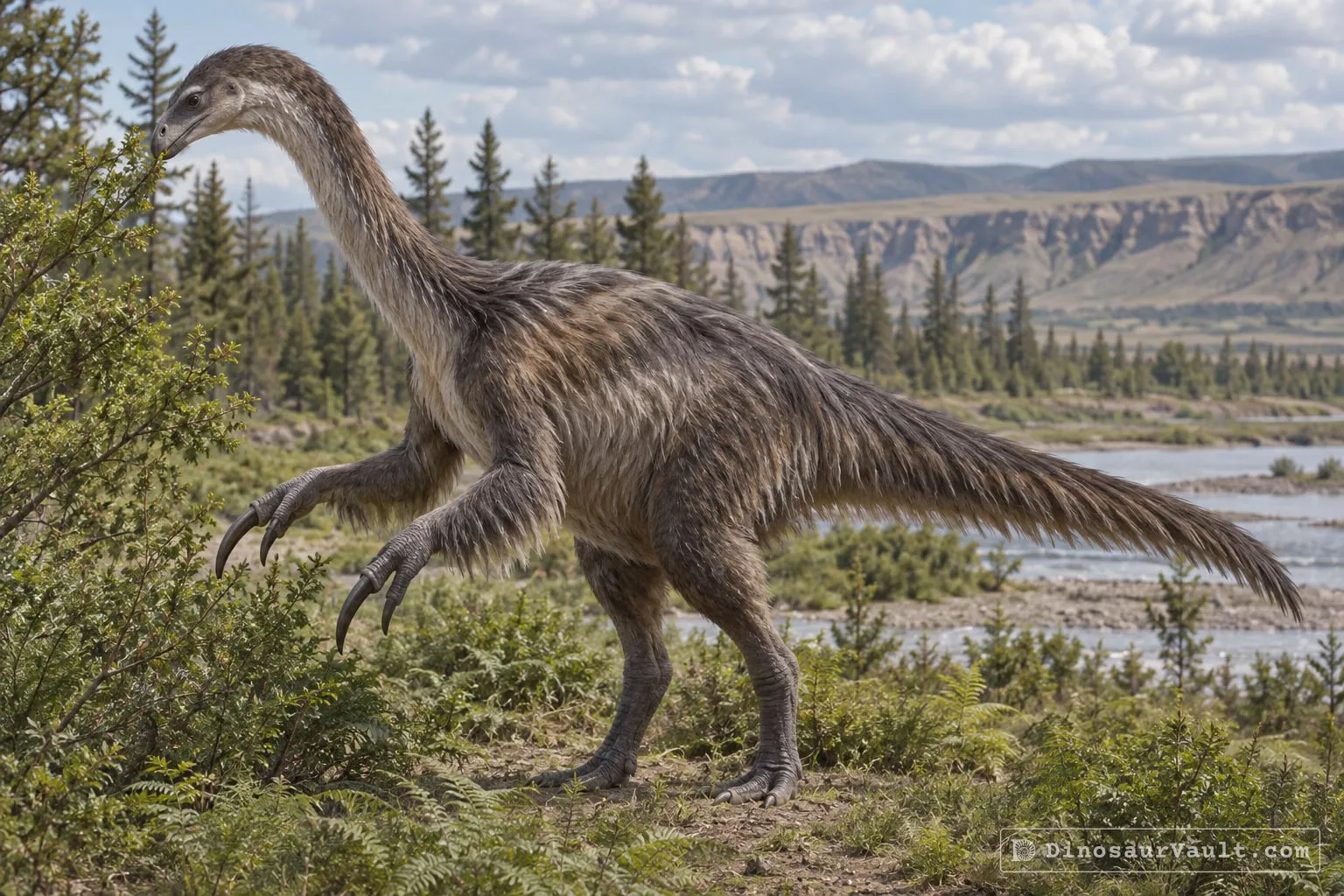
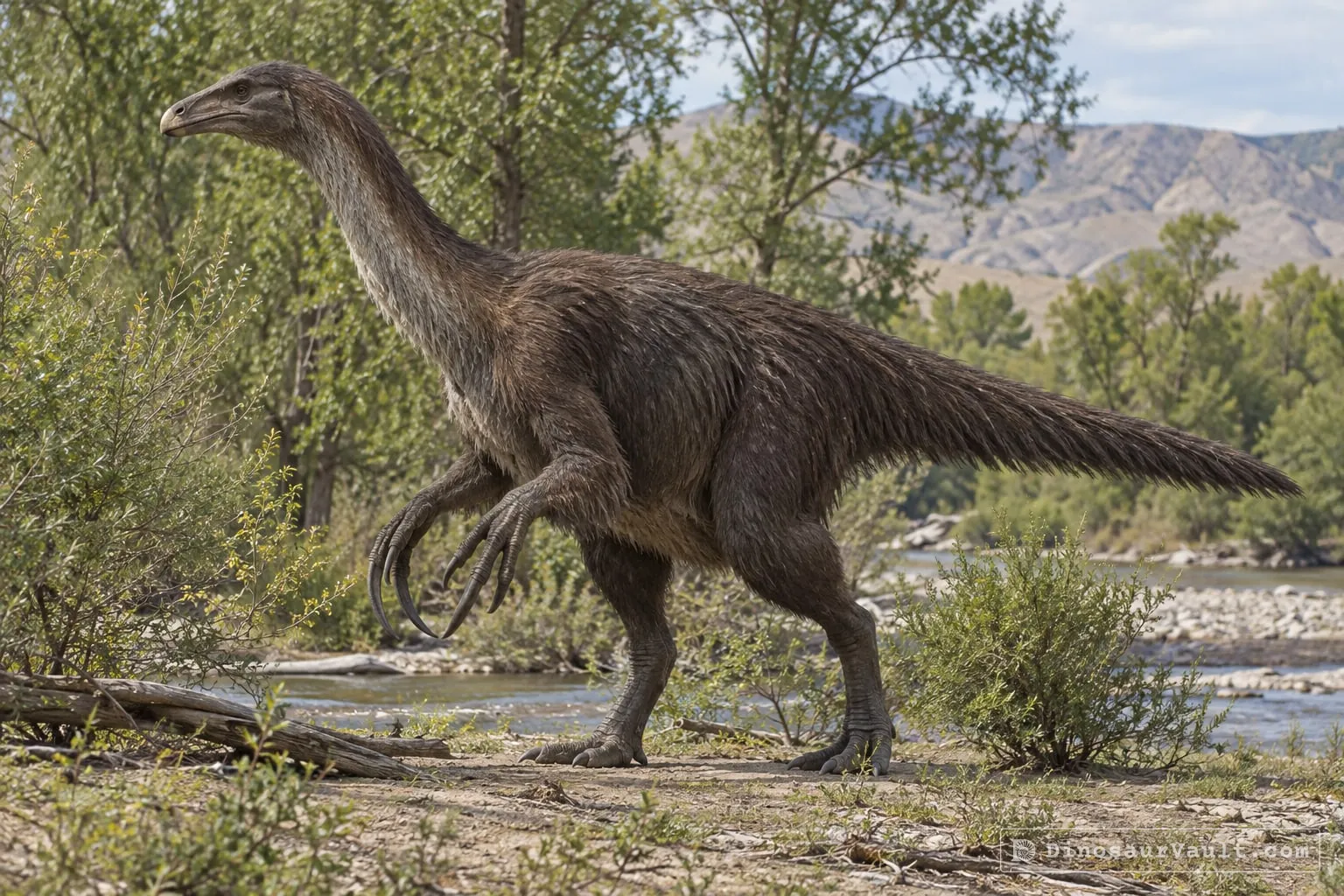
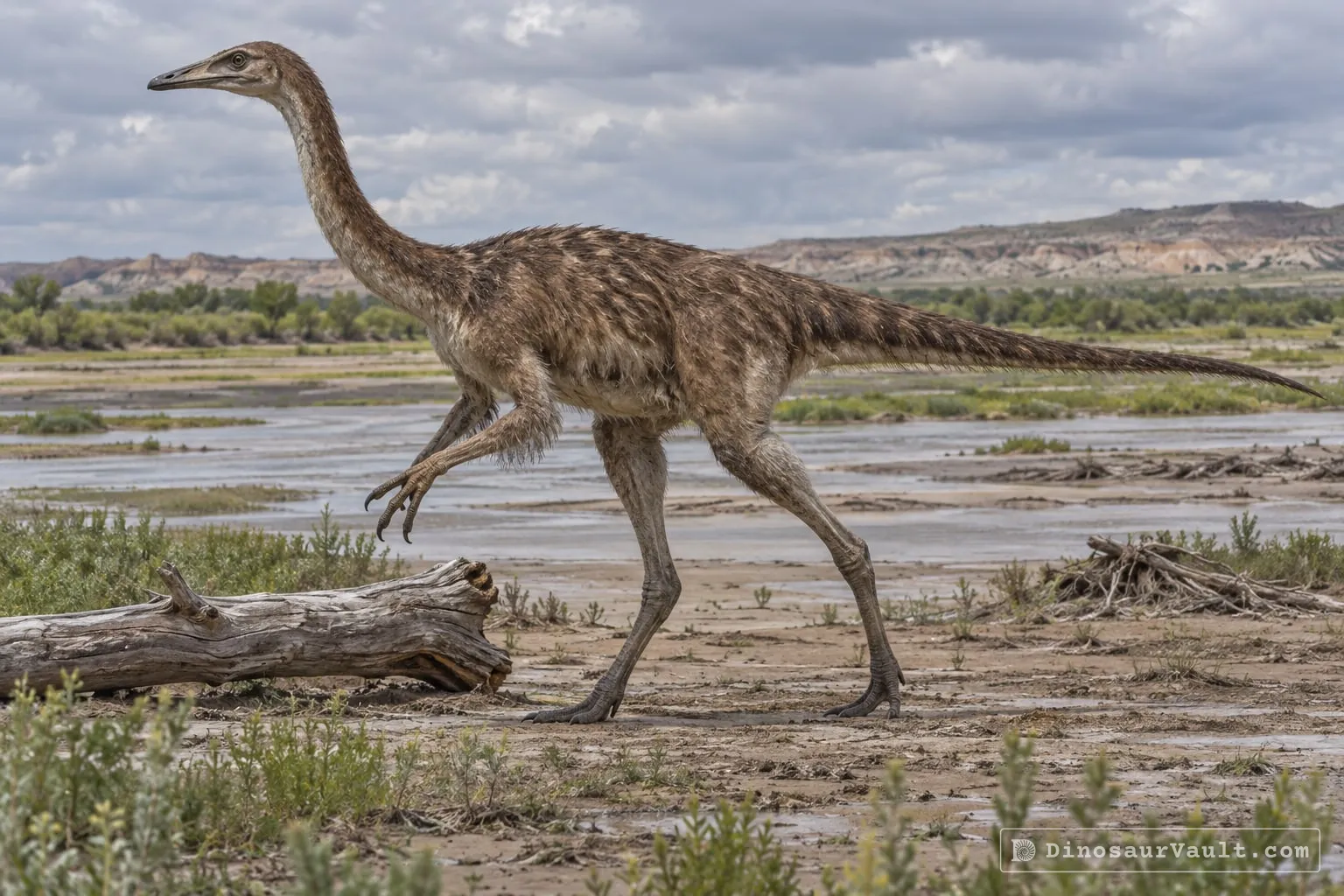
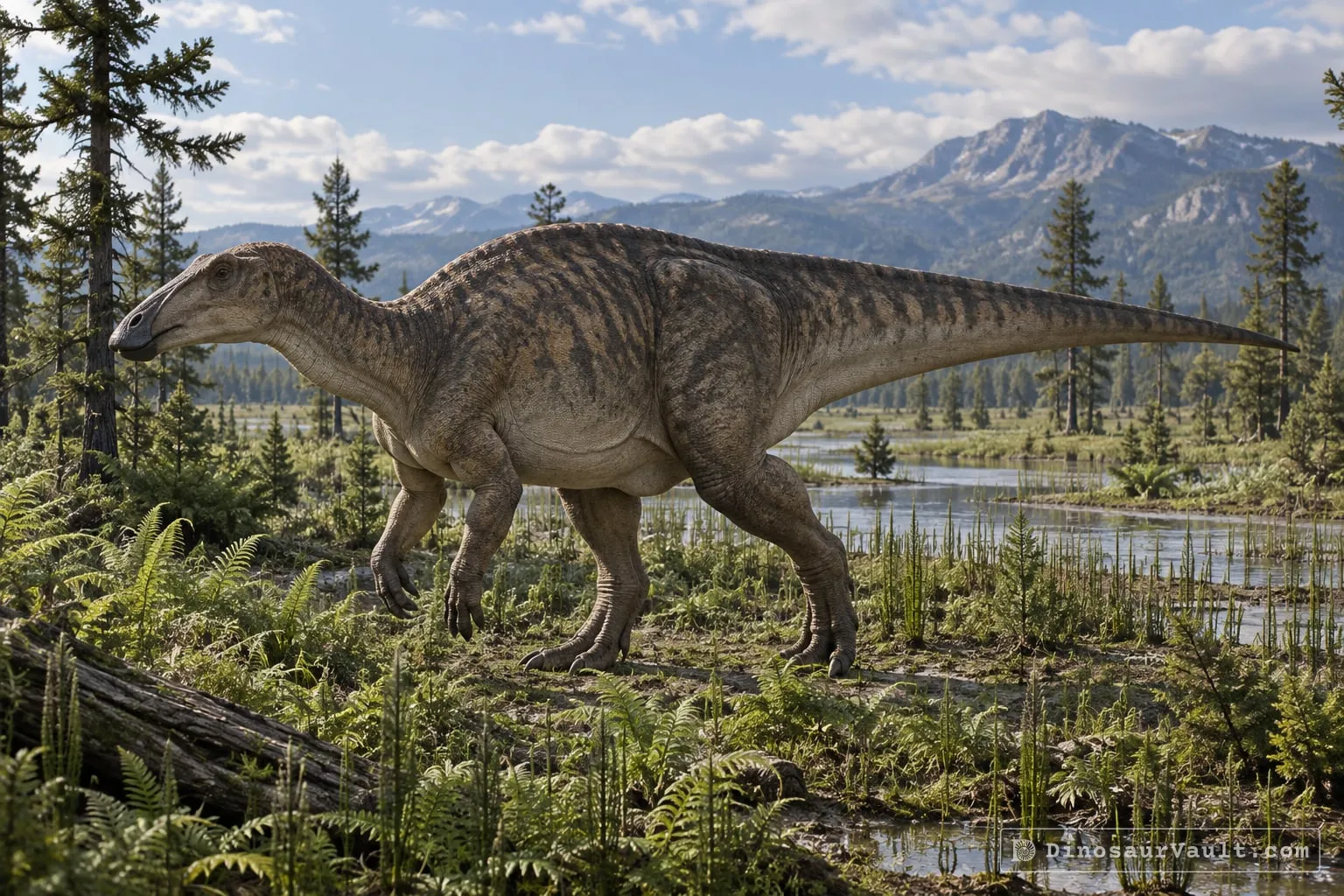
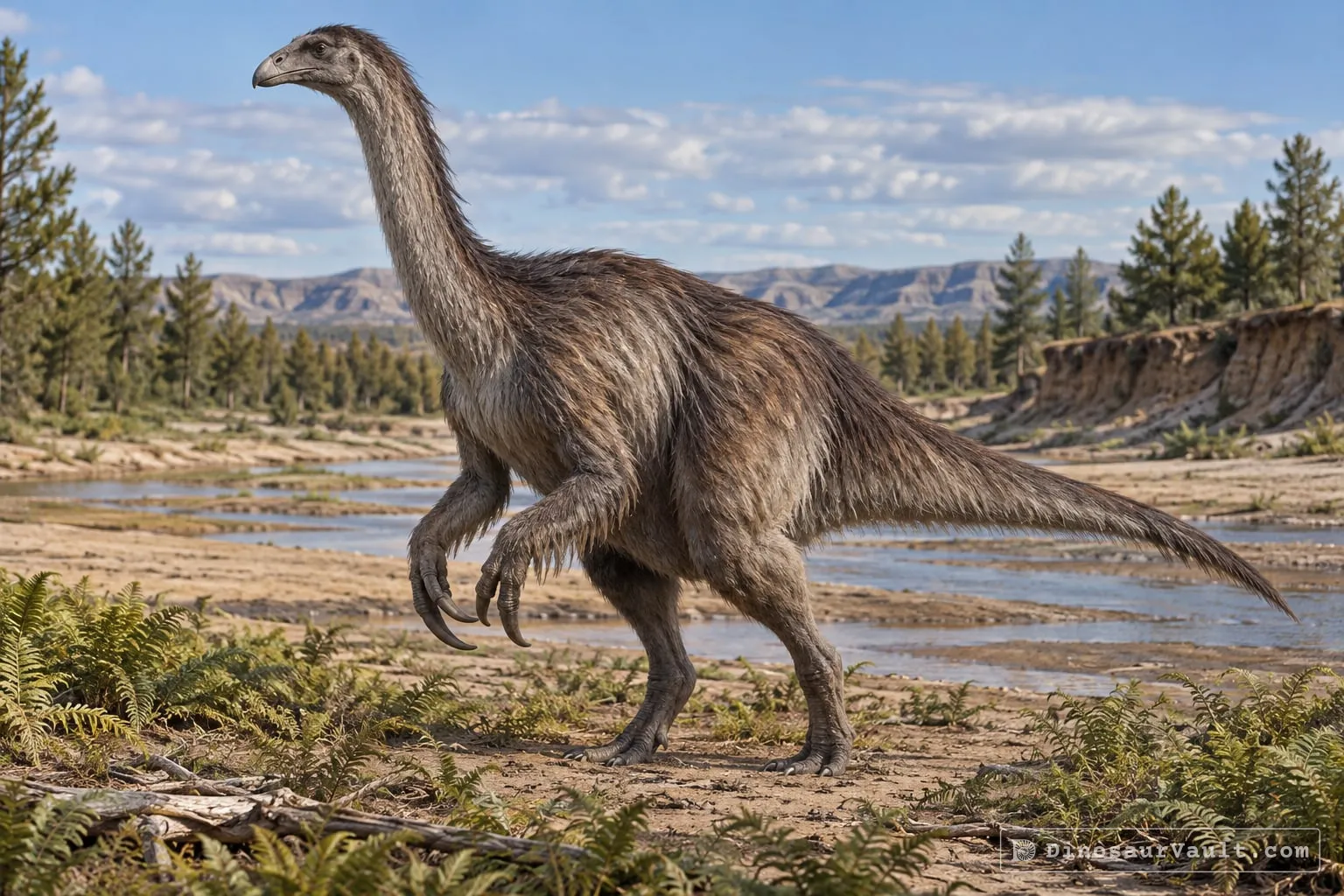


A rock formation can hold fossils laid down millions of years apart, so not every animal here met Talarurus.
The evidence
The science behind Talarurus
Which parts of the picture come from its own bones, and which come from its relatives.
From its own fossils
- Several skulls show the shape of its muzzle and the bony armor covering its head.
- Skull scans reveal the spaces occupied by the brain and inner ears.
- Its skeleton includes armored body plates and a club at the end of a stiffened tail.
Borrowed from relatives
- Much of the body is known from its own bones; missing details can be compared with other armored dinosaurs such as Pinacosaurus.
Still unknown
- Its skin color.
- Exactly which plants it ate.
- How its armor changed as it grew.
Discovery timeline
- 1952Named itMaleev
- 2018SkullPaulina-Carabajal et al.
- 2020SkullsPark et al.
Key papers
The research behind what we know of Talarurus
Named it
Named Talarurus from armored dinosaur remains found in Mongolia.
Noviy ankilosavr is verchnego mela Mongolii [A new ankylosaur from the Upper Cretaceous of Mongolia]. Doklady Akademii Nauk SSSR 87: 273-276
No link available
Skull
Reconstructed the brain cavity and inner ears of Talarurus and Tarchia, comparing their anatomy with other armored dinosaurs.
Neuroanatomy of the ankylosaurid dinosaurs Tarchia teresae and Talarurus plicatospineus from the Upper Cretaceous of Mongolia, with comments on endocranial variability among ankylosaurs. Palaeogeography, Palaeoclimatology, Palaeoecology 494: 135-146
Read the paper : Neuroanatomy of the ankylosaurid dinosaurs Tarchia teresae and Talarurus plicatospineus from the Upper Cretaceous of Mongolia, with comments on endocranial variability among ankylosaurs (opens in a new tab)Skulls
New skulls clarified the head shape and suggested that Talarurus and Tsagantegia ate different kinds of vegetation.
Additional skulls of Talarurus plicatospineus (Dinosauria: Ankylosauridae) and implications for paleobiogeography and paleoecology of armored dinosaurs. Cretaceous Research 108: 104340
Read the paper : Additional skulls of Talarurus plicatospineus (Dinosauria: Ankylosauridae) and implications for paleobiogeography and paleoecology of armored dinosaurs (opens in a new tab)
Close relatives
Other members of Ankylosauridae


Sources: Wikidata