Erlikosaurus
"Erlik's lizard"
- Lived
- 94 to 84 million years ago, Late Cretaceous
- Diet
- Herbivore
- Length
- about 3.4 m (11 ft)
- Group
- Theropods, Therizinosauridae
- Found in
- Mongolia
- Named by
- Barsbold and Perle 1980
Size comparison
To scale

Scale in metersOutline: typical theropod shape
Where its fossils were found
The evidence
Today

90 million years ago
Habitat
River floodplains and lake margins in what is now Mongolia. Other dinosaurs in the Baynshire Formation included Segnosaurus, Achillobator and Talarurus.
Field notes
About Erlikosaurus
What it was like
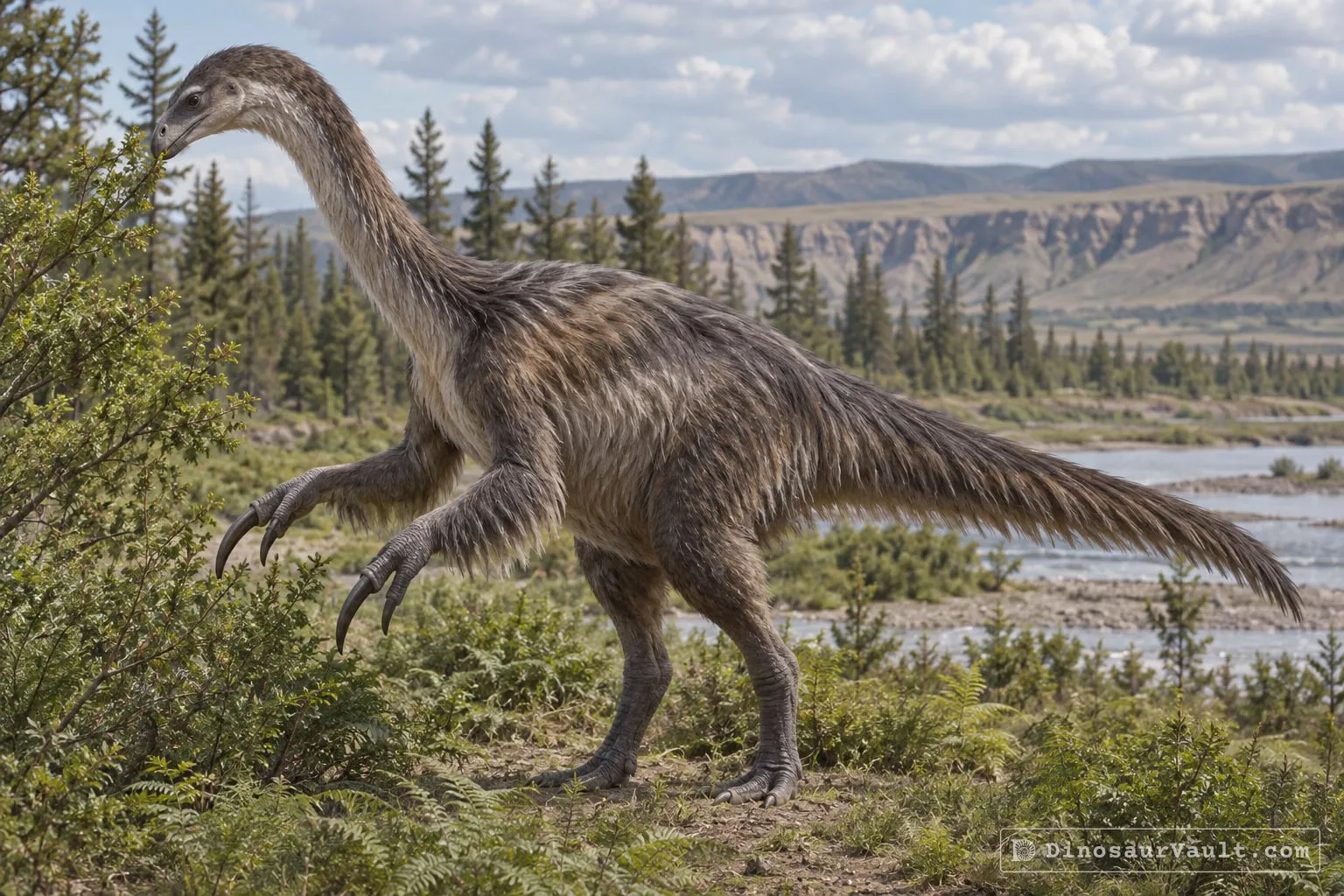
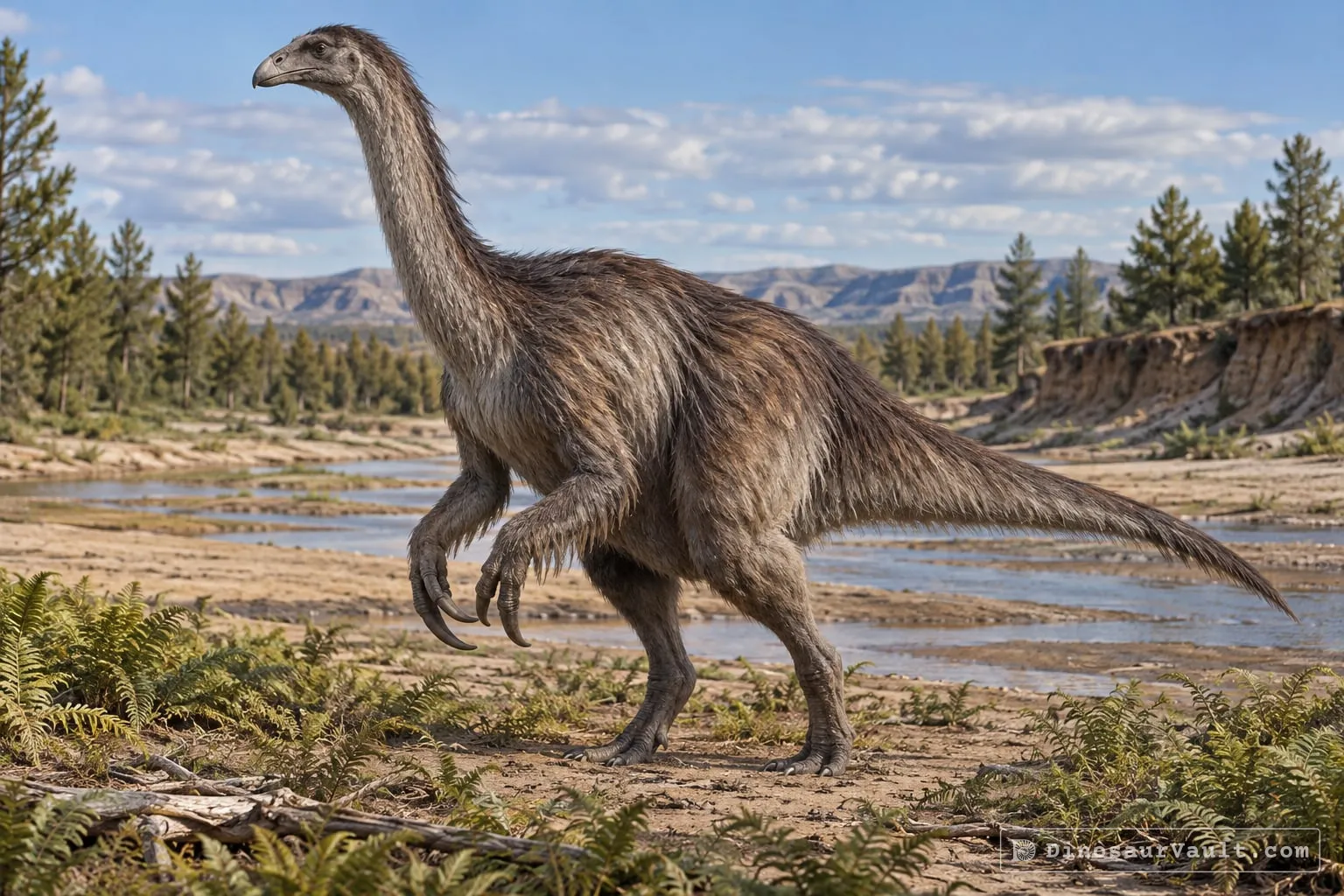
Erlikosaurus was a therizinosaur about 3.4 meters (11 feet) long, small for its family. It had a long neck, a small head with a toothless beak at the front, and small, leaf-shaped teeth behind, suited to cropping plants.
It is known from the most complete therizinosaur skull ever found, which has shown scientists much about how these odd dinosaurs fed.
Its world
It lived in the Late Cretaceous in what is now Mongolia. Its fossil comes from the Baynshire Formation, where it shared the land with the larger therizinosaur Segnosaurus, the raptor Achillobator and the armored Talarurus.
How it was found
Barsbold and Perle named Erlikosaurus in 1980, from a single find. The name comes from a god of death in Mongolian myth.
Field gallery
More views of Erlikosaurus
Scenes reconstructed from the available fossil evidence.
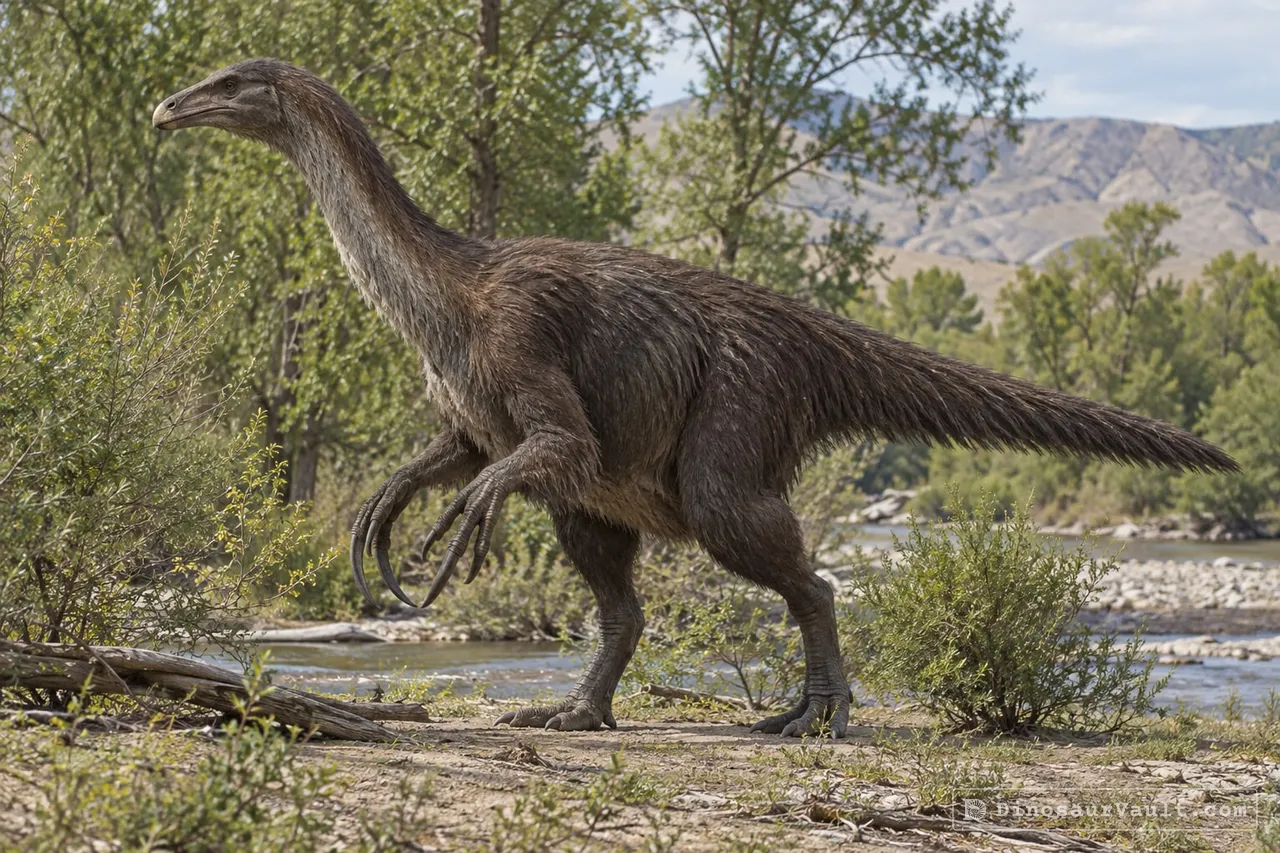
1 of 3
Lived alongside
Found in the same rock formations
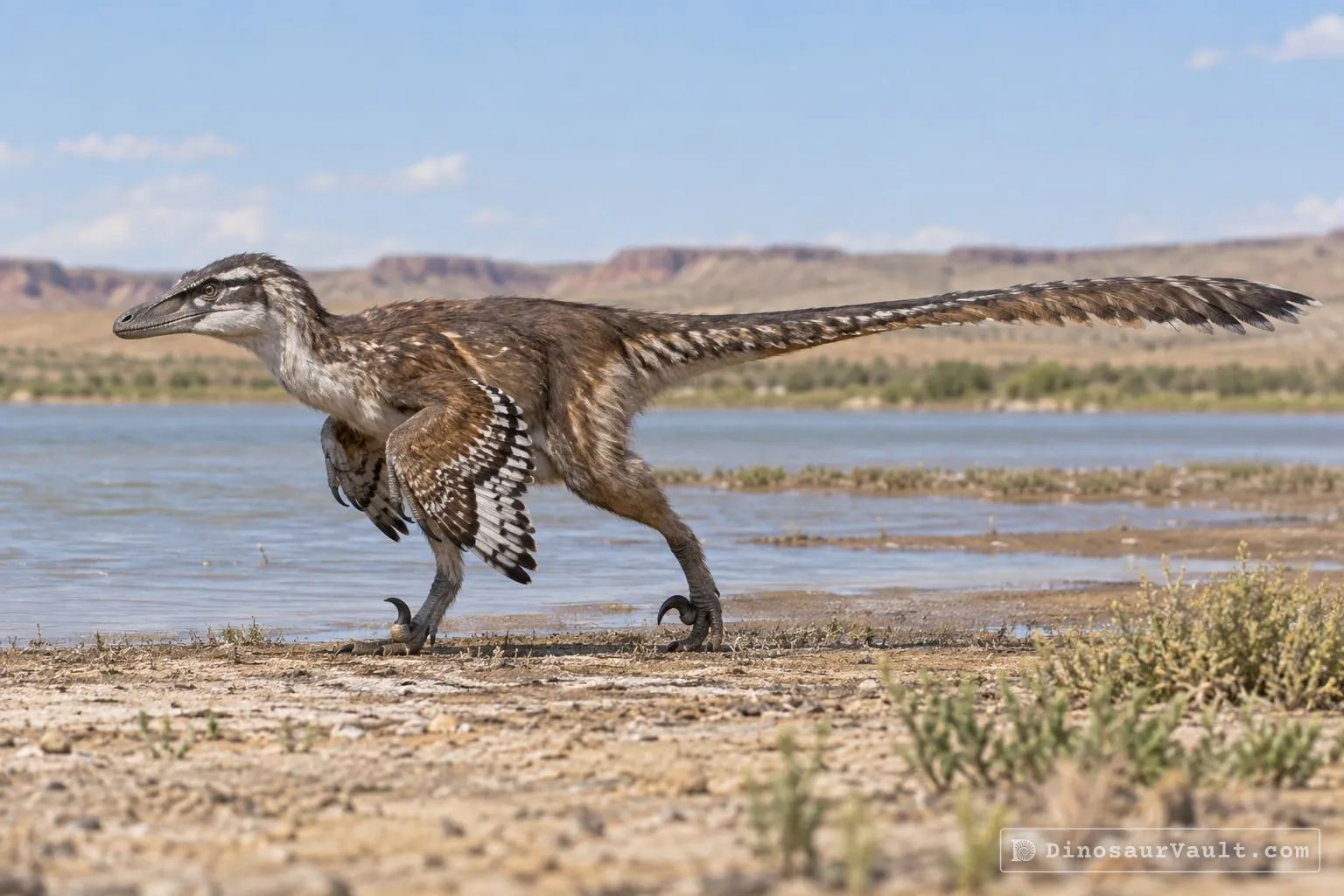
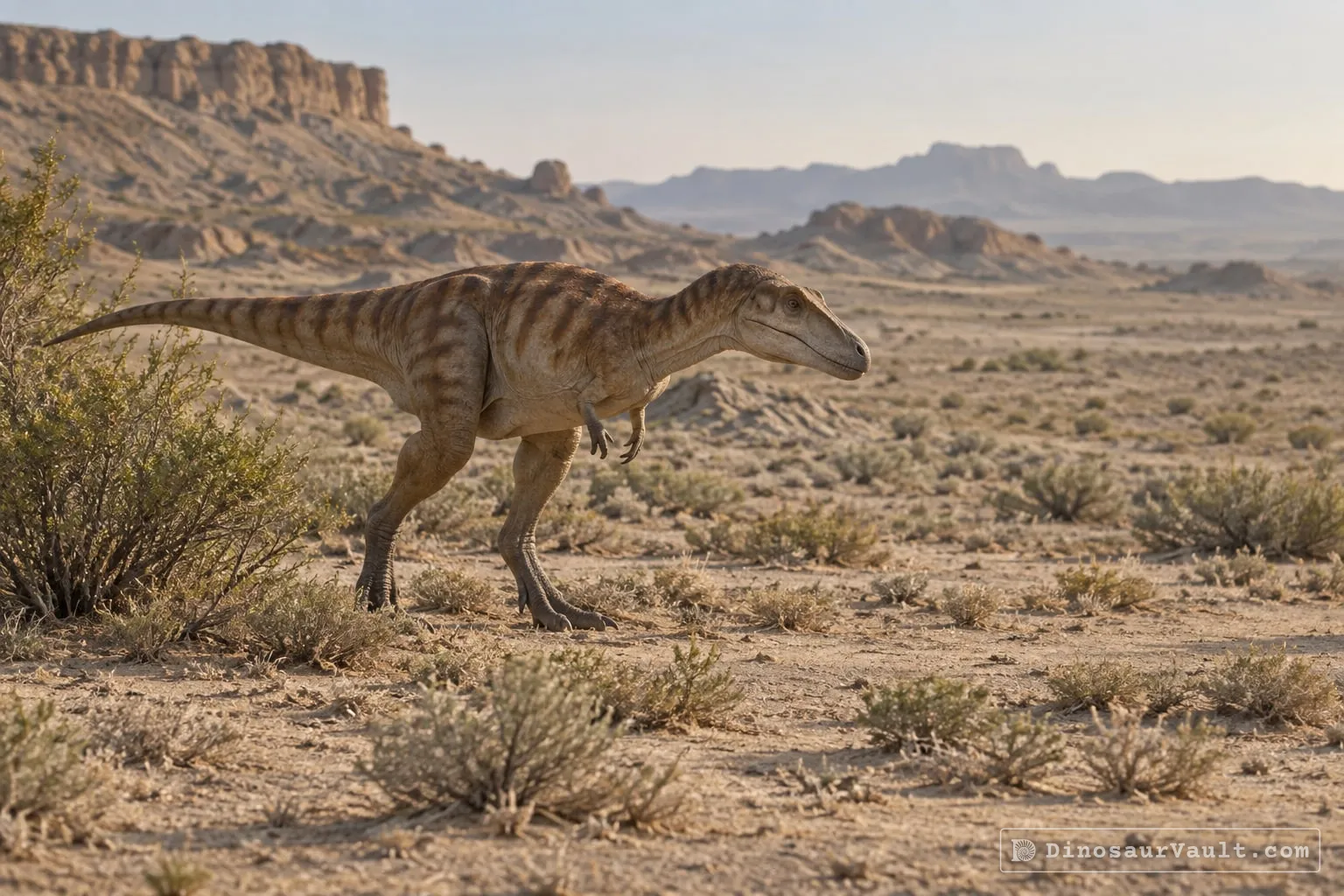
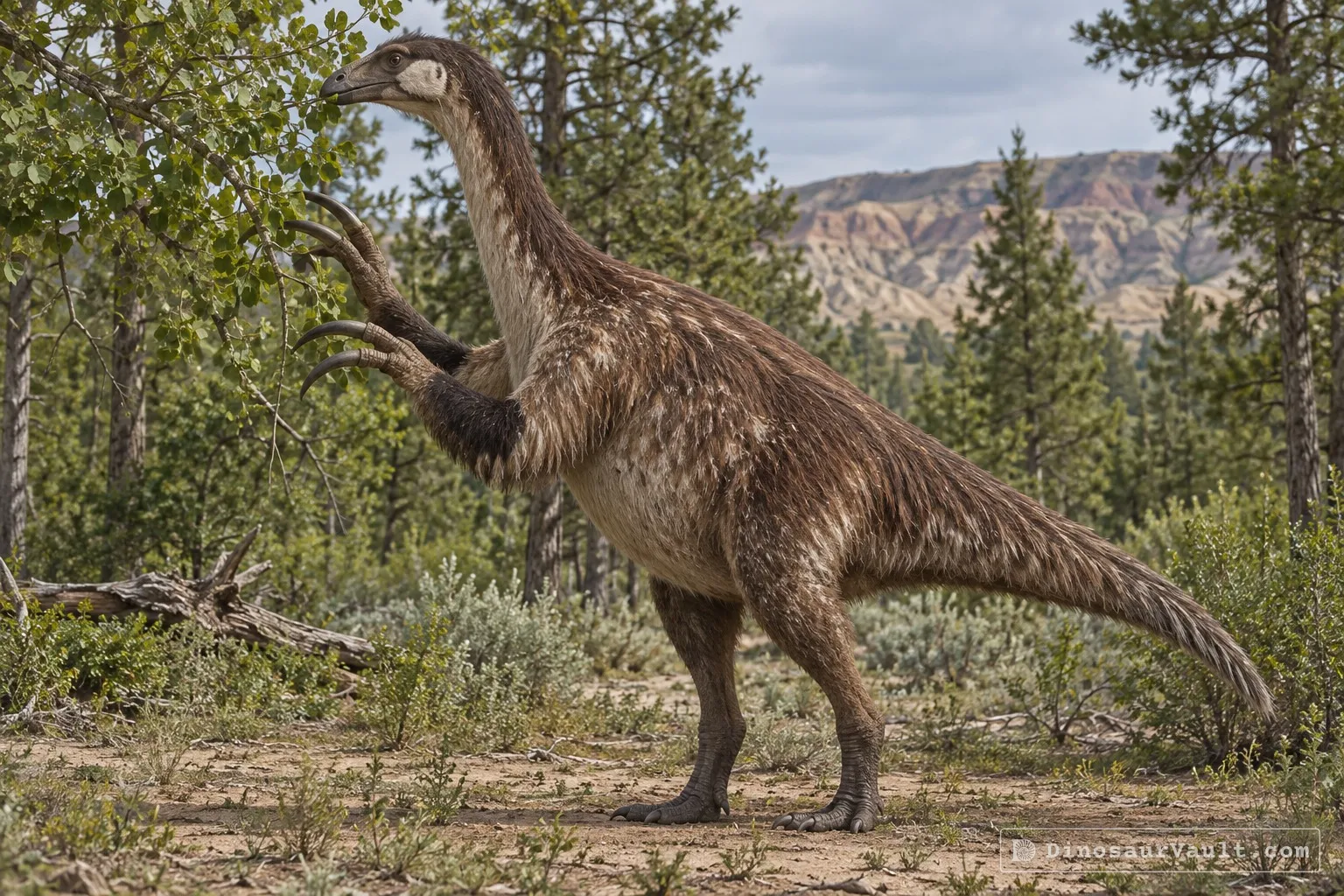
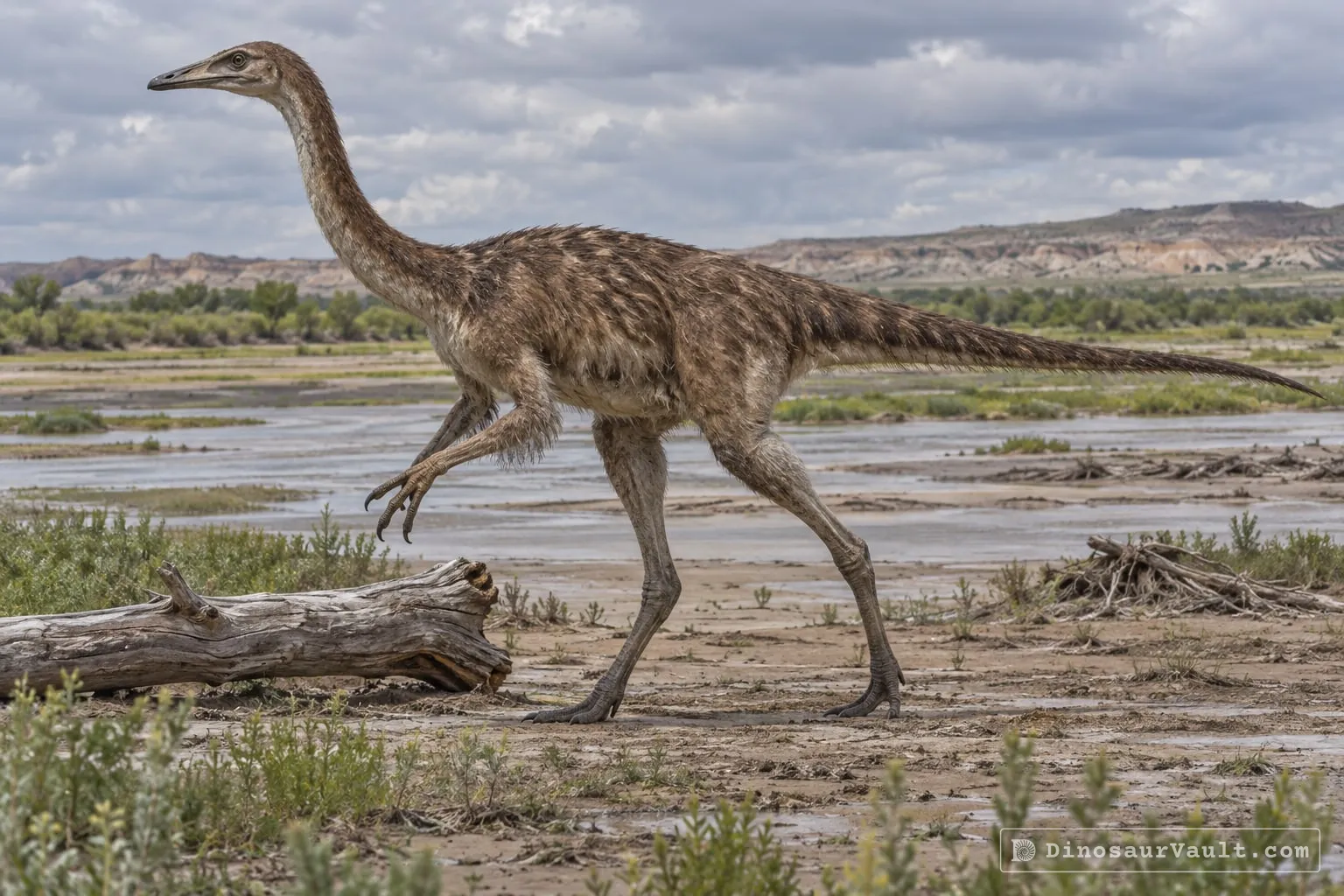
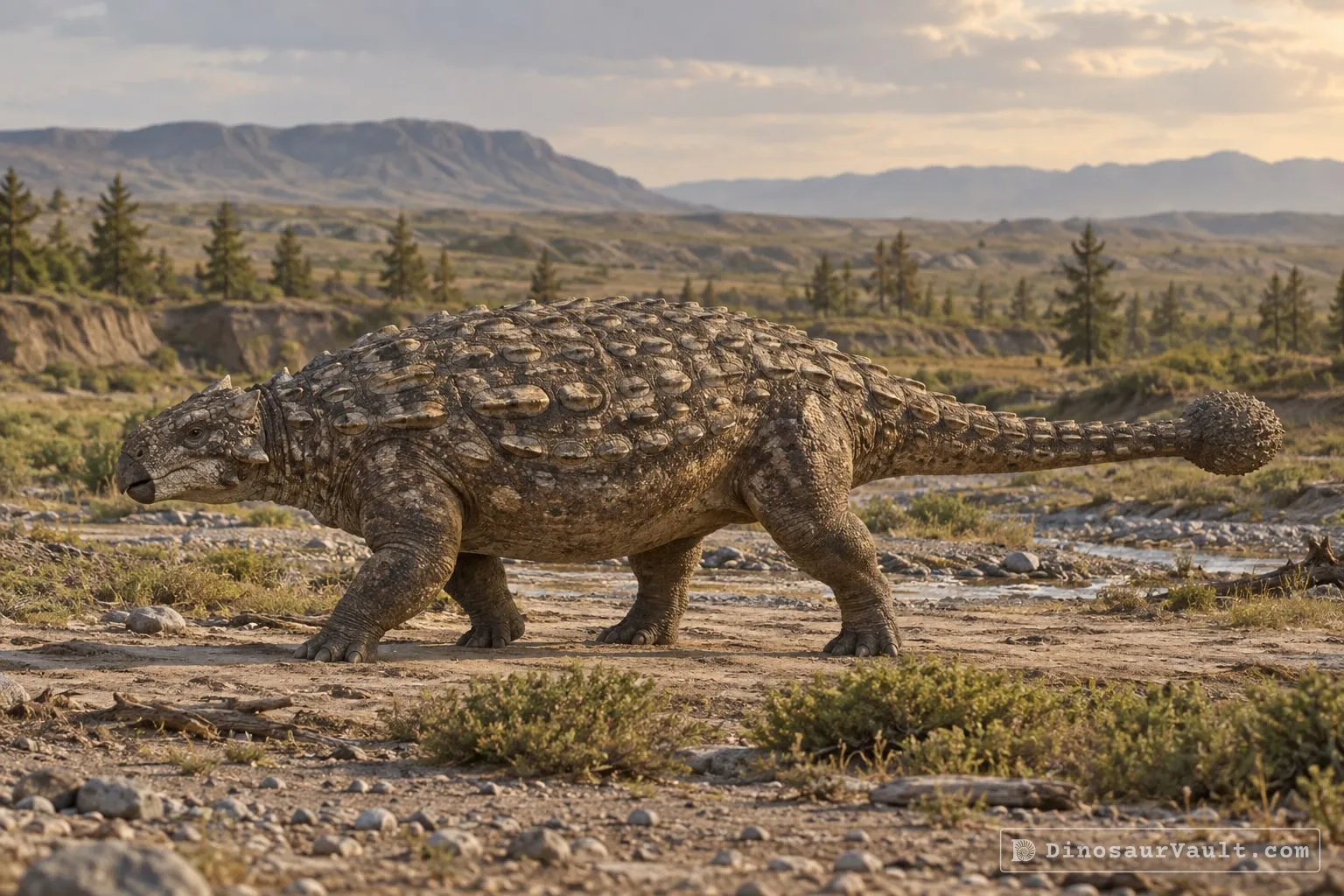
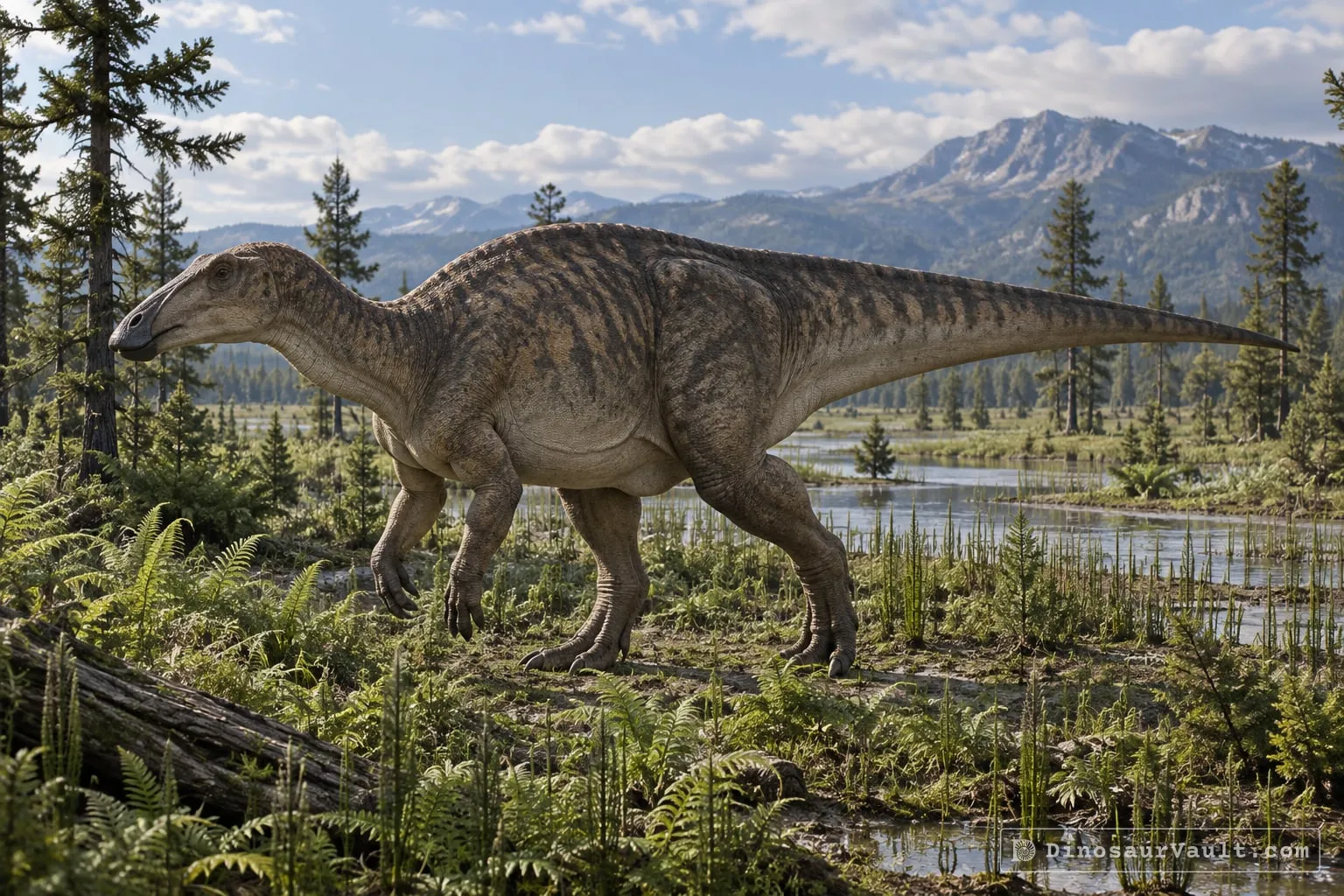


A rock formation can hold fossils laid down millions of years apart, so not every animal here met Erlikosaurus.
The evidence
The science behind Erlikosaurus
Which parts of the picture come from its own bones, and which come from its relatives.
From its own fossils
- A nearly complete skull, parts of the neck, an upper arm bone and foot bones.
- The jaws have a toothless front and small teeth farther back.
- The foot claws are narrow from side to side.
Borrowed from relatives
- The broad pelvis and much of the body are restored from other therizinosaurs, including Segnosaurus.
Still unknown
- Its skin covering and color.
- The shape and length of its hand claws.
- Exactly which plants it ate.
Discovery timeline
- 1980Named itBarsbold & Perle
- 2014SkullLautenschlager et al.
- 2017How it fedLautenschlager
Key papers
The research behind what we know of Erlikosaurus
Named it
Named Erlikosaurus from a skull and partial skeleton, drawing attention to its toothless snout and narrow foot claws.
Segnosauria, a new infraorder of carnivorous dinosaurs. Acta Palaeontologica Polonica 25: 187-195
No link available
Skull
Used scans to separate and restore the skull bones, revealing details hidden inside the fossil.
Cranial anatomy ofErlikosaurus andrewsi(Dinosauria, Therizinosauria): new insights based on digital reconstruction. Journal of Vertebrate Paleontology 34: 1263-1291
Read the paper : Cranial anatomy ofErlikosaurus andrewsi(Dinosauria, Therizinosauria): new insights based on digital reconstruction (opens in a new tab)How it fed
Jaw models suggest Erlikosaurus and Segnosaurus could use different feeding strategies, reducing competition for plants.
Functional niche partitioning in Therizinosauria provides new insights into the evolution of theropod herbivory. Palaeontology 60: 375-387
Read the paper : Functional niche partitioning in Therizinosauria provides new insights into the evolution of theropod herbivory (opens in a new tab)
Close relatives
Other members of Therizinosauridae


Sources: Wikidata