Saichania
sigh-CHAN-ee-a
"beautiful one"
- Lived
- 84 to 72 million years ago, Late Cretaceous
- Diet
- Herbivore
- Length
- about 6.6 m (22 ft)
- Group
- Ankylosaurs, Ankylosauridae
- Found in
- Mongolia
- Named by
- Maryanska 1977
Size comparison
To scale


Scale in metersOutline: typical ankylosaur shape
Where its fossils were found
The evidence
Today

80 million years ago
Habitat
Its home in Mongolia included dry dunes and oases. Shri, Tarchia and Avimimus lived in the same region.
Field notes
About Saichania
What it was like
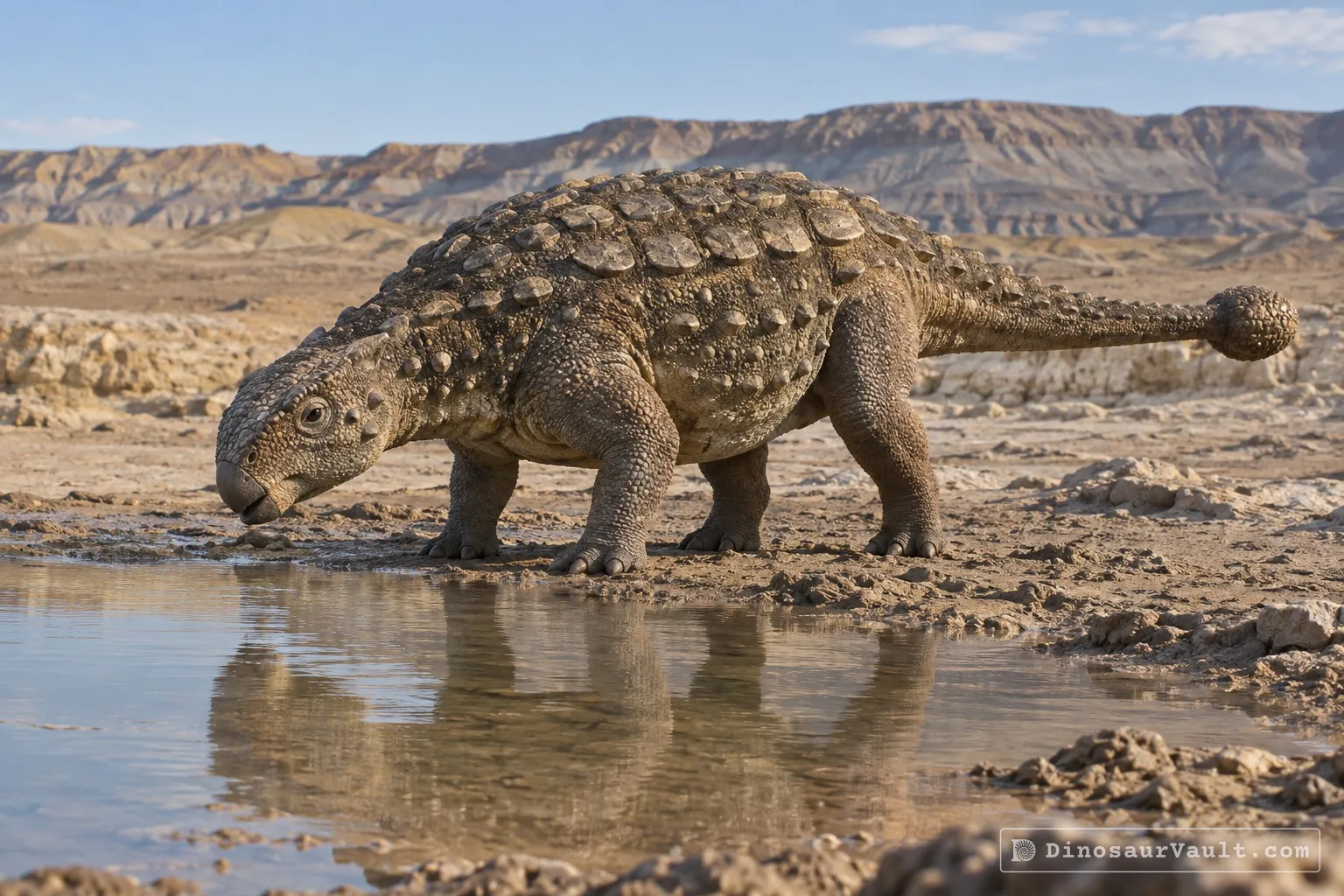
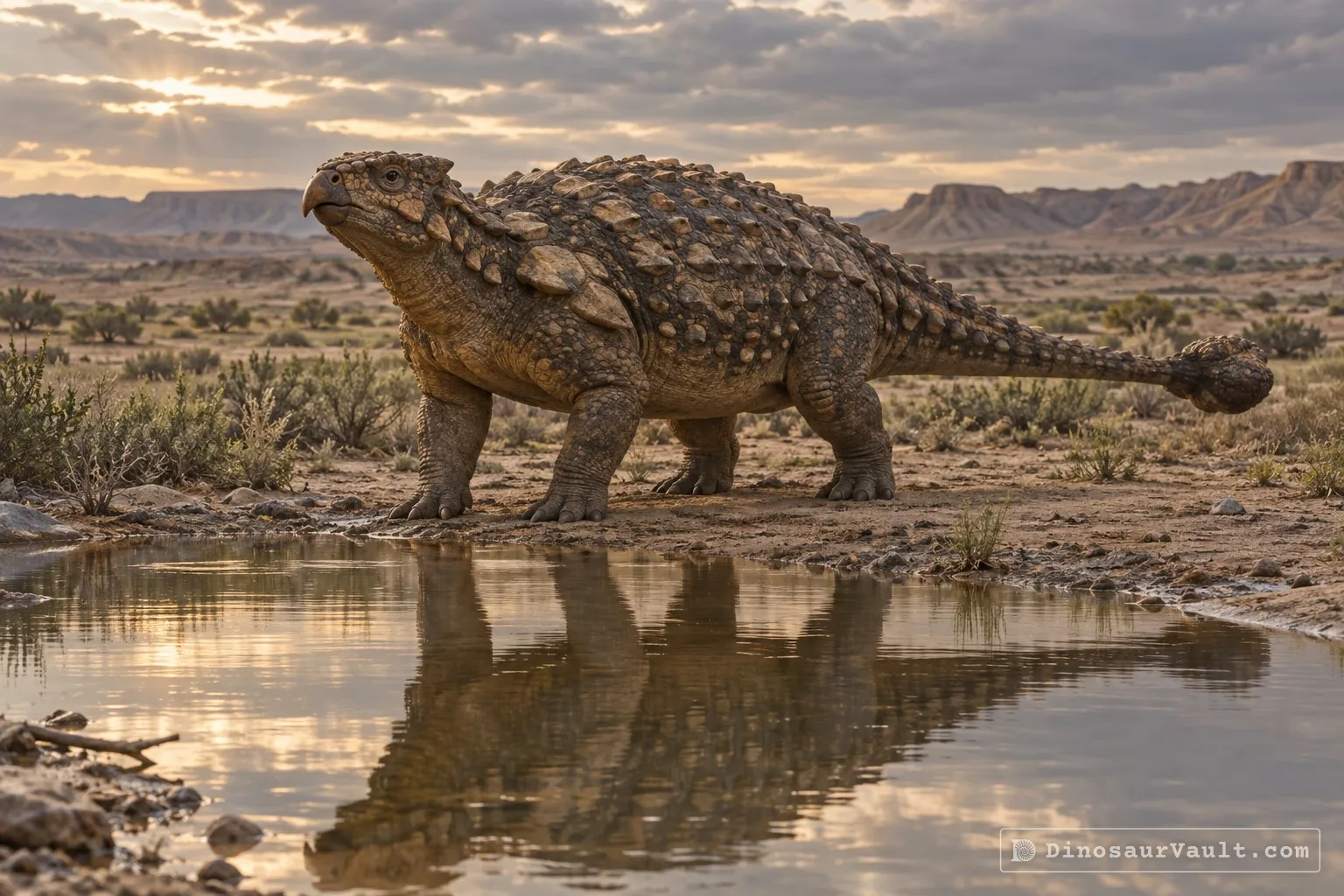
Saichania was an ankylosaur, a low, heavily armored plant eater with a bony club on its tail. It was about 6.6 meters (22 feet) long. Its skull was covered in bumpy armor, and even its belly had bony plates.
Its world
It lived in the Late Cretaceous, in what is now Mongolia. Its fossils come from the Baruungoyot Formation, a dry land of dunes and oases, shared with the dromaeosaur Shri, the armored Tarchia and the small bird-like Avimimus.
How it was found
Maryanska named Saichania in 1977. Its name is Mongolian and refers to its well preserved skeleton.
Field gallery
More views of Saichania
Scenes reconstructed from the available fossil evidence.
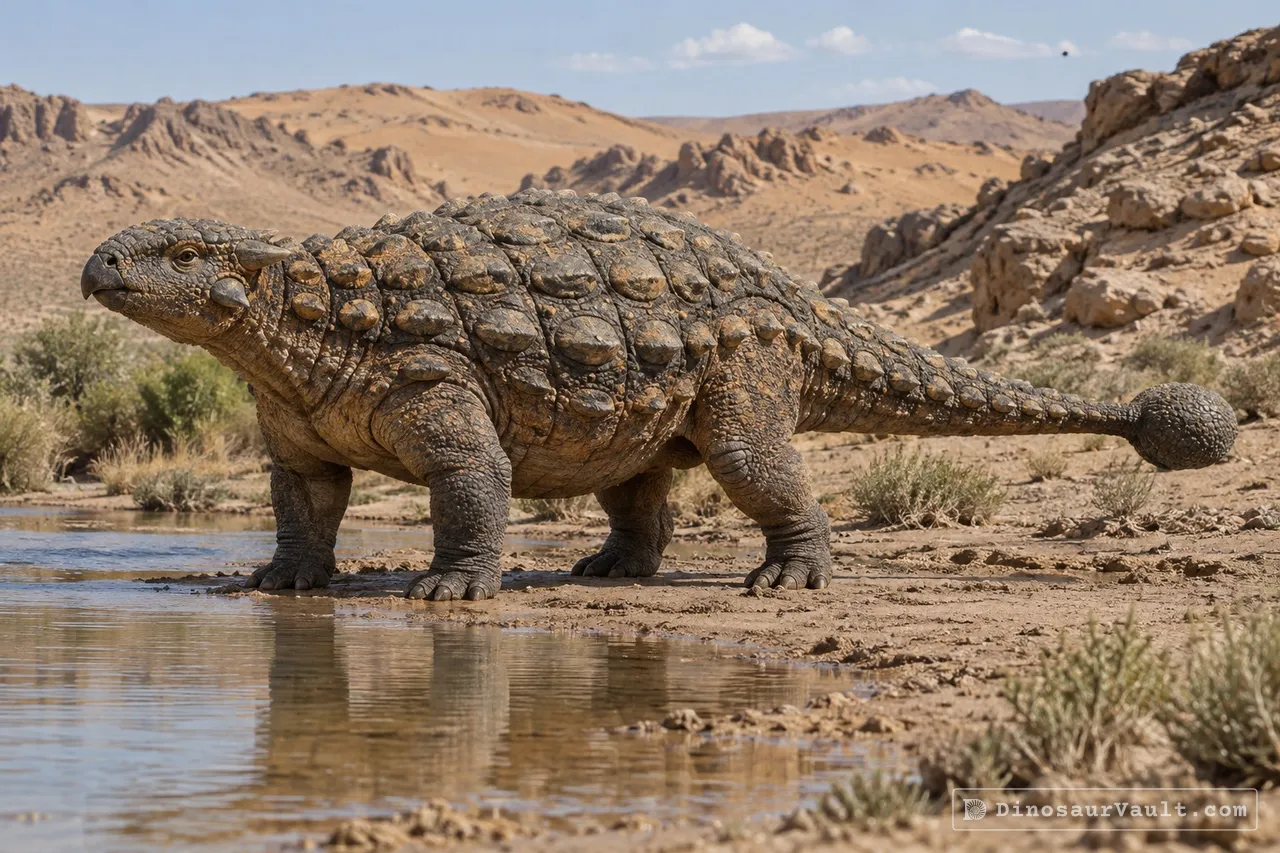
1 of 3
Lived alongside
Found in the same rock formations
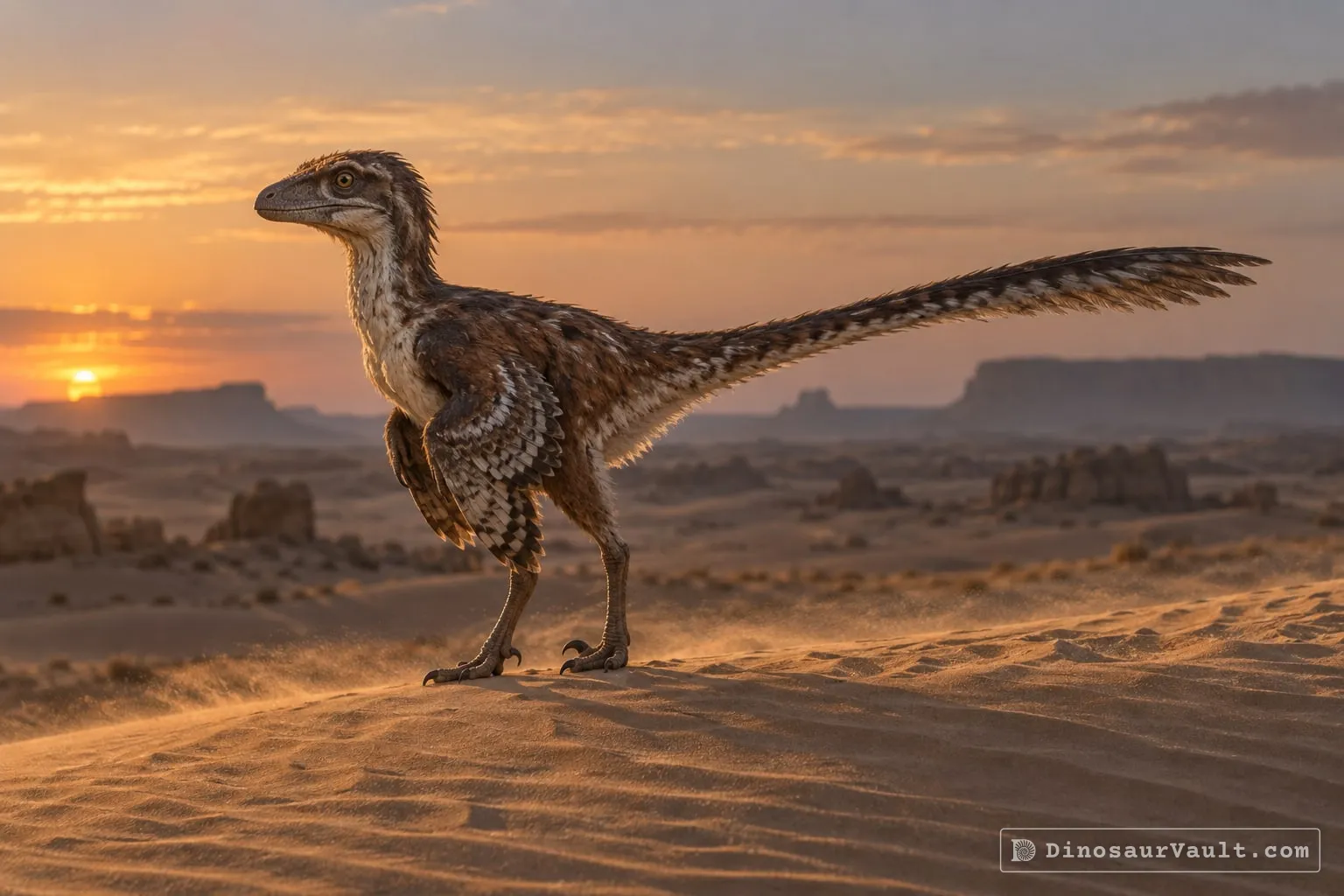
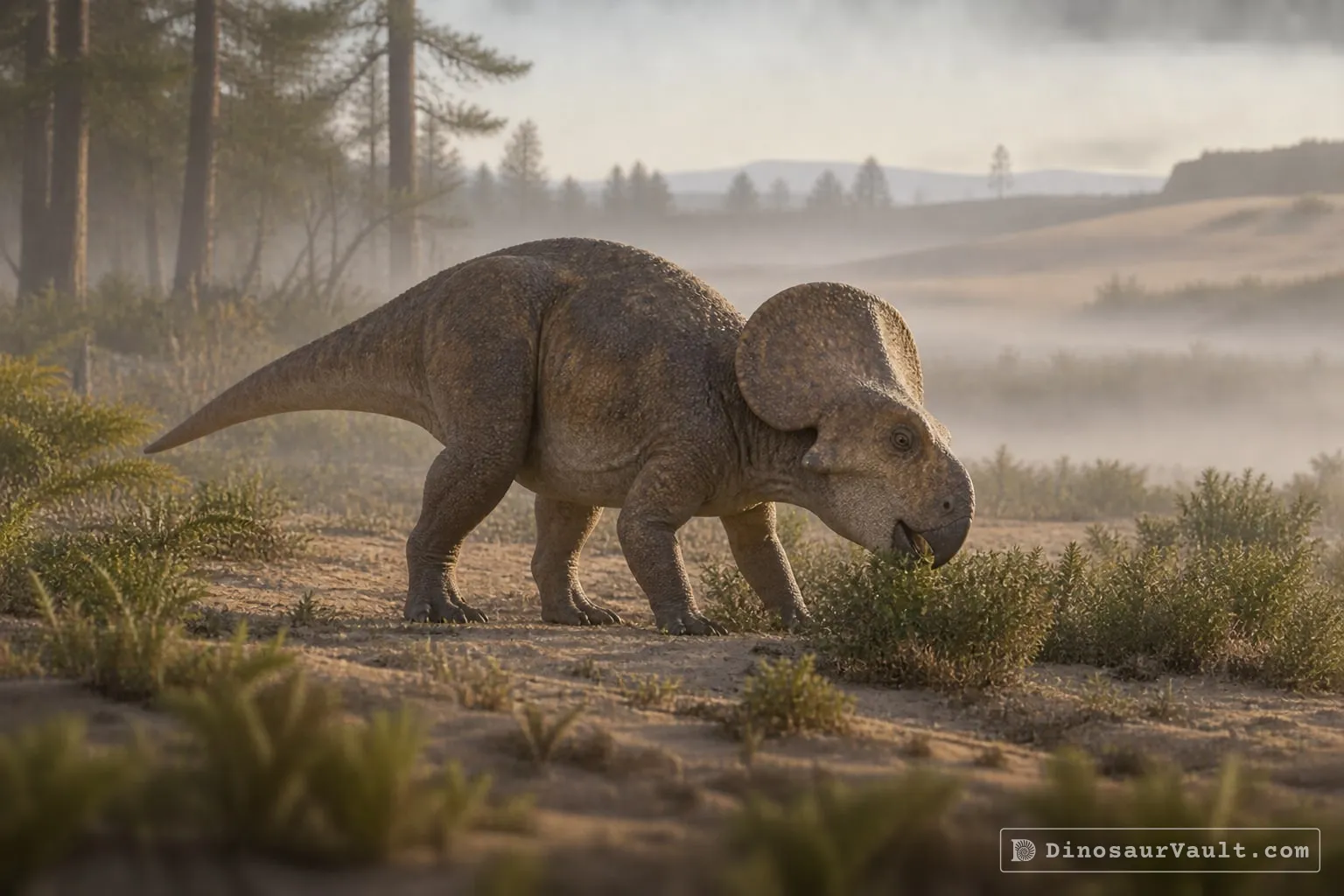
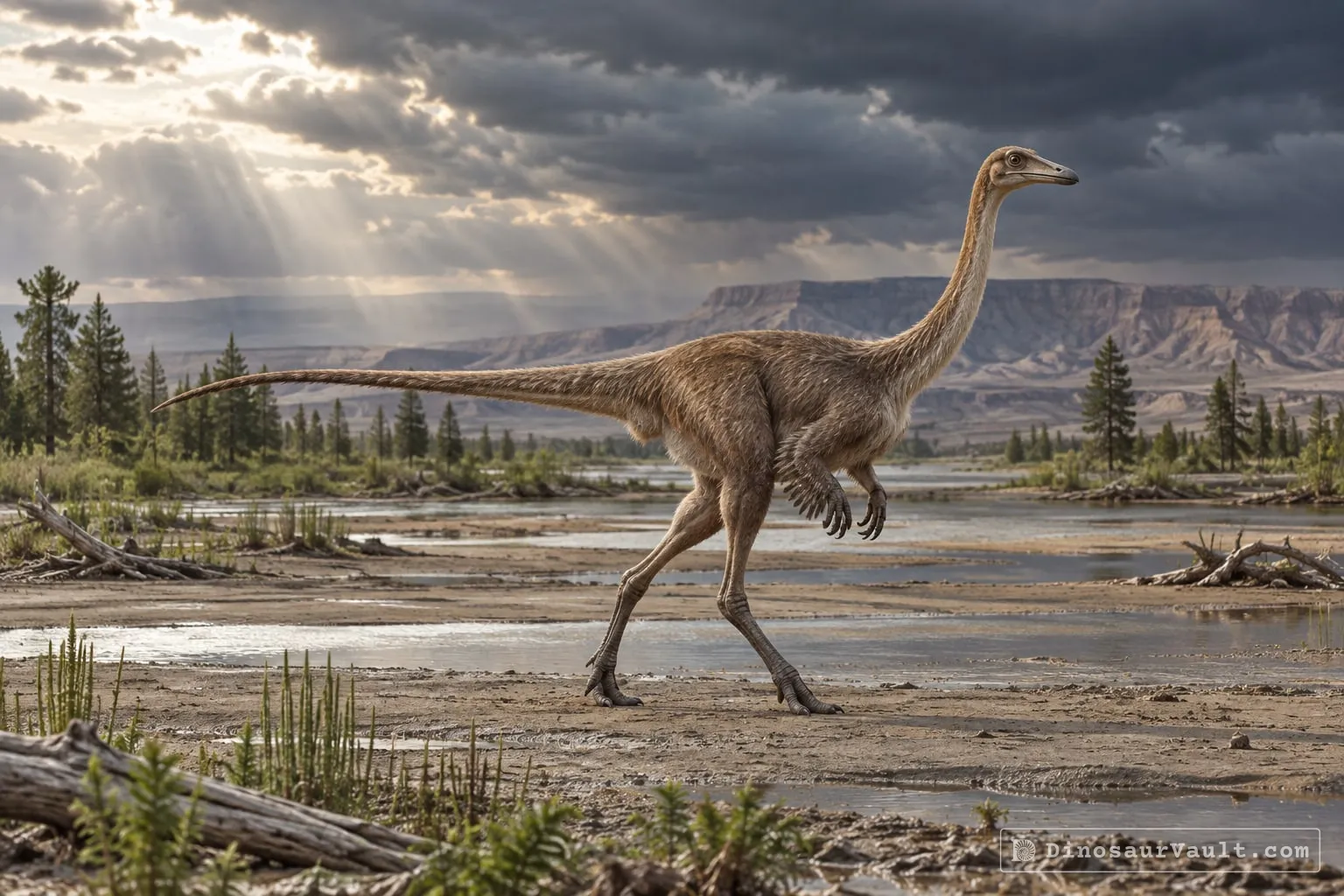
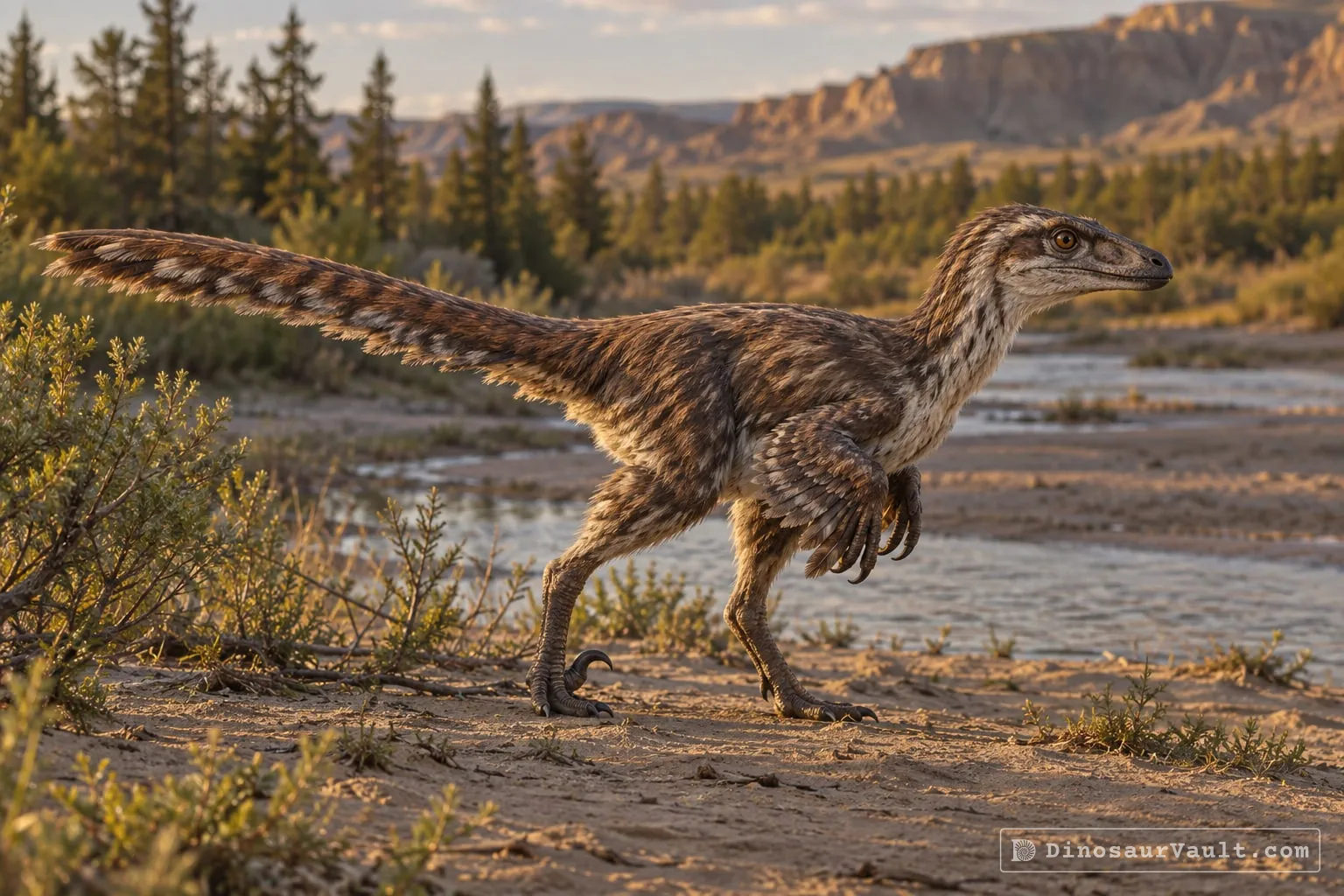
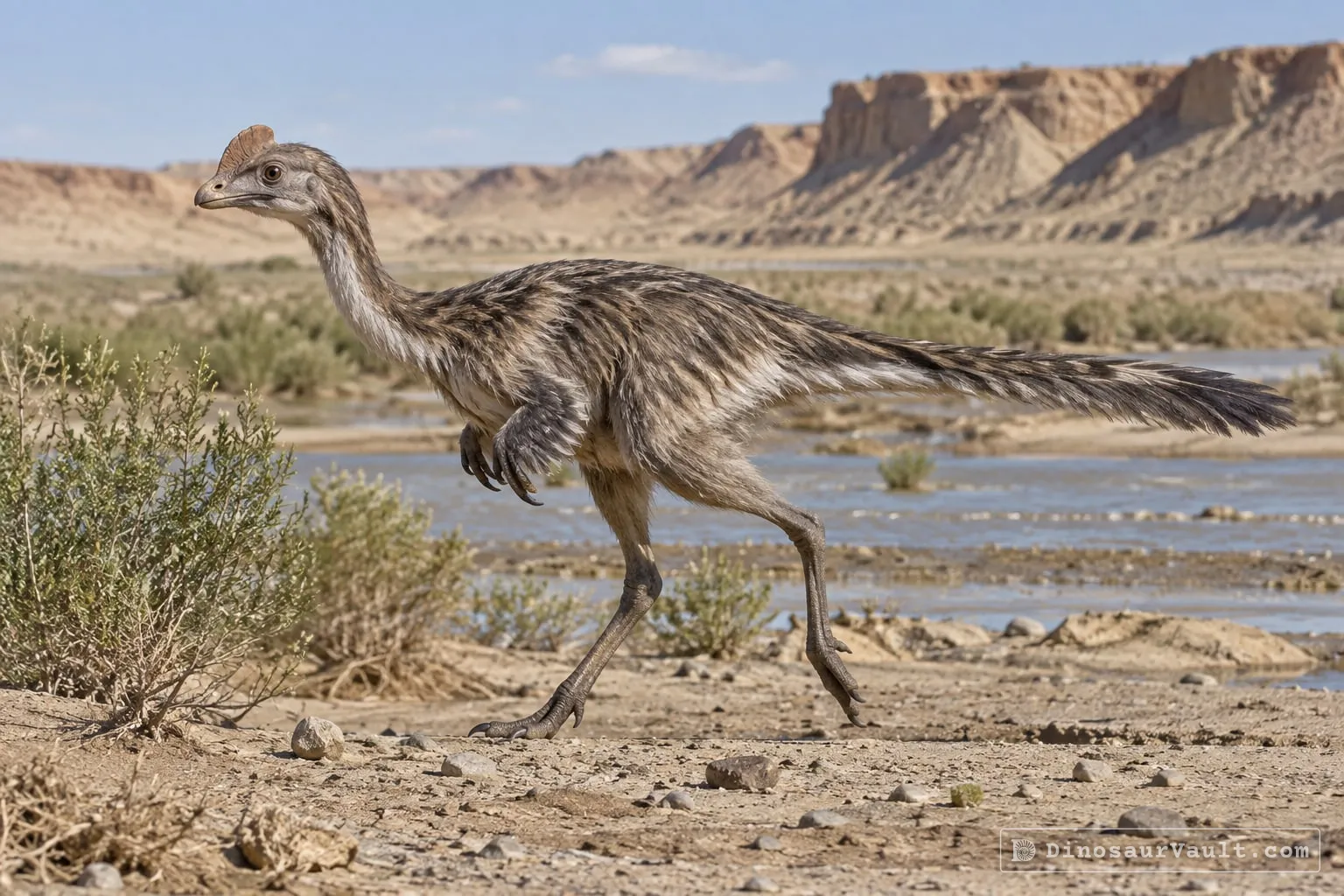
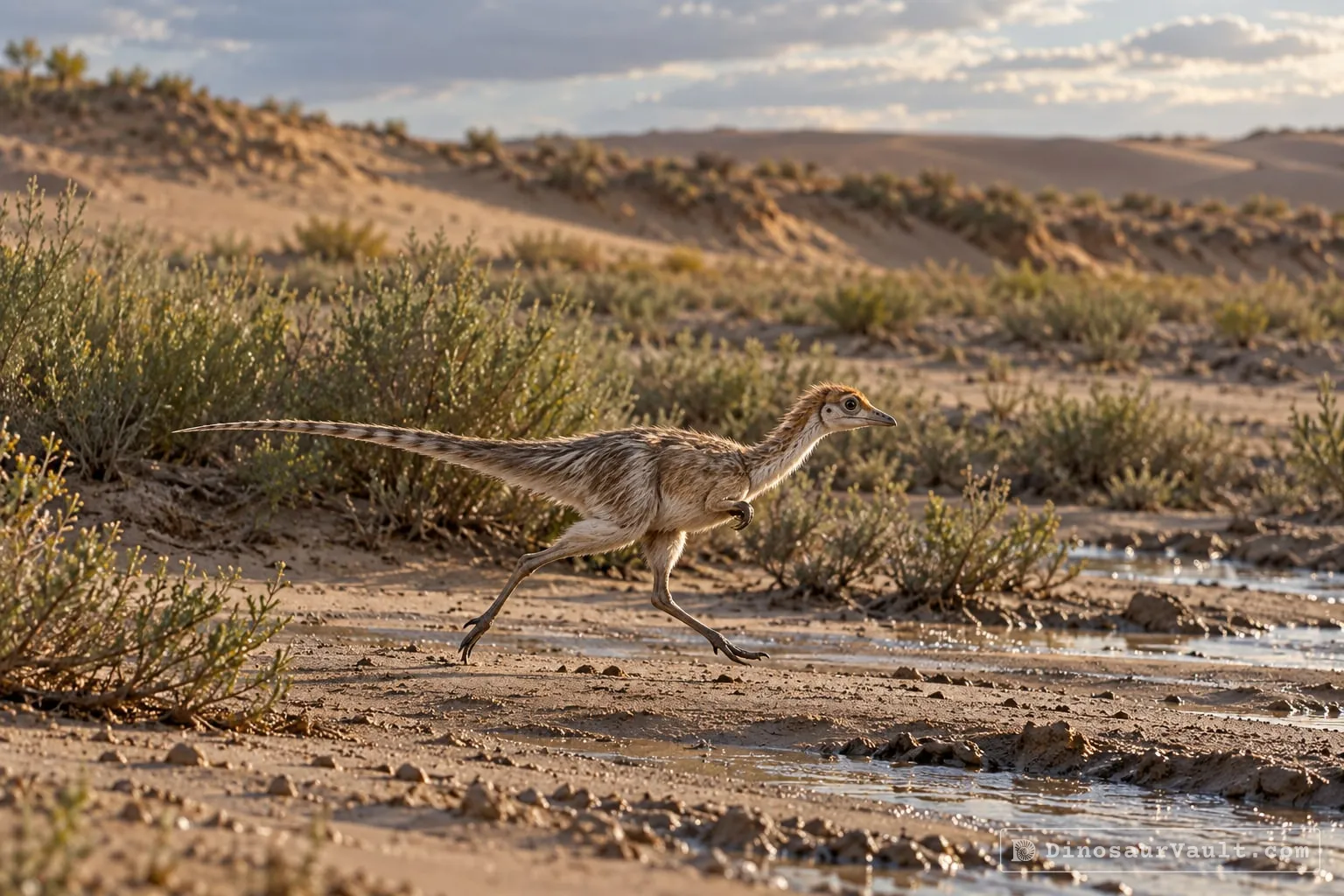


A rock formation can hold fossils laid down millions of years apart, so not every animal here met Saichania.
The evidence
The science behind Saichania
Which parts of the picture come from its own bones, and which come from its relatives.
From its own fossils
- The original skeleton preserves the skull, jaws and front half of the body, with stout arms and short hands.
- Bumpy skull armor, broad rear horns and separate cheek horns give its head a distinctive outline.
- Bands of keeled armor cross the neck and shoulders, with additional plates along the flanks.
Borrowed from relatives
- Pinacosaurus helps restore the missing hips, hind legs and broad hind toes.
- Tarchia supplies a model for the stiff tail handle and blunt club.
Still unknown
- The exact shape of its tail club.
- The complete arrangement of armor across its rear half.
- Its color and how its armor changed as it grew.
Often drawn wrong
- Long, hooked hand claws replace the short, broad tips suggested by its hands.
- A fence of giant side spikes exaggerates its flank armor.
Discovery timeline
- 1977Named itMaryanska
- 2011Close relativeCurrie et al.
- 2014SkullArbour, Currie & Badamgarav
Key papers
The research behind what we know of Saichania
Named it
Named Saichania from an armored skull and the front half of a skeleton with strong arms and preserved neck armor.
Ankylosauridae (Dinosauria) from Mongolia. Palaeontologia Polonica 37: 85-151
No link available
Close relative
Described the hands and broad hind toes of Pinacosaurus, a useful comparison for the missing feet of Saichania.
Hands, Feet, and Behaviour inPinacosaurus(Dinosauria: Ankylosauridae). Acta Palaeontologica Polonica 56: 489-504
Read the paper : Hands, Feet, and Behaviour inPinacosaurus(Dinosauria: Ankylosauridae) (opens in a new tab)Skull
Compared Mongolian armored dinosaurs and clarified the skull features that distinguish Saichania from other ankylosaurs.
The ankylosaurid dinosaurs of the Upper Cretaceous Baruungoyot and Nemegt formations of Mongolia. Zoological Journal of the Linnean Society 172: 631-652
Read the paper : The ankylosaurid dinosaurs of the Upper Cretaceous Baruungoyot and Nemegt formations of Mongolia (opens in a new tab)
Close relatives
Other members of Ankylosauridae


Sources: Wikidata