Outline: a typical theropod
Duonychus
"two claws"
- Lived
- 101 to 84 million years ago, Late Cretaceous
- Diet
- Herbivore
- Group
- Theropods, Therizinosauridae
- Found in
- Mongolia
- Named by
- Kobayashi et al. 2025
Where its fossils were found
The evidence
Today
90 million years ago
Field notes
About Duonychus
What it was like
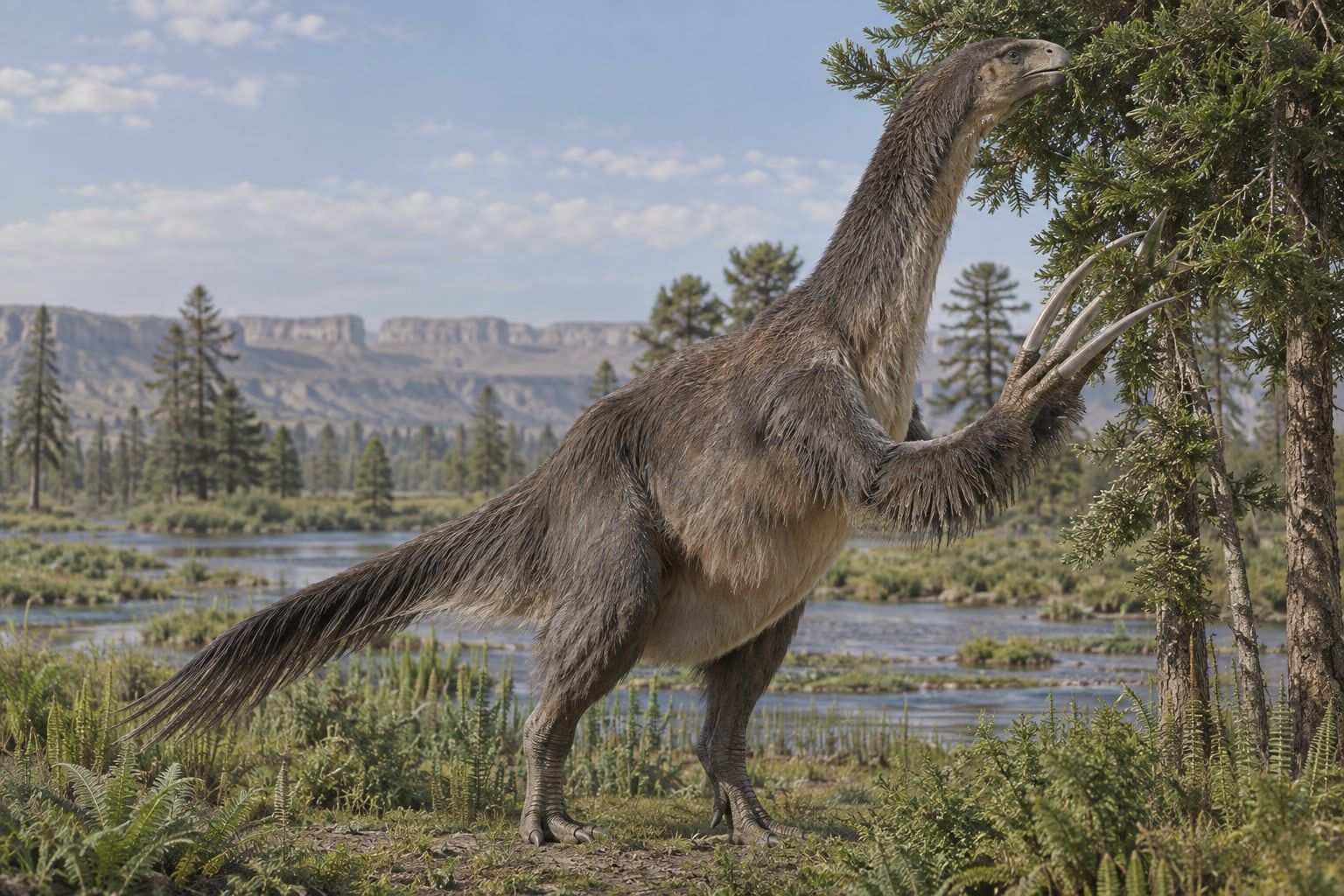
Duonychus was a therizinosaur, a pot-bellied plant eater with a long neck and big claws. Unlike its relatives, which had three fingers, Duonychus had only two fingers on each hand, each tipped with a large, curved claw.
One of its claws still has its horny sheath preserved, which shows that the claw in life was even longer than the bone inside. It may have used its hands to pull branches toward its mouth.
Its world
It lived in the Late Cretaceous in what is now Mongolia. Its fossil comes from the Baynshire Formation, where it shared the land with other therizinosaurs, Segnosaurus and Erlikosaurus, the raptor Achillobator and the armored Talarurus.
How it was found
Kobayashi and colleagues named Duonychus in 2025, from a single partial skeleton.
Lived alongside
Found in the same rock formations
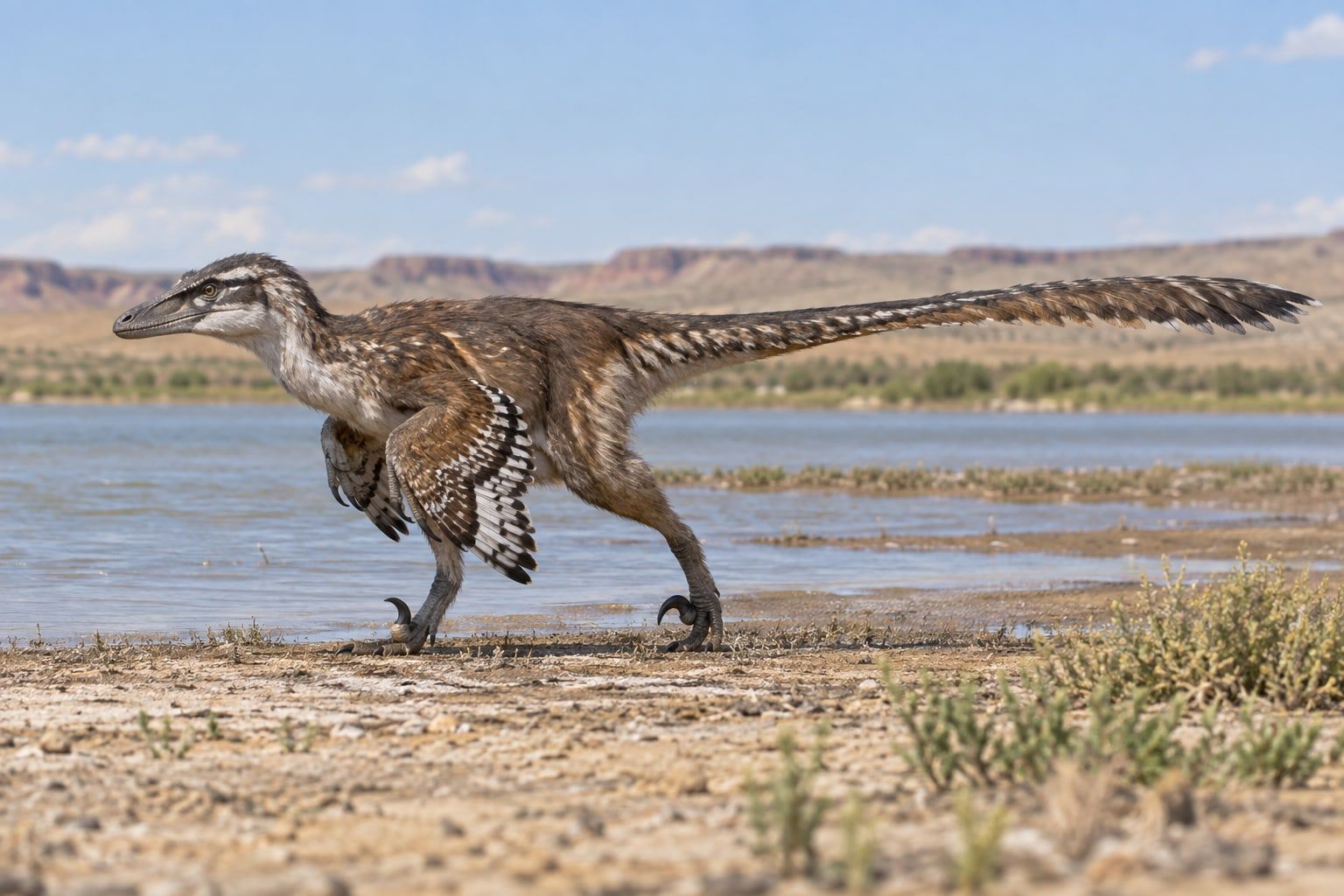
Close relatives
Other members of Therizinosauridae
Sources: WikidataNamed in: Y. Kobayashi, D. K. Zelenitsky, and A. R. Fiorillo, T. Chinzorig. 2025. Didactyl therizinosaur with a preserved keratinous claw from the Late Cretaceous of Mongolia. iScience