Heyuannia
"from Heyuan"
Type species Heyuannia huangi
- Lived
- 84 to 66 million years ago, Late Cretaceous
- Diet
- Omnivore
- Length
- about 2 m (7 ft)
- Group
- Theropods, Oviraptoridae
- Found in
- China and Mongolia
- Named by
- Lü 2003
Size comparison
To scale

Scale in metersOutline: typical theropod shape
Where its fossils were found
The evidence
Today

75 million years ago
Habitat
The Mongolian species lived in a dry landscape with windblown sand and nearby streams. Nemegtomaia and Tarchia are also known from the Baruungoyot Formation.
Field notes
About Heyuannia
What it was like
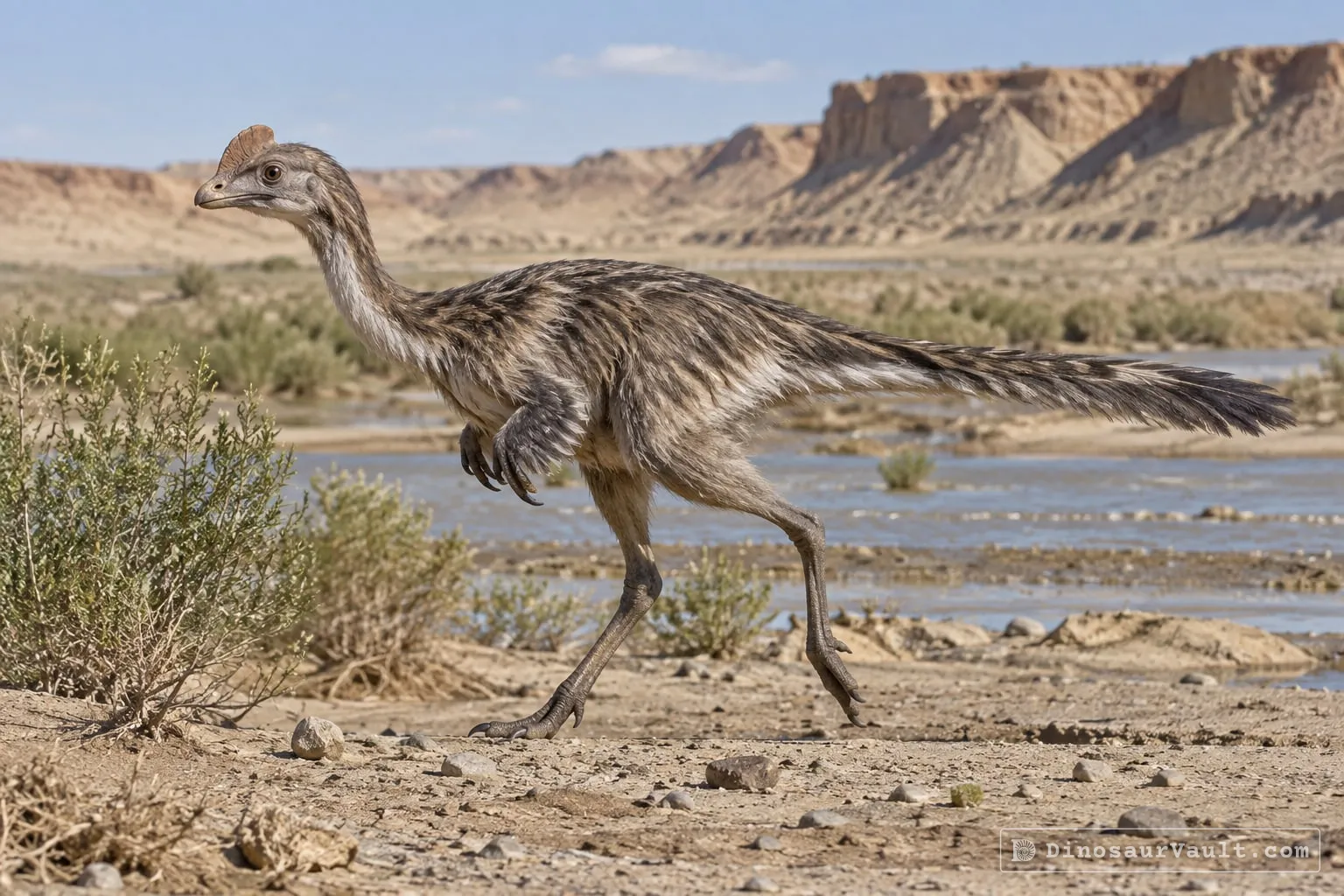
Heyuannia was an oviraptor about 2 meters (7 feet) long, with a toothless beak and no crest. It had short arms with a reduced first finger.
Nests of eggs found in the same rocks in China are thought to belong to it, and a study of them suggests their shells were blue-green.
Its world
It lived in the Late Cretaceous in what is now southern China, with a second species from Mongolia. In China its bones come from the Dongyuan Formation, and in Mongolia from the Baruungoyot Formation.
How it was found
Lü named Heyuannia in 2003. It was the first oviraptor found in China.
Field gallery
More views of Heyuannia
Scenes reconstructed from the available fossil evidence.
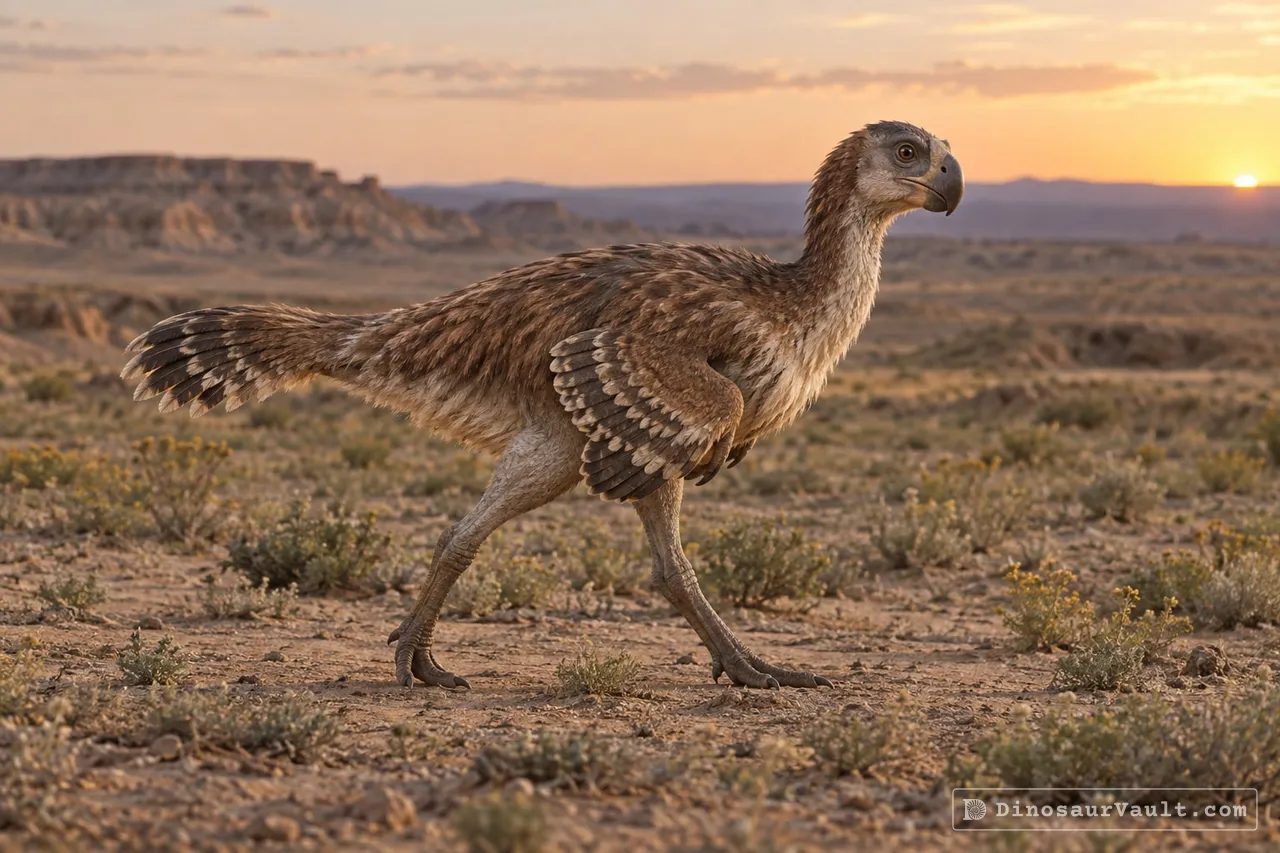
Lived alongside
Found in the same rock formations
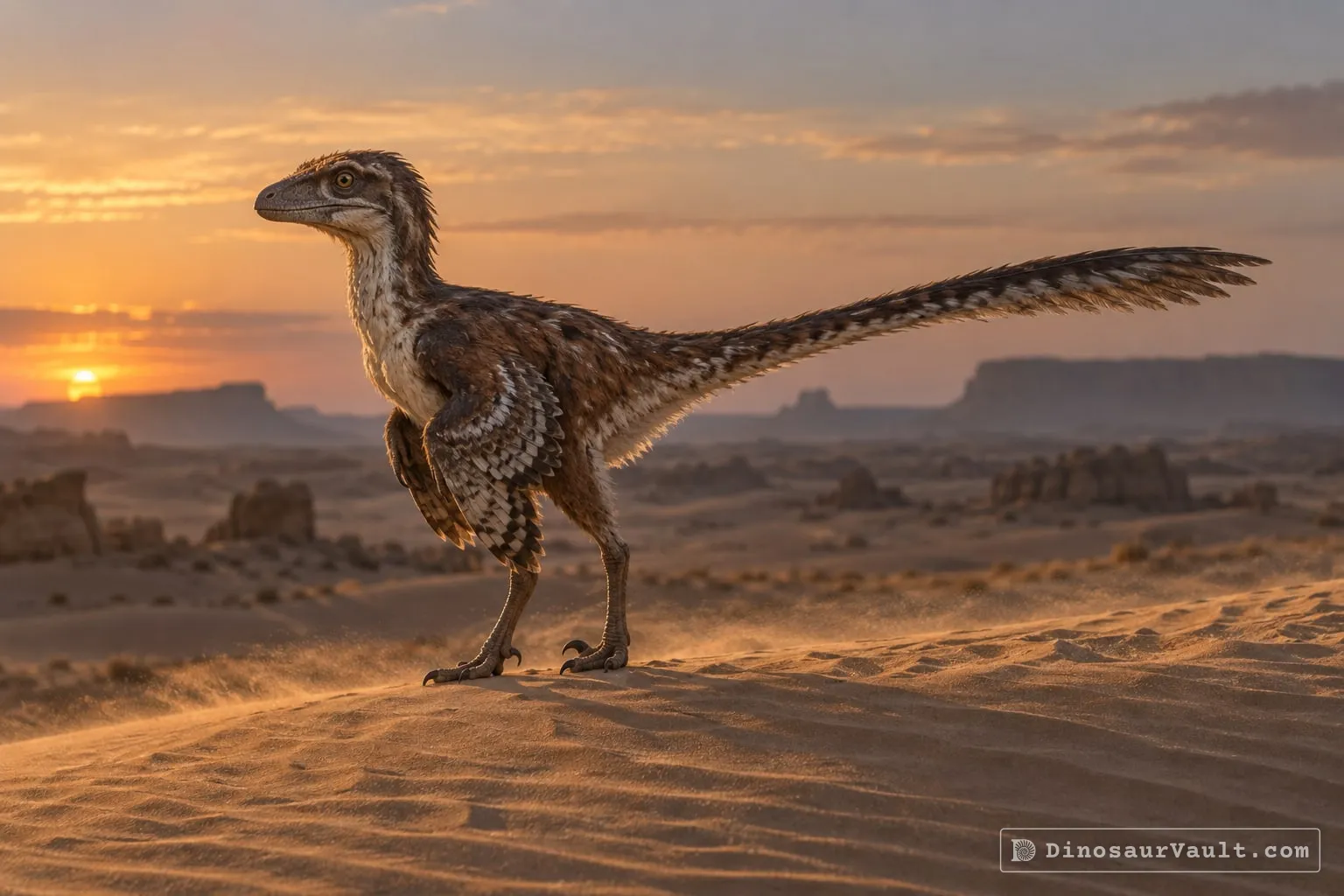
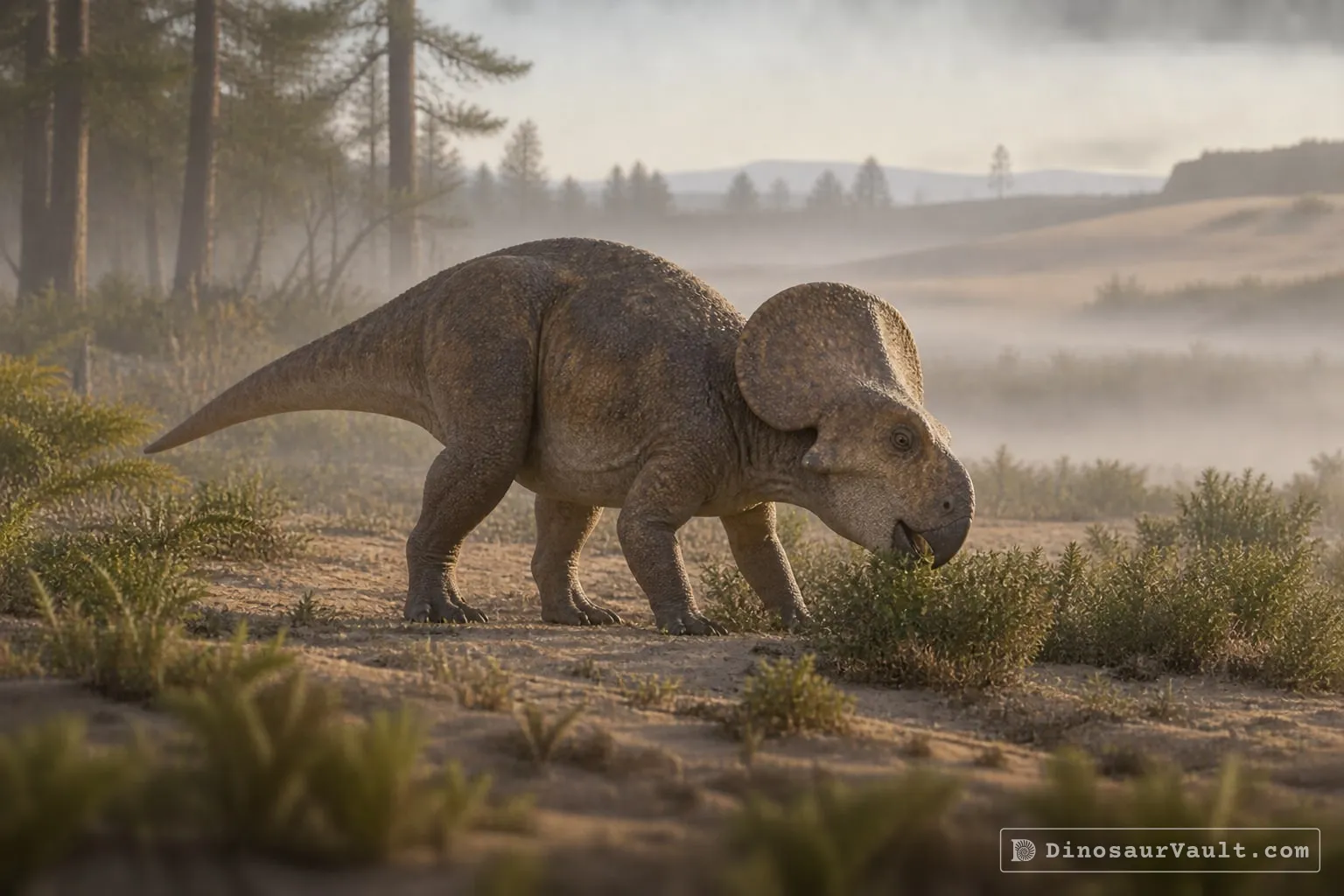
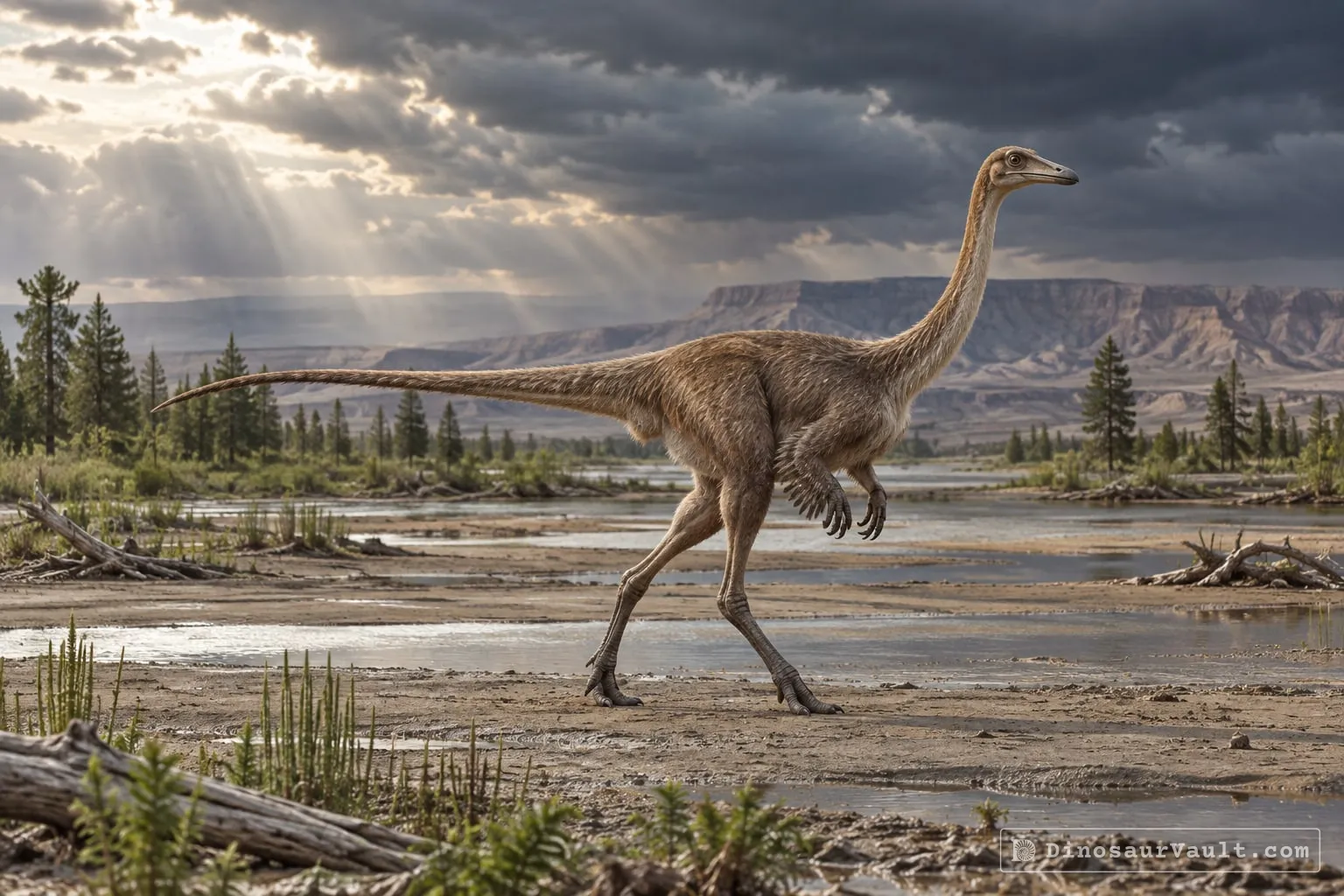
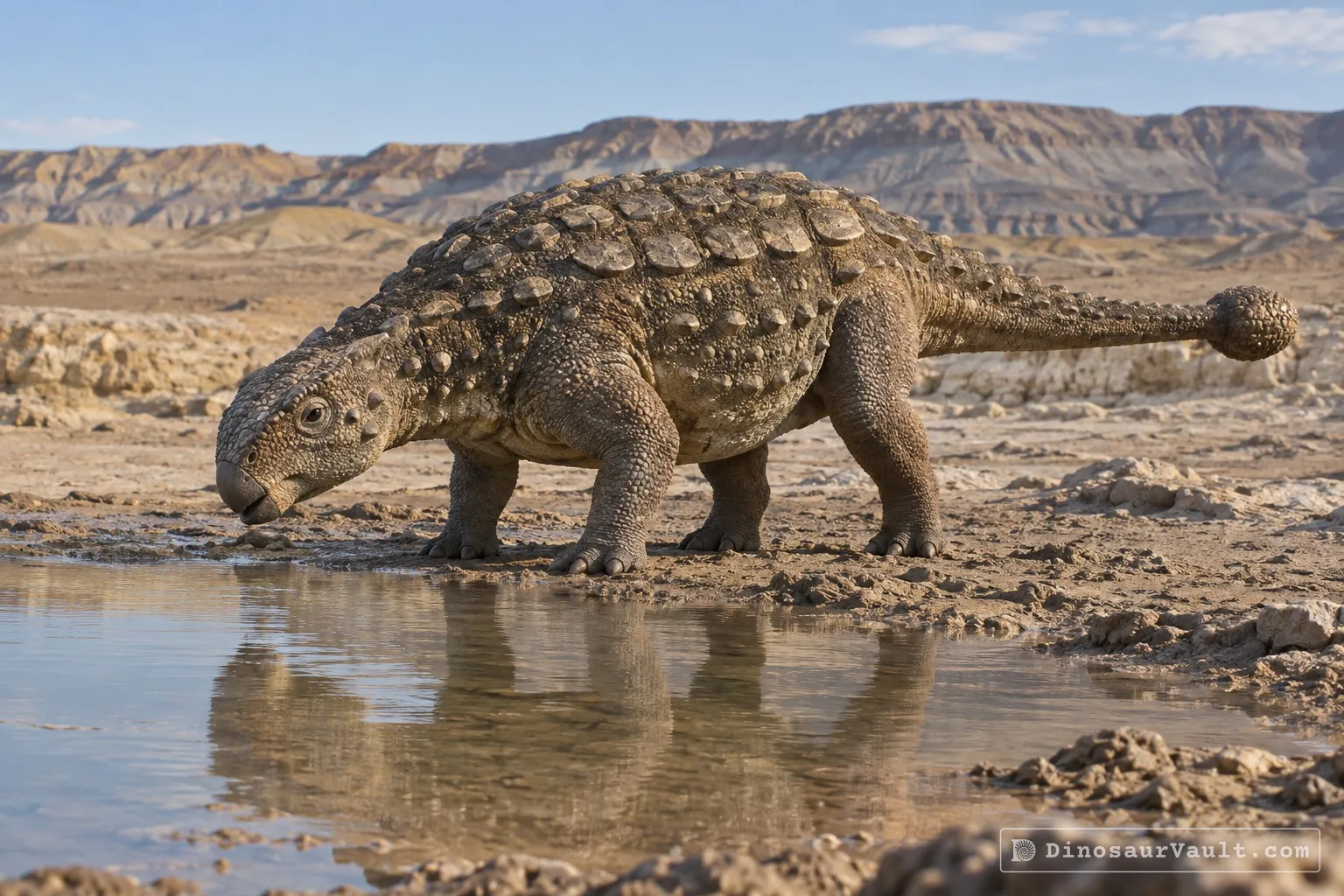
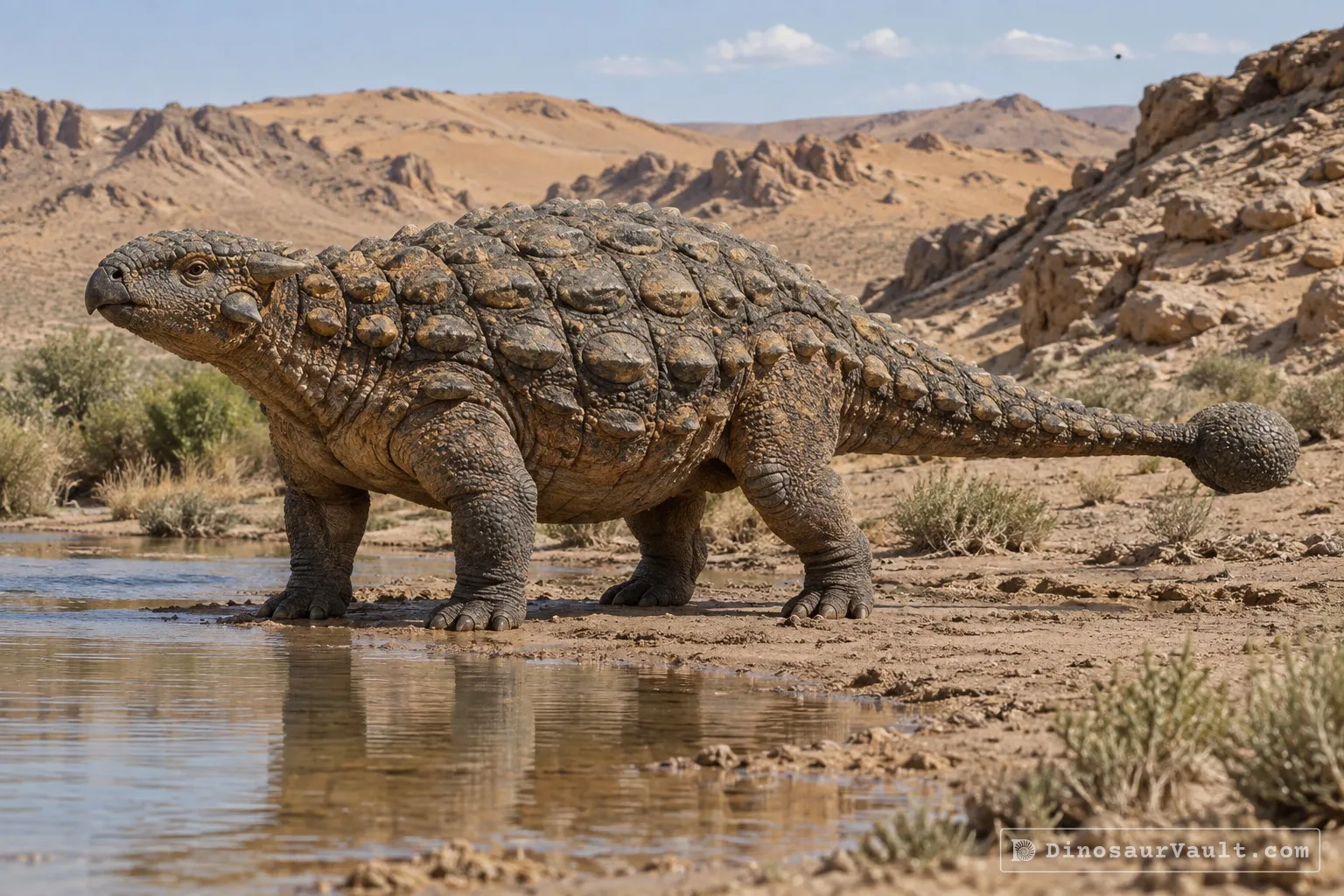
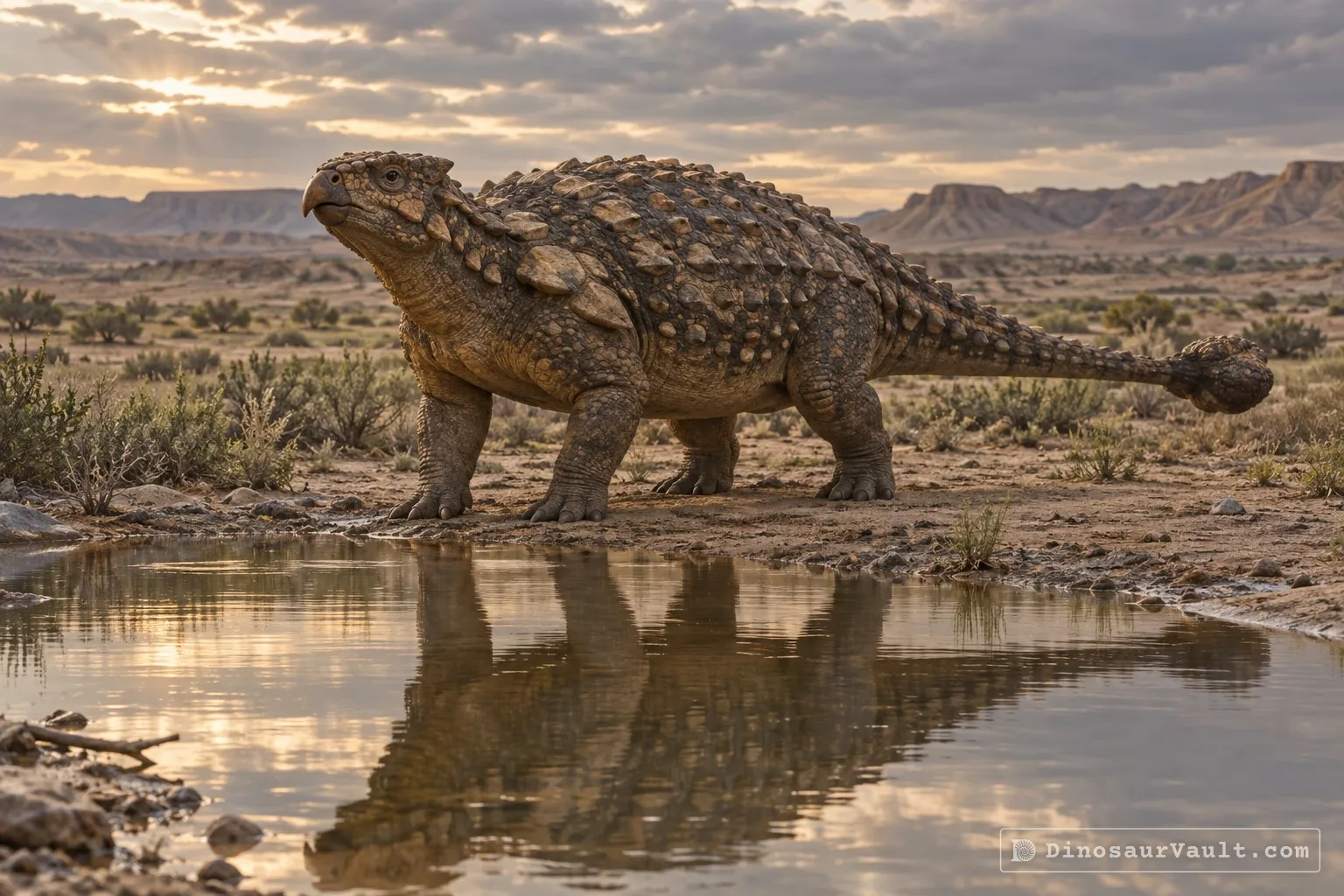
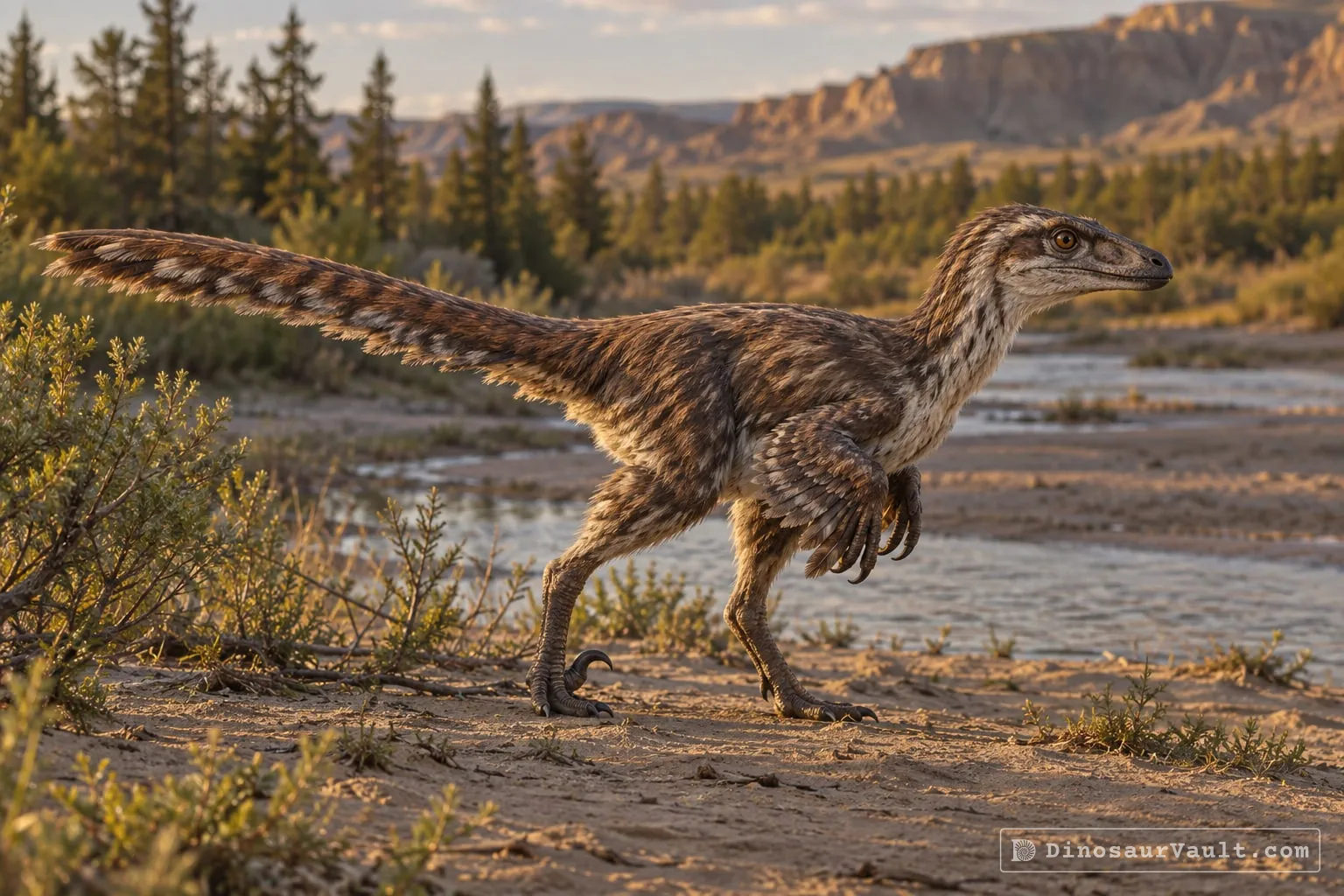


A rock formation can hold fossils laid down millions of years apart, so not every animal here met Heyuannia.
The evidence
The science behind Heyuannia
Which parts of the picture come from its own bones, and which come from its relatives.
From its own fossils
- Its skull has toothless jaws and lacks a bony crest.
- Well-preserved wrist bones allowed the hand to fold sharply toward the forearm.
- Eggshells attributed to Heyuannia preserve pigments that suggest blue-green eggs.
Borrowed from relatives
- Its feathers are restored by comparison with feathered oviraptorosaurs such as Caudipteryx.
- Brooding poses in relatives such as Nemegtomaia suggest that Heyuannia may have spread its arms over a nest.
Still unknown
- Its feather colors and markings.
- Which foods made up most of its diet.
- How its plumage changed as it grew.
Discovery timeline
- 1998Close relativeQiang et al.
- 2003Named itLü
- 2012Same rocksFanti, Currie & Badamgarav
- 2017Growing upWiemann et al.
- 2024PostureQiu et al.
Key papers
The research behind what we know of Heyuannia
Close relative
Described feathers in Caudipteryx, a relative that helps guide restorations of Heyuannia's plumage.
Two feathered dinosaurs from northeastern China. Nature 393: 753-761
Read the paper : Two feathered dinosaurs from northeastern China (opens in a new tab)Named it
Named Heyuannia from a skeleton found in southern China.
A new oviraptorosaurid (Theropoda: Oviraptorosauria) from the Late Cretaceous of southern China. Journal of Vertebrate Paleontology 22: 871-875
Read the paper : A new oviraptorosaurid (Theropoda: Oviraptorosauria) from the Late Cretaceous of southern China (opens in a new tab)Same rocks
Described Nemegtomaia on a nest and the sandy environments that also housed other oviraptorids.
New Specimens of Nemegtomaia from the Baruungoyot and Nemegt Formations (Late Cretaceous) of Mongolia. PLoS ONE 7: e31330
Read the paper : New Specimens of Nemegtomaia from the Baruungoyot and Nemegt Formations (Late Cretaceous) of Mongolia (opens in a new tab)Growing up
Found preserved pigments in eggs attributed to Heyuannia and reconstructed blue-green shells and partially open nests.
Dinosaur origin of egg color: oviraptors laid blue-green eggs. PeerJ 5: e3706
Read the paper : Dinosaur origin of egg color: oviraptors laid blue-green eggs (opens in a new tab)Posture
Described wrist bones that let Heyuannia fold its hands sharply toward its forearms, much like living birds.
The osteology of the wrist of Heyuannia huangi (Oviraptorosauria) and its implications for the wrist folding mechanism. PeerJ 12: e17669
Read the paper : The osteology of the wrist of Heyuannia huangi (Oviraptorosauria) and its implications for the wrist folding mechanism (opens in a new tab)
Close relatives
Other members of Oviraptoridae


Sources: Wikidata