Shri
Type species Shri devi
- Lived
- 84 to 72 million years ago, Late Cretaceous
- Diet
- Carnivore
- Group
- Theropods, Dromaeosauridae
- Found in
- Mongolia
- Named by
- Turner et al. 2021
Where its fossils were found
The evidence
Today

80 million years ago
Habitat
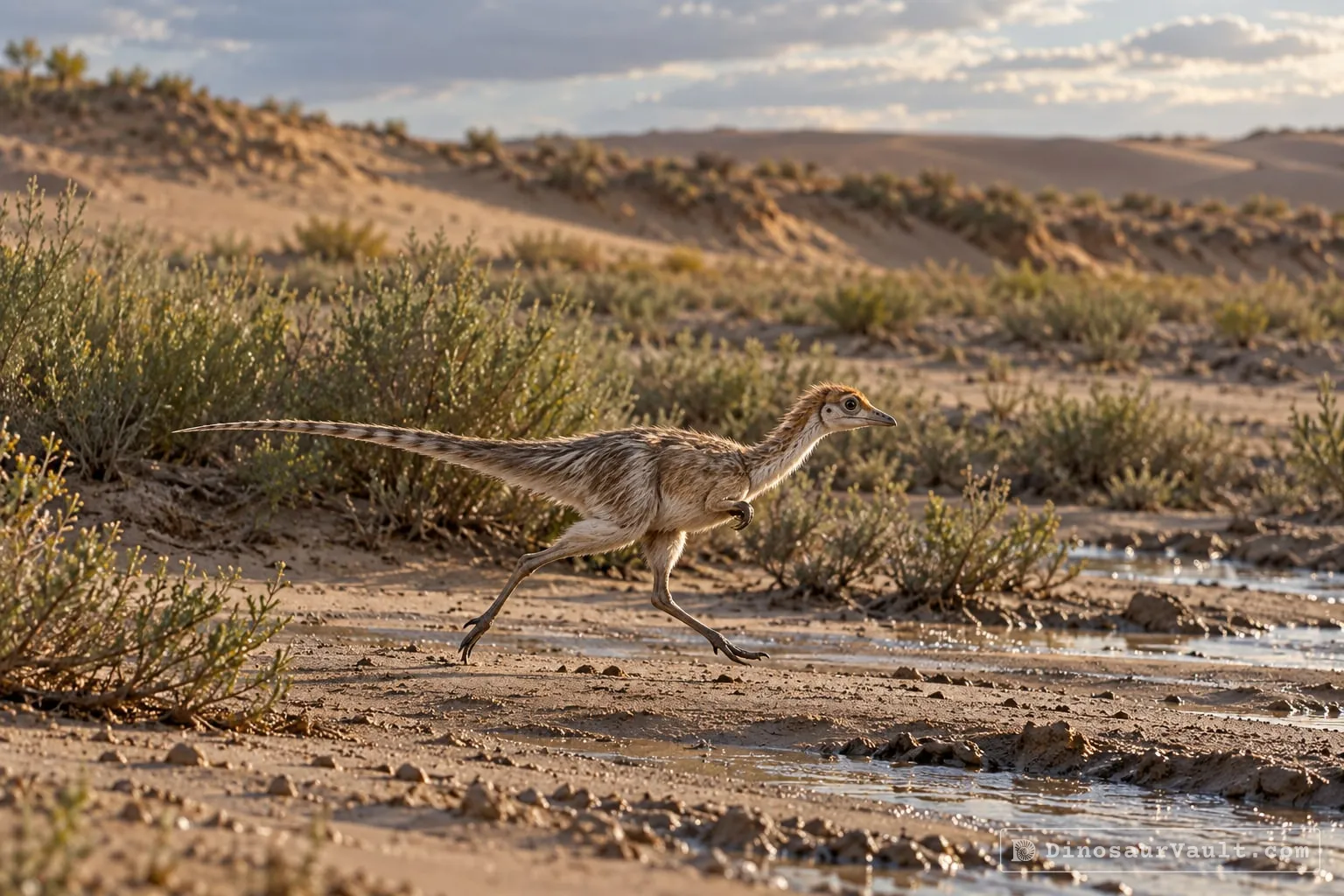
Shri devi lived in a dry, sandy landscape in Mongolia, with more moisture than the nearby dune habitats known for Velociraptor. Saichania, Tarchia and Avimimus also come from the Baruungoyot Formation.
Field notes
About Shri
What it was like
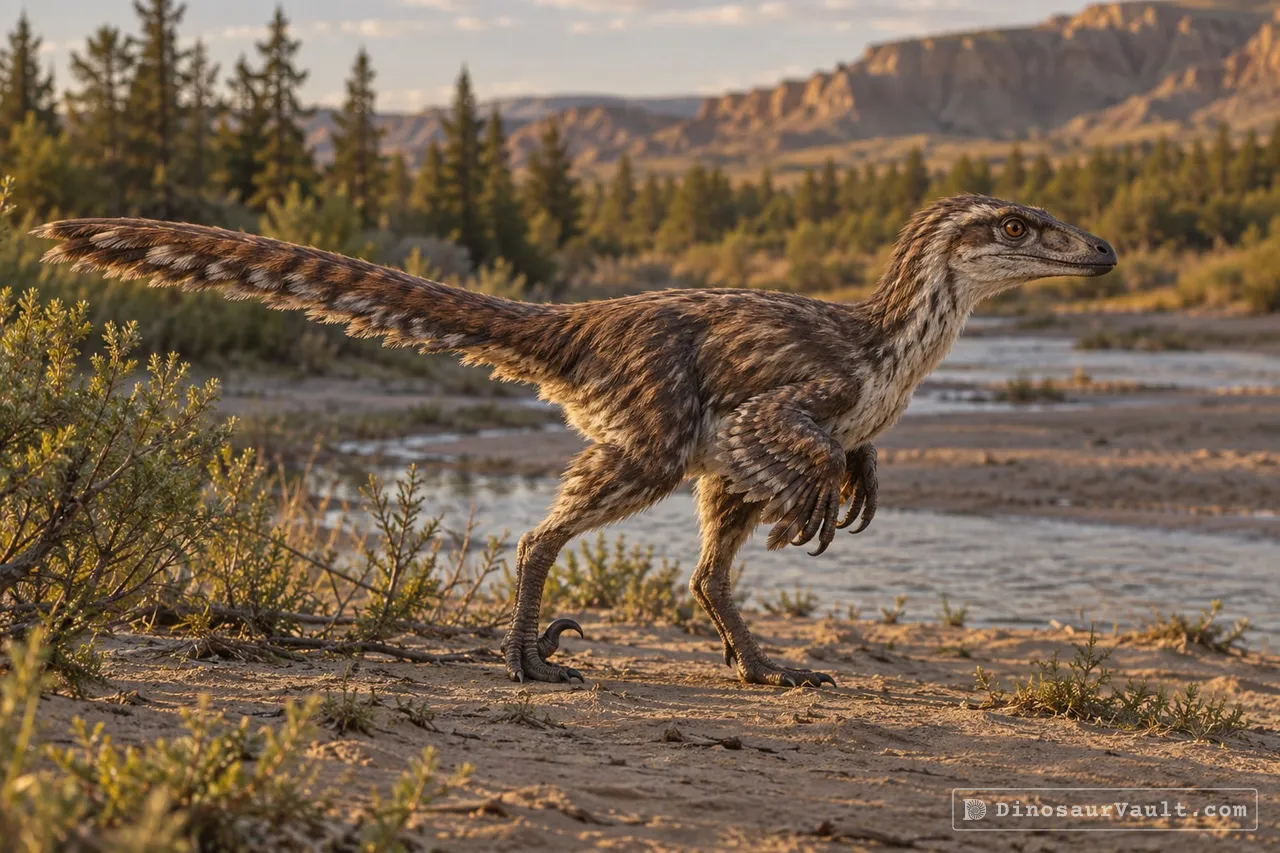
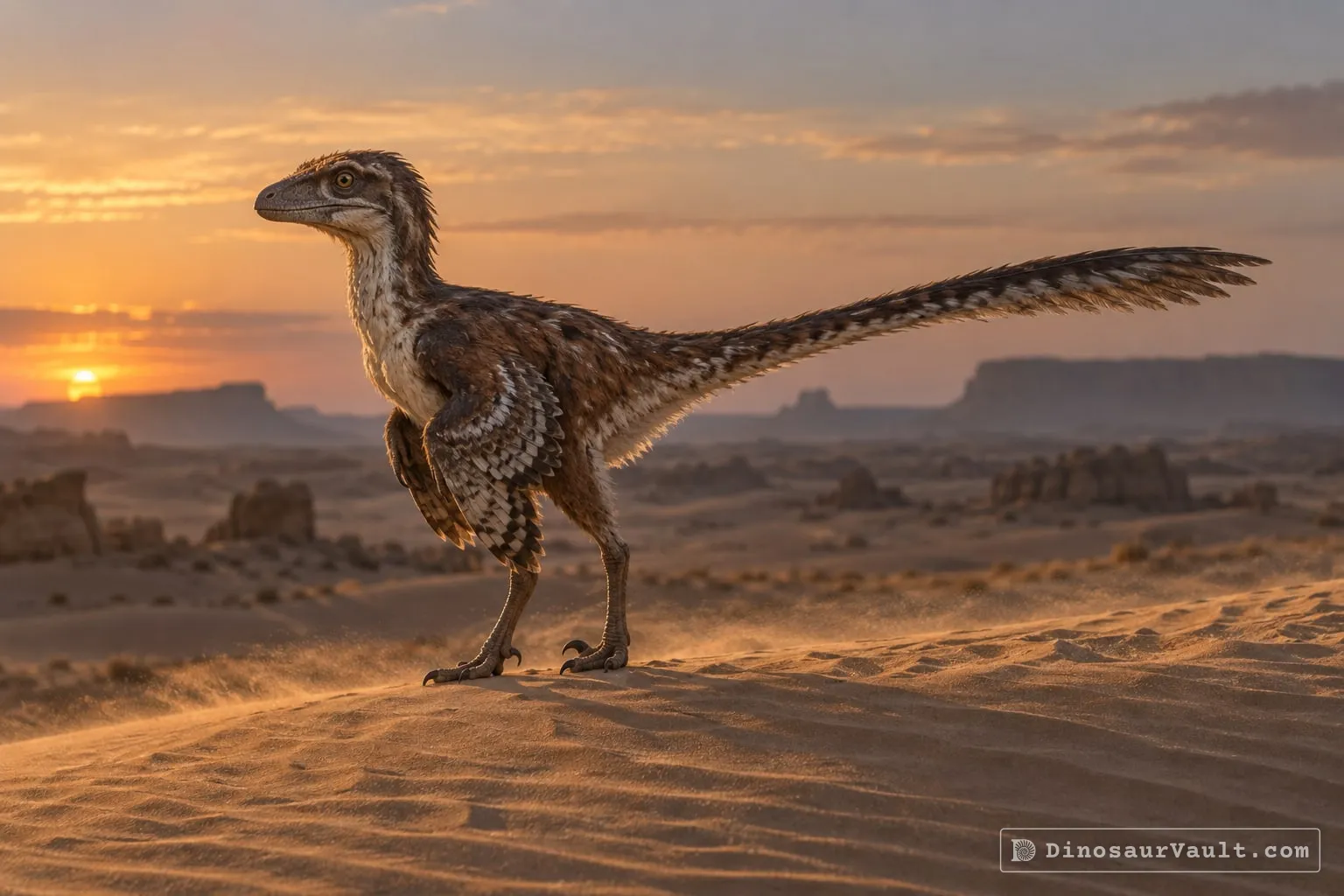
Shri was a small dromaeosaur, a feathered hunter close to Velociraptor. It had a sickle claw on each foot and, like its relatives, was probably covered in feathers.
Its world
It lived in the Late Cretaceous, in what is now Mongolia. It comes from the Baruungoyot Formation, a dry land shared with the armored Saichania and Tarchia and the small bird-like Avimimus.
How it was found
Turner and colleagues named Shri in 2021. The type species is Shri devi, named after a deity.
Field gallery
More views of Shri
Scenes reconstructed from the available fossil evidence.
Lived alongside
Found in the same rock formations
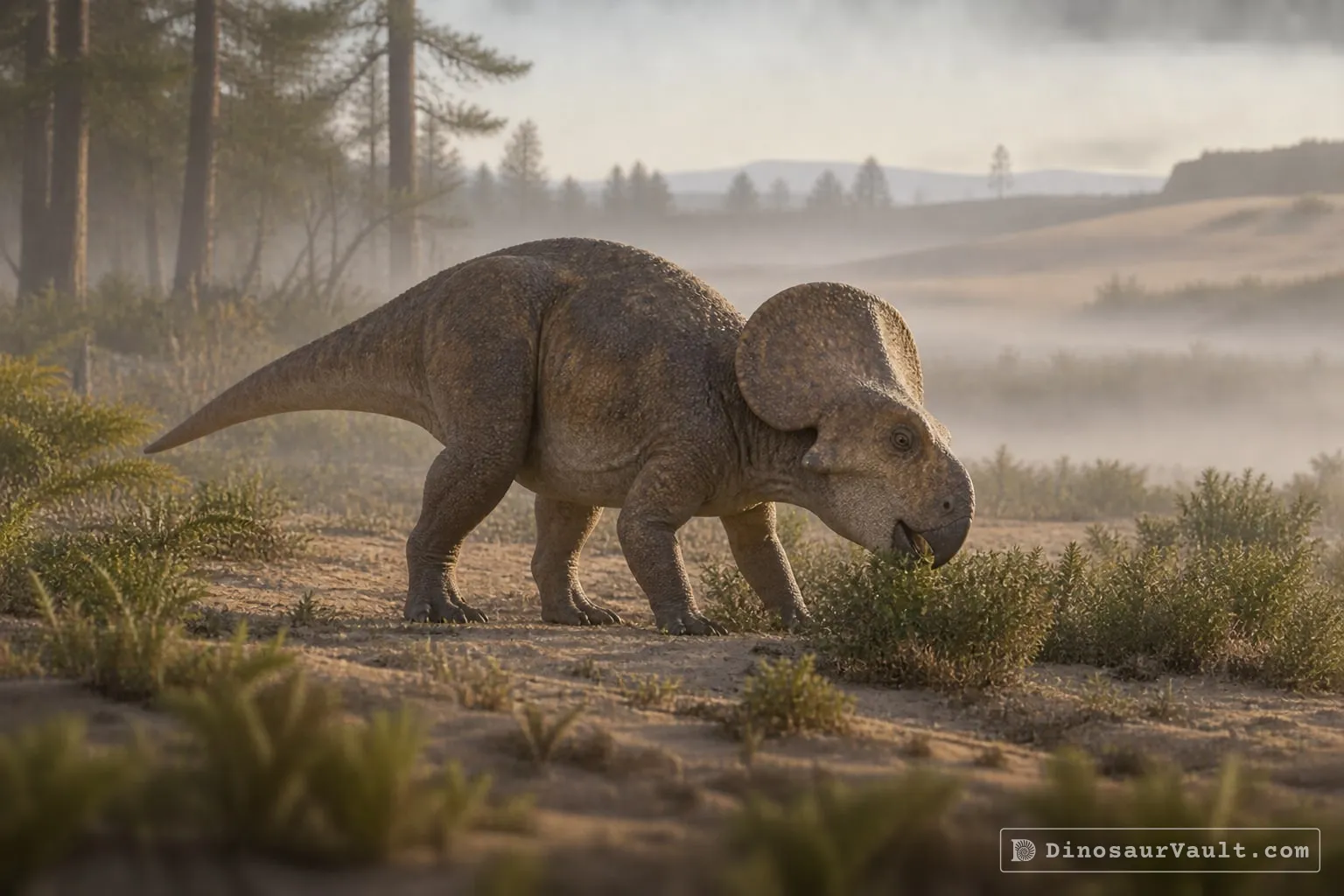
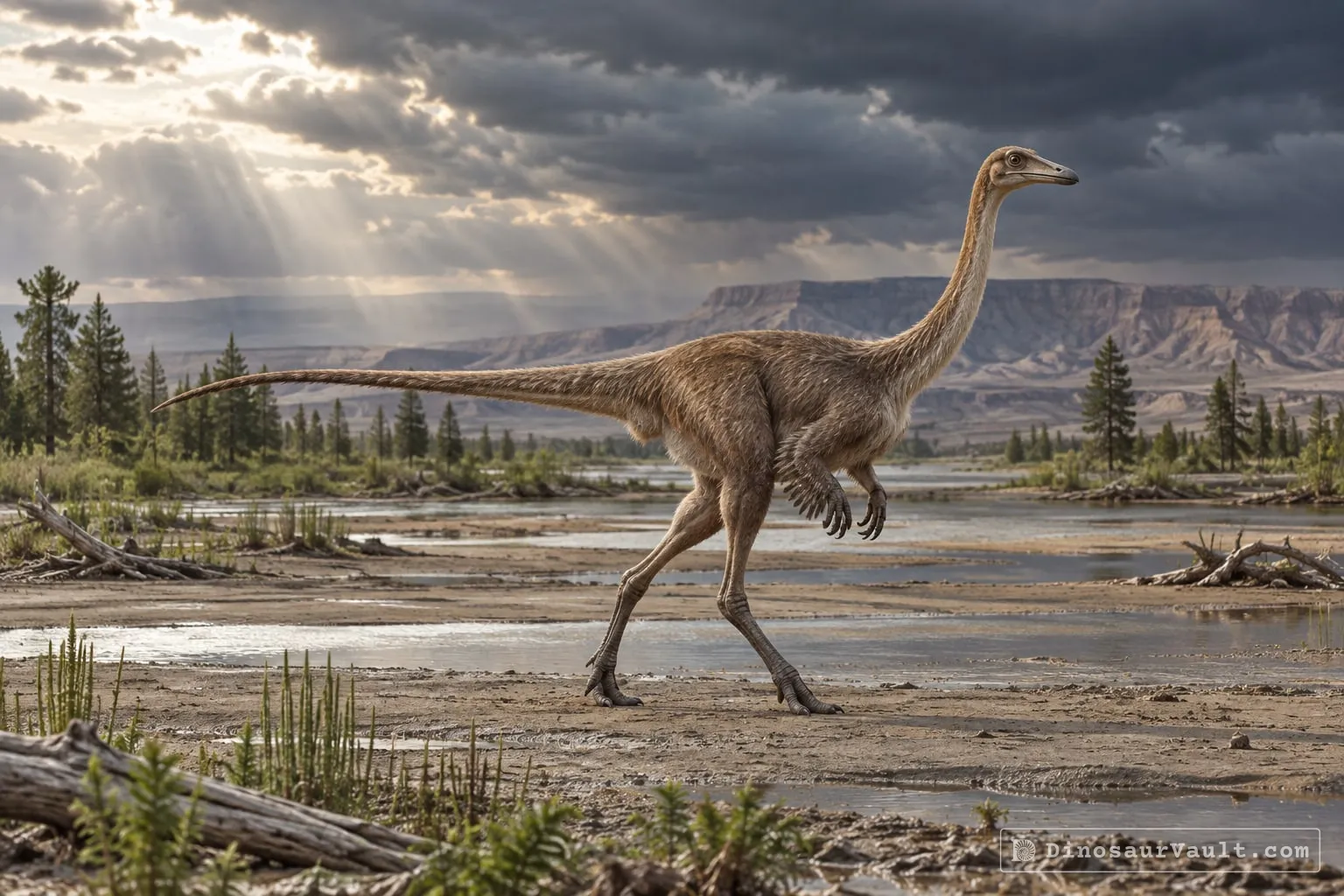
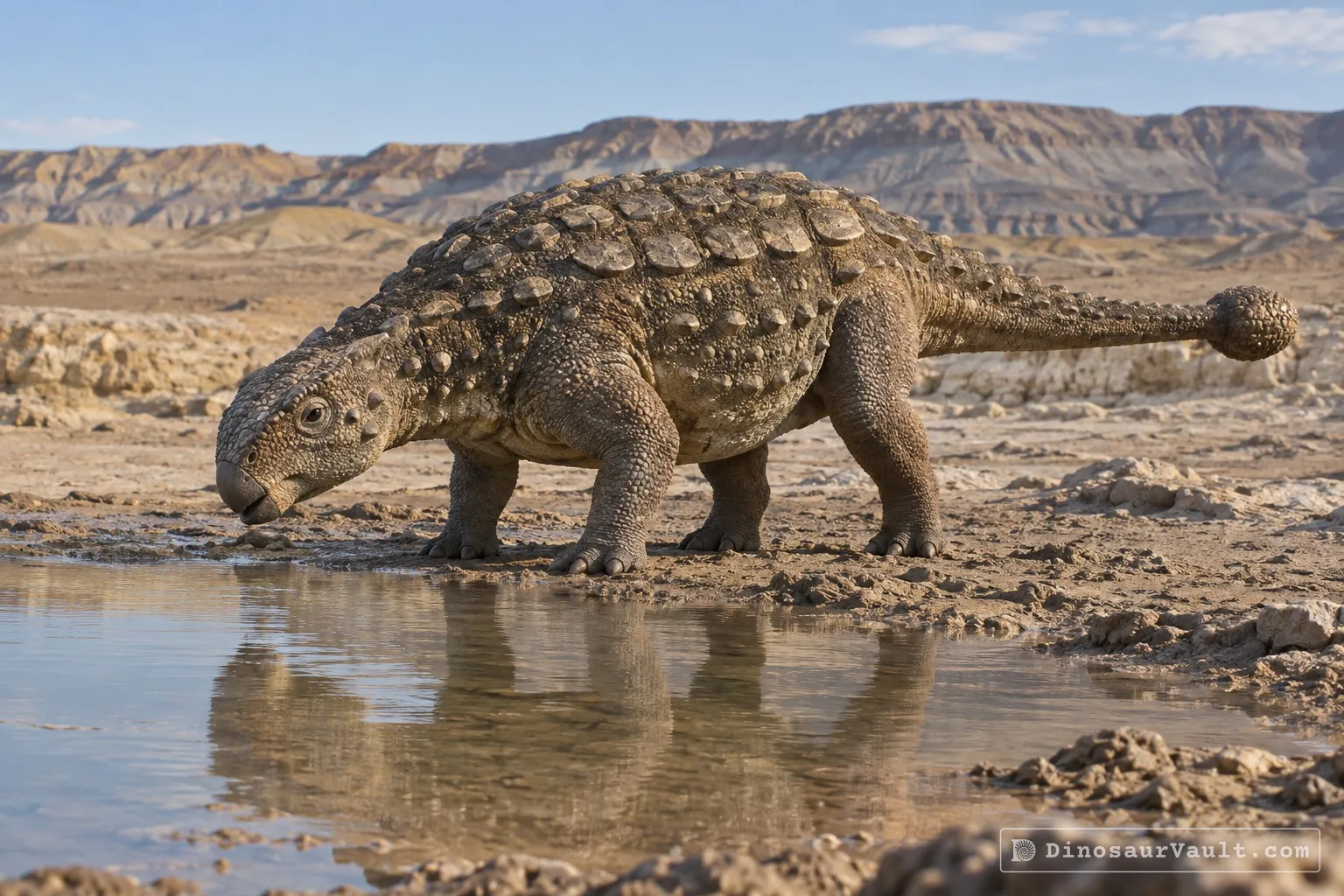
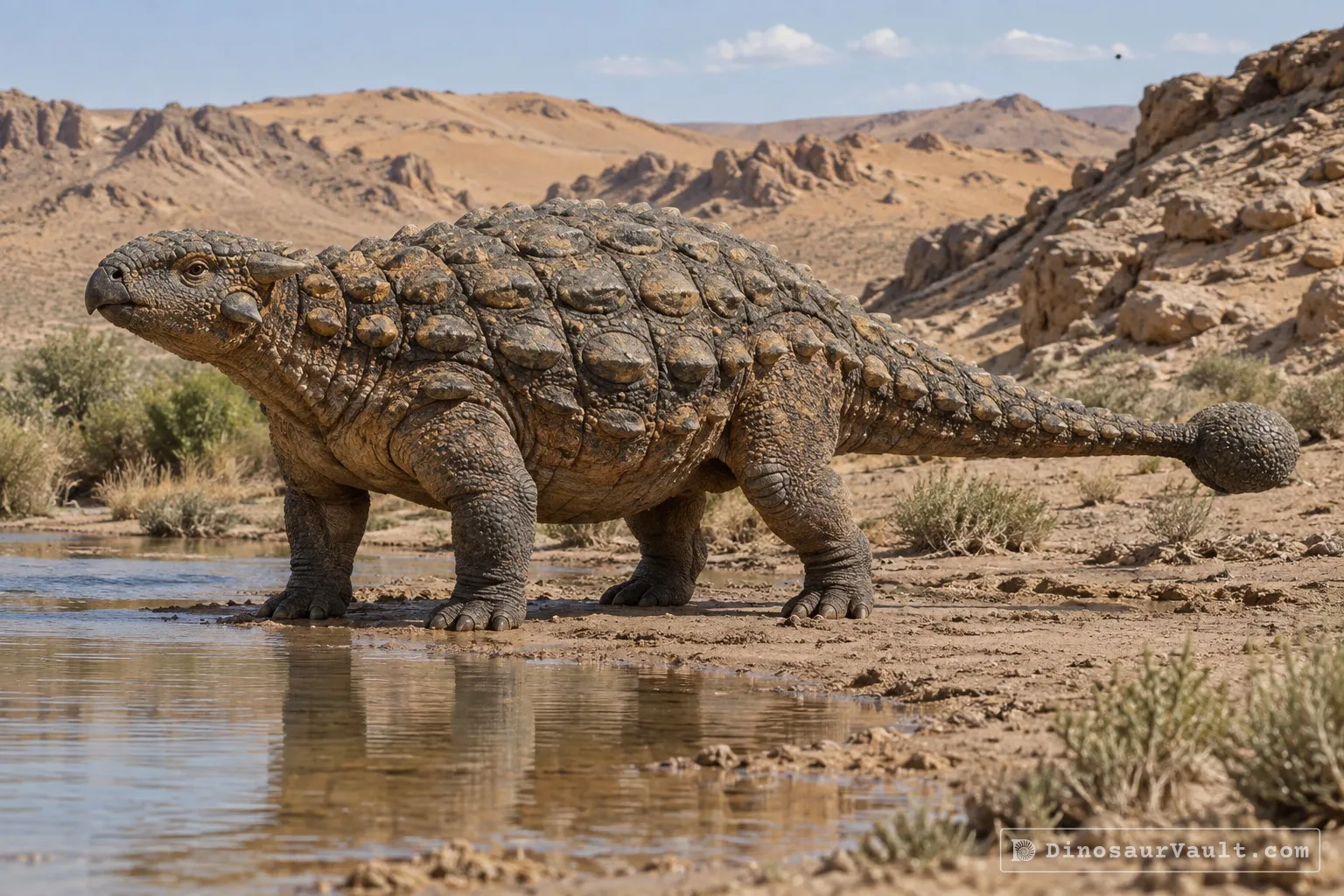
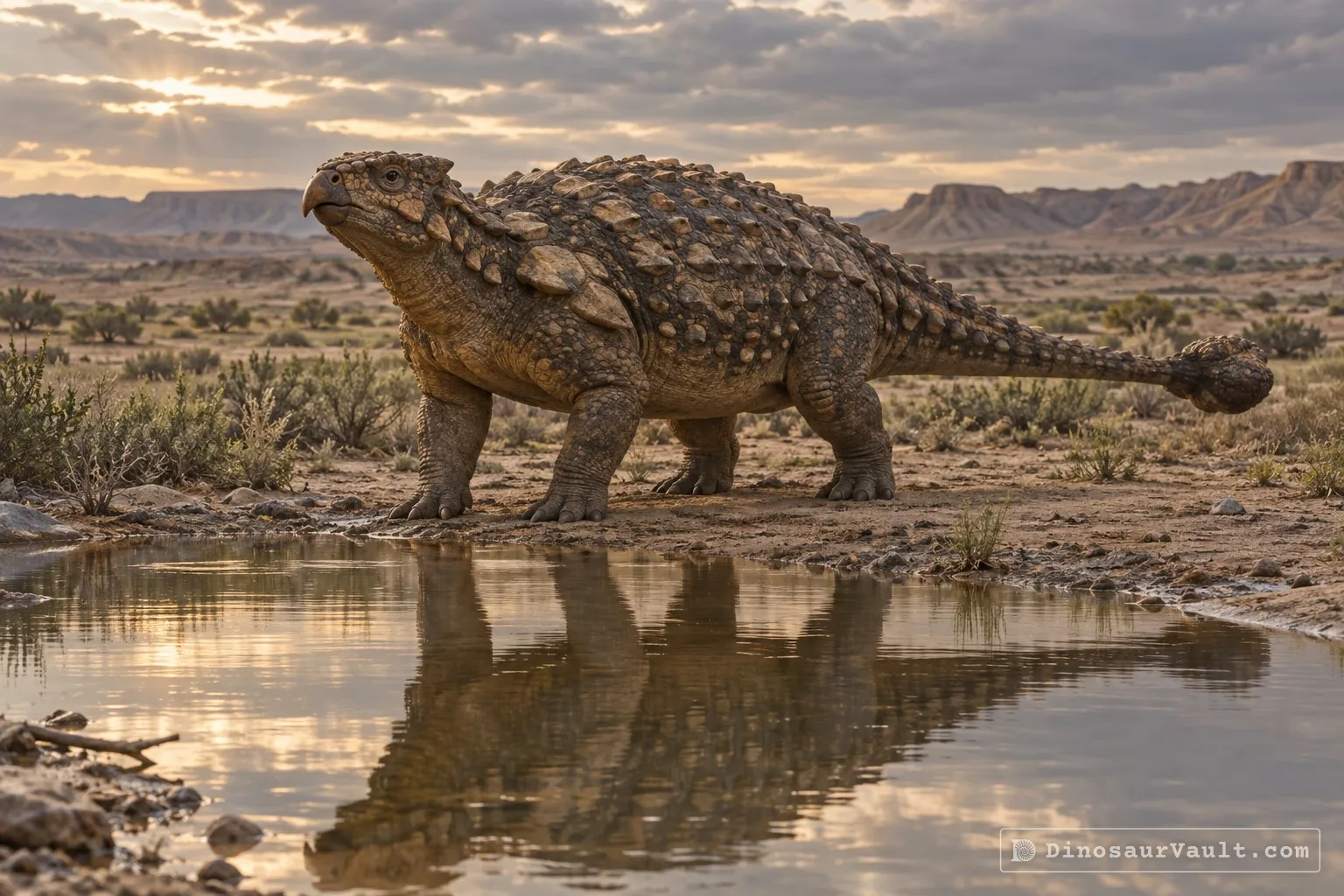
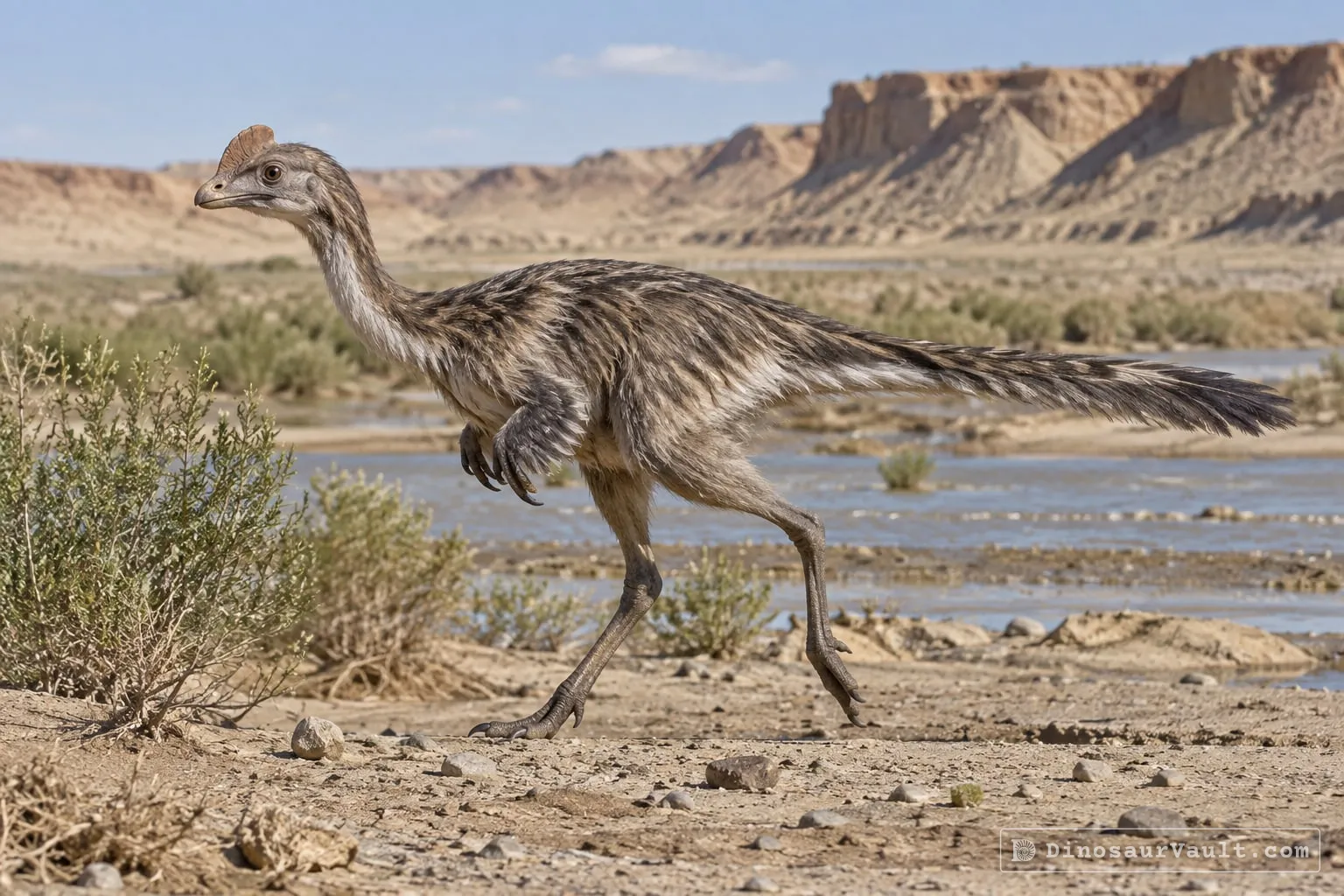


A rock formation can hold fossils laid down millions of years apart, so not every animal here met Shri.
The evidence
The science behind Shri
Which parts of the picture come from its own bones, and which come from its relatives.
From its own fossils
- The type specimen of Shri devi preserves hind limbs, the pelvis and parts of the backbone.
- A separate partial skull and foot were referred to Shri devi; the middle of the face is relatively short and low, and the foot has an enlarged sickle claw on the second toe.
- A separate specimen named Shri rapax preserves an exceptionally robust hand with a stout thumb and a large thumb claw.
Borrowed from relatives
- Feathers on Shri are inferred from relatives such as Zhenyuanlong.
- Missing parts of the face are compared with Velociraptor, and neck, trunk and shoulder connections with Zhenyuanlong.
Still unknown
- Its feather colors and patterns.
- Its usual prey and hunting behavior.
- How its proportions changed as it grew.
Discovery timeline
- 2007SkinTurner, Makovicky & Norell
- 2015SkinLü & Brusatte
- 2021Named itTurner, Montanari & Norell
- 2023SkullCzepiński
- 2025New findMoutrille et al.
Key papers
The research behind what we know of Shri
Skin
Identified feather attachment points on a Velociraptor arm bone.
Feather quill knobs in the dinosaur Velociraptor. Science 317: 1721
Read the paper : Feather quill knobs in the dinosaur Velociraptor (opens in a new tab)Skin
Described Zhenyuanlong with feathers preserved on the neck, back and arms, a comparison for inferred feather covering in Shri.
A large, short-armed, winged dromaeosaurid (Dinosauria: Theropoda) from the Early Cretaceous of China and its implications for feather evolution. Scientific Reports 5
Read the paper : A large, short-armed, winged dromaeosaurid (Dinosauria: Theropoda) from the Early Cretaceous of China and its implications for feather evolution (opens in a new tab)Named it
Named a relative of Velociraptor from a partial skeleton with distinctive vertebrae and an enlarged foot claw.
A New Dromaeosaurid from the Late Cretaceous Khulsan Locality of Mongolia. American Museum Novitates 2020
Read the paper : A New Dromaeosaurid from the Late Cretaceous Khulsan Locality of Mongolia (opens in a new tab)Skull
Referred a partial skull and associated foot to Shri devi, describing a relatively short middle face and diagnostic foot features.
Skull of a dromaeosaurid Shri devi from the Upper Cretaceous of the Gobi Desert suggests convergence to the North American forms. Acta Palaeontologica Polonica 68
Read the paper : Skull of a dromaeosaurid Shri devi from the Upper Cretaceous of the Gobi Desert suggests convergence to the North American forms (opens in a new tab)New find
Named Shri rapax from a separate specimen with unusually robust hands and a large thumb claw.
A new bird-like dinosaur from the Upper Cretaceous of Mongolia with extremely robust hands supports niche partitioning among velociraptorines. Historical Biology 38: 1987-2018
Read the paper : A new bird-like dinosaur from the Upper Cretaceous of Mongolia with extremely robust hands supports niche partitioning among velociraptorines (opens in a new tab)
Close relatives
Other members of Dromaeosauridae


Sources: Wikidata