Yutyrannus
yoo-tie-RAN-us
"feathered tyrant"
- Lived
- 126 to 120 million years ago, Early Cretaceous
- Diet
- Carnivore
- Length
- about 9 m (30 ft)
- Weight
- about 1.4 metric tons (1.5 short tons)
- Group
- Theropods, Proceratosauridae
- Found in
- China
- Named by
- Xu et al. 2012
Size comparison
To scale
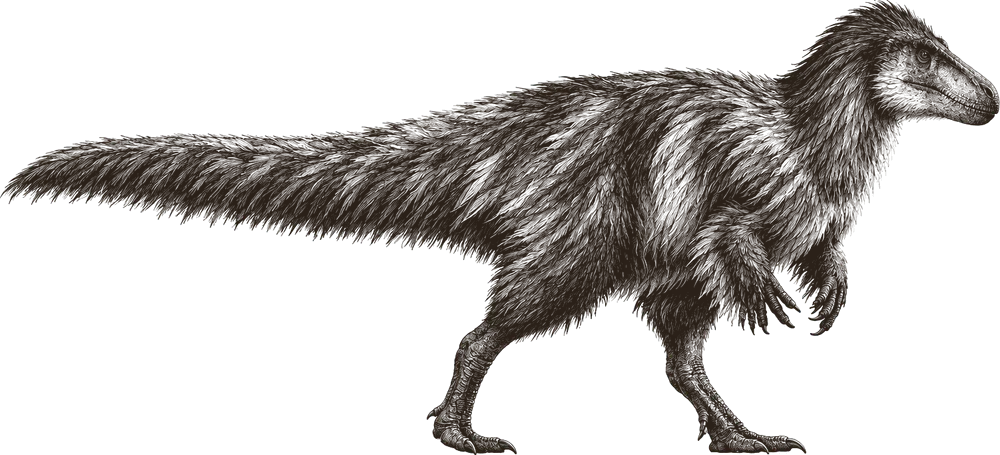


Scale in meters
Where its fossils were found
The evidence
Today

125 million years ago
Habitat
It lived in a region of lakes in the Yixian Formation, where ginkgo trees grew. Psittacosaurus, Beipiaosaurus and Sinosauropteryx also inhabited this region.
Field notes
About Yutyrannus
A feathered giant
Yutyrannus was a large, meat-eating relative of Tyrannosaurus, notable for something most tyrannosaurs never show in the fossil record: long, filament-like feathers covering large parts of its body. It grew to about 9 meters, or roughly 30 feet, in length, and may have weighed around 1,400 kilograms, making it one of the largest feathered dinosaurs known. Its skull carried a low bony crest running along the snout, and like other early tyrannosauroids it had three fingers on each hand rather than the two seen in later, larger members of the group.
Its world
Yutyrannus lived during the Early Cretaceous, between about 126 and 120 million years ago, in what is now northeastern China. All known fossils come from a single region, preserved in the Yixian Formation, a rock unit famous for capturing fine details like feathers. It shared this world with the small horned Psittacosaurus, the feathered Sinosauropteryx and Caudipteryx, the raptor Sinornithosaurus, and the early tyrannosauroid Dilong.
How it was found
Xu and his colleagues named Yutyrannus in 2012, based on multiple skeletons found together that preserved patches of feathers. Among dinosaurs with direct fossil evidence of feathers, Yutyrannus is by far the largest yet found, showing that feathered body coverings were not limited to small dinosaurs. Its closest relatives, including Guanlong, Proceratosaurus, and Sinotyrannus, form the family Proceratosauridae, an early branch of the tyrannosauroid line that appeared long before giants such as Tyrannosaurus.
Field gallery
More views of Yutyrannus
Scenes reconstructed from the available fossil evidence.
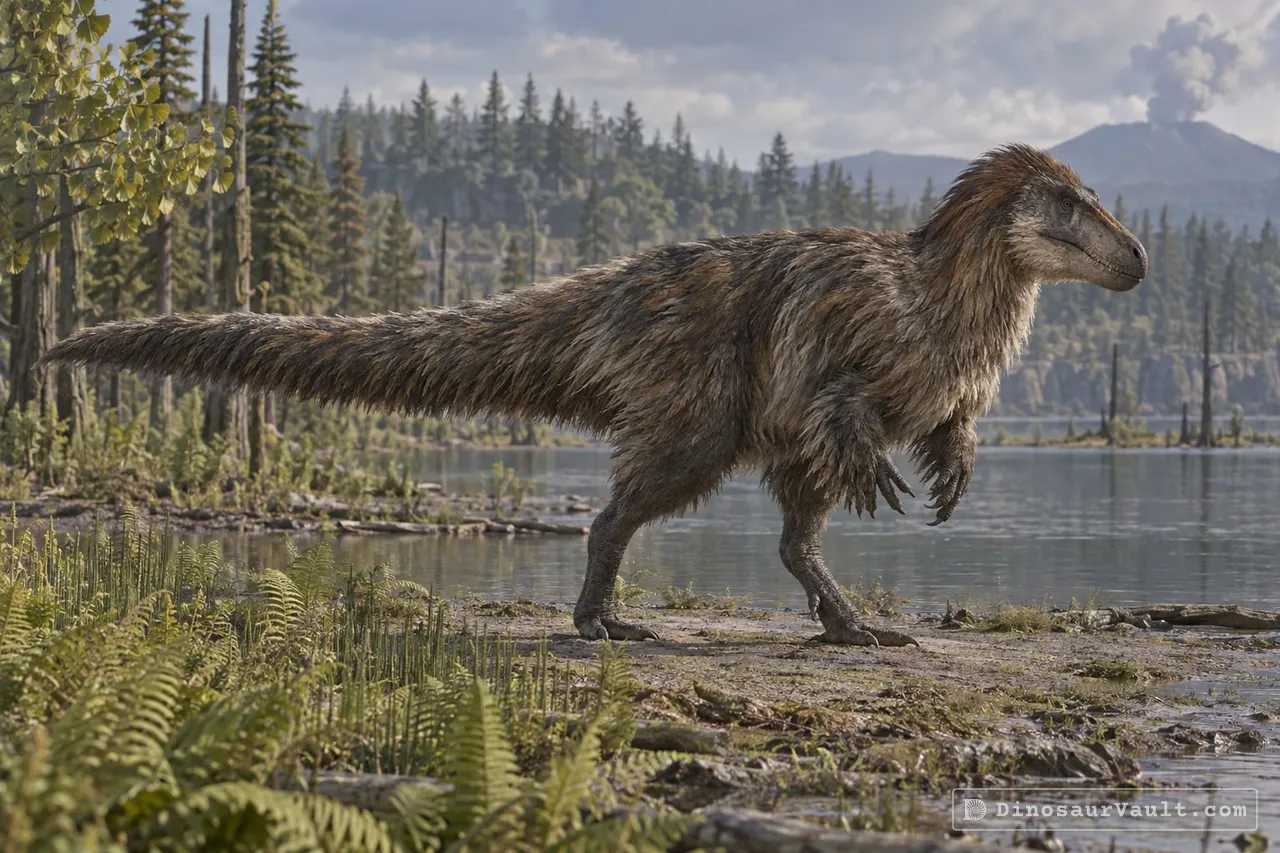
1 of 7
Lived alongside
Found in the same rock formations
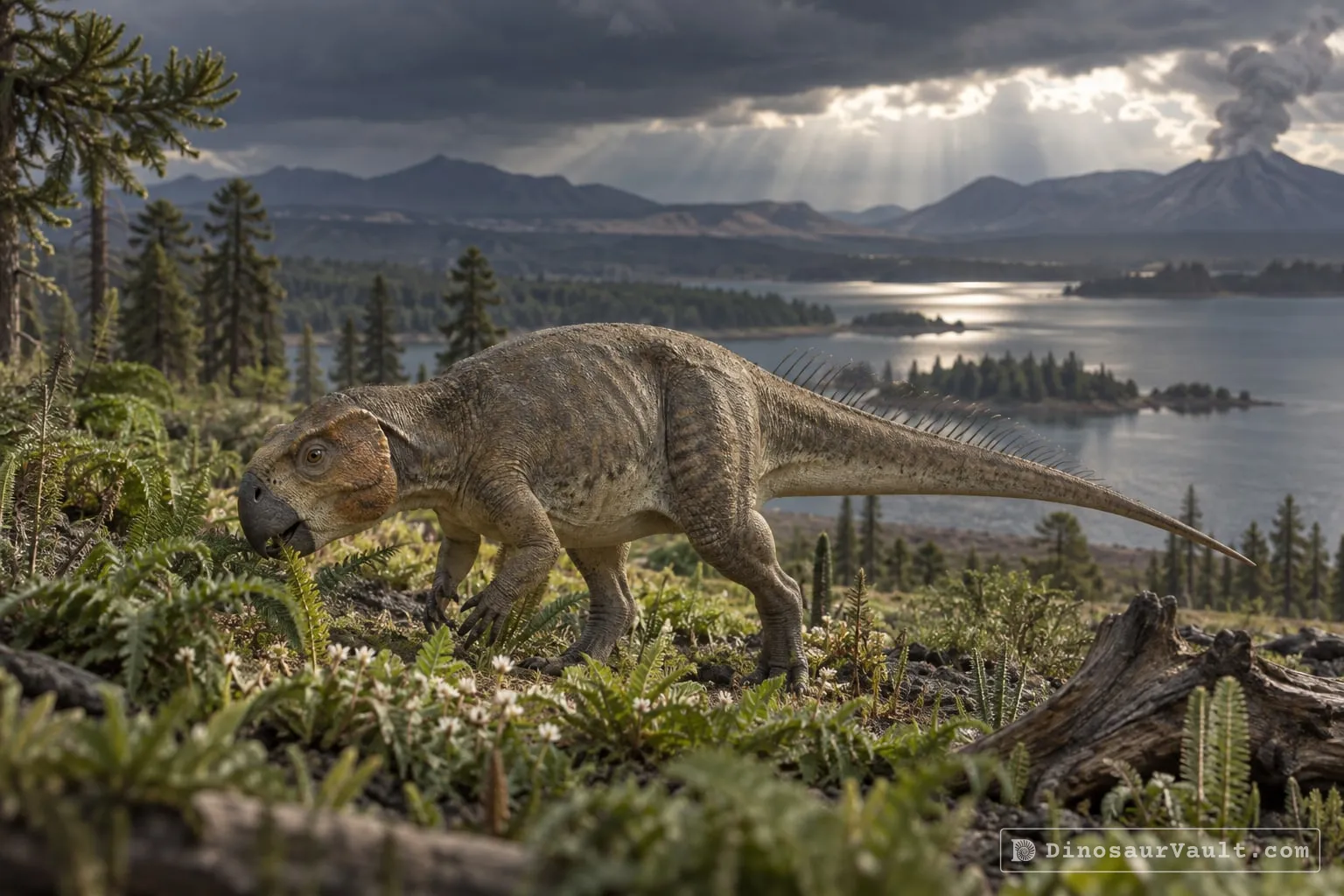
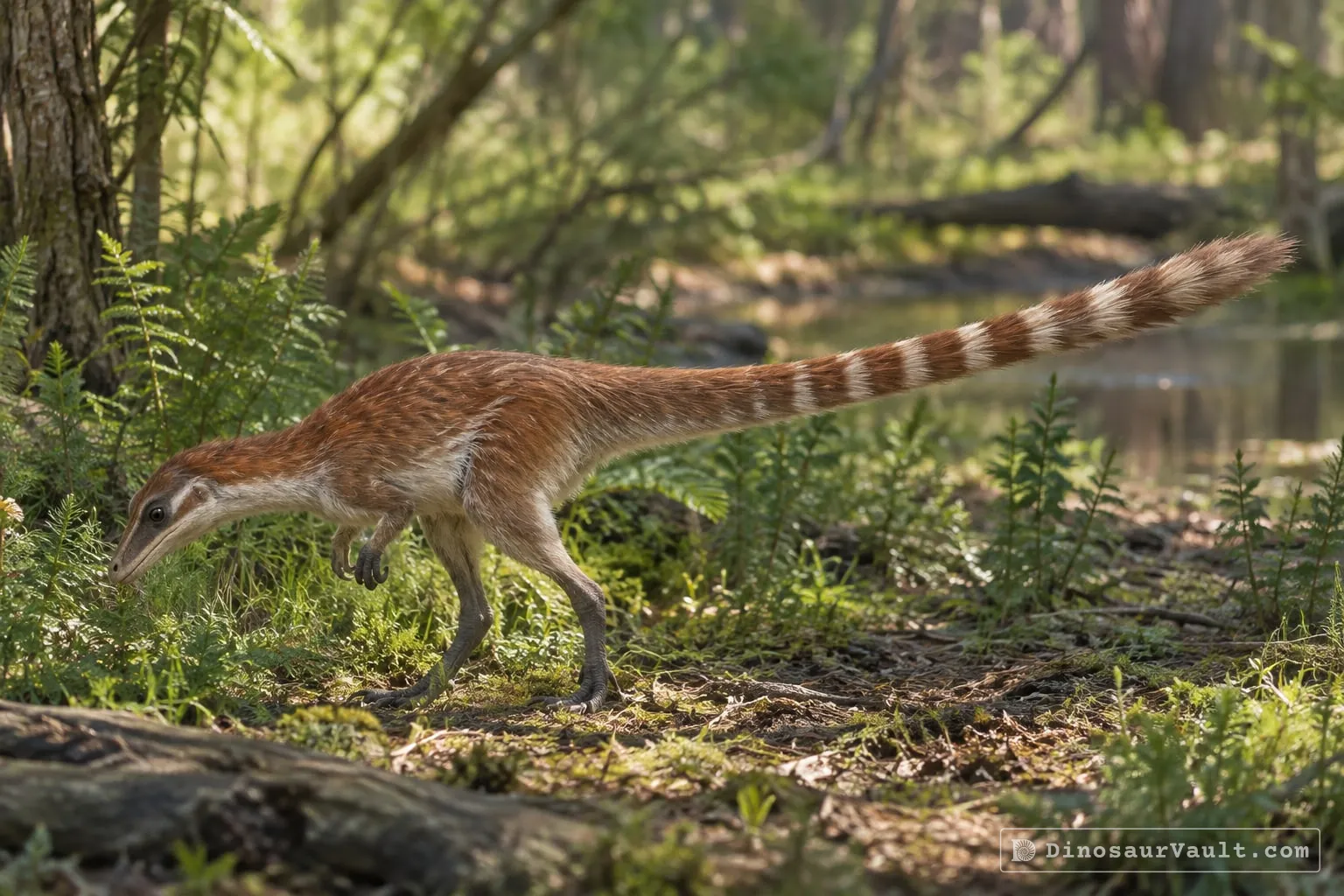
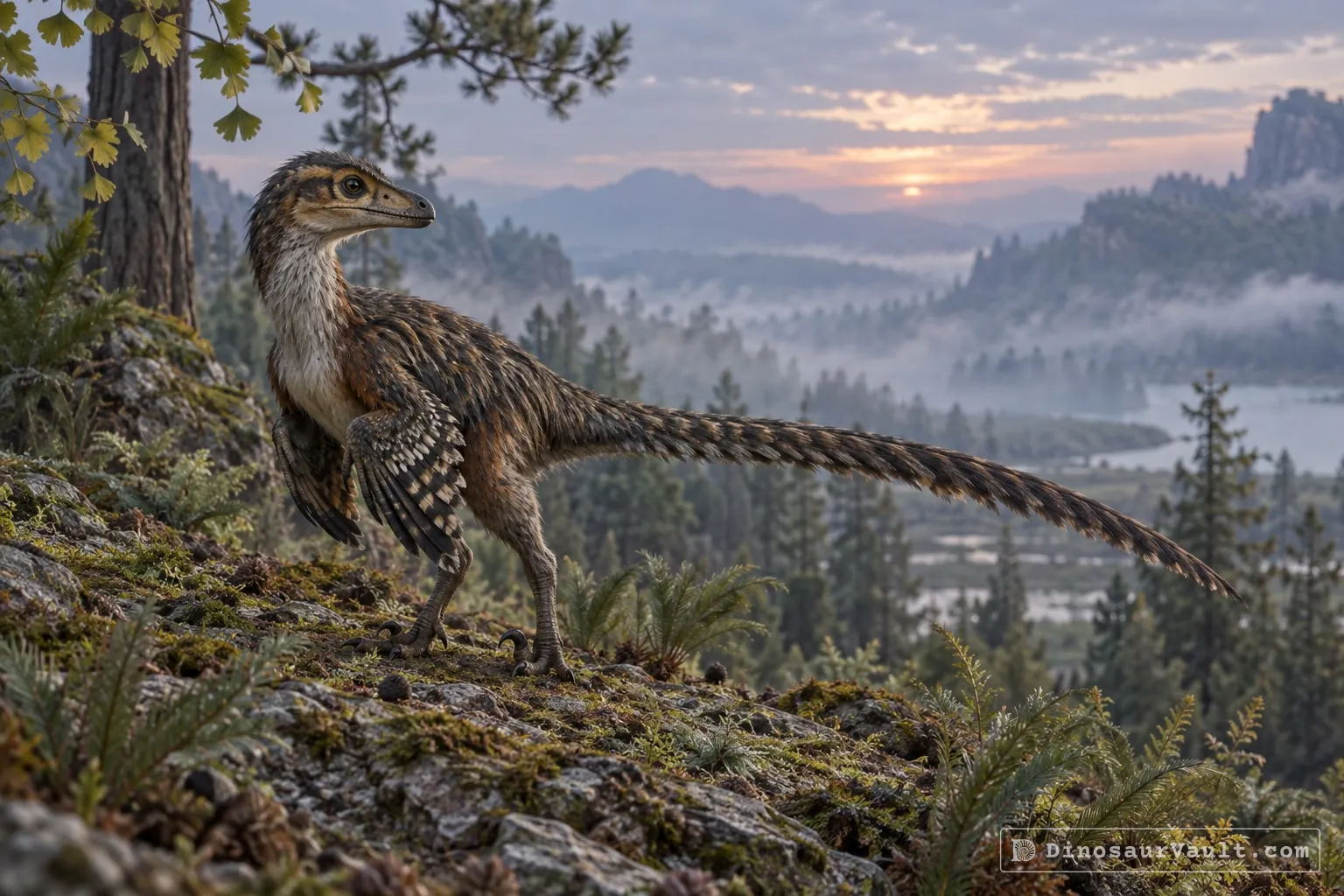
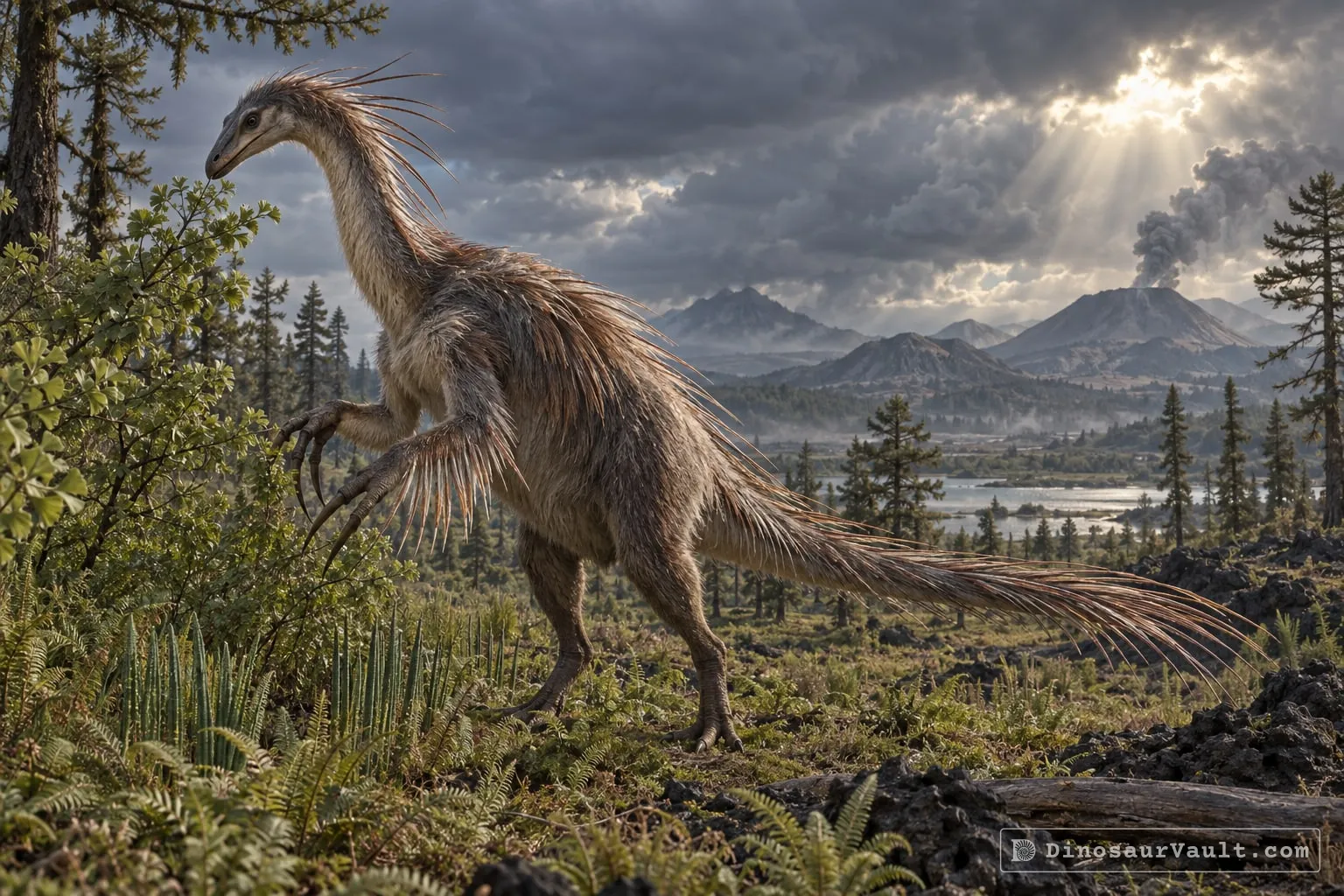
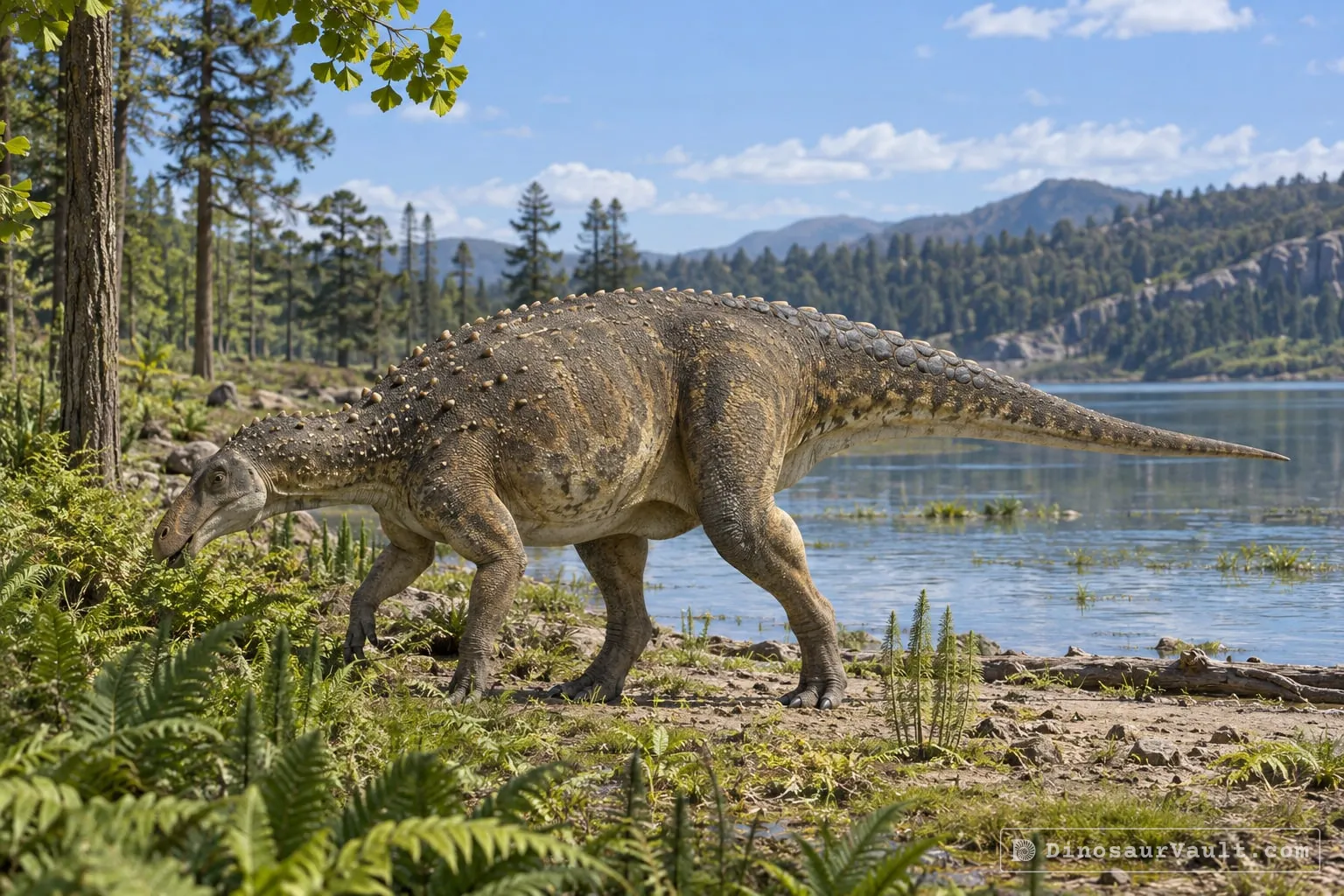
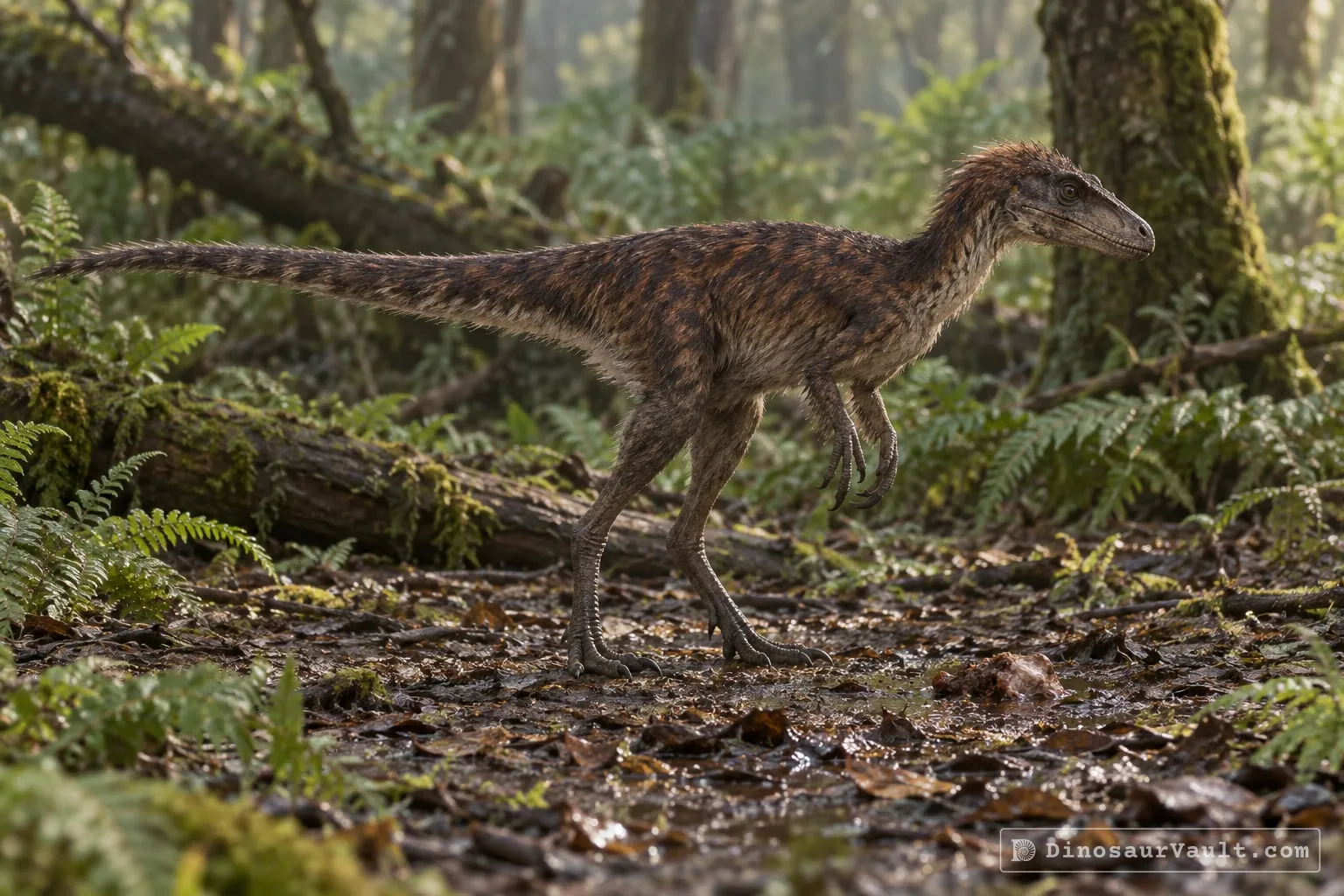
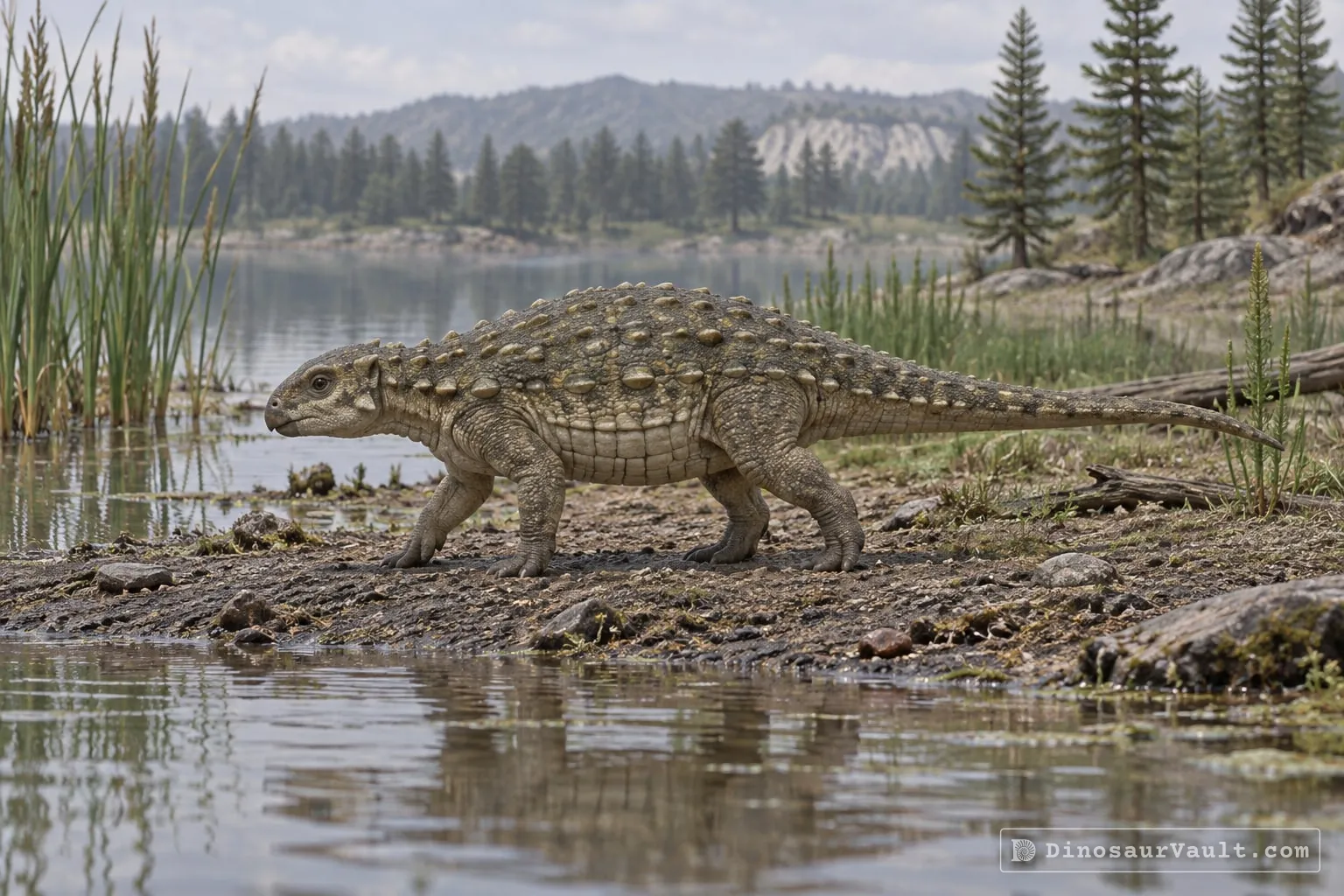
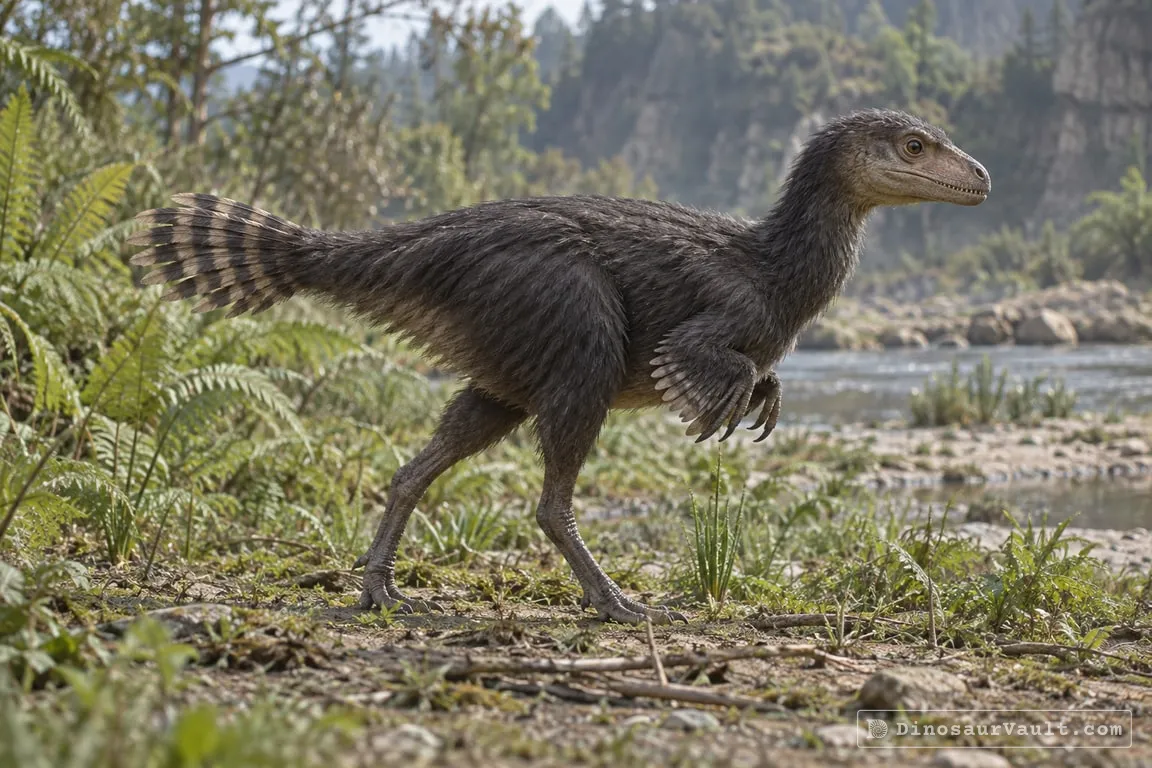


A rock formation can hold fossils laid down millions of years apart, so not every animal here met Yutyrannus.
The evidence
The science behind Yutyrannus
Which parts of the picture come from its own bones, and which come from its relatives.
From its own fossils
- Nearly complete skeletons preserve long, threadlike feathers on both a large individual and smaller ones.
- The skull has a low crest along the snout, and each hand has three fingers.
Borrowed from relatives
- Almost the whole skeleton is known from its own bones.
- Probable lips are restored by comparison with other theropods, including Tyrannosaurus.
Still unknown
- Its feather colors and the density of its coat across the whole body.
- Whether it hunted in groups or cared for its young.
- Which smaller dinosaurs it hunted.
Often drawn wrong
- A bare, scaly body leaves out the long feathers preserved with its skeletons.
- Two-fingered hands copy later tyrannosaurs; Yutyrannus had three fingers.
- Its snout crest was low, rather than a tall horn.
Discovery timeline
- 2003Its worldZhou & Zheng
- 2004Close relativeXu et al.
- 2012Named itXu et al.
- 2016Family treeBrusatte & Carr
- 2023Close relativeCullen et al.
Key papers
The research behind what we know of Yutyrannus
Its world
Described fossil ginkgo reproductive structures from the Yixian Formation, adding to the known plant life of its region.
The missing link in Ginkgo evolution. Nature 423: 821-822
Read the paper : The missing link in Ginkgo evolution (opens in a new tab)Close relative
Described the smaller tyrannosauroid Dilong with a filamentous covering and long arms ending in three-fingered hands.
Basal tyrannosauroids from China and evidence for protofeathers in tyrannosauroids. Nature 431: 680-684
Read the paper : Basal tyrannosauroids from China and evidence for protofeathers in tyrannosauroids (opens in a new tab)Named it
Described nearly complete skeletons with long feathers, showing that even a very large tyrannosauroid could have a feathered coat.
A gigantic feathered dinosaur from the Lower Cretaceous of China. Nature 484: 92-95
Read the paper : A gigantic feathered dinosaur from the Lower Cretaceous of China (opens in a new tab)Family tree
Placed Yutyrannus among early tyrannosauroids, separate from the later giant tyrannosaur family.
The phylogeny and evolutionary history of tyrannosauroid dinosaurs. Scientific Reports 6
Read the paper : The phylogeny and evolutionary history of tyrannosauroid dinosaurs (opens in a new tab)Close relative
Comparisons of theropod teeth and living reptiles support lips covering the teeth when the mouth closed.
Theropod dinosaur facial reconstruction and the importance of soft tissues in paleobiology. Science 379: 1348-1352
Read the paper : Theropod dinosaur facial reconstruction and the importance of soft tissues in paleobiology (opens in a new tab)
Close relatives
Other members of Proceratosauridae


Sources: Wikidata