Caudipteryx
caw-DIP-ter-ix
"tail feather"
Type species Caudipteryx zoui
- Lived
- 126 to 120 million years ago, Early Cretaceous
- Diet
- Omnivore
- Length
- about 1 m (3 ft)
- Group
- Theropods
- Found in
- China
- Named by
- Ji et al. 1998
Size comparison
To scale

Scale in metersOutline: typical theropod shape
Where its fossils were found
The evidence
Today

125 million years ago
Habitat
Lakes bordered by land with abundant conifers in what is now China. Its neighbors included Sinosauropteryx, Sinornithosaurus and Psittacosaurus.
Field notes
About Caudipteryx
What it was like
Caudipteryx was a feathered dinosaur about 1 meter (3 feet) long, roughly the size of a peacock. It had long legs for running, short arms and a fan of long feathers at the end of its tail.
It also had feathers on its arms, but they were too short for flight. It probably used them for display. It ate plants and small animals, and swallowed stones to help grind its food.
Its world
It lived about 126 to 120 million years ago, in the Early Cretaceous, in what is now China. Its fossils come from the Yixian Formation, famous for feathered dinosaurs.
Its neighbors included Sinosauropteryx, Sinornithosaurus, Psittacosaurus and the large feathered tyrannosaur Yutyrannus.
How it was found
Ji and colleagues named Caudipteryx in 1998. The type species is Caudipteryx zoui. It was one of the first dinosaurs found with clear feathers, and it helped settle the link between dinosaurs and birds.
Field gallery
More views of Caudipteryx
Scenes reconstructed from the available fossil evidence.
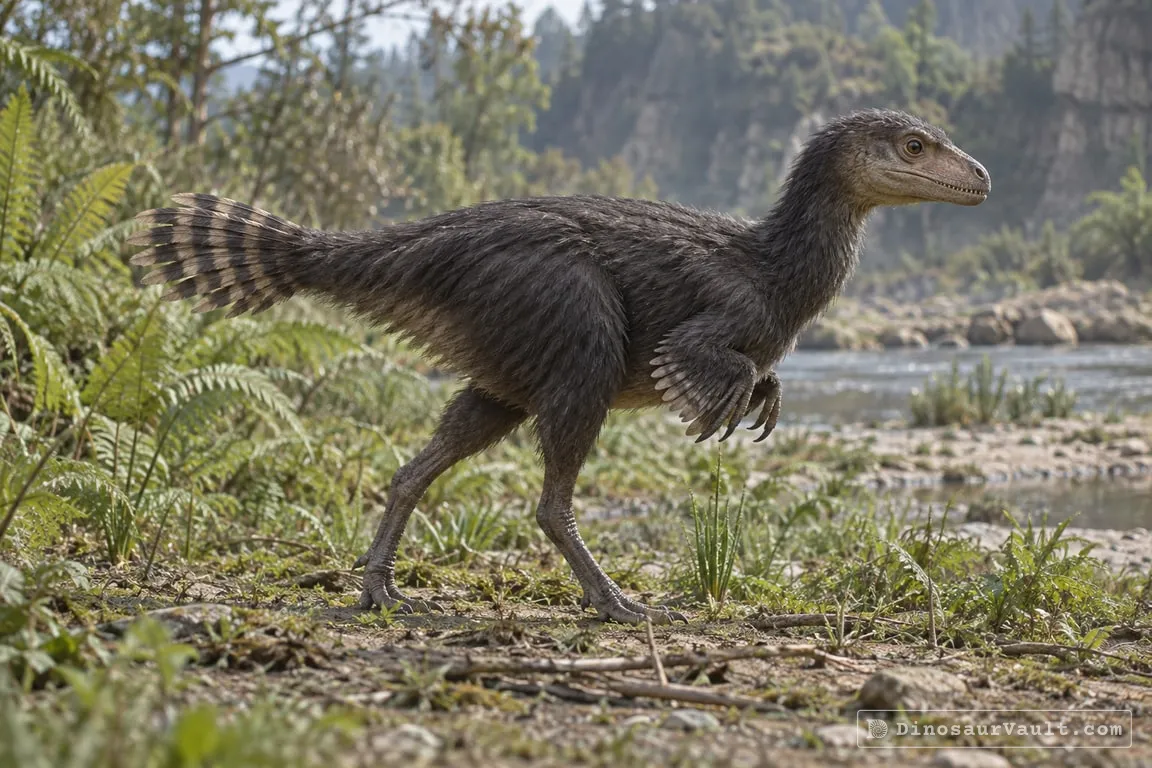
1 of 3
Lived alongside
Found in the same rock formations
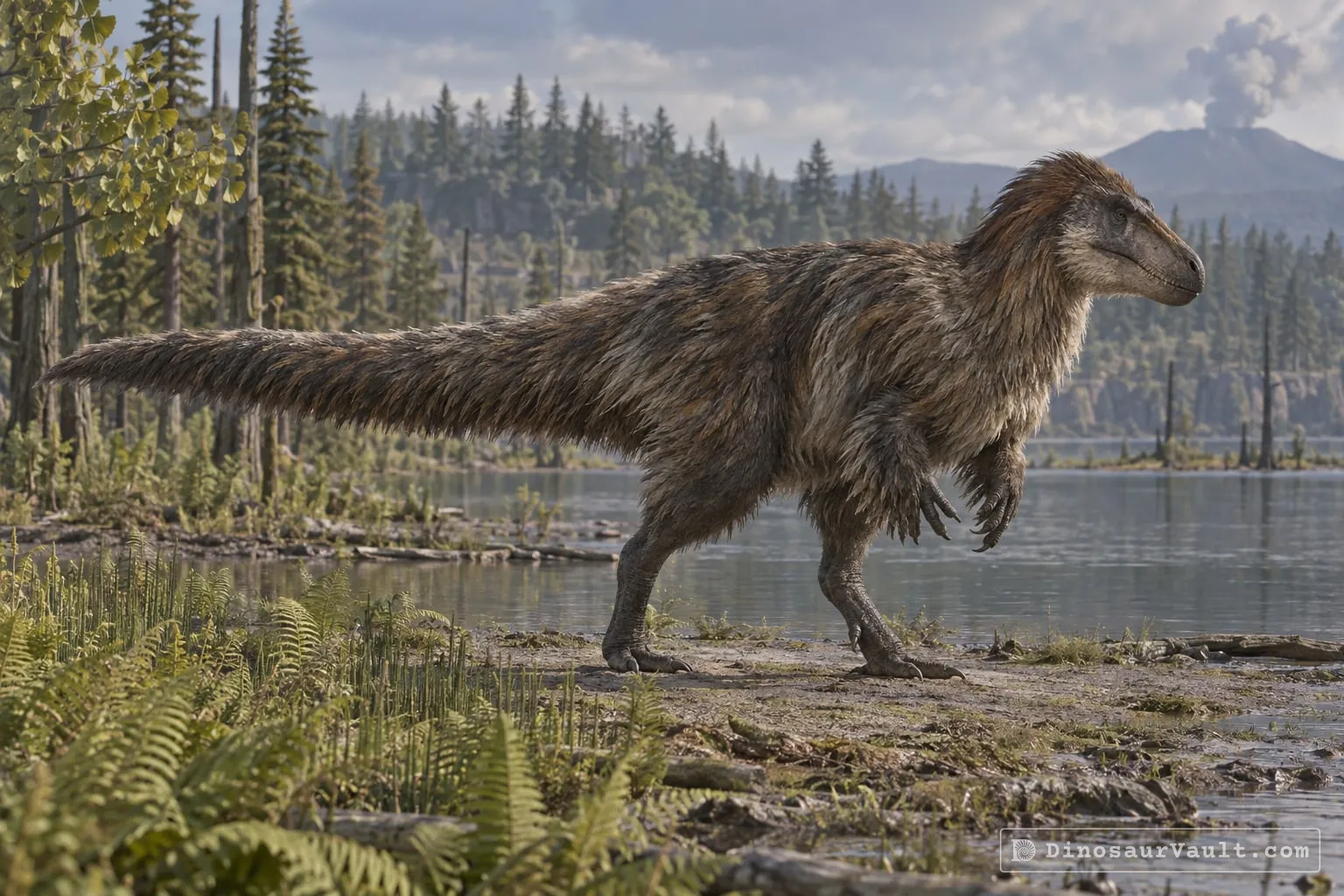
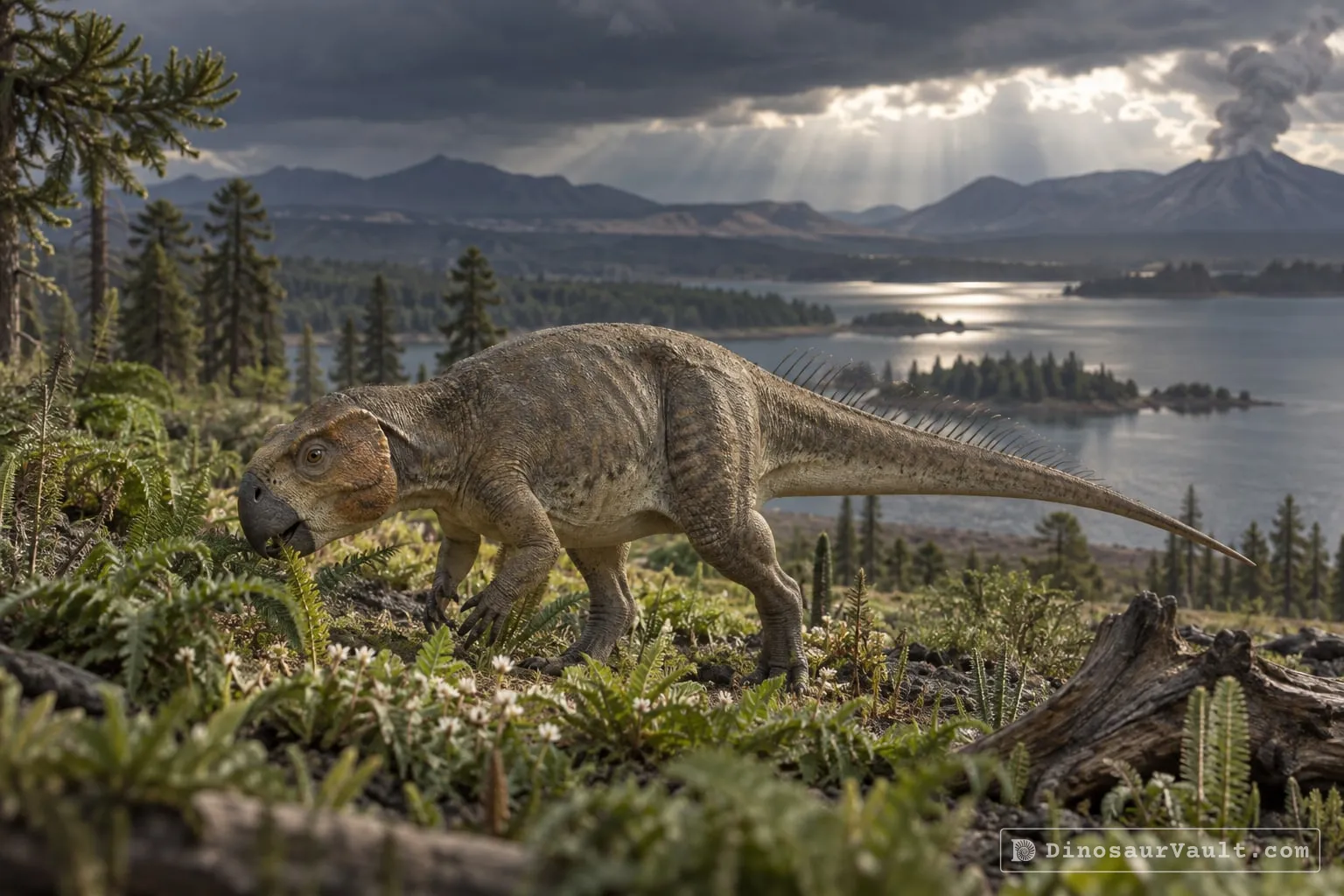
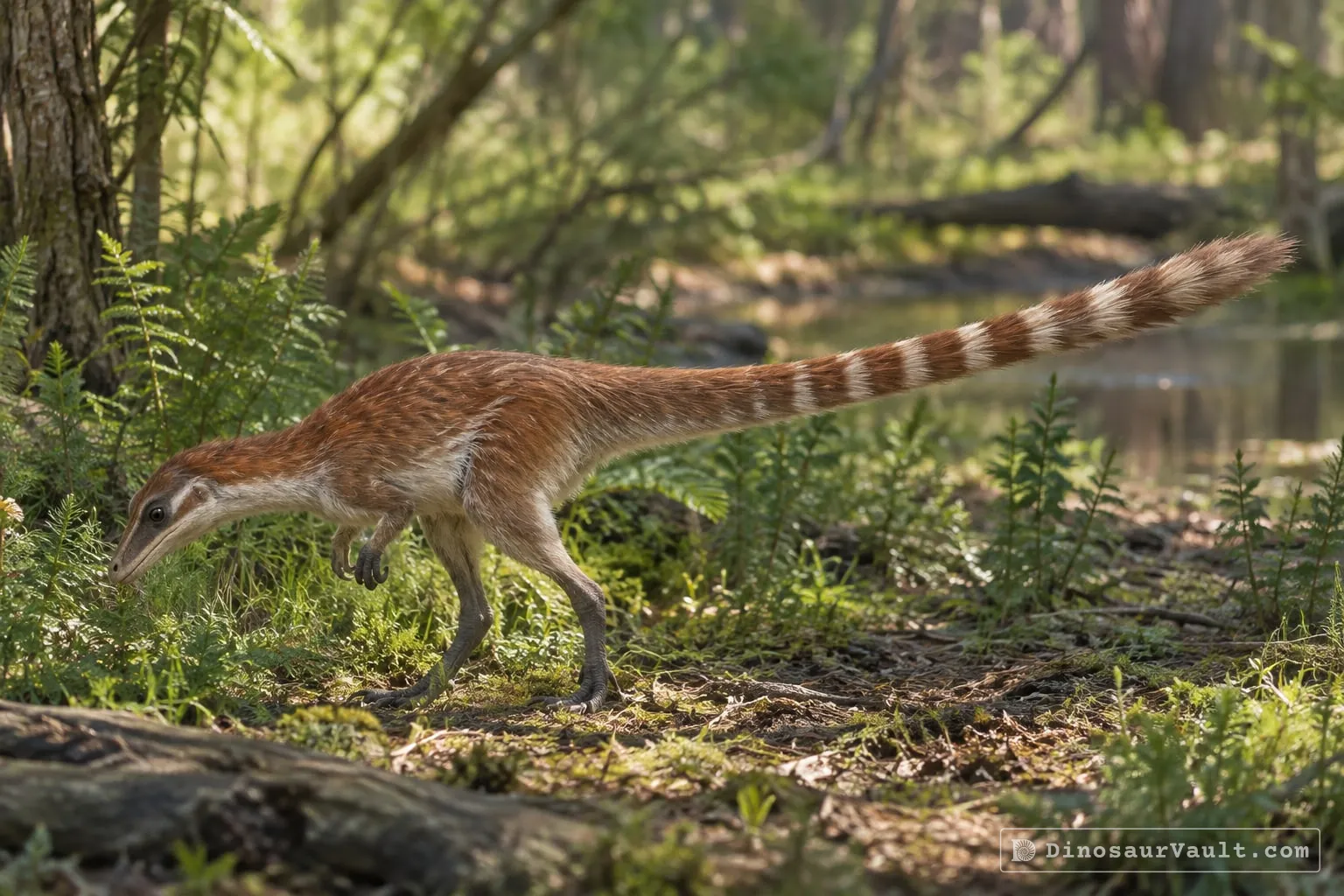
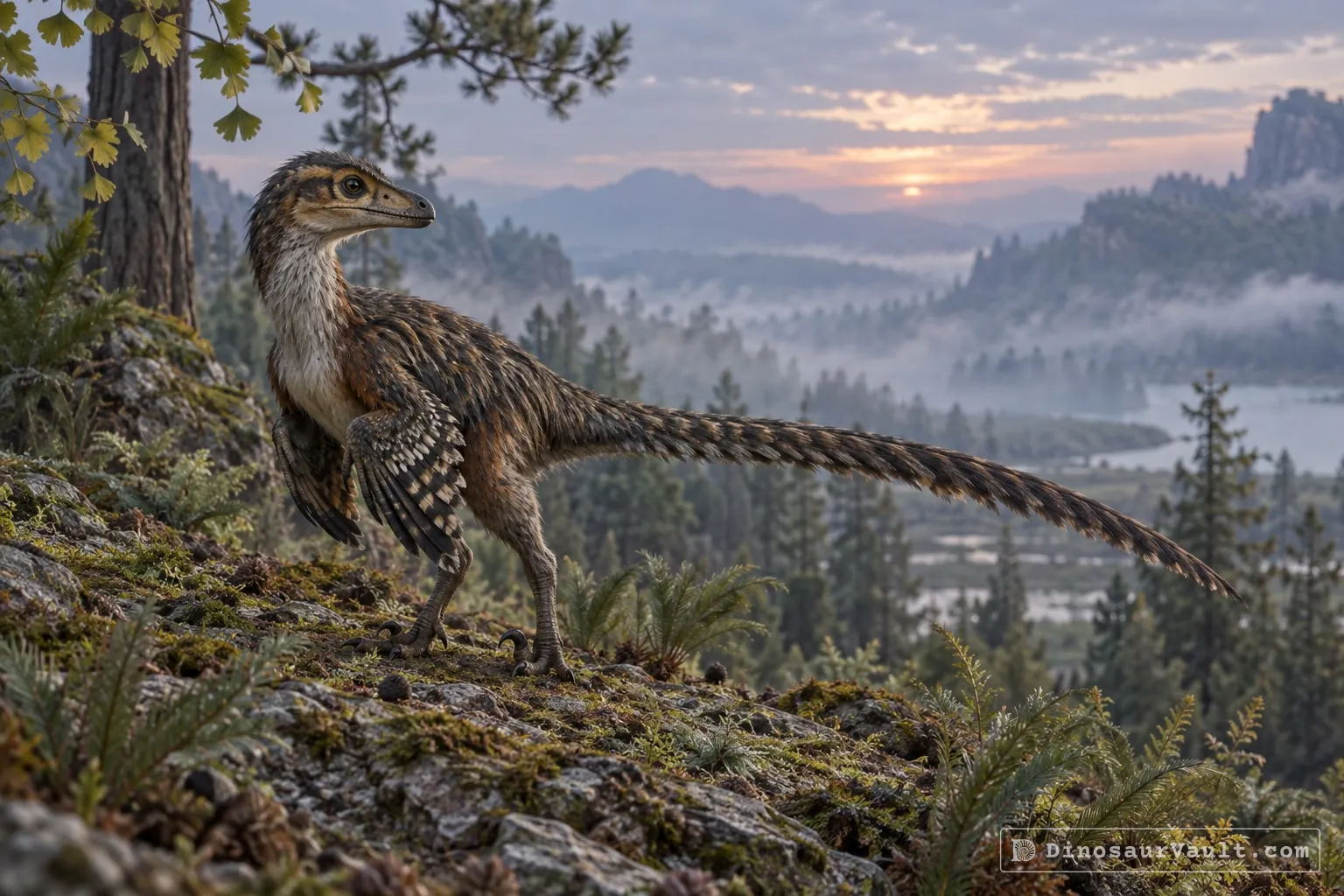
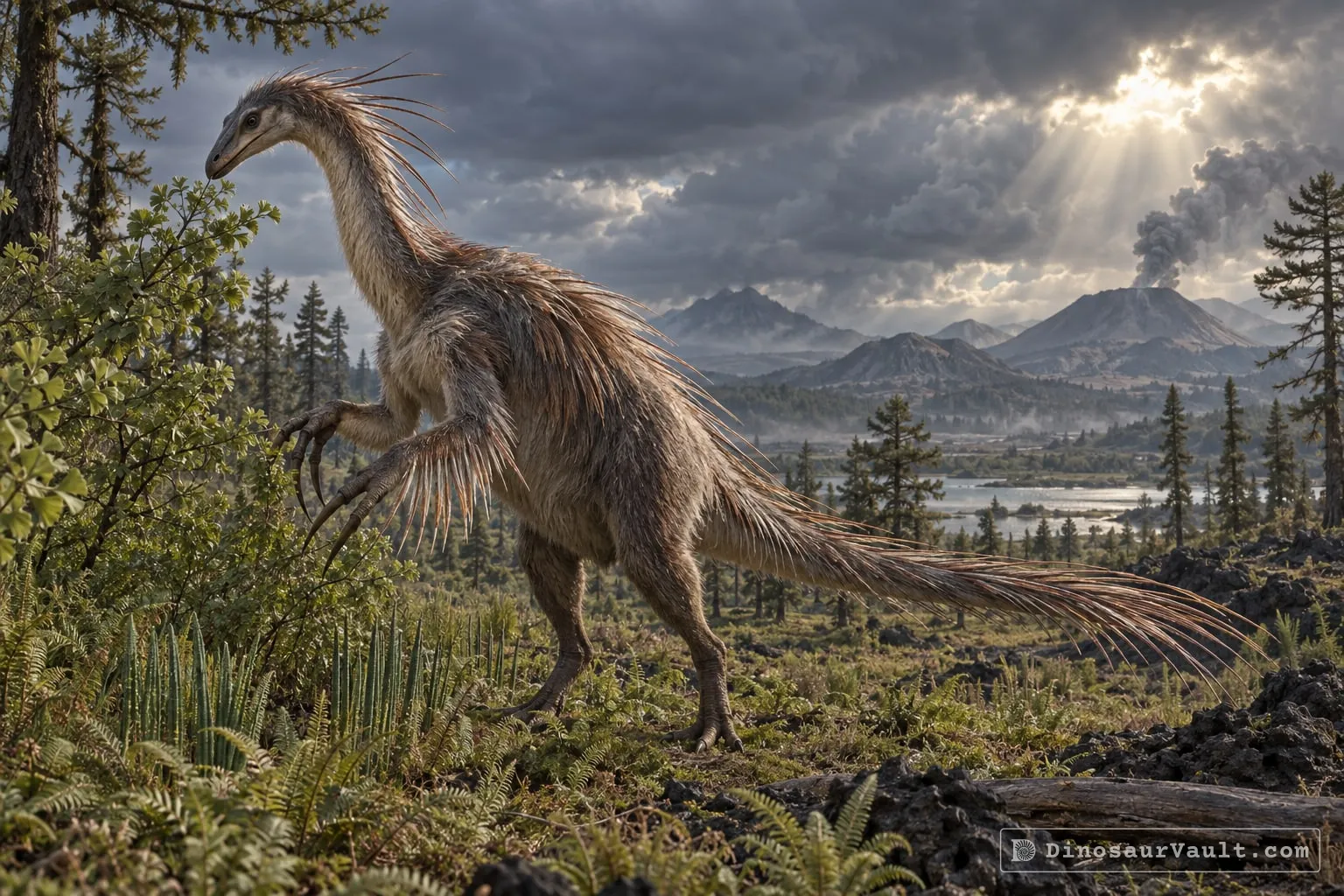
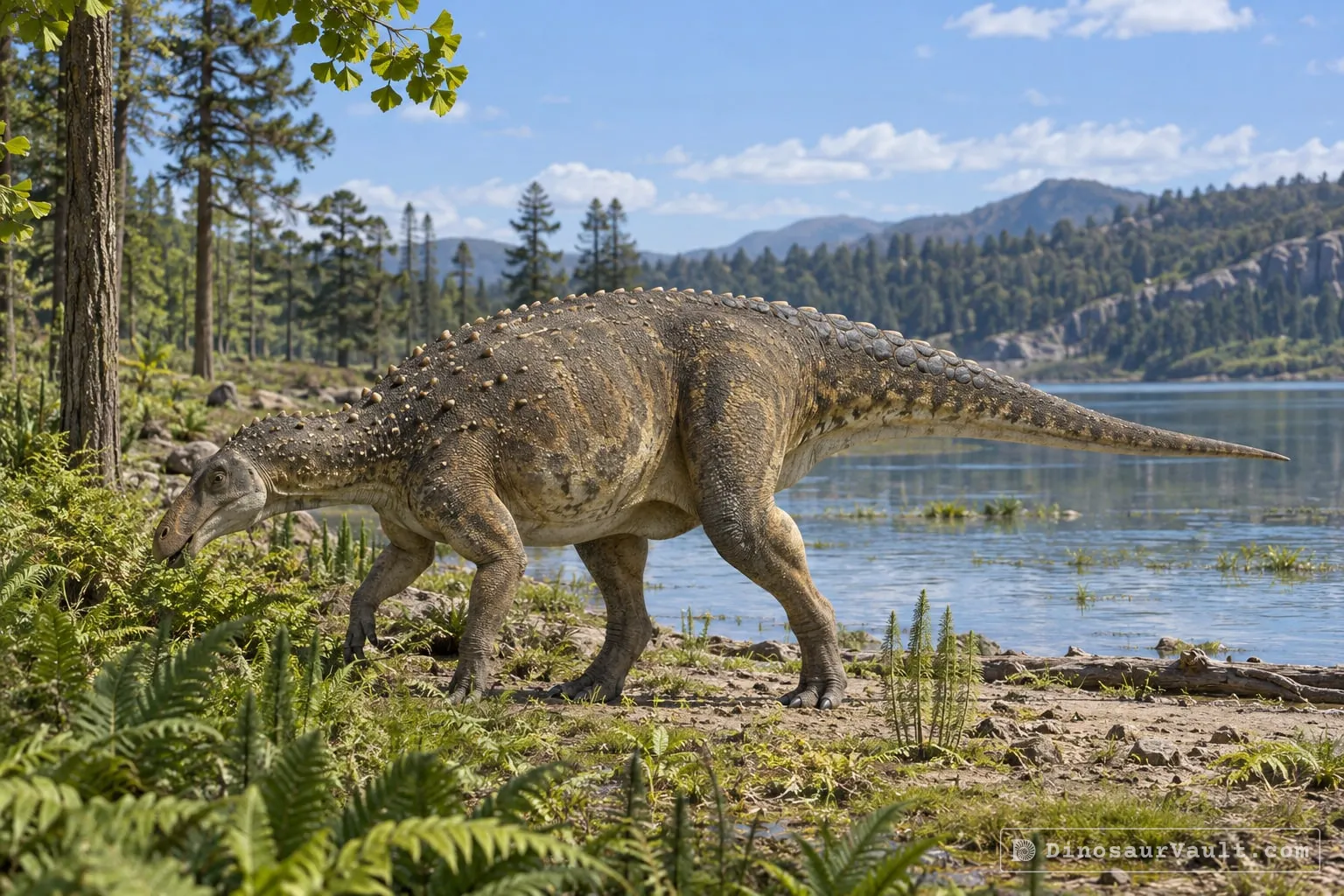
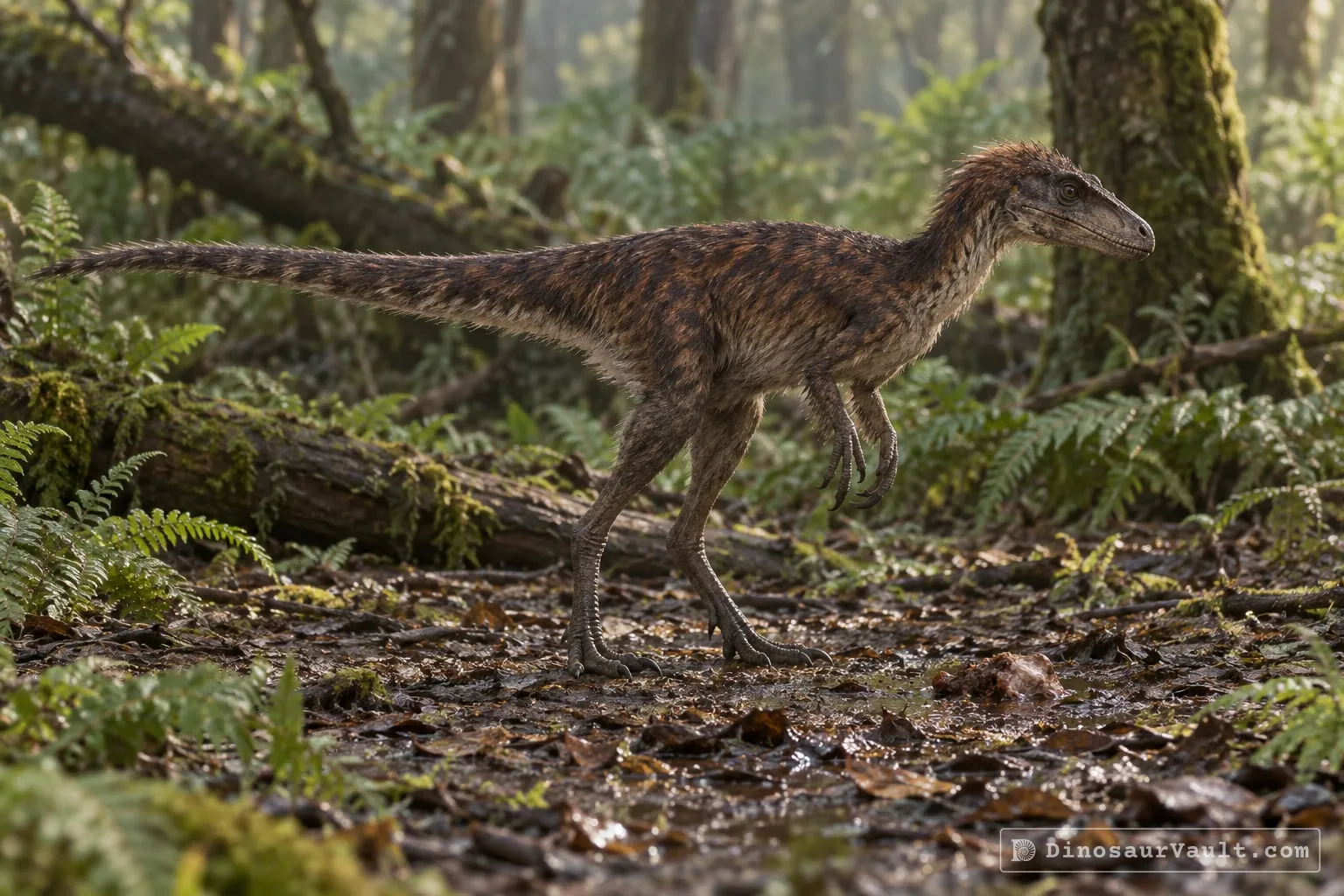
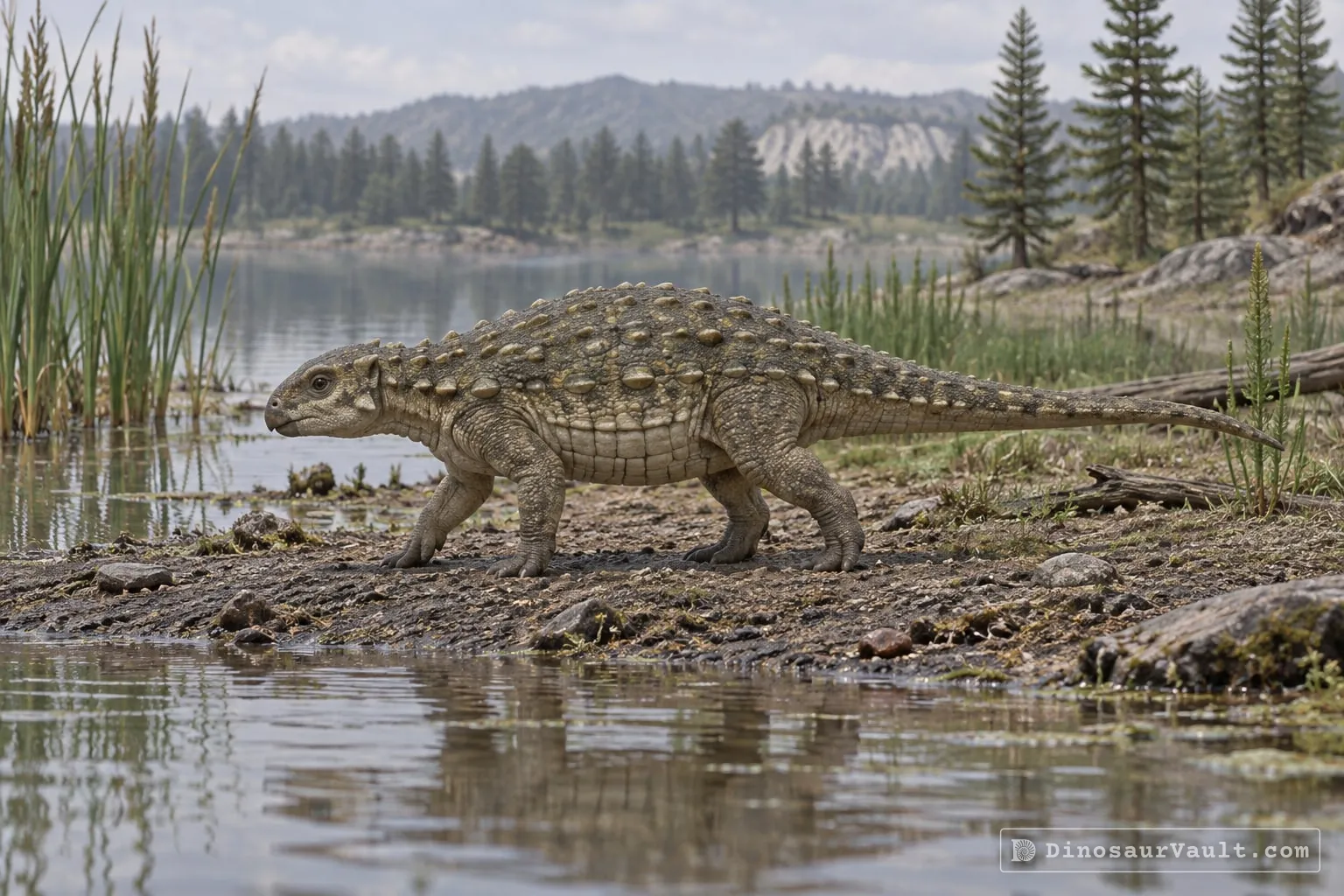


A rock formation can hold fossils laid down millions of years apart, so not every animal here met Caudipteryx.
The evidence
The science behind Caudipteryx
Which parts of the picture come from its own bones, and which come from its relatives.
From its own fossils
- Nearly complete skeletons show short arms, long hind legs and a short bony tail.
- Long feathers form a fan at the tail tip and wing-like sheets on the hands.
- Clusters of swallowed stones are preserved inside the belly.
Borrowed from relatives
- Most of its skeleton and much of its feather arrangement are known from its own fossils.
Still unknown
- Its full color pattern.
- How it used its feathered arms in courtship or other displays.
- How its feathers changed as it grew.
Discovery timeline
- 1998Named itQiang et al.
- 2018PostureTalori et al.
- 2019Close relativeQiu et al.
- 2019PostureTalori et al.
- 2021New findZheng et al.
Key papers
The research behind what we know of Caudipteryx
Named it
Described Caudipteryx with long feathers on its arms and tail, showing that elaborate feathers existed in dinosaurs that could not fly.
Two feathered dinosaurs from northeastern China. Nature 393: 753-761
Read the paper : Two feathered dinosaurs from northeastern China (opens in a new tab)Posture
Models and a robot showed that its feathered arms produced little lift during running, supporting a flightless way of life.
Winged forelimbs of the small theropod dinosaur Caudipteryx could have generated small aerodynamic forces during rapid terrestrial locomotion. Scientific Reports 8
Read the paper : Winged forelimbs of the small theropod dinosaur Caudipteryx could have generated small aerodynamic forces during rapid terrestrial locomotion (opens in a new tab)Close relative
Described Xingtianosaurus, a close relative whose hands help explain how the unusually reduced fingers of Caudipteryx evolved.
A new caudipterid from the Lower Cretaceous of China with information on the evolution of the manus of Oviraptorosauria. Scientific Reports 9
Read the paper : A new caudipterid from the Lower Cretaceous of China with information on the evolution of the manus of Oviraptorosauria (opens in a new tab)Posture
Mechanical models suggested that running could make its feathered arms flap passively at certain speeds.
Identification of avian flapping motion from non-volant winged dinosaurs based on modal effective mass analysis. PLOS Computational Biology 15: e1006846
Read the paper : Identification of avian flapping motion from non-volant winged dinosaurs based on modal effective mass analysis (opens in a new tab)New find
Reported remarkably preserved cartilage cells in a thigh bone, including structures interpreted as a fossilized cell nucleus.
Nuclear preservation in the cartilage of the Jehol dinosaur Caudipteryx. Communications Biology 4
Read the paper : Nuclear preservation in the cartilage of the Jehol dinosaur Caudipteryx (opens in a new tab)
Close relatives
Other members of Oviraptorosauria


Sources: Wikidata