Psittacosaurus
sit-AK-oh-SORE-us
"parrot lizard"
- Lived
- 143 to 101 million years ago, Early Cretaceous
- Diet
- Herbivore
- Length
- about 2 m (7 ft)
- Group
- Ceratopsians
- Found in
- China, Mongolia and Russia
- Named by
- Osborn 1923
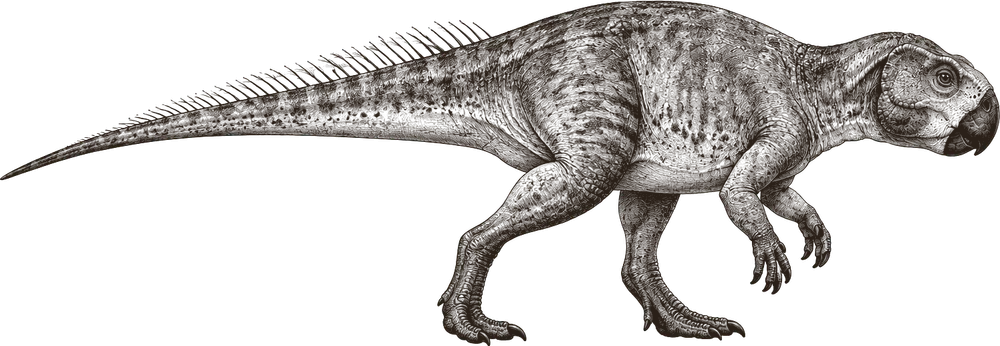
Size comparison
To scale

Scale in meters
Where its fossils were found
The evidence
Today

120 million years ago
Also reported from Thailand.
Habitat
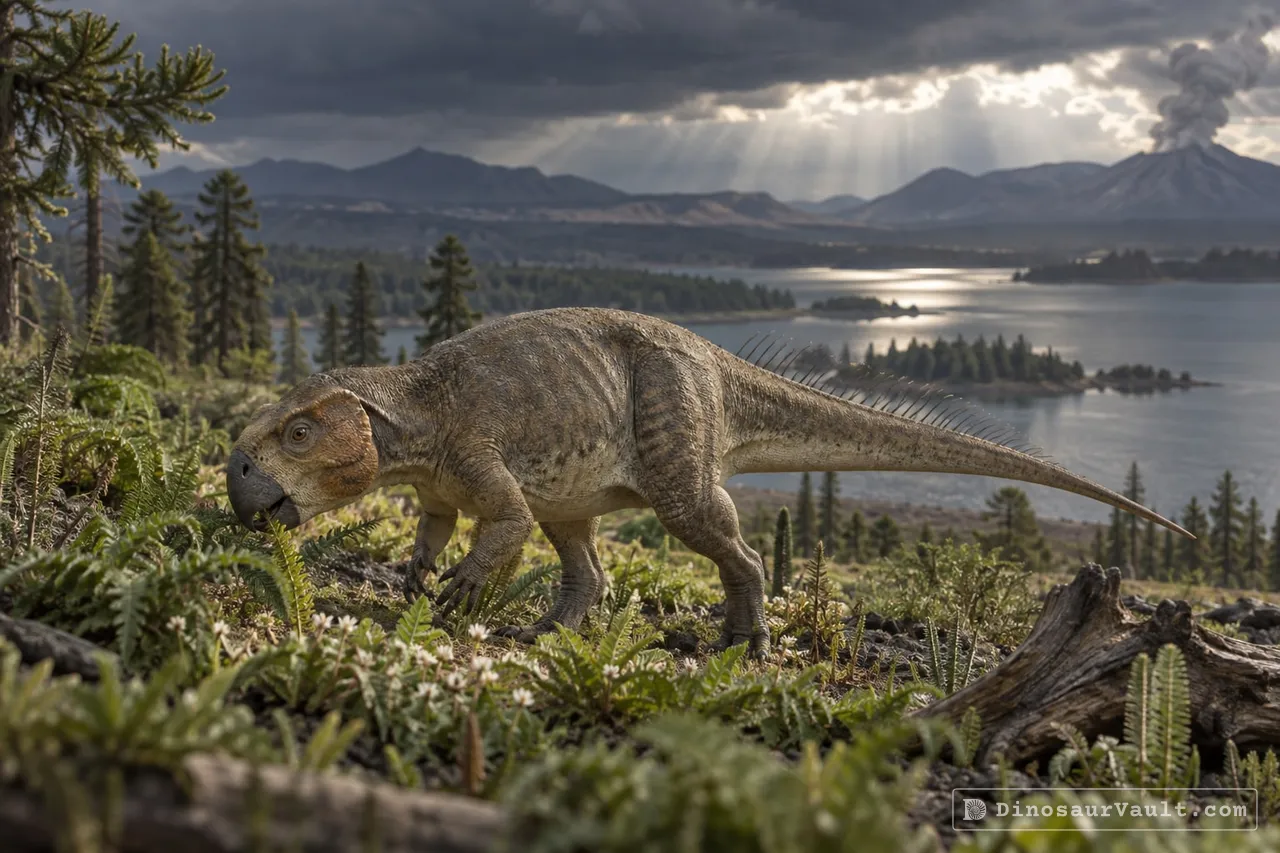
In the Yixian Formation, it lived around lakes and wooded land where ginkgo trees grew. Beipiaosaurus and Yutyrannus inhabited the same region.
Field notes
About Psittacosaurus
What it was like
Psittacosaurus was a small plant eater with a deep, parrot-like beak and a robust skull. It grew to about 2 meters (6.6 feet) long, and most species stood and walked on two legs as adults.
One remarkable fossil preserves long, bristle-like filaments growing from the top of its tail, a feature not seen in most other dinosaurs. Psittacosaurus probably had good senses of smell and sight, and may have been active at different times of day.
Its world
Psittacosaurus lived from about 143 to 101 million years ago, in the Early Cretaceous, across what is now China, Mongolia, and Russia, with possible remains also reported from Thailand. Its fossils come from several formations, including Yixian, Jiufotang, Ilek, Öösh, Ejinhoro, and Doushan.
It shared its world with feathered theropods such as Yutyrannus, Sinosauropteryx, Sinornithosaurus, and Microraptor, as well as the armored Wuerhosaurus and the clawed Beipiaosaurus.
How it was found
Osborn named Psittacosaurus in 1923. More species have been named within Psittacosaurus than any other dinosaur genus, and about 66 fossil finds are known in total, including many complete skeletons and individuals of different ages. This makes it one of the best-studied dinosaurs for understanding how dinosaurs grew from hatchlings into adults. It is considered a close relative of other early ceratopsians such as Albalophosaurus and Micropachycephalosaurus.
Field gallery
More views of Psittacosaurus
Scenes reconstructed from the available fossil evidence.
1 of 7
Lived alongside
Found in the same rock formations
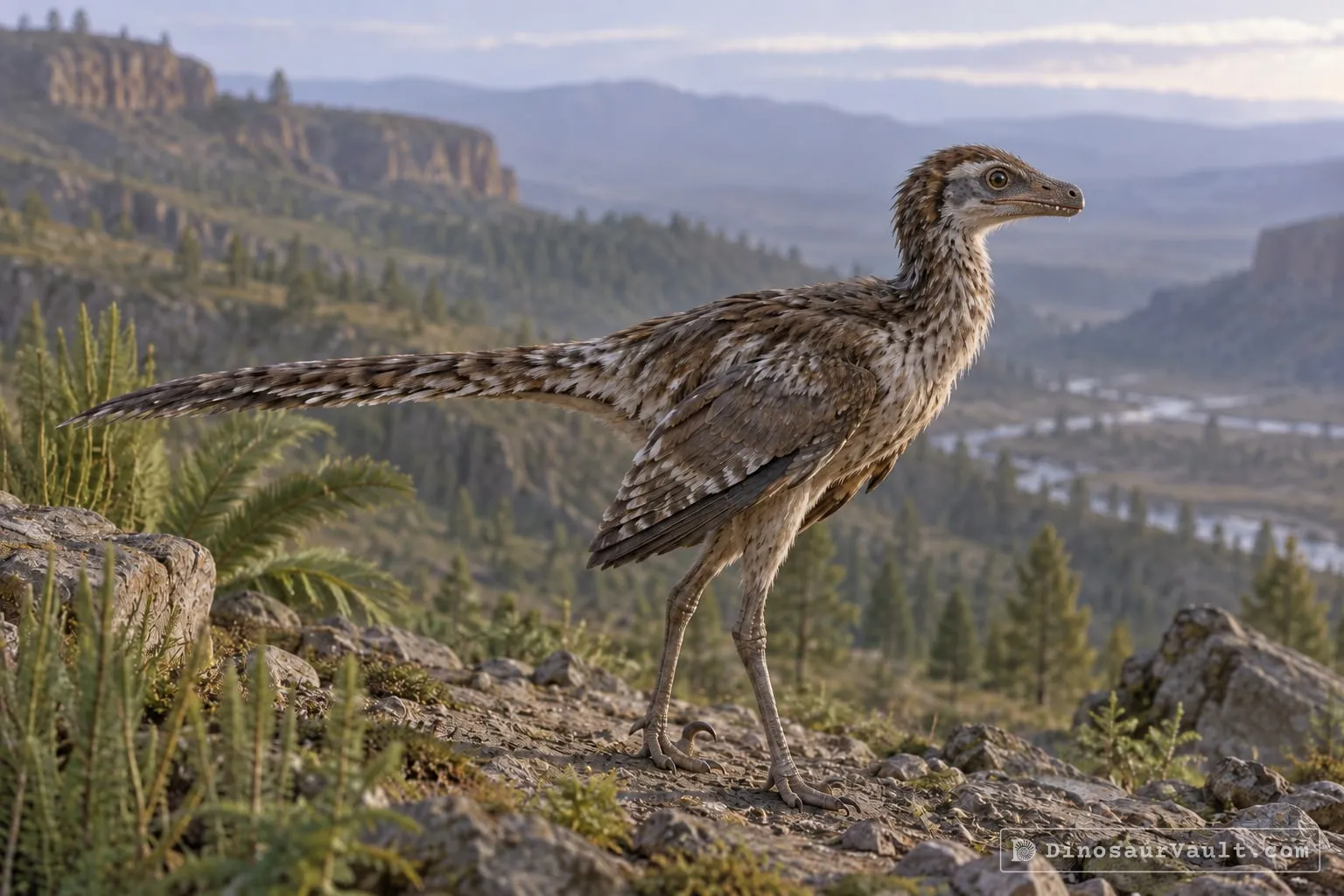
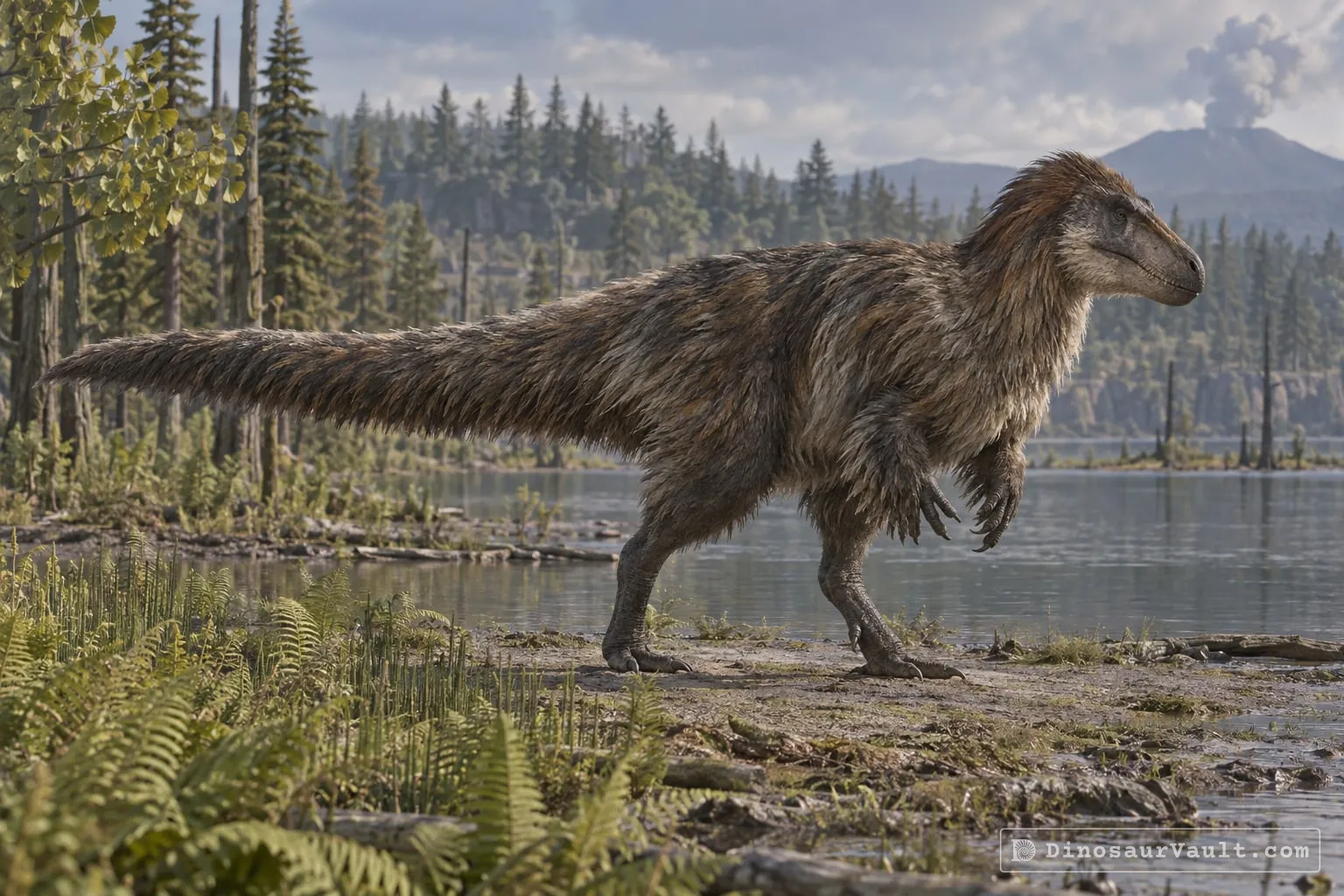
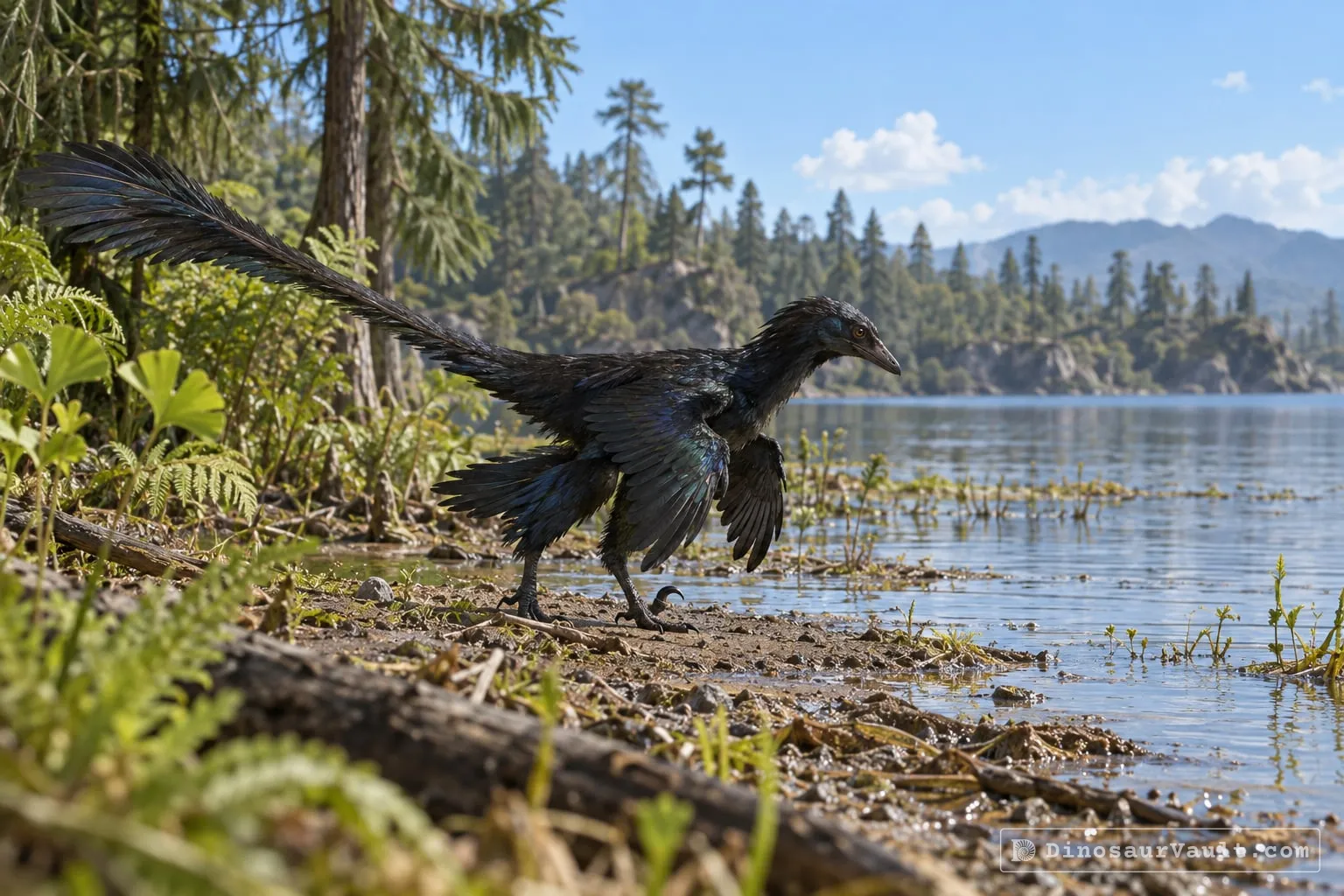
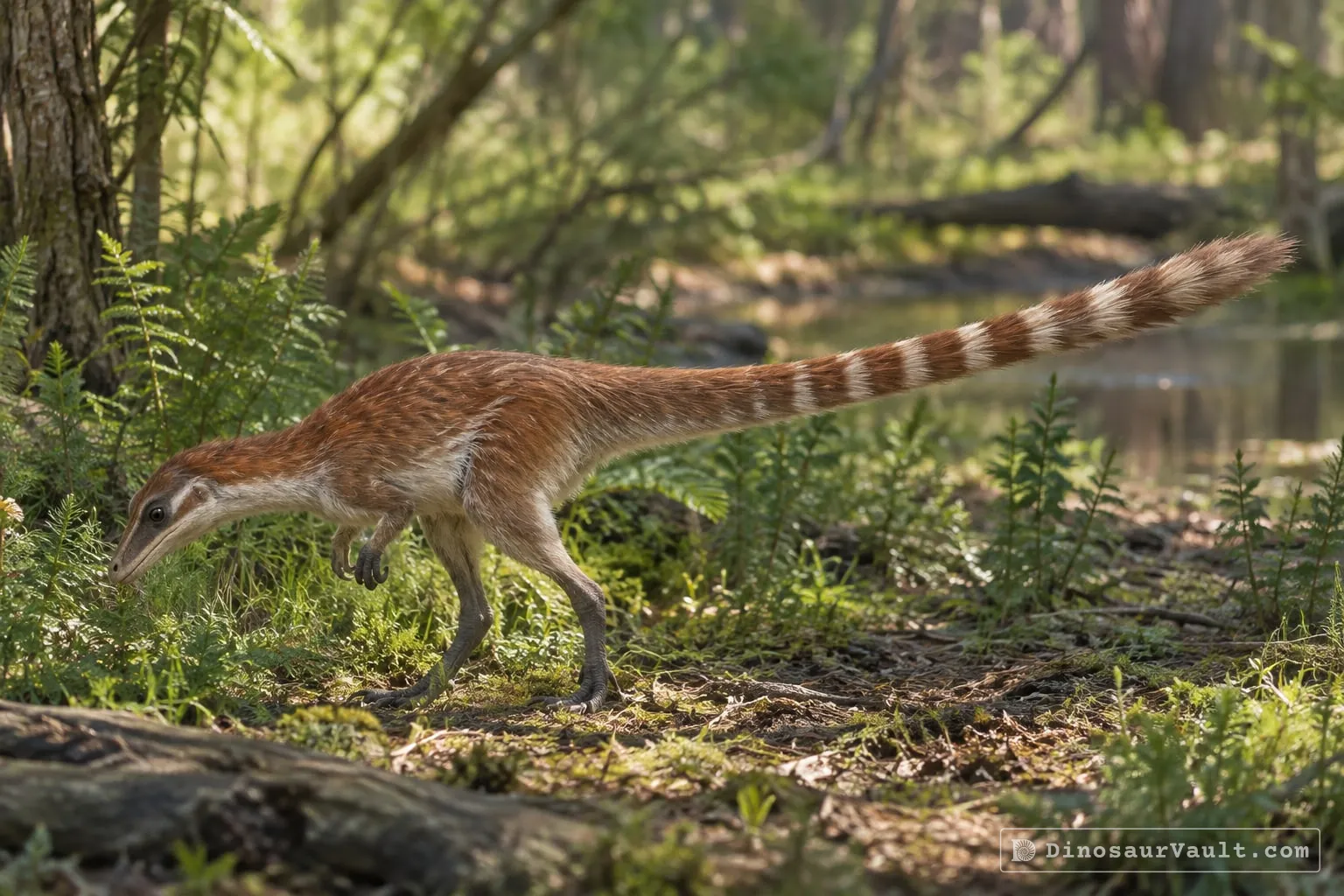
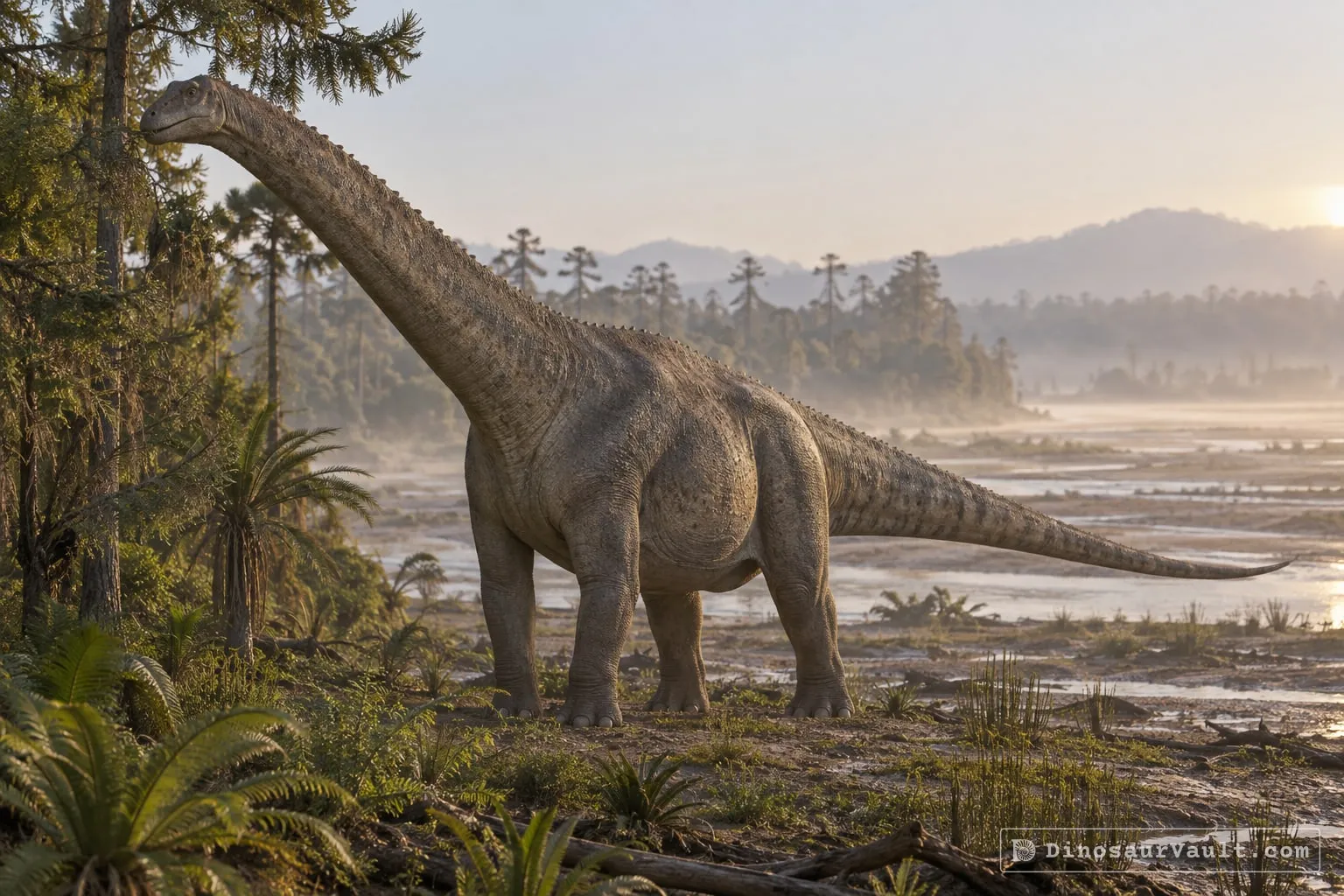
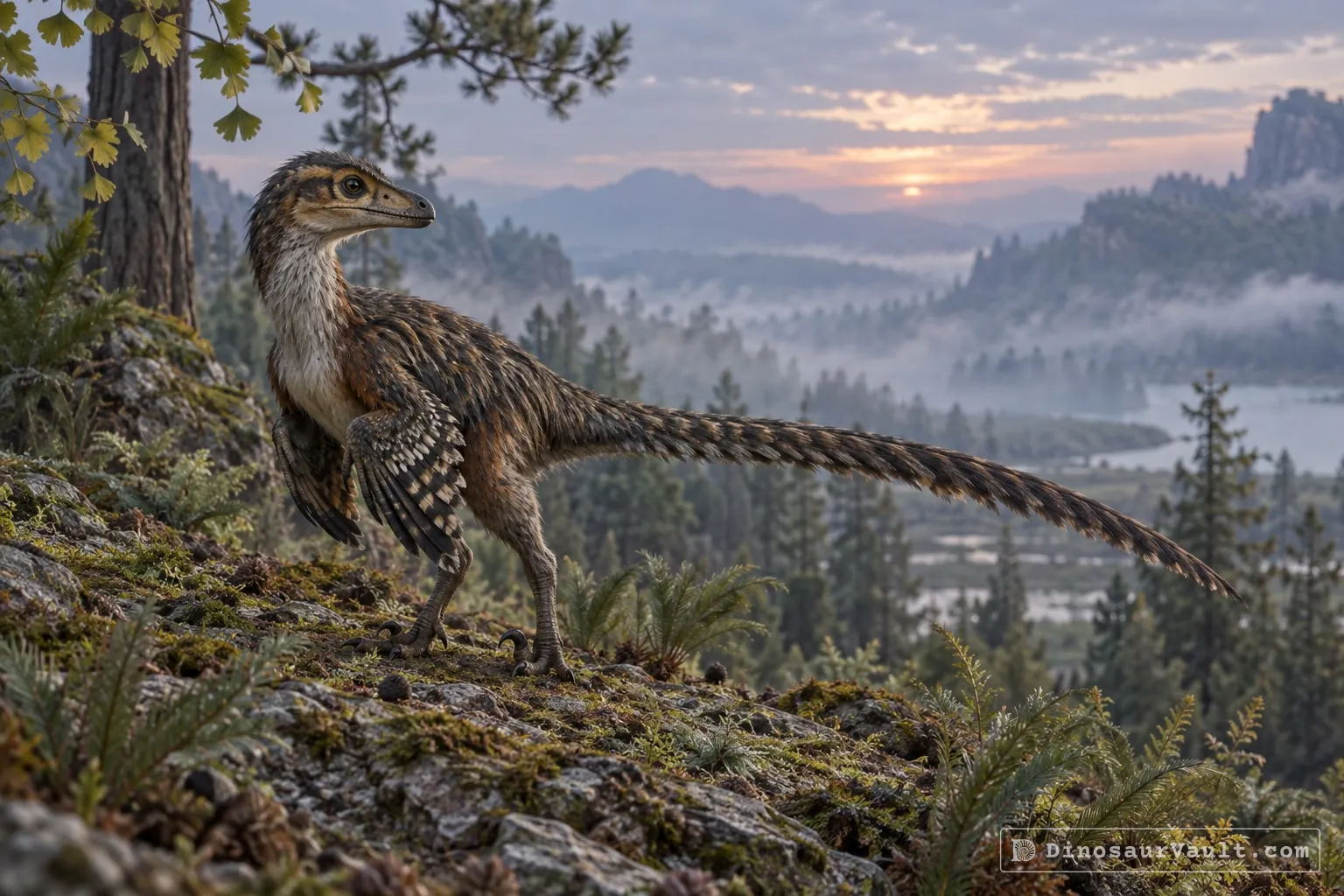
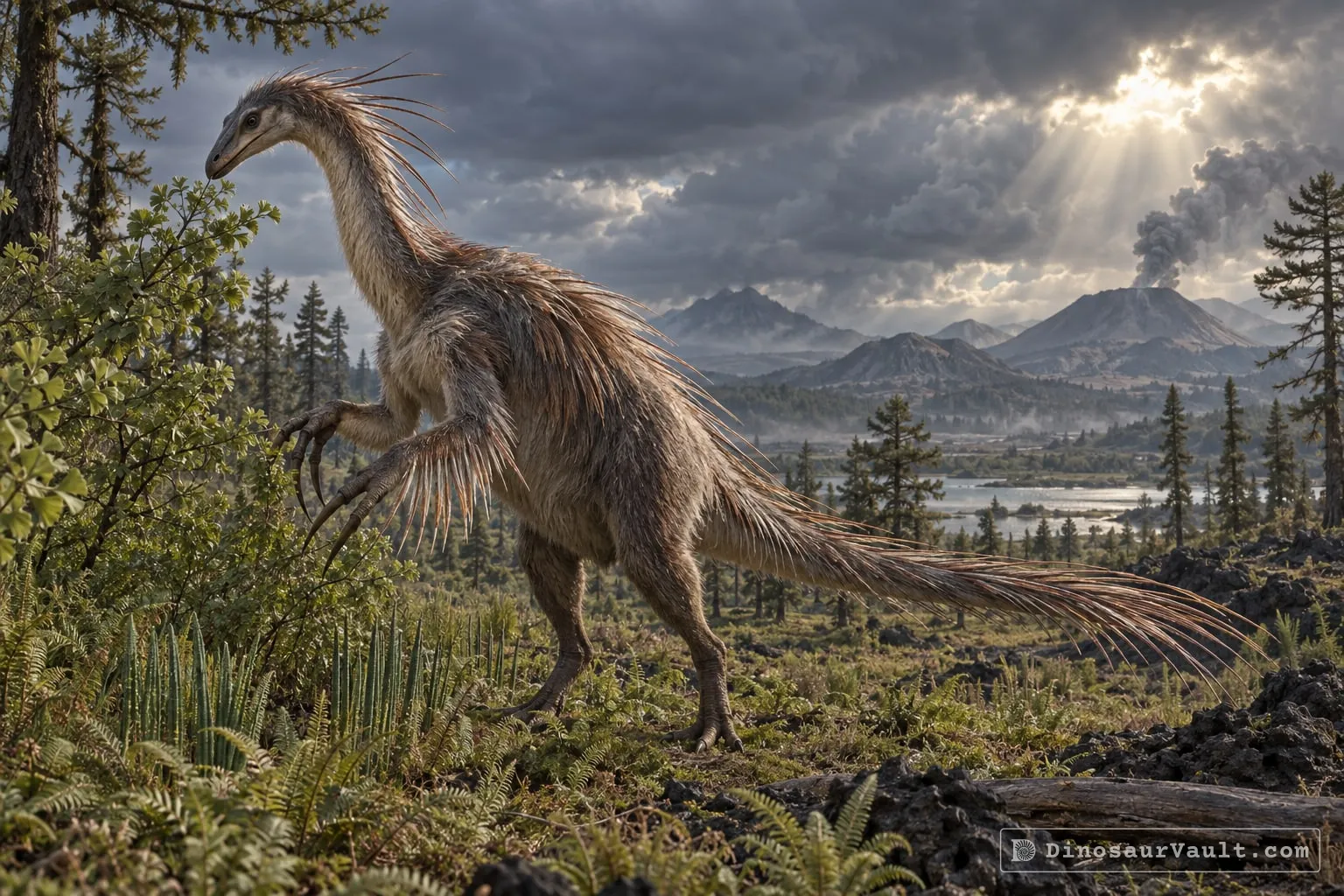
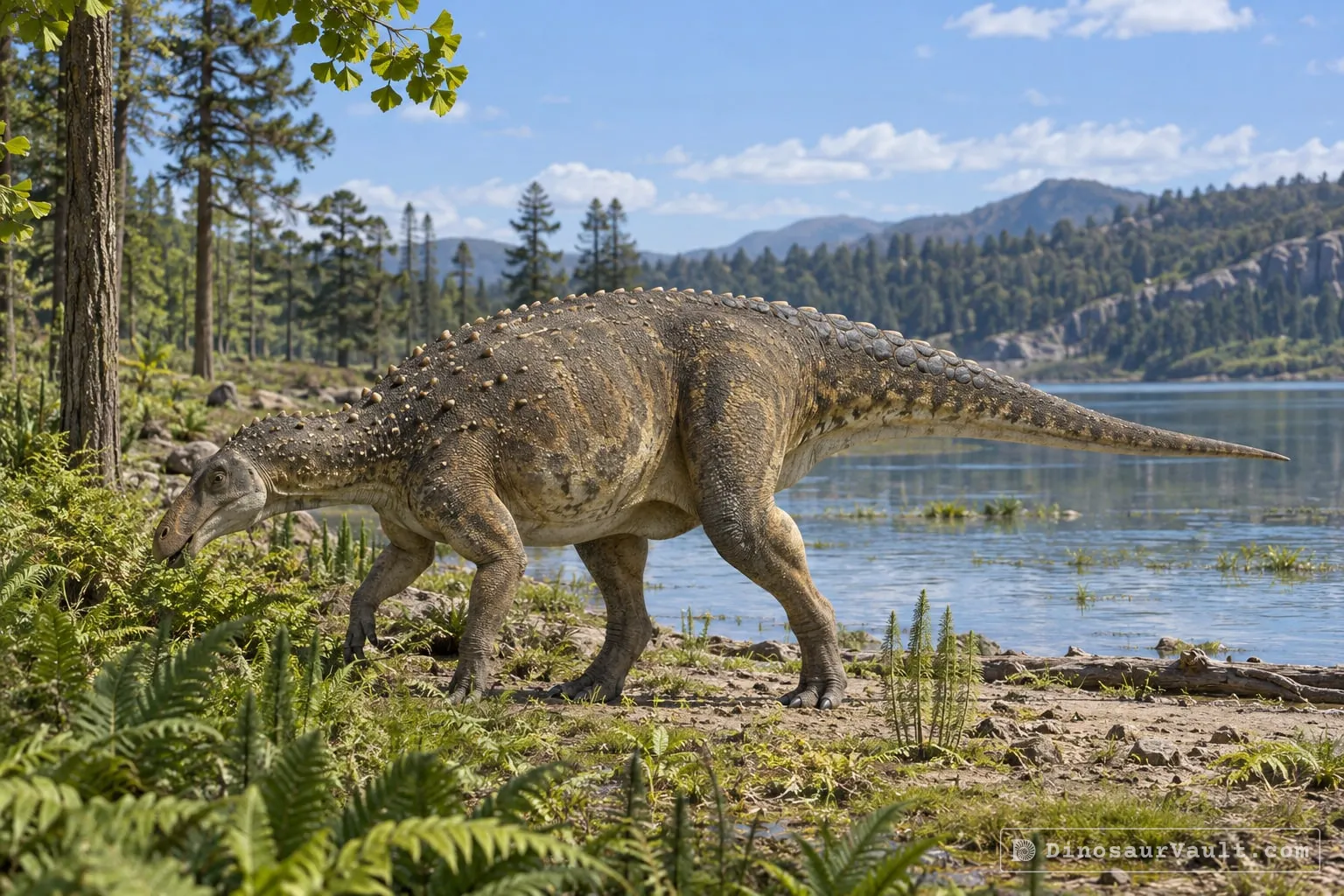


A rock formation can hold fossils laid down millions of years apart, so not every animal here met Psittacosaurus.
The evidence
The science behind Psittacosaurus
Which parts of the picture come from its own bones, and which come from its relatives.
From its own fossils
- Many complete skeletons show a deep parrot-like beak, cheek projections, short arms and long hindlimbs.
- A fossil preserves scaly skin and long bristles along the top of the tail.
- Preserved pigment in one specimen shows a darker back and a lighter belly.
Borrowed from relatives
- Almost the entire skeleton is known from its own fossils, so its body shape needs little help from relatives.
- The tail bristles and color pattern of the best-preserved specimen are often extended to other species within Psittacosaurus.
Still unknown
- Which species the specimen with tail bristles belongs to.
- Whether every species had the same skin covering and color pattern.
- Whether older animals cared for the young found beside them.
Often drawn wrong
- It had no broad neck frill or long brow horns like Triceratops.
- The known bristles form a row on the upper tail, rather than a coat of long feathers over the whole body.
Discovery timeline
- 1923Named itOsborn
- 2002SkinMayr et al.
- 2013SkullHedrick & Dodson
- 2013Growing upZhao
- 2016SkinVinther et al.
Key papers
The research behind what we know of Psittacosaurus
Named it
Named a small plant eater from Mongolia with a deep skull and a parrot-like beak.
Two Lower Cretaceous dinosaurs of Mongolia. American Museum Novitates 95: 1-10
No link available
Skin
Described long bristles preserved along the upper tail of a Psittacosaurus specimen with scaly skin.
Bristle-like integumentary structures at the tail of the horned dinosaur Psittacosaurus. Naturwissenschaften 89: 361-365
Read the paper : Bristle-like integumentary structures at the tail of the horned dinosaur Psittacosaurus (opens in a new tab)Skull
Compared skull shapes and proposed that several named forms represented variation and burial distortion within the same species.
Lujiatun Psittacosaurids: Understanding Individual and Taphonomic Variation Using 3D Geometric Morphometrics. PLoS ONE 8: e69265
Read the paper : Lujiatun Psittacosaurids: Understanding Individual and Taphonomic Variation Using 3D Geometric Morphometrics (opens in a new tab)Growing up
Studied clusters of young Psittacosaurus and proposed that juveniles of different ages sometimes gathered together.
Juvenile-only clusters and behaviour of the Early Cretaceous dinosaur Psittacosaurus. Acta Palaeontologica Polonica
Read the paper : Juvenile-only clusters and behaviour of the Early Cretaceous dinosaur Psittacosaurus (opens in a new tab)Skin
Reconstructed a darker back and lighter belly in one specimen, a camouflage pattern suited to the soft light of woodland.
3D Camouflage in an Ornithischian Dinosaur. Current Biology 26: 2456-2462
Read the paper : 3D Camouflage in an Ornithischian Dinosaur (opens in a new tab)
Close relatives
Other members of Ceratopsia


Sources: Wikidata