Beipiaosaurus
Type species Beipiaosaurus inexpectus
- Lived
- 126 to 120 million years ago, Early Cretaceous
- Diet
- Herbivore
- Length
- about 2 m (7 ft)
- Group
- Theropods
- Found in
- China
- Named by
- Xu et al. 1999
Size comparison
To scale

Scale in meters
Where its fossils were found
The evidence
Today

125 million years ago
Habitat
It lived near lakes in the Yixian Formation of China. Neighbors included Psittacosaurus, Sinornithosaurus and Sinosauropteryx.
Field notes
About Beipiaosaurus
What it was like
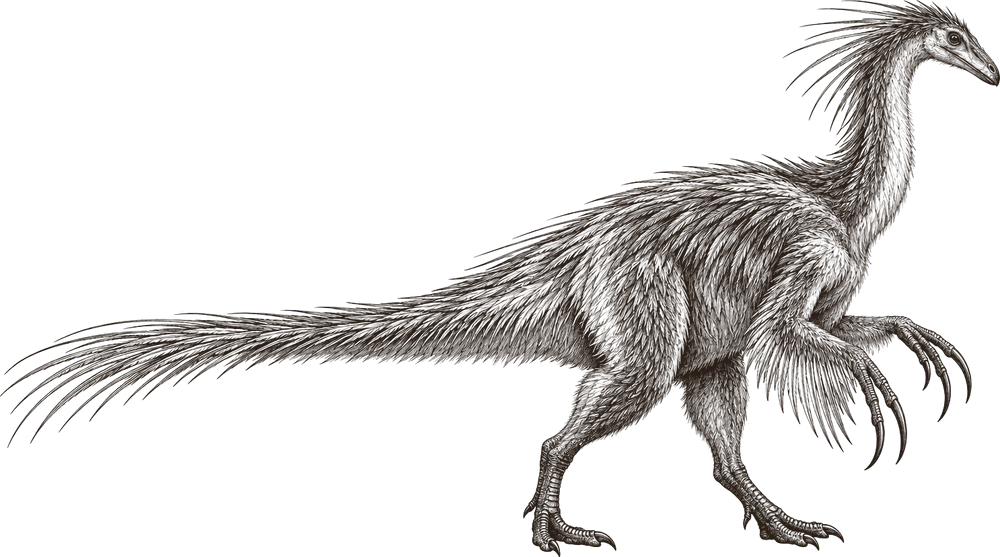
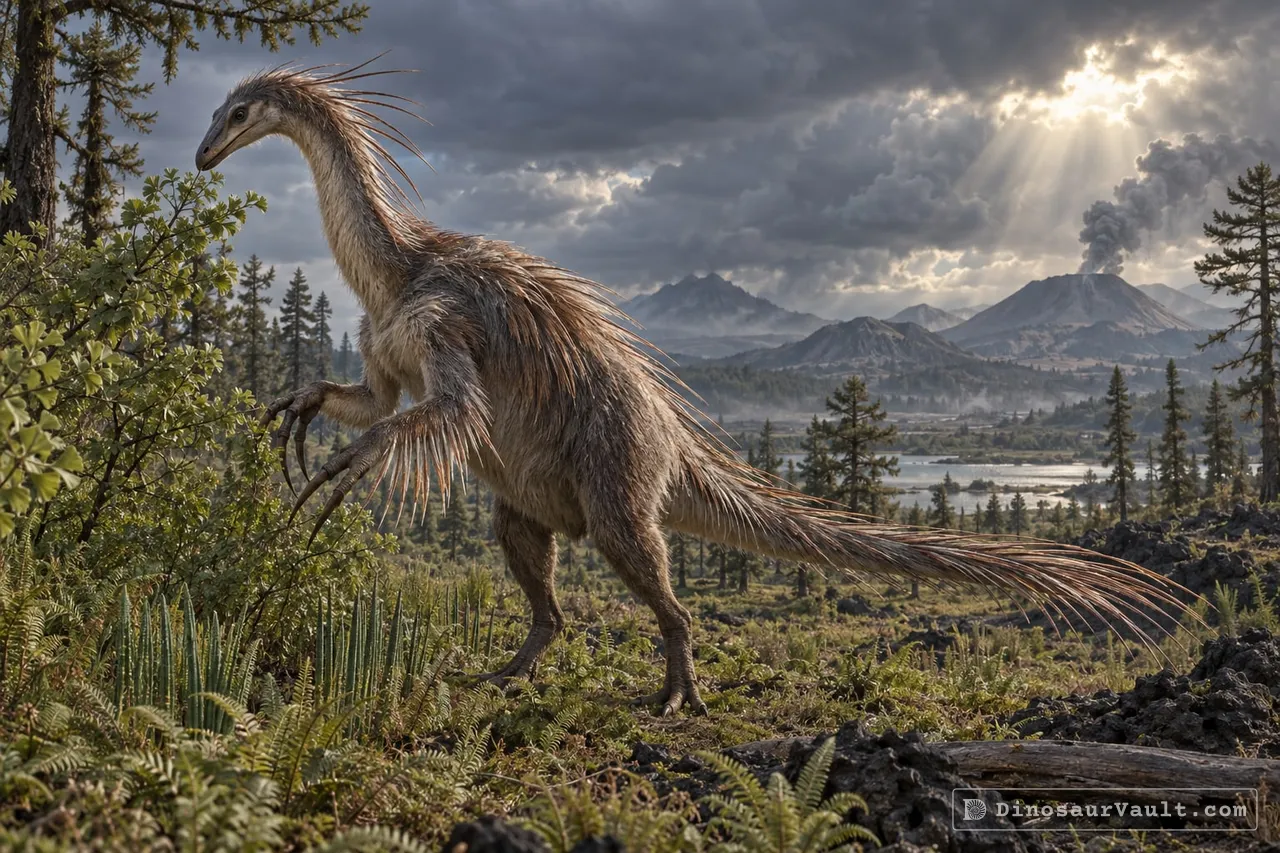
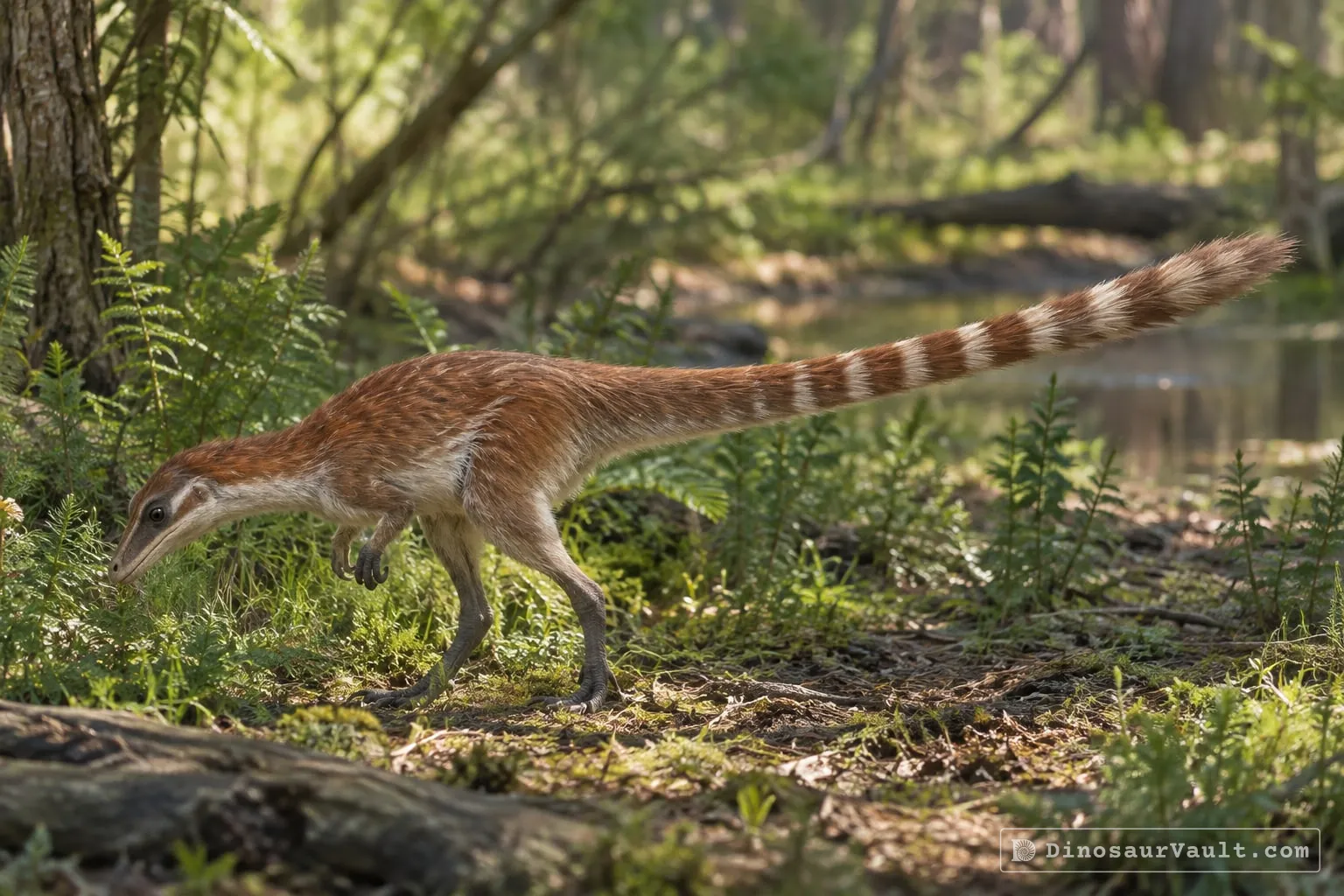
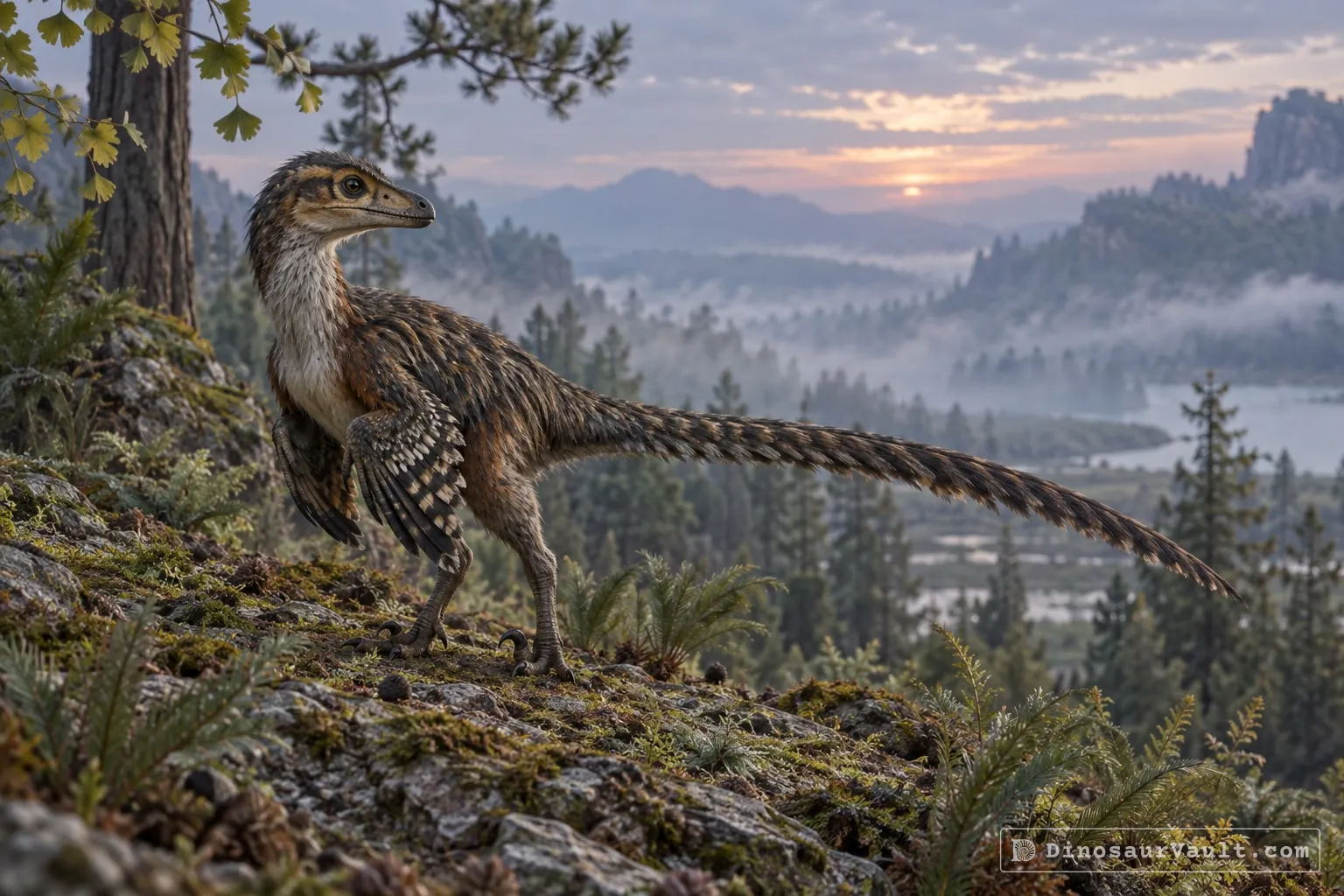
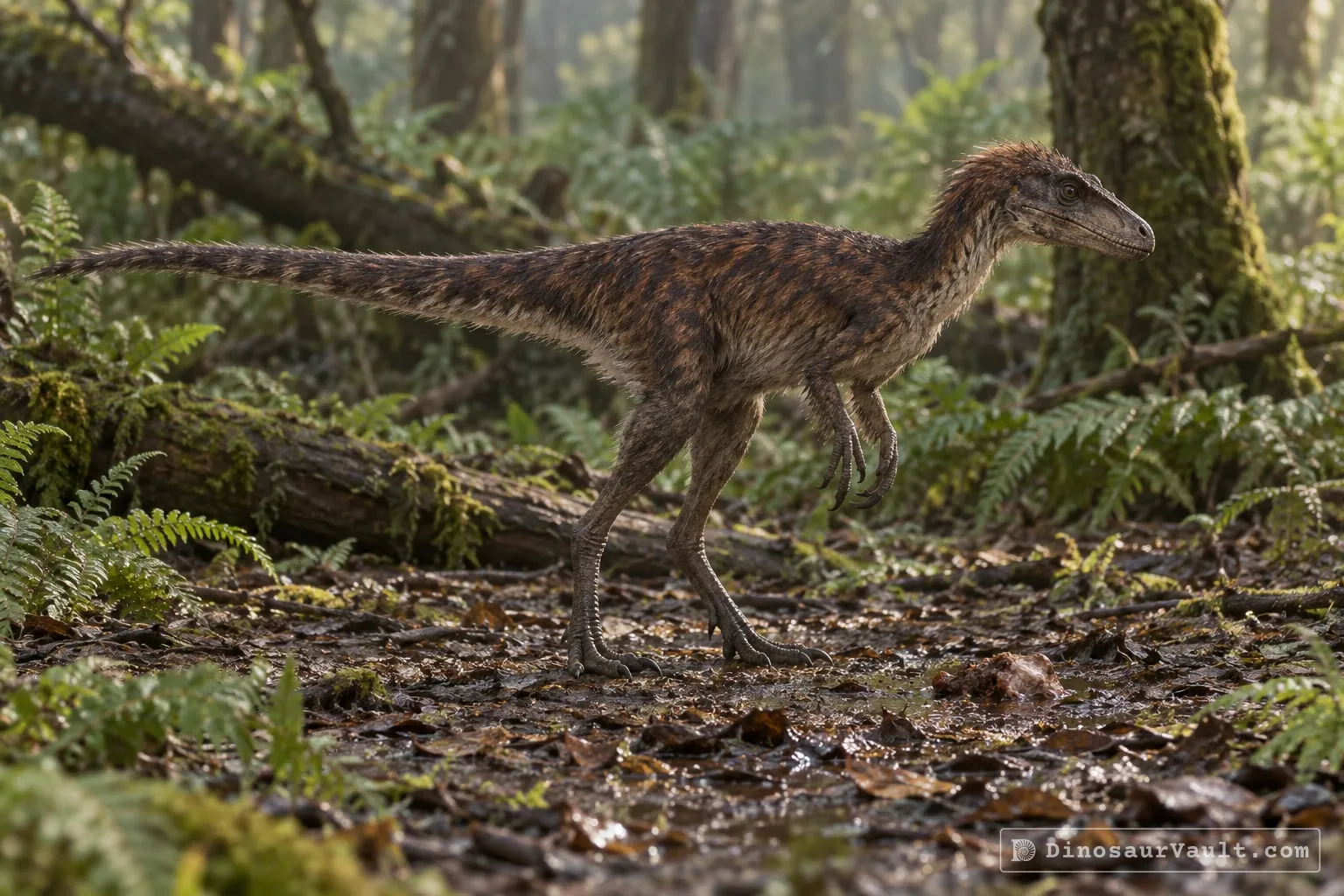
Beipiaosaurus was an unusual theropod: a member of the therizinosaurs, a group of plant-eating dinosaurs that evolved from meat-eating ancestors and ended up with long claws, small heads, and rounded bodies built for digesting plants. Its body was covered in long, simple, filament-like feathers, among the clearest early evidence that feathers were not limited to the close relatives of birds. Beipiaosaurus grew to about 2 meters (6.6 feet) long. The type species is Beipiaosaurus inexpectus.
Its world
Beipiaosaurus lived from about 126 to 120 million years ago, during the Early Cretaceous, in what is now China. Its fossils come from the Yixian Formation, alongside other feathered dinosaurs such as Sinornithosaurus, Sinosauropteryx, and Caudipteryx, the plant eater Psittacosaurus, and the much larger, feathered predator Yutyrannus. Together, these finds make the Yixian Formation one of the richest sources of feathered dinosaur fossils anywhere in the world.
How it was found
Xu and colleagues named Beipiaosaurus in 1999. Two fossil finds are known today. Its discovery helped show that feathers were spread widely across the theropod family tree, not confined to the small group of dinosaurs most closely related to birds.
Field gallery
More views of Beipiaosaurus
Scenes reconstructed from the available fossil evidence.
1 of 7
Lived alongside
Found in the same rock formations
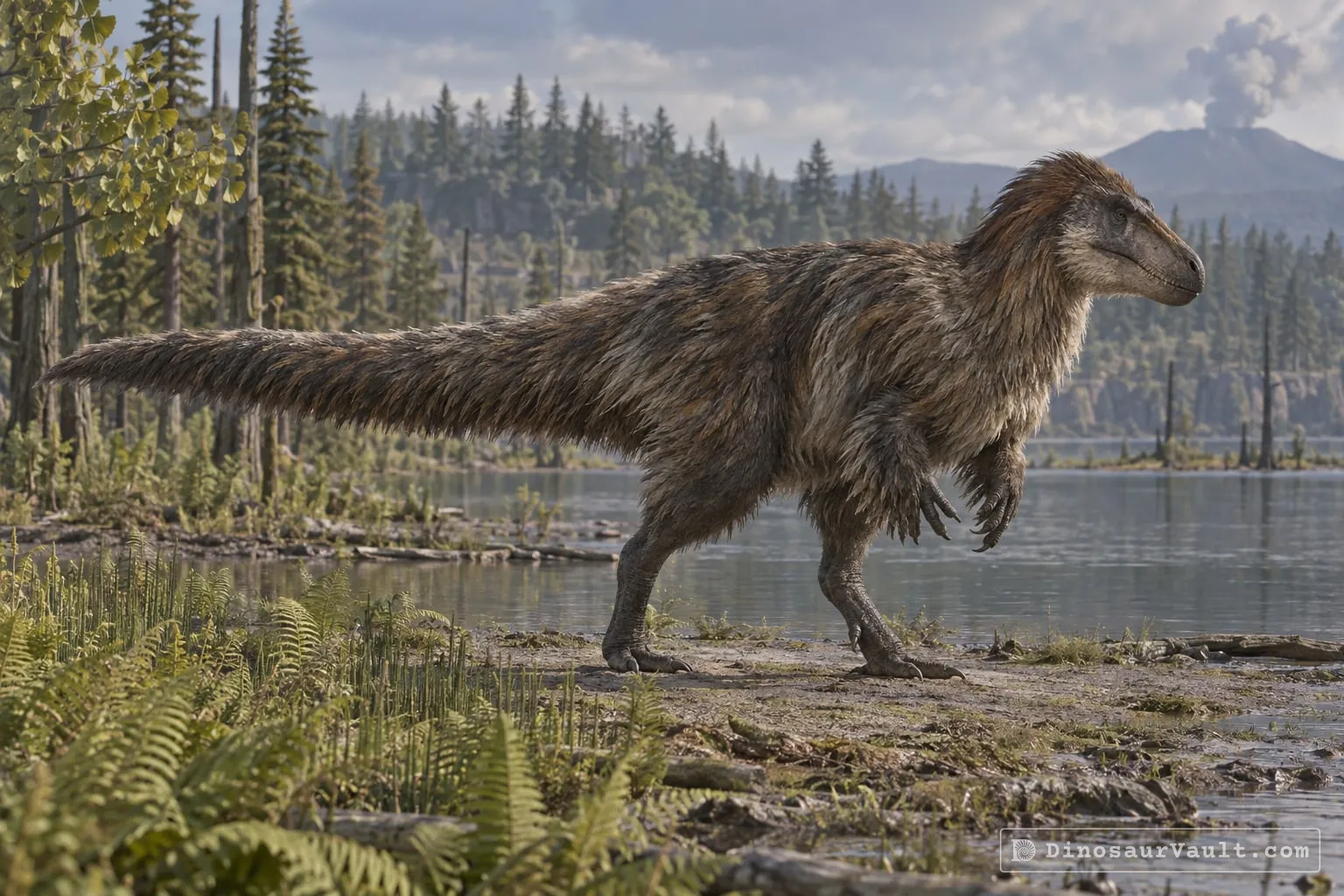
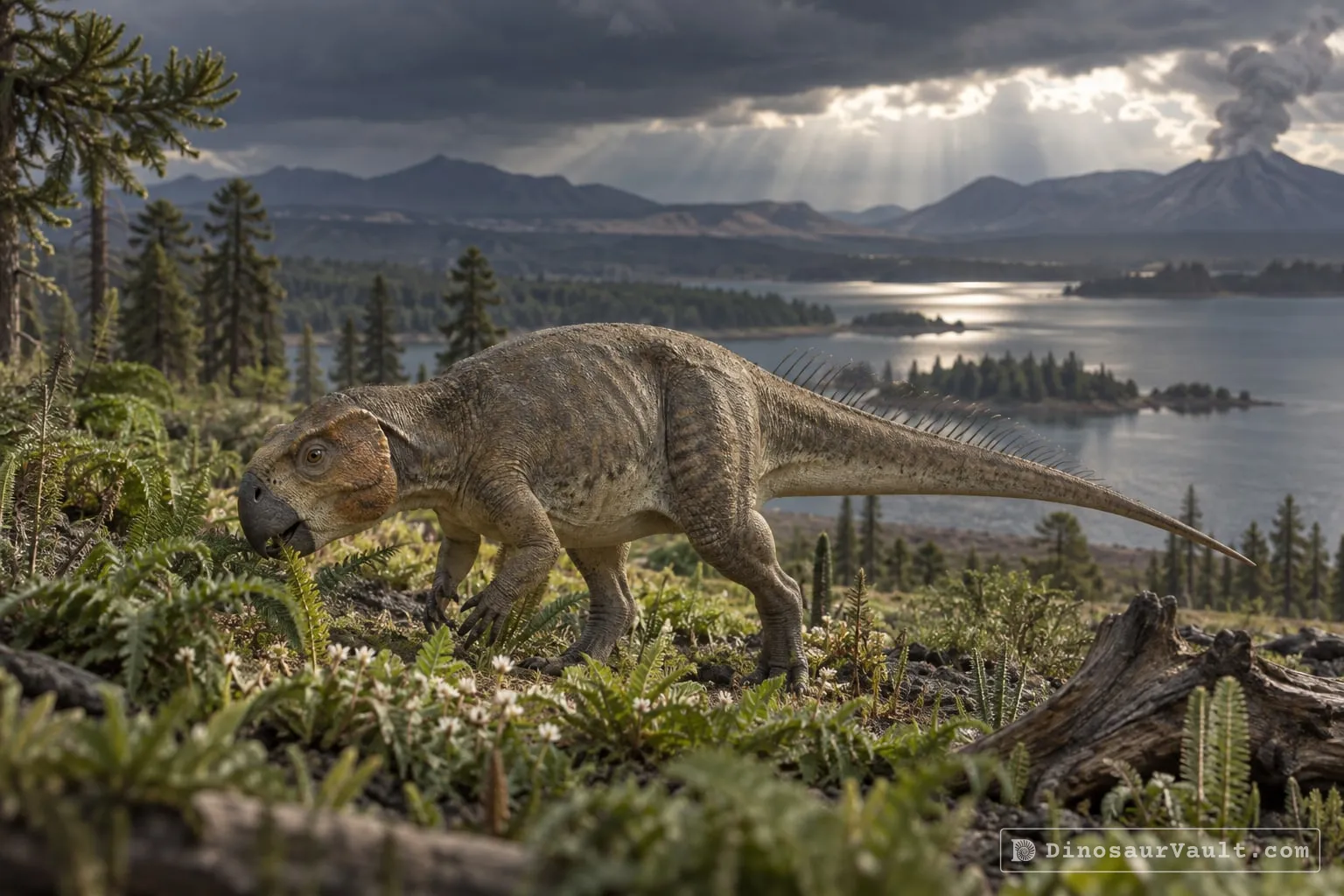
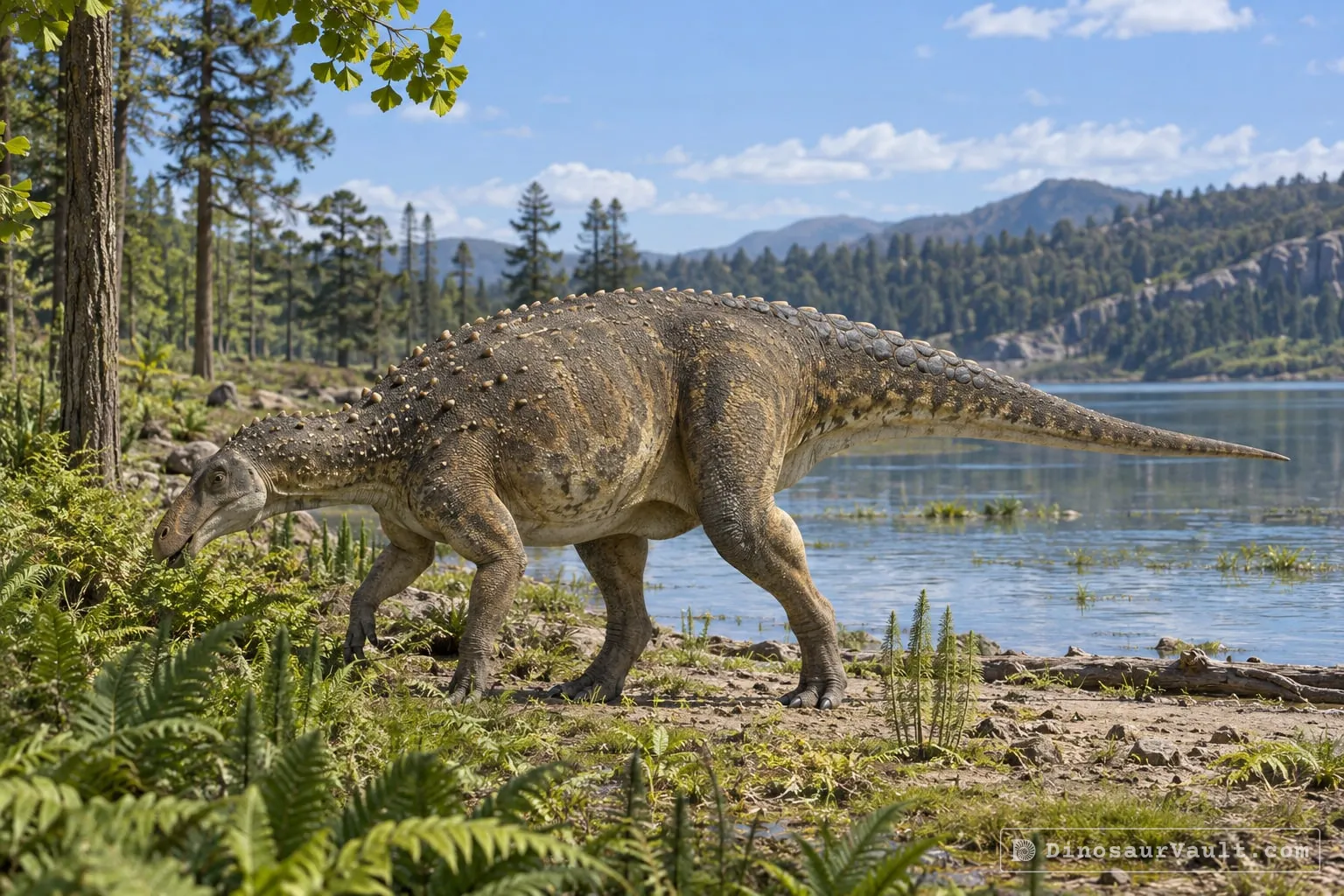
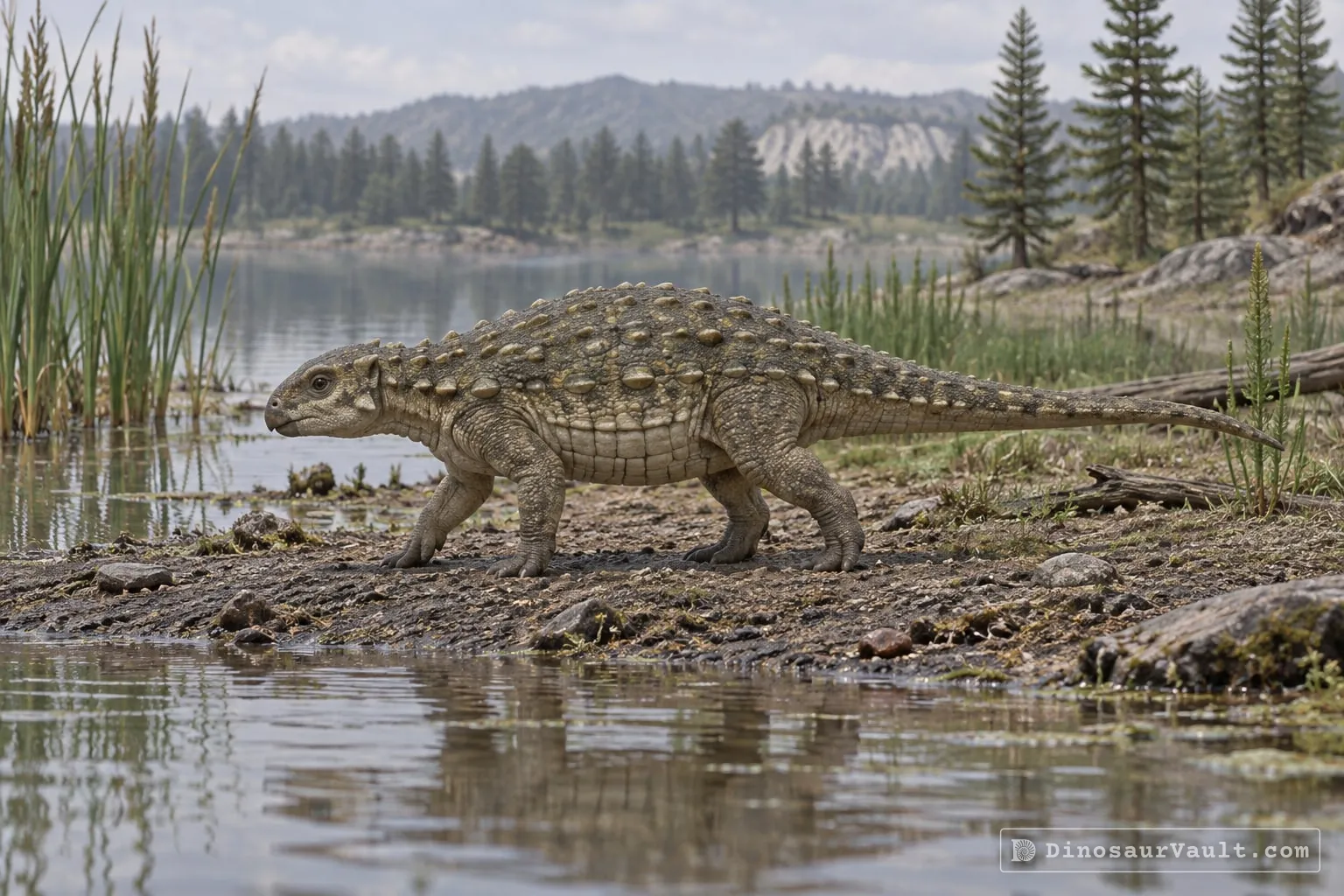
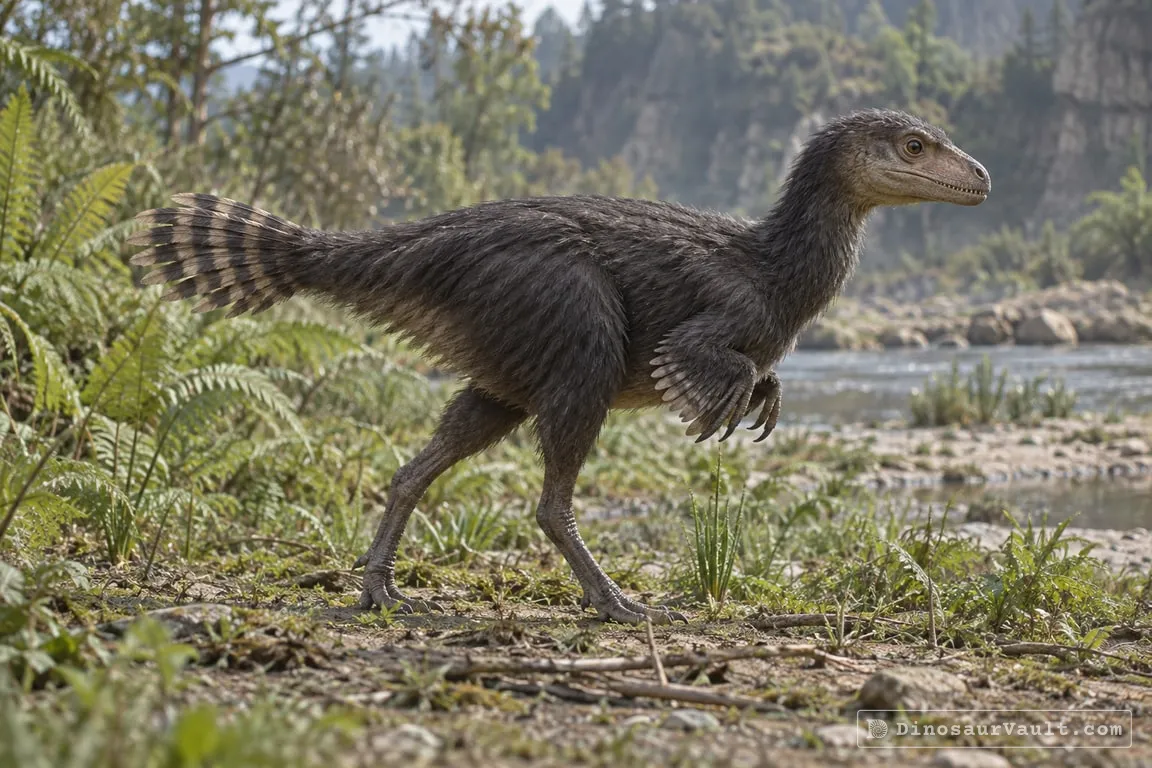


A rock formation can hold fossils laid down millions of years apart, so not every animal here met Beipiaosaurus.
The evidence
The science behind Beipiaosaurus
Which parts of the picture come from its own bones, and which come from its relatives.
From its own fossils
- Fossils preserve a body covering of fine, simple feathers.
- Longer, broad, unbranched feathers occur around the neck, shoulders and rump.
- Skull and limb bones show a toothed head, long arms and curved hand claws.
Borrowed from relatives
- Comparisons with Alxasaurus help fill gaps in the body outline of this early therizinosaur.
Still unknown
- Its complete color pattern.
- Whether the broad feathers served for display or another purpose.
- The body proportions of its hatchlings.
Often drawn wrong
- A bare, scaly body leaves out its preserved feather covering.
- Its broad feathers were simple filaments, rather than the flight feathers of a modern bird.
- A miniature Therizinosaurus gives it the wrong body proportions.
Discovery timeline
- 1999Named itXu, Tang & Wang
- 2009SkinXu, Zheng & You
- 2021Full descriptionLiao et al.
Key papers
The research behind what we know of Beipiaosaurus
Named it
Named a small therizinosaur with preserved body filaments, helping establish that therizinosaurs belonged among feathered theropods.
A therizinosauroid dinosaur with integumentary structures from China. Nature 399: 350-354
Read the paper : A therizinosauroid dinosaur with integumentary structures from China (opens in a new tab)Skin
Described long, broad, unbranched feathers in Beipiaosaurus, adding a simple feather form to the known range of dinosaur coverings.
A new feather type in a nonavian theropod and the early evolution of feathers. Proceedings of the National Academy of Sciences 106: 832-834
Read the paper : A new feather type in a nonavian theropod and the early evolution of feathers (opens in a new tab)Full description
Described the skeleton behind the skull, showing how its limbs and body combine early theropod features with the developing therizinosaur body plan.
Postcranial osteology of Beipiaosaurus inexpectus (Theropoda: Therizinosauria). PLOS ONE 16: e0257913
Read the paper : Postcranial osteology of Beipiaosaurus inexpectus (Theropoda: Therizinosauria) (opens in a new tab)
Close relatives
Other members of Therizinosauroidea


Sources: Wikidata