Akainacephalus
"thorn head"
Type species Akainacephalus johnsoni
- Lived
- 84 to 72 million years ago, Late Cretaceous
- Diet
- Herbivore
- Group
- Ankylosaurs, Ankylosauridae
- Found in
- United States
- Named by
- Wiersma and Irmis 2018
Where its fossils were found
The evidence
Today

80 million years ago
Habitat
A wet plain crossed by rivers, with ponds in the low ground. Gryposaurus, Kosmoceratops and Teratophoneus lived in the same region.
Field notes
About Akainacephalus
What it was like
Akainacephalus was an ankylosaur, a low, armored plant eater with a club on its tail. Its skull was covered in spiky, cone-shaped bumps. It was more like Asian ankylosaurs than its North American neighbors, which suggests its ancestors came from Asia.
Its world
It lived in the Late Cretaceous, in what is now Utah. It comes from the Kaiparowits Formation, where it shared the land with the tyrannosaur Teratophoneus, the horned Kosmoceratops and Utahceratops, and the duckbill Gryposaurus.
How it was found
Wiersma and Irmis named Akainacephalus in 2018. The type species is Akainacephalus johnsoni.
Field gallery
More views of Akainacephalus
Scenes reconstructed from the available fossil evidence.
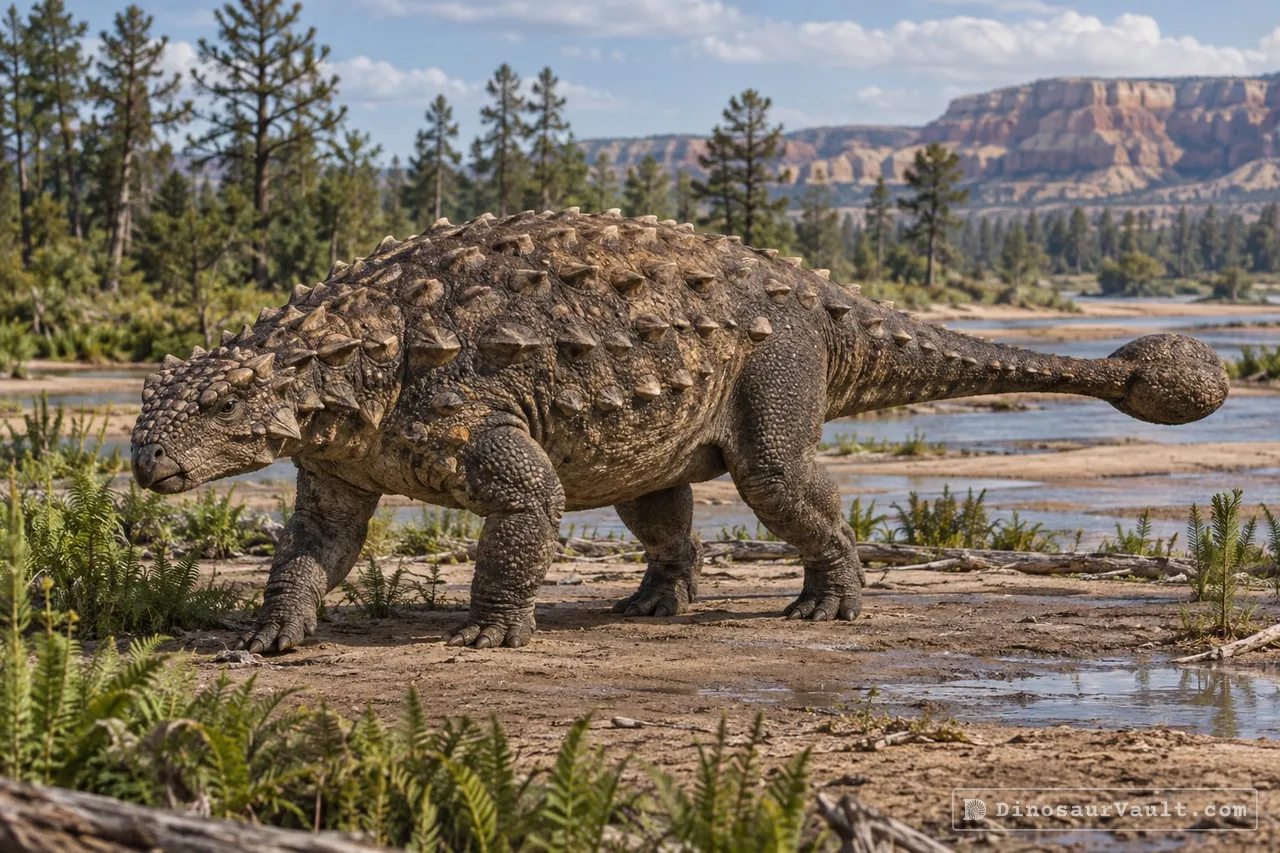
1 of 3
Lived alongside
Found in the same rock formations
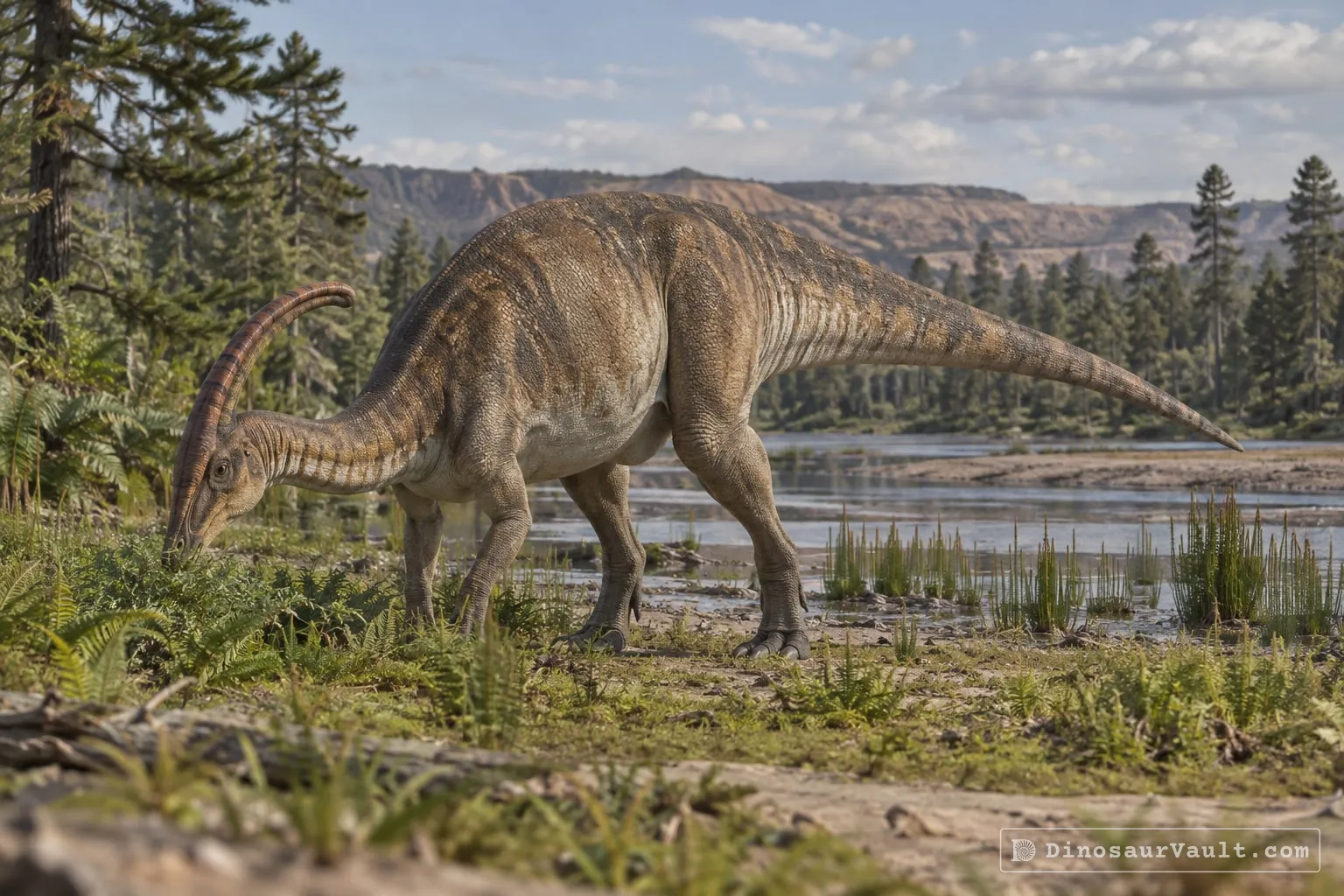
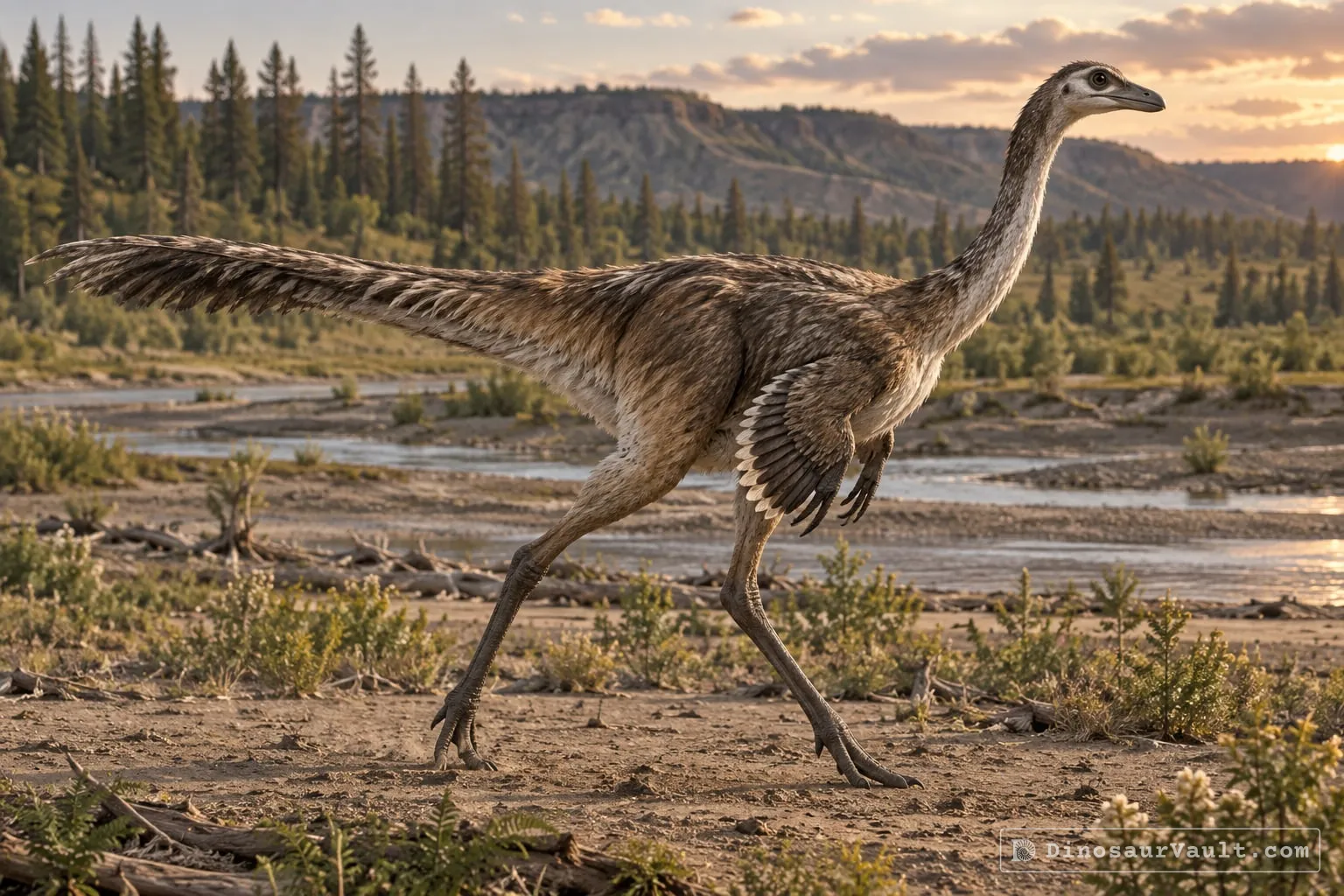
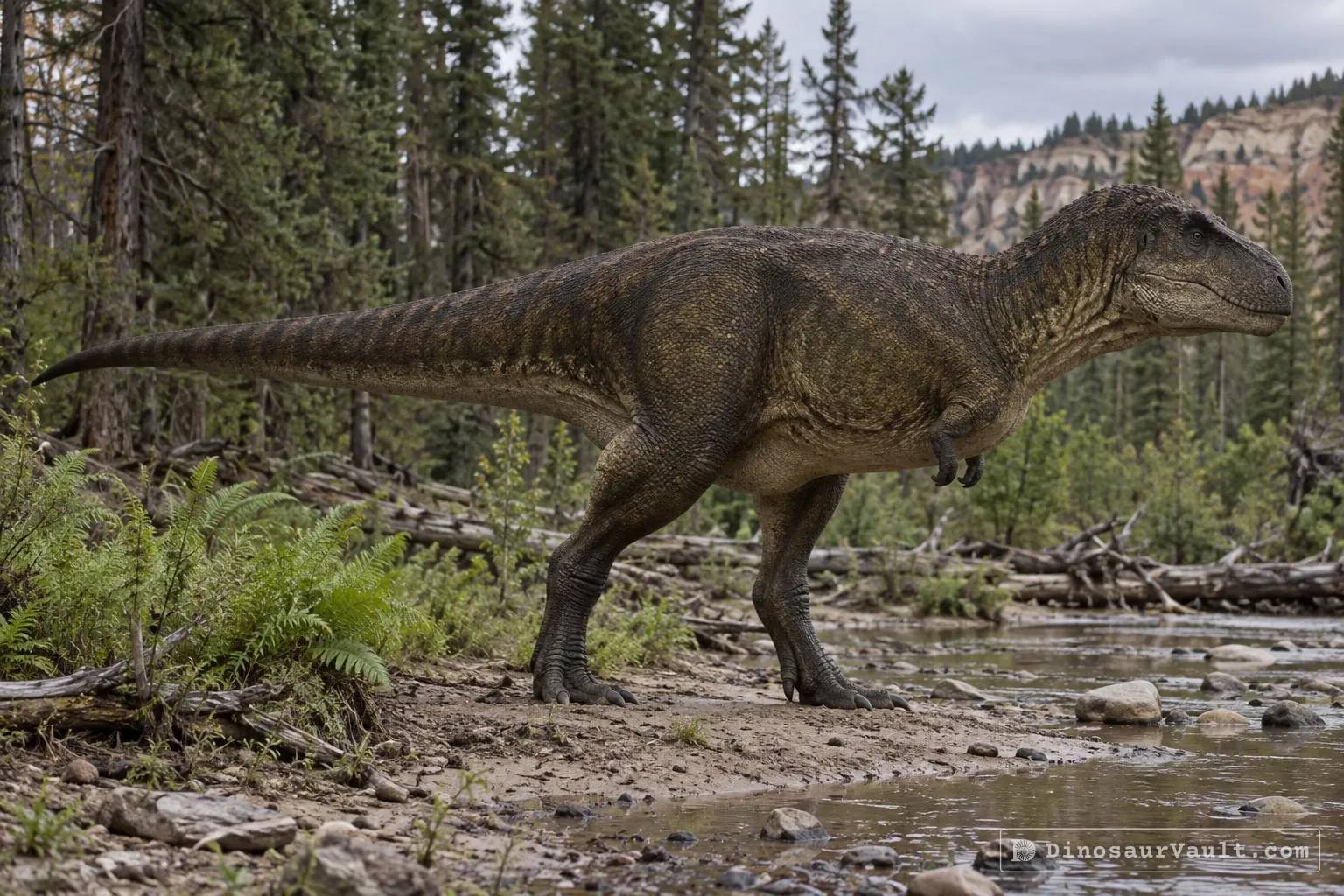
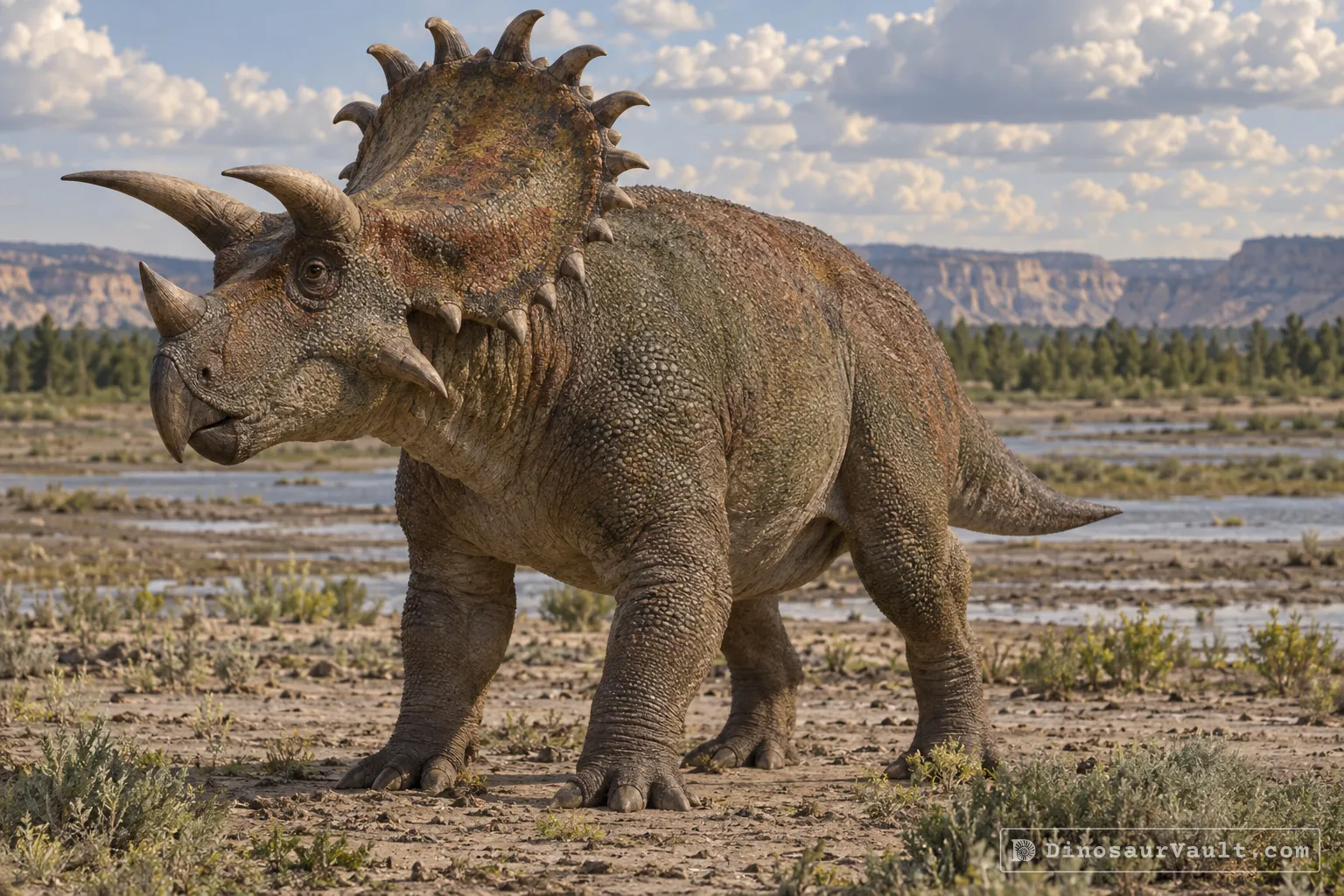
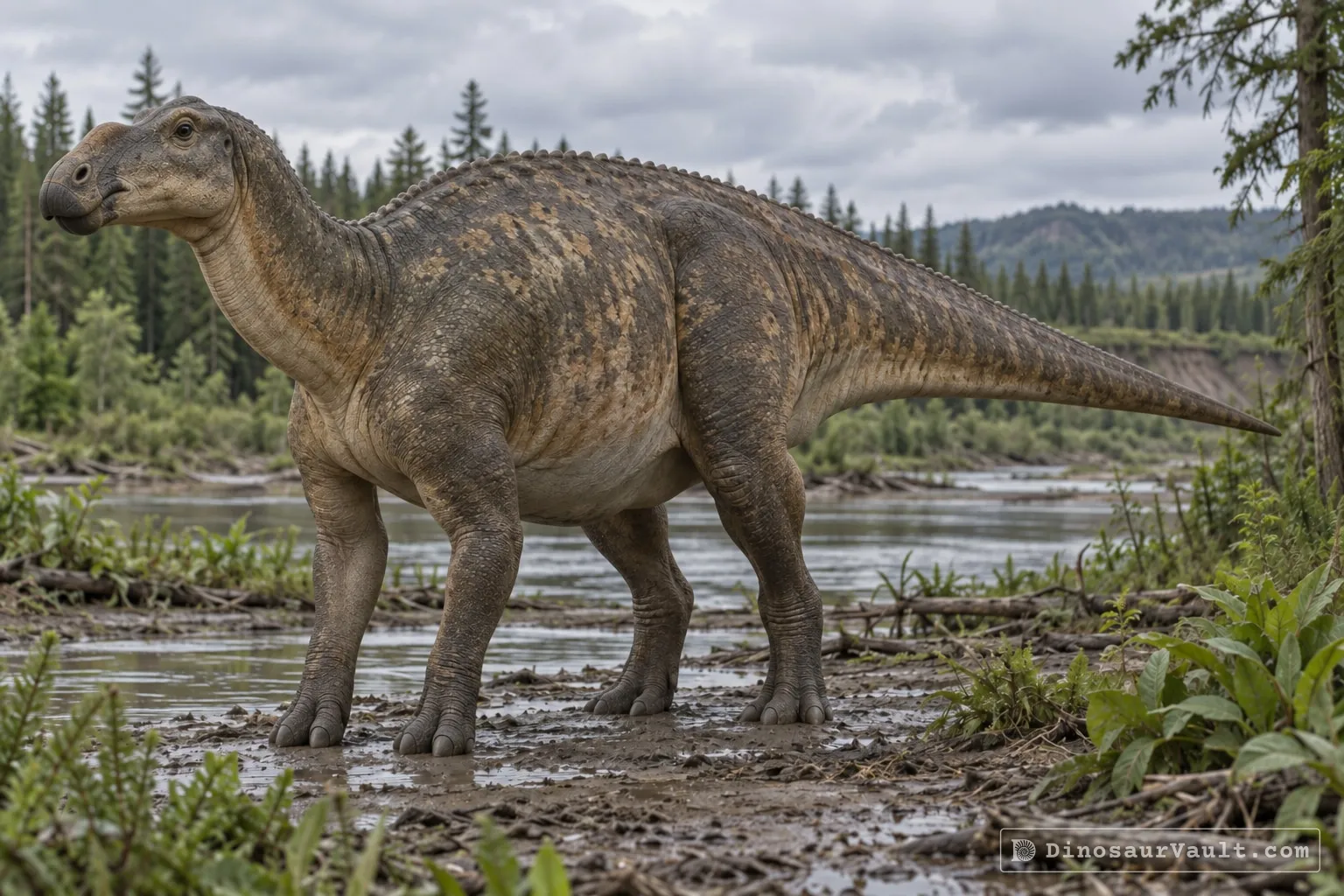
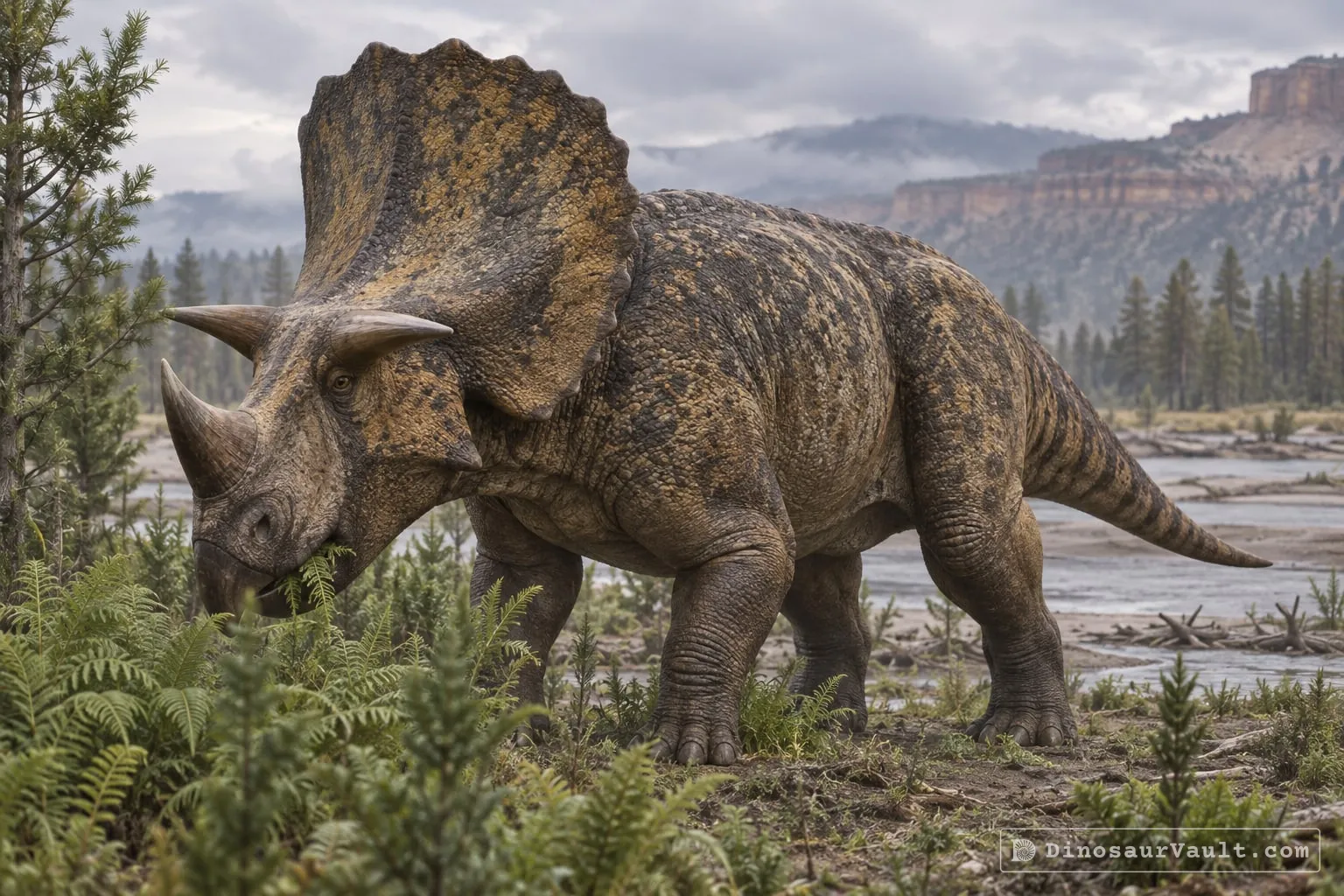
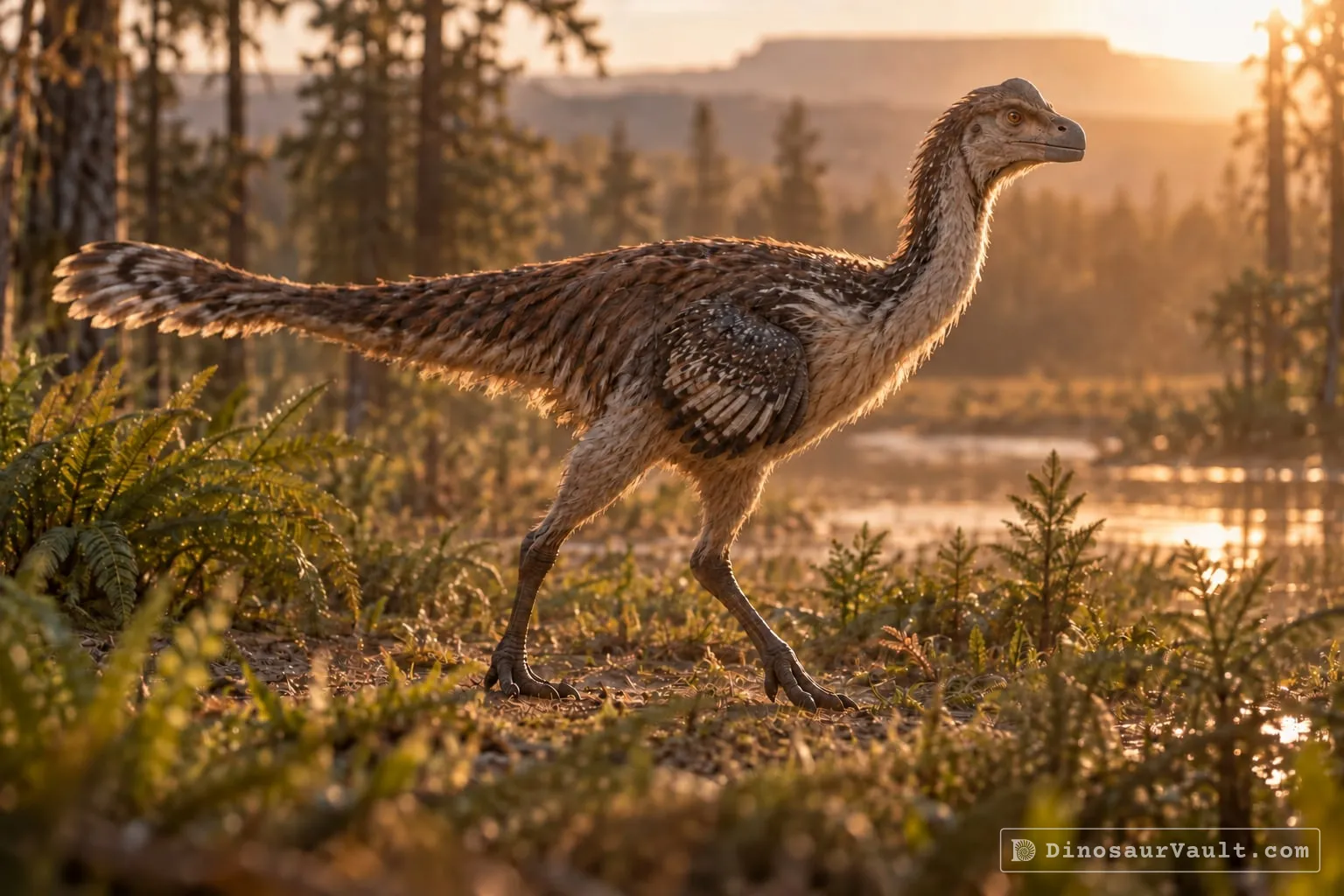
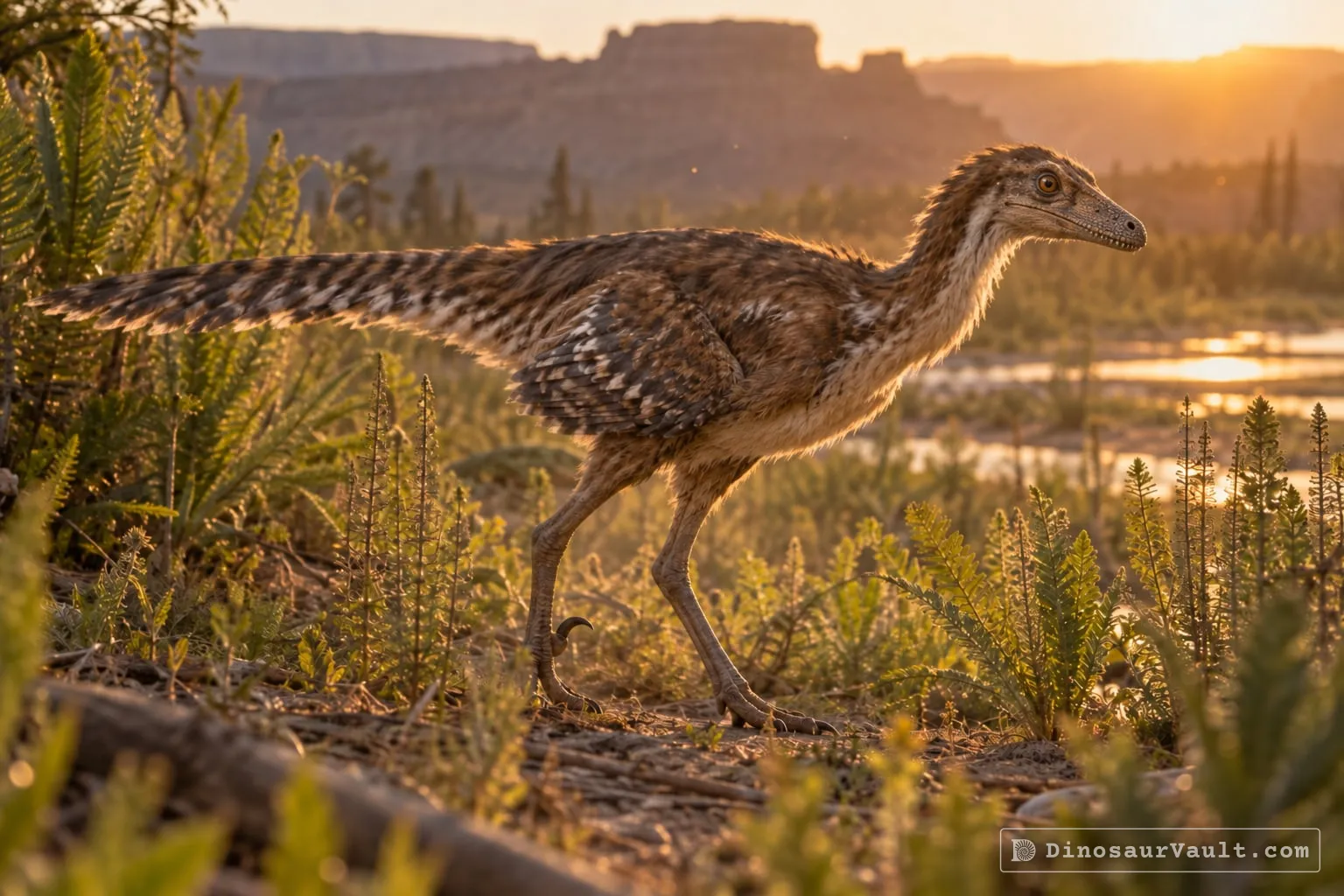


A rock formation can hold fossils laid down millions of years apart, so not every animal here met Akainacephalus.
The evidence
The science behind Akainacephalus
Which parts of the picture come from its own bones, and which come from its relatives.
From its own fossils
- A partial skeleton preserves the complete skull, much of the backbone, limb bones and a complete tail club.
- Cone-shaped and pyramid-shaped armor covers the skull, with large horns sweeping backward behind the eyes.
- Bony armor includes bands around the neck and separate plates from the body.
Borrowed from relatives
- Missing parts of the feet and body armor are restored by comparison with ankylosaurids such as Euoplocephalus and Pinacosaurus.
Still unknown
- Its color and the complete arrangement of its body armor.
- Whether it used its tail club against predators, rivals or both.
Discovery timeline
- 2009Close relativesArbour
- 2015Family treeArbour & Currie
- 2018Named itWiersma & Irmis
Key papers
The research behind what we know of Akainacephalus
Close relatives
Modeled tail clubs of Euoplocephalus and Dyoplosaurus, finding that large clubs could deliver bone-breaking blows.
Estimating Impact Forces of Tail Club Strikes by Ankylosaurid Dinosaurs. PLoS ONE 4: e6738
Read the paper : Estimating Impact Forces of Tail Club Strikes by Ankylosaurid Dinosaurs (opens in a new tab)Family tree
Found that ankylosaurids evolved stiff tail handles before enlarged bony knobs appeared at their tips.
Ankylosaurid dinosaur tail clubs evolved through stepwise acquisition of key features. Journal of Anatomy 227: 514-523
Read the paper : Ankylosaurid dinosaur tail clubs evolved through stepwise acquisition of key features (opens in a new tab)Named it
Described the skull, skeleton and tail club, and linked its spiky skull armor to Nodocephalosaurus and Asian ankylosaurs.
A new southern Laramidian ankylosaurid, Akainacephalus johnsoni gen. et sp. nov., from the upper Campanian Kaiparowits Formation of southern Utah, USA. PeerJ 6: e5016
Read the paper : A new southern Laramidian ankylosaurid, Akainacephalus johnsoni gen. et sp. nov., from the upper Campanian Kaiparowits Formation of southern Utah, USA (opens in a new tab)
Close relatives
Other members of Ankylosauridae


Sources: Wikidata