Parasaurolophus
pair-uh-sor-OL-oh-fus
"near crested lizard"
- Lived
- 84 to 72 million years ago, Late Cretaceous
- Diet
- Herbivore
- Length
- about 9.5 m (31 ft)
- Weight
- about 2.5 metric tons (2.8 short tons)
- Group
- Ornithopods, Hadrosauridae
- Found in
- United States and Canada
- Named by
- Parks 1922
Size comparison
To scale
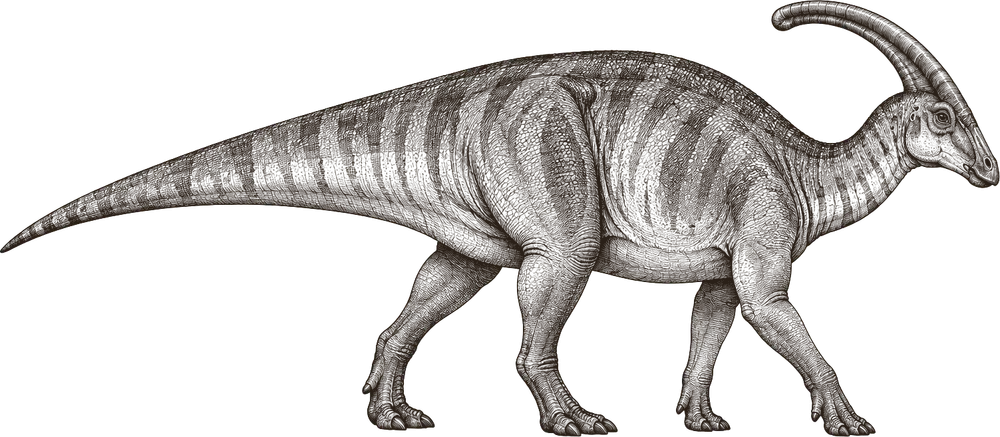

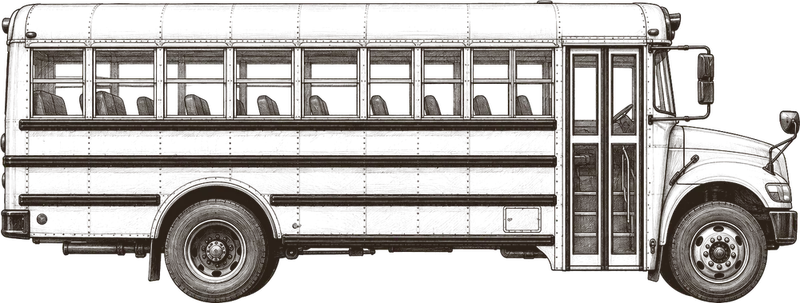
Scale in meters
Where its fossils were found
The evidence
Today

80 million years ago
Habitat
Rivers crossed wooded floodplains in Alberta, where Parasaurolophus lived in the Dinosaur Park landscape. Regional neighbors included Styracosaurus, Struthiomimus and Chasmosaurus.
A Dinosaur Vault short
Can We Hear a Dinosaur Through Its Skull?
Scientists scanned the hollow crest of Parasaurolophus and modeled the spaces inside it to explore how it might have sounded.
Subscribe on YouTubeField notes
About Parasaurolophus
What it was like
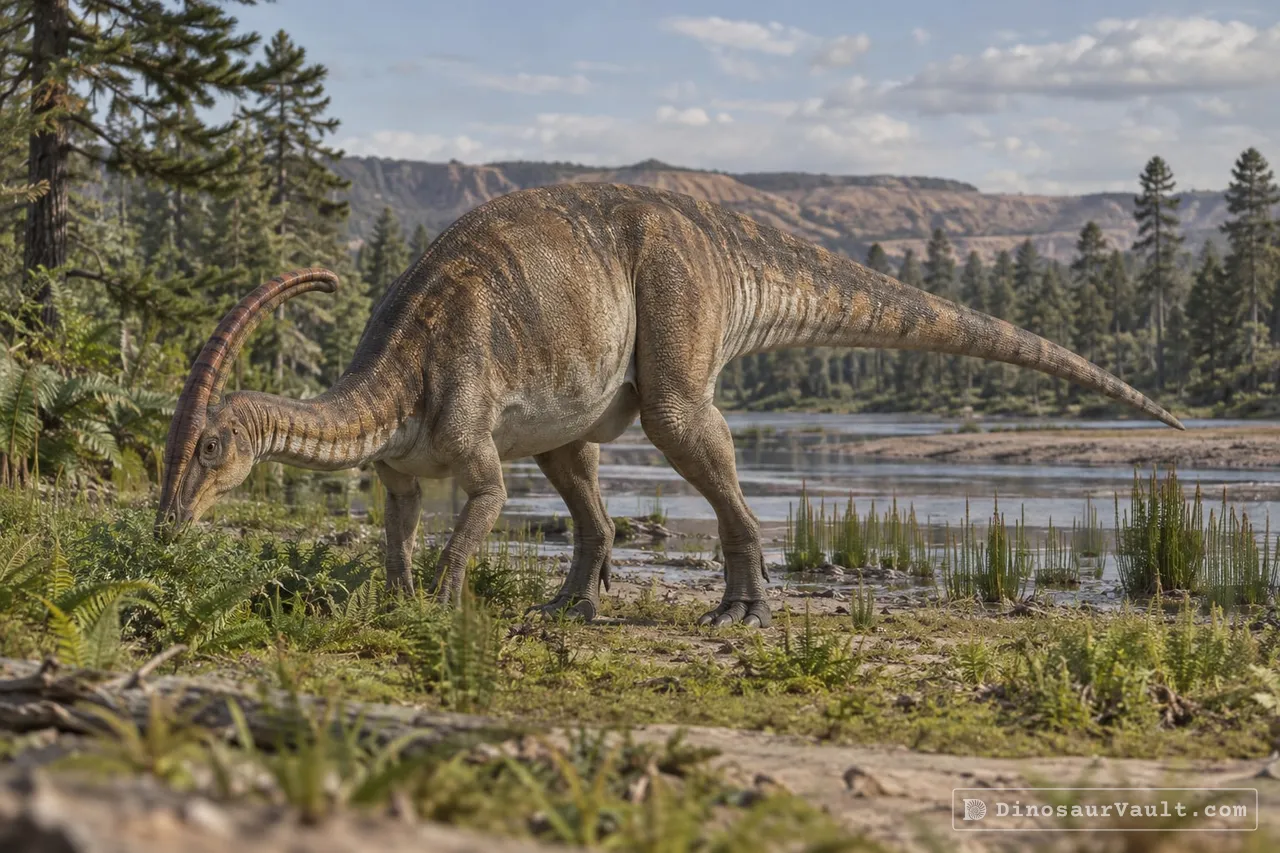
Parasaurolophus is known for the long, curved, tube-shaped crest that swept back from its skull, one of the most unusual head ornaments of any dinosaur. At about 9.5 meters long and 2500 kilograms in weight, it walked on two legs or four, browsing on plants with a wide, toothless beak backed by rows of grinding teeth.
The crest was hollow, with airways running through it from the nose to the tip and back again. Scientists think Parasaurolophus may have used it to make loud, low calls, and possibly to help members of a herd recognize each other by sight as well as sound.
Its world
Parasaurolophus lived in the Late Cretaceous, from about 84 to 72 million years ago, in what is now New Mexico, Utah, and Alberta. Its fossils come from formations such as Kirtland and Kaiparowits, rock layers laid down by ancient rivers and floodplains.
It lived alongside Tyrannosaurus and the smaller hunter Daspletosaurus, as well as the horned Pentaceratops and the dome-headed Stegoceras. Despite this crowd of predators, Parasaurolophus had few close relatives nearby, and remains a fairly rare find compared with other duck-billed dinosaurs.
How it was found
Parasaurolophus was named in 1922 by Parks, based on a skull and partial skeleton found in Alberta. Paleontologists have since recorded 15 finds across two countries, yet it is still known from fewer good skeletons than many of its relatives, such as Edmontosaurus and Corythosaurus.
Field gallery
More views of Parasaurolophus
Scenes reconstructed from the available fossil evidence.
1 of 7
Lived alongside
Found in the same rock formations
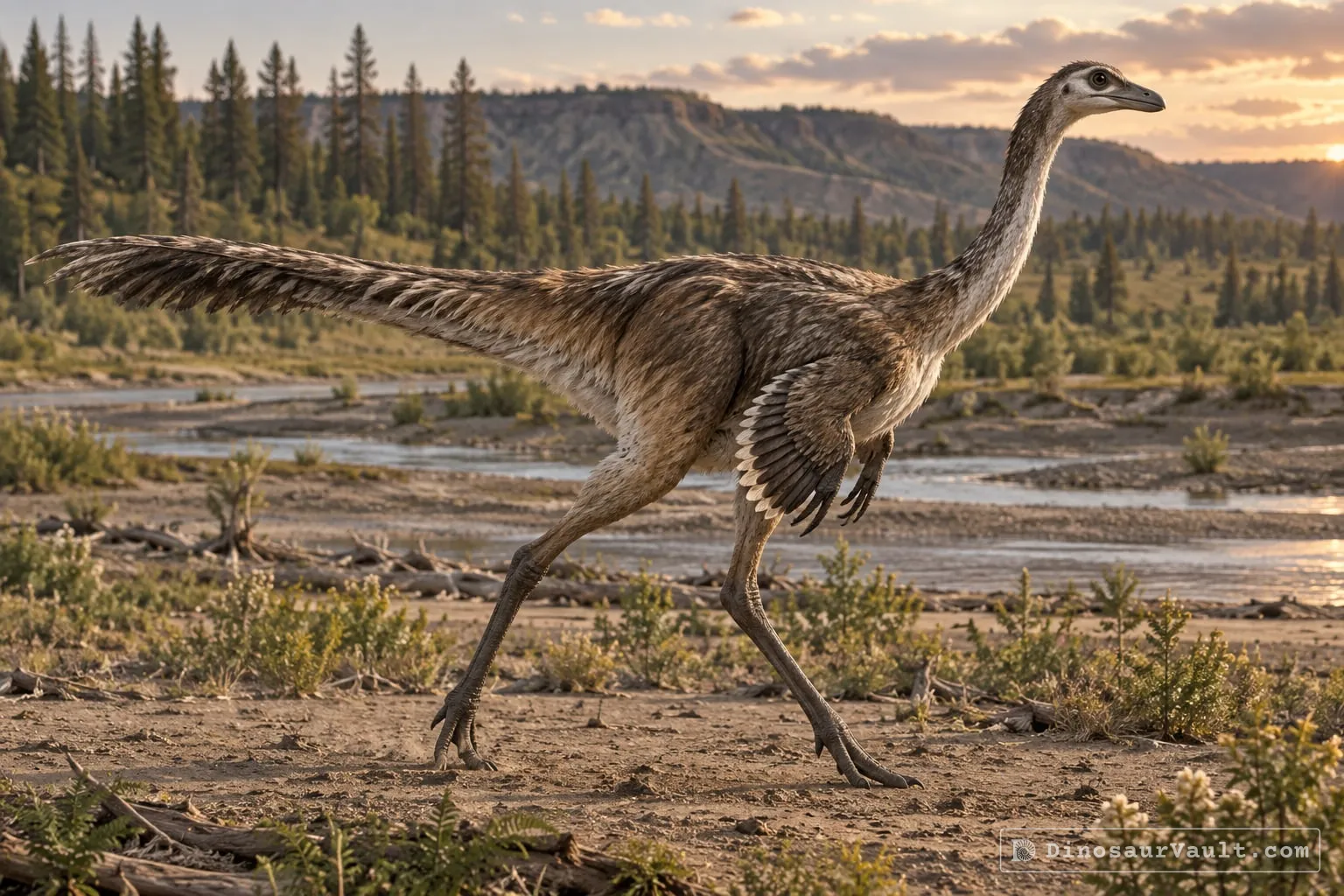
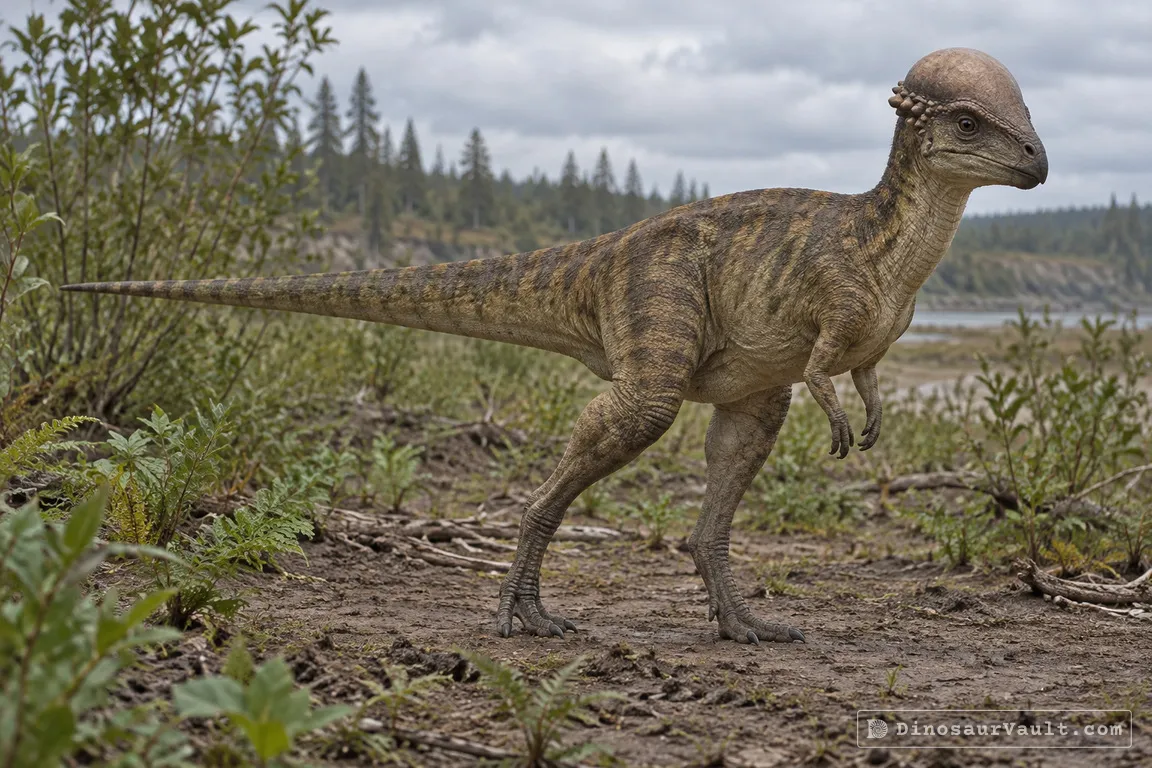
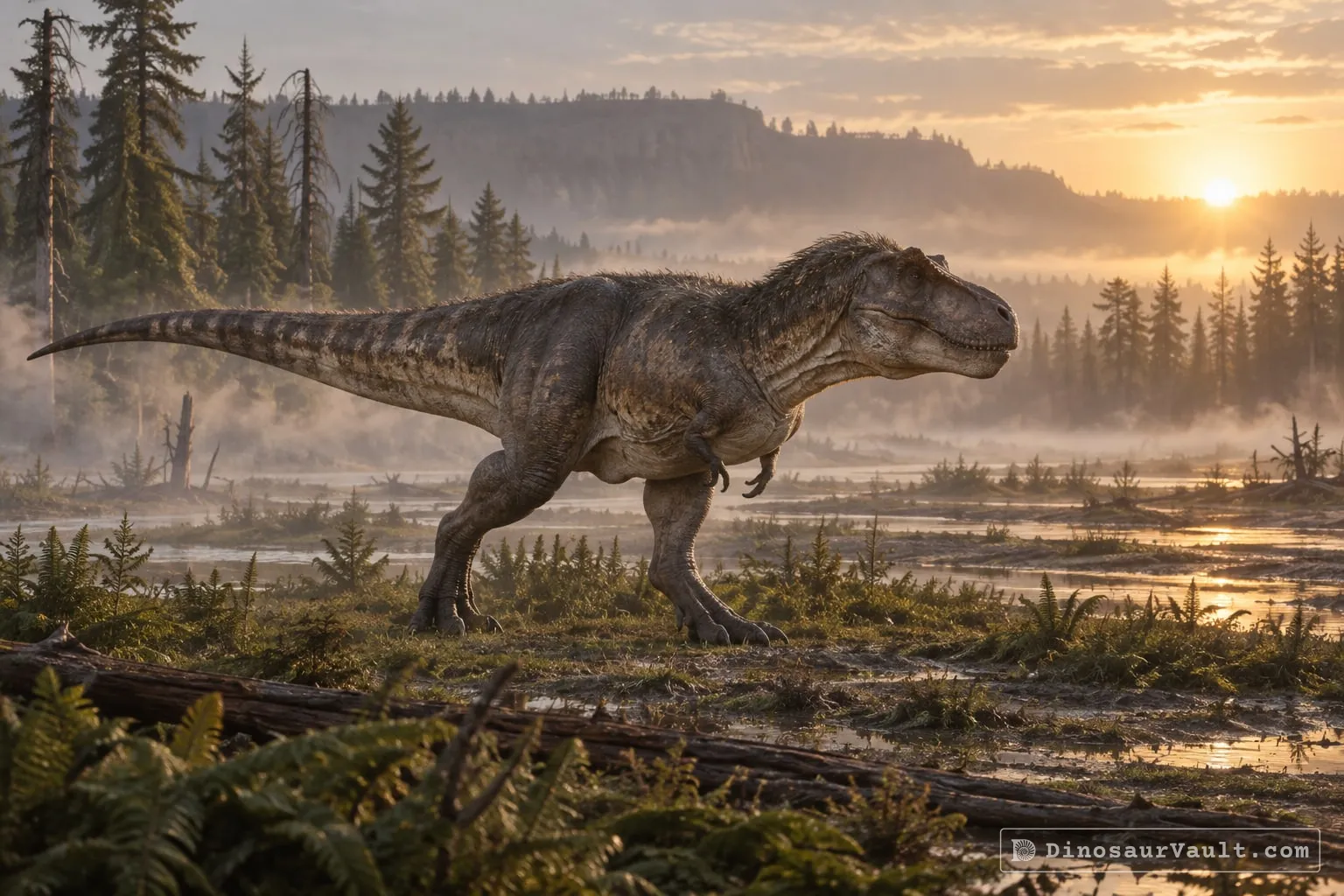
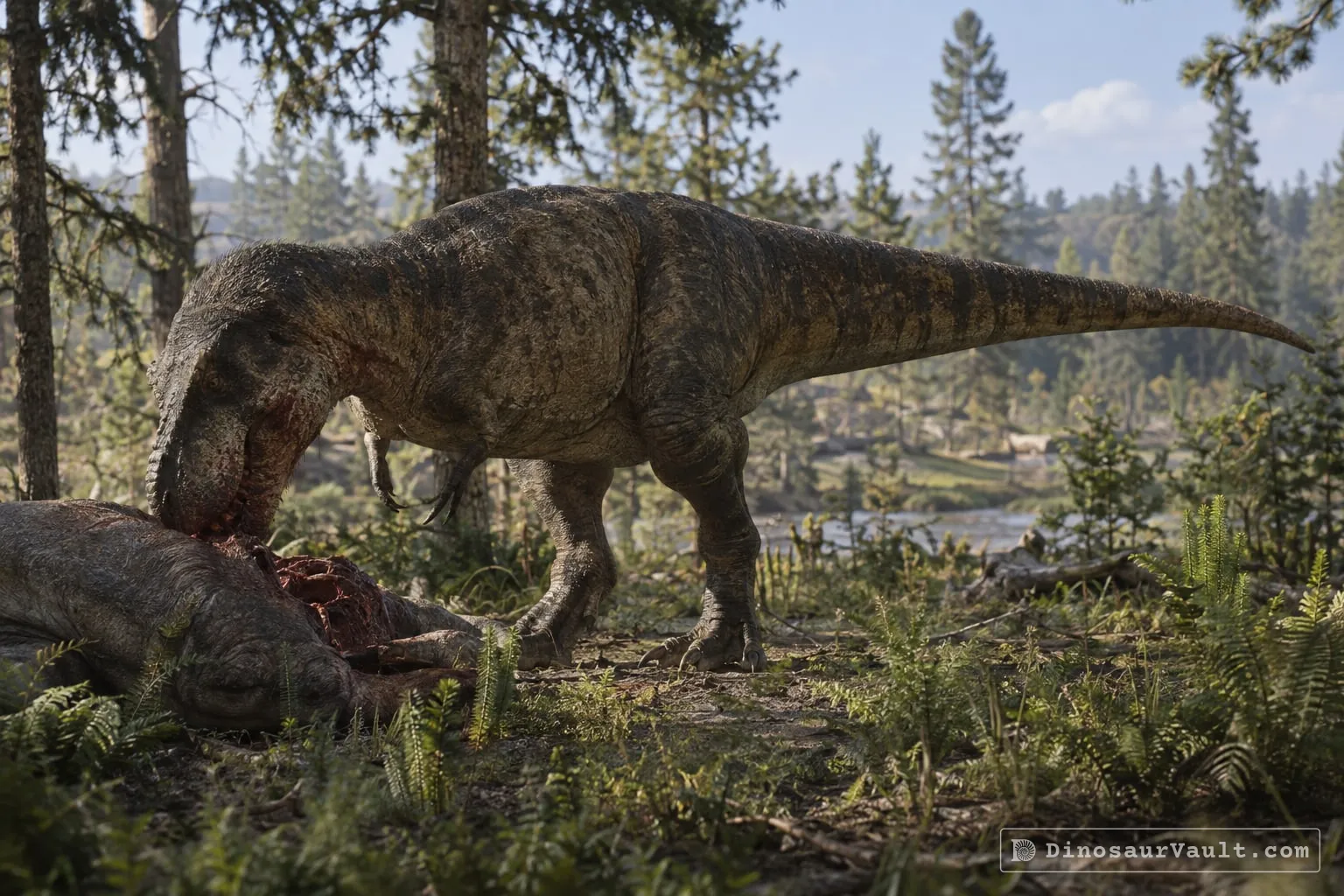
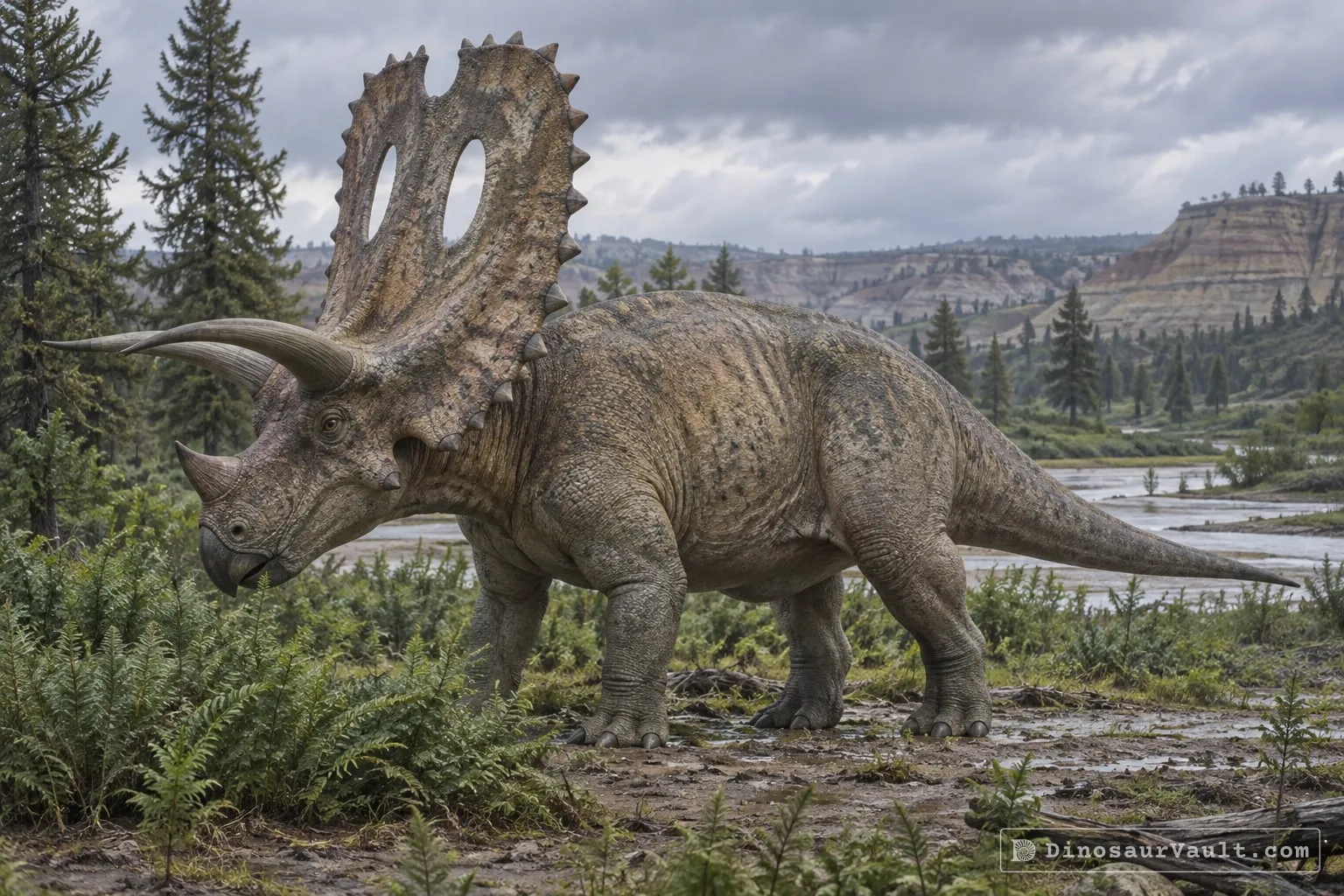
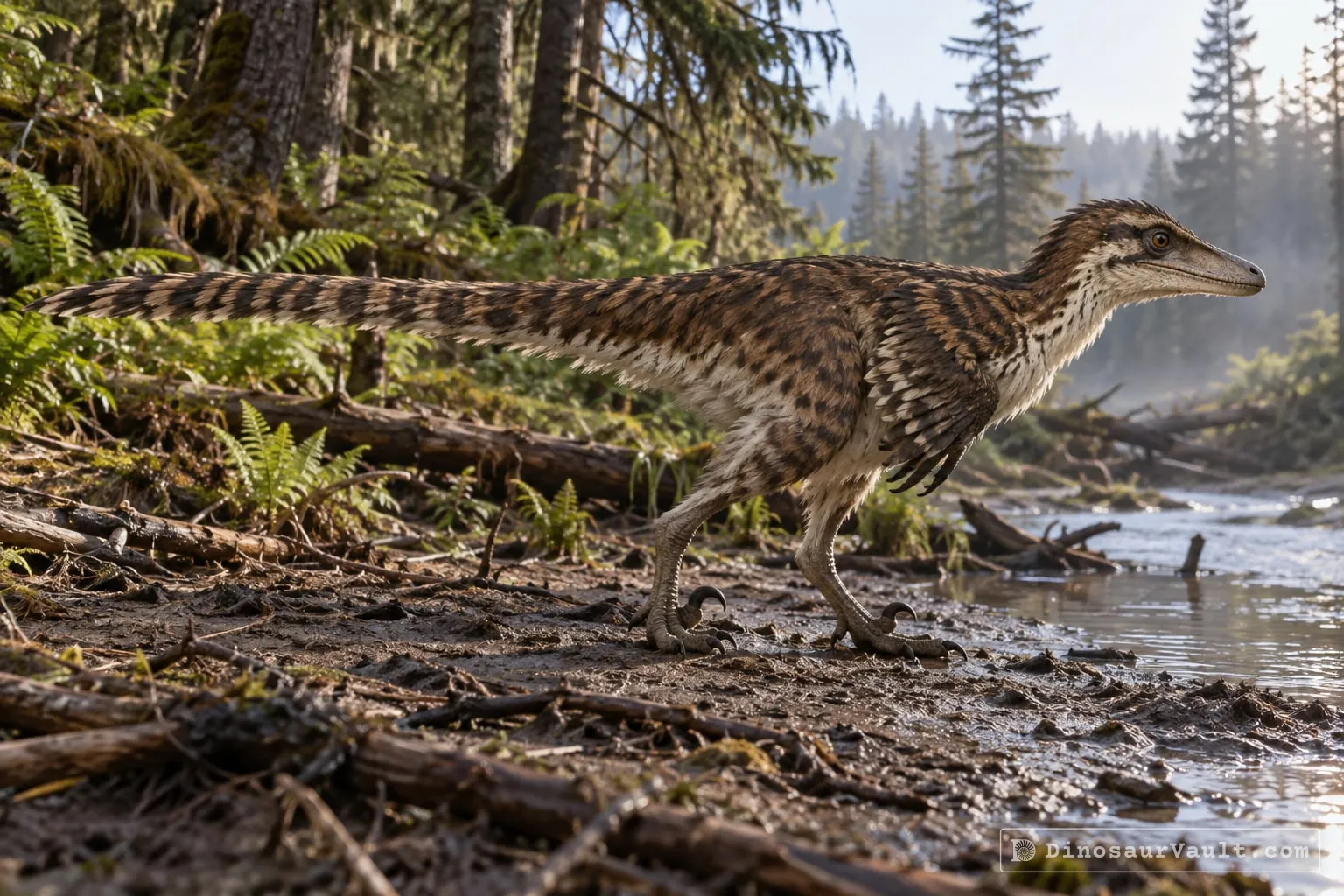
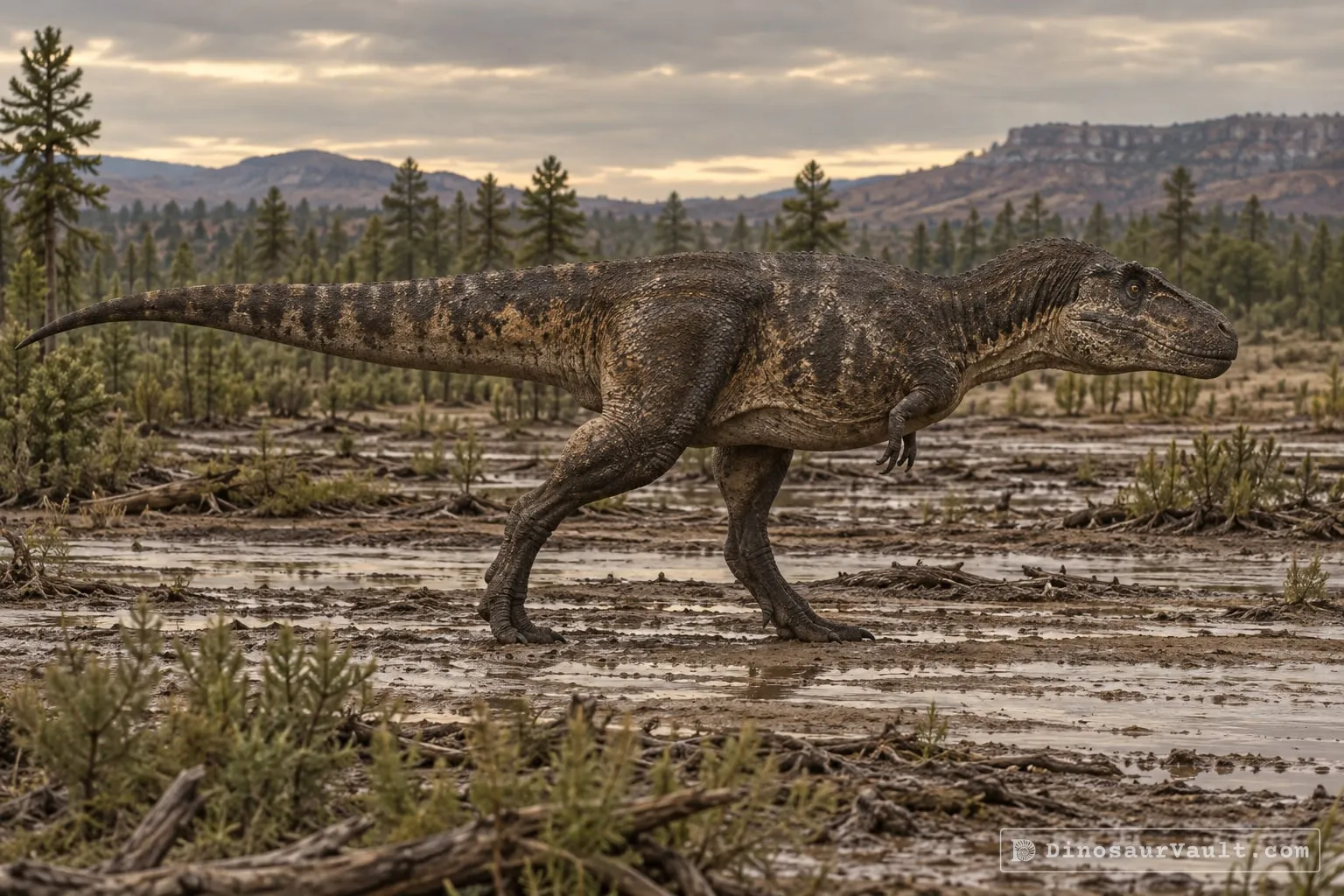
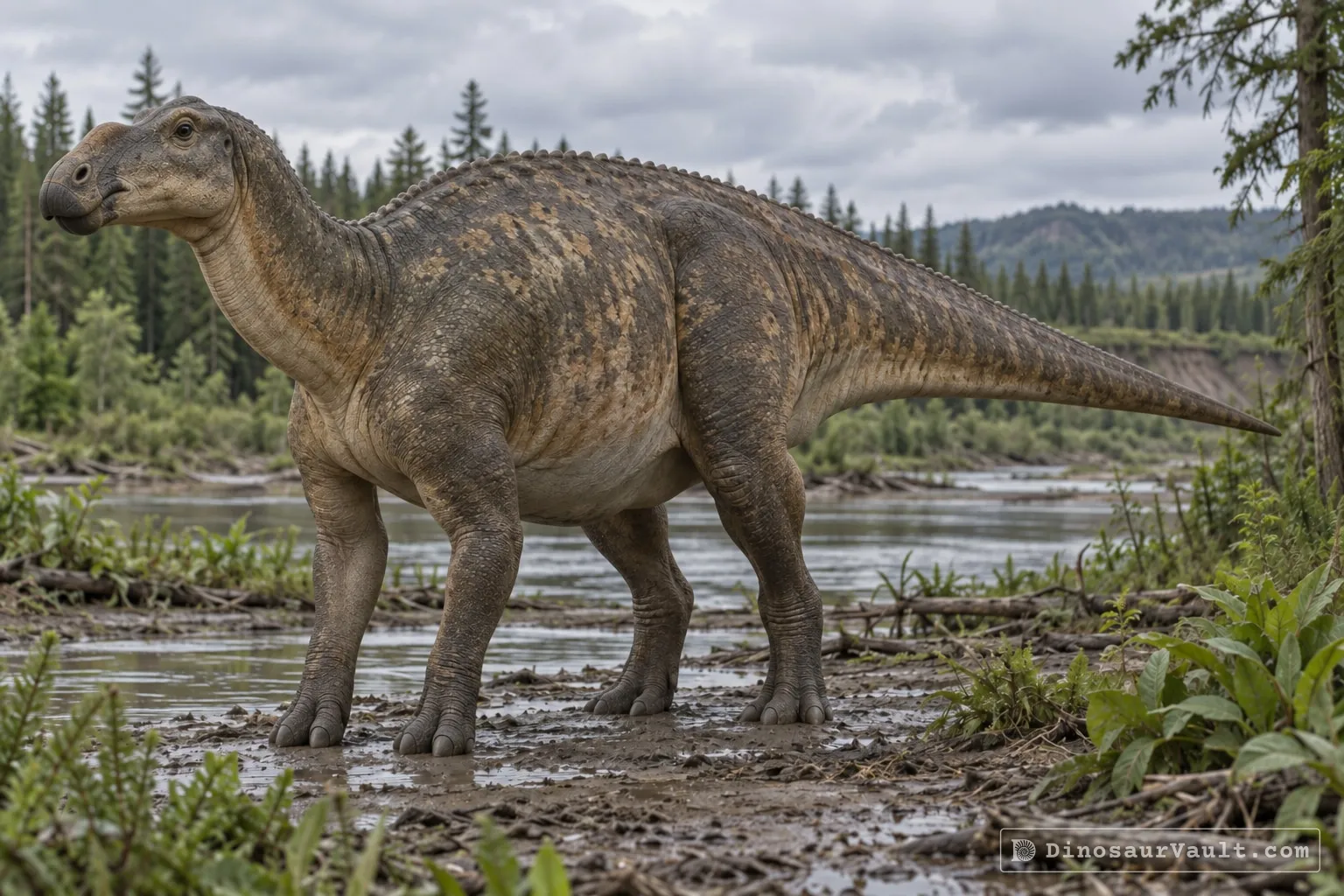


A rock formation can hold fossils laid down millions of years apart, so not every animal here met Parasaurolophus.
The evidence
The science behind Parasaurolophus
Which parts of the picture come from its own bones, and which come from its relatives.
From its own fossils
- Skulls preserve a hollow, backward-sweeping crest with nasal passages running through it.
- Skeletons show strong hindlimbs, compact weight-bearing hands and a long balancing tail.
- The original skeleton has healed rib fractures and damaged bones along the back.
Borrowed from relatives
- Its own skulls and skeletons supply most of the body shape.
- Scaly skin follows impressions preserved in other duck-billed dinosaurs, including Edmontosaurus.
- The inner ears of Corythosaurus and Hypacrosaurus support comparisons with low-pitched calls.
Still unknown
- Its skin color and the exact sound of its calls.
- How the crest of the species walkeri changed through its earliest growth stages.
- How much crest differences reflected age, sex or species.
Often drawn wrong
- The crest was a closed structure rather than an open-ended breathing snorkel.
- Its compact weight-bearing hands were shaped differently from webbed swimming paddles.
- Young animals had short, rounded crests rather than miniature copies of the adult tube.
Discovery timeline
- 1922Named itParks
- 2009Close relativeEvans, Ridgely & Witmer
- 2013Growing upFarke et al.
- 2020PostureBertozzo et al.
- 2021SkullGates, Evans & Sertich
Key papers
The research behind what we know of Parasaurolophus
Named it
Named Parasaurolophus from a skull and partial skeleton with a long tubular crest found in Alberta.
Parasaurolophus walkeri, a new genus and species of crested trachodont dinosaur. University of Toronto Studies, Geology Series 13: 1-32
No link available
Close relative
Scans of related crested duck-billed dinosaurs revealed inner ears suited to low frequencies, supporting the idea that crests helped with calls.
Endocranial Anatomy of Lambeosaurine Hadrosaurids (Dinosauria: Ornithischia): A Sensorineural Perspective on Cranial Crest Function. The Anatomical Record 292: 1315-1337
Read the paper : Endocranial Anatomy of Lambeosaurine Hadrosaurids (Dinosauria: Ornithischia): A Sensorineural Perspective on Cranial Crest Function (opens in a new tab)Growing up
Described a young skeleton with a rounded crest, showing that crest development began earlier than in some other duck-billed dinosaurs.
Ontogeny in the tube-crested dinosaur Parasaurolophus (Hadrosauridae) and heterochrony in hadrosaurids. PeerJ 1: e182
Read the paper : Ontogeny in the tube-crested dinosaur Parasaurolophus (Hadrosauridae) and heterochrony in hadrosaurids (opens in a new tab)Posture
Examined healed injuries in the original skeleton and proposed reconstructions of the ligament supporting its head and neck.
Description and etiology of paleopathological lesions in the type specimen of Parasaurolophus walkeri (Dinosauria: Hadrosauridae), with proposed reconstructions of the nuchal ligament. Journal of Anatomy 238: 1055-1069
Read the paper : Description and etiology of paleopathological lesions in the type specimen of Parasaurolophus walkeri (Dinosauria: Hadrosauridae), with proposed reconstructions of the nuchal ligament (opens in a new tab)Skull
A new skull clarified which bones formed the crest and identified features distinguishing the short-crested species cyrtocristatus.
Description and rediagnosis of the crested hadrosaurid (Ornithopoda) dinosaur Parasaurolophus cyrtocristatus on the basis of new cranial remains. PeerJ 9: e10669
Read the paper : Description and rediagnosis of the crested hadrosaurid (Ornithopoda) dinosaur Parasaurolophus cyrtocristatus on the basis of new cranial remains (opens in a new tab)
Close relatives
Other members of Hadrosauridae


Sources: Wikidata