Zhongornis
"intermediate bird"
Type species Zhongornis haoae
- Lived
- 126 to 120 million years ago, Early Cretaceous
- Diet
- Carnivore
- Group
- Theropods
- Found in
- China
- Named by
- Gao et al. 2008
Where its fossils were found
The evidence
Today

125 million years ago
Habitat
Forests and lakes in a volcanic region of China. Psittacosaurus, Sinosauropteryx and Sinornithosaurus lived in the Yixian Formation landscape.
Field notes
About Zhongornis
What it was like
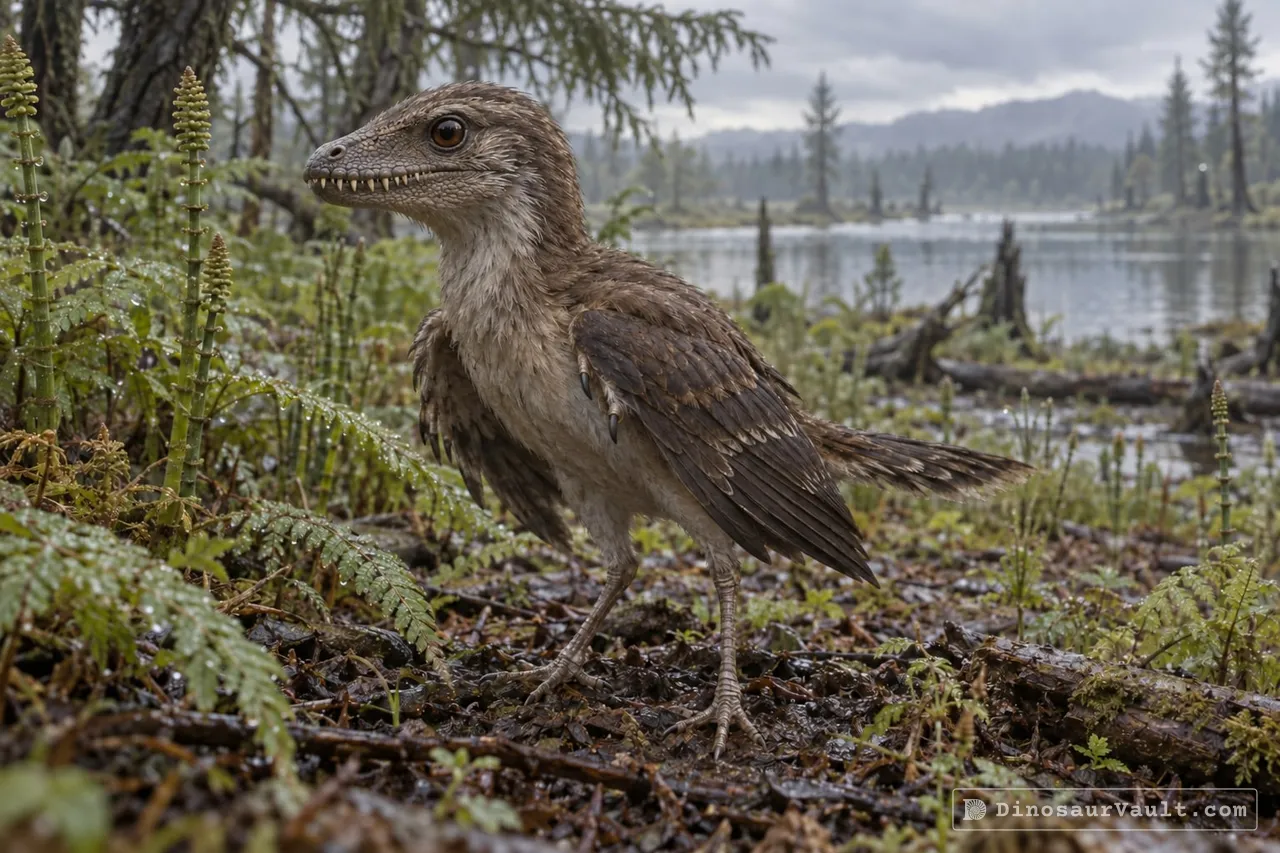
Zhongornis was a tiny feathered animal known from a skeleton of a young individual. It has a short tail and grasping hands. It was first described as a bird, but some scientists think it is closer to the scansoriopterygids, small tree-climbing dinosaurs.
Its world
It lived about 126 to 120 million years ago, in the Early Cretaceous, in what is now China. Its fossil comes from the Yixian Formation, a land of forests and lakes shared with the feathered Sinosauropteryx and the horned Psittacosaurus.
How it was found
Gao and colleagues named it in 2008. The type species is Zhongornis haoae.
Field gallery
More views of Zhongornis
Scenes reconstructed from the available fossil evidence.
Lived alongside
Found in the same rock formations
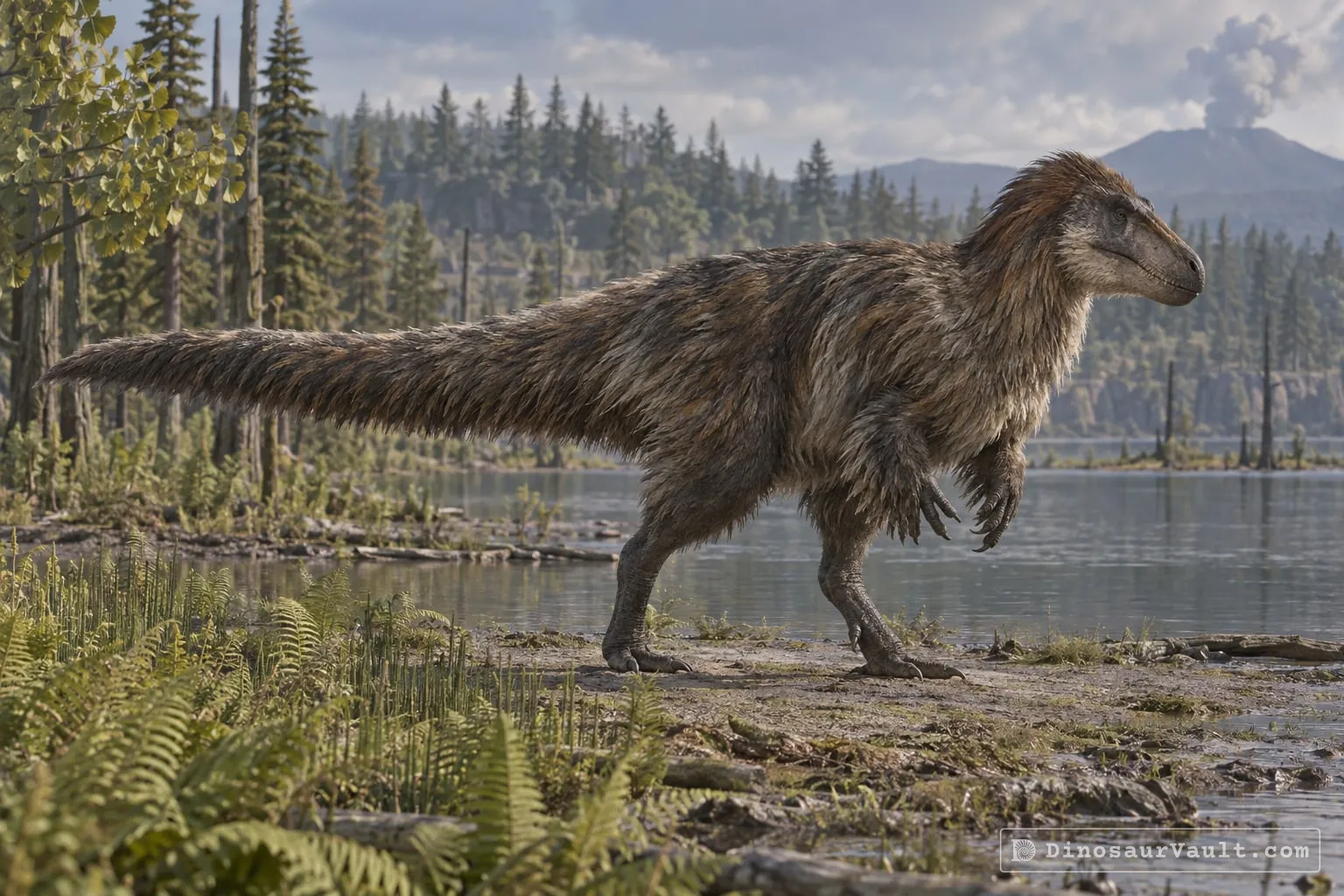
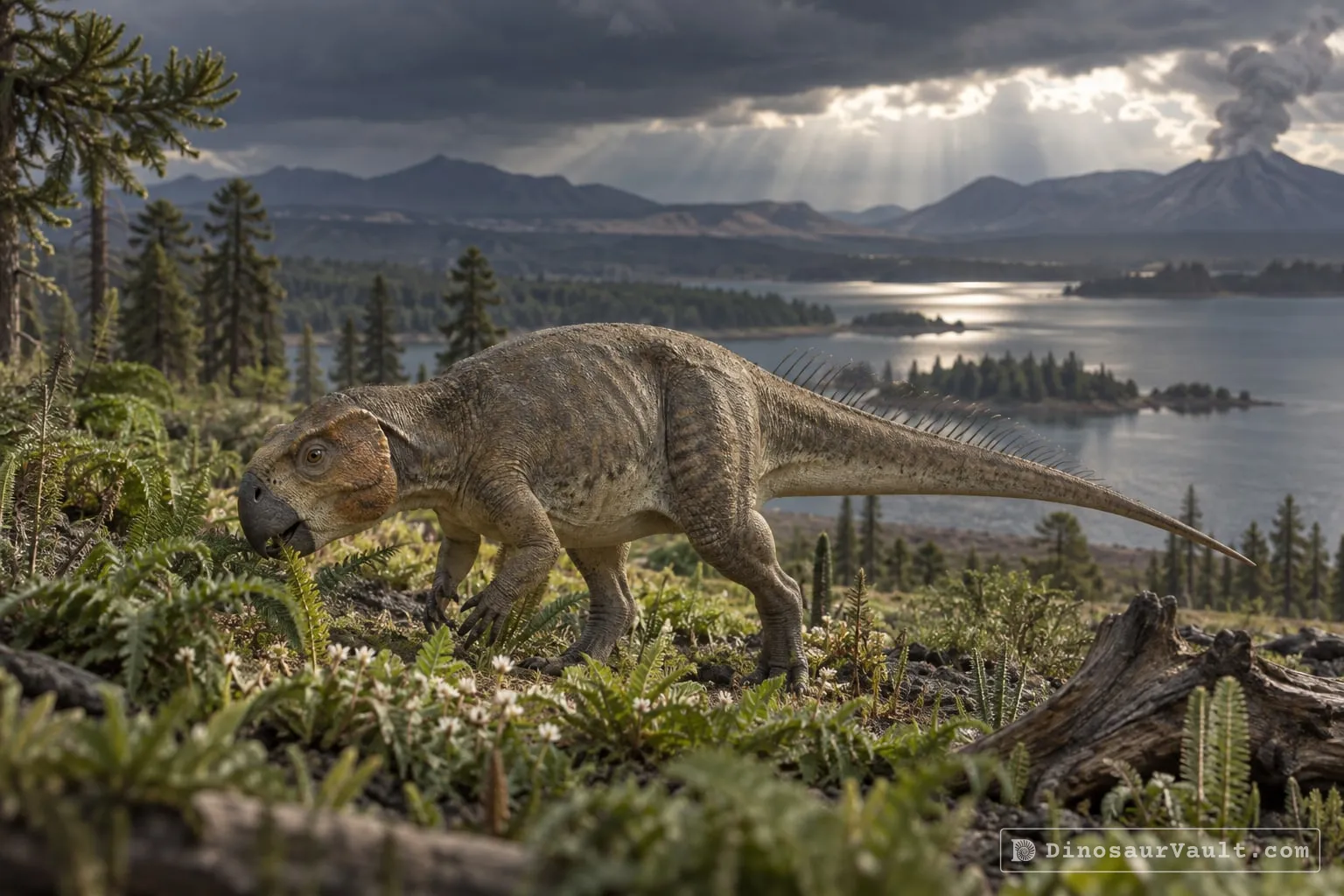
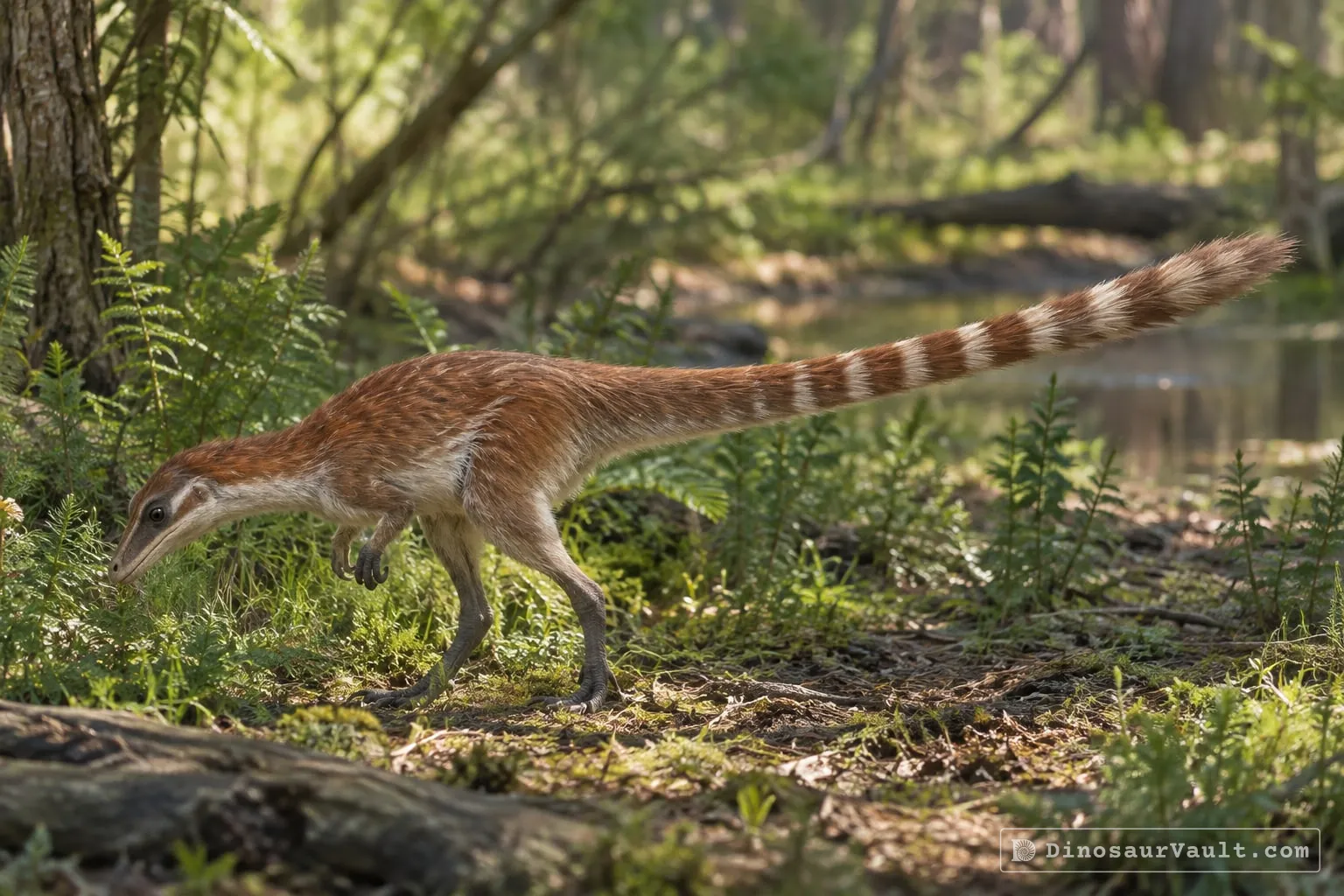
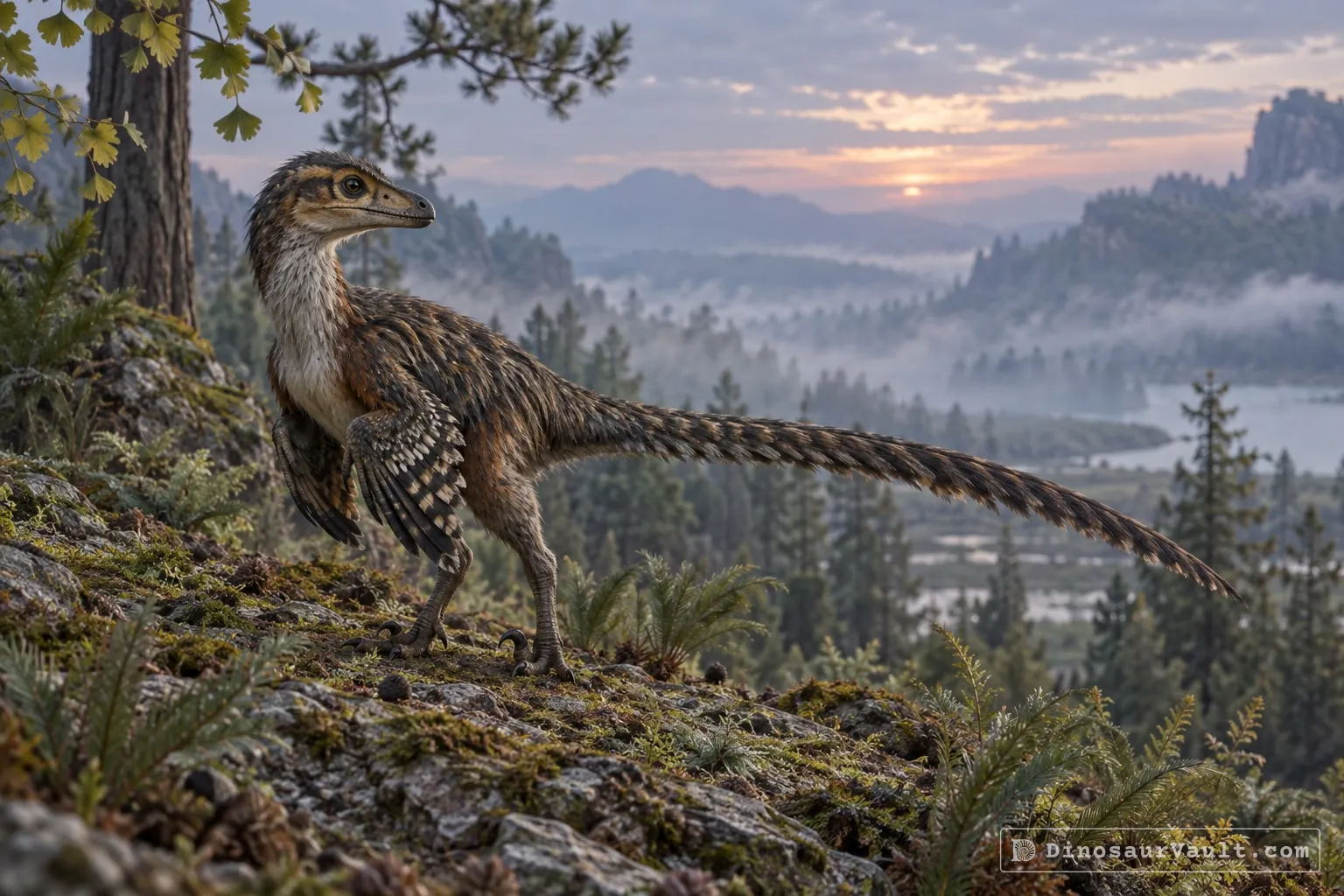
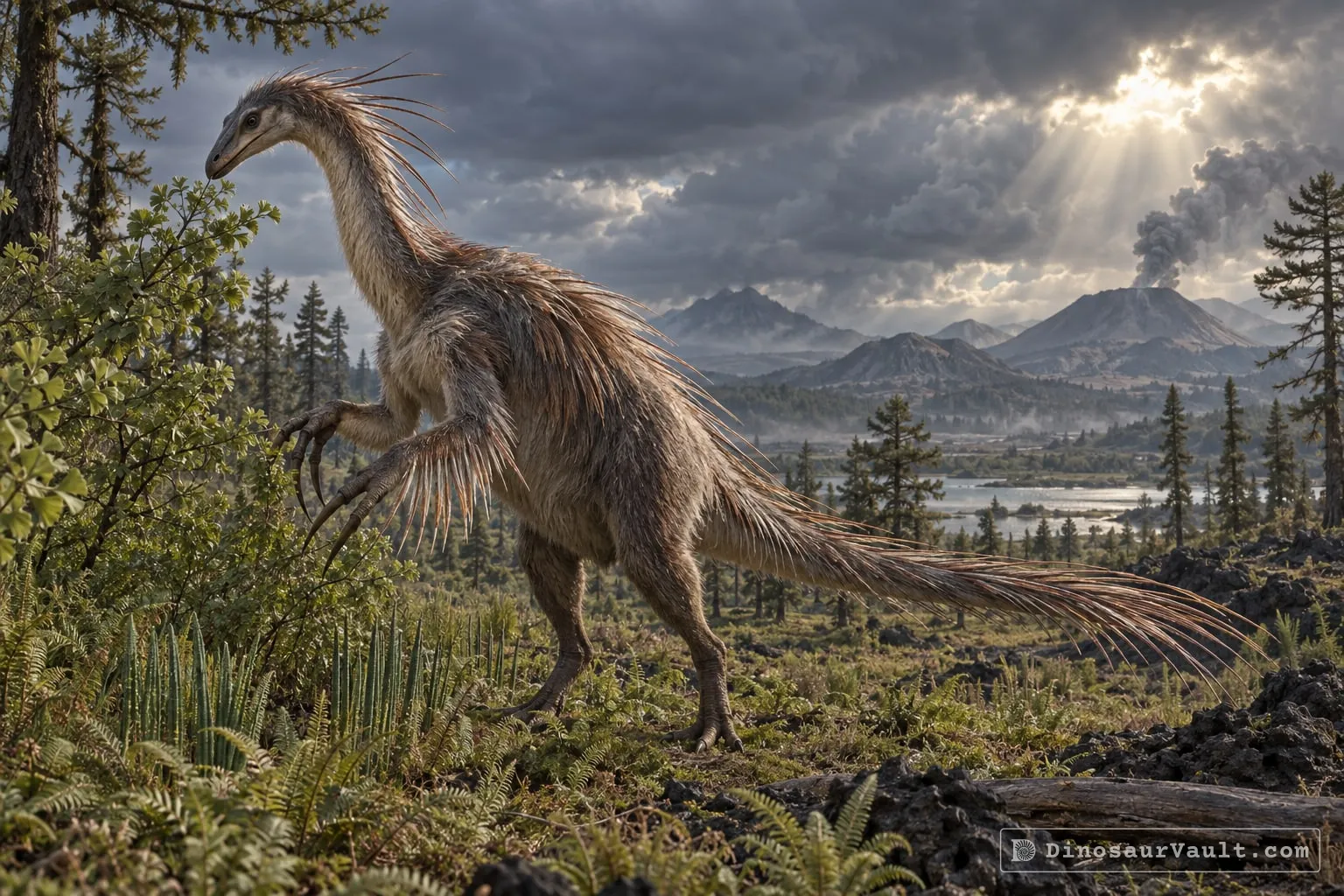
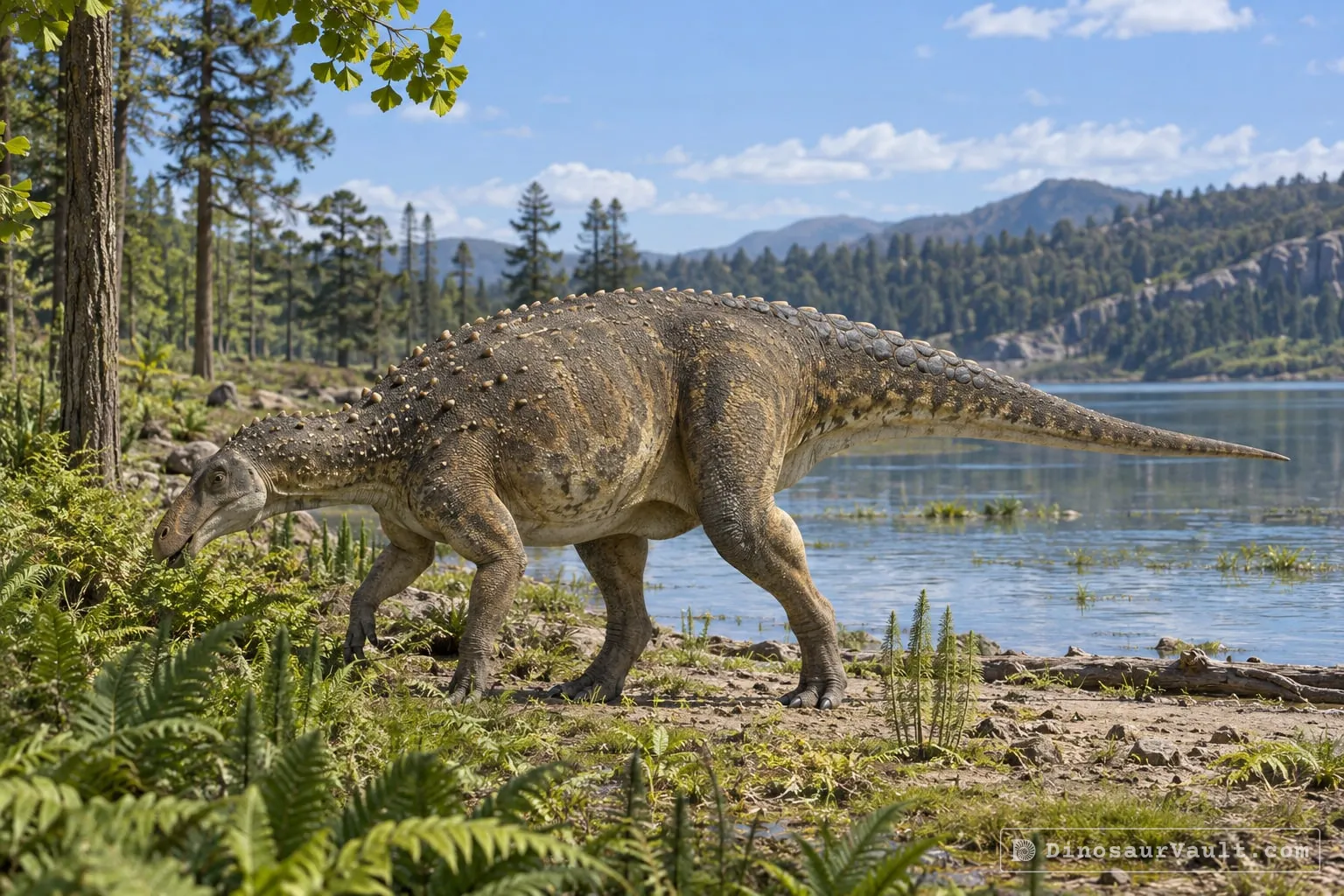
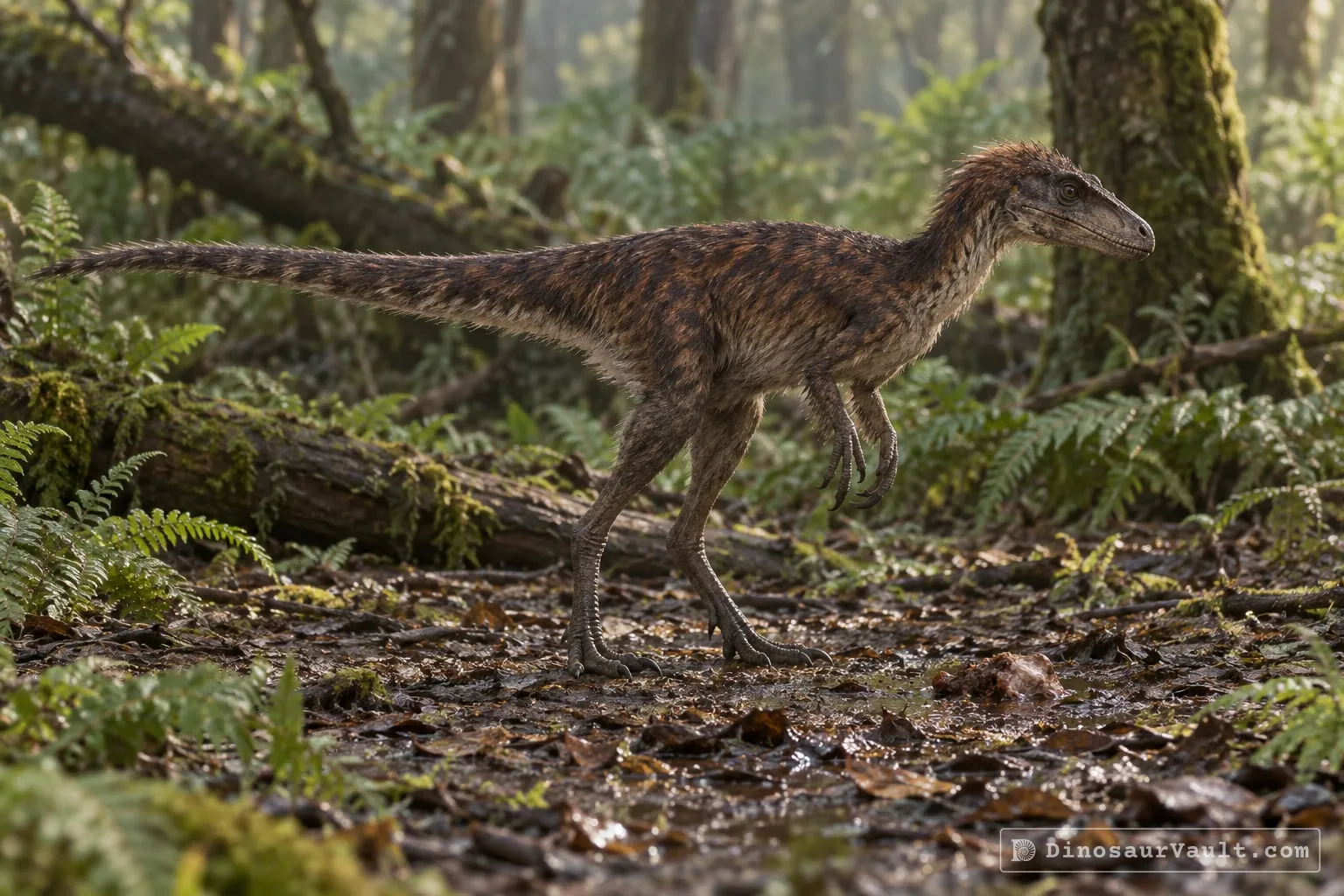


A rock formation can hold fossils laid down millions of years apart, so not every animal here met Zhongornis.
The evidence
The science behind Zhongornis
Which parts of the picture come from its own bones, and which come from its relatives.
From its own fossils
- A nearly complete skeleton of a young animal preserves the skull, grasping hands and feather impressions.
- The shortened bony tail preserves separate tail bones rather than a fully fused tip.
Borrowed from relatives
- Most of the young animal's skeleton is known directly; its adult shape is reconstructed through comparisons with early birds and small feathered dinosaurs.
- Its hand and tail have been compared with those of Epidexipteryx and Caudipteryx.
Still unknown
- Whether it belonged among early birds or nearer to scansoriopterygid dinosaurs.
- Whether the tail tip would have fused as it grew.
- Its adult size and feather colors.
Discovery timeline
- 2008Named itGAO et al.
- 2018Growing upRashid et al.
Key papers
The research behind what we know of Zhongornis
Named it
Named Zhongornis from a juvenile skeleton and interpreted its shortened tail as a step toward the fused tail tip of birds.
A NEW BASAL LINEAGE OF EARLY CRETACEOUS BIRDS FROM CHINA AND ITS IMPLICATIONS ON THE EVOLUTION OF THE AVIAN TAIL. Palaeontology 51: 775-791
Read the paper : A NEW BASAL LINEAGE OF EARLY CRETACEOUS BIRDS FROM CHINA AND ITS IMPLICATIONS ON THE EVOLUTION OF THE AVIAN TAIL (opens in a new tab)Growing up
Showed that bird tail tips fuse after hatching, offering a growth-related explanation for the unfused tail of young Zhongornis.
Avian tail ontogeny, pygostyle formation, and interpretation of juvenile Mesozoic specimens. Scientific Reports 8
Read the paper : Avian tail ontogeny, pygostyle formation, and interpretation of juvenile Mesozoic specimens (opens in a new tab)
Close relatives
Other members of Paraves


Sources: Wikidata