Serikornis
"silk bird"
Type species Serikornis sungei
- Lived
- 162 to 155 million years ago, Late Jurassic
- Diet
- Carnivore
- Group
- Theropods
- Found in
- China
- Named by
- Lefèvre et al. 2017
Where its fossils were found
The evidence
Today

160 million years ago
Habitat
Forests and lakes covered this part of Late Jurassic China. Anchiornis, Yi and Caihong are also known from the Tiaojishan Formation.
Field notes
About Serikornis
What it was like
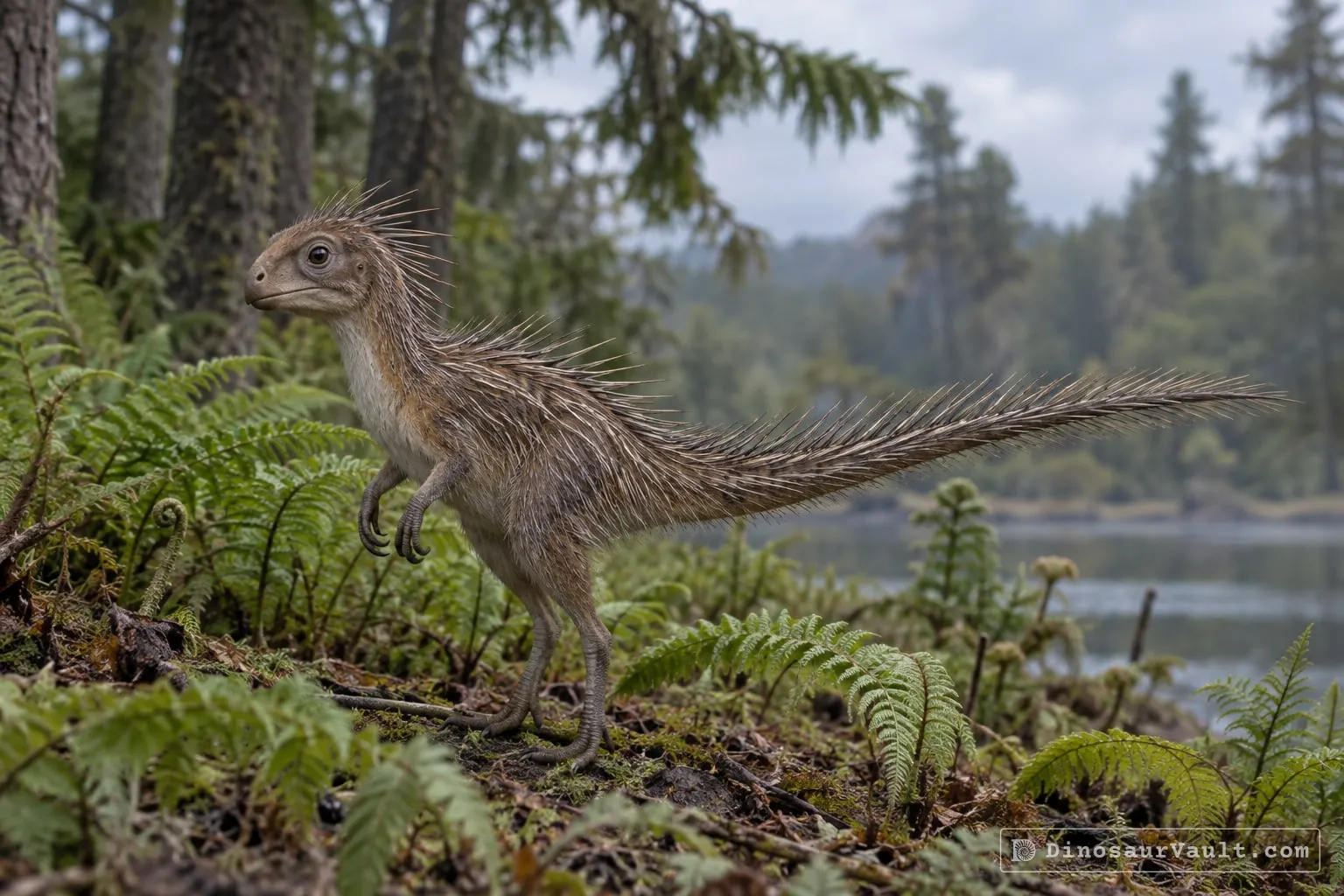
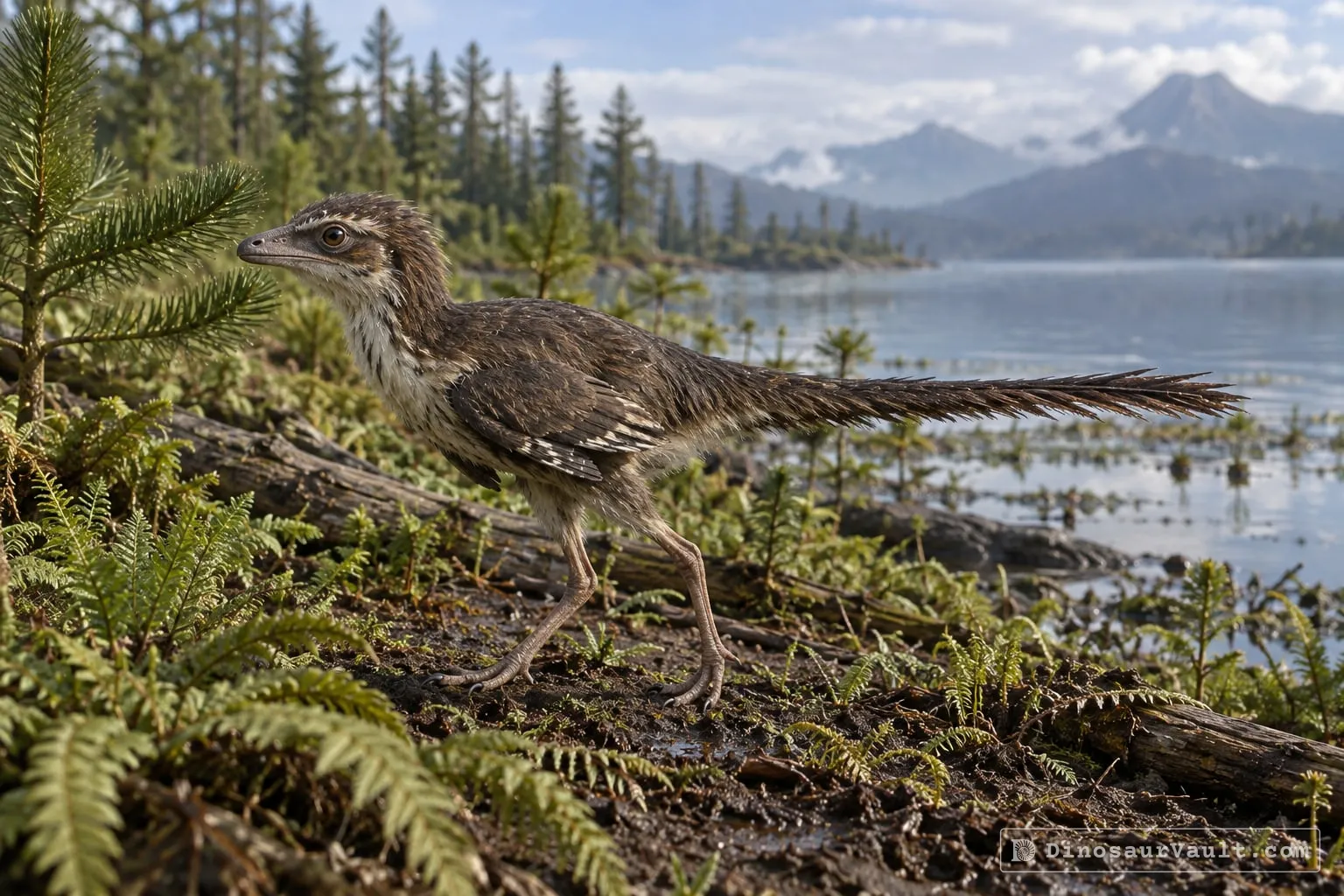
Serikornis was a small feathered dinosaur, about the size of a pheasant. It had feathers on its arms and legs, but they seem too simple for flight, so it probably lived on the ground. Some scientists think it may be the same animal as Anchiornis.
Its world
It lived in the Late Jurassic in what is now China. Its bones come from the Tiaojishan Formation, a land of forests and lakes shared with Anchiornis, the bat-winged Yi and the rainbow-feathered Caihong.
How it was found
Lefèvre and colleagues named it in 2017. The type species is Serikornis sungei.
Field gallery
More views of Serikornis
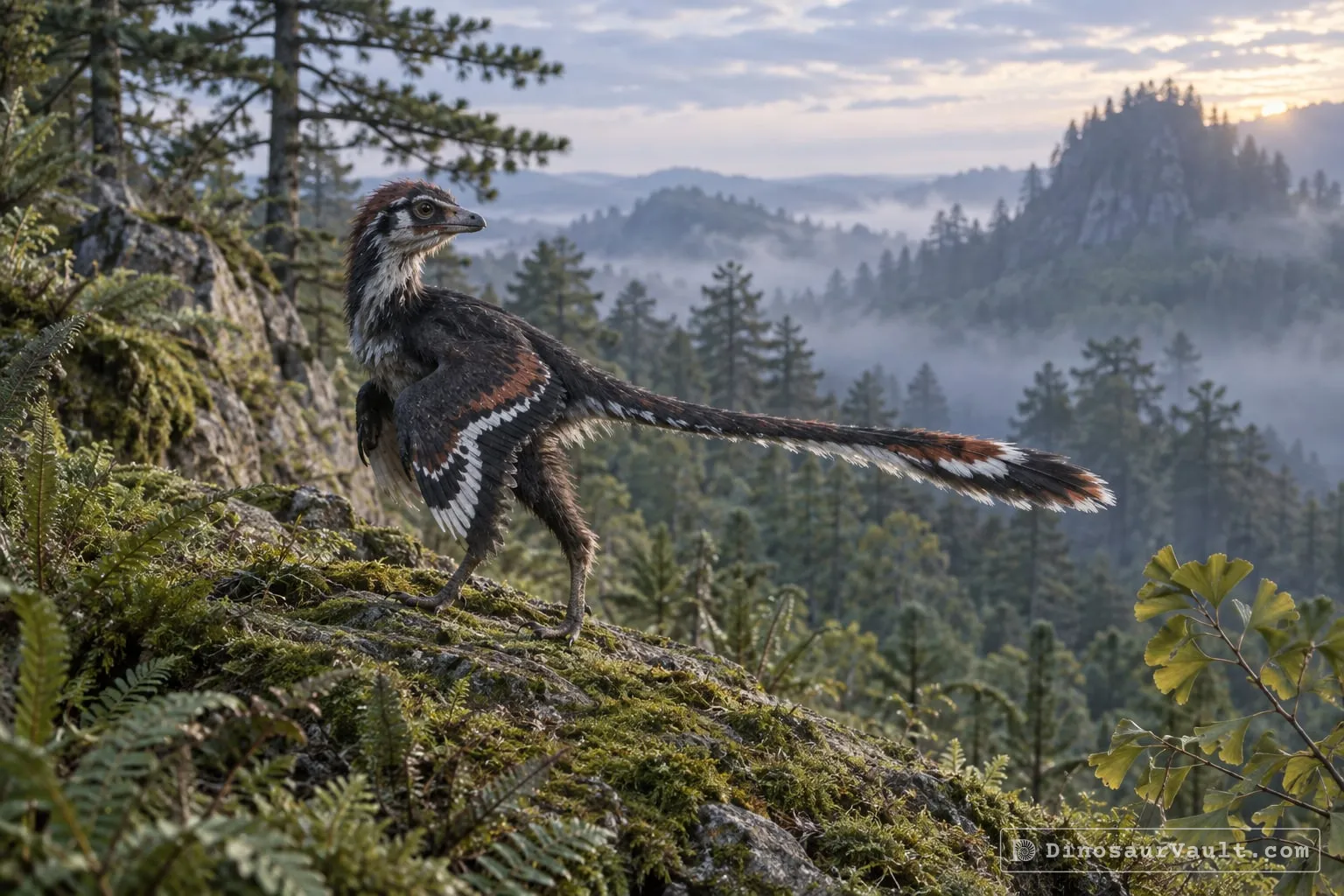
Scenes reconstructed from the available fossil evidence.
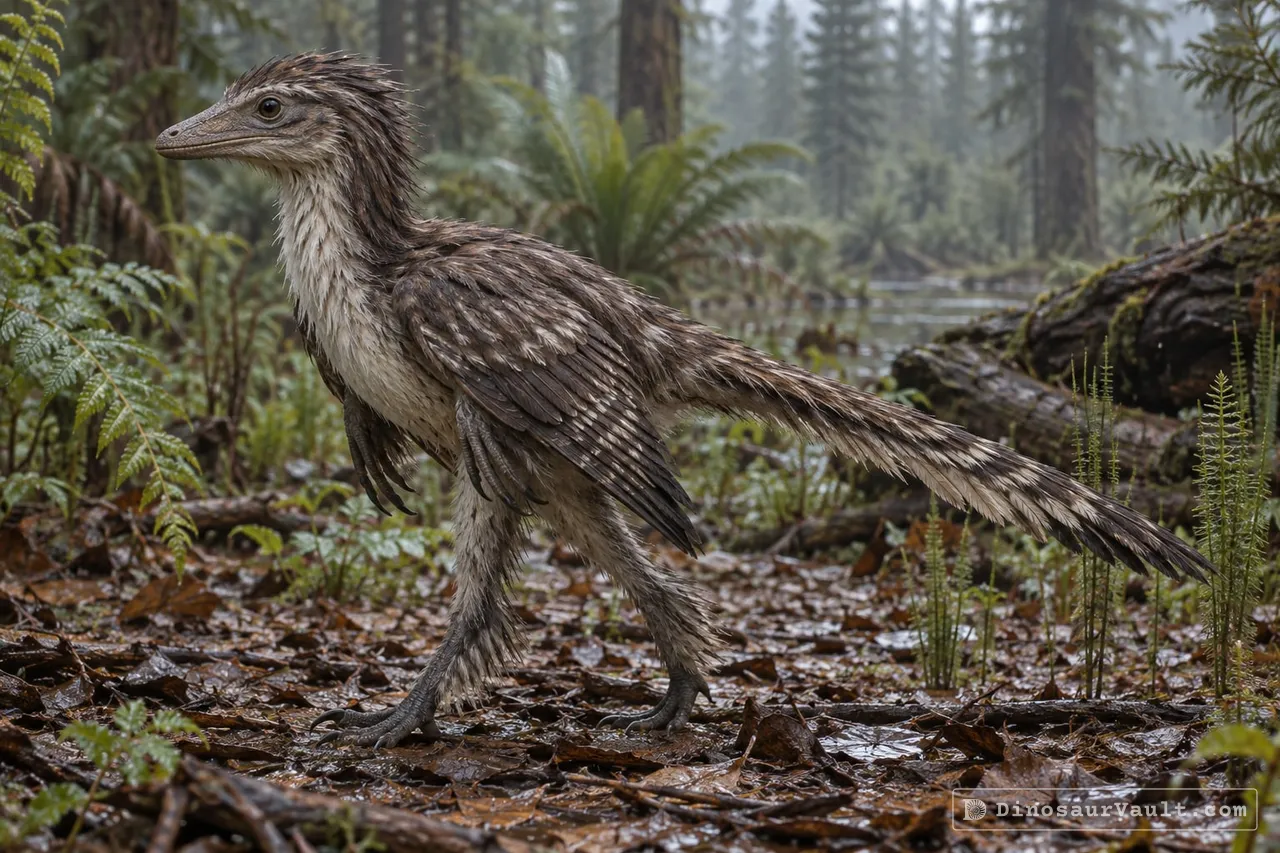
1 of 3
Lived alongside
Found in the same rock formations
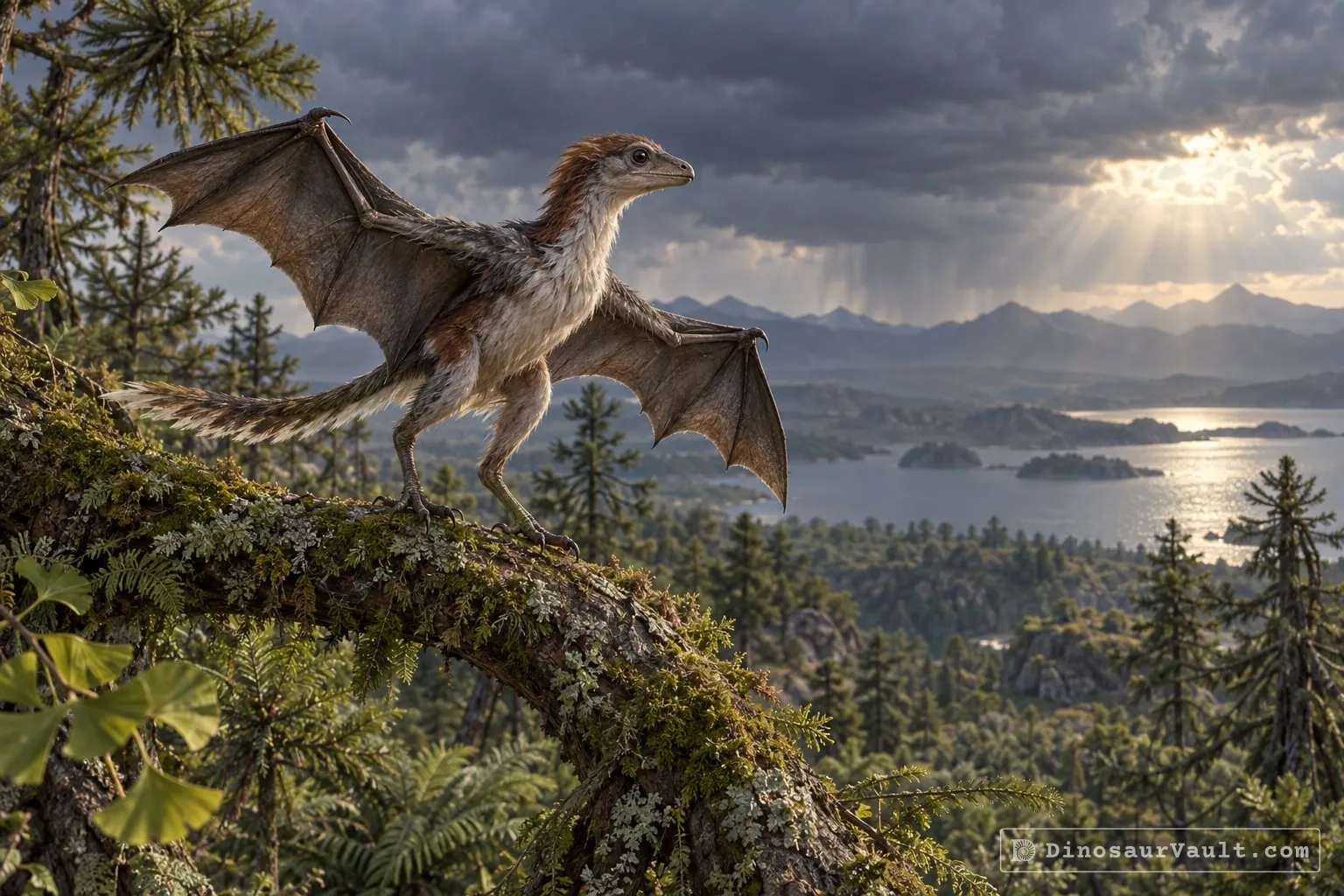
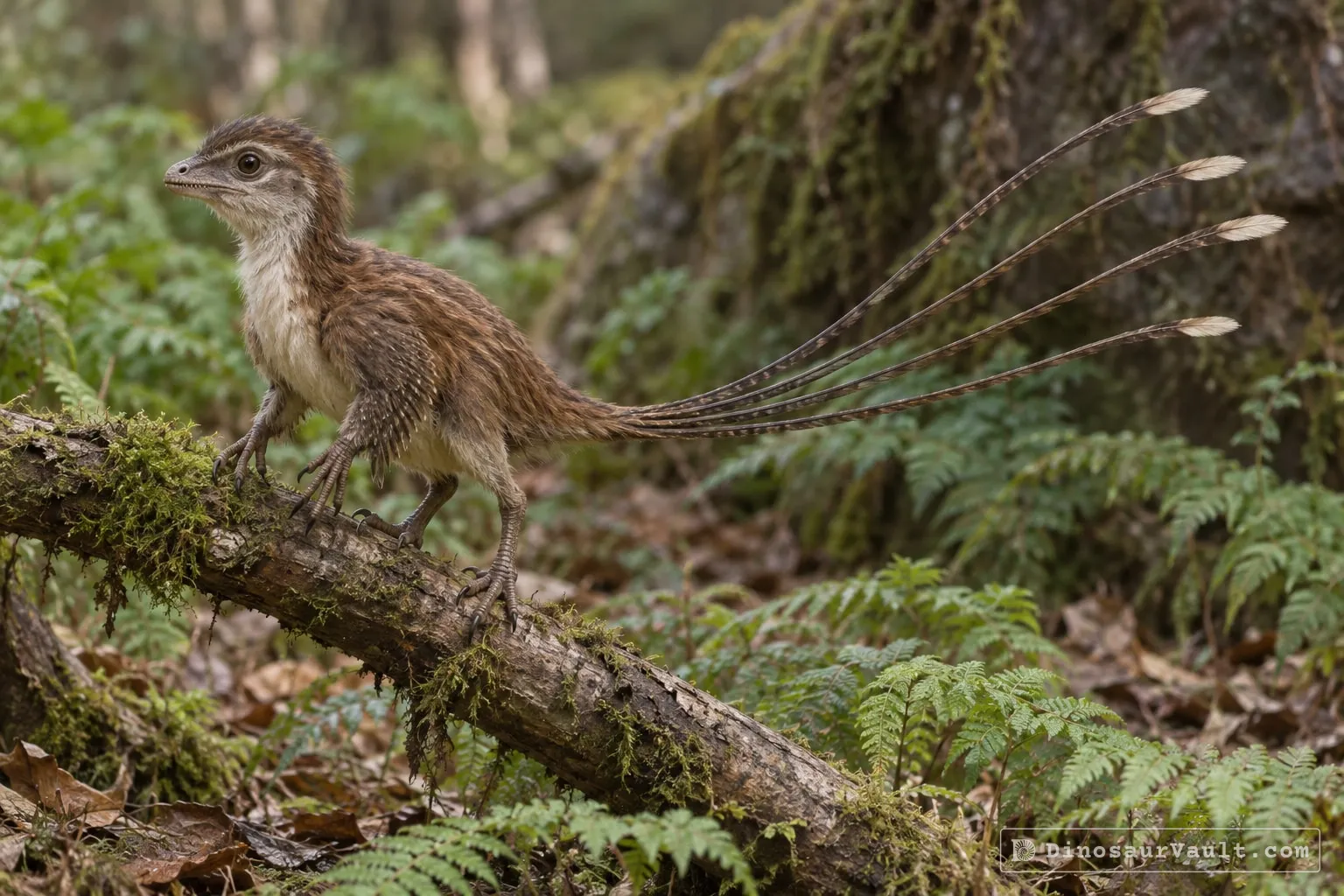
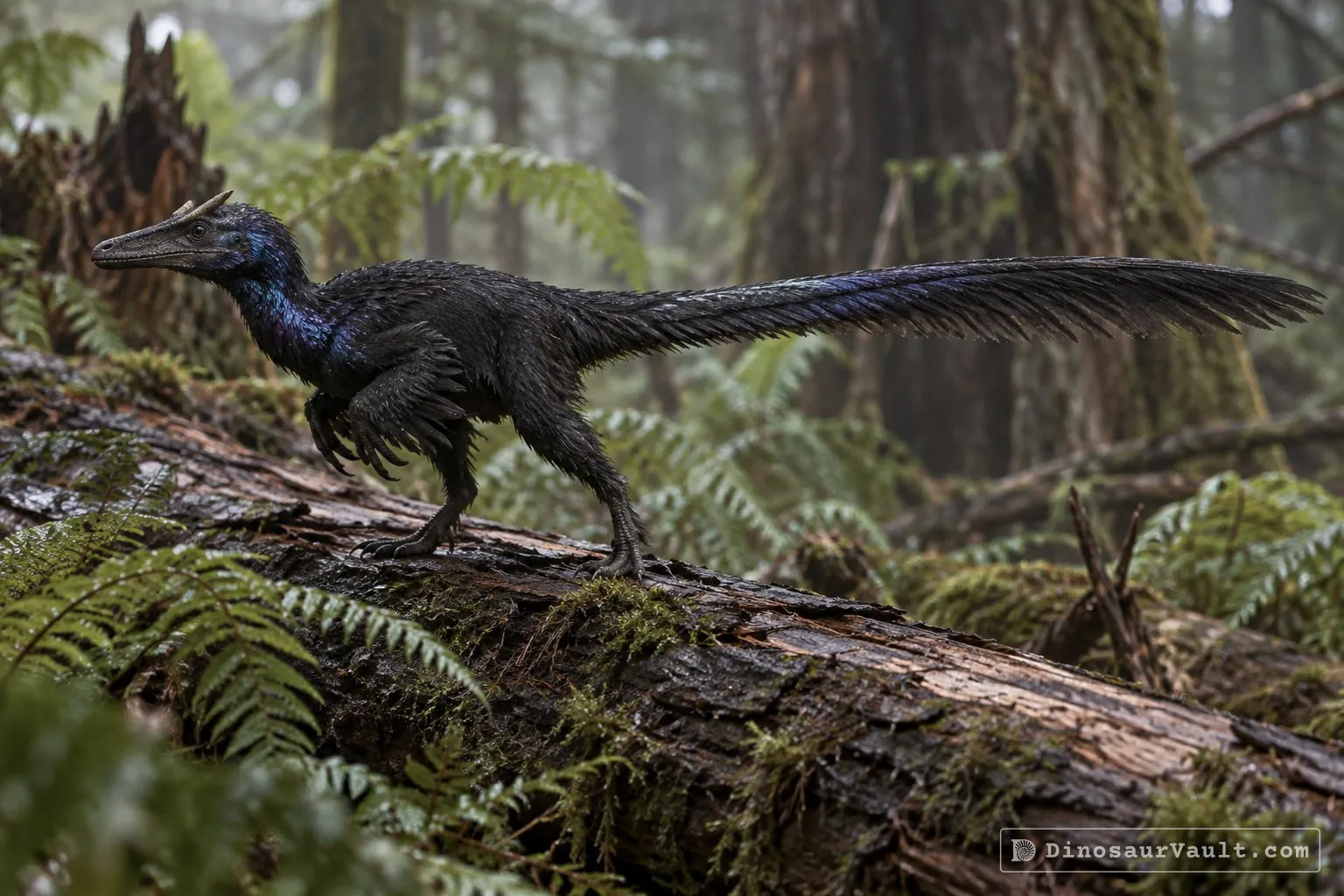
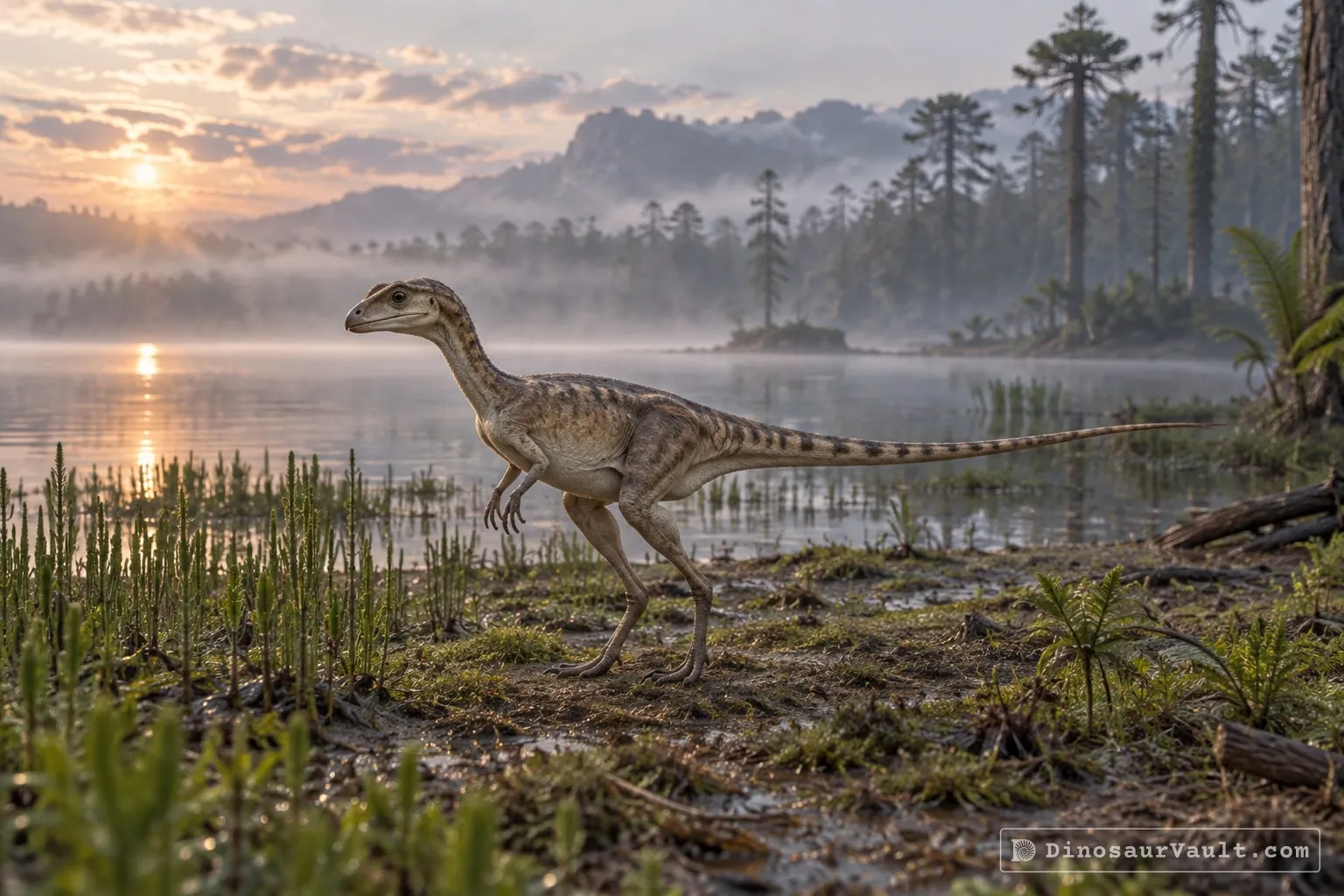
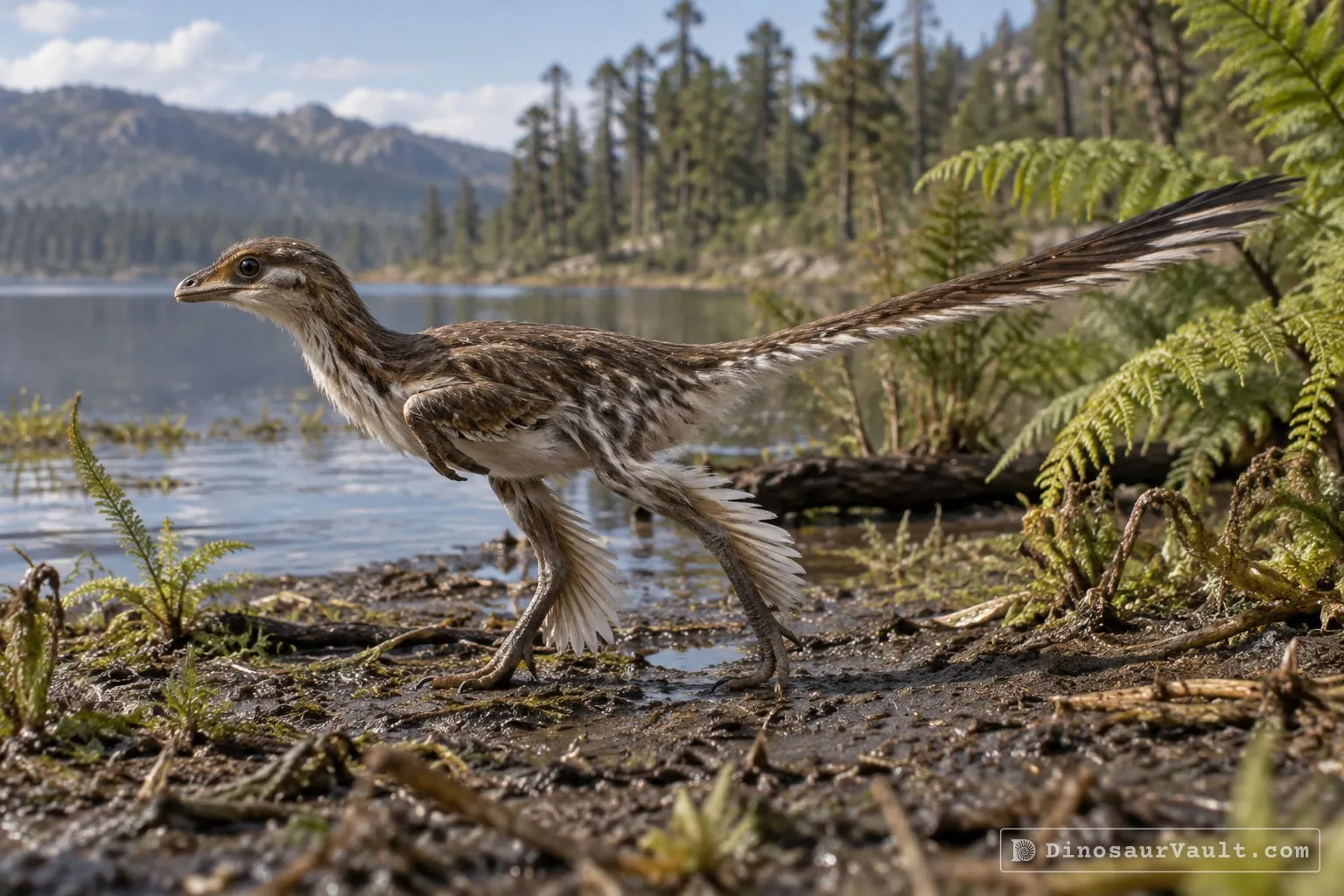


A rock formation can hold fossils laid down millions of years apart, so not every animal here met Serikornis.
The evidence
The science behind Serikornis
Which parts of the picture come from its own bones, and which come from its relatives.
From its own fossils
- A nearly complete skeleton preserves feathers along the arms and long leg feathers reaching the toes.
- The tail has fine filaments near its base and slender feathers farther along.
- The limb feathers are thin and symmetrical.
Borrowed from relatives
- Most of its body shape and feather covering come from its own fossil, with Anchiornis helping comparisons of the crushed bones.
Still unknown
- Whether Serikornis is a separate genus or the same animal as Anchiornis.
- Its feather colors.
- How often it climbed trees.
Discovery timeline
- 2017Named itLefèvre et al.
- 2018Same rocksHu et al.
- 2019Family treeAgnolin et al.
Key papers
The research behind what we know of Serikornis
Named it
Described a feathered skeleton with long leg feathers and interpreted Serikornis as a ground-dwelling animal without adaptations for flight.
A new Jurassic theropod from China documents a transitional step in the macrostructure of feathers. The Science of Nature 104
Read the paper : A new Jurassic theropod from China documents a transitional step in the macrostructure of feathers (opens in a new tab)Same rocks
Described Caihong from the same formation, including feather structures suggesting iridescent colors on parts of its body.
A bony-crested Jurassic dinosaur with evidence of iridescent plumage highlights complexity in early paravian evolution. Nature Communications 9
Read the paper : A bony-crested Jurassic dinosaur with evidence of iridescent plumage highlights complexity in early paravian evolution (opens in a new tab)Family tree
Reexamined the features used to distinguish Serikornis and proposed that it belongs to Anchiornis.
Paravian Phylogeny and the Dinosaur-Bird Transition: An Overview. Frontiers in Earth Science 6
Read the paper : Paravian Phylogeny and the Dinosaur-Bird Transition: An Overview (opens in a new tab)
Close relatives
Other members of Paraves


Sources: Wikidata