Caihong
"rainbow"
Type species Caihong juji
- Lived
- 162 to 155 million years ago, Late Jurassic
- Diet
- Carnivore
- Group
- Theropods
- Found in
- China
- Named by
- Hu et al. 2018
Where its fossils were found
The evidence
Today

160 million years ago
Habitat
Forests and lakes in what is now China, with conifers, ginkgo relatives and ferns. Anchiornis, Yi and Epidexipteryx occur in the same formation.
Field notes
About Caihong
What it was like
Caihong was a small feathered dinosaur about the size of a duck. Tiny pigment structures in its fossil feathers suggest its head and neck feathers shone with changing, rainbow-like colors, as in a hummingbird. It had bony crests over its eyes and long feathers along its arms and tail.
Its world
It lived about 162 to 155 million years ago, in the Late Jurassic, in what is now China. Its bones come from the Tiaojishan Formation, a land of forests and lakes shared with other small feathered dinosaurs such as Anchiornis and the bat-winged Yi.
How it was found
Hu and colleagues named it in 2018 from one find. The type species is Caihong juji.
Field gallery
More views of Caihong
Scenes reconstructed from the available fossil evidence.
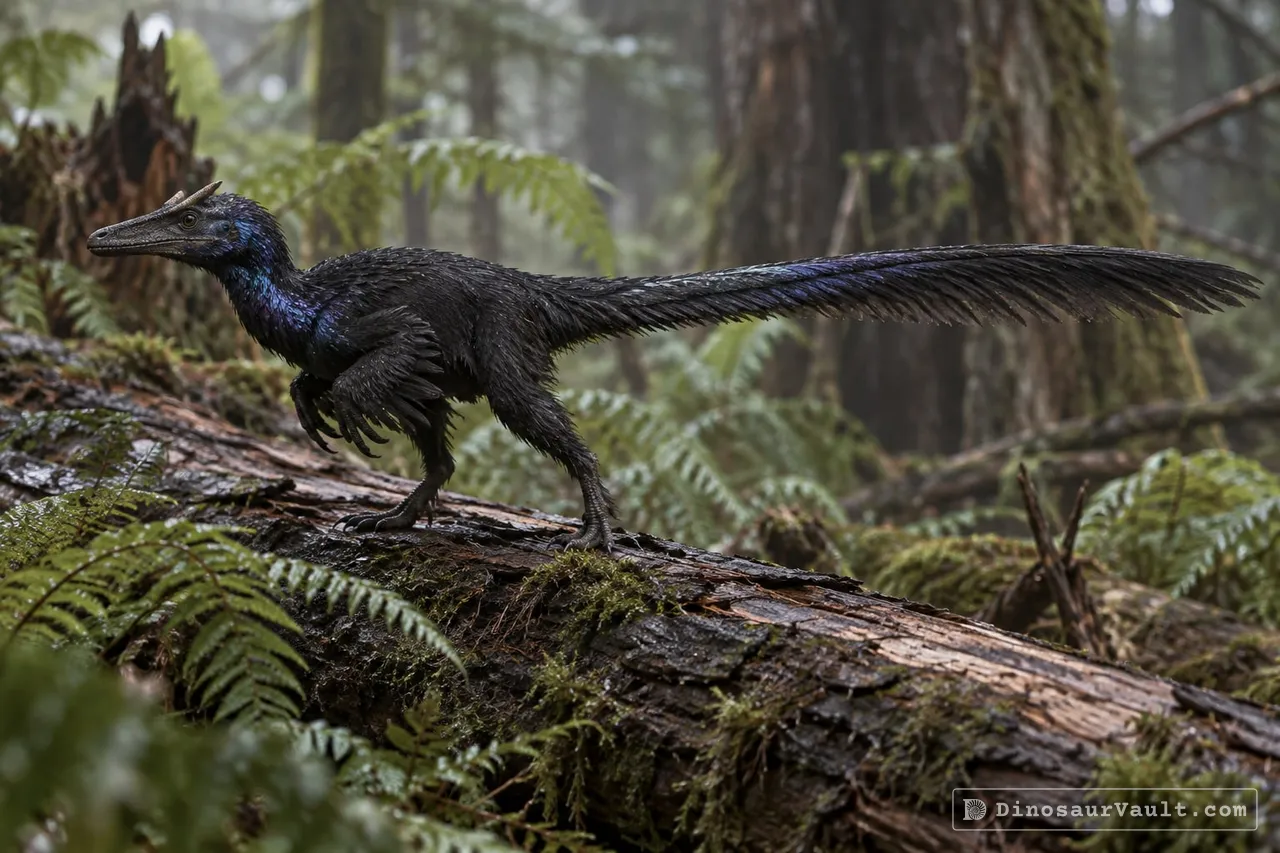
1 of 3
Lived alongside
Found in the same rock formations
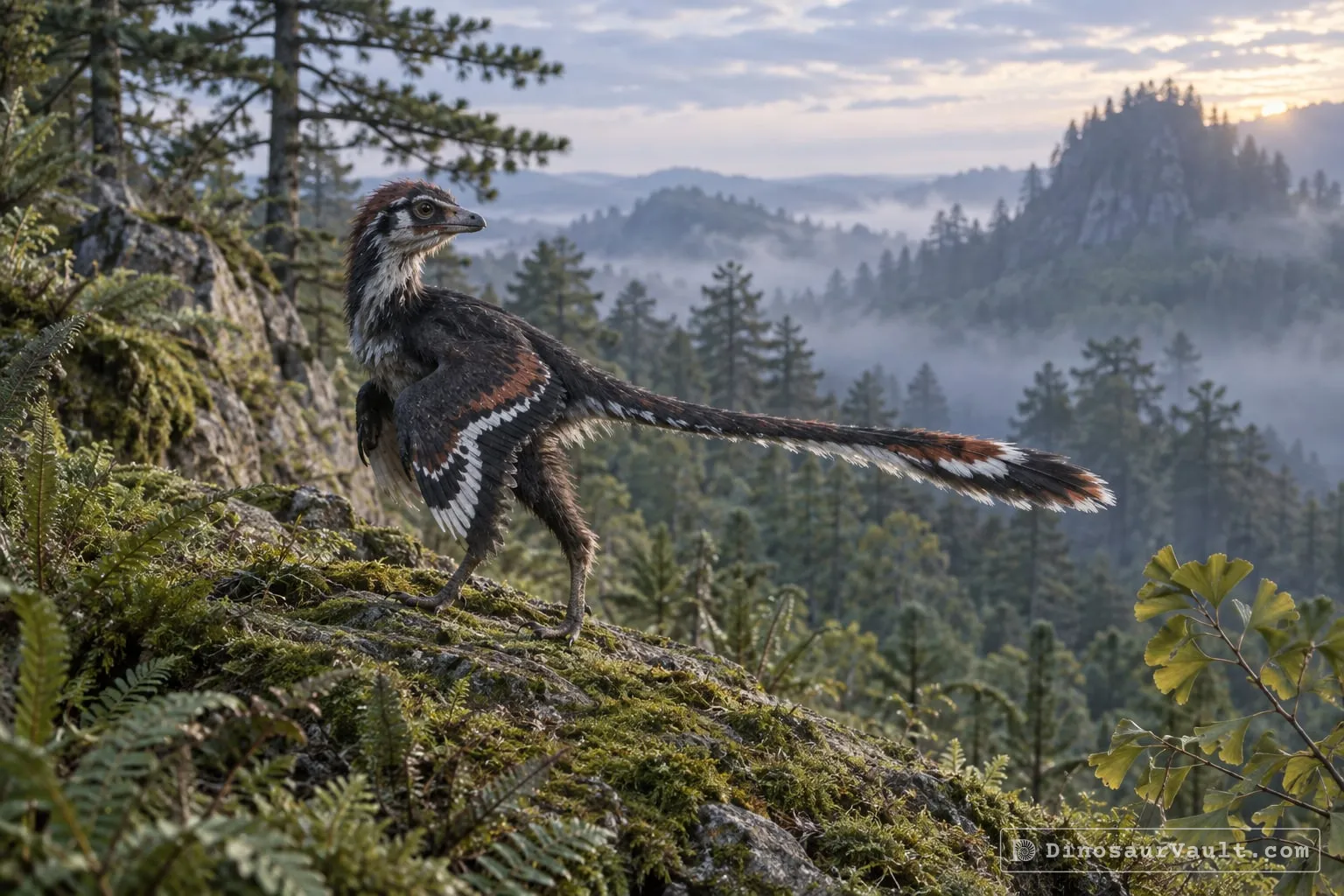
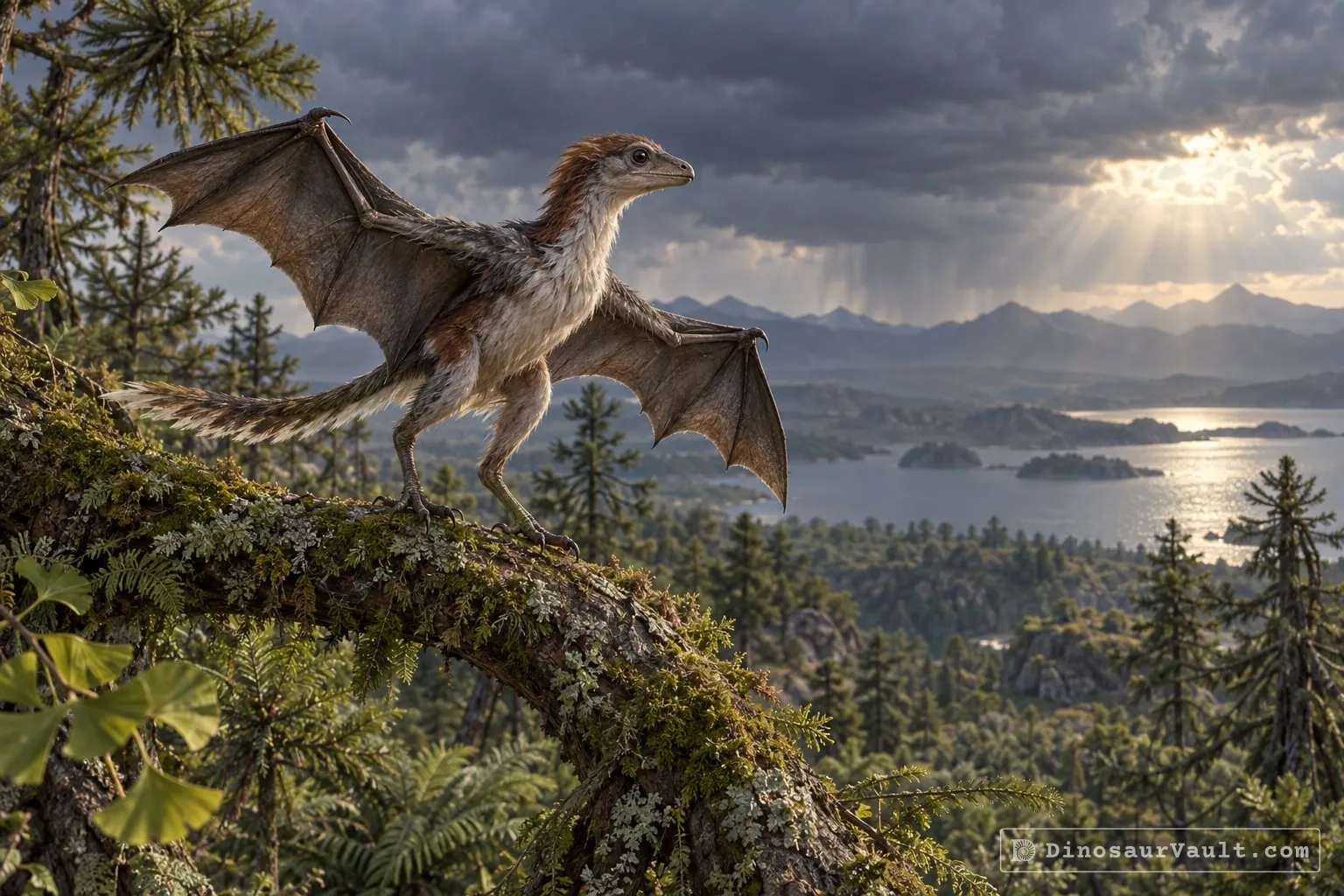
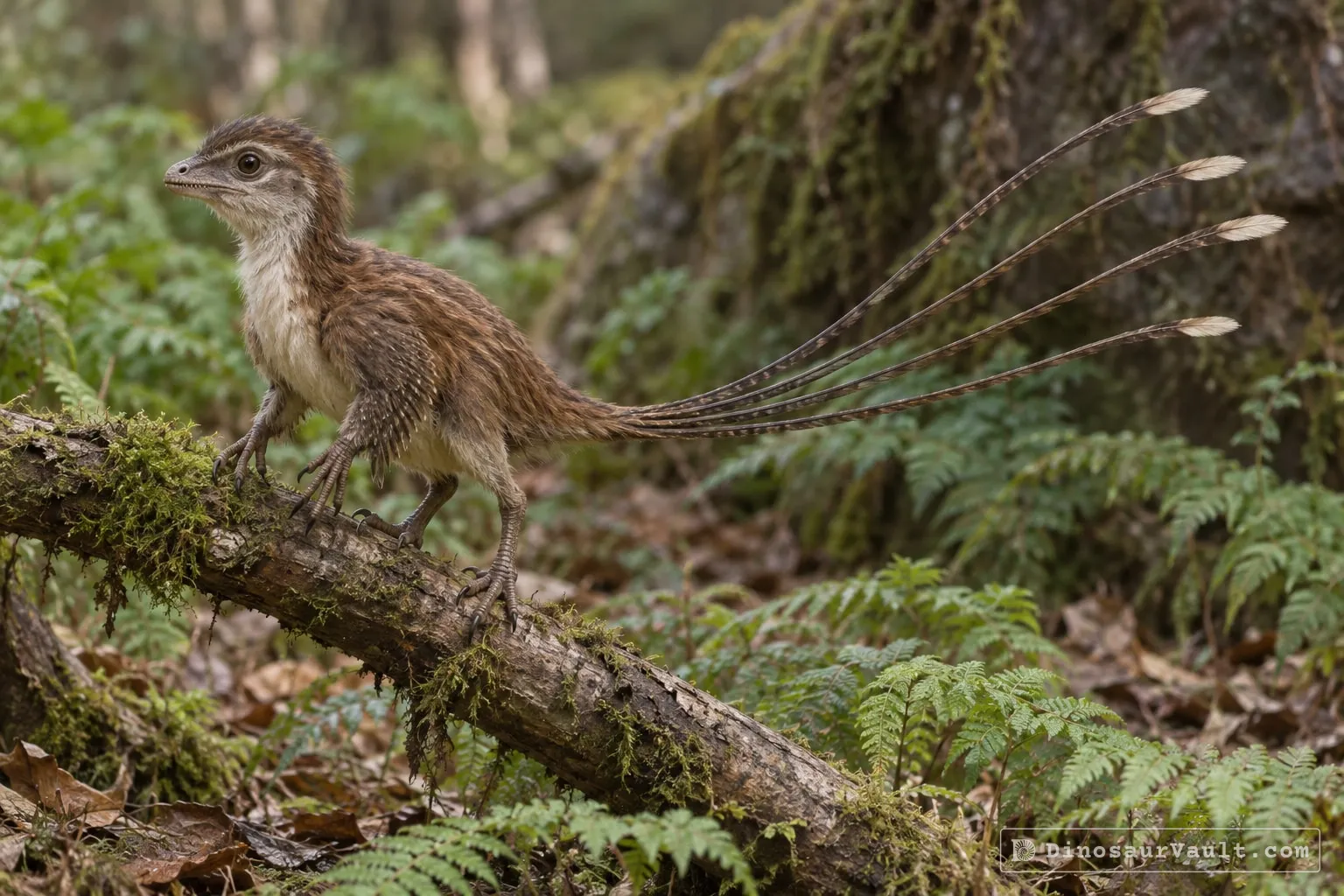
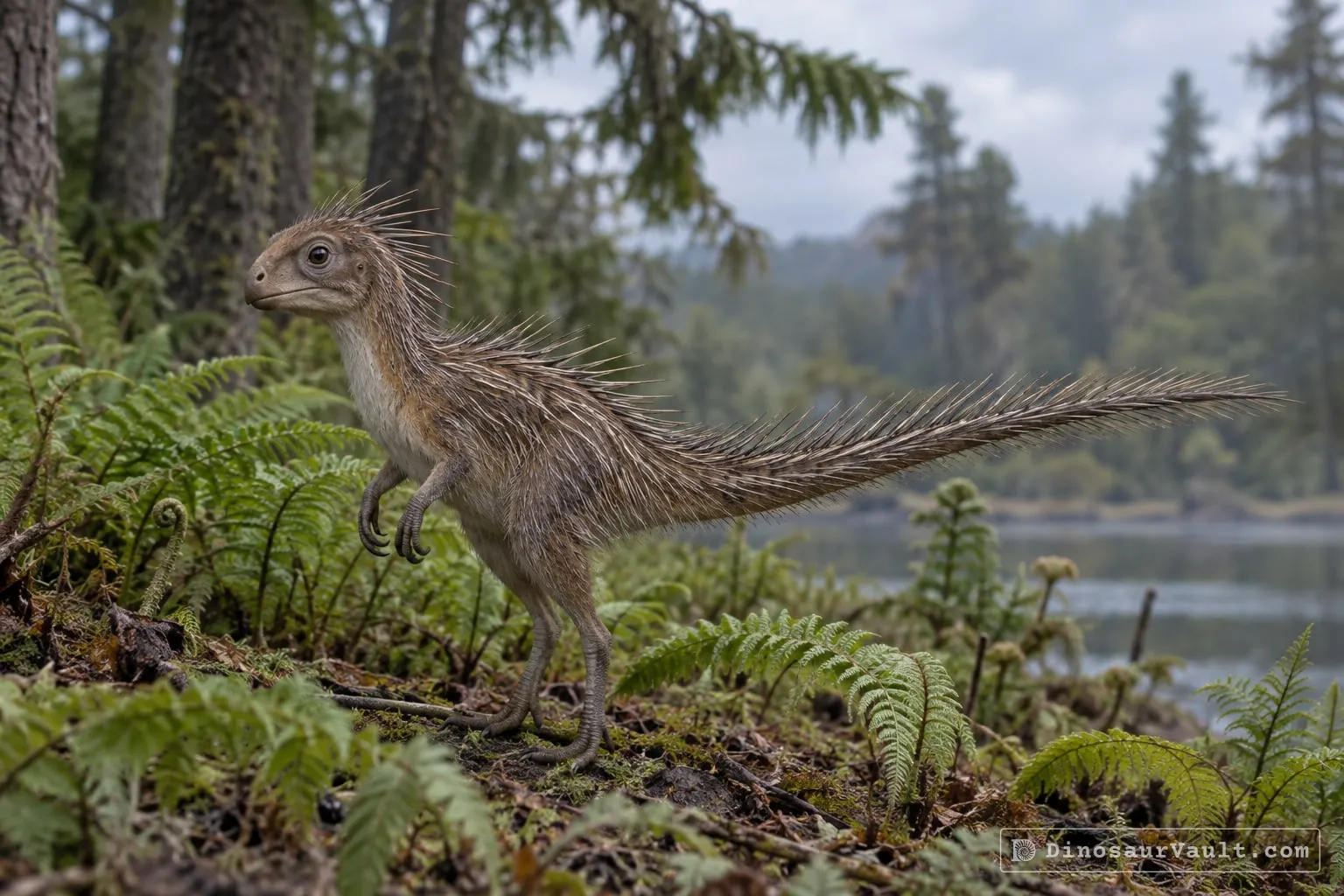
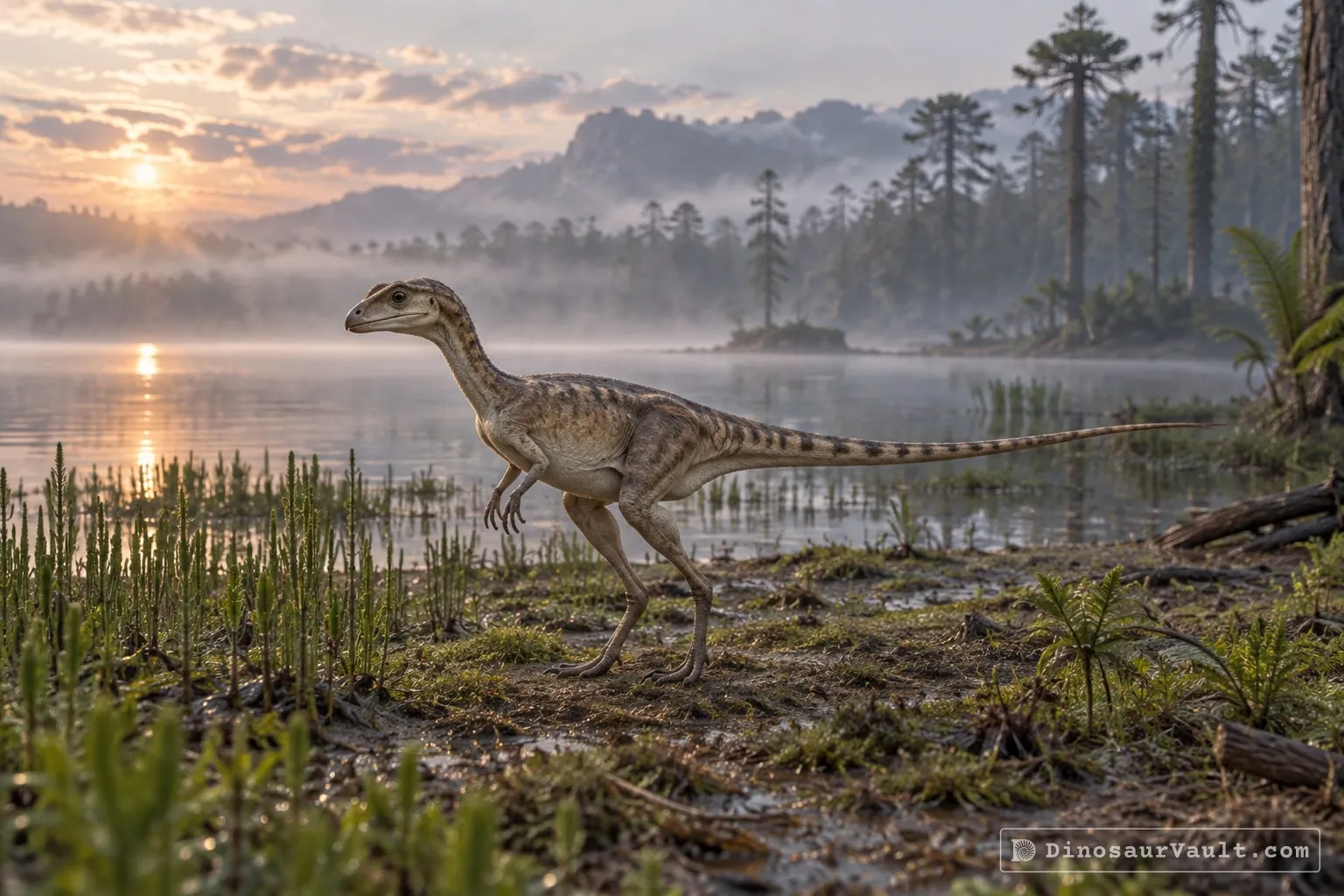
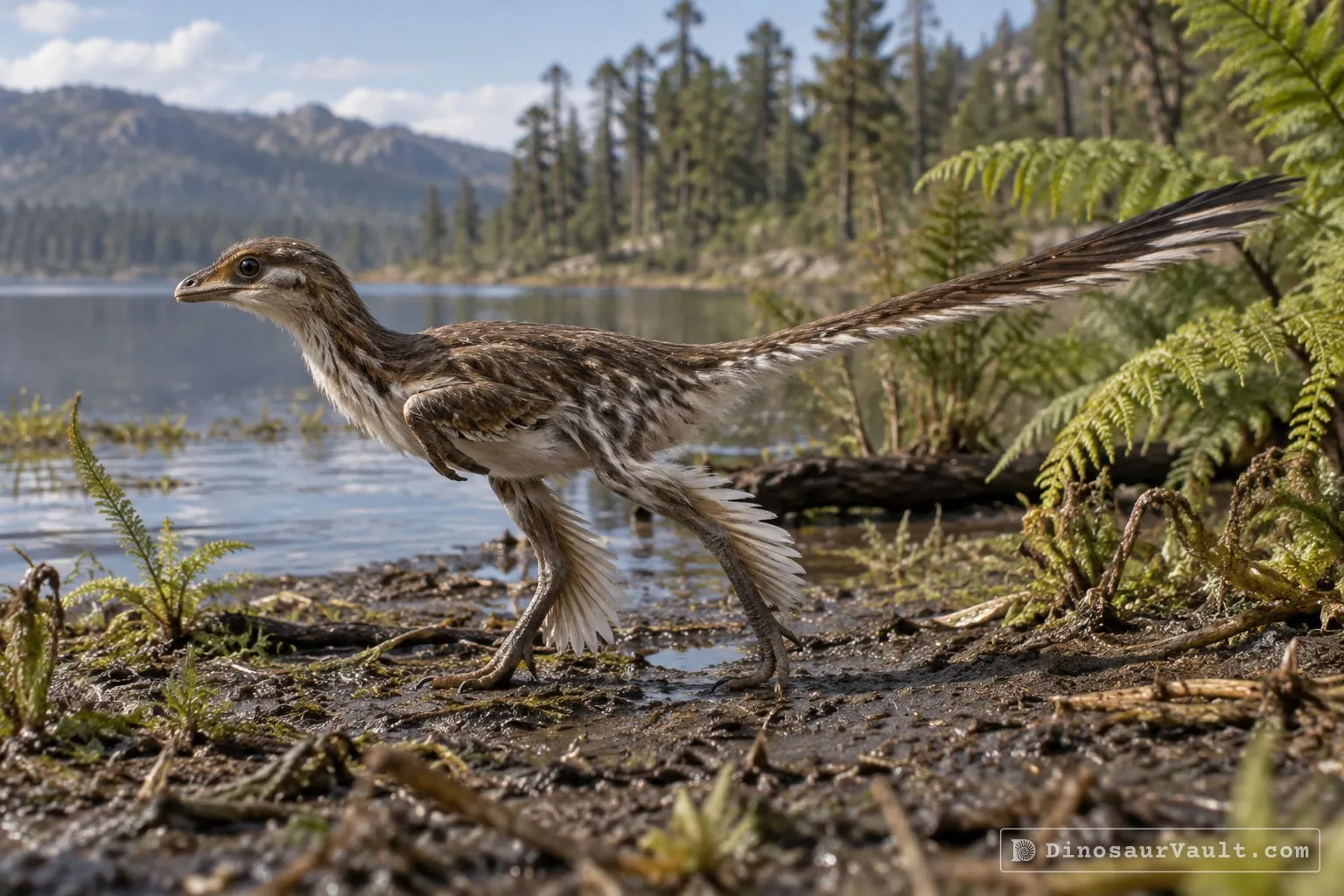

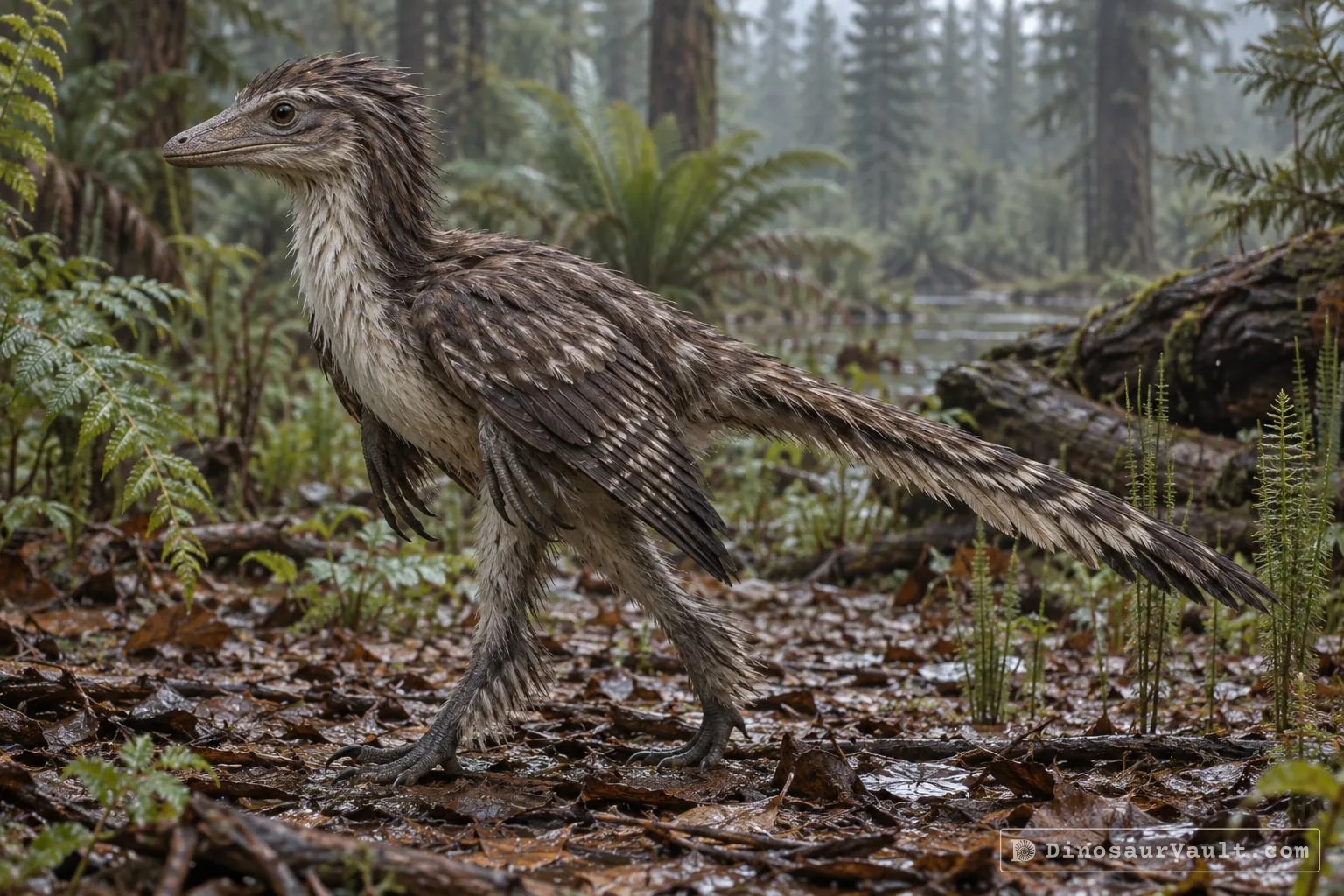


A rock formation can hold fossils laid down millions of years apart, so not every animal here met Caihong.
The evidence
The science behind Caihong
Which parts of the picture come from its own bones, and which come from its relatives.
From its own fossils
- A nearly complete skeleton preserves a long, low skull with bony crests near the eyes.
- Long feathers cover the arms, legs and tail; some tail feathers have unequal vanes on either side of the shaft.
- Tiny pigment structures in its head and neck feathers suggest a shimmering, iridescent sheen.
Borrowed from relatives
- Most of the body and plumage are known from its own fossil.
- Living birds, including hummingbirds, provide comparisons for interpreting its feather colors.
Still unknown
- The exact colors of its shimmering feathers.
- Whether it could fly under its own power.
- How it used its crests and feather displays.
Discovery timeline
- 2018Named itHu et al.
- 2018SkinNordén et al.
- 2019Its worldJiang et al.
Key papers
The research behind what we know of Caihong
Named it
Described a crested, feathered dinosaur with asymmetrical tail feathers and pigment structures suggesting iridescent plumage.
A bony-crested Jurassic dinosaur with evidence of iridescent plumage highlights complexity in early paravian evolution. Nature Communications 9
Read the paper : A bony-crested Jurassic dinosaur with evidence of iridescent plumage highlights complexity in early paravian evolution (opens in a new tab)Skin
Compared pigment structures across living birds and tested methods for recognizing iridescence in fossils, including Caihong.
Melanosome diversity and convergence in the evolution of iridescent avian feathers-Implications for paleocolor reconstruction. Evolution 73: 15-27
Read the paper : Melanosome diversity and convergence in the evolution of iridescent avian feathers-Implications for paleocolor reconstruction (opens in a new tab)Its world
Documented fossil woods from the Tiaojishan Formation, including conifers, cycads and ginkgo relatives.
The Jurassic fossil wood diversity from western Liaoning, NE China. Journal of Palaeogeography 8
Read the paper : The Jurassic fossil wood diversity from western Liaoning, NE China (opens in a new tab)
Close relatives
Other members of Paraves


Sources: Wikidata