Eosinopteryx
"dawn Chinese wing"
- Lived
- 168 to 152 million years ago, Middle Jurassic to Late Jurassic
- Diet
- Carnivore
- Group
- Theropods
- Found in
- China
- Named by
- Godefroit et al. 2013
Where its fossils were found
The evidence
Today

160 million years ago
Habitat
Forests of conifers, cycads and ginkgo relatives grew in a volcanic landscape in Jurassic China. Other dinosaurs from the Tiaojishan Formation include Anchiornis, Yi and Epidexipteryx.
Field notes
About Eosinopteryx
What it was like
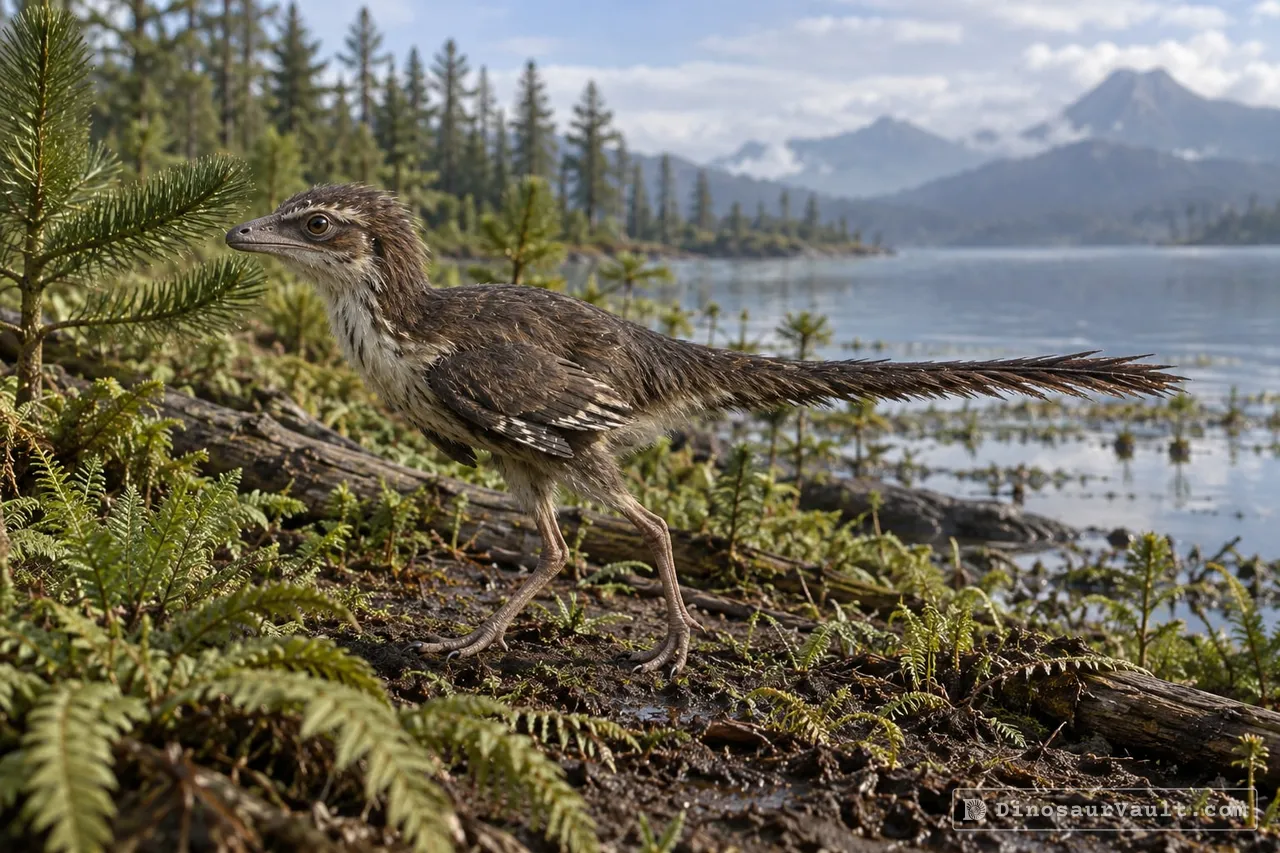
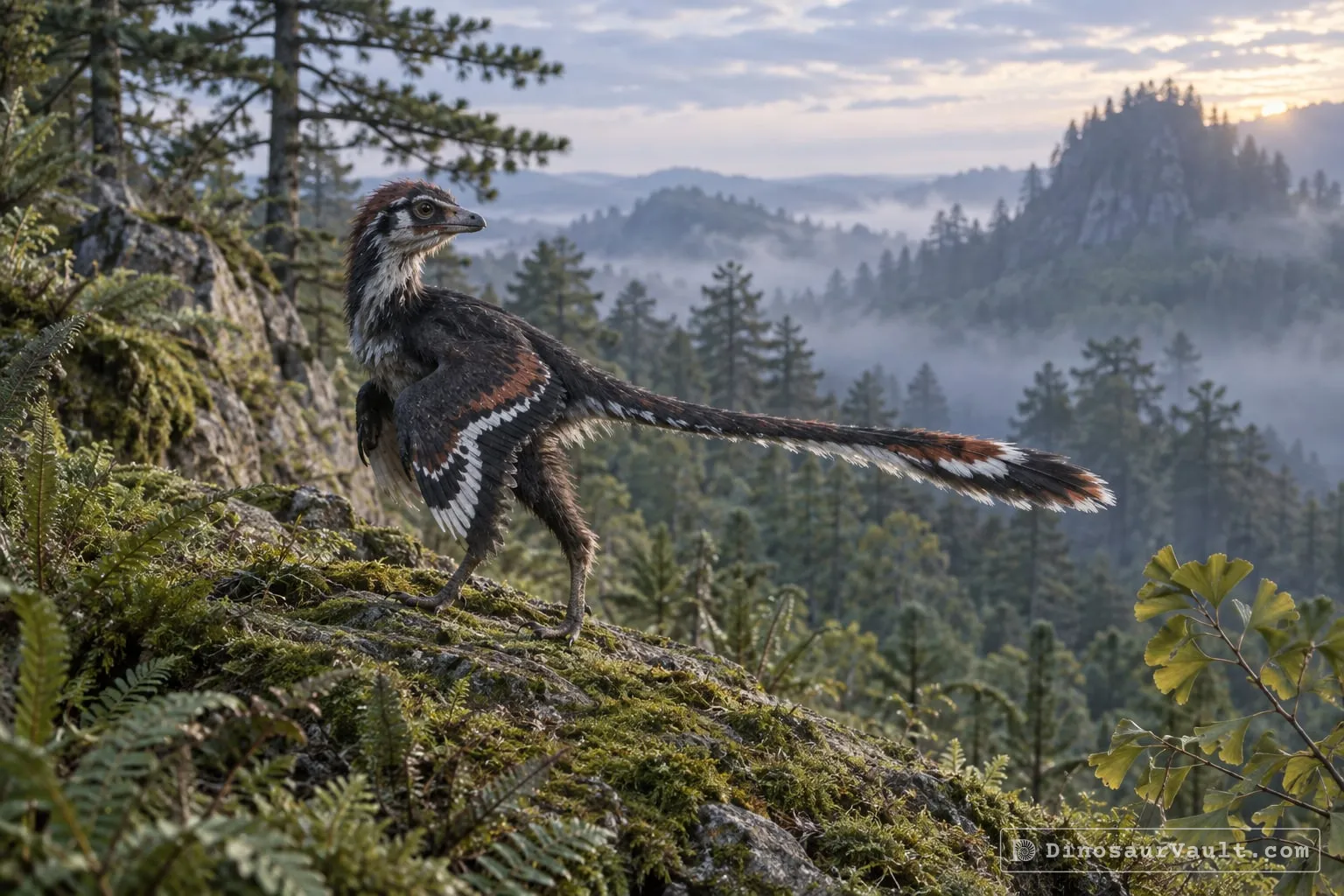
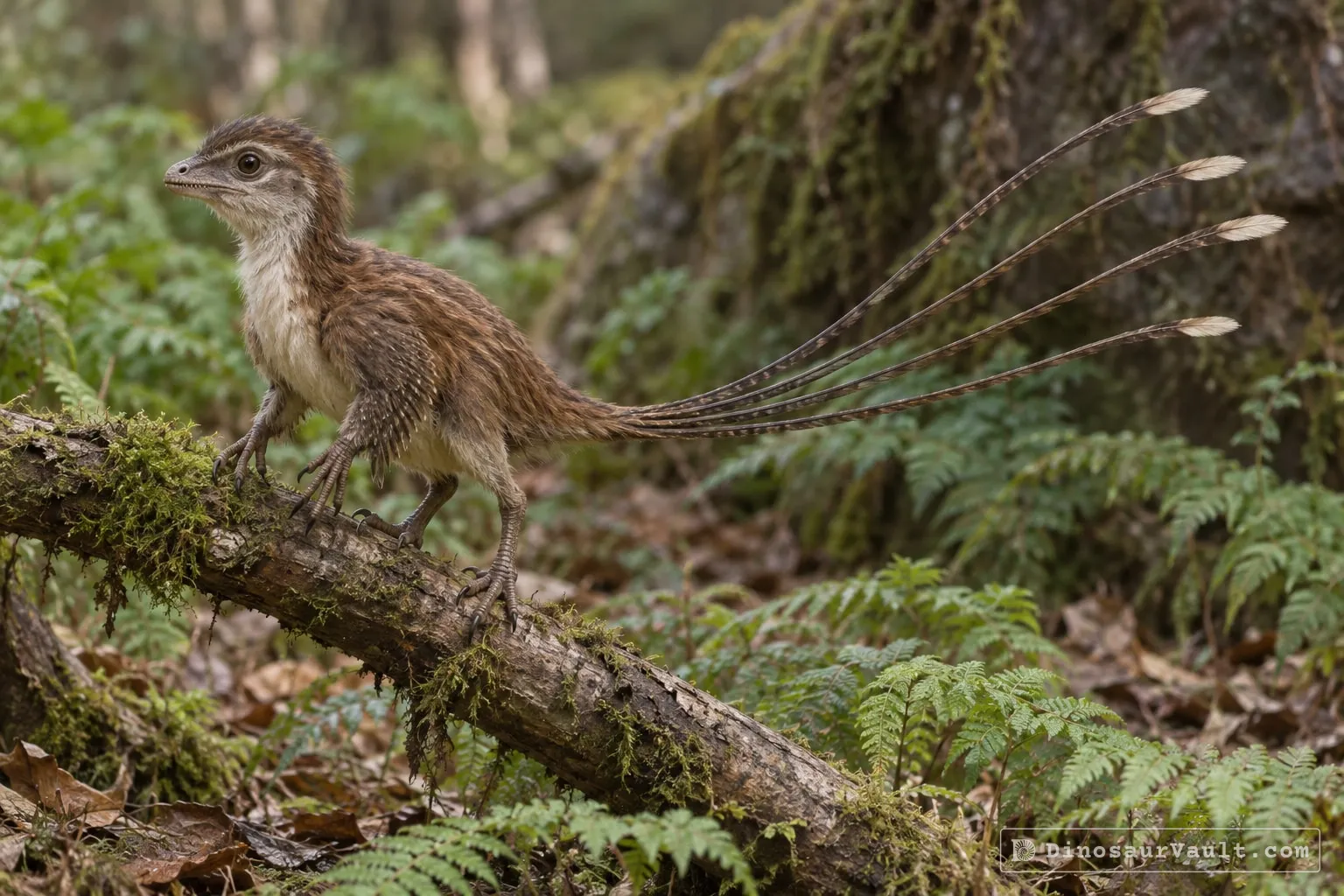
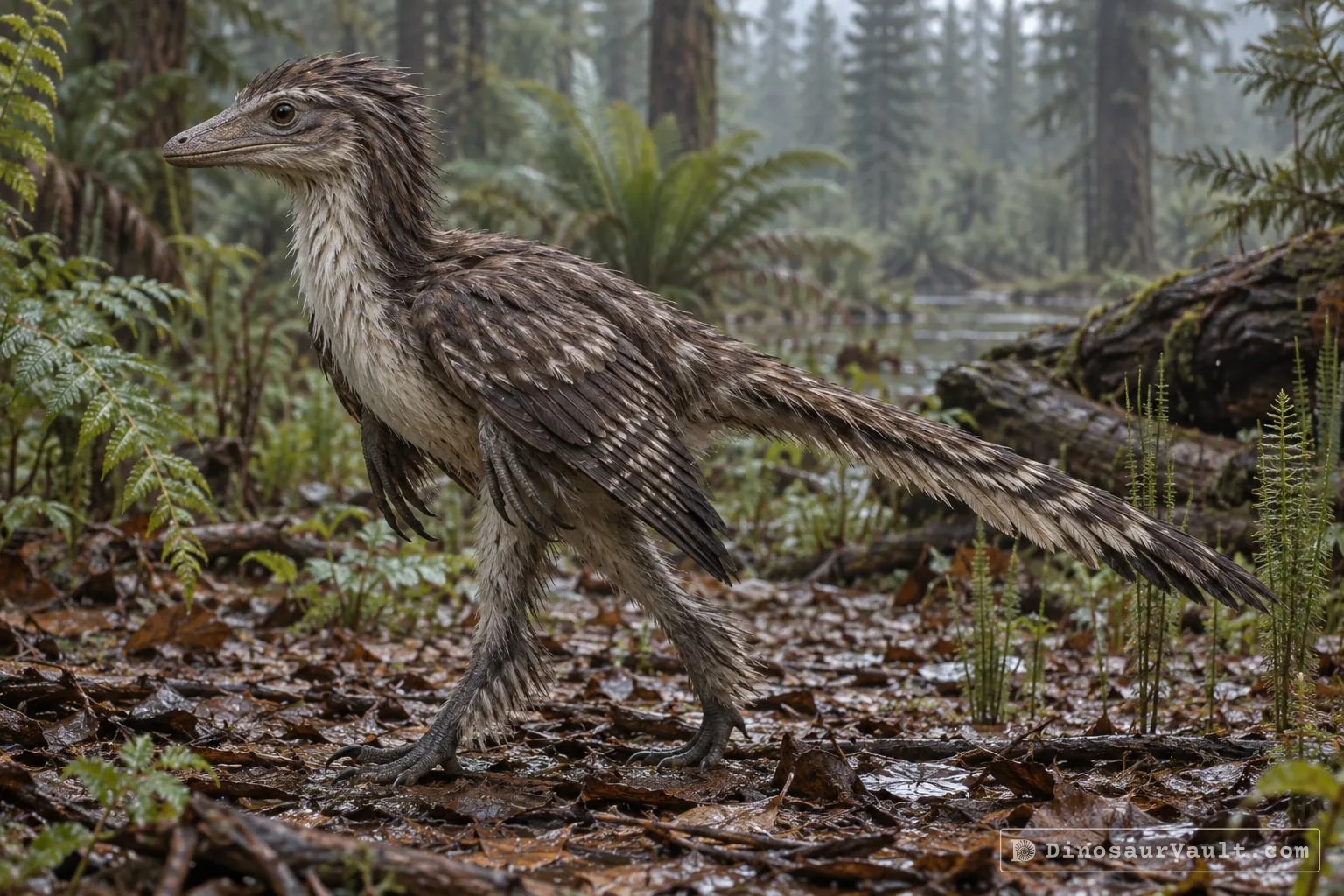
Eosinopteryx was a tiny feathered dinosaur, a close relative of Anchiornis. It had short arms, a short tail with few feathers and no feathers on its lower legs, which suggests it lived mostly on the ground.
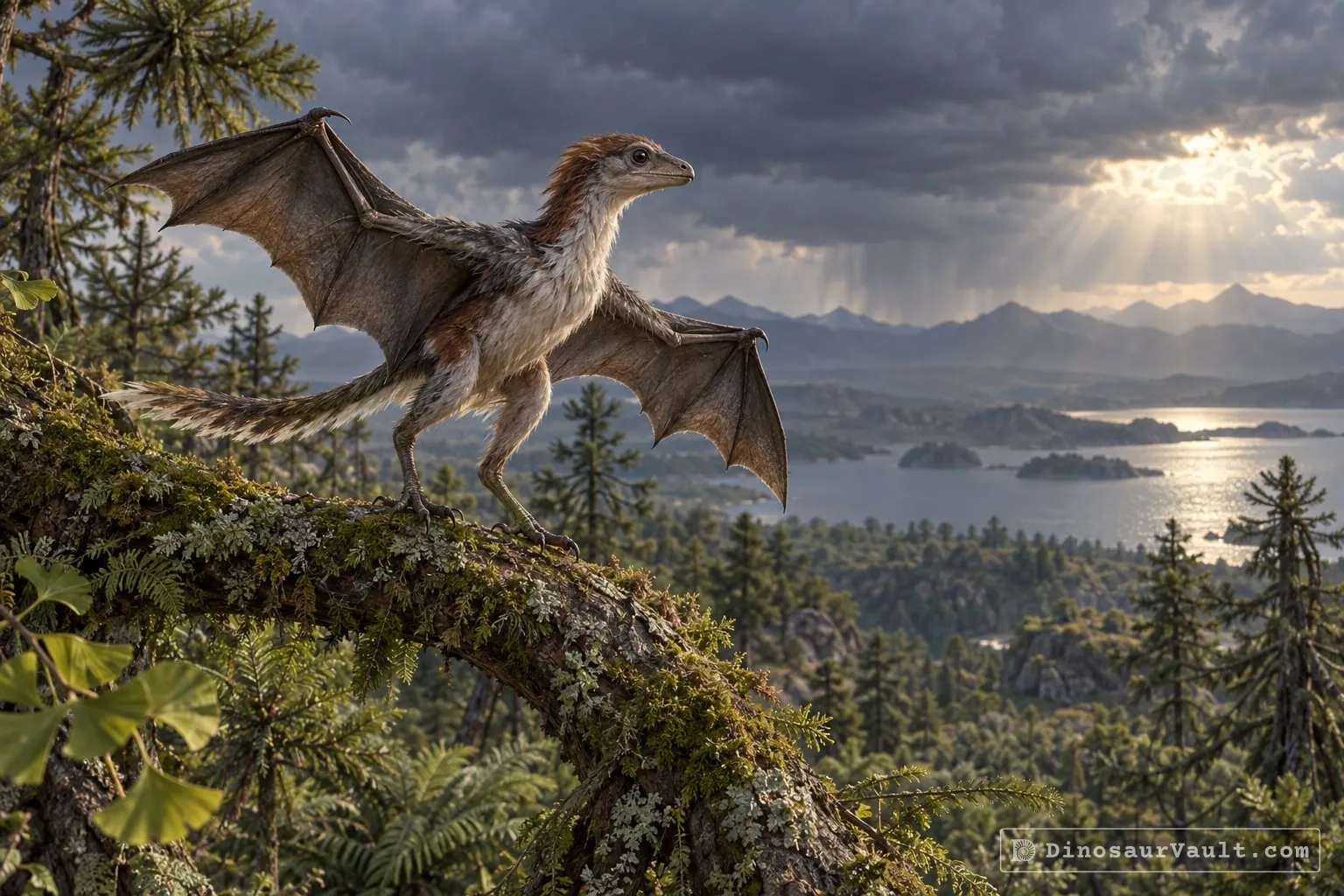
Its feathers were not suited to flight.
Its world
It lived in the Jurassic in what is now northeastern China. Its skeleton comes from the Tiaojishan Formation, which has also produced Anchiornis, Yi and Epidexipteryx.
How it was found
Godefroit and colleagues named Eosinopteryx in 2013, from a single find. Some scientists think it is simply an Anchiornis.
Field gallery
More views of Eosinopteryx
Scenes reconstructed from the available fossil evidence.
Lived alongside
Found in the same rock formations
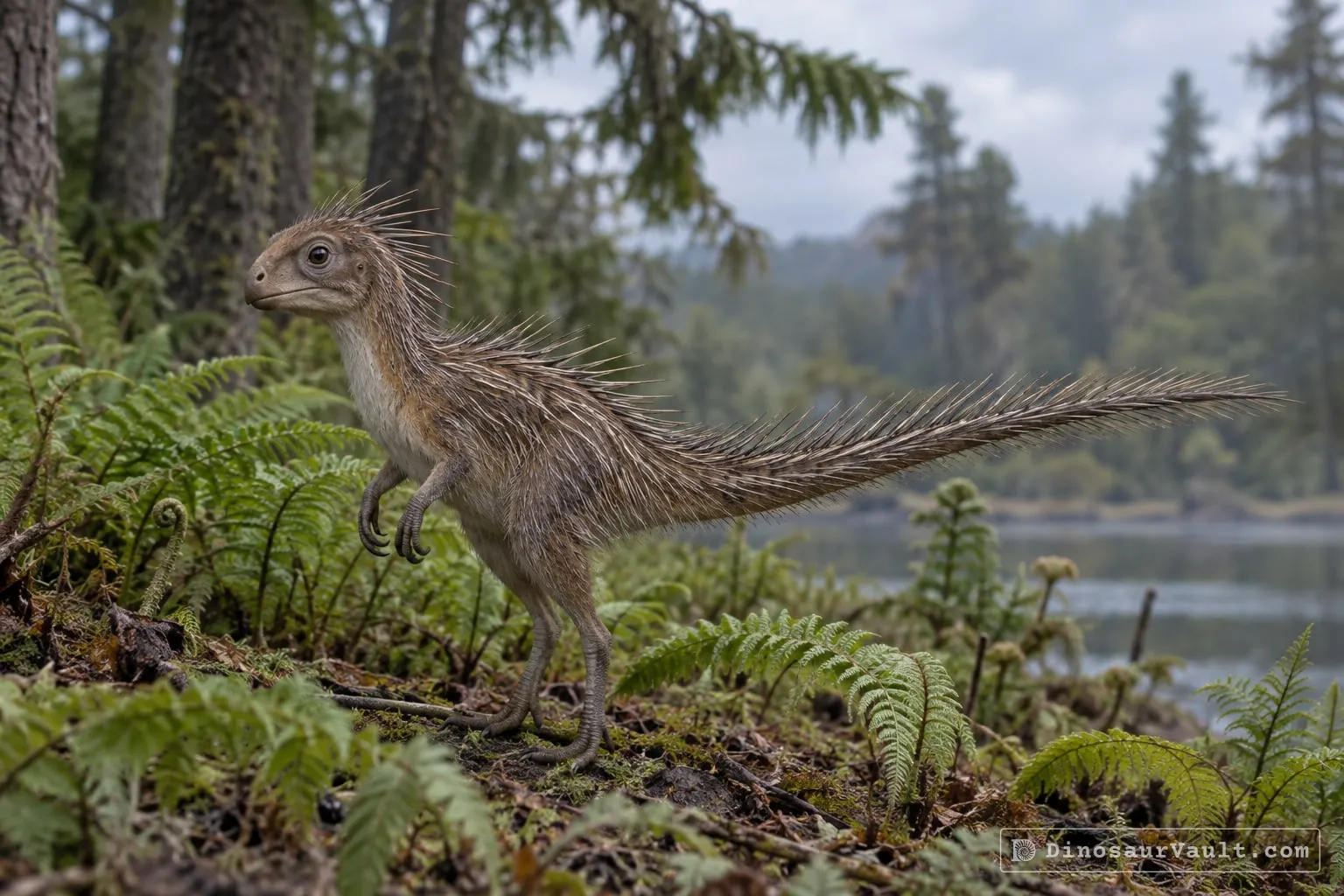
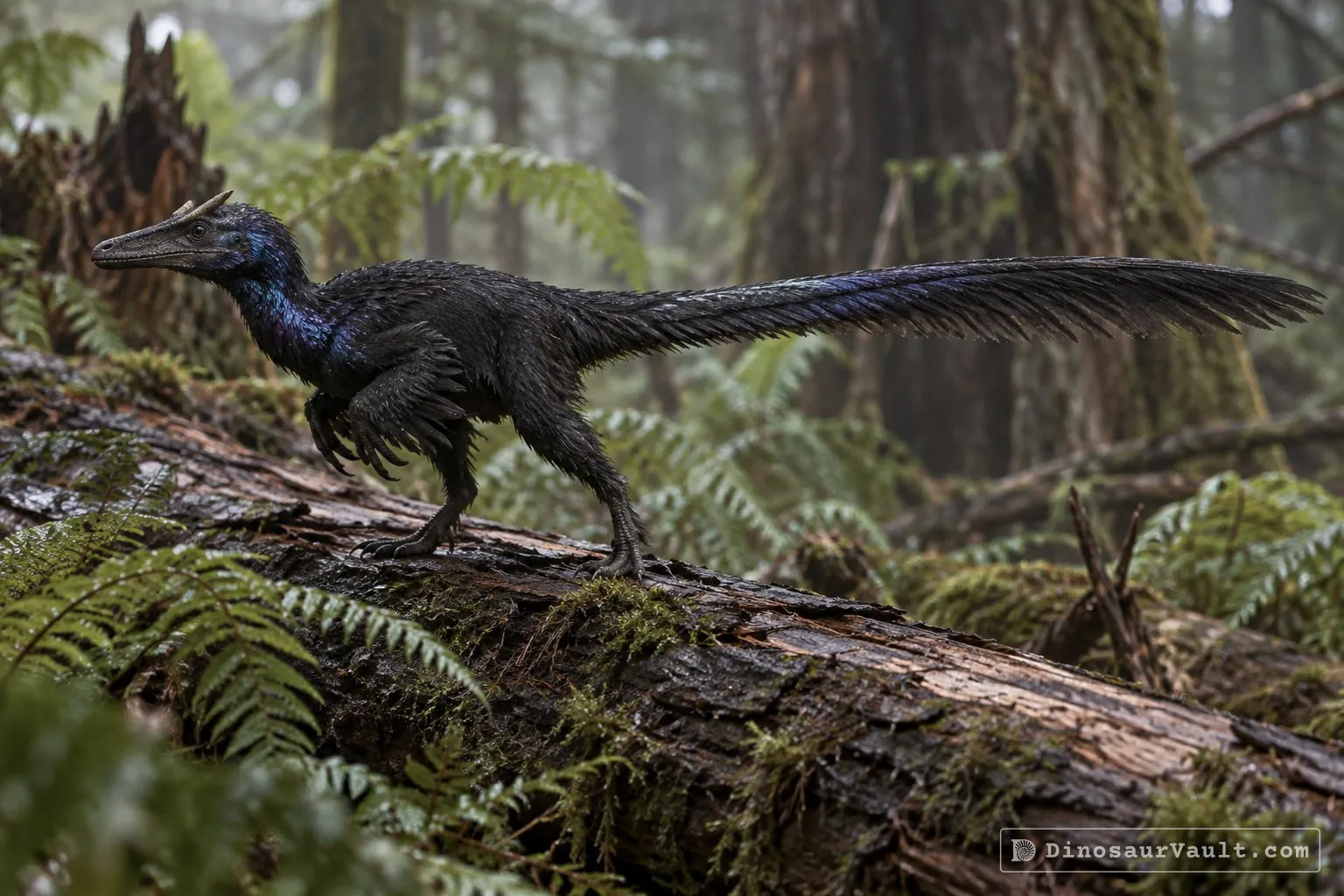
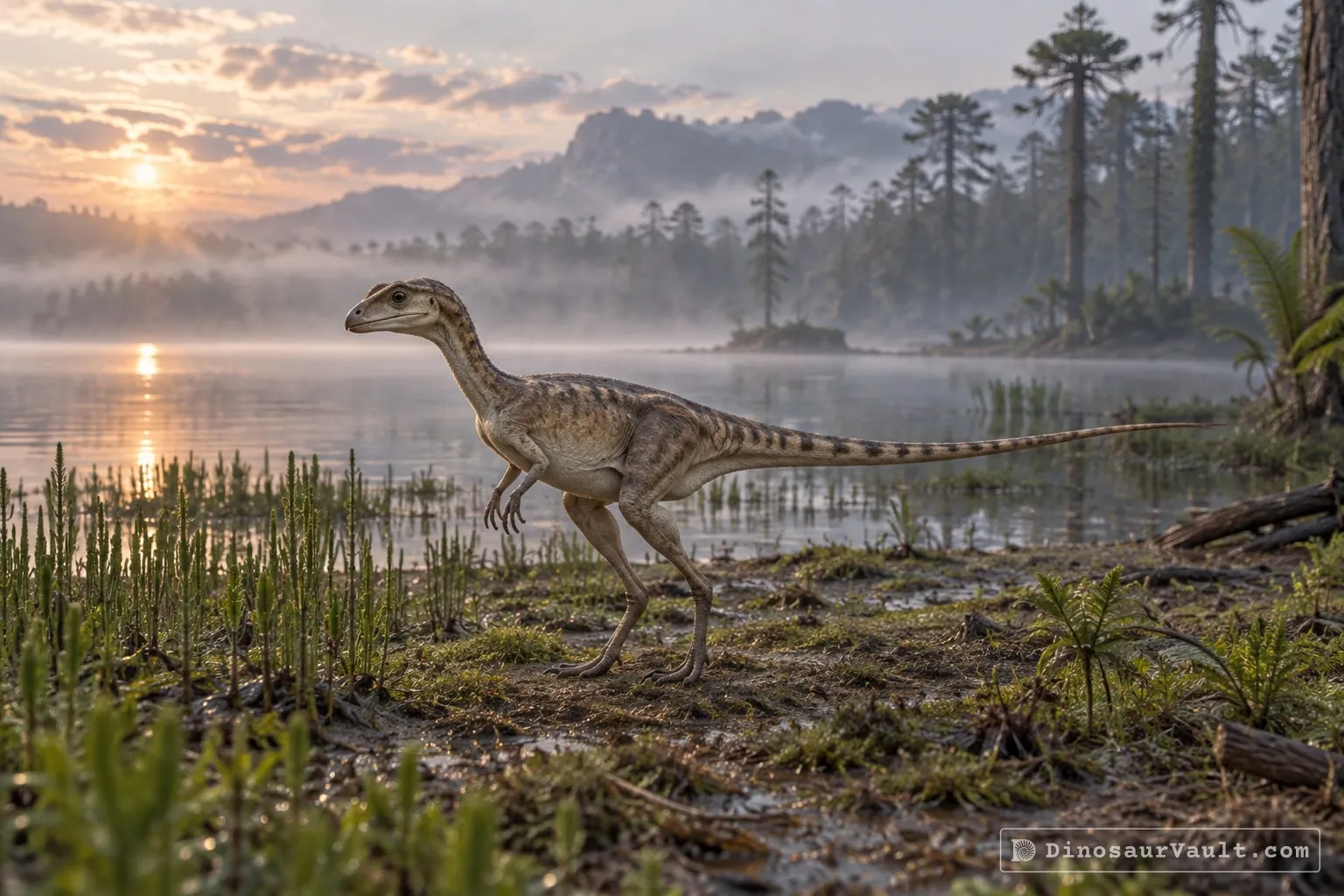
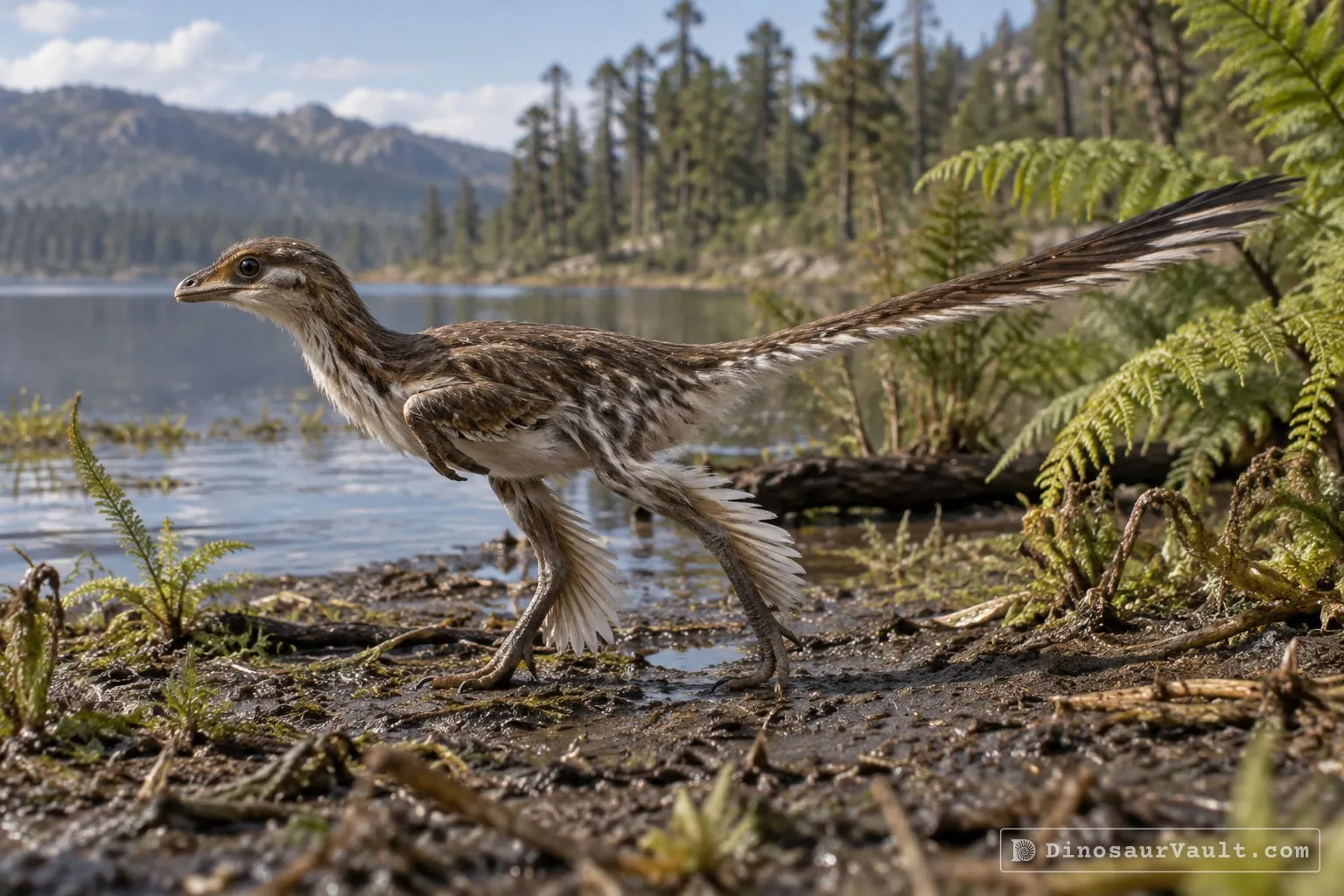


A rock formation can hold fossils laid down millions of years apart, so not every animal here met Eosinopteryx.
The evidence
The science behind Eosinopteryx
Which parts of the picture come from its own bones, and which come from its relatives.
From its own fossils
- A single articulated skeleton preserves the skull, limbs and much of the backbone, along with feathers.
- Long feathers with vanes are preserved beside the arms, and shorter feathers cover the body.
- The toes have short, gently curved claws.
Borrowed from relatives
- Most of the body is represented by its own skeleton.
- Anchiornis provides a comparison for missing tail feathers and other gaps in the preserved plumage.
Still unknown
- Whether it was a separate genus or a young Anchiornis.
- Its color and the complete arrangement of its feathers.
- The full length of its tail.
Discovery timeline
- 2013Named itGodefroit et al.
- 2019Family treeAgnolin et al.
- 2026RedescriptionLi et al.
Key papers
The research behind what we know of Eosinopteryx
Named it
Named a small feathered dinosaur and proposed that its reduced leg and tail plumage suited a life on the ground.
Reduced plumage and flight ability of a new Jurassic paravian theropod from China. Nature Communications 4
Read the paper : Reduced plumage and flight ability of a new Jurassic paravian theropod from China (opens in a new tab)Family tree
Proposed that Eosinopteryx belongs to Anchiornis, noting the incomplete tail and variation in preserved feathers.
Paravian Phylogeny and the Dinosaur-Bird Transition: An Overview. Frontiers in Earth Science 6
Read the paper : Paravian Phylogeny and the Dinosaur-Bird Transition: An Overview (opens in a new tab)Redescription
Reexamined the original skeleton and interpreted it as an immature Anchiornis, with apparent differences caused largely by damage and distortion.
Redescription and taxonomic reassessment of the holotype of anchiornithine Eosinopteryx brevipenna. Palaeoworld 35: 201180
Read the paper : Redescription and taxonomic reassessment of the holotype of anchiornithine Eosinopteryx brevipenna (opens in a new tab)
Close relatives
Other members of Paraves


Sources: Wikidata