Pedopenna
"foot feather"
Type species Pedopenna daohugouensis
- Lived
- 165 to 162 million years ago, Middle Jurassic
- Diet
- Carnivore
- Group
- Theropods
- Found in
- China
- Named by
- Xu and Zhang 2005
Where its fossils were found
The evidence
Today

165 million years ago
Habitat
Wooded landscapes with conifers and ginkgo relatives, crossed by streams and dotted with lakes. Ferns grew near the water; Anchiornis, Yi and Tianyulong lived in the same region.
Field notes
About Pedopenna
What it was like
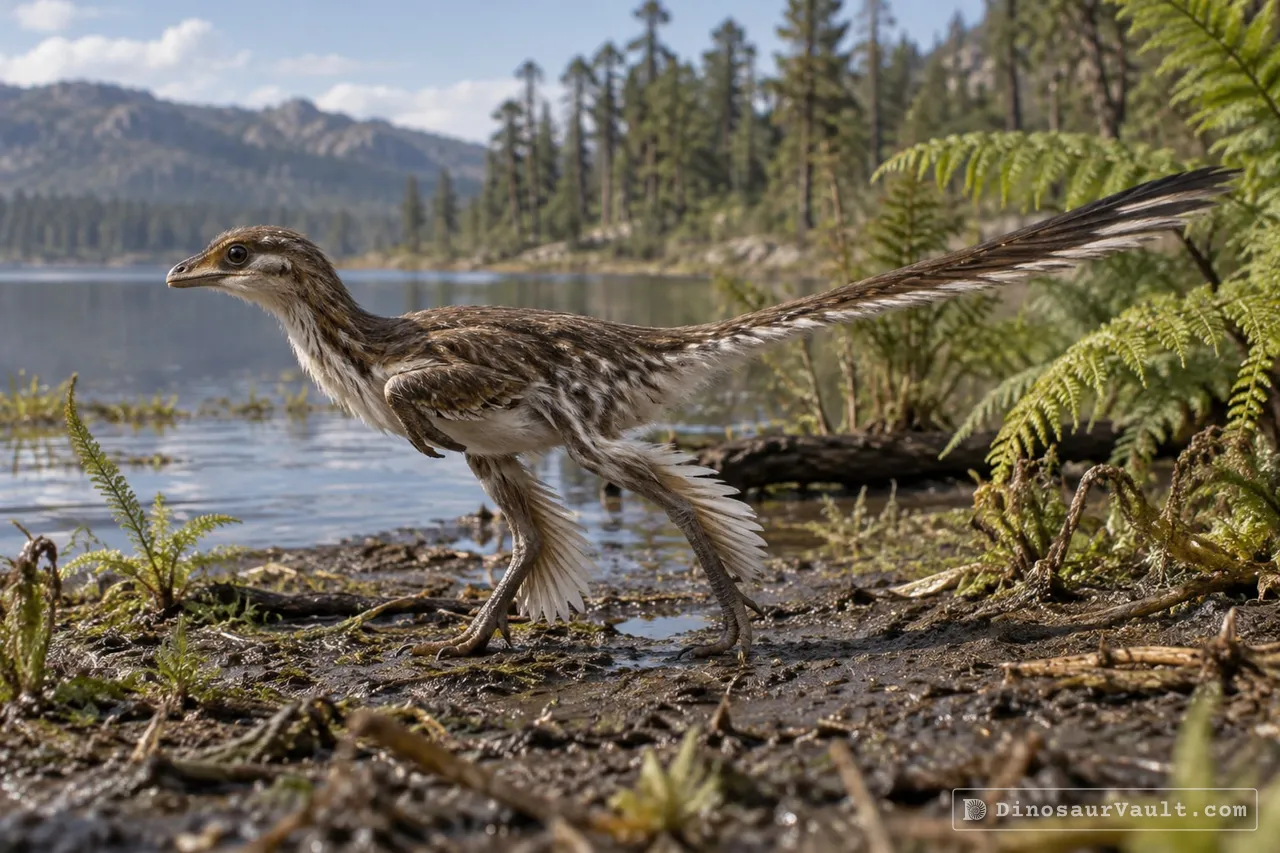
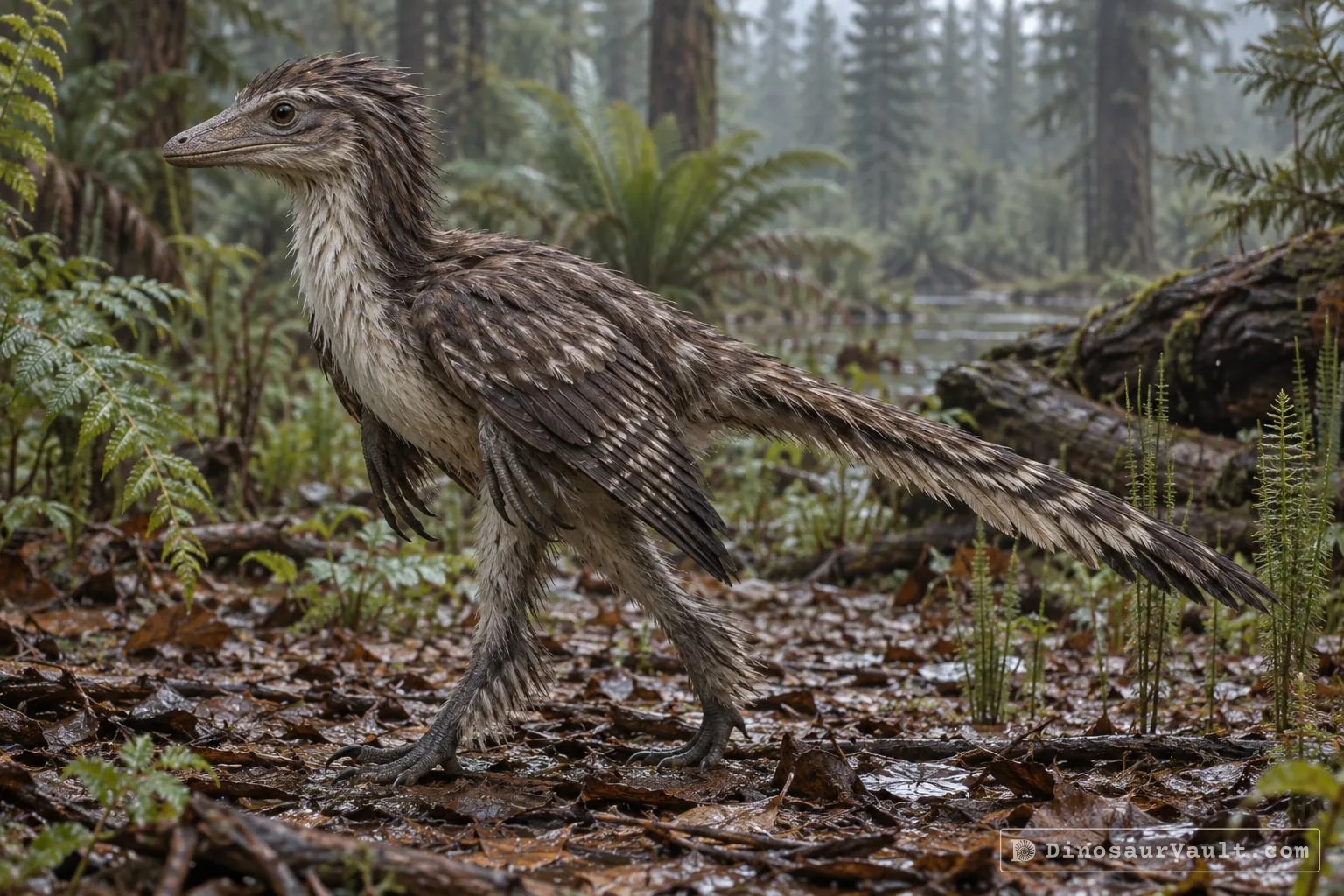
Pedopenna is known from the lower legs and feet of a small feathered theropod. The feet carry long feathers, which suggests it may have had feathered legs like Microraptor and Anchiornis.
Its world
It lived in the Middle Jurassic, in what is now China. It comes from the same fossil beds as the feathered Anchiornis, the bat-winged Yi and the fuzzy ornithischian Tianyulong.
How it was found
Xu and Zhang named Pedopenna in 2005. The type species is Pedopenna daohugouensis.
Field gallery
More views of Pedopenna
Scenes reconstructed from the available fossil evidence.
Lived alongside
Found in the same rock formations
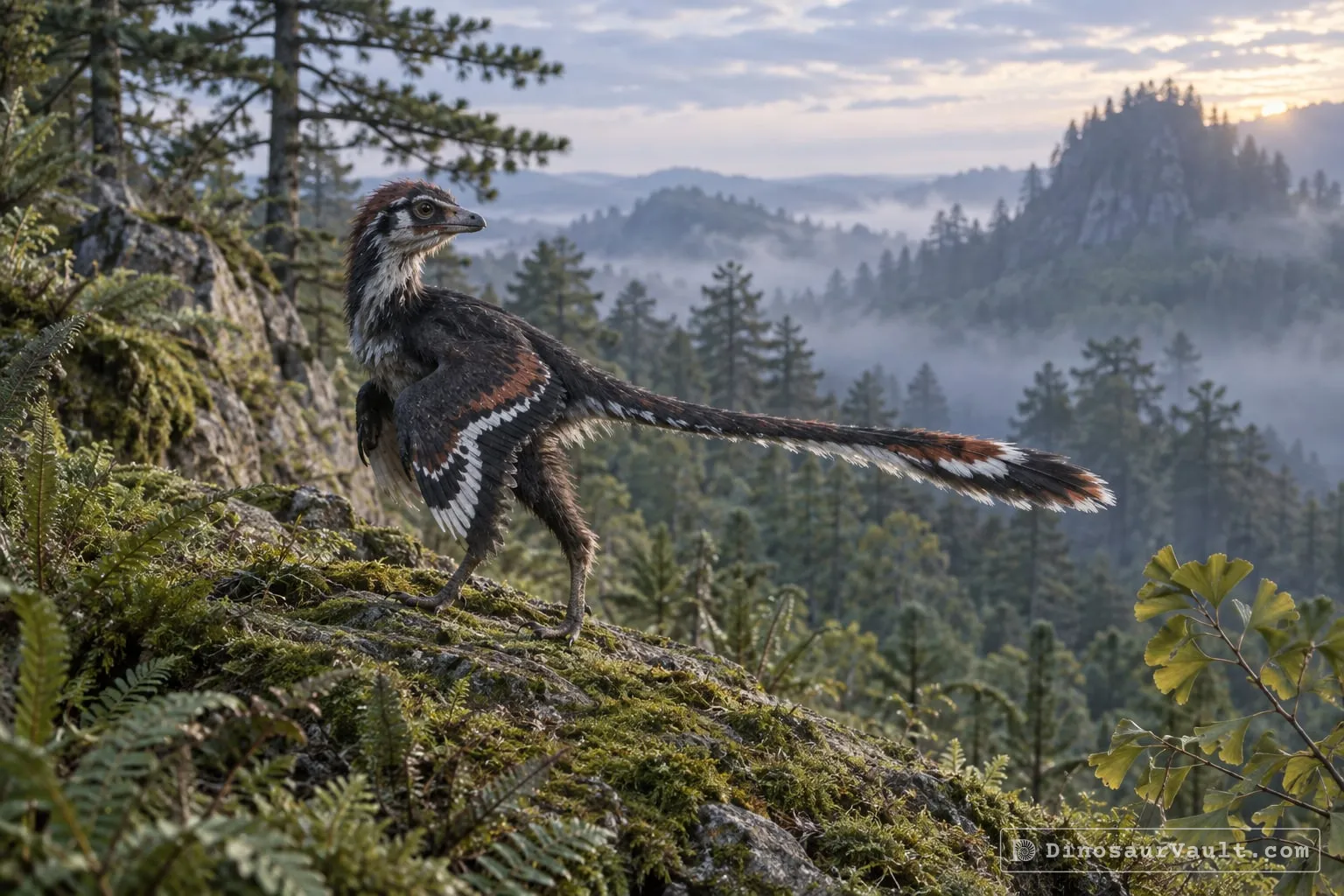
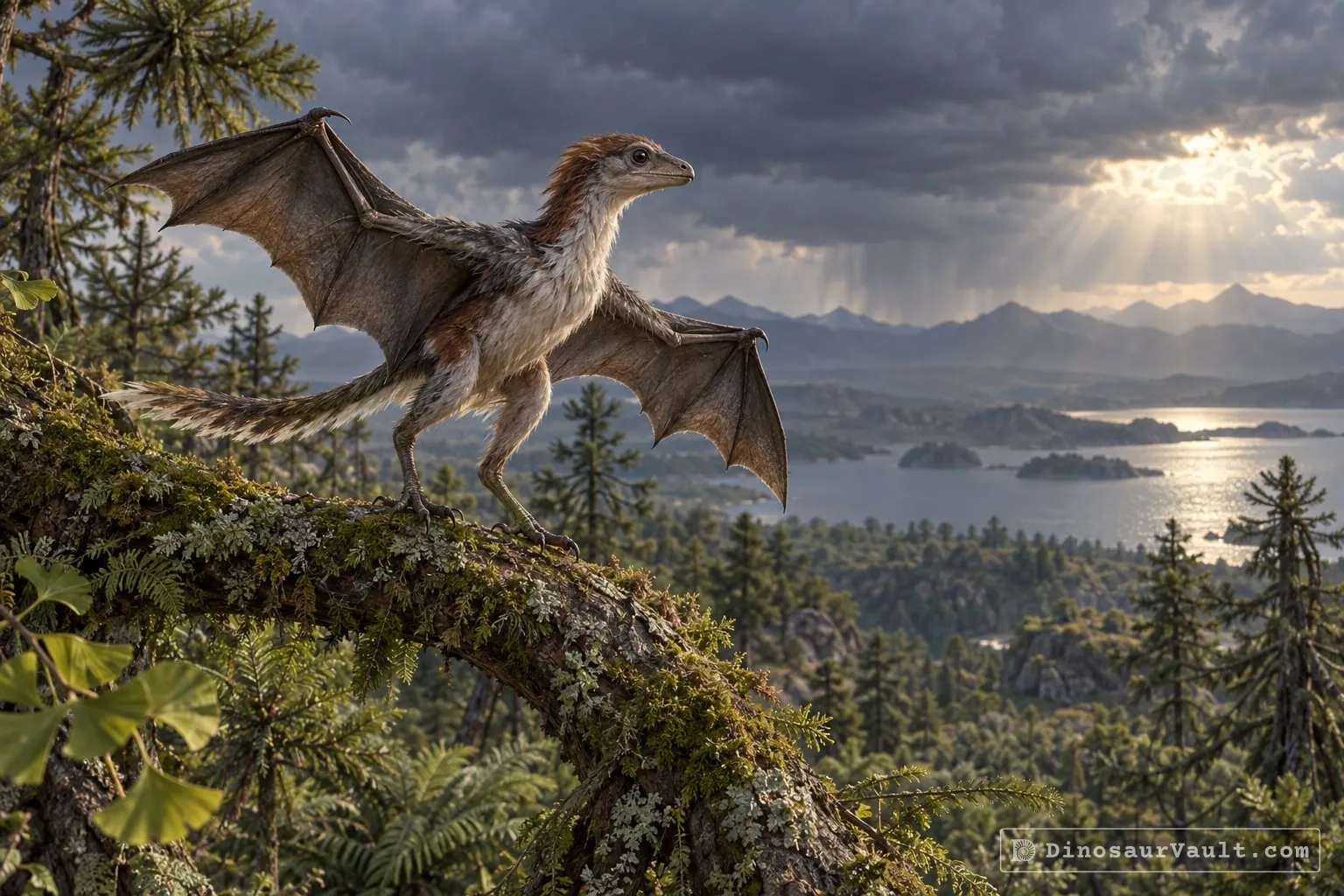
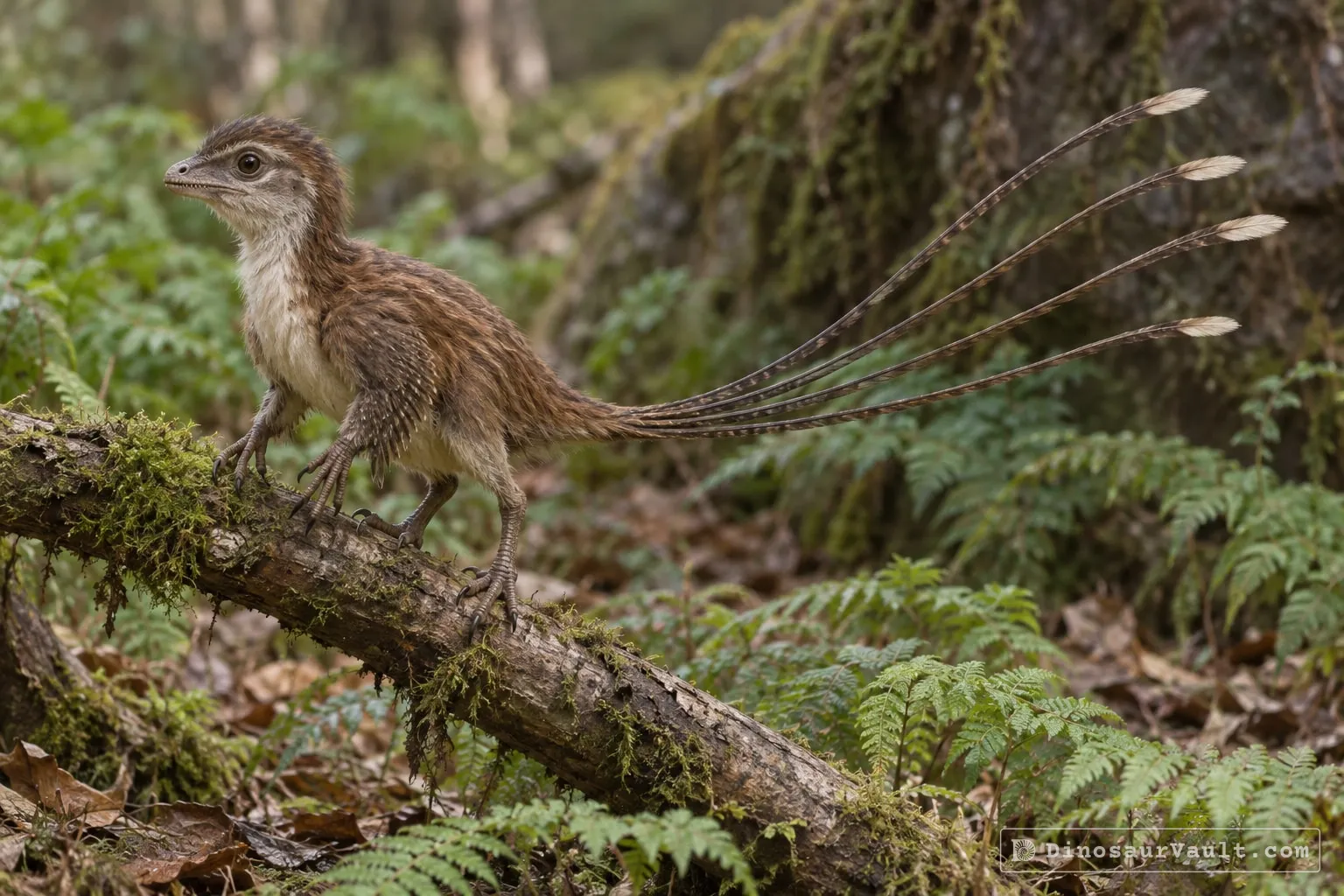
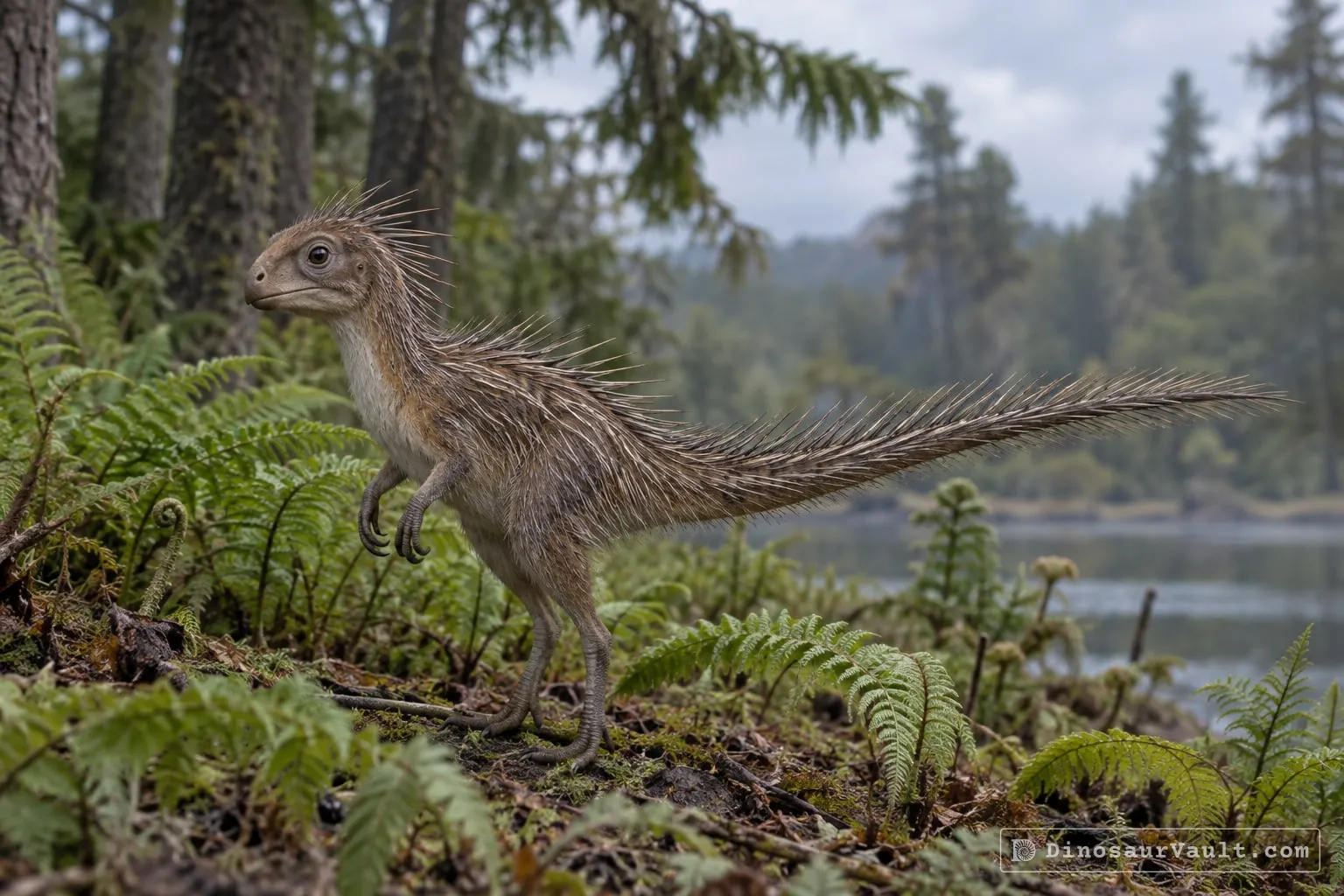
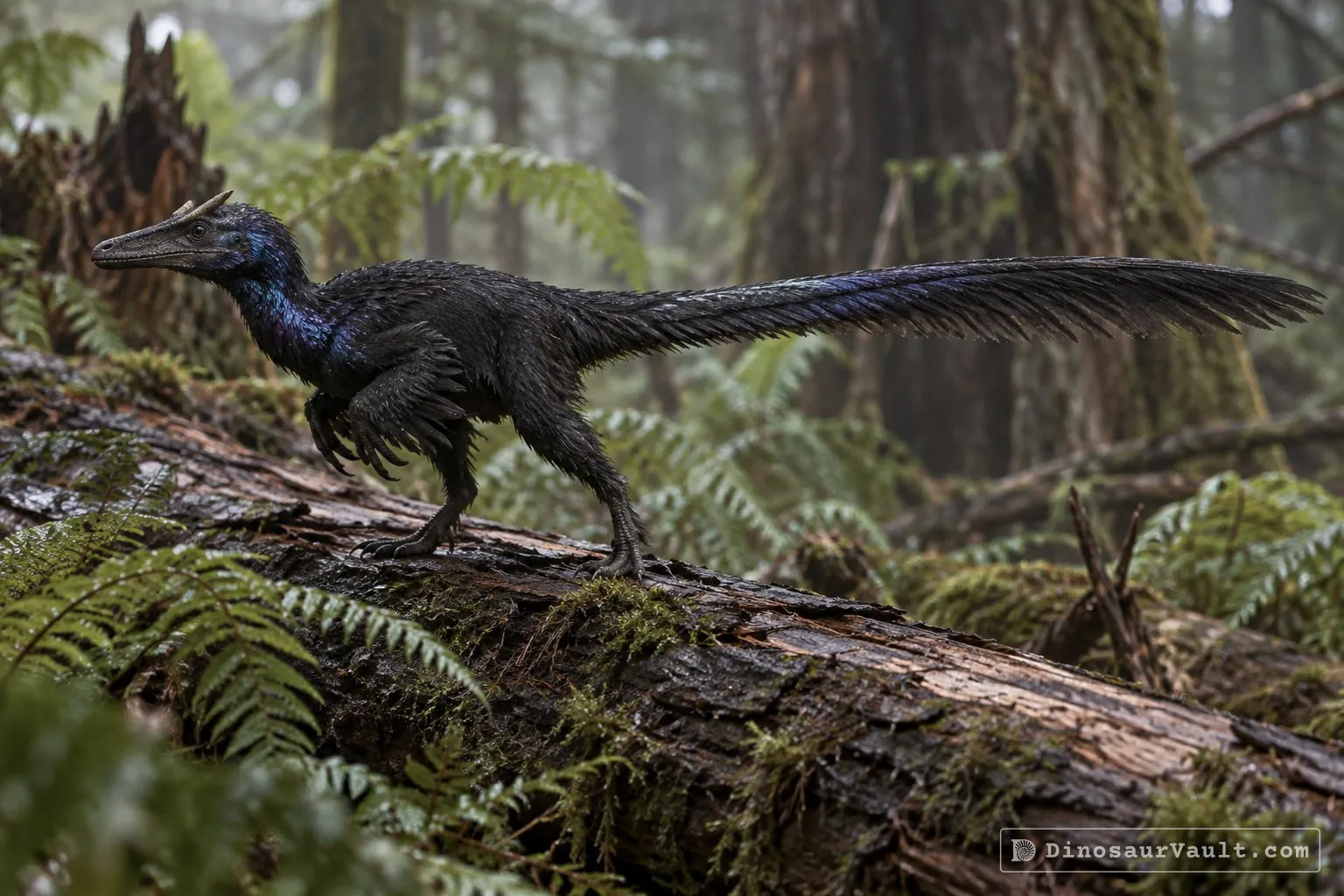
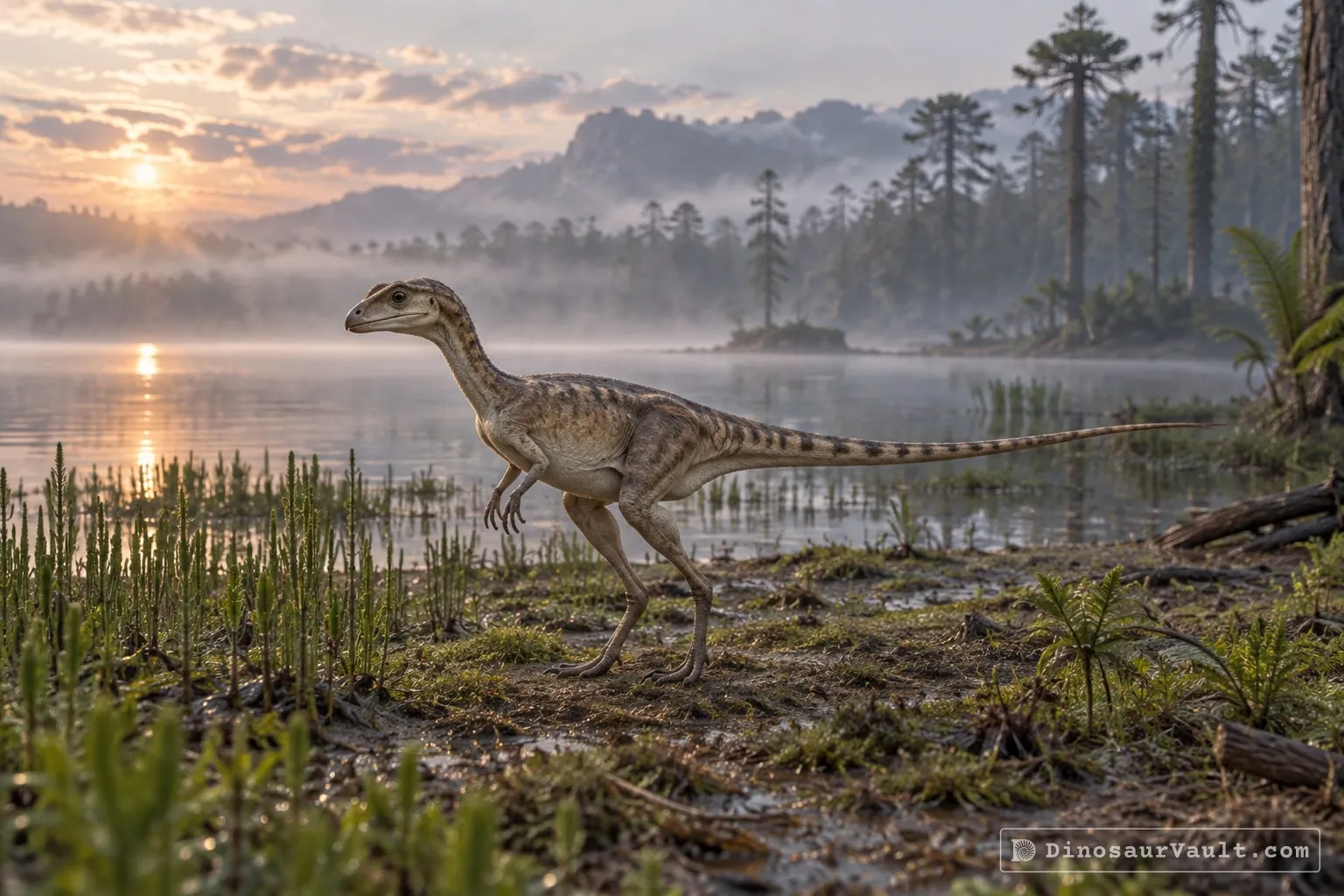
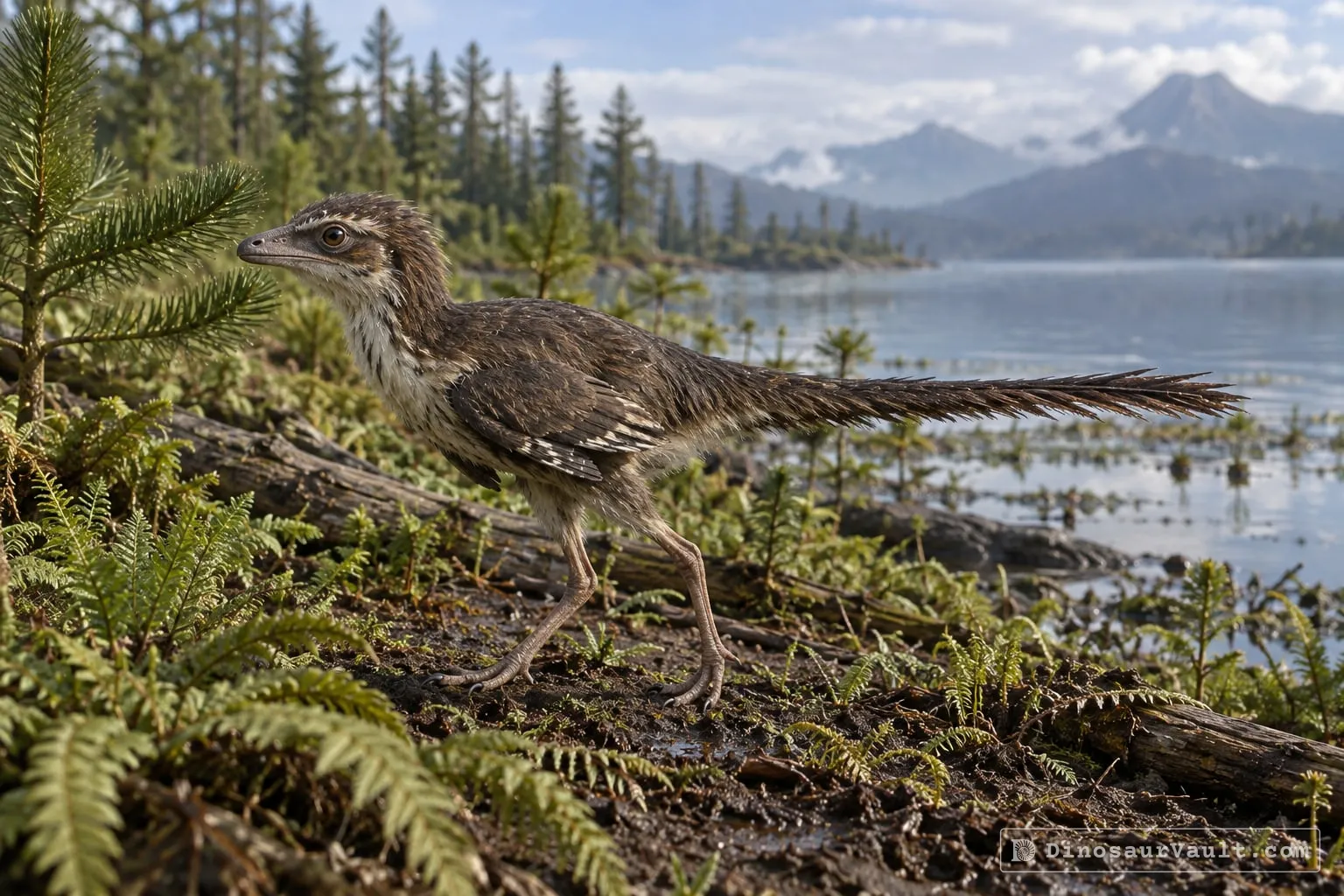


A rock formation can hold fossils laid down millions of years apart, so not every animal here met Pedopenna.
The evidence
The science behind Pedopenna
Which parts of the picture come from its own bones, and which come from its relatives.
From its own fossils
- A partial lower leg and foot preserve long feathers along the metatarsus, the part of the foot above the toes.
- The foot feathers have shafts and flat vanes, with shorter feathers close to the bones.
- The second toe has an enlarged claw, less specialized than the sickle claw of dromaeosaurs.
Borrowed from relatives
- The missing head, trunk, arms and tail are inferred from early feathered paravians such as Anchiornis and Microraptor.
Still unknown
- Its full body shape and its exact place in the dinosaur family tree.
- Whether the long foot feathers helped it glide, kept it warm or served as a display.
- Its feather colors.
Discovery timeline
- 2003Close relativeXu et al.
- 2005Named itXu & Zhang
- 2014Its worldNa et al.
Key papers
The research behind what we know of Pedopenna
Close relative
Described Microraptor with long feathers on its arms and legs, providing a comparison for the foot feathers of Pedopenna.
Four-winged dinosaurs from China. Nature 421: 335-340
Read the paper : Four-winged dinosaurs from China (opens in a new tab)Named it
Described the feathered foot and placed Pedopenna close to the origin of birds.
A new maniraptoran dinosaur from China with long feathers on the metatarsus. Naturwissenschaften 92: 173-177
Read the paper : A new maniraptoran dinosaur from China with long feathers on the metatarsus (opens in a new tab)Its world
Used pollen and spores to reconstruct wooded uplands, lowlands and waterside vegetation in the region where Pedopenna was found.
The Middle Jurassic palynology of the Daohugou area, Inner Mongolia, China, and its implications for palaeobiology and palaeogeography. Palynology 39: 270-287
Read the paper : The Middle Jurassic palynology of the Daohugou area, Inner Mongolia, China, and its implications for palaeobiology and palaeogeography (opens in a new tab)
Close relatives
Other members of Paraves


Sources: Wikidata