Velocisaurus
"swift lizard"
- Lived
- 86 to 84 million years ago, Late Cretaceous
- Diet
- Carnivore
- Group
- Theropods, Noasauridae
- Found in
- Argentina
- Named by
- Bonaparte 1991
Where its fossils were found
The evidence
Today

80 million years ago
Habitat
River channels and floodplains formed part of the landscape of the Bajo de la Carpa Formation in Argentina. Neighbors included Alvarezsaurus, Neuquensaurus and Bonitasaura.
Field notes
About Velocisaurus
What it was like
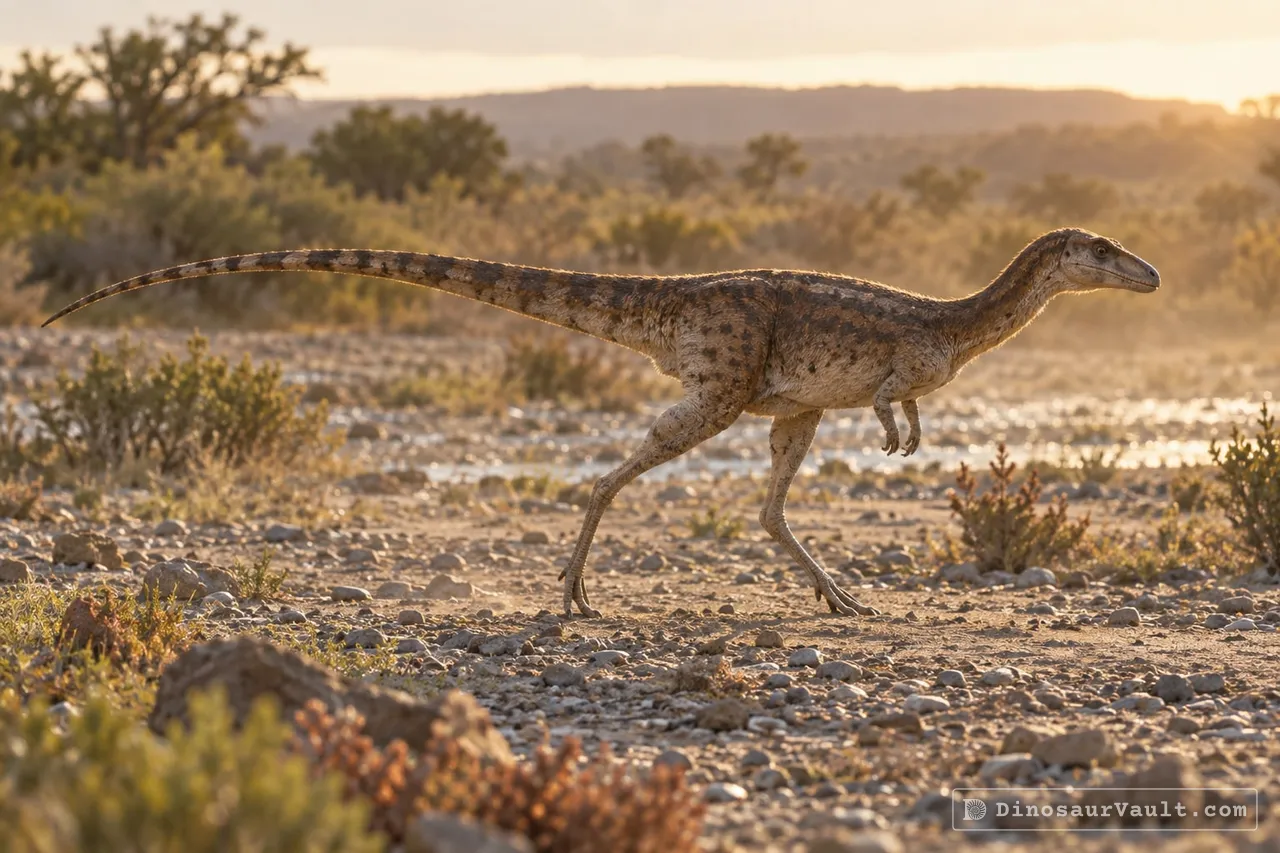
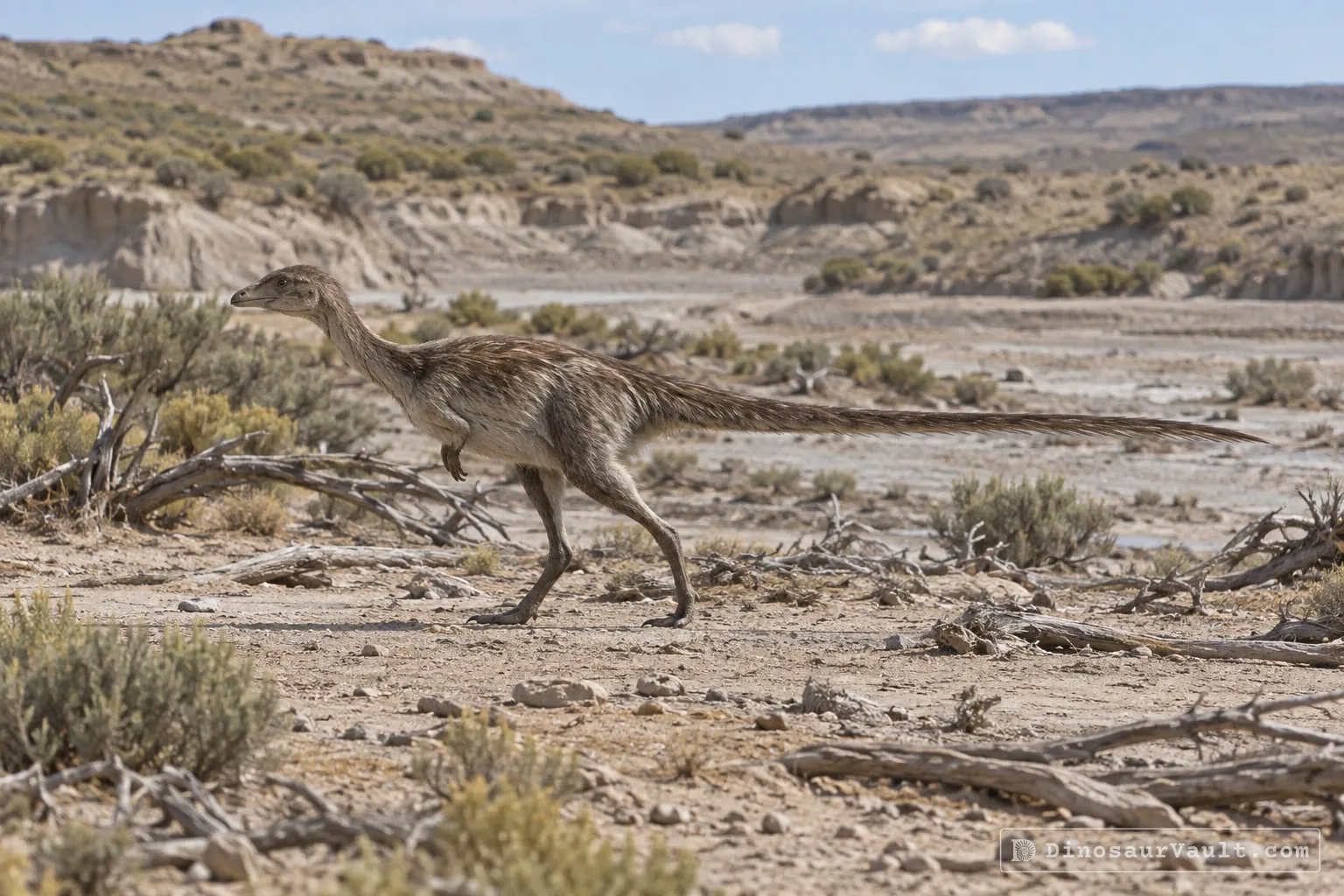
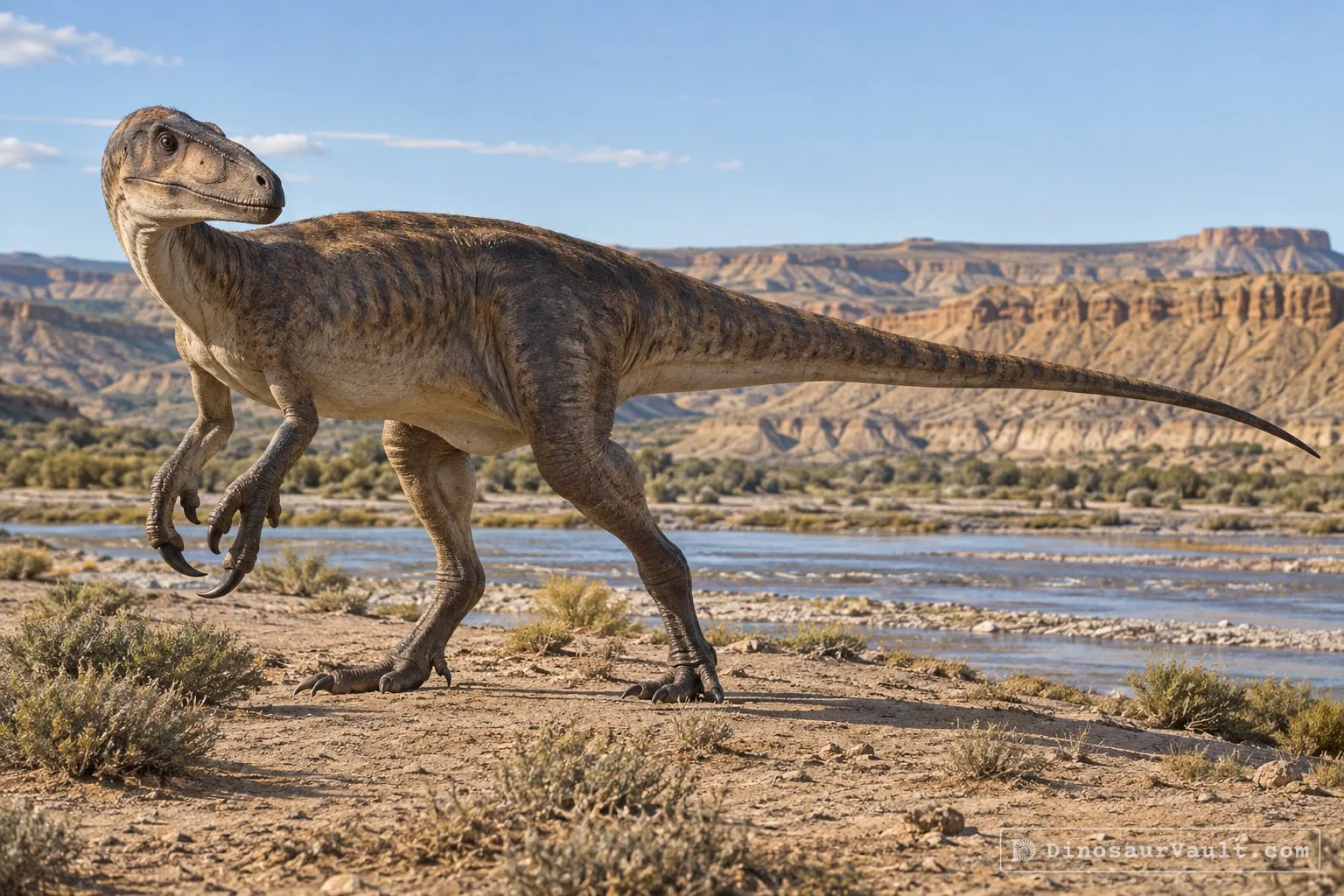
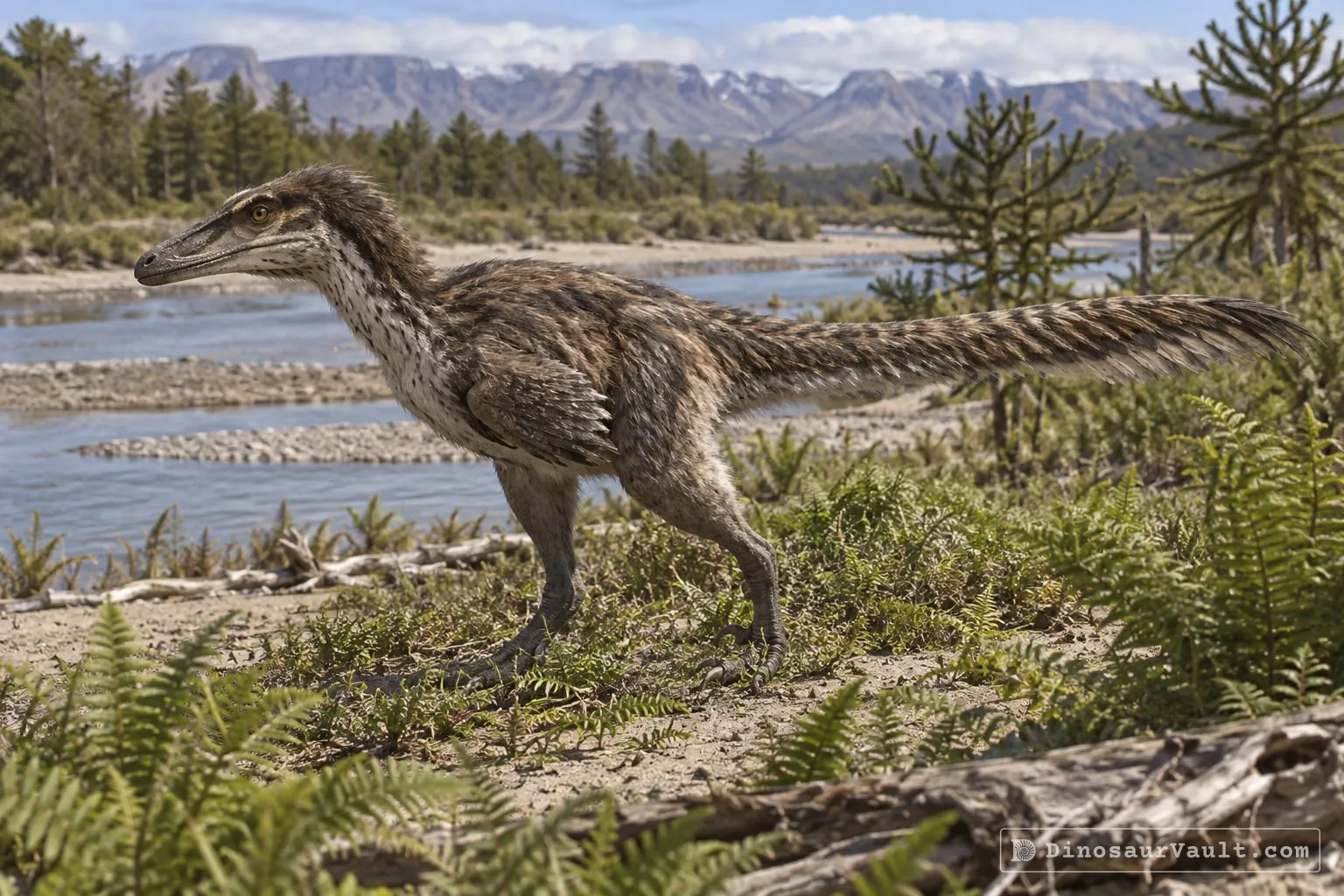
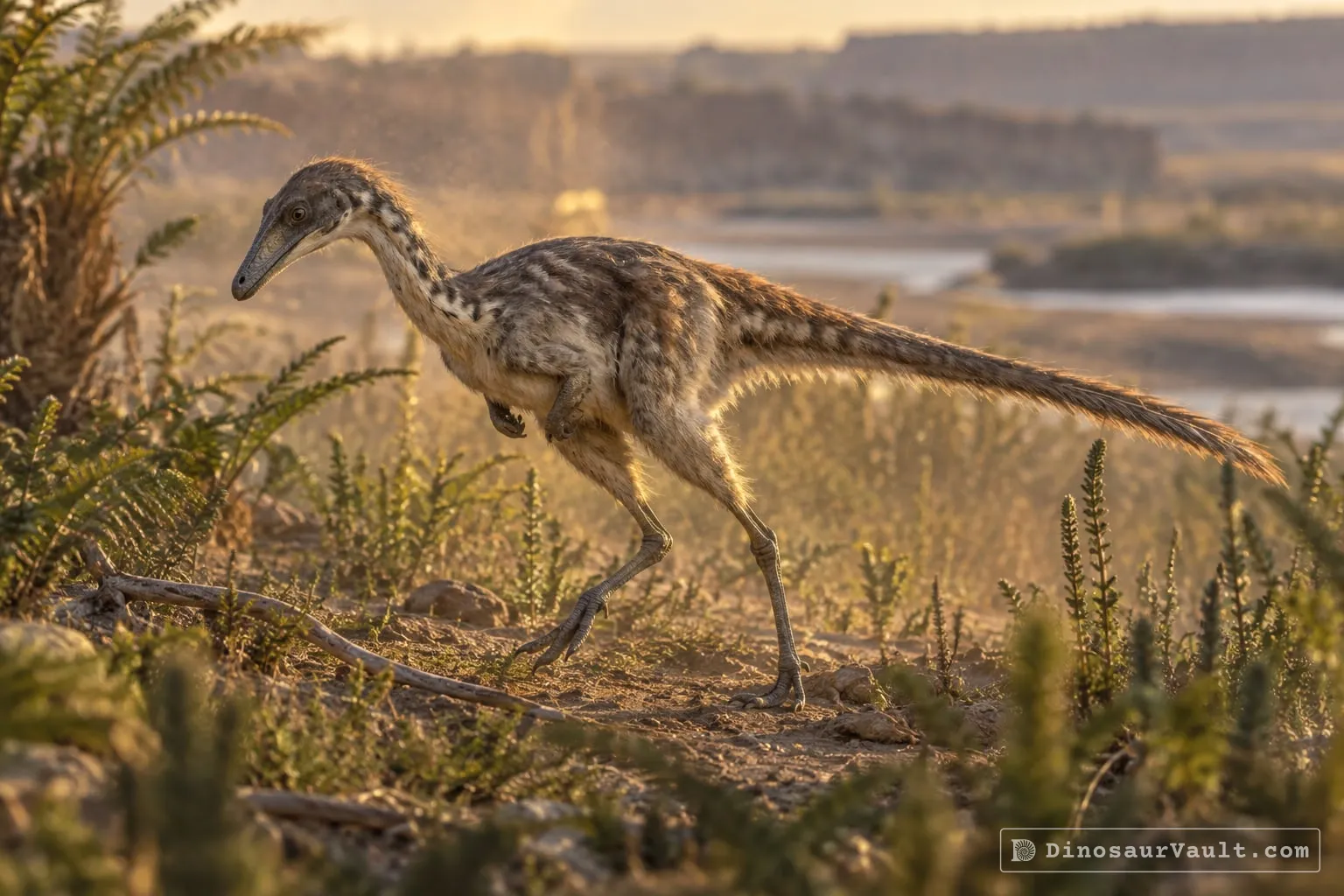
Velocisaurus was a small predator from the noasaurid family. It is known mainly from a lower leg and foot. The long, slender foot bones suggest a fast runner, which is where its name comes from.
Its world
It lived about 86 to 84 million years ago, in the Late Cretaceous, in what is now Argentina. Its bones come from the Bajo de la Carpa Formation, where it lived alongside the small Alvarezsaurus and the titanosaur Neuquensaurus.
How it was found
Bonaparte named Velocisaurus in 1991.
Field gallery
More views of Velocisaurus
Scenes reconstructed from the available fossil evidence.
1 of 3
Lived alongside
Found in the same rock formations
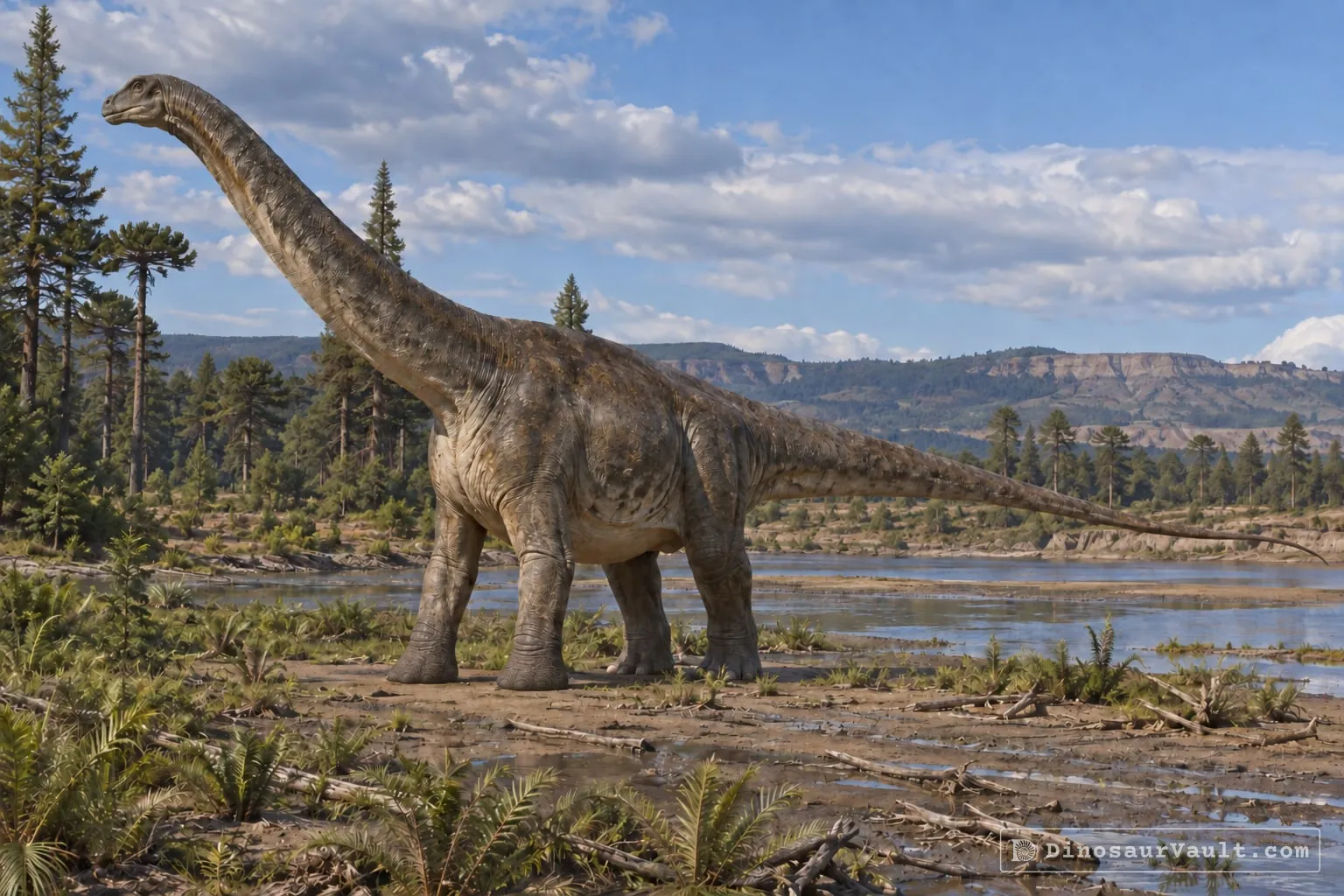
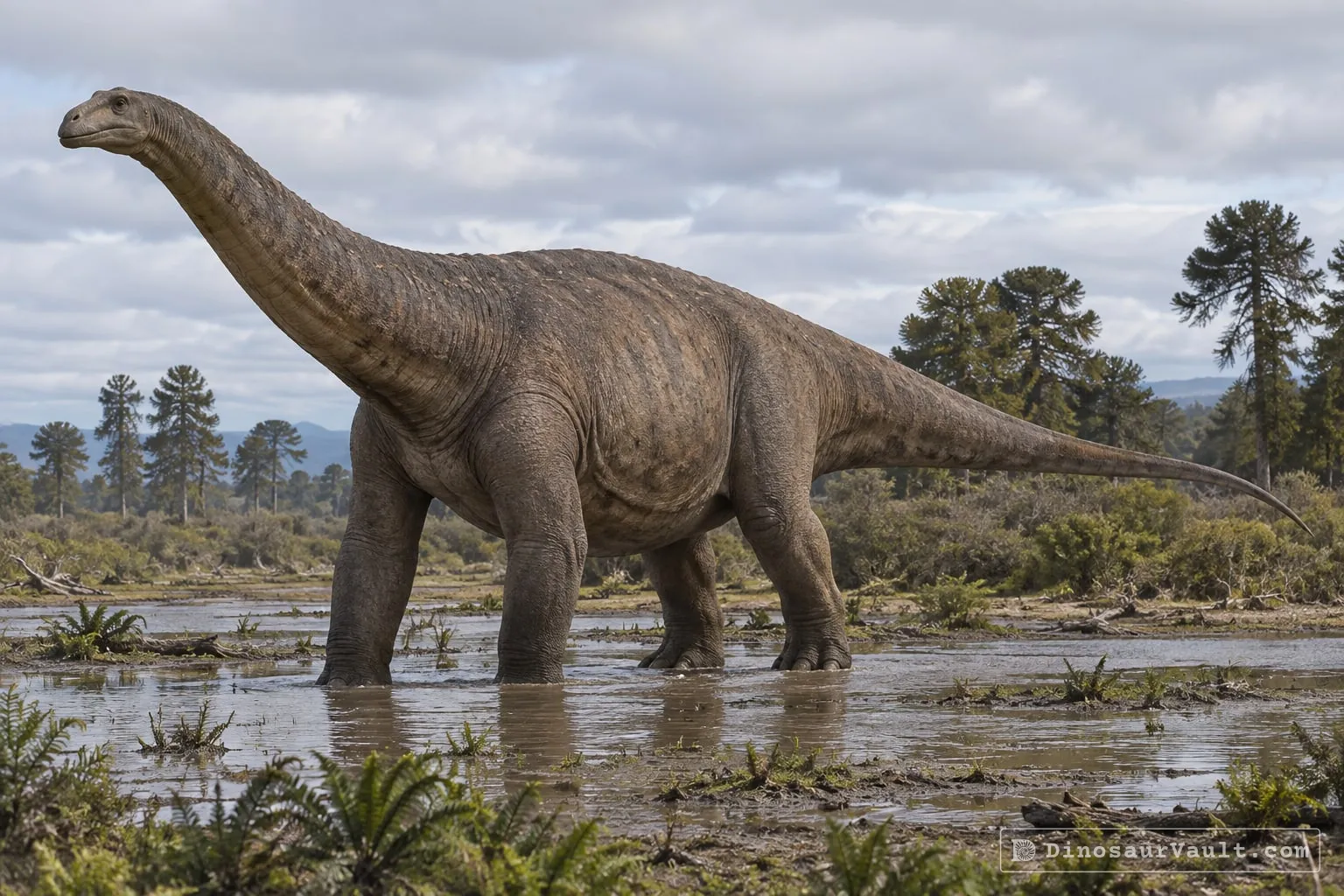
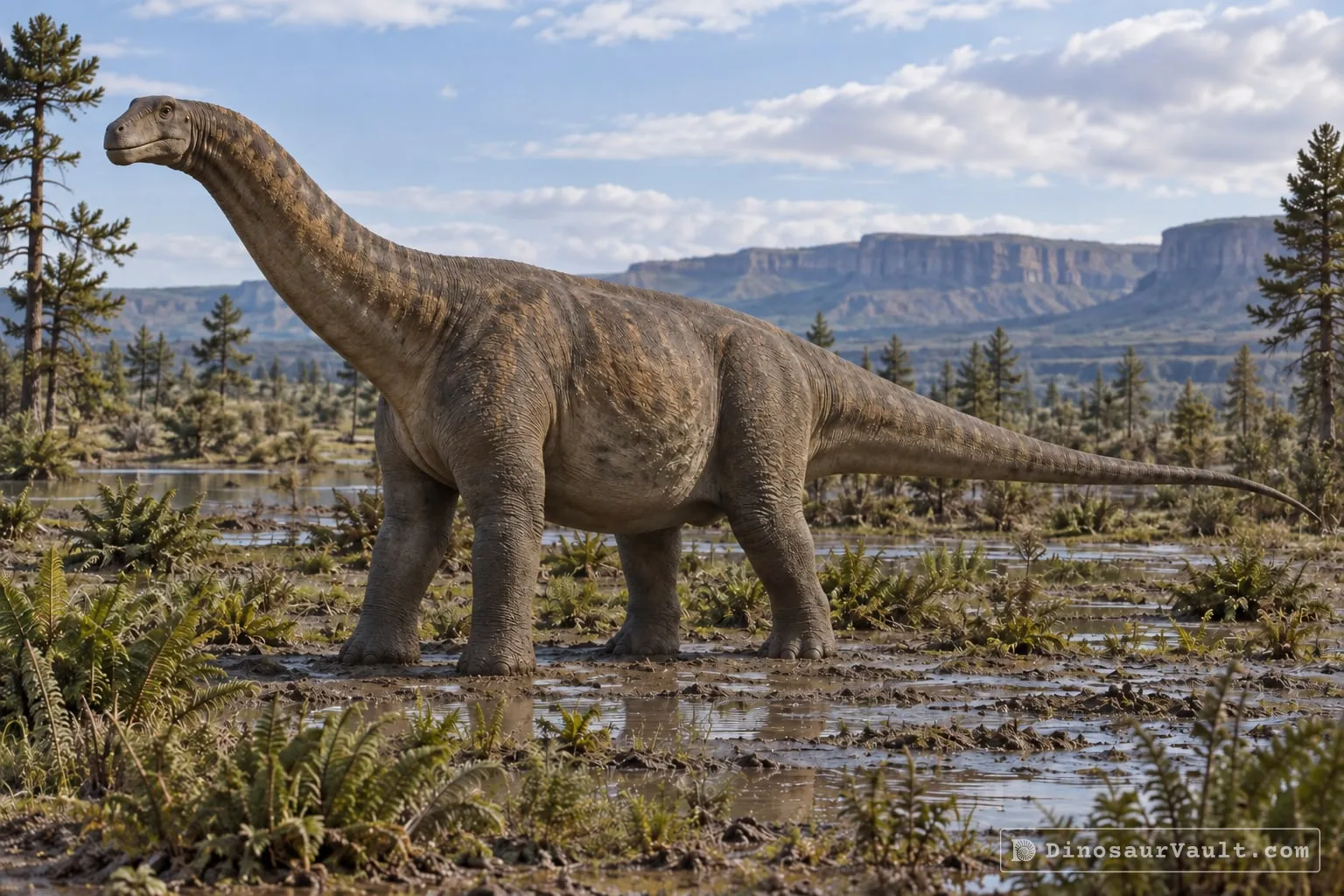
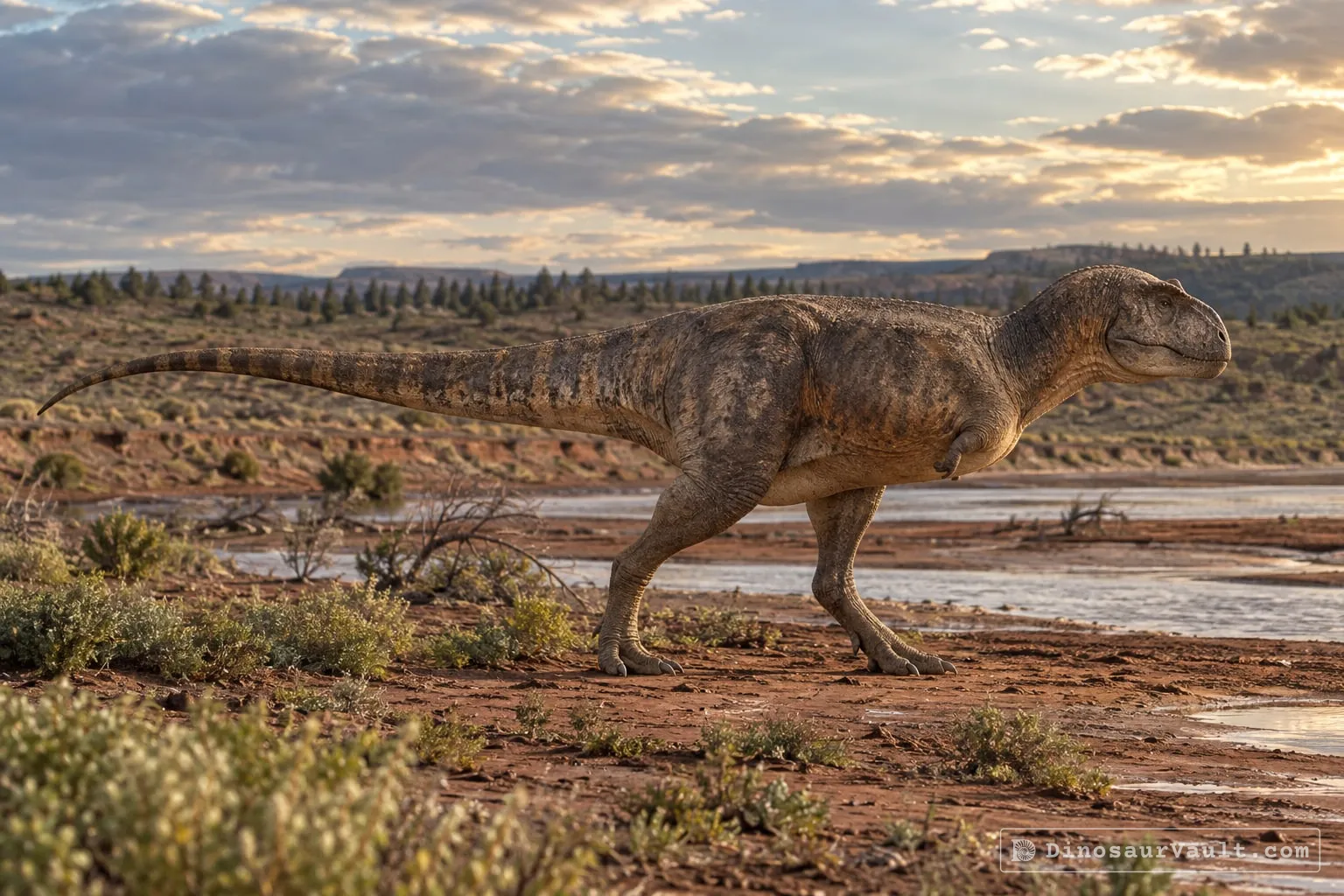


A rock formation can hold fossils laid down millions of years apart, so not every animal here met Velocisaurus.
The evidence
The science behind Velocisaurus
Which parts of the picture come from its own bones, and which come from its relatives.
From its own fossils
- Partial hindlimbs preserve long, slender shin bones and a more strongly built thigh bone.
- The central long bone of the foot is stout, while those on either side are reduced to thin rods.
- The outer toe has short bones that tilt inward and a gently curved claw.
Borrowed from relatives
- Masiakasaurus provides a guide to the missing head, curved neck, narrow body and grasping arms.
Still unknown
- The shape of its skull and teeth.
- Its hand anatomy and complete toe arrangement.
- Its skin covering, color and running speed.
Often drawn wrong
- A huge raptor-style foot claw replaces the gently curved claw found in its fossils.
- Giving it the forward-pointing front teeth of Masiakasaurus copies a feature of that relative.
Discovery timeline
- 1991Named itBonaparte
- 2011Close relativeCarrano, Loewen & Sertich
- 2016New findBrissón Egli, AgnolÍn & Novas
Key papers
The research behind what we know of Velocisaurus
Named it
Named Velocisaurus from an incomplete hindlimb with an unusual, slender foot.
Los vertebrados fósiles de la Formación Rio Colorado, de la Ciudad de Neuquén y Cercanías, Cretácico Superior, Argentina [The vertebrate fossils of the Rio Colorado Formation, from the city of Neuquén and surrounding areas, Upper Cretaceous, Argentina]. Revista del Museo Argentino de Ciencias Naturales "Bernardino Rivadavia" e Instituto Nacional de Investigación de las Ciencias Naturales: Paleontología 4: 17-123
No link available
Close relative
Described new Masiakasaurus bones, revealing a low skull and substantial arms that help guide restorations of Velocisaurus.
New materials of Masiakasaurus knopfleri Sampson, Carrano, and Forster, 2001, and implications for the morphology of the Noasauridae (Theropoda:Ceratosauria). Smithsonian Contributions to Paleobiology: 1-53
Read the paper : New materials of Masiakasaurus knopfleri Sampson, Carrano, and Forster, 2001, and implications for the morphology of the Noasauridae (Theropoda:Ceratosauria) (opens in a new tab)New find
Described another hindlimb and identified distinctive foot features that support Velocisaurus as a separate genus.
A new specimen of Velocisaurus unicus (Theropoda, Abelisauroidea) from the Paso Córdoba locality (Santonian), Río Negro, Argentina. Journal of Vertebrate Paleontology 36: e1119156
Read the paper : A new specimen of Velocisaurus unicus (Theropoda, Abelisauroidea) from the Paso Córdoba locality (Santonian), Río Negro, Argentina (opens in a new tab)
Close relatives
Other members of Noasauridae


Sources: Wikidata