Outline: a typical theropod
Berthasaura
"Bertha's lizard"
- Lived
- 121 to 72 million years ago, Early Cretaceous to Late Cretaceous
- Diet
- Carnivore
- Group
- Theropods, Noasauridae
- Found in
- Brazil
- Named by
- de Souza et al. 2021
Where its fossils were found
The evidence
Today

95 million years ago
Field notes
About Berthasaura
What it was like
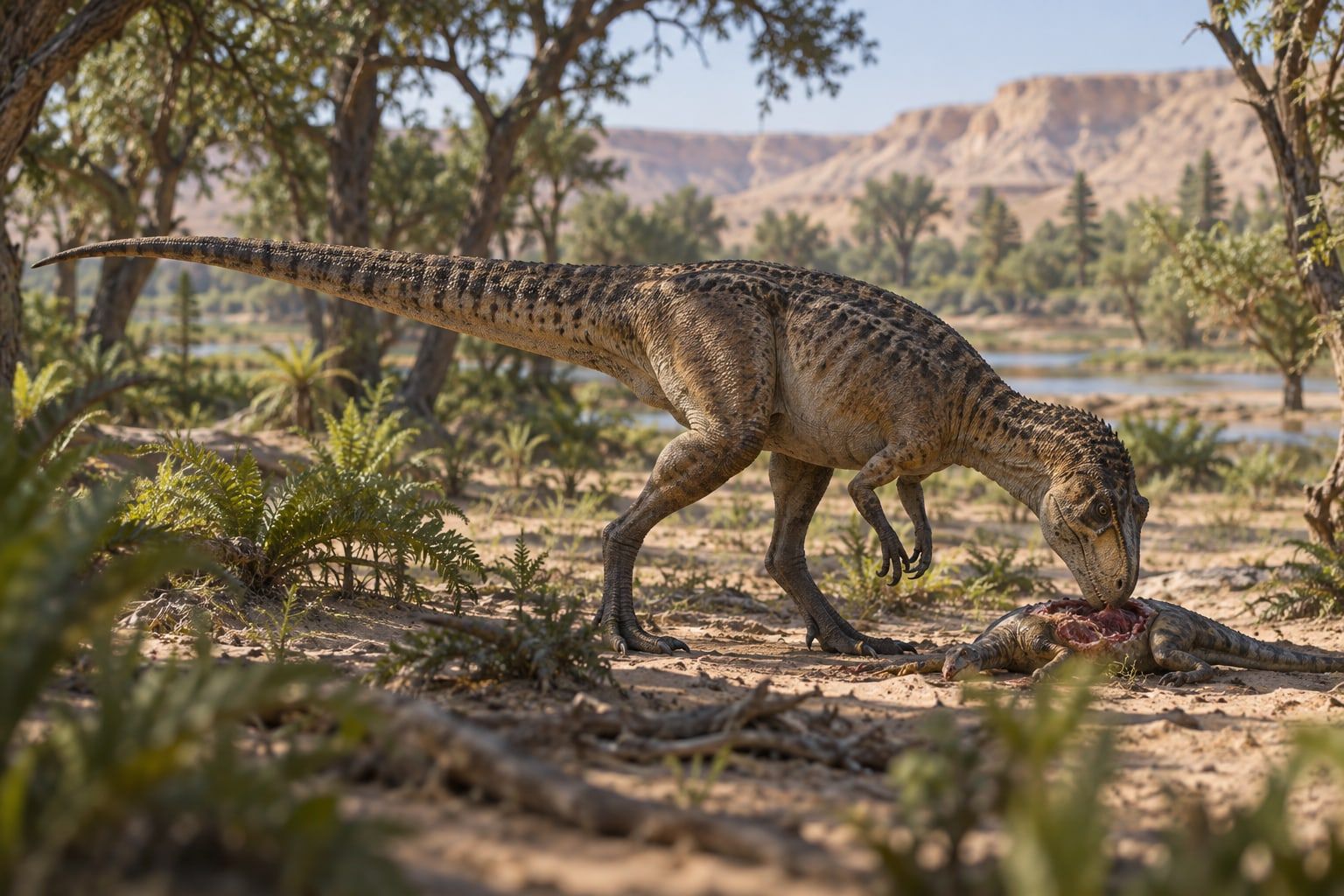
Berthasaura was a small theropod with a toothless beak. That is unusual for its group, and it suggests the animal may have eaten plants or a mixed diet. It is known from a nearly complete skeleton, probably of a young animal.
Its world
It lived in the Cretaceous in what is now Brazil. Its bones come from the Goio-Erê Formation, a desert of sand dunes where it lived alongside the small predator Vespersaurus.
How it was found
De Souza and colleagues named Berthasaura in 2021. The name honors a Brazilian scientist and campaigner for women's rights.
Lived alongside
Found in the same rock formations
Close relatives
Other members of Noasauridae
Sources: WikidataNamed in: G. A. de Souza, M. B. Soares, and L. C. Weinschutz, E. Wilner, R. T., Lopes, O. M. O. de Araujo, A. W. A. Kellner. 2021. The first edentulous ceratosaur from South America. Scientific Reports 11(22281):22281:1-15