Outline: a typical theropod
Diuqin
"bird of prey"
Type species Diuqin lechiguanae
- Lived
- 86 to 84 million years ago, Late Cretaceous
- Diet
- Carnivore
- Group
- Theropods, Dromaeosauridae
- Found in
- Argentina
- Named by
- Porfiri et al. 2024
Where its fossils were found
The evidence
Today

80 million years ago
Field notes
About Diuqin
What it was like
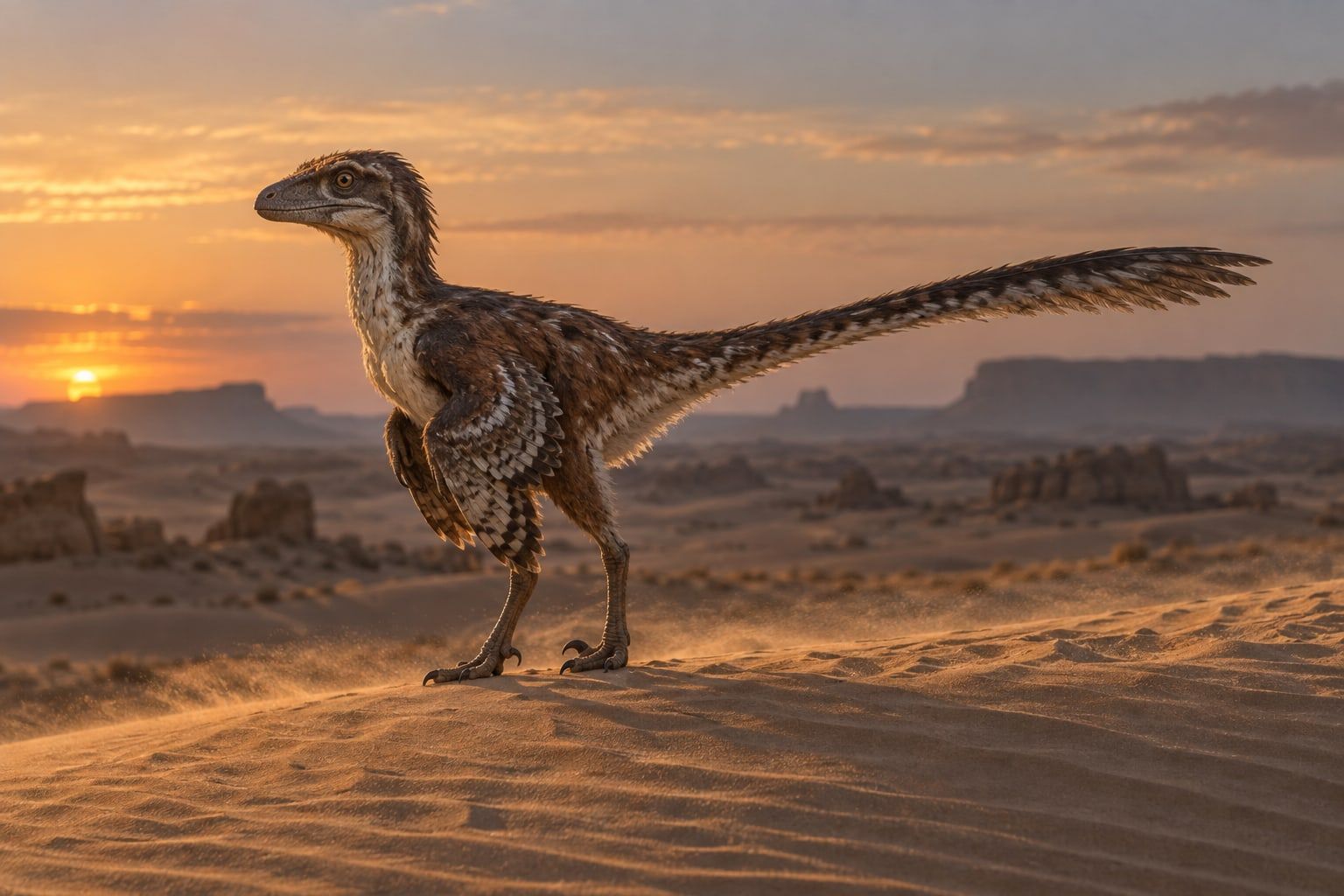
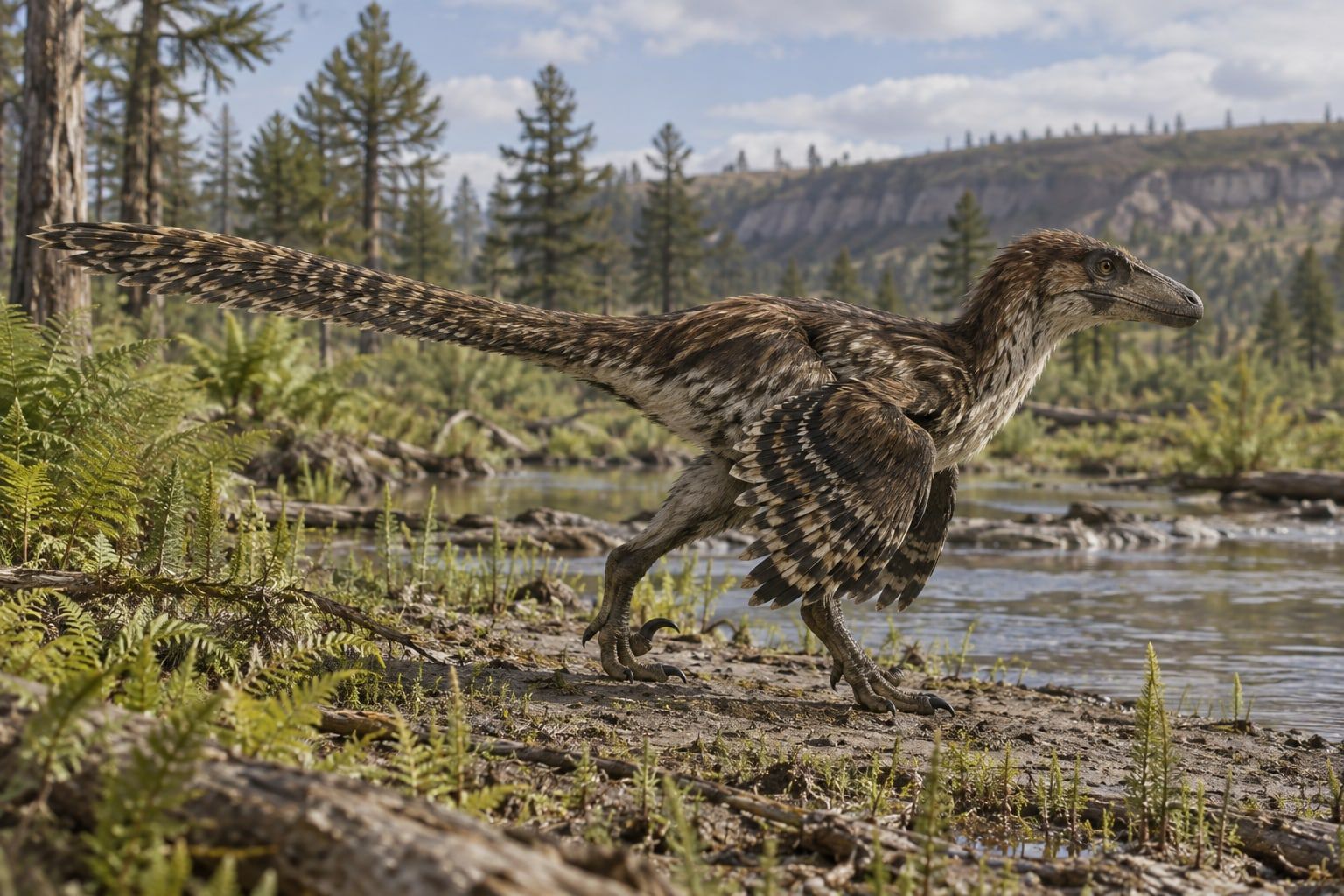
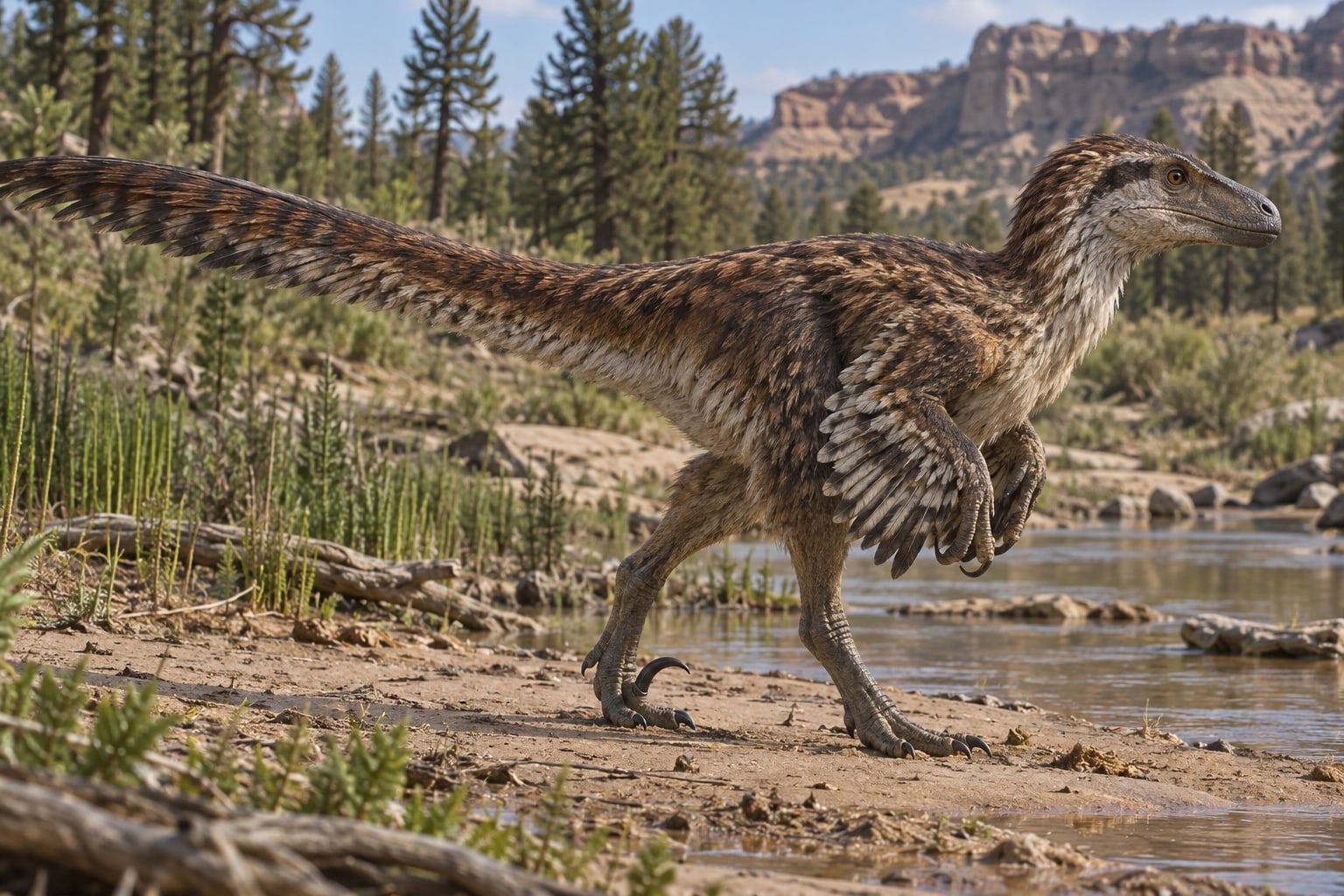
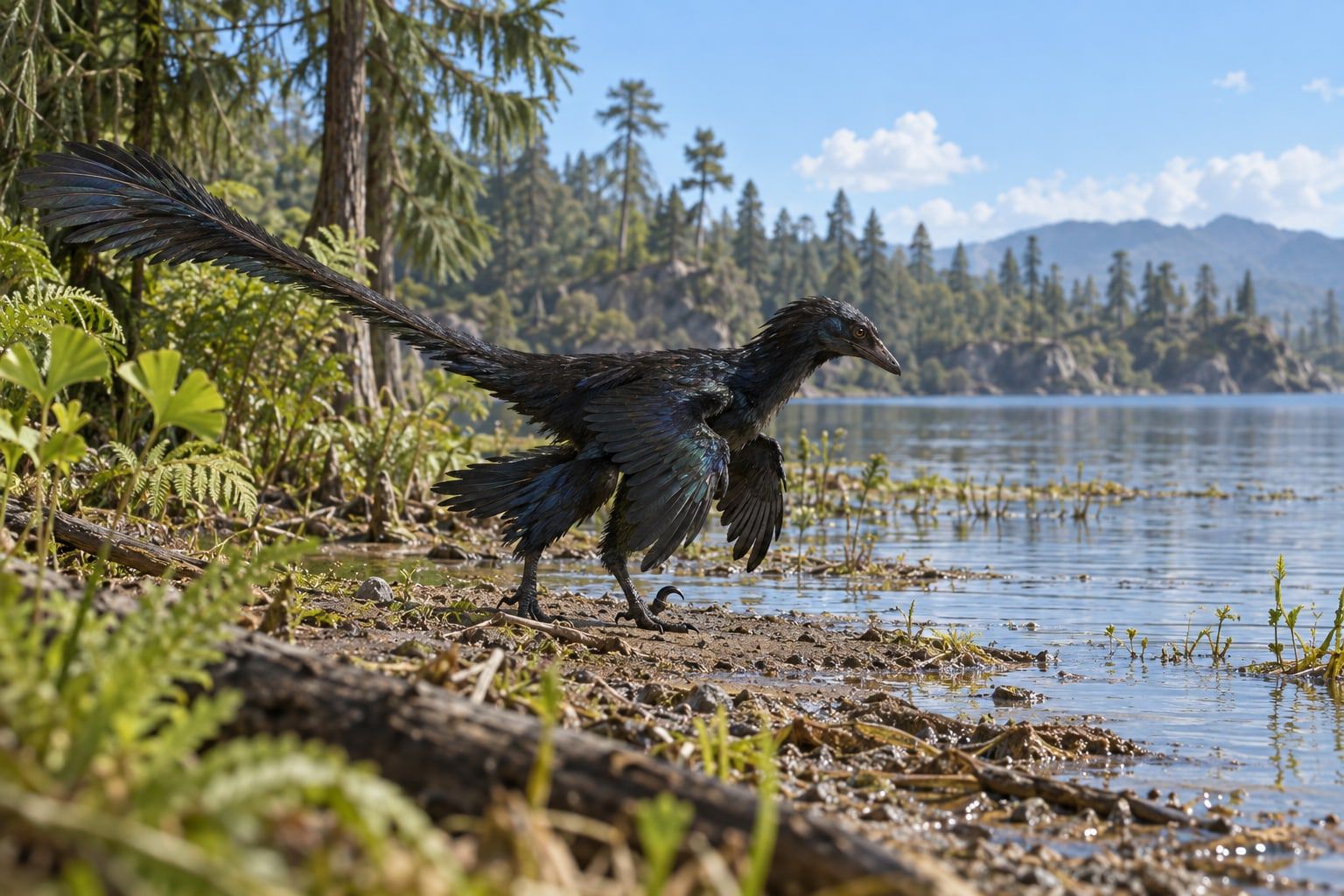
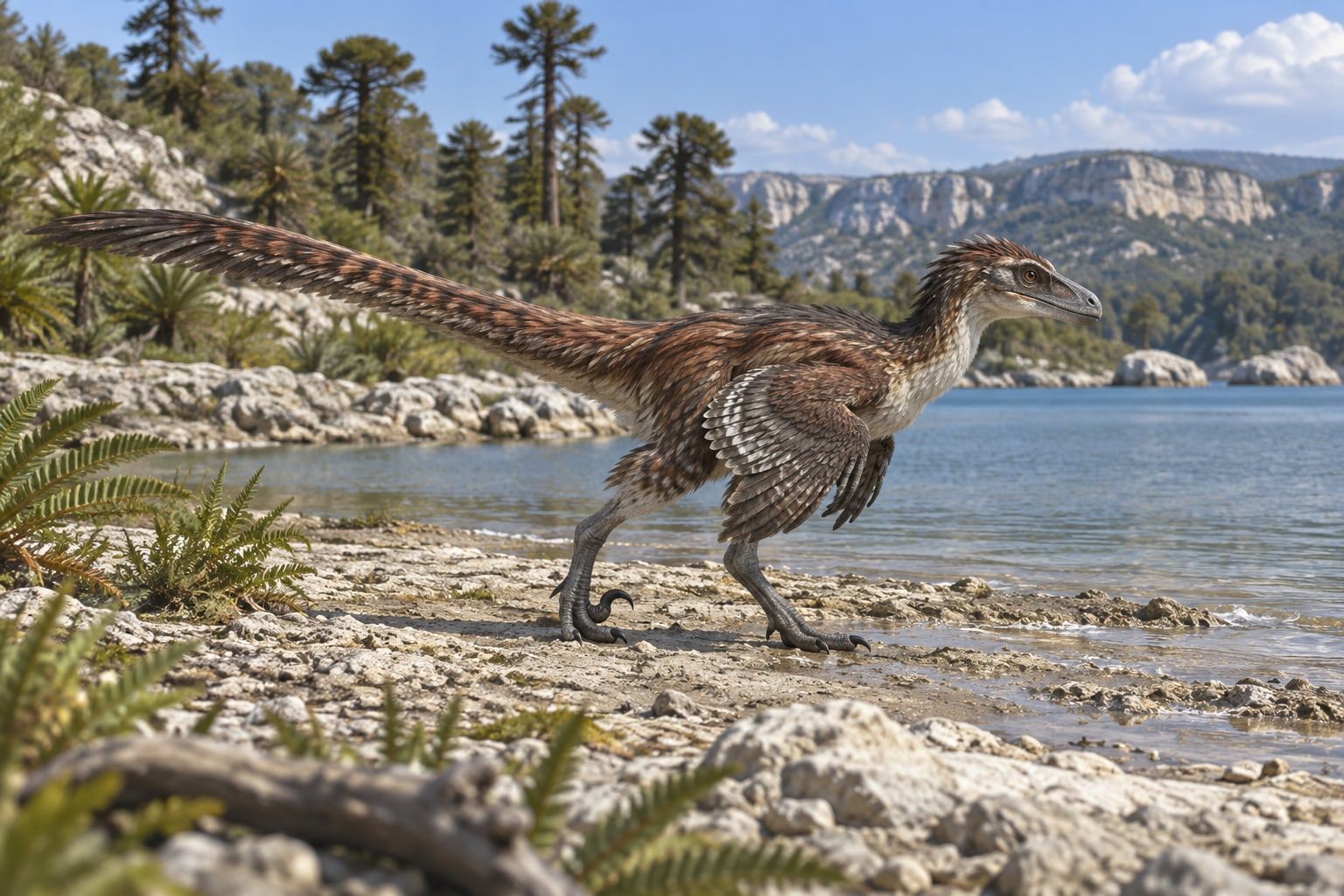
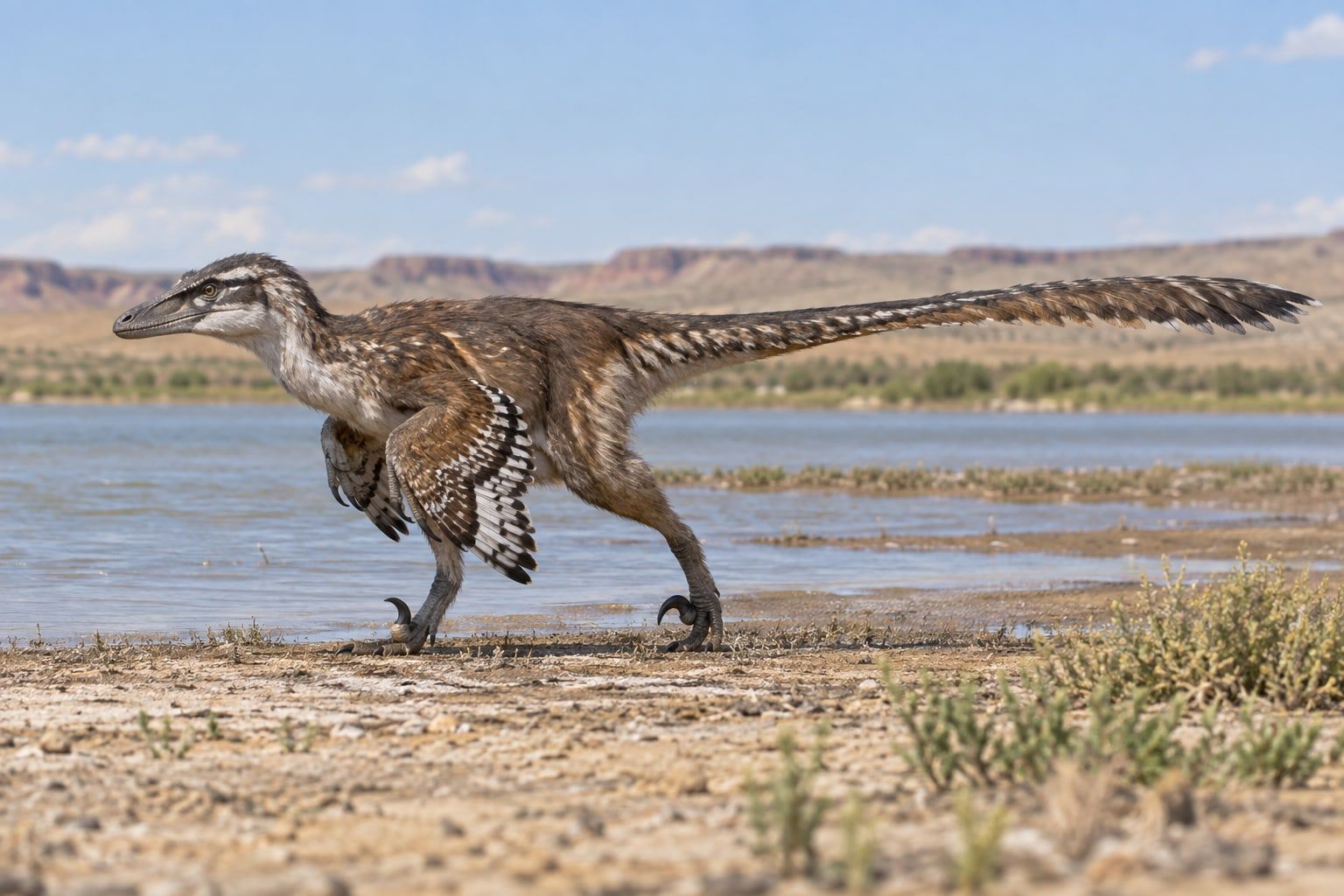
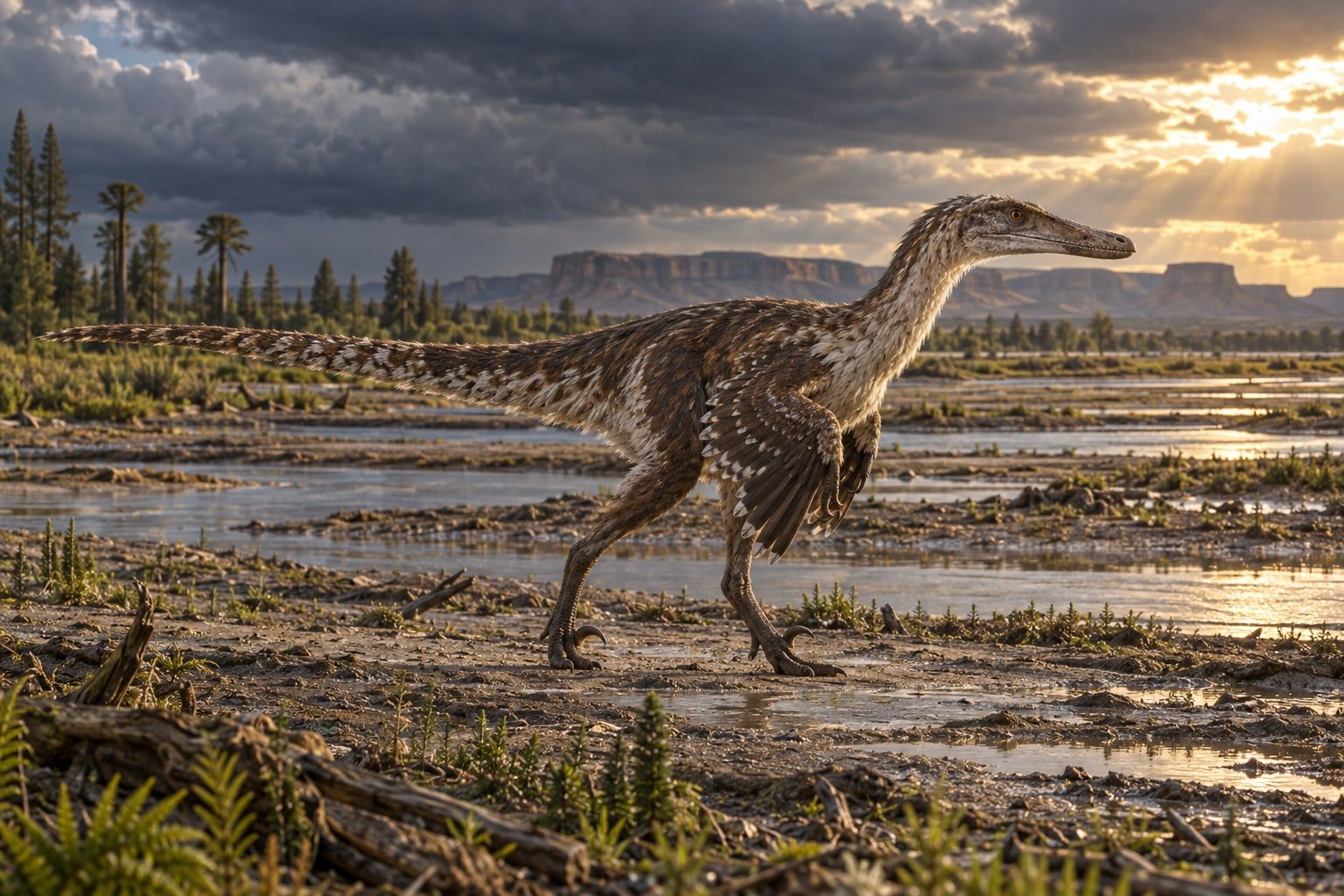
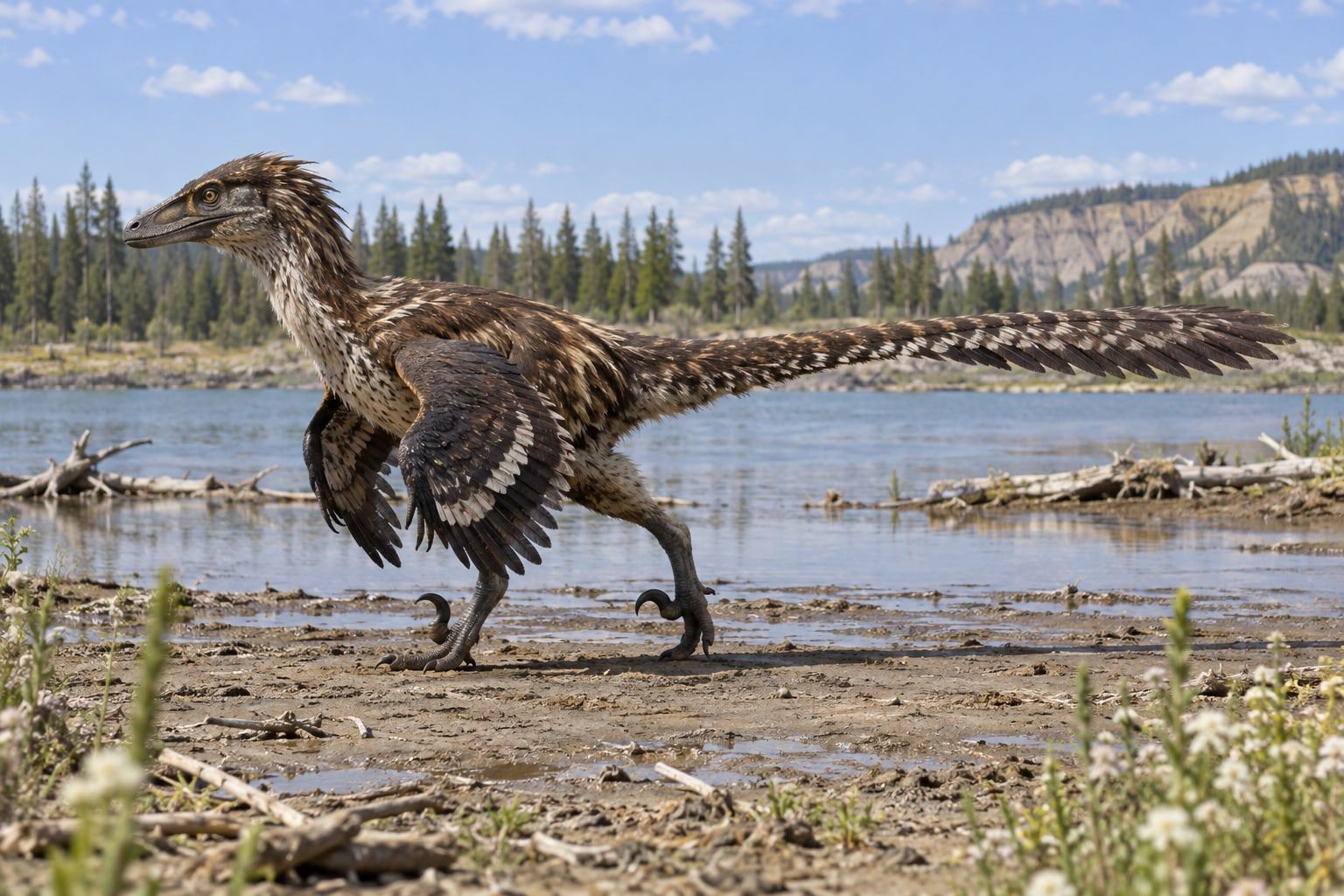
Diuqin was a feathered hunter from the southern branch of the raptor family, known only from an upper arm bone and a few backbones.
Its world
It lived about 86 to 84 million years ago, in the Late Cretaceous, in what is now Argentina. Its bones come from the Bajo de la Carpa Formation, where it shared the land with the titanosaur Bonitasaura, the small hunters Alvarezsaurus and Velocisaurus and the abelisaur Viavenator.
How it was found
Porfiri and colleagues named Diuqin in 2024, from a single find. Its arm bone carries tooth marks, which suggests its body was fed on after death.
Lived alongside
Found in the same rock formations
Close relatives
Other members of Dromaeosauridae
Sources: WikidataNamed in: J. D. Porfiri, M. A. Baiano, and D. D. dos Santos, F. A. Gianechini, M. Pittman, M. C. Lamanna. 2024. Diuqin lechiguanae gen. et sp. nov., a new unenlagiine (Theropoda: Paraves) from the Bajo de la Carpa Formation (Neuquén Group, Upper Cretaceous) of Neuquén Province, Patagonia, Argentina. BMC Ecology and Evolution 24:77:1-22