Alvarezsaurus
- Lived
- 86 to 84 million years ago, Late Cretaceous
- Diet
- Carnivore
- Length
- about 2 m (7 ft)
- Group
- Theropods, Alvarezsauridae
- Found in
- Argentina
- Named by
- Bonaparte 1991
Size comparison
To scale

Scale in metersOutline: typical theropod shape
Where its fossils were found
The evidence
Today

80 million years ago
Habitat
The Bajo de la Carpa Formation records sand dunes and streams that flowed after floods. Other dinosaurs from these rocks include Velocisaurus, Neuquensaurus and Bonitasaura.
Field notes
About Alvarezsaurus
What it was like
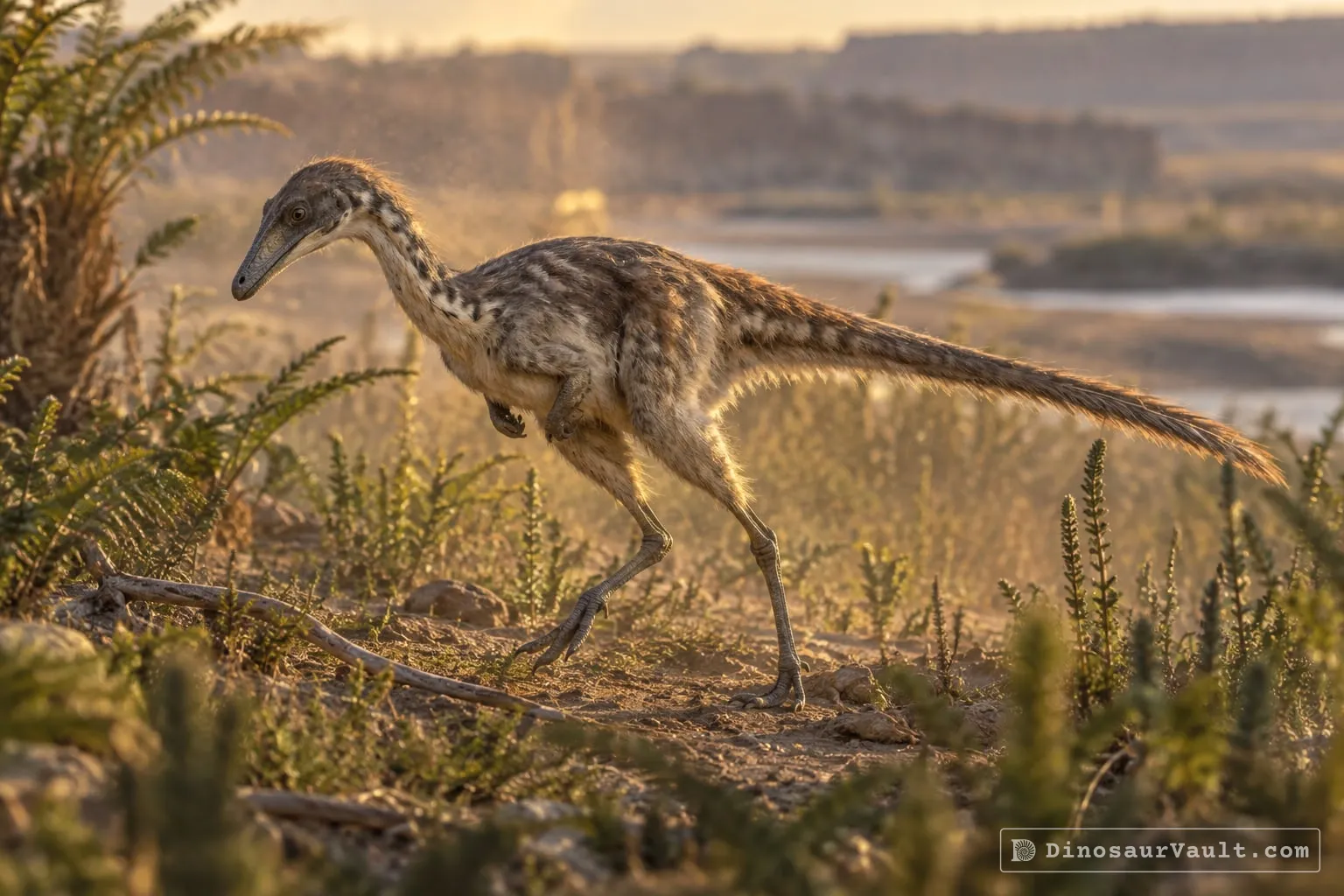
Alvarezsaurus was a small, lightly built theropod about 2 meters (7 feet) long, with long legs and a long tail. It gives its name to the alvarezsaurs, a group known for short, strong arms with one big claw, likely used to break open insect nests. Its own arms are poorly known.
Its world
It lived about 86 to 84 million years ago, in the Late Cretaceous, in what is now Argentina. It comes from the Bajo de la Carpa Formation, where it shared the land with the small theropod Velocisaurus, the megaraptor Tratayenia and the titanosaurs Neuquensaurus and Yeneen.
How it was found
Bonaparte named Alvarezsaurus in 1991, after a historian from the region where it was found.
Field gallery
More views of Alvarezsaurus
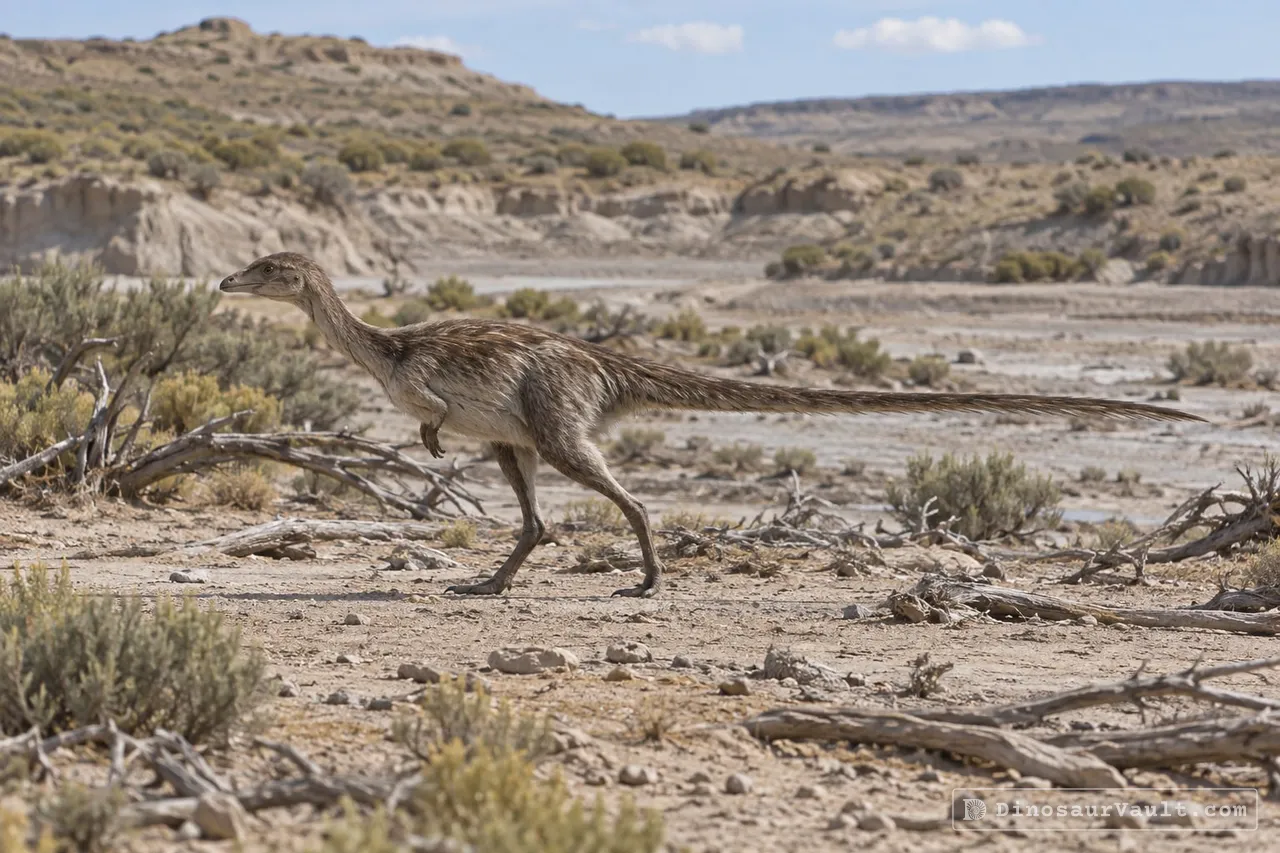
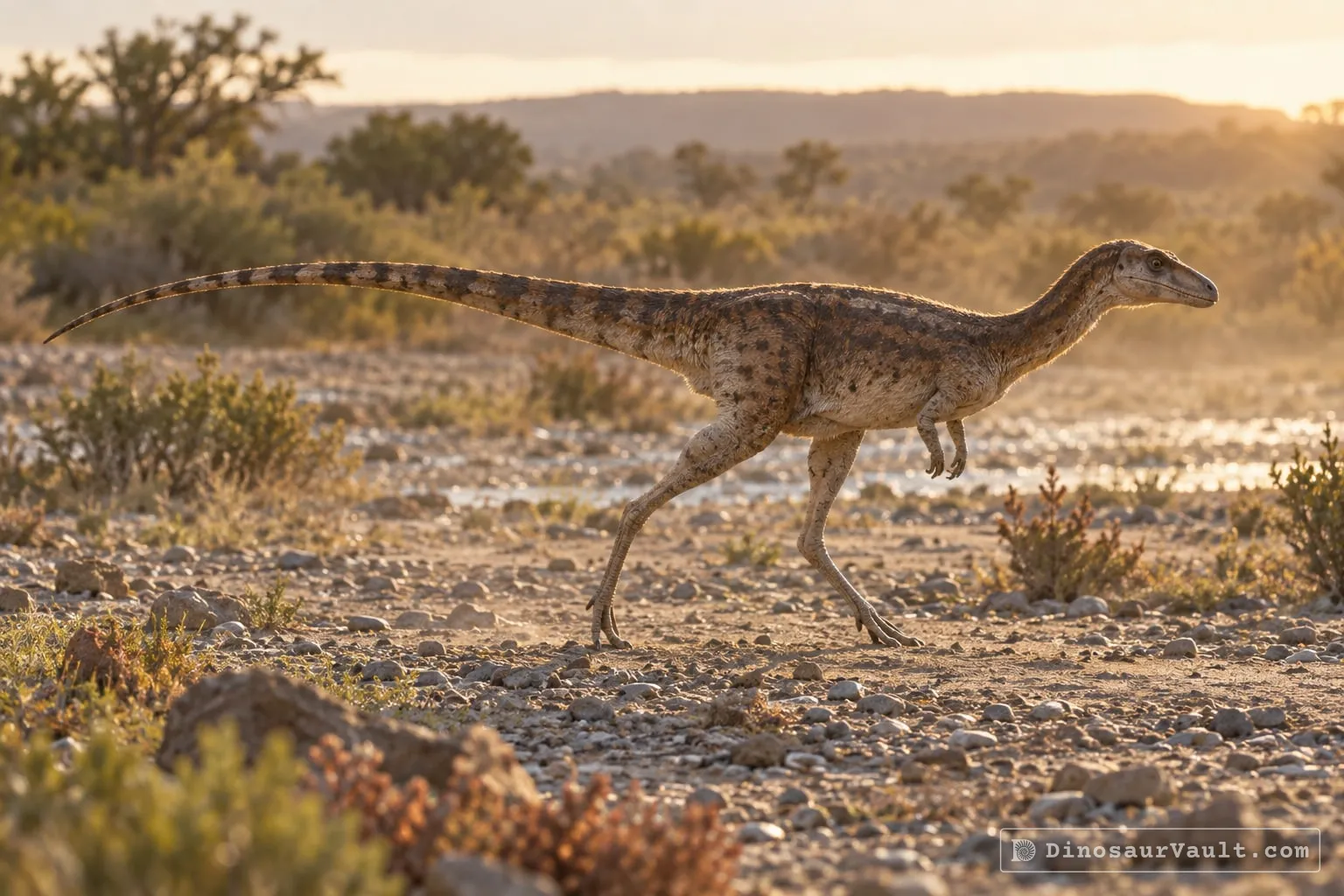
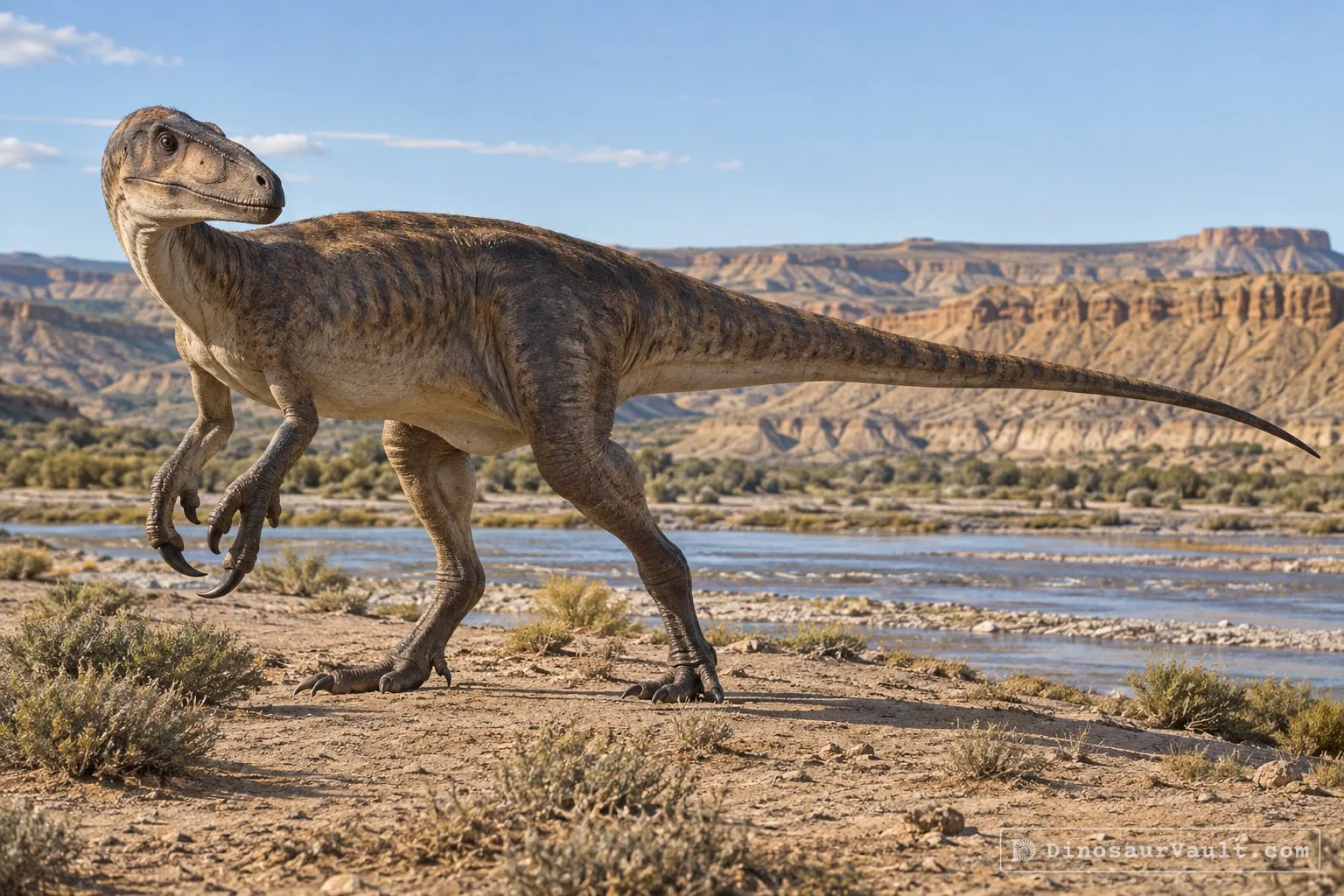
Scenes reconstructed from the available fossil evidence.
Lived alongside
Found in the same rock formations
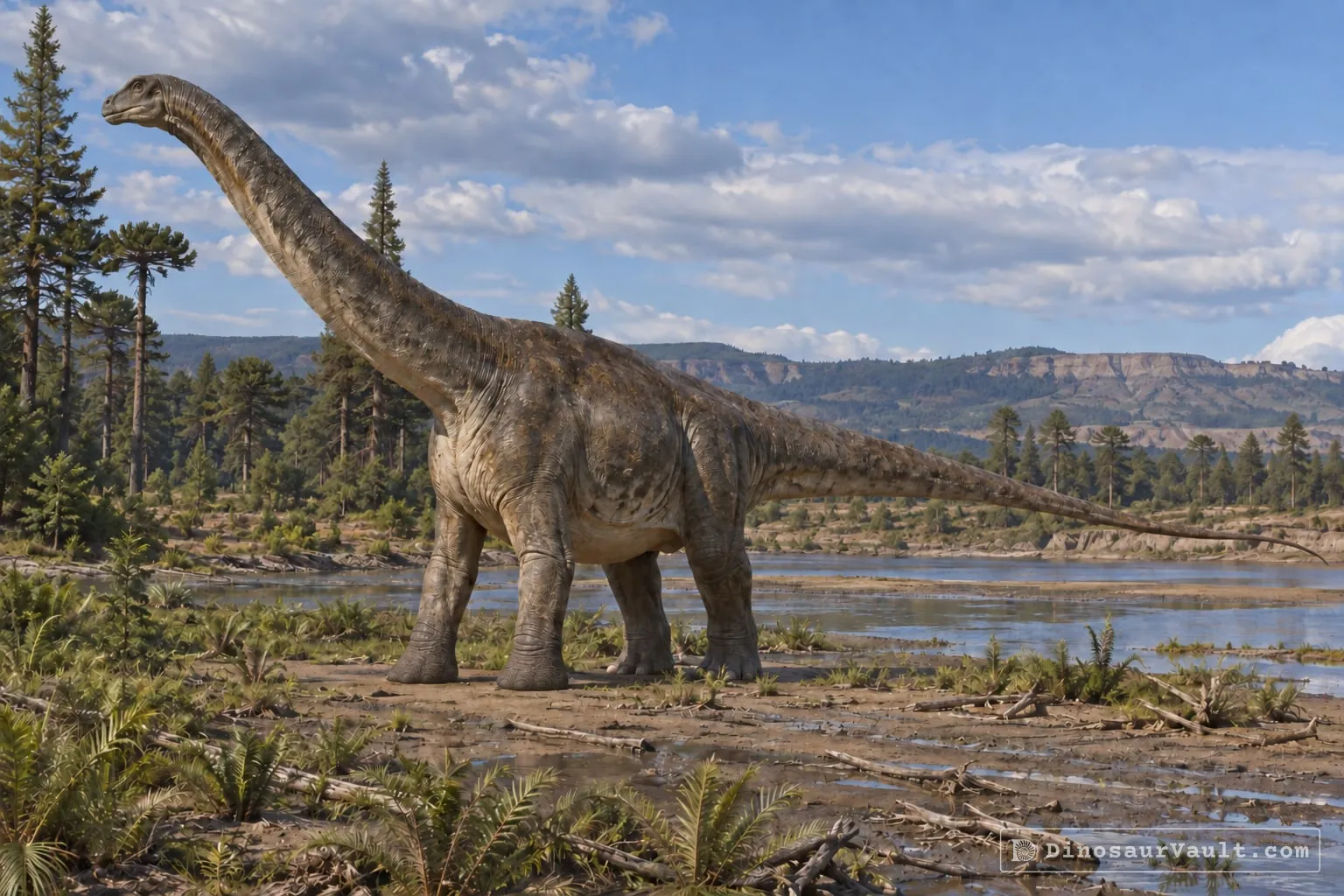
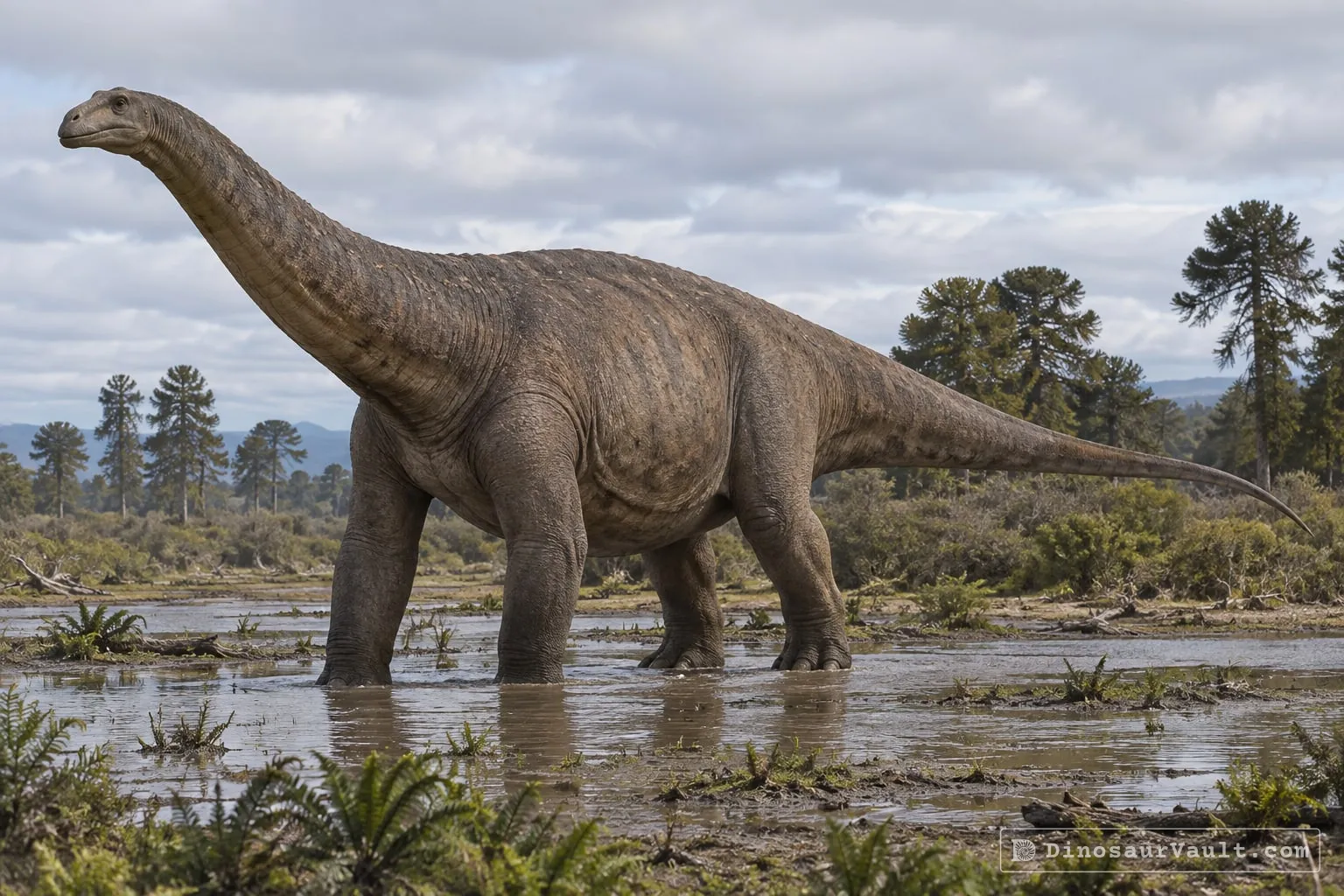
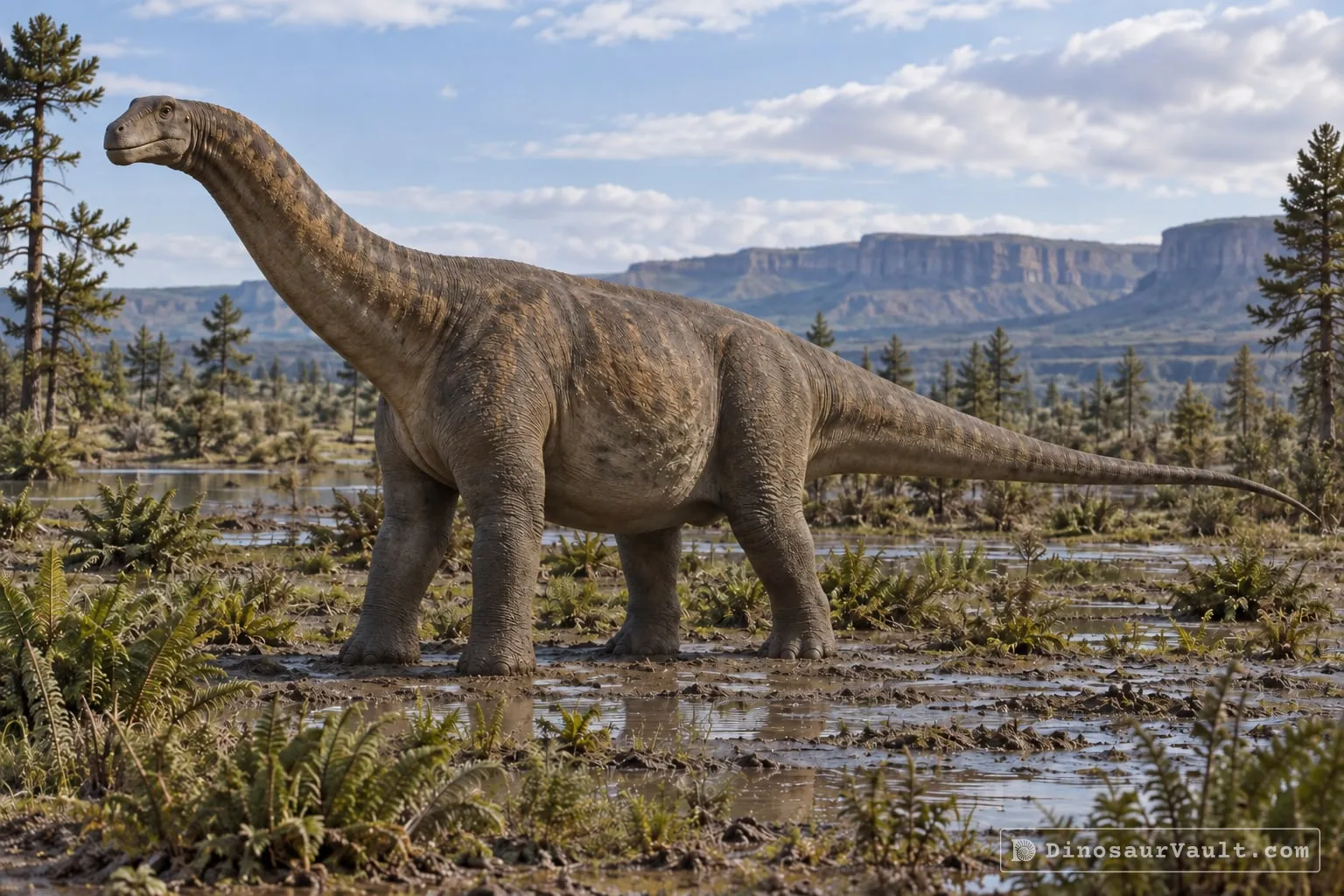
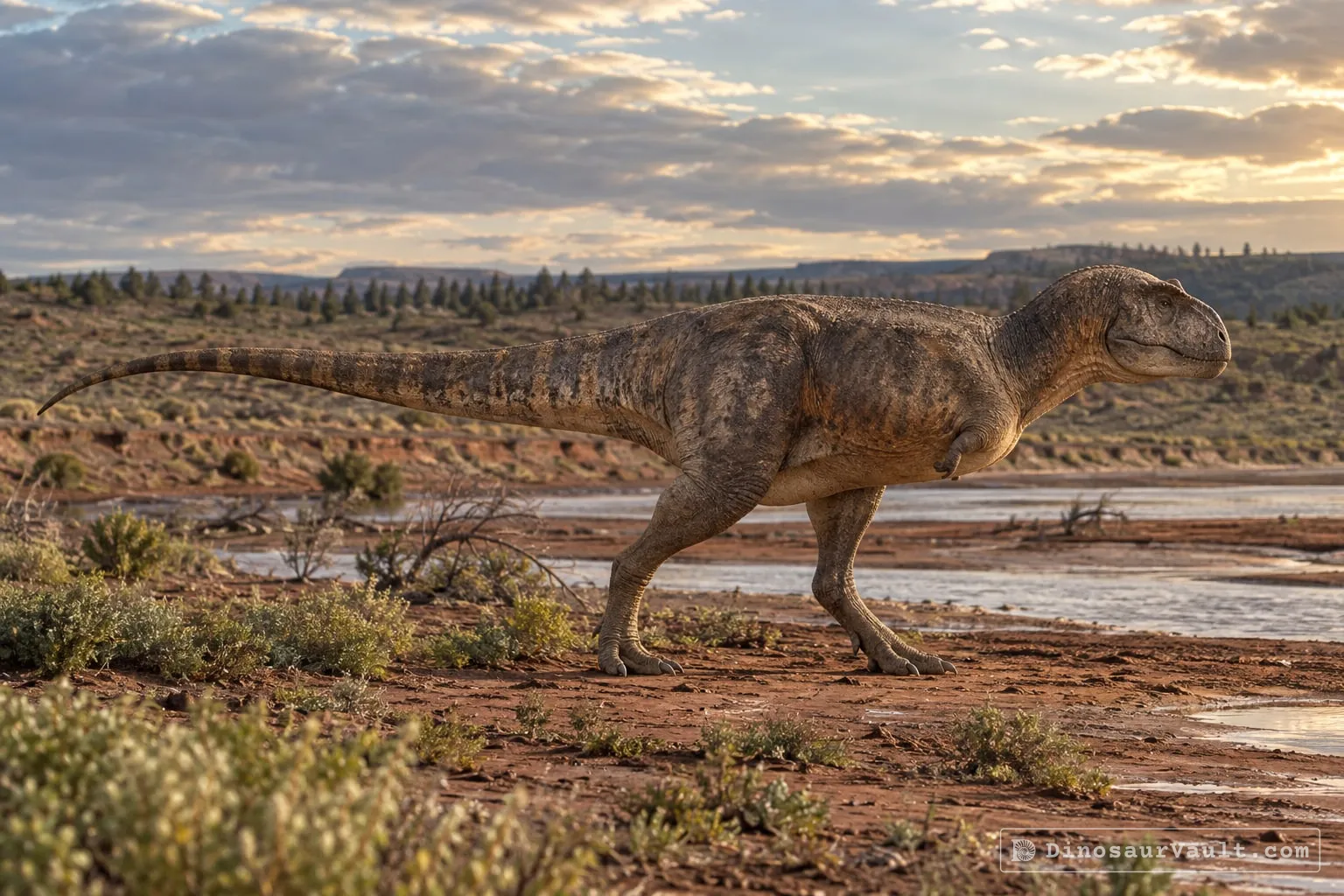
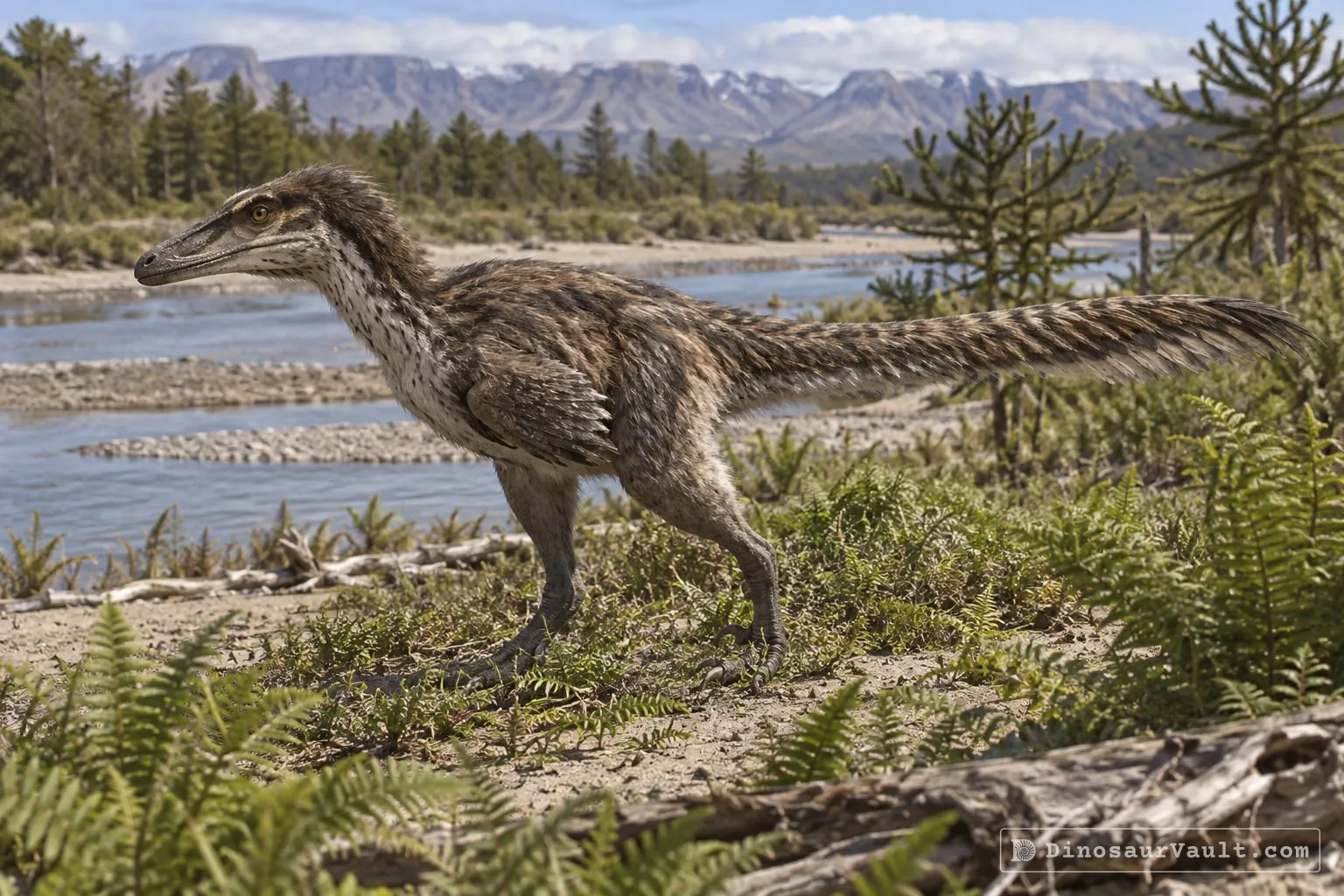


A rock formation can hold fossils laid down millions of years apart, so not every animal here met Alvarezsaurus.
The evidence
The science behind Alvarezsaurus
Which parts of the picture come from its own bones, and which come from its relatives.
From its own fossils
- An incomplete skeleton preserves parts of the backbone, shoulder, hips and hind legs.
- The hip has a prominent bony ridge above the socket for the thigh bone.
Borrowed from relatives
- The missing skull and much of the arms are restored by comparison with better-known alvarezsaurs such as Patagonykus and Mononykus.
Still unknown
- The complete shape of its skull and hands.
- Its feather covering and color.
- Whether it specialized in eating insects.
Discovery timeline
- 1991Named itBonaparte
- 2007Same rocksMARTINELLI & VERA
- 2012Close relativeMakovicky, Apesteguía & Gianechini
Key papers
The research behind what we know of Alvarezsaurus
Named it
Named Alvarezsaurus from an incomplete skeleton in Argentina and established the family that bears its name.
Los vertebrados fósiles de la Formación Rio Colorado, de la Ciudad de Neuquén y Cercanías, Cretácico Superior, Argentina [The vertebrate fossils of the Rio Colorado Formation, from the city of Neuquén and surrounding areas, Upper Cretaceous, Argentina]. Revista del Museo Argentino de Ciencias Naturales "Bernardino Rivadavia" e Instituto Nacional de Investigación de las Ciencias Naturales: Paleontología 4: 17-123
No link available
Same rocks
Described Achillesaurus from the same formation and compared its tail, hip and ankle bones with those of Alvarezsaurus.
Achillesaurus manazzonei, a new alvarezsaurid theropod (Dinosauria) from the Late Cretaceous Bajo de la Carpa Formation, Río Negro Province, Argentina. Zootaxa 1582
Read the paper : Achillesaurus manazzonei, a new alvarezsaurid theropod (Dinosauria) from the Late Cretaceous Bajo de la Carpa Formation, Río Negro Province, Argentina (opens in a new tab)Close relative
Described Alnashetri and identified the original Alvarezsaurus skeleton as a young juvenile when comparing body sizes among alvarezsaurs.
A New Coelurosaurian Theropod from the La Buitrera Fossil Locality of Río Negro, Argentina. Fieldiana Life and Earth Sciences 5: 90-98
Read the paper : A New Coelurosaurian Theropod from the La Buitrera Fossil Locality of Río Negro, Argentina (opens in a new tab)
Close relatives
Other members of Alvarezsauridae


Sources: Wikidata