Neuquensaurus
"Neuquén lizard"
- Lived
- 86 to 66 million years ago, Late Cretaceous
- Diet
- Herbivore
- Length
- estimates range from 7 to 9 m (23 to 30 ft)
- Group
- Sauropods, Saltasauridae
- Found in
- Argentina
- Named by
- Powell 1992
Where its fossils were found
The evidence
Today

75 million years ago
Also reported from Uruguay.
Habitat
Rivers crossed low floodplains in Argentina, leaving sand and mud in the Anacleto Formation. Aucasaurus and Aerosteon were among the predators of its world.
Field notes
About Neuquensaurus
What it was like
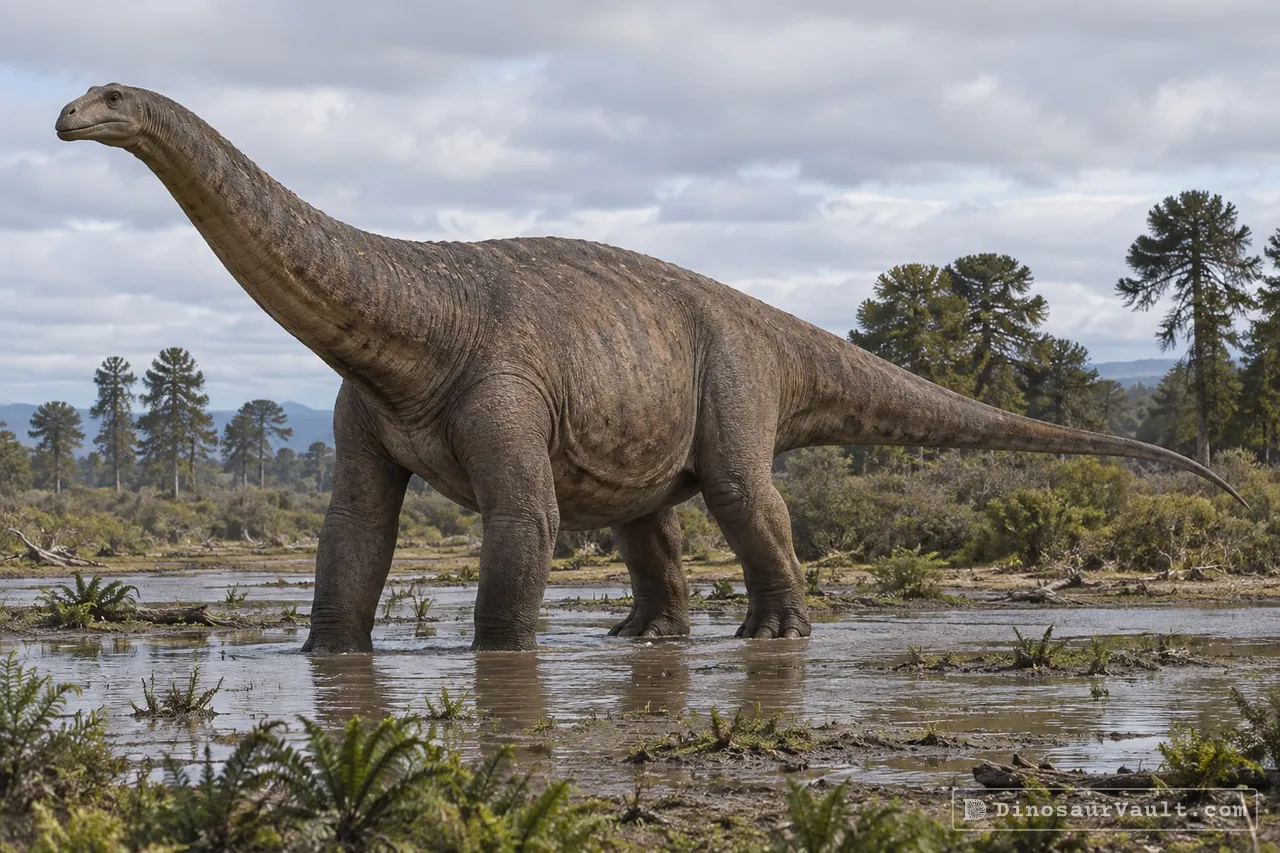
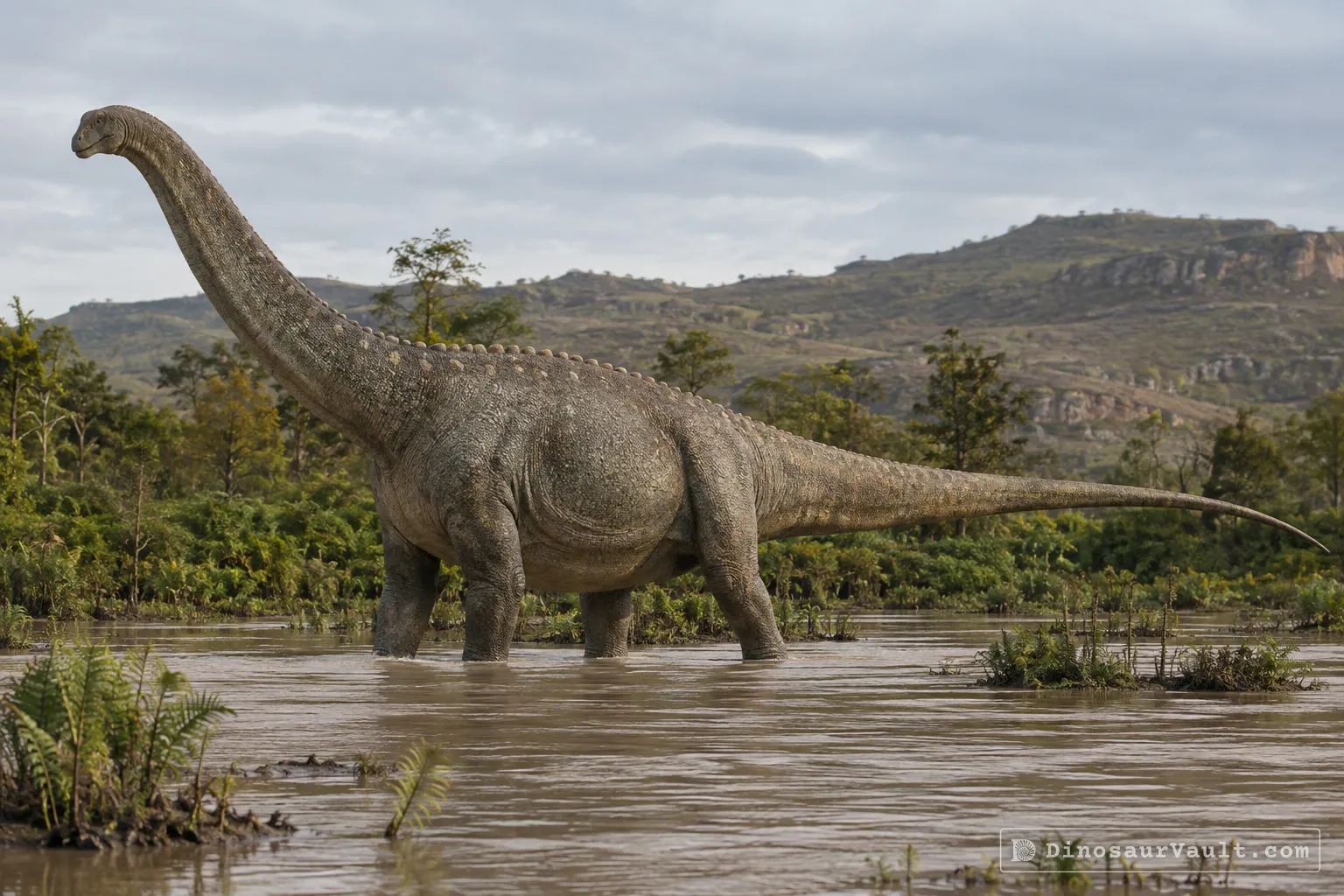
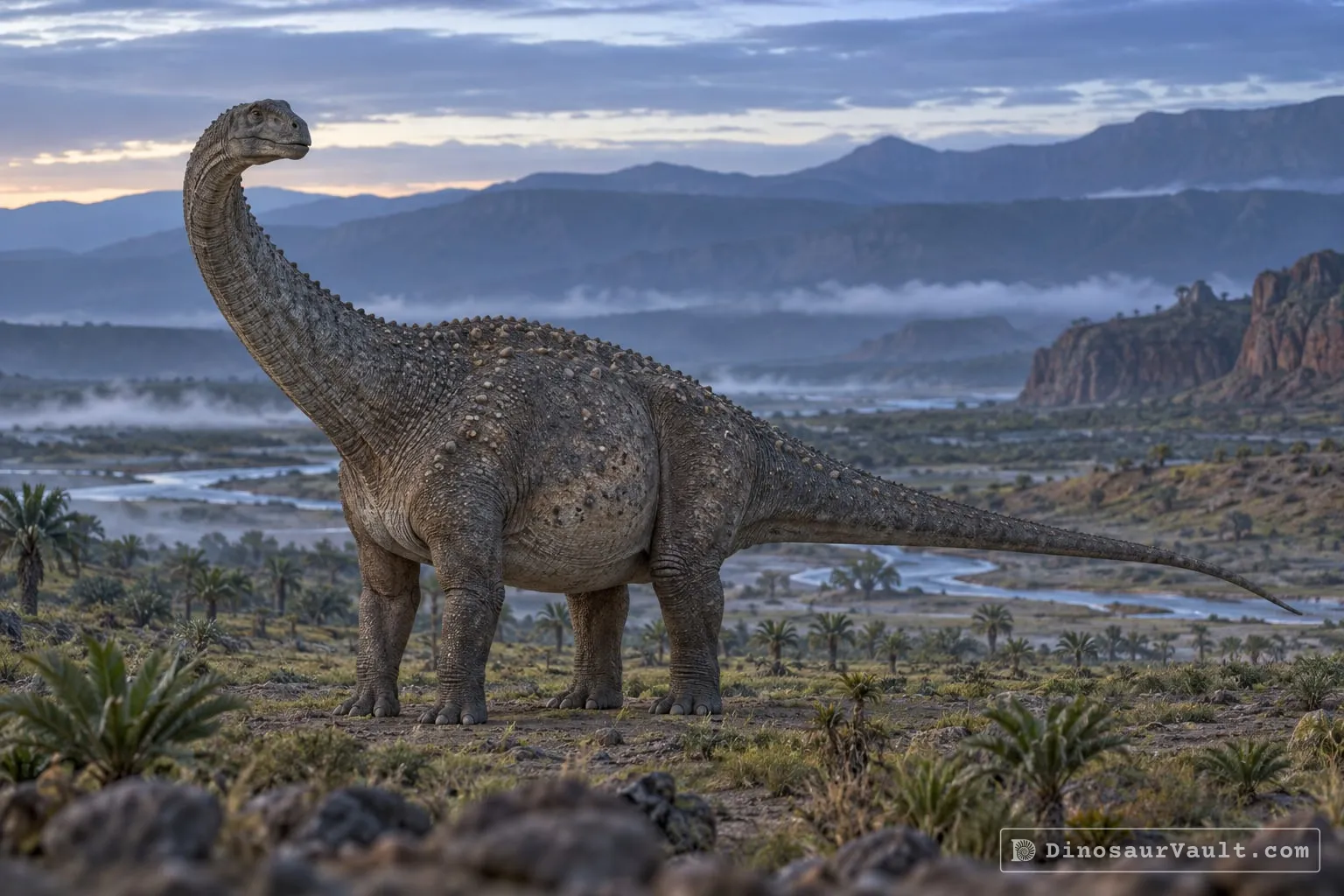
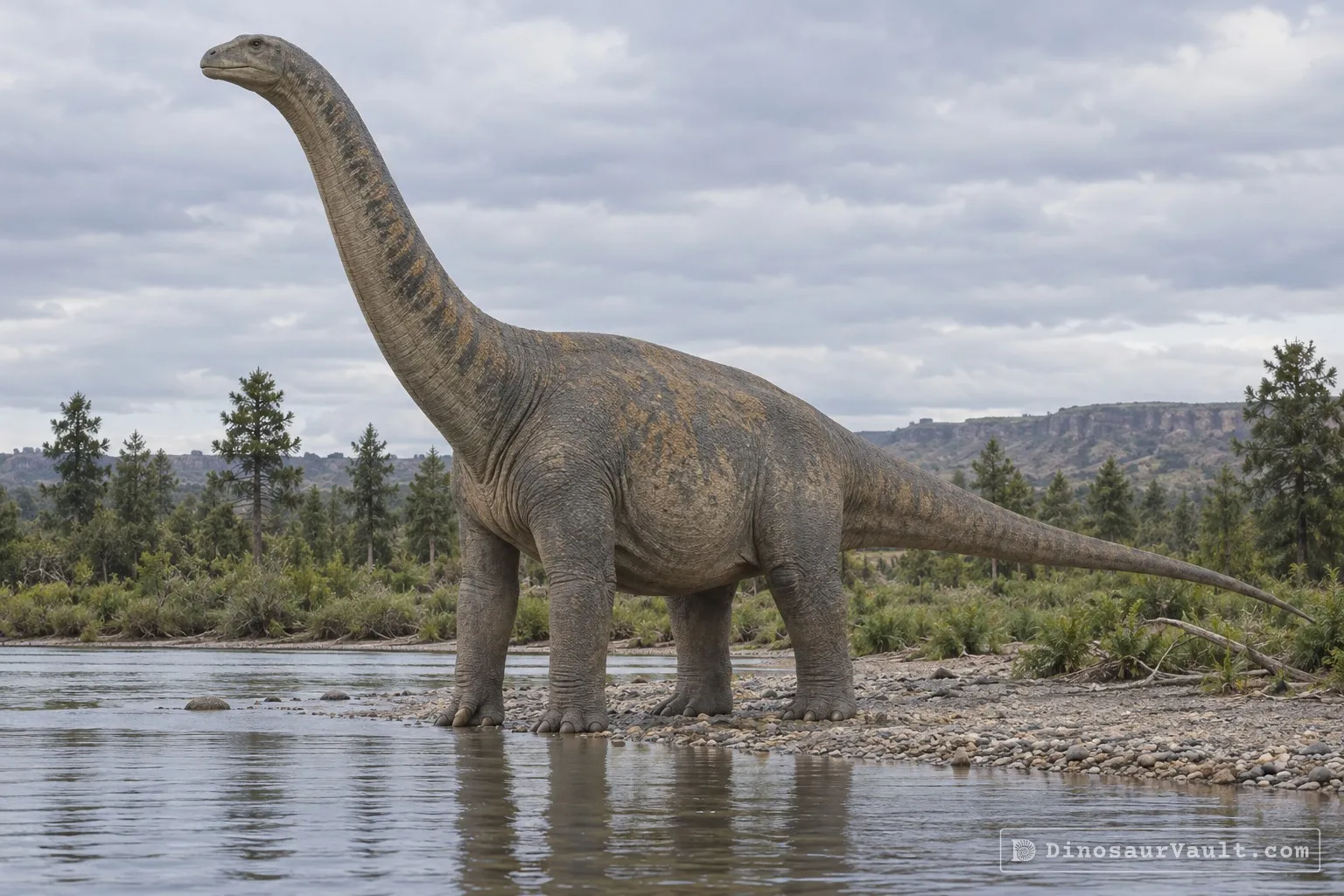
Neuquensaurus was a small titanosaur, a long-necked plant eater close to Saltasaurus. Published estimates put its length at about 7 to 9 meters (23 to 30 feet), rather than a precise size measured from a complete skeleton. Bony plates set in its skin gave it some armor, and its legs were short and sturdy for a sauropod.
Its world
It lived in the Late Cretaceous in what is now Argentina, and it has also been reported from Uruguay. Its bones come from several rock layers, including the Anacleto Formation, where it lived alongside the predators Aucasaurus and Aerosteon.
How it was found
Its bones were first given another name, and Powell gave it its own genus in 1992. There are 11 recorded finds, which make it one of the better known small titanosaurs.
Field gallery
More views of Neuquensaurus
Scenes reconstructed from the available fossil evidence.
Lived alongside
Found in the same rock formations
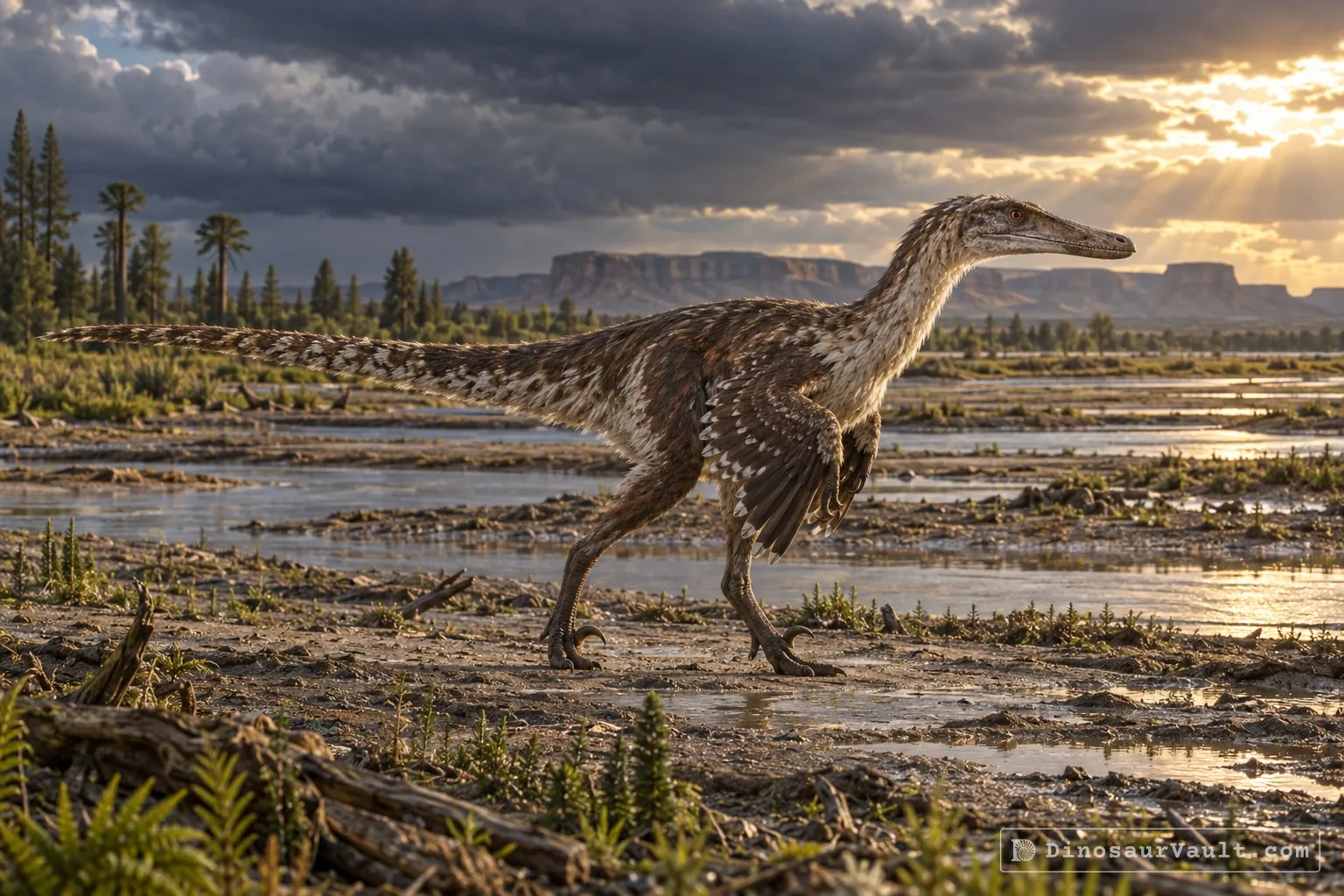


A rock formation can hold fossils laid down millions of years apart, so not every animal here met Neuquensaurus.
The evidence
The science behind Neuquensaurus
Which parts of the picture come from its own bones, and which come from its relatives.
From its own fossils
- Backbones, hips and limb bones show a compact sauropod with sturdy legs.
- Bony plates found with a partial skeleton show that it carried armor in its skin.
- Some bones once identified as parts of the hand actually belong to the foot.
Borrowed from relatives
- The missing face is usually given a long, low shape based on other titanosaurs such as Tapuiasaurus.
- Rapetosaurus helps restore the compact, upright arrangement of the hand bones.
Still unknown
- The shape of its complete skull.
- How its bony plates were arranged across the body.
- Whether the species called robustus belongs to the same animal as australis.
Often drawn wrong
- Neat rows of tall spikes go beyond the known bony plates.
Discovery timeline
- 1992Named itPowell
- 2005New findSalgado, Apesteguía & Heredia
- 2010Full descriptionOtero
Key papers
The research behind what we know of Neuquensaurus
Named it
Established Neuquensaurus as a distinct genus of small armored sauropods.
Osteologia de Saltasaurus loricatus (Sauropoda - Titanosauridae) del Cretácico Superior del noroeste Argentino [Osteology of Saltasaurus loricatus (Sauropoda - Titanosauridae) from the Upper Cretaceous of northwest Argentina]. In J. L. Sanz & A. D. Buscalioni (eds.), Los Dinosaurios y Su Entorno Biotico: Actas del Segundo Curso de Paleontologia in Cuenca. Institutio "Juan de Valdes", Cuenca, Argentina.
No link available
New find
Described an associated partial skeleton and bony skin plates, adding detail to the backbone, hips and hind legs.
A new specimen ofNeuquensaurus australis, a Late Cretaceous saltasaurine titanosaur from north Patagonia. Journal of Vertebrate Paleontology 25: 623-634
Read the paper : A new specimen ofNeuquensaurus australis, a Late Cretaceous saltasaurine titanosaur from north Patagonia (opens in a new tab)Full description
Described the limbs and girdles in detail, corrected earlier bone identifications and compared its anatomy with other small titanosaurs.
The Appendicular Skeleton ofNeuquensaurus, a Late Cretaceous Saltasaurine Sauropod from Patagonia, Argentina. Acta Palaeontologica Polonica 55: 399-426
Read the paper : The Appendicular Skeleton ofNeuquensaurus, a Late Cretaceous Saltasaurine Sauropod from Patagonia, Argentina (opens in a new tab)
Close relatives
Other members of Saltasauridae


Sources: Wikidata