Deltadromeus
DEL-tuh-DROH-me-us
"delta runner"
Type species Deltadromeus agilis
- Lived
- 101 to 94 million years ago, Late Cretaceous
- Diet
- Carnivore
- Length
- about 8 m (26 ft)
- Group
- Theropods, Noasauridae
- Found in
- Egypt, Algeria and Morocco
- Named by
- Sereno et al. 1996
Size comparison
To scale
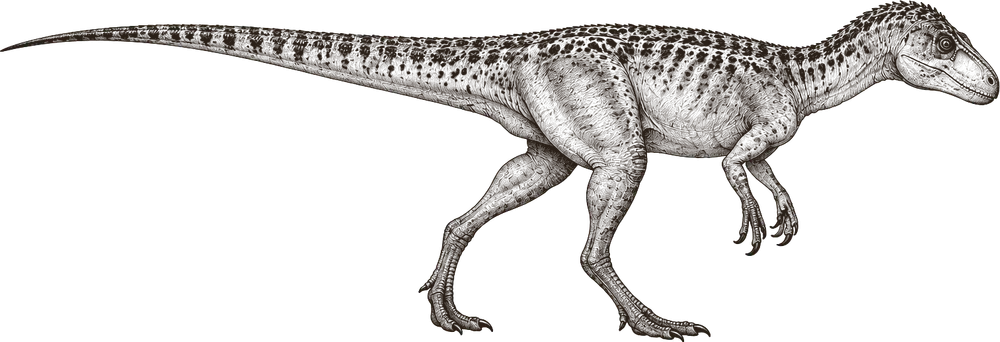

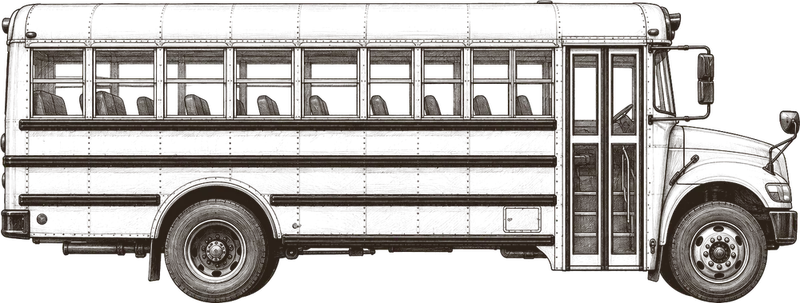
Scale in meters
Where its fossils were found
The evidence
Today

95 million years ago
Habitat
Rivers spread into a delta in Morocco, with channels and wet lowlands. The wider region also supported Spinosaurus and Rebbachisaurus.
Field notes
About Deltadromeus
What it was like
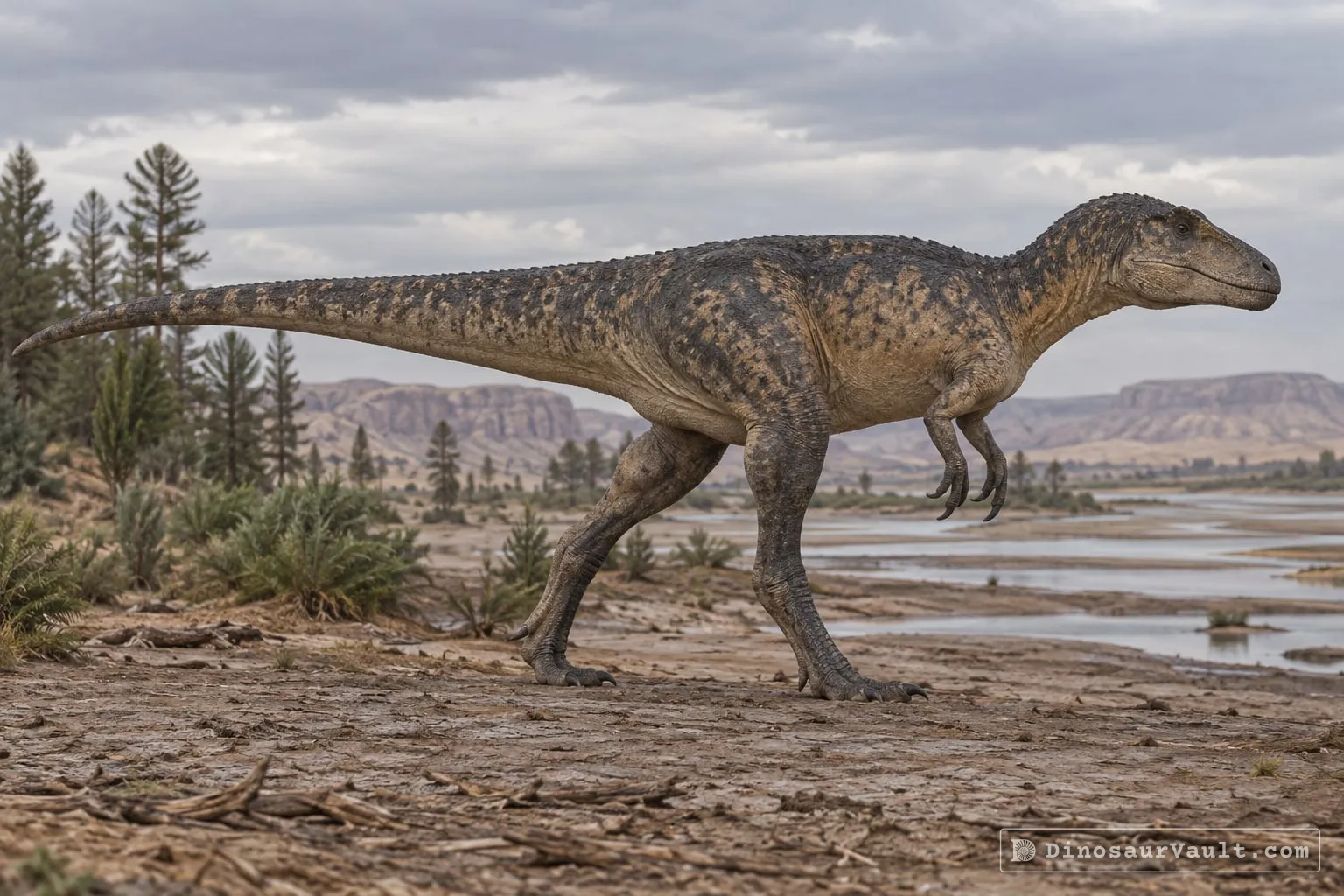
Deltadromeus was a theropod with long, slender hind limbs and a light frame. A reconstruction of its known skeleton gives a length of around 8 meters (26 feet). This incomplete specimen does not establish the maximum size of a fully grown animal.
Its arms were unusually long for a theropod, longer in proportion than those of many of its relatives. Scientists still debate exactly what kind of theropod it was: some studies place it among the ceratosaurs, close to Noasaurus and Elaphrosaurus, while others have linked it to entirely different theropod groups. If the ceratosaur link is correct, Deltadromeus may have been a plant eater or omnivore rather than a strict hunter, unusual for a dinosaur this size.
Its world
Deltadromeus lived from about 101 to 94 million years ago, in the Late Cretaceous, across what are now Egypt, Algeria, and Morocco. Its bones come from the Baharîje and Gara Sbaa formations.
It shared its world with some of the largest predators ever known, including Spinosaurus and the disputed Bahariasaurus, as well as the giant sauropod Paralititan and the plant eater Rebbachisaurus.
How it was found
Sereno and colleagues named Deltadromeus in 1996, giving it the species name Deltadromeus agilis. About six fossil finds are known so far. Some bones from Egypt once assigned to the theropod Bahariasaurus have since been suggested to belong to Deltadromeus instead, though this connection is still debated, and some researchers even wonder whether Deltadromeus and Bahariasaurus are the same animal under two names.
Field gallery
More views of Deltadromeus
Scenes reconstructed from the available fossil evidence.
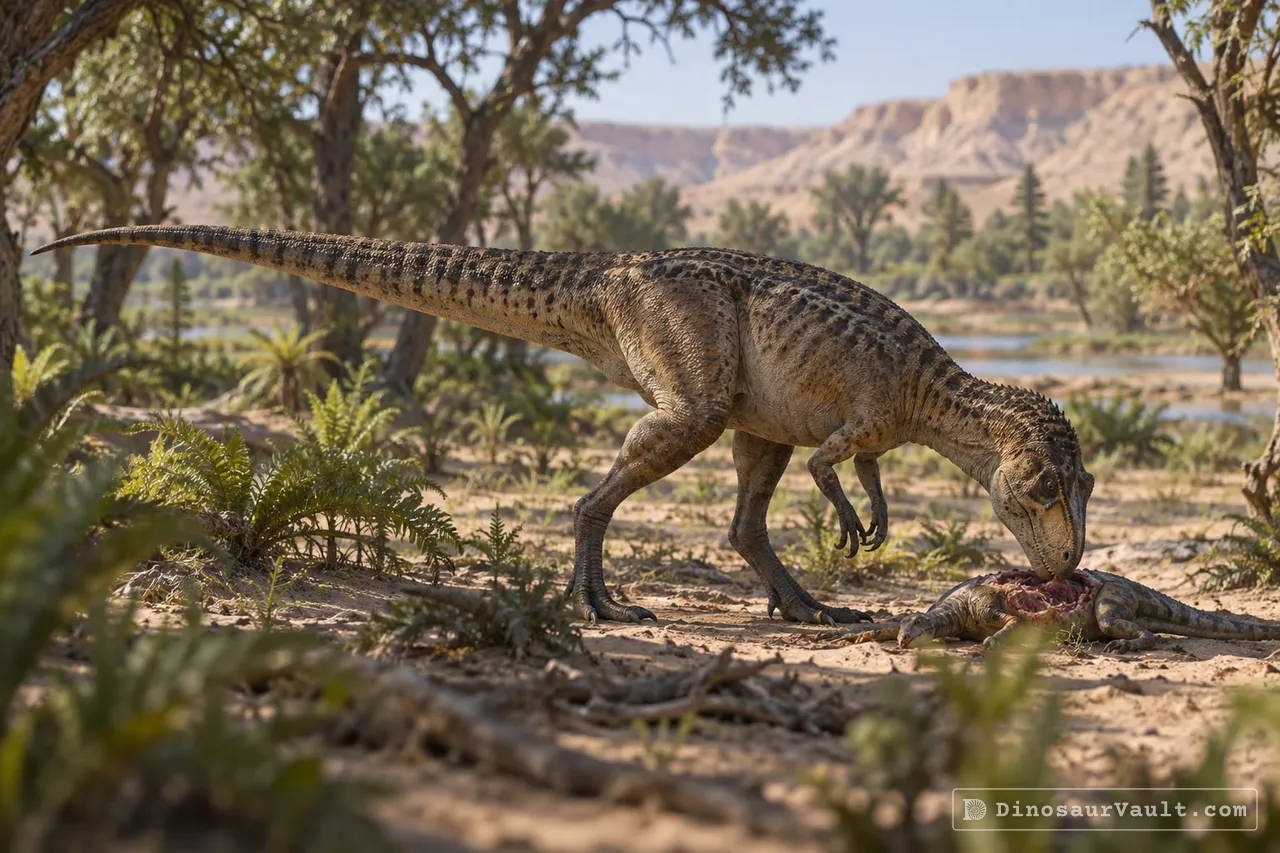
1 of 7
Lived alongside
Found in the same rock formations
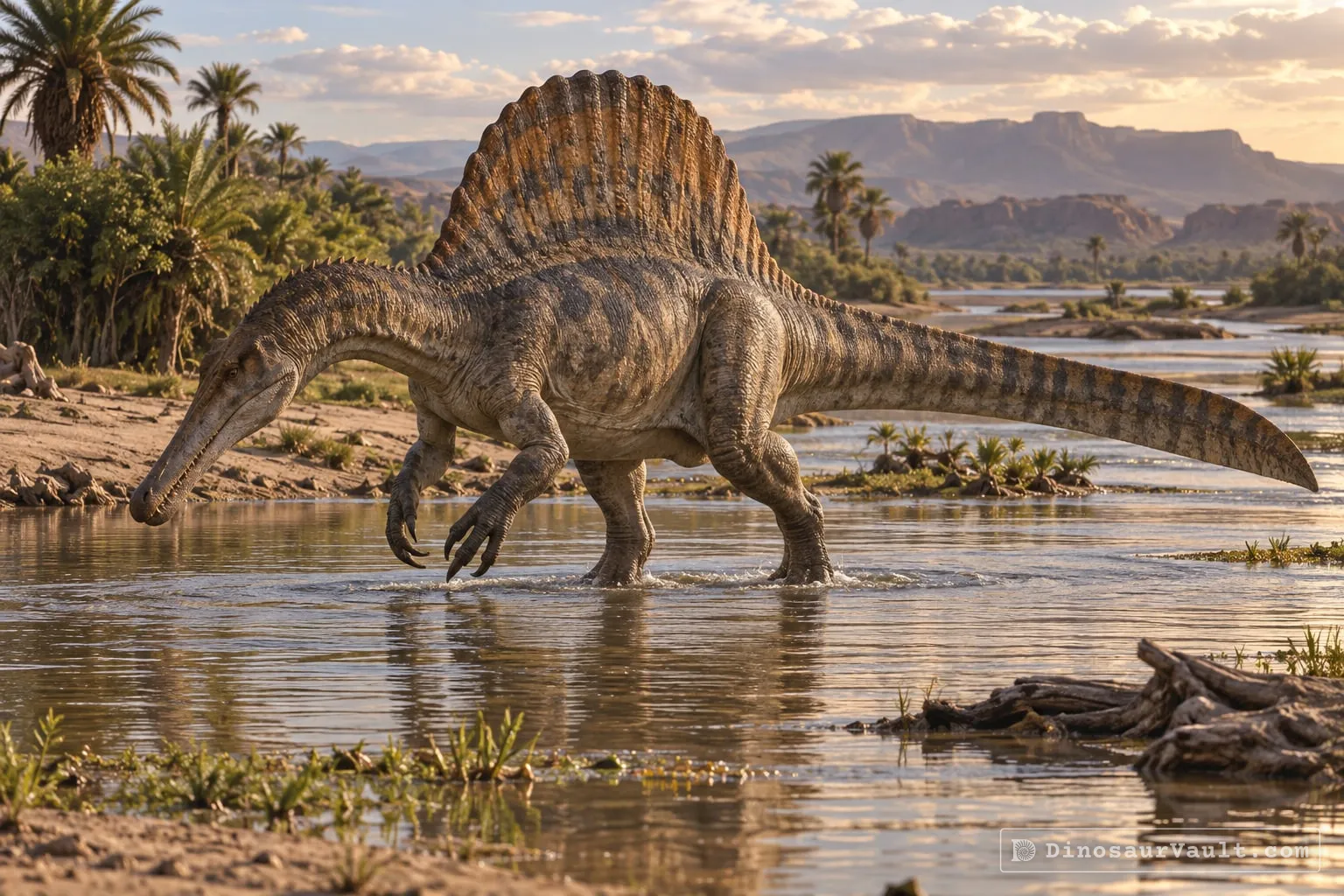
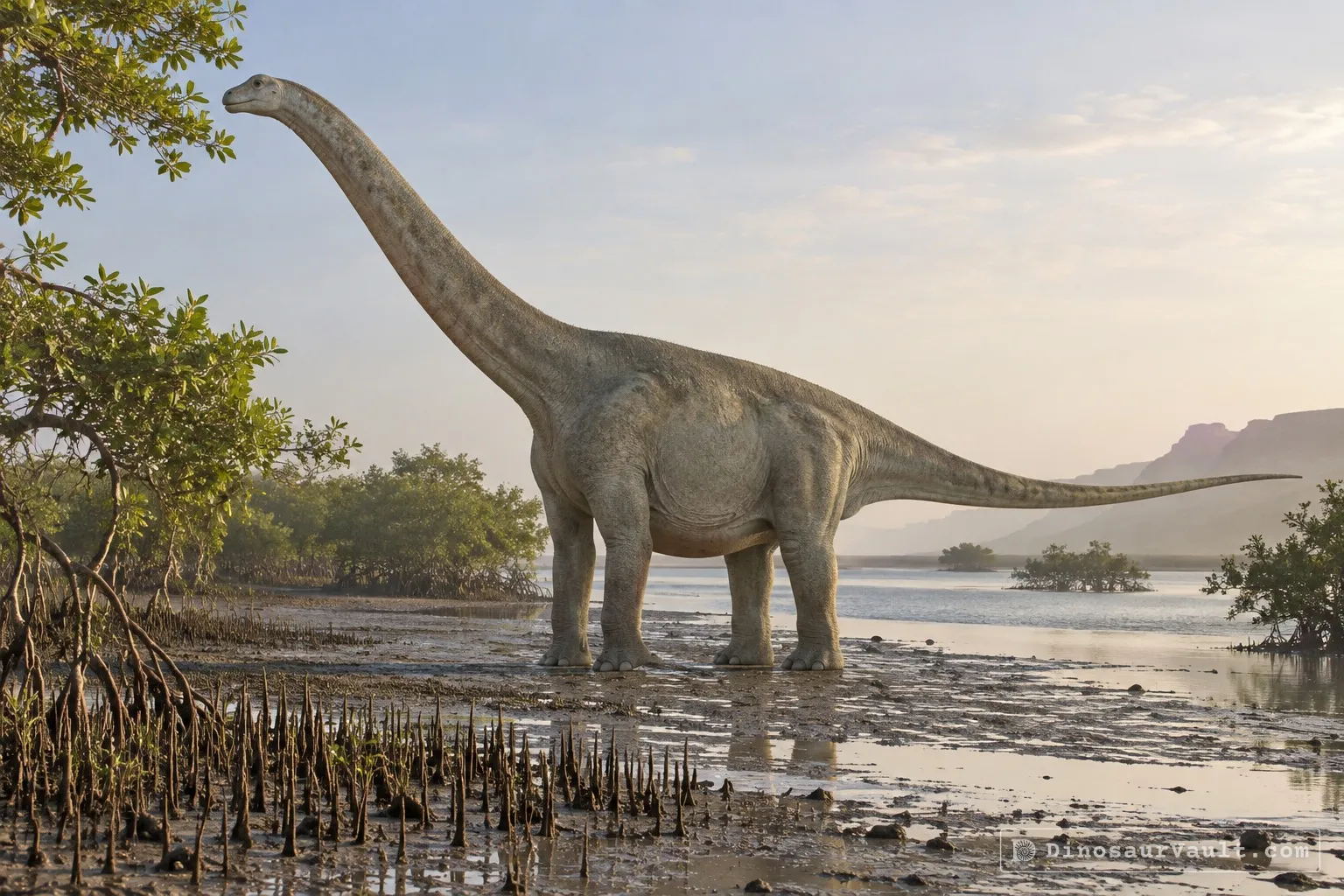
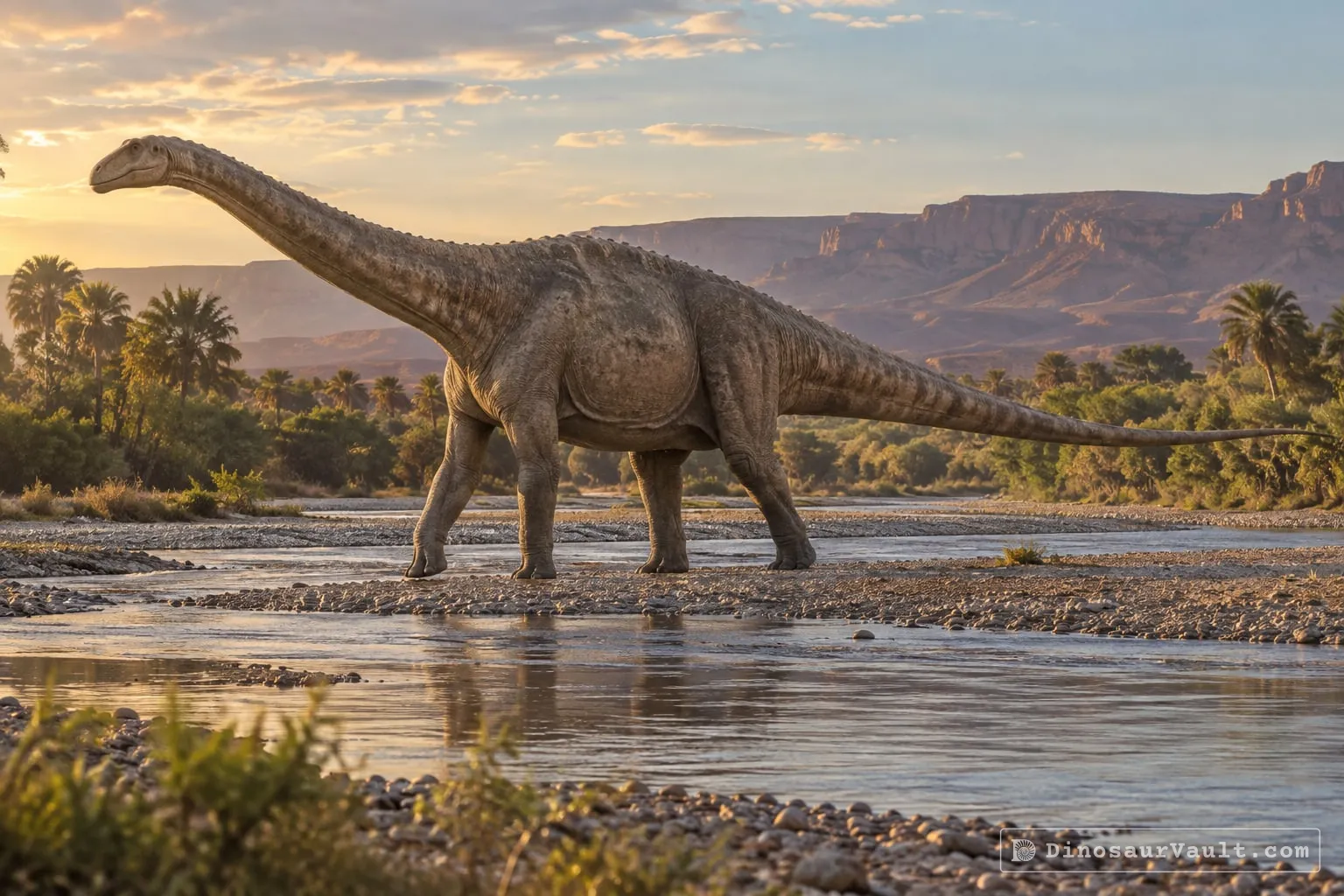
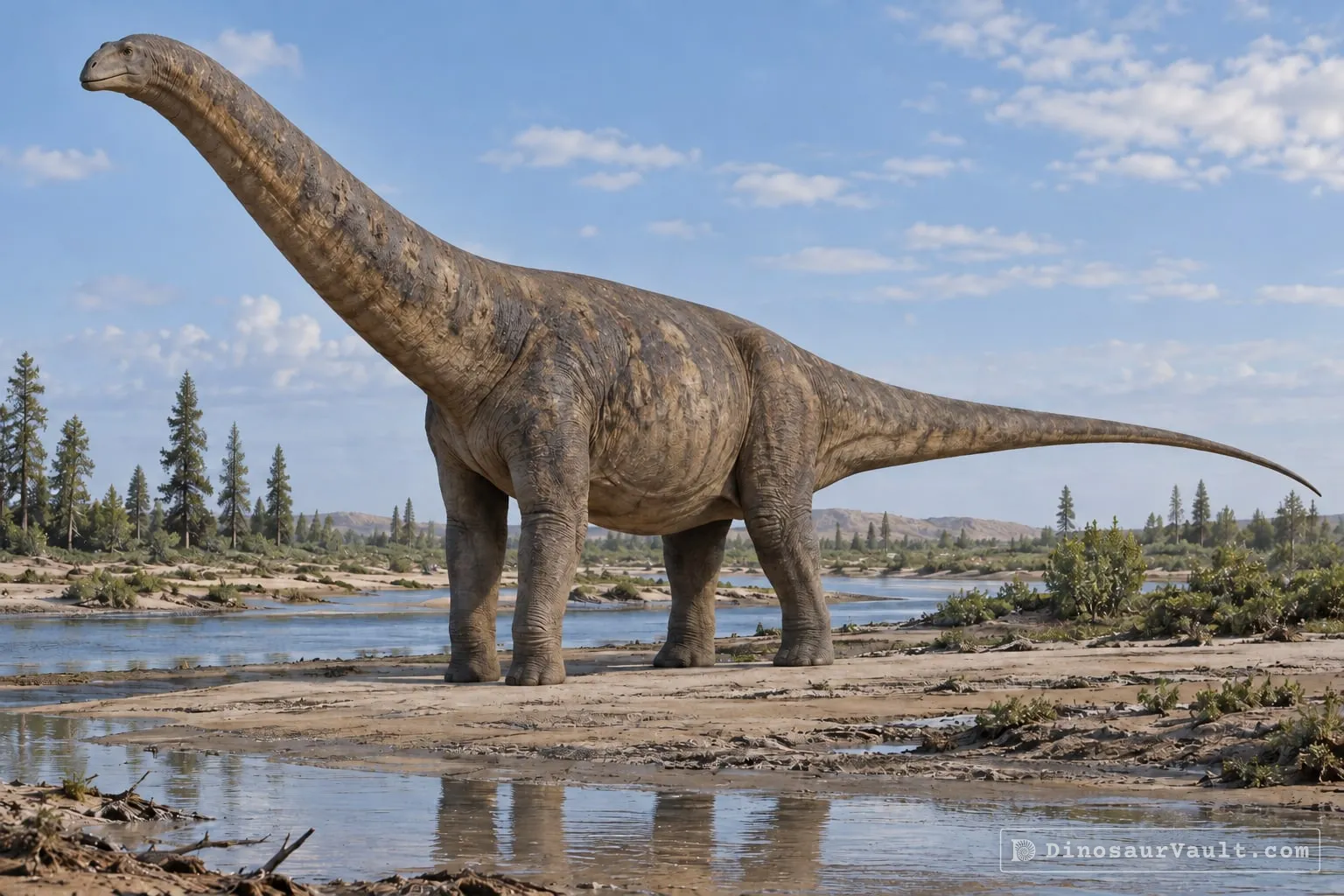


A rock formation can hold fossils laid down millions of years apart, so not every animal here met Deltadromeus.
The evidence
The science behind Deltadromeus
Which parts of the picture come from its own bones, and which come from its relatives.
From its own fossils
- The Moroccan partial skeleton has notably long, slender hind legs.
- Its limb bones show a lightly built large theropod.
Borrowed from relatives
- The missing head is inferred from other theropods, with Elaphrosaurus offering one possible comparison.
- Lips over the teeth follow comparisons with large theropods such as Tyrannosaurus.
Still unknown
- The shape of its skull and what it ate.
- Its exact place in the theropod family tree.
- Whether the disputed Egyptian bones belong to the same animal.
Discovery timeline
- 1996Named itSereno et al.
- 2020Its worldIbrahim et al.
- 2023Close relativeCullen et al.
Key papers
The research behind what we know of Deltadromeus
Named it
Named Deltadromeus from a partial Moroccan skeleton with unusually slender hind legs.
Predatory Dinosaurs from the Sahara and Late Cretaceous Faunal Differentiation. Science 272: 986-991
Read the paper : Predatory Dinosaurs from the Sahara and Late Cretaceous Faunal Differentiation (opens in a new tab)Its world
Reviewed the delta deposits and their fauna, including the headless Deltadromeus skeleton and its debated relationships.
Geology and paleontology of the Upper Cretaceous Kem Kem Group of eastern Morocco. ZooKeys 928: 1-216
Read the paper : Geology and paleontology of the Upper Cretaceous Kem Kem Group of eastern Morocco (opens in a new tab)Close relative
Comparisons of teeth and jaws support lips in large theropods, providing a guide for the missing mouth of Deltadromeus.
Theropod dinosaur facial reconstruction and the importance of soft tissues in paleobiology. Science 379: 1348-1352
Read the paper : Theropod dinosaur facial reconstruction and the importance of soft tissues in paleobiology (opens in a new tab)
Close relatives
Other members of Noasauridae


Sources: Wikidata