Suuwassea
"ancient thunder"
Type species Suuwassea emilieae
- Lived
- 152 to 149 million years ago, Late Jurassic
- Diet
- Herbivore
- Group
- Sauropods, Dicraeosauridae
- Found in
- United States
- Named by
- Harris and Dodson 2004
Where its fossils were found
The evidence
Today

150 million years ago
Habitat
River floodplains in the Morrison Formation supported conifers and ferns. Other dinosaurs from these rocks include Allosaurus, Apatosaurus and Stegosaurus.
Field notes
About Suuwassea
What it was like
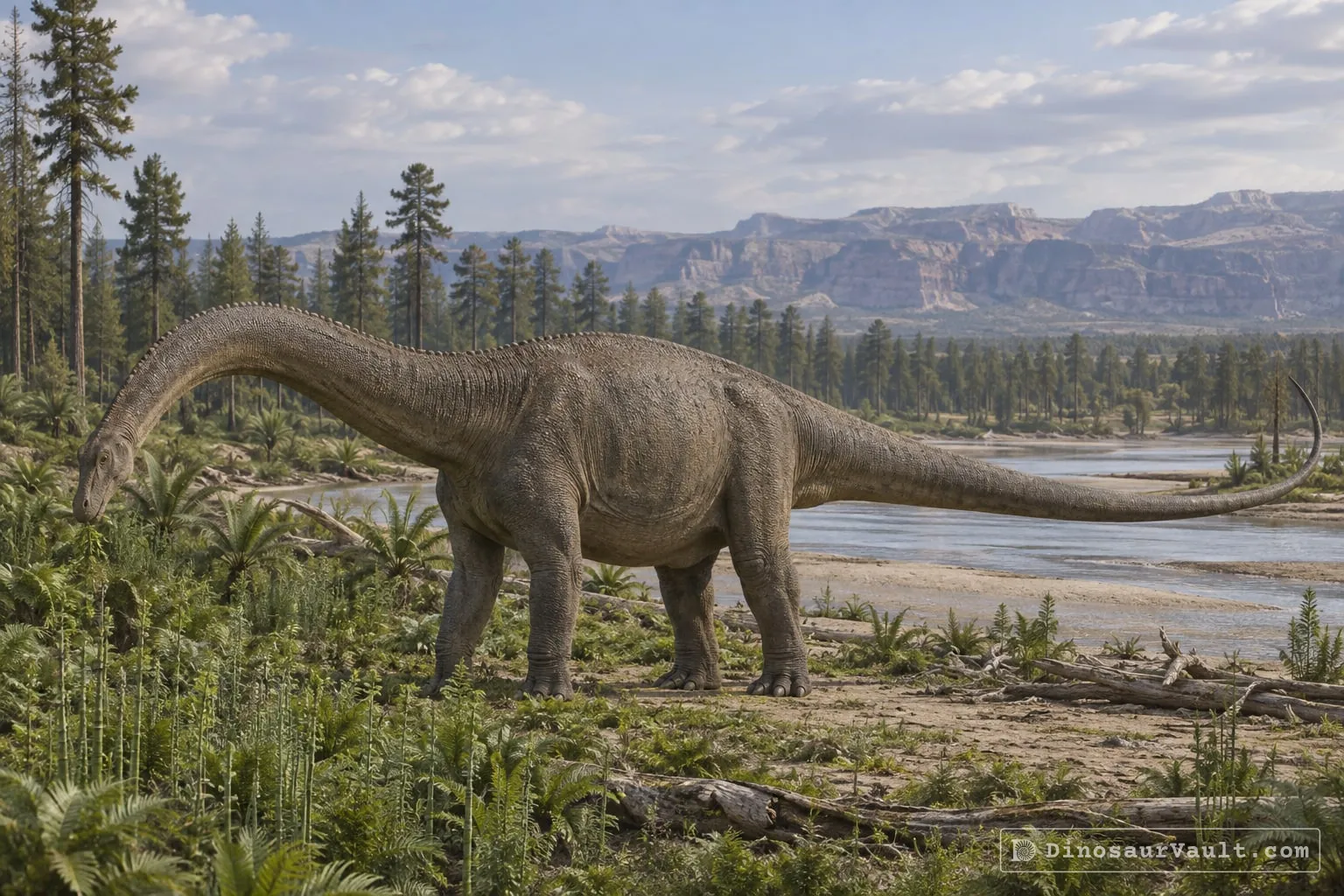
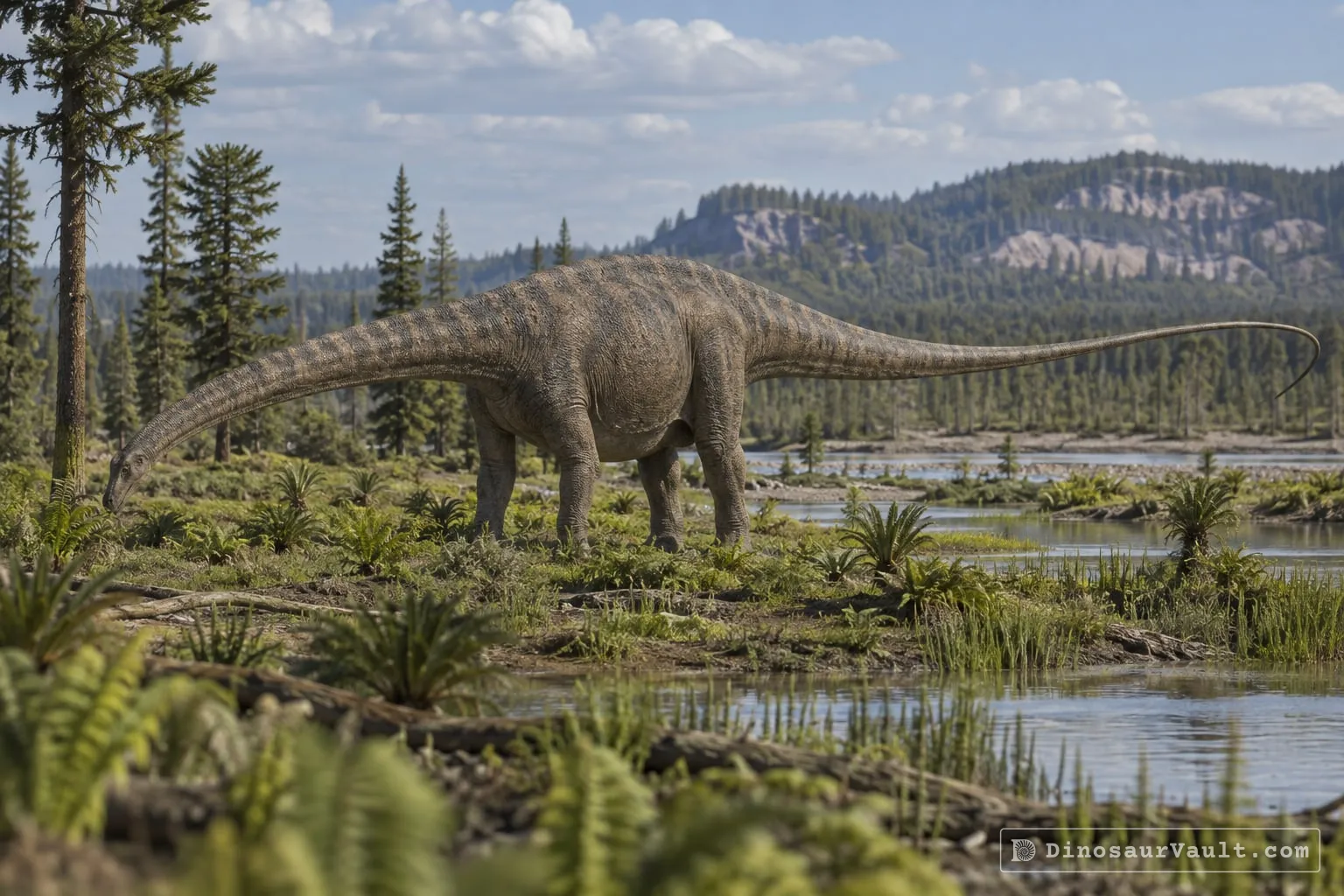
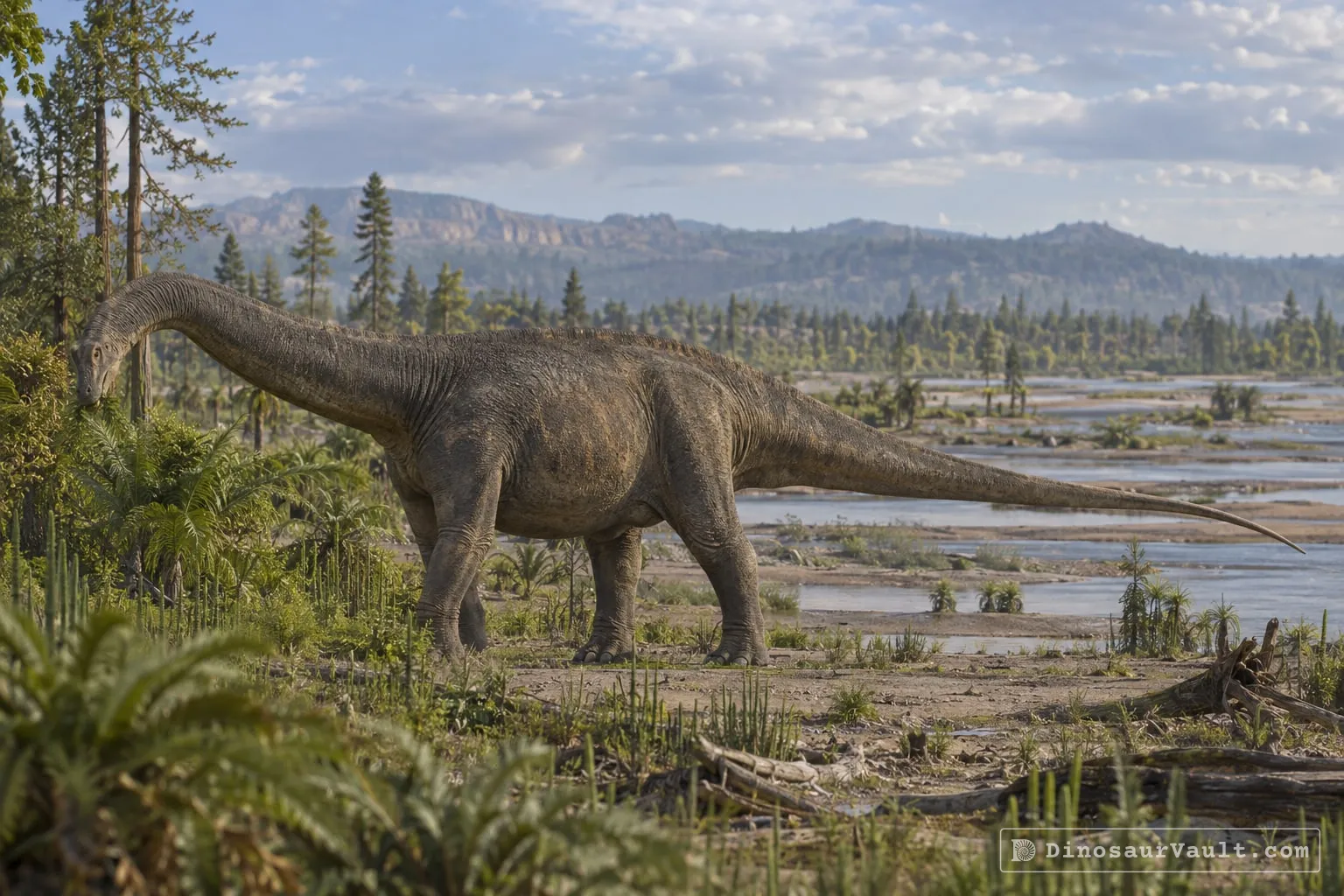
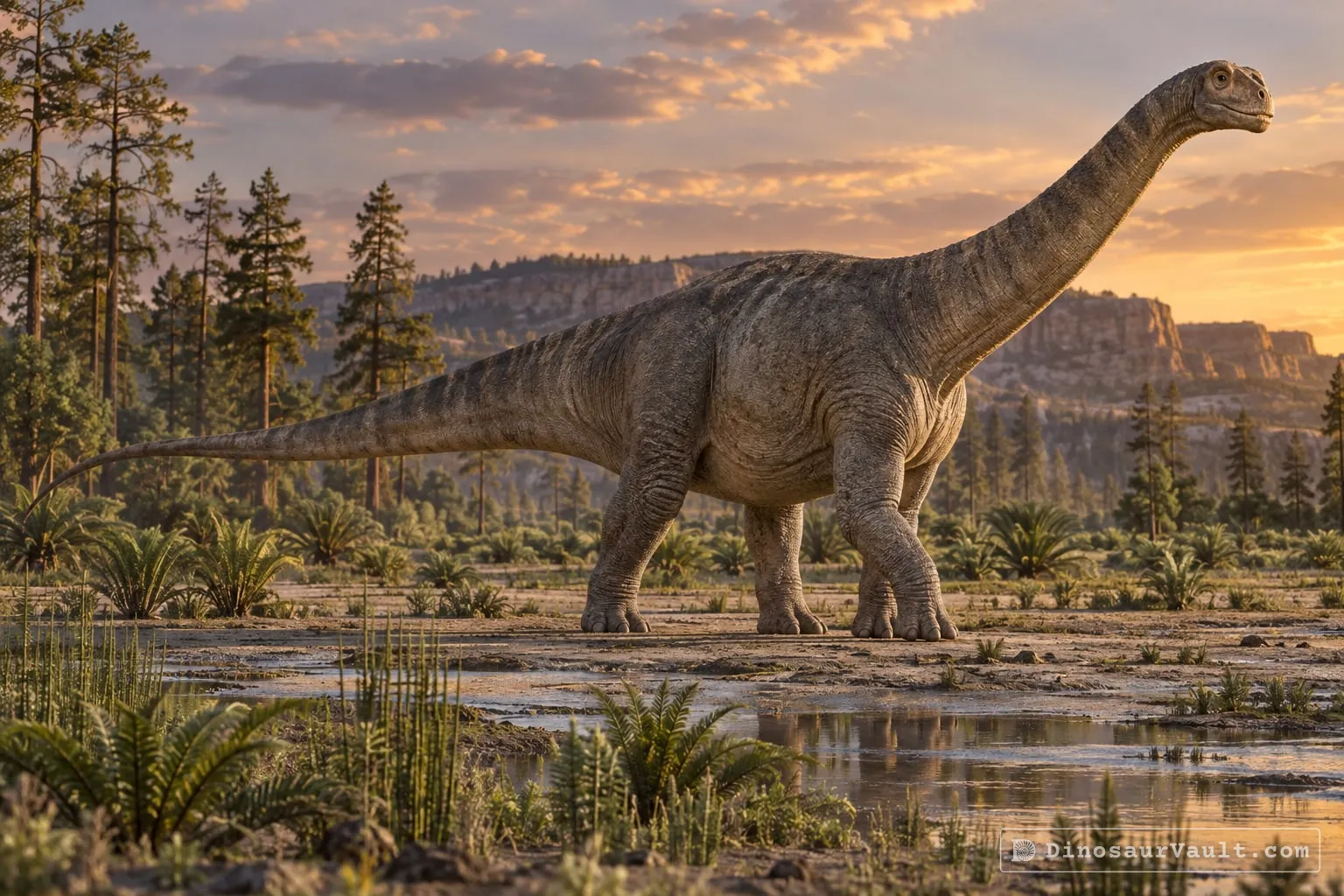
Suuwassea was a long-necked sauropod, a relative of Diplodocus and Dicraeosaurus. It is known from a partial skeleton with pieces of the skull. It was fairly small for a sauropod.
Its world
It lived about 152 to 149 million years ago, in the Late Jurassic, in what is now Montana. Its bones come from the Morrison Formation, where it shared the land with Allosaurus and giant sauropods such as Apatosaurus.
How it was found
Harris and Dodson named it in 2004. The type species is Suuwassea emilieae. The name comes from the language of a native people of the region.
Field gallery
More views of Suuwassea
Scenes reconstructed from the available fossil evidence.
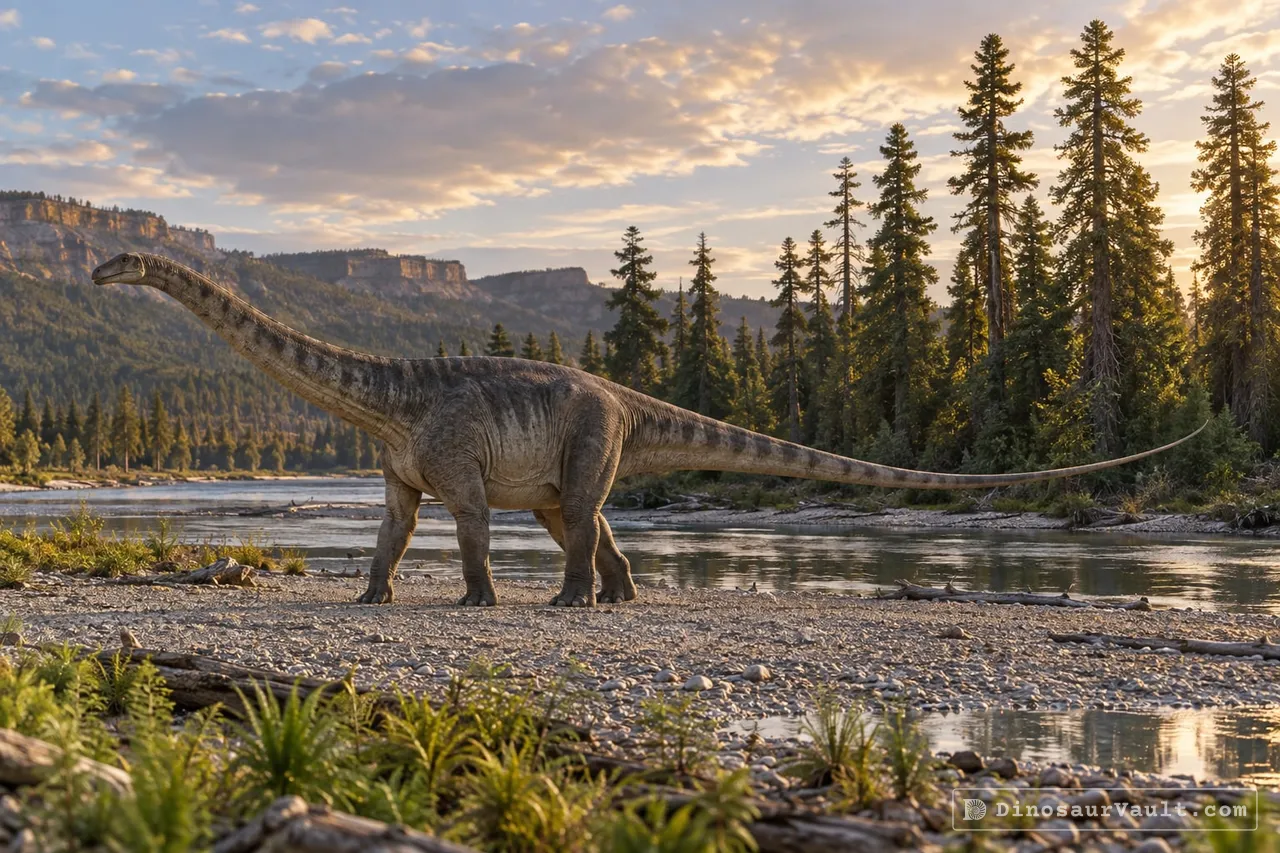
1 of 3
Lived alongside
Found in the same rock formations
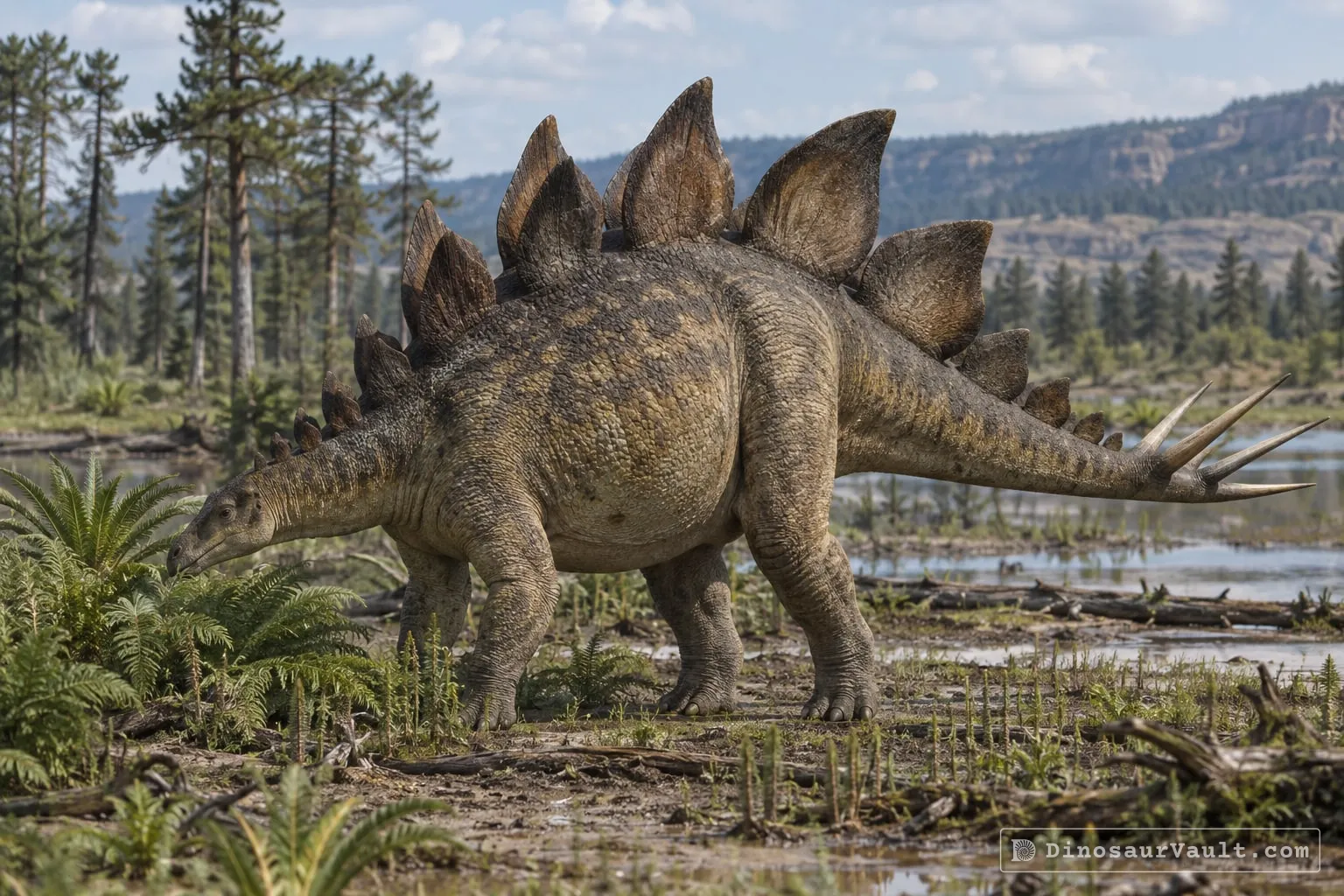
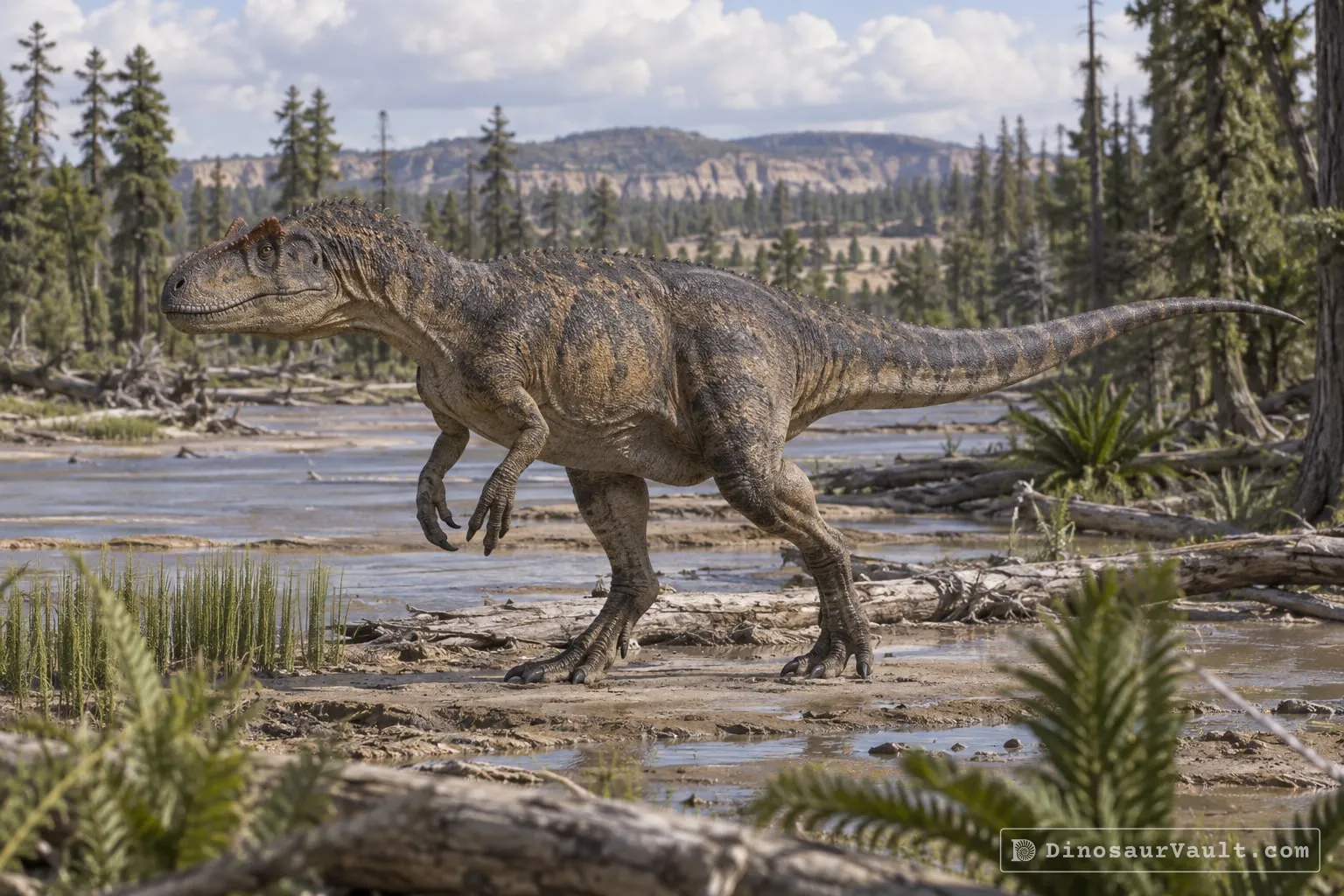
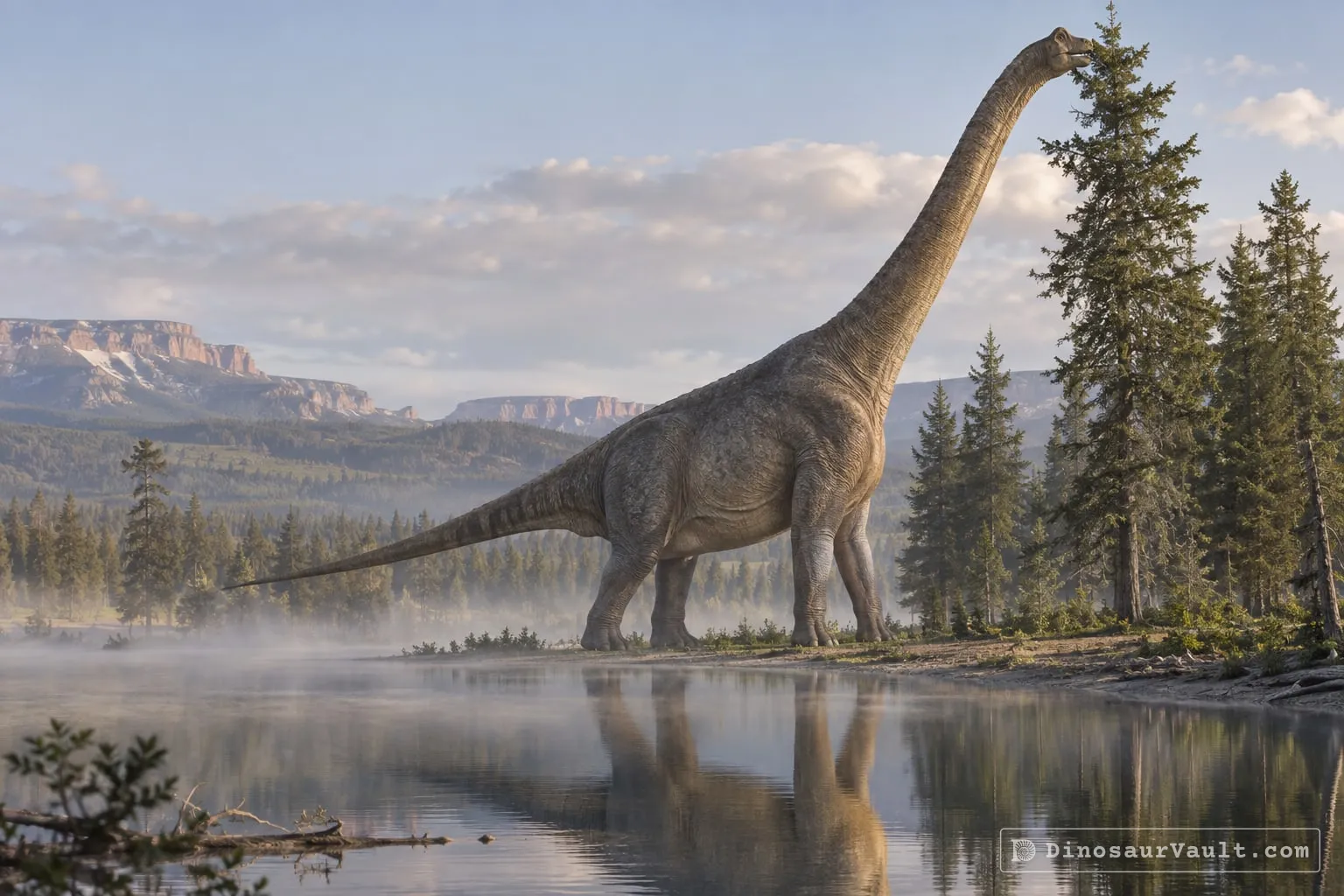
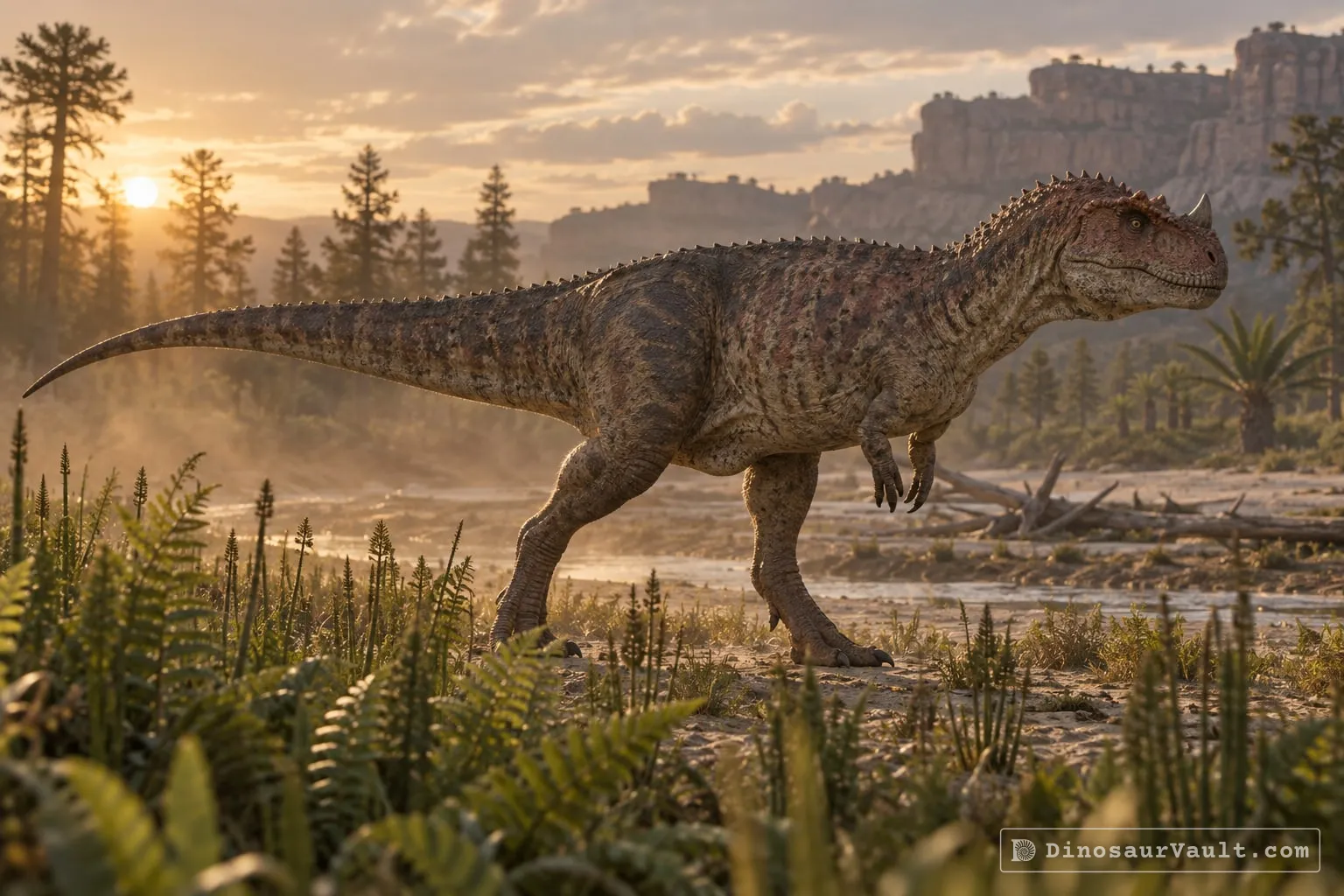


A rock formation can hold fossils laid down millions of years apart, so not every animal here met Suuwassea.
The evidence
The science behind Suuwassea
Which parts of the picture come from its own bones, and which come from its relatives.
From its own fossils
- An associated partial skeleton preserves skull pieces, including the front of the upper jaw and much of the braincase, as well as neck and tail vertebrae and limb bones.
- A lower jaw bone from the same quarry, matching in size, is assigned to the same individual. It is slender behind a deep, downward-projecting chin.
- Its preserved claws are flattened from side to side, modestly curved and blunt, though one is smaller and less flattened. Short vertebrae near the tail tip belonged to a long, tapering tail.
Borrowed from relatives
- Dicraeosaurus provides a comparison for restoring the missing outline of the muzzle.
- The compact, weight-bearing front feet are restored using Apatosaurus.
Still unknown
- The middle of its skull, between the snout and the eyes, and so the complete shape of its head.
- The exact length of its neck. Its front neck vertebrae are proportioned like those of Diplodocus but built more like those of Apatosaurus.
- How many claws the hind foot had, and whether the larger claw came from a hand instead. Which toes and sides the claws belonged to is also unknown.
Discovery timeline
- 2004Named itHarris & Dodson
- 2006SkullHarris
- 2006Full descriptionHARRIS
- 2007Full descriptionHarris
- 2010SkullWHITLOCK & HARRIS
- 2011Close relativeWhitlock
Key papers
The research behind what we know of Suuwassea
Named it
Named a new sauropod from an associated partial skeleton with skull bones from Montana.
A new diplodocoid sauropod dinosaur from the Upper Jurassic Morrison Formation of Montana, USA. Acta Palaeontologica Polonica 49: 197-210
No link available
Skull
Described the skull pieces, including part of the upper jaw, the skull roof and the braincase.
Cranial osteology ofSuuwassea emilieae(Sauropoda: Diplodocoidea: Flagellicaudata) from the Upper Jurassic Morrison Formation of Montana, USA. Journal of Vertebrate Paleontology 26: 88-102
Read the paper : Cranial osteology ofSuuwassea emilieae(Sauropoda: Diplodocoidea: Flagellicaudata) from the Upper Jurassic Morrison Formation of Montana, USA (opens in a new tab)Full description
Described the neck, back and tail vertebrae, including unusually short bones at the whip-like tail tip.
THE AXIAL SKELETON OF THE DINOSAUR SUUWASSEA EMILIEAE (SAUROPODA: FLAGELLICAUDATA) FROM THE UPPER JURASSIC MORRISON FORMATION OF MONTANA, USA. Palaeontology 49: 1091-1121
Read the paper : THE AXIAL SKELETON OF THE DINOSAUR SUUWASSEA EMILIEAE (SAUROPODA: FLAGELLICAUDATA) FROM THE UPPER JURASSIC MORRISON FORMATION OF MONTANA, USA (opens in a new tab)Full description
Described the limb bones and claws, and discussed whether Suuwassea and Dyslocosaurus could be the same animal.
The appendicular skeleton of Suuwassea emilieae (Sauropoda: Flagellicaudata) from the Upper Jurassic Morrison Formation of Montana (USA). Geobios 40: 501-522
Read the paper : The appendicular skeleton of Suuwassea emilieae (Sauropoda: Flagellicaudata) from the Upper Jurassic Morrison Formation of Montana (USA) (opens in a new tab)Skull
Identified a lower jaw from the same individual, with a slender rear portion and a deep chin.
The dentary of Suuwassea emilieae (Sauropoda: Diplodocoidea). Journal of Vertebrate Paleontology 30: 1637-1641
Read the paper : The dentary of Suuwassea emilieae (Sauropoda: Diplodocoidea) (opens in a new tab)Close relative
Compared snout shapes in diplodocoids and found that Dicraeosaurus had a narrower, rounder muzzle than the square-snouted diplodocids.
Inferences of Diplodocoid (Sauropoda: Dinosauria) Feeding Behavior from Snout Shape and Microwear Analyses. PLoS ONE 6: e18304
Read the paper : Inferences of Diplodocoid (Sauropoda: Dinosauria) Feeding Behavior from Snout Shape and Microwear Analyses (opens in a new tab)
Close relatives
Other members of Dicraeosauridae


Sources: Wikidata