Ceratosaurus
seh-RAT-oh-SORE-us
"horned lizard"
- Lived
- 155 to 143 million years ago, Late Jurassic
- Diet
- Carnivore
- Length
- about 6 m (20 ft)
- Group
- Theropods
- Found in
- United States, Portugal and Tanzania
- Named by
- Marsh 1884
Size comparison
To scale


Scale in meters
Where its fossils were found
The evidence
Today

150 million years ago
Also reported from Uruguay.
Habitat
Its Morrison habitat included river floodplains with conifers, ferns and horsetails. Stegosaurus, Diplodocus and Apatosaurus lived in the same region.
Field notes
About Ceratosaurus
What it was like
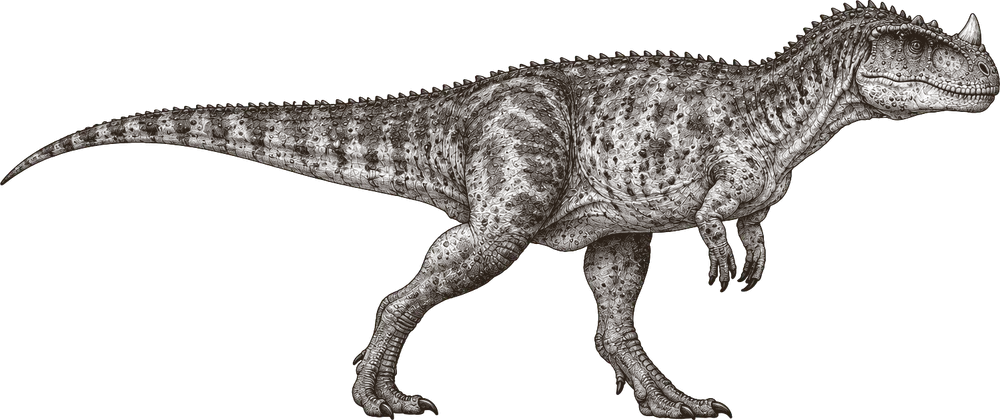
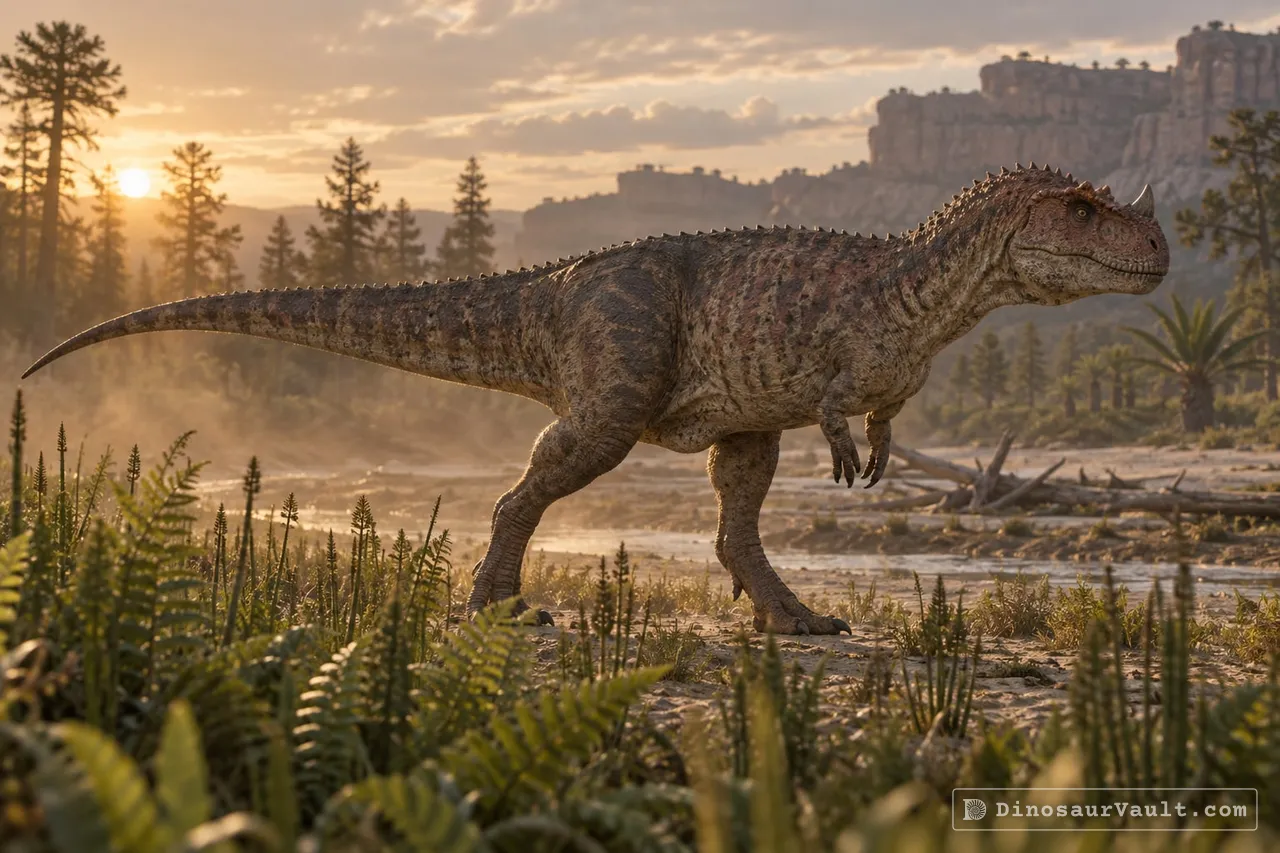
Ceratosaurus was a mid-sized meat-eating dinosaur that grew to about 6 meters (20 feet) long. It is best known for a tall, blade-like horn on its snout and a smaller horn above each eye, along with deep, powerful jaws lined with long, blade-shaped teeth.
A row of small bony plates ran down the middle of its neck, back, and tail. Its arms were short but still had four clawed fingers. The snout horn was probably too fragile for fighting and more likely served as a display feature to attract mates or signal to rivals.
Its world
Ceratosaurus lived from about 155 to 143 million years ago, spanning the Late Jurassic and Early Cretaceous, in what is now the United States, Portugal, and Tanzania, with possible remains also reported from Uruguay. In the United States, fossils have been found in Colorado, Wyoming, Utah, and Oklahoma.
It shared its world with other large predators, including Torvosaurus and Allosaurus, and with plant eaters such as Stegosaurus, Brachiosaurus, and Diplodocus.
How it was found
Marsh named Ceratosaurus in 1884, based on a nearly complete skeleton. Around 26 finds are now known, though only a handful are as complete as the first. Ceratosaurus gives its name to Ceratosauria, a wider group of theropods, and its closer relatives include Genyodectes and Saltriovenator.
Field gallery
More views of Ceratosaurus
Scenes reconstructed from the available fossil evidence.
1 of 7
Lived alongside
Found in the same rock formations
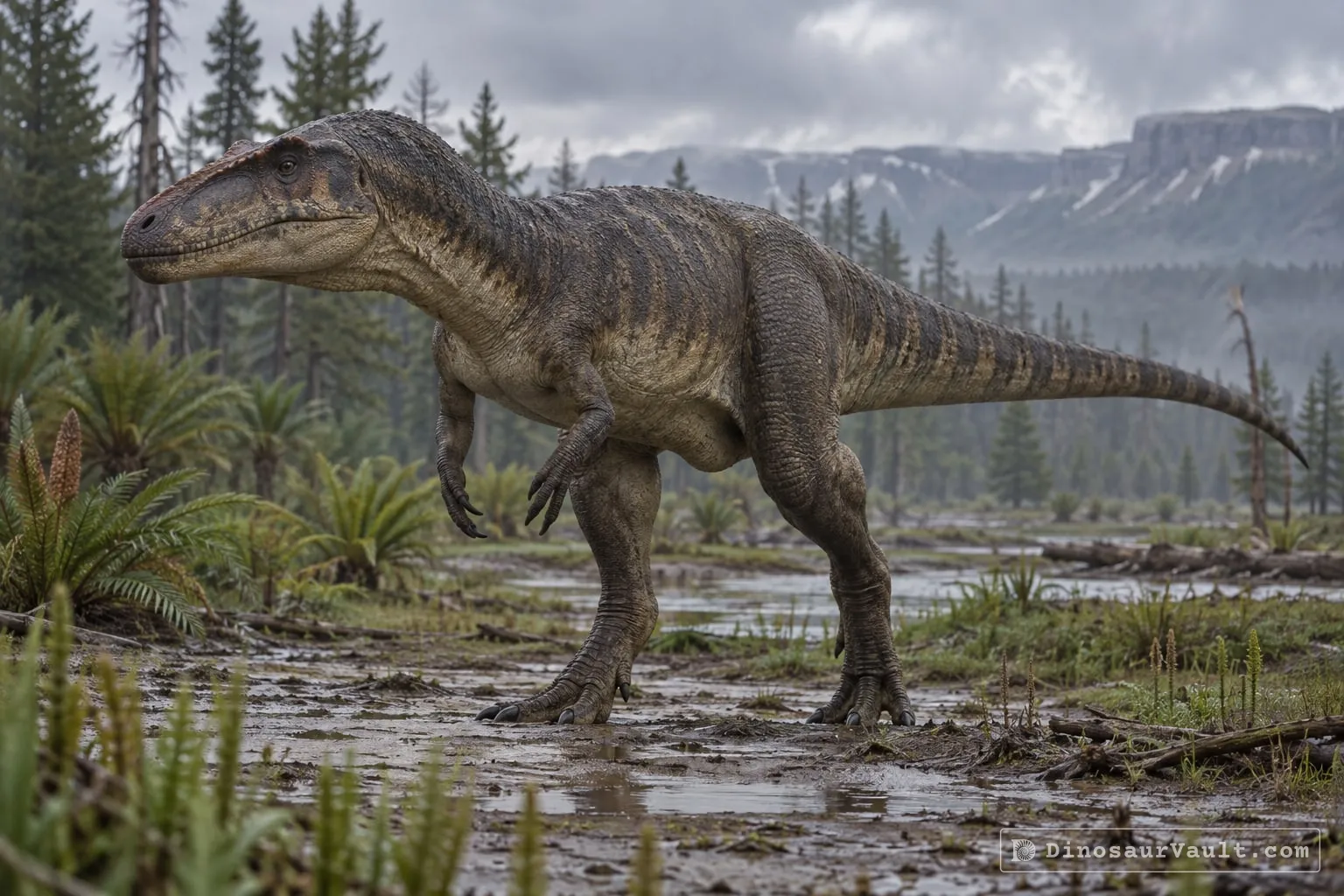
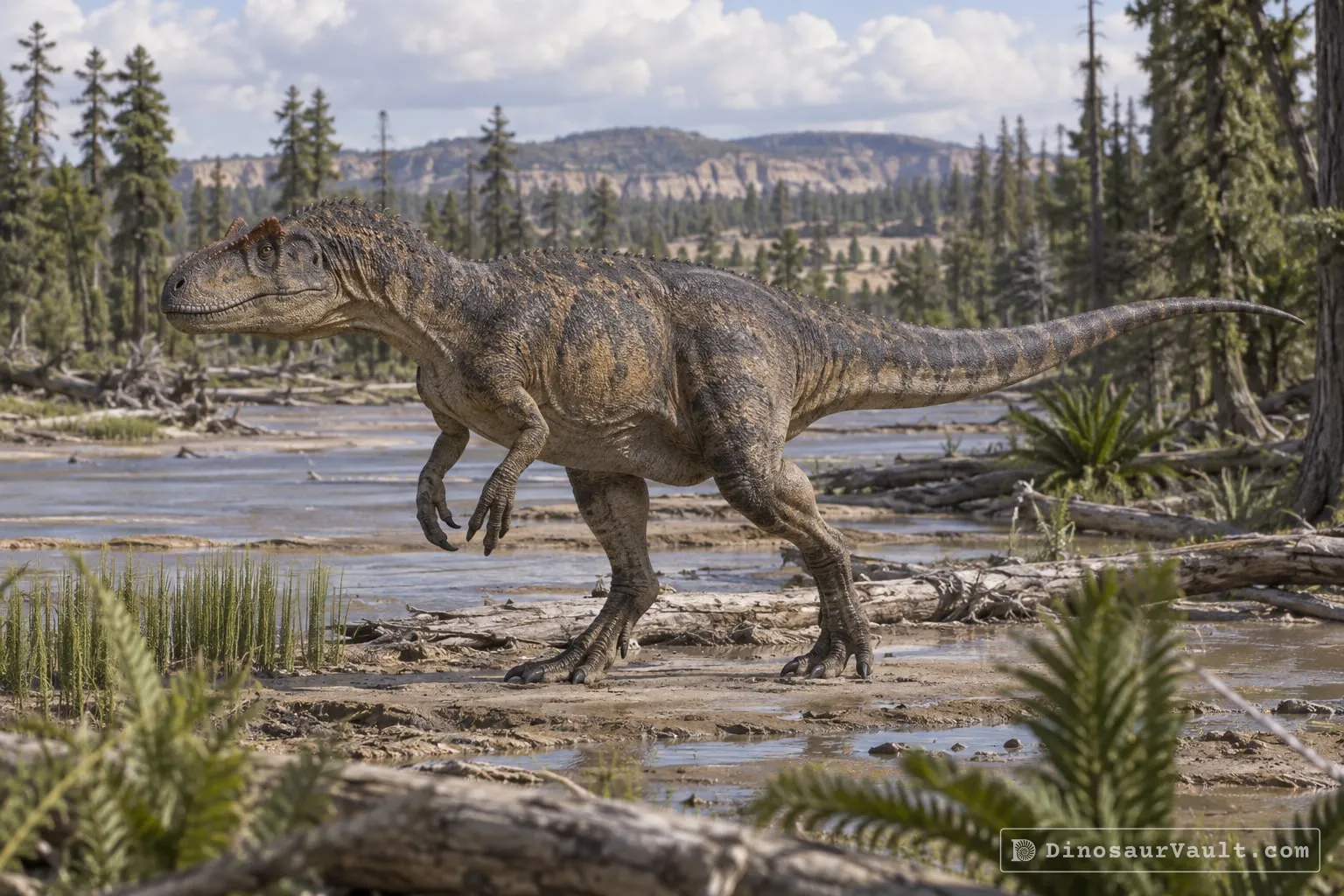
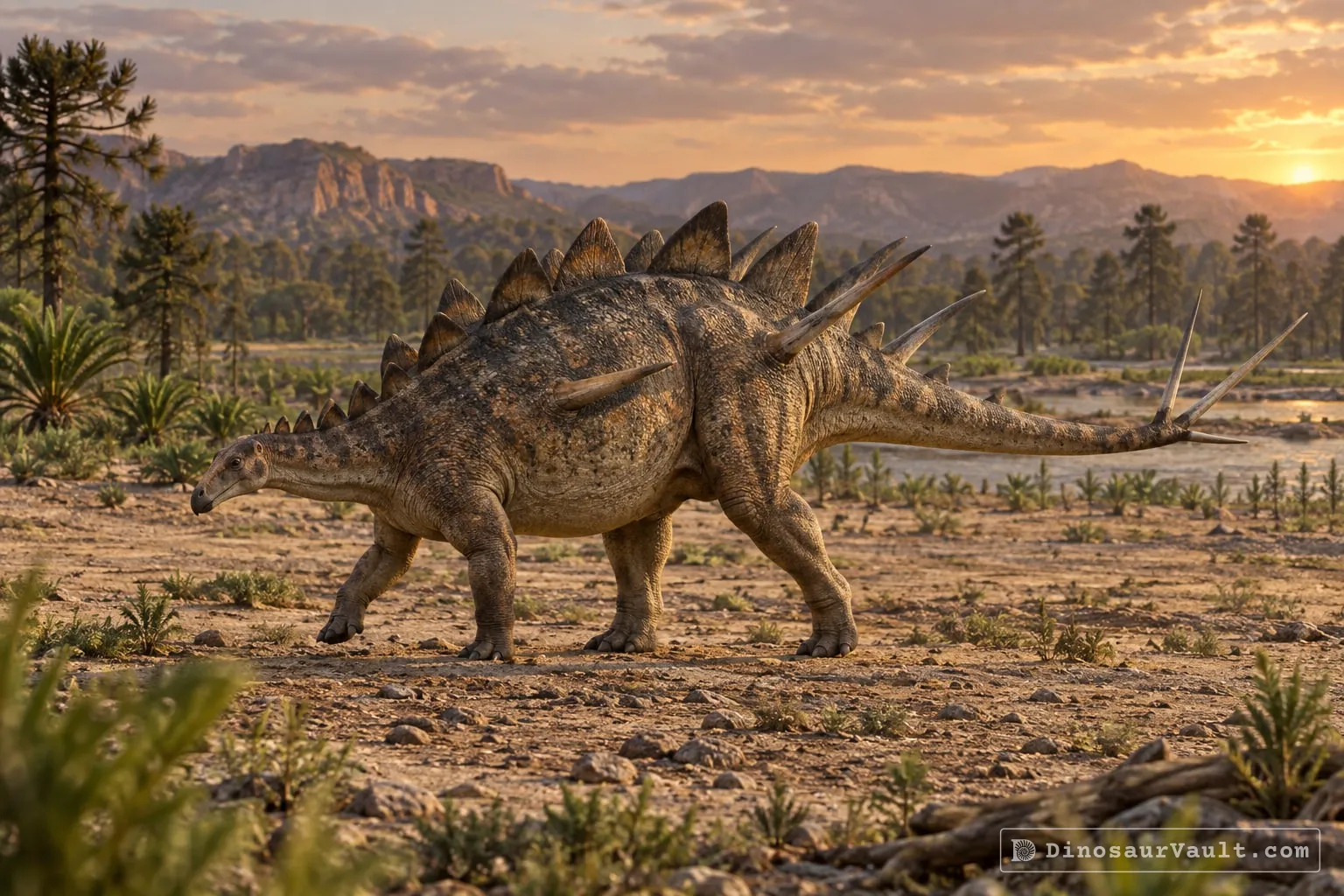
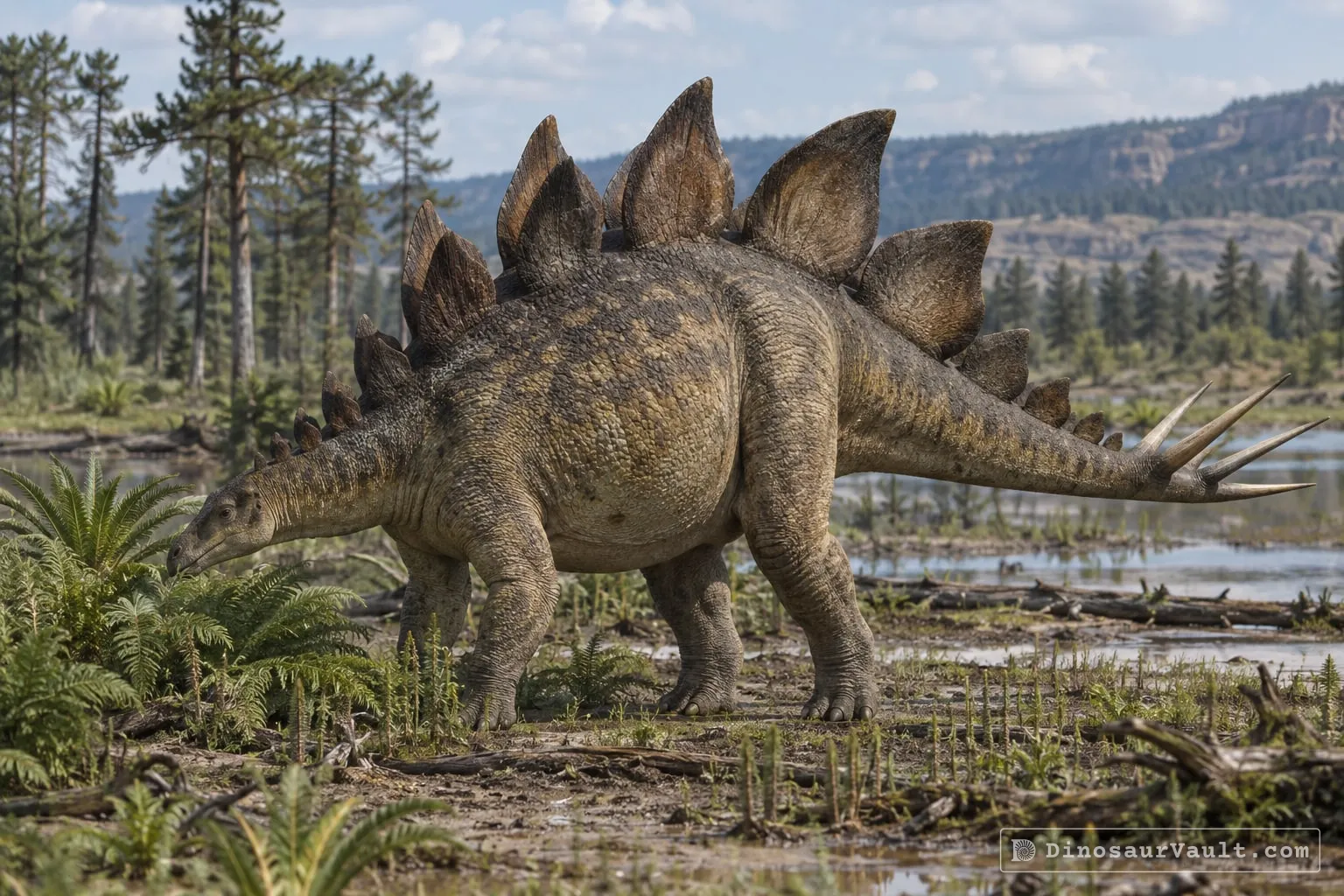
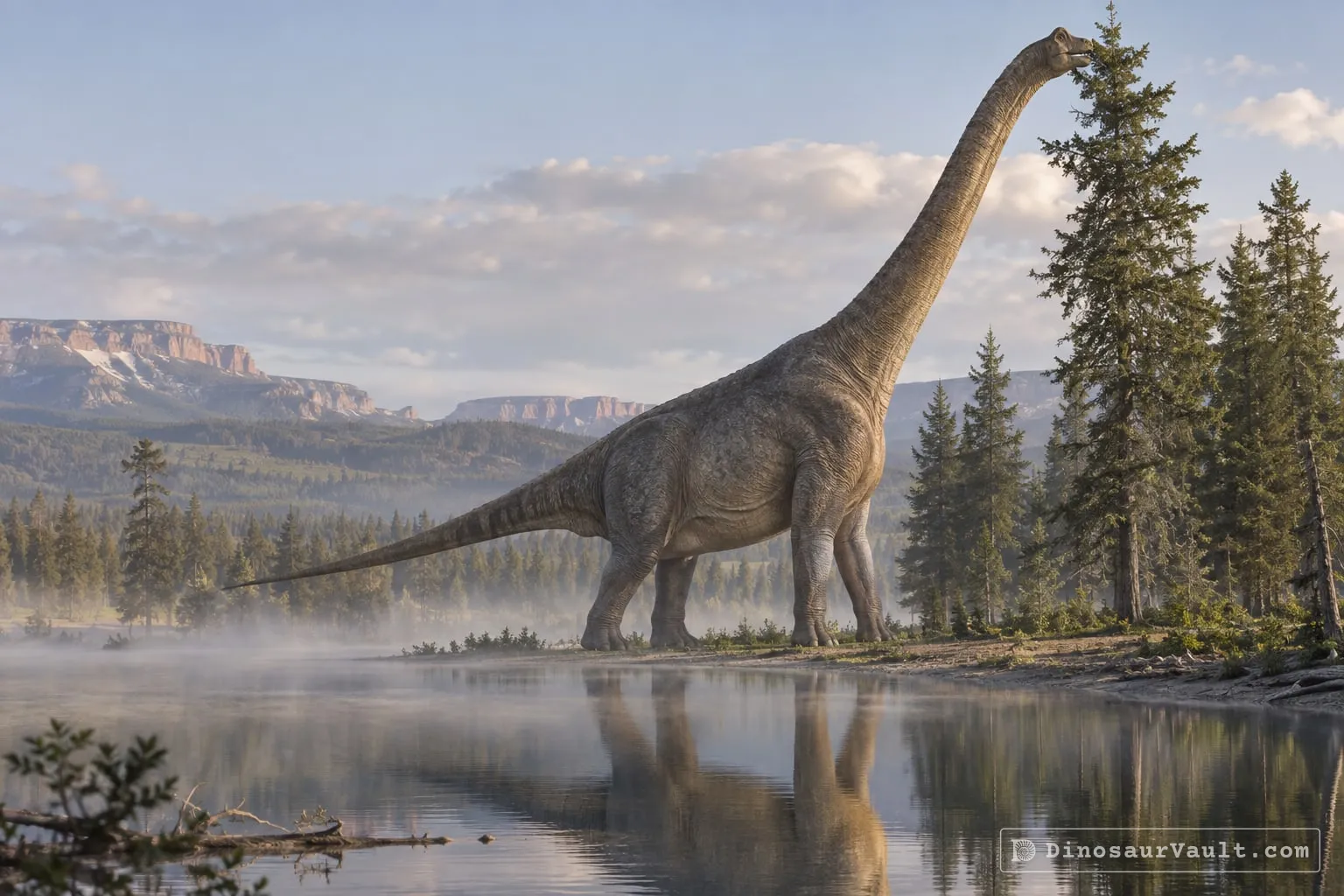
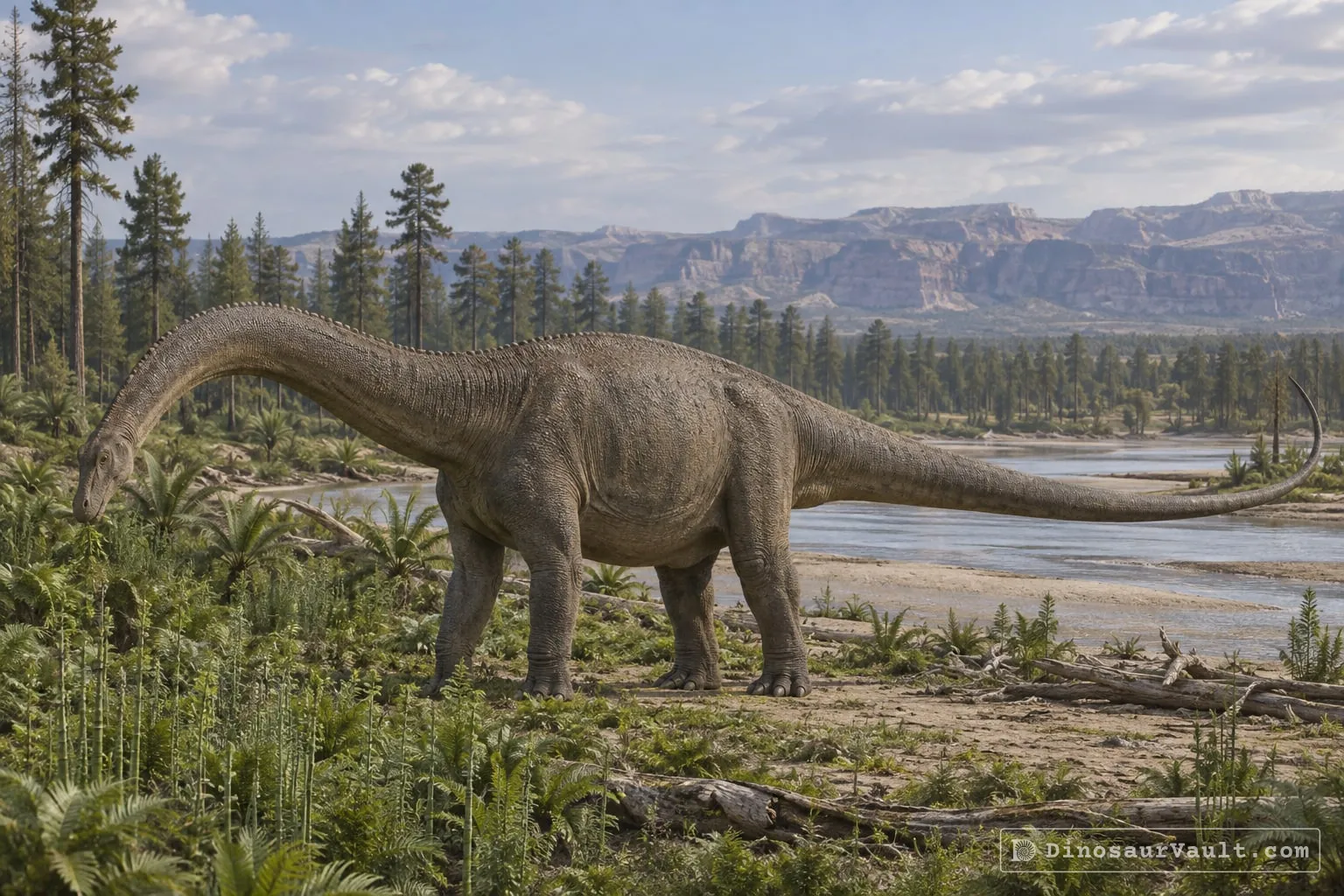
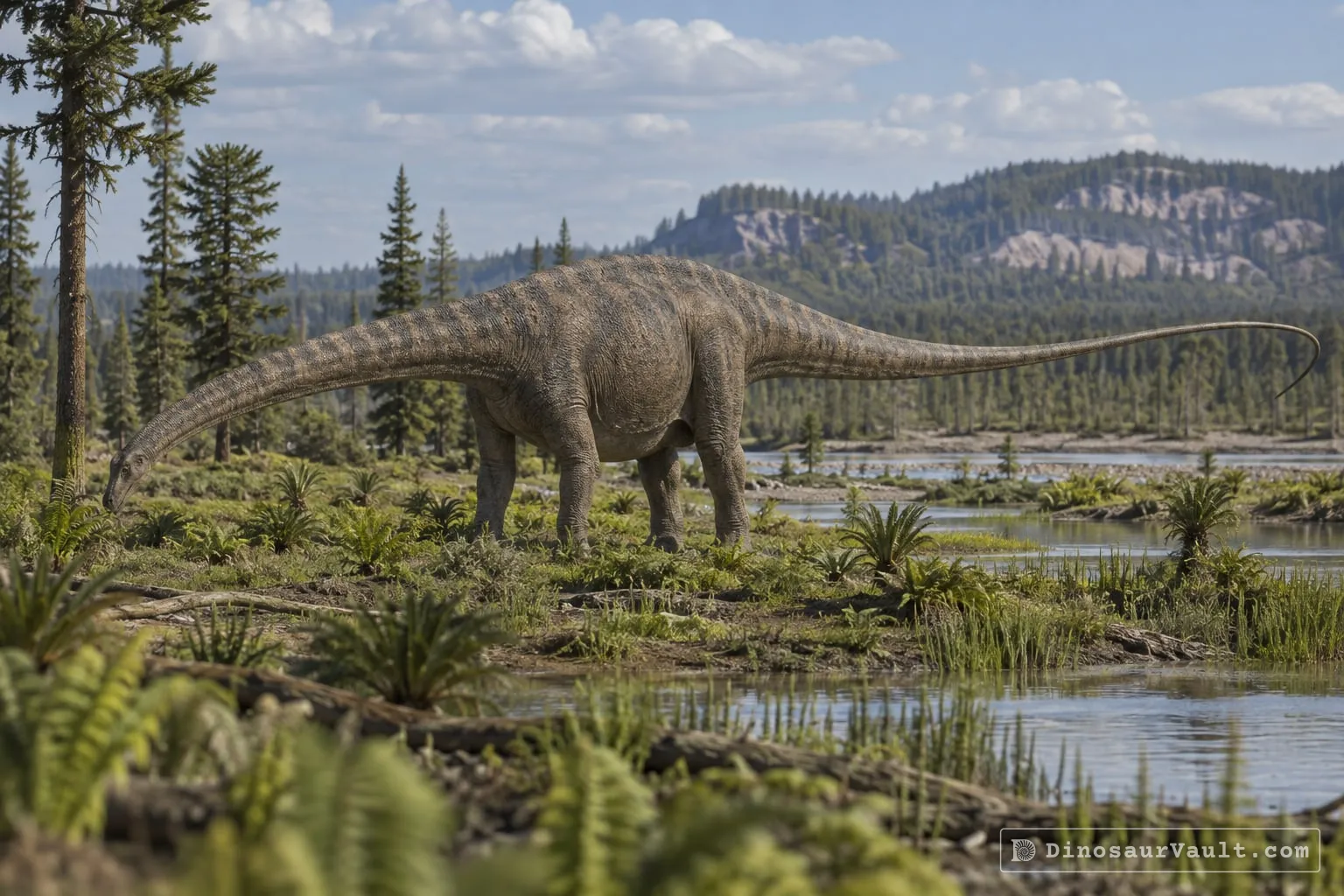
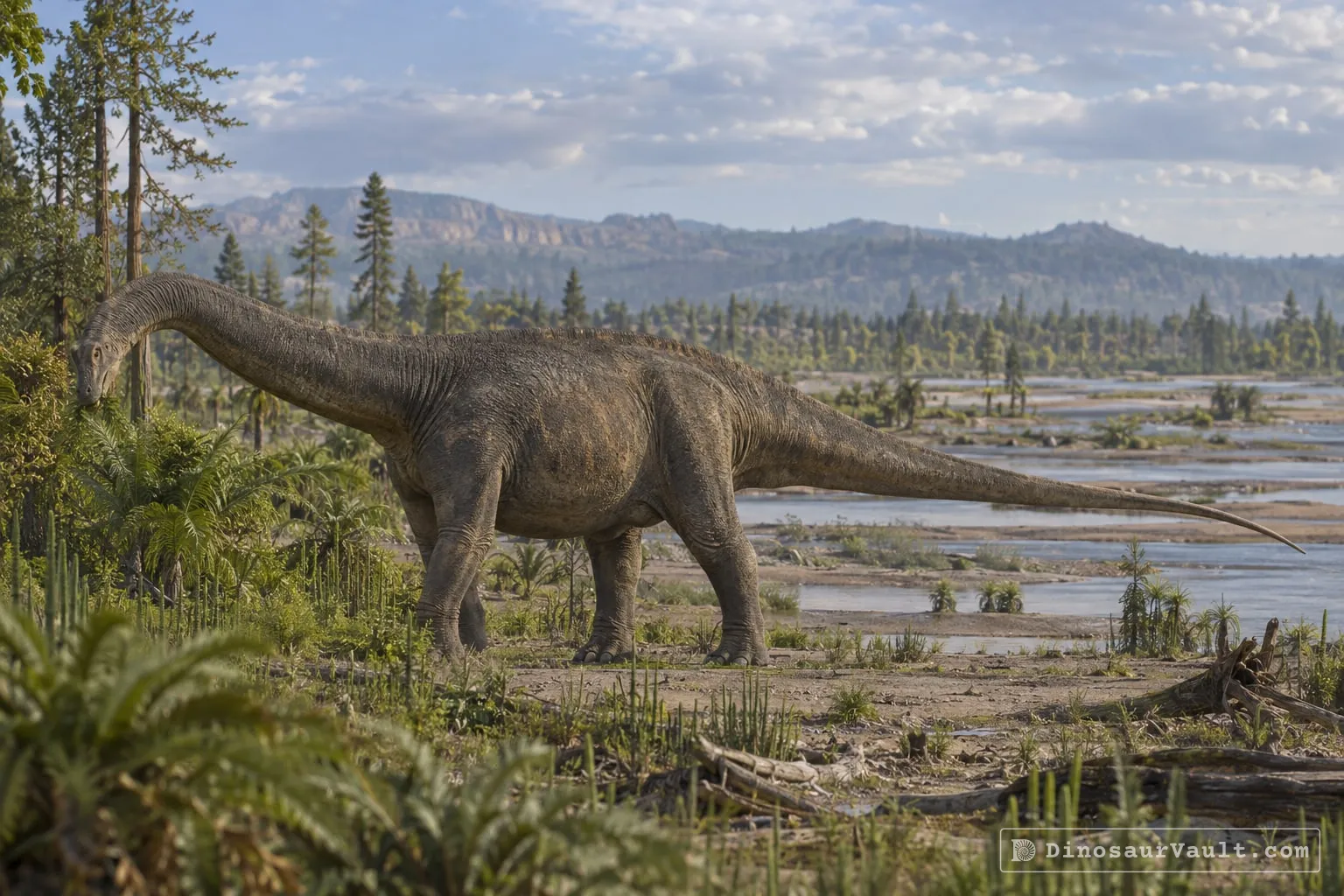


A rock formation can hold fossils laid down millions of years apart, so not every animal here met Ceratosaurus.
The evidence
The science behind Ceratosaurus
Which parts of the picture come from its own bones, and which come from its relatives.
From its own fossils
- A nearly complete skeleton shows a deep skull, long blade-shaped teeth, a narrow snout horn and smaller horns above the eyes.
- Its short hands had four fingers, with the outermost greatly reduced.
- Small bony plates preserved with the skeleton formed a row along the middle of the back.
Borrowed from relatives
- Most of the body is known from its own bones.
- Lips and scaly skin are inferred by comparison with other theropods, including Carnotaurus.
Still unknown
- Its color.
- How the horns changed as it grew.
- The full arrangement of its bony skin plates.
Often drawn wrong
- The snout horn was a narrow blade, rather than a thick rhinoceros-like cone.
- The palms faced inward, rather than downward.
- A tall sail or several rows of large back spikes replace its small bony plates with invented structures.
Discovery timeline
- 1884Named itMarsh
- 2003Fossil sitesAntunes & Mateus
- 2008Family treeCarrano & Sampson
- 2016Full descriptionCarrano & Choiniere
- 2025Growing upSombathy, O'Connor & D'Emic
Key papers
The research behind what we know of Ceratosaurus
Named it
Named the horned meat eater from a nearly complete skeleton found in the Morrison Formation.
Principal characters of American Jurassic dinosaurs; Part VIII, The order Theropoda. American Journal of Science s3-27: 329-340
Read the paper : Principal characters of American Jurassic dinosaurs; Part VIII, The order Theropoda (opens in a new tab)Fossil sites
Reviewed dinosaur finds in Portugal, including Ceratosaurus, showing that the genus also occurred across the Atlantic from its American localities.
Dinosaurs of Portugal. Comptes Rendus Palevol 2: 77-95
Read the paper : Dinosaurs of Portugal (opens in a new tab)Family tree
Compared bones across the family and placed Ceratosaurus outside the branch containing the specialized abelisaurids.
The Phylogeny of Ceratosauria (Dinosauria: Theropoda). Journal of Systematic Palaeontology 6: 183-236
Read the paper : The Phylogeny of Ceratosauria (Dinosauria: Theropoda) (opens in a new tab)Full description
Restudied the forearm and hand, documenting four fingers and a greatly reduced outer finger.
New information on the forearm and manus ofCeratosaurus nasicornisMarsh, 1884 (Dinosauria, Theropoda), with implications for theropod forelimb evolution. Journal of Vertebrate Paleontology 36: e1054497
Read the paper : New information on the forearm and manus ofCeratosaurus nasicornisMarsh, 1884 (Dinosauria, Theropoda), with implications for theropod forelimb evolution (opens in a new tab)Growing up
Microscopic bone structure shows unusually rapid growth compared with later ceratosaurs and reveals how its bony skin plates developed.
Osteohistology of the unusually fast‐growing theropod dinosaur Ceratosaurus. Journal of Anatomy 247: 765-789
Read the paper : Osteohistology of the unusually fast‐growing theropod dinosaur Ceratosaurus (opens in a new tab)
Close relatives
Other members of Ceratosauria


Sources: Wikidata