Stegosaurus
STEG-oh-SORE-us
"roof lizard"
- Lived
- 155 to 143 million years ago, Late Jurassic
- Diet
- Herbivore
- Length
- about 9 m (30 ft)
- Weight
- about 5 metric tons (5.5 short tons)
- Group
- Stegosaurs, Stegosauridae
- Found in
- United States
- Named by
- Marsh 1877
Size comparison
To scale
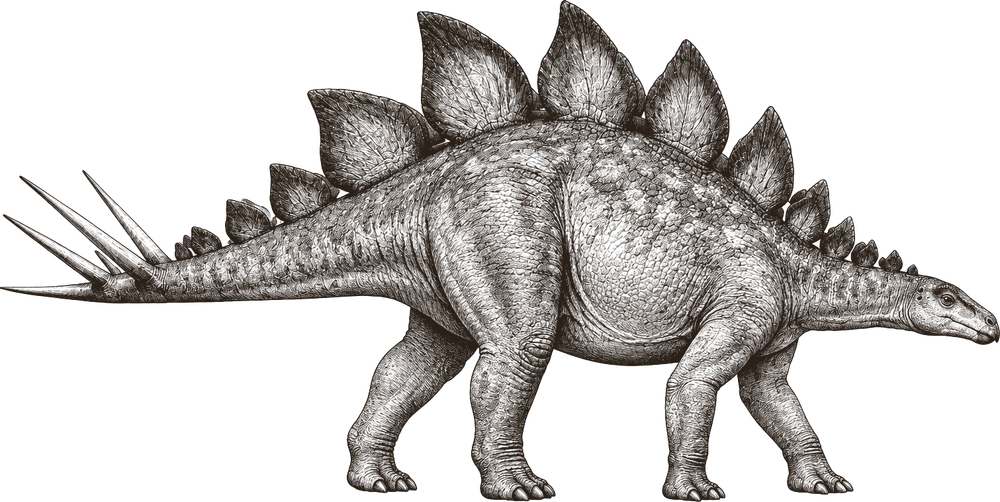


Scale in meters
Where its fossils were found
The evidence
Today

150 million years ago
Also reported from China and Portugal.
Habitat
Rivers crossed the Morrison floodplain, with conifers, ferns and horsetails growing around wetter ground. Diplodocus, Camptosaurus and Dryosaurus shared its landscape.
A Dinosaur Vault film
Who Punched a Hole Through This Dinosaur Bone?
An Allosaurus tail bone with a hole straight through it, a Stegosaurus tail spike that fits the wound, and a bitten neck plate that tells the other half of the fight.
Subscribe on YouTubeField notes
About Stegosaurus
What it was like
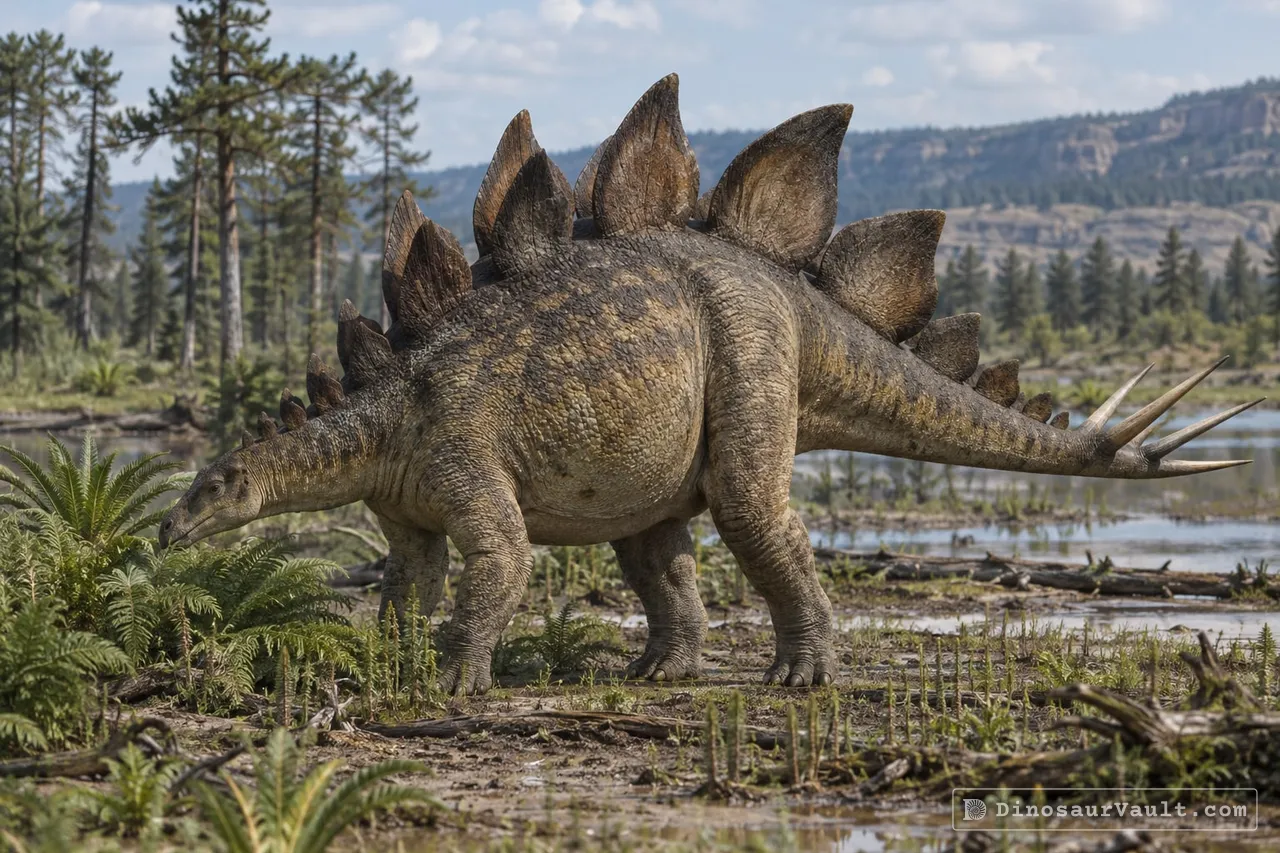
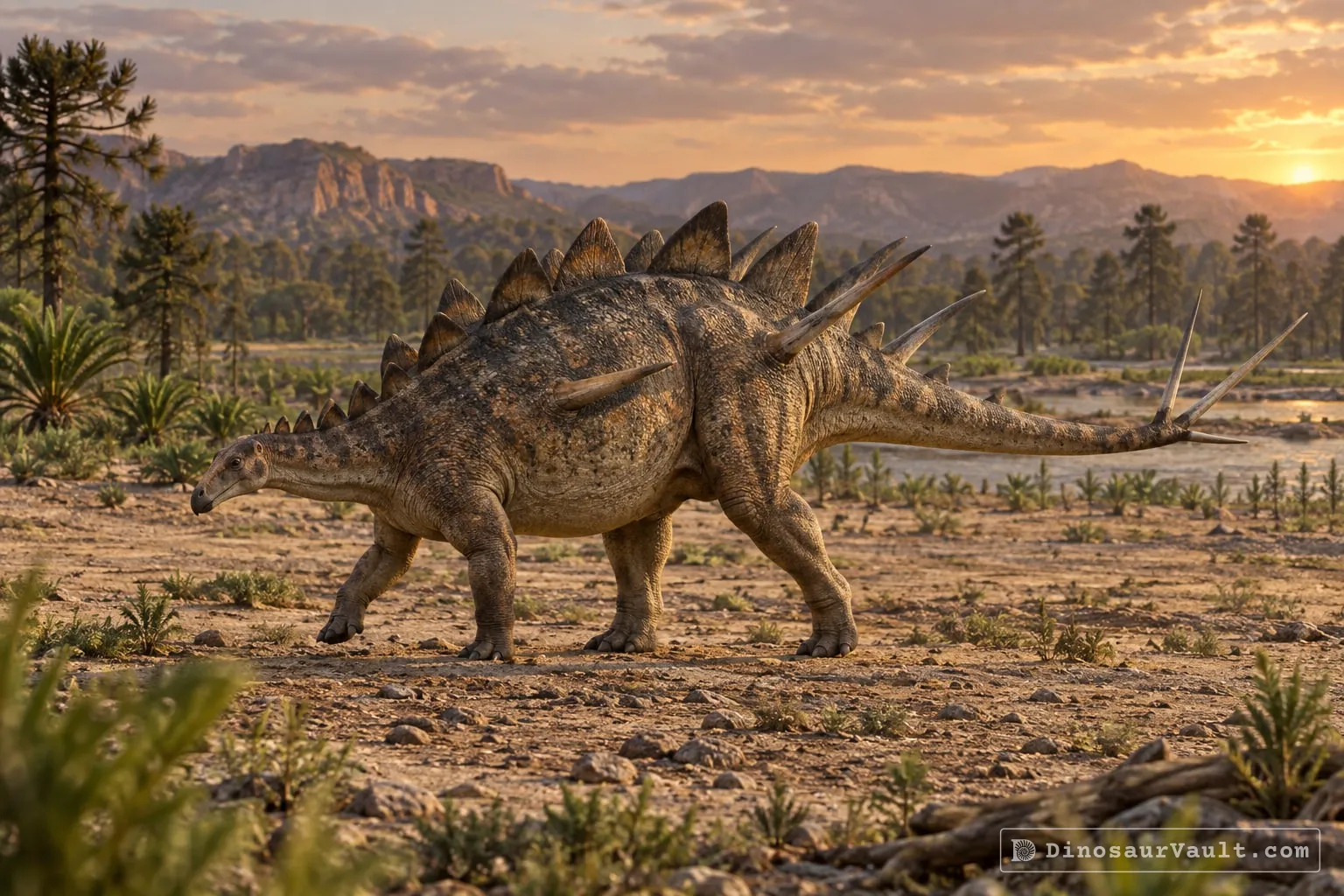
Stegosaurus walked on four legs and carried a row of large, upright plates along its back, ending in sharp spikes near the tip of its tail. It grew up to about 9 meters (30 feet) long and could weigh around 5 metric tons.
It had a small head and short jaws, so it most likely browsed on low plants rather than reaching into trees. The tail spikes were probably used for defense, while the plates may have been for display or for controlling body temperature.
Its world
Stegosaurus lived from about 155 to 143 million years ago, spanning the Late Jurassic and Early Cretaceous, in what is now the western United States and Portugal. Its bones come from the Morrison Formation, alongside sauropods like Brachiosaurus, Brontosaurus, Diplodocus, and Apatosaurus.
Allosaurus lived in the same habitat and may have preyed on Stegosaurus, at least on younger or weaker animals.
How it was found
Marsh named Stegosaurus in 1877. Roughly 76 fossil finds of the genus have been recorded, though many early skeletons were incomplete, so it took years for paleontologists to work out the correct arrangement of its plates.
Field gallery
More views of Stegosaurus
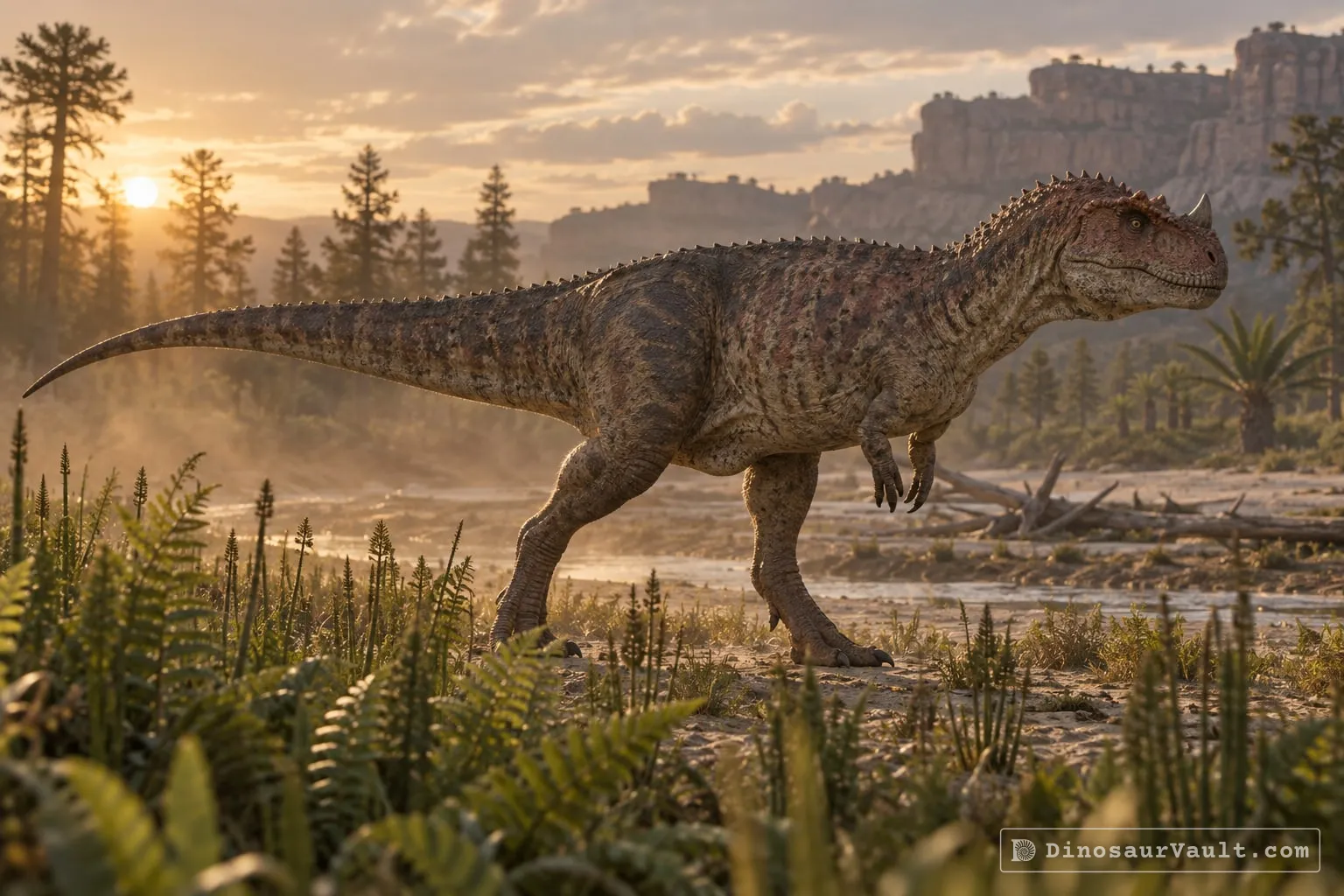
Scenes reconstructed from the available fossil evidence.
1 of 7
Lived alongside
Found in the same rock formations
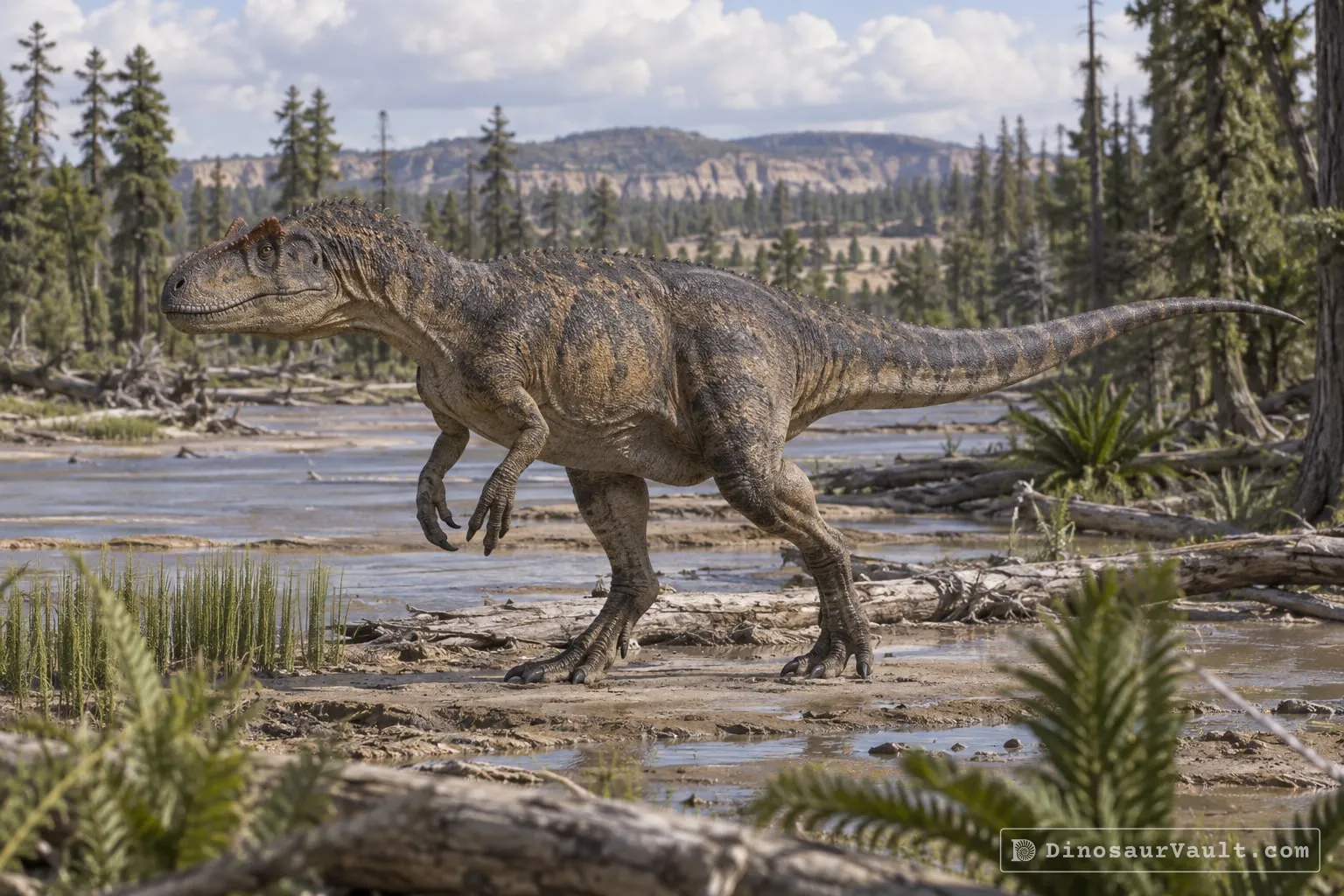
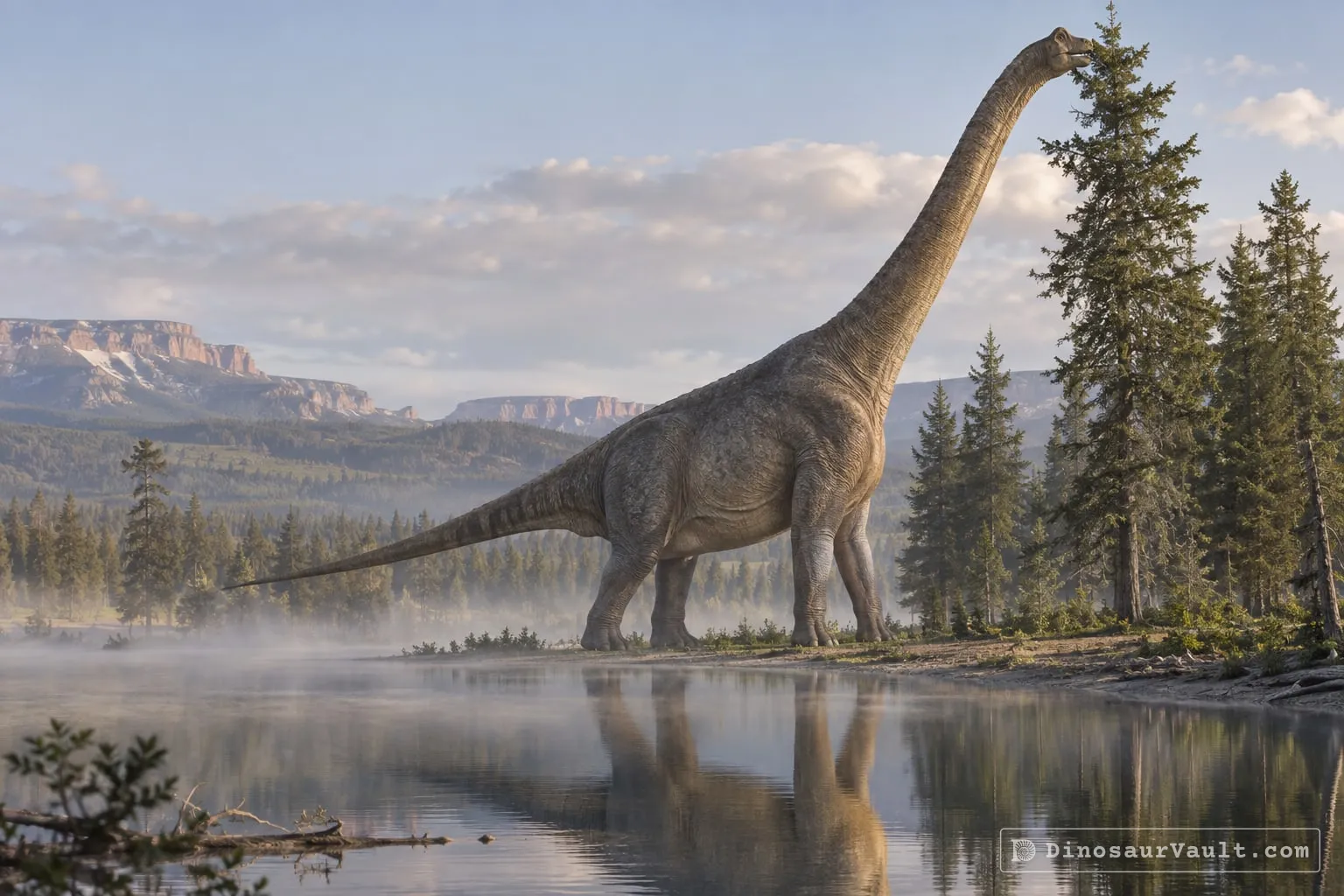
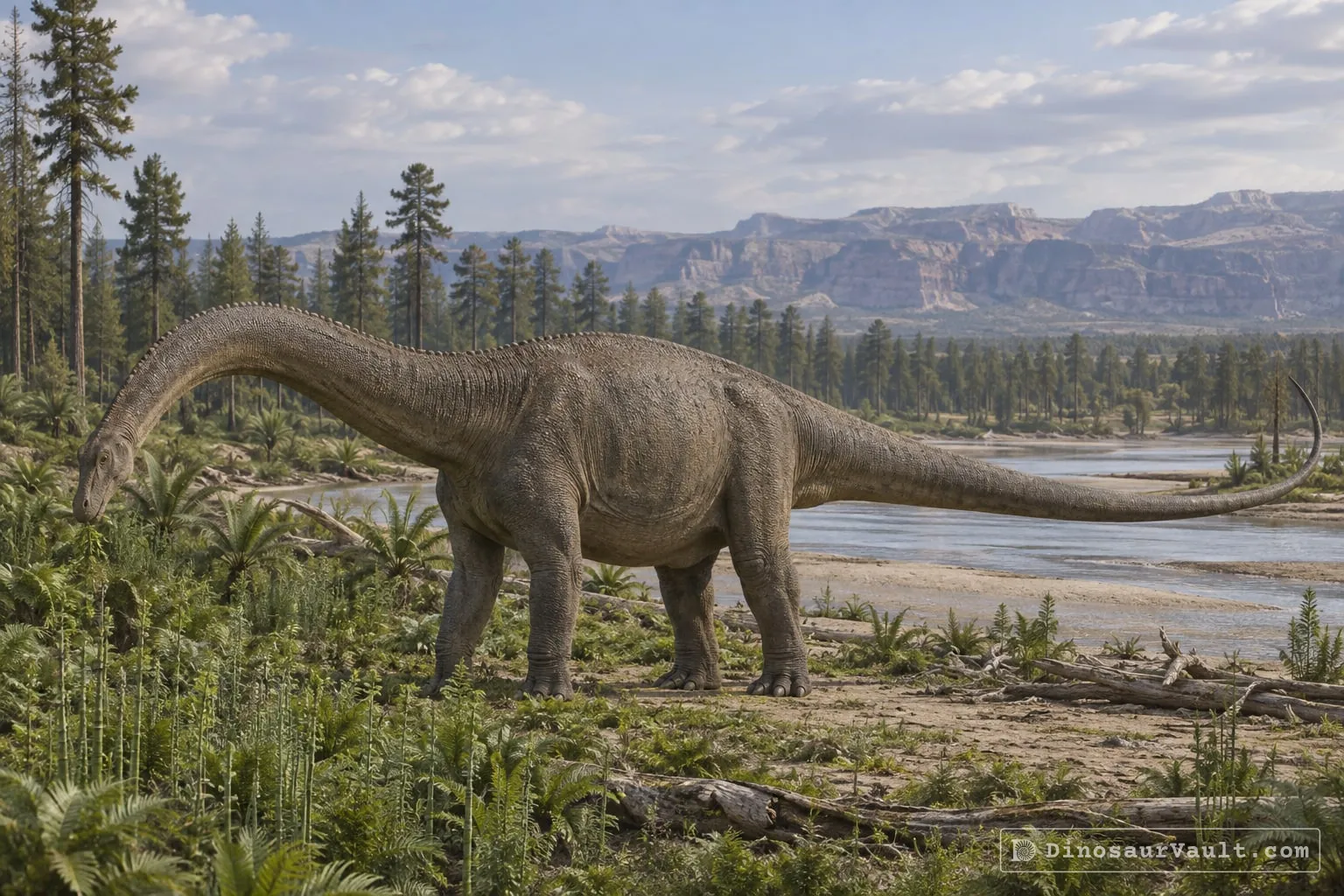
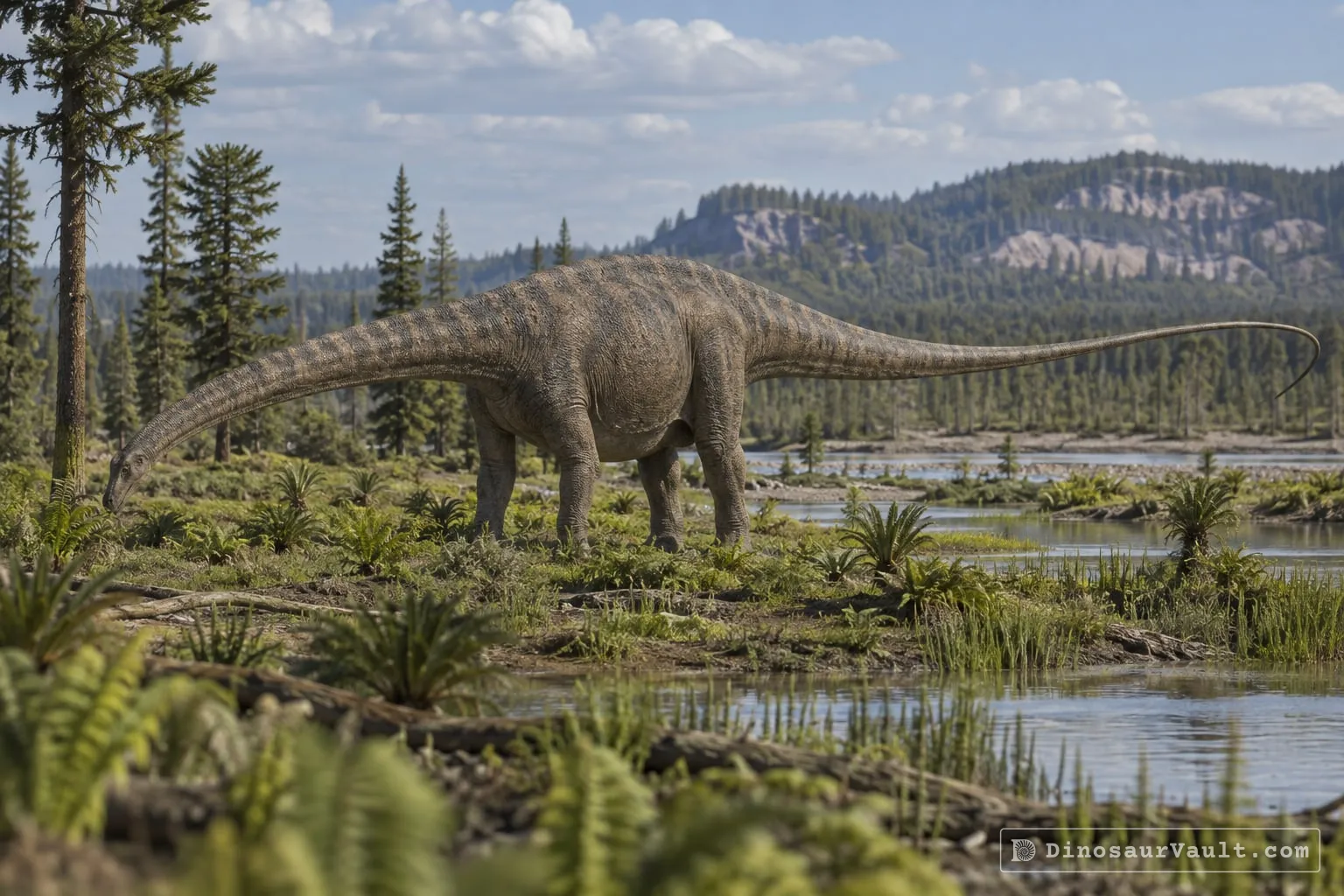
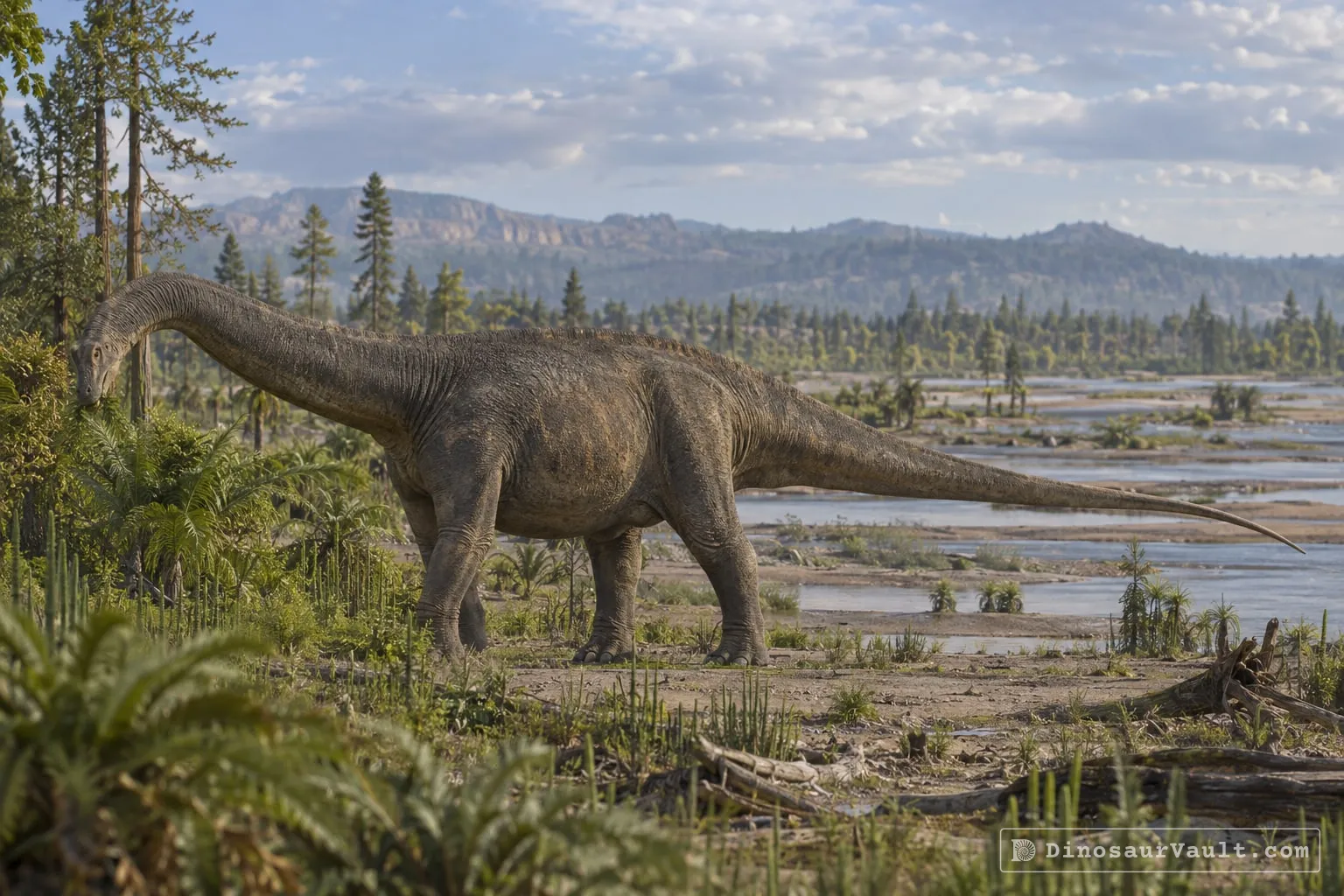
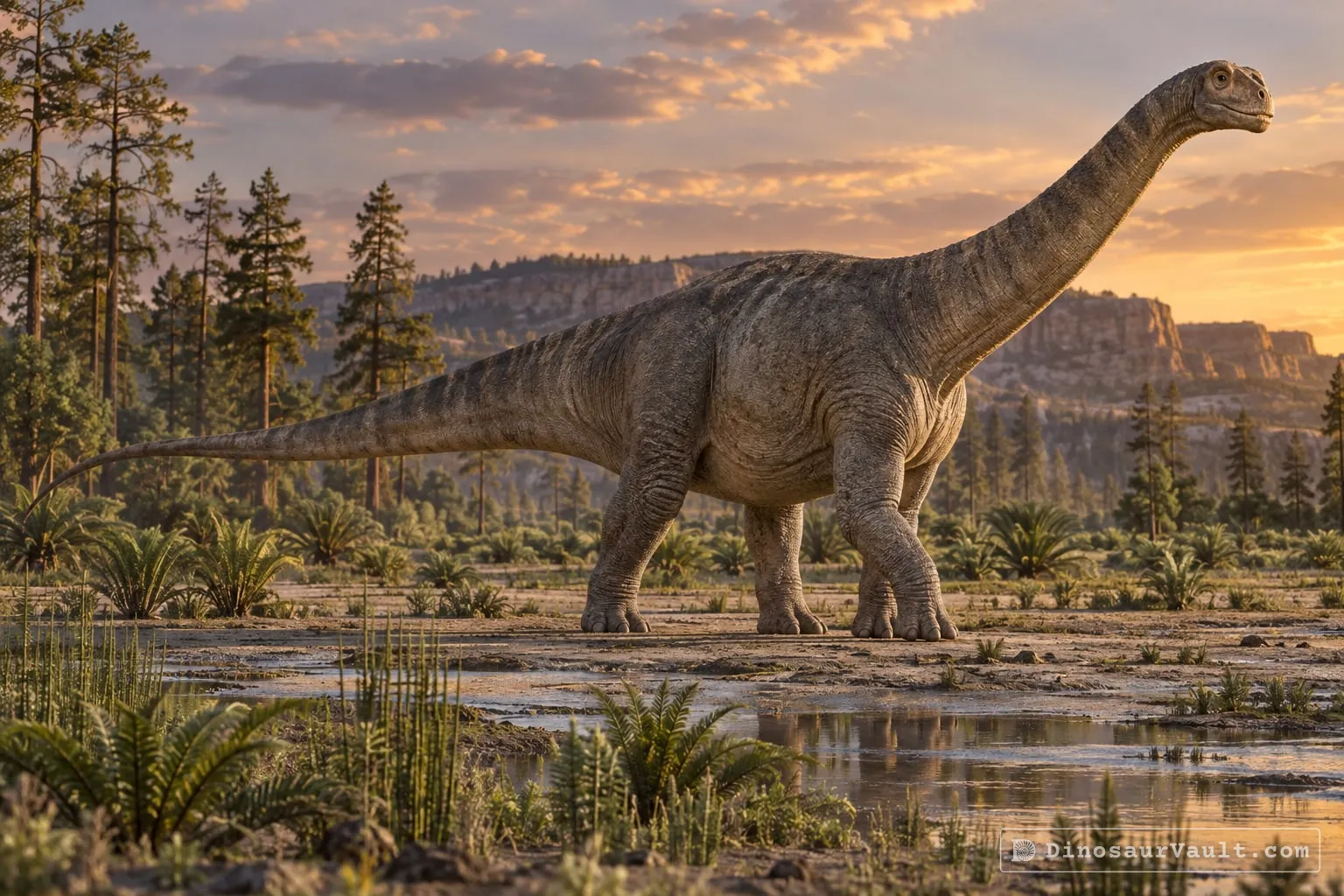


A rock formation can hold fossils laid down millions of years apart, so not every animal here met Stegosaurus.
The evidence
The science behind Stegosaurus
Which parts of the picture come from its own bones, and which come from its relatives.
From its own fossils
- Nearly complete skeletons show a small head, arched back and hindlegs longer than the forelegs.
- An articulated skeleton preserves upright plates in staggered rows, with outward-pointing spikes at the tail tip.
- Thin sections of plates and spikes show their internal bone changing as the animal grew.
Borrowed from relatives
- Almost the whole body is known from its own bones, so little of its basic shape needs to be borrowed.
- The outer coverings of its plates and spikes follow comparisons with other armored dinosaurs and living animals with horn coverings.
Still unknown
- Its color and whether it lived in groups.
- The complete plate outlines and exact species identity of some young specimens.
- How much the plates served display or helped control body temperature.
Often drawn wrong
- The plates stood in staggered rows rather than matching pairs directly opposite each other.
- Its tail ended in spikes rather than a club or extra rows of armor.
- Its hindquarters stood higher than its shoulders, unlike a body with equally long front and back legs.
Discovery timeline
- 1877Named itMarsh
- 1982Growing upGalton
- 2011Growing upHAYASHI et al.
- 2015Full descriptionMaidment, Brassey & Barrett
- 2015PostureBrassey, Maidment & Barrett
Key papers
The research behind what we know of Stegosaurus
Named it
Named Stegosaurus from fragmentary bones and a plate, beginning the long effort to work out its armor and posture.
A new order of extinct Reptilia (Stegosauria) from the Jurassic of the Rocky Mountains. American Journal of Science s3-14: 513-514
Read the paper : A new order of extinct Reptilia (Stegosauria) from the Jurassic of the Rocky Mountains (opens in a new tab)Growing up
Described young Stegosaurus bones and compared their proportions with those of adults.
Juveniles of the stegosaurian dinosaur Stegosaurus from the Upper Jurassic of North America. Journal of Vertebrate Paleontology 2: 47-62
Read the paper : Juveniles of the stegosaurian dinosaur Stegosaurus from the Upper Jurassic of North America (opens in a new tab)Growing up
Examined bone inside plates and spikes, tracing changes in their structure from young animals to adults.
Ontogenetic histology of Stegosaurus plates and spikes. Palaeontology 55: 145-161
Read the paper : Ontogenetic histology of Stegosaurus plates and spikes (opens in a new tab)Full description
Described an exceptionally complete skeleton, giving a detailed account of the backbone, limbs, plates and tail spikes.
The Postcranial Skeleton of an Exceptionally Complete Individual of the Plated Dinosaur Stegosaurus stenops (Dinosauria: Thyreophora) from the Upper Jurassic Morrison Formation of Wyoming, U.S.A. PLOS ONE 10: e0138352
Read the paper : The Postcranial Skeleton of an Exceptionally Complete Individual of the Plated Dinosaur Stegosaurus stenops (Dinosauria: Thyreophora) from the Upper Jurassic Morrison Formation of Wyoming, U.S.A. (opens in a new tab)Posture
Compared body-weight estimates from a digital skeleton and limb bones, showing why the animal's growth stage matters when estimating its weight.
Body mass estimates of an exceptionally complete Stegosaurus (Ornithischia: Thyreophora): comparing volumetric and linear bivariate mass estimation methods. Biology Letters 11
Read the paper : Body mass estimates of an exceptionally complete Stegosaurus (Ornithischia: Thyreophora): comparing volumetric and linear bivariate mass estimation methods (opens in a new tab)
Close relatives
Other members of Stegosauridae


Sources: Wikidata