Allosaurus
AL-oh-SORE-us
"different lizard"
- Lived
- 155 to 143 million years ago, Late Jurassic
- Diet
- Carnivore
- Length
- about 9.5 m (31 ft)
- Weight
- about 2 metric tons (2.2 short tons)
- Group
- Theropods
- Found in
- United States and Portugal
- Named by
- Marsh 1877
Size comparison
To scale
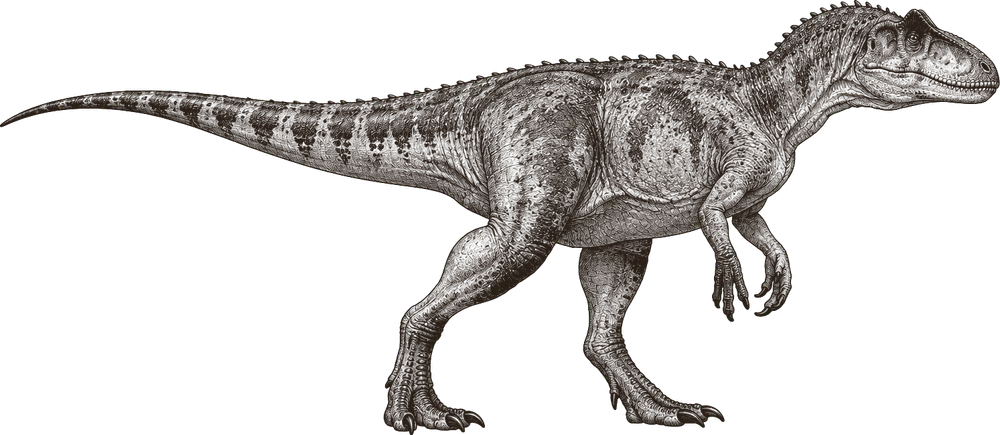


Scale in meters
Where its fossils were found
The evidence
Today

150 million years ago
Also reported from Germany.
Habitat
Rivers crossed broad floodplains in the Morrison Formation landscape, with conifers, ferns and horsetails. Stegosaurus, Diplodocus and Camptosaurus lived in this world.
A Dinosaur Vault film
Who Punched a Hole Through This Dinosaur Bone?
An Allosaurus tail bone with a hole straight through it, a Stegosaurus tail spike that fits the wound, and a bitten neck plate that tells the other half of the fight.
Subscribe on YouTubeField notes
About Allosaurus
What it was like
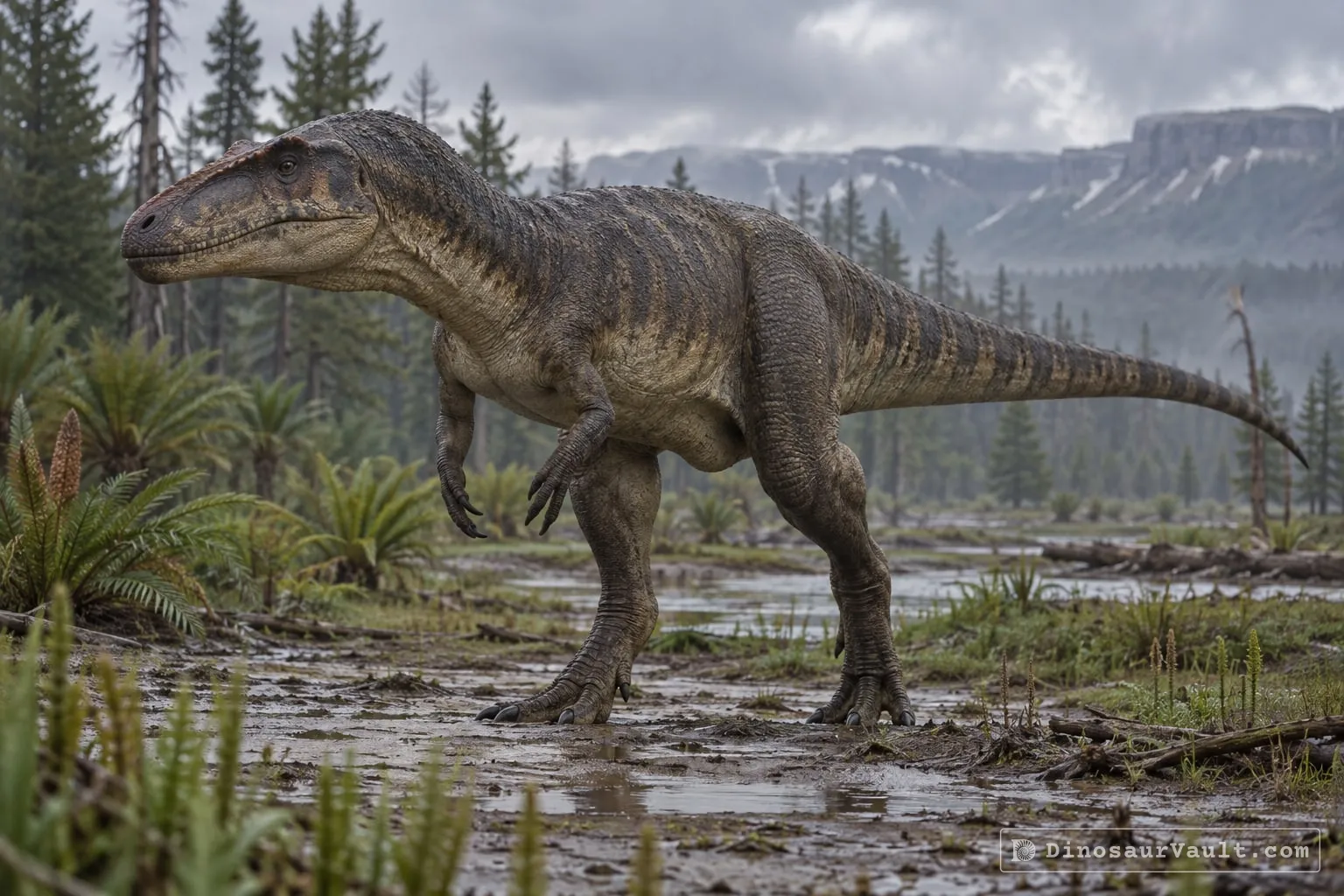
Allosaurus was a large, agile hunter with a light, strong skull lined with rows of sharp, serrated teeth. It grew up to about 9.5 meters (31 feet) long and could weigh around 2 metric tons. Its arms were small next to its powerful legs but ended in sharp, curved claws.
It probably preyed on large plant eaters such as stegosaurs and sauropods. Scientists still debate whether Allosaurus hunted alone or sometimes gathered around the same carcass or prey.
Its world
Allosaurus lived from about 155 to 143 million years ago, spanning the Late Jurassic and Early Cretaceous, in what is now the western United States and Portugal. Its bones come mainly from the Morrison Formation, alongside plant eaters like Stegosaurus, Camarasaurus, Brachiosaurus, and Diplodocus, and other hunters such as Ceratosaurus and Torvosaurus. Allosaurus was the most common large predator in this habitat, so its bones turn up wherever the Morrison rock is exposed.
How it was found
Marsh named Allosaurus in 1877. It is one of the best-known Jurassic predators, with about 137 fossil finds recorded, giving paleontologists an unusually full picture of how it looked and moved. Few other dinosaurs from this period are known from so many separate skeletons.
Field gallery
More views of Allosaurus
Scenes reconstructed from the available fossil evidence.
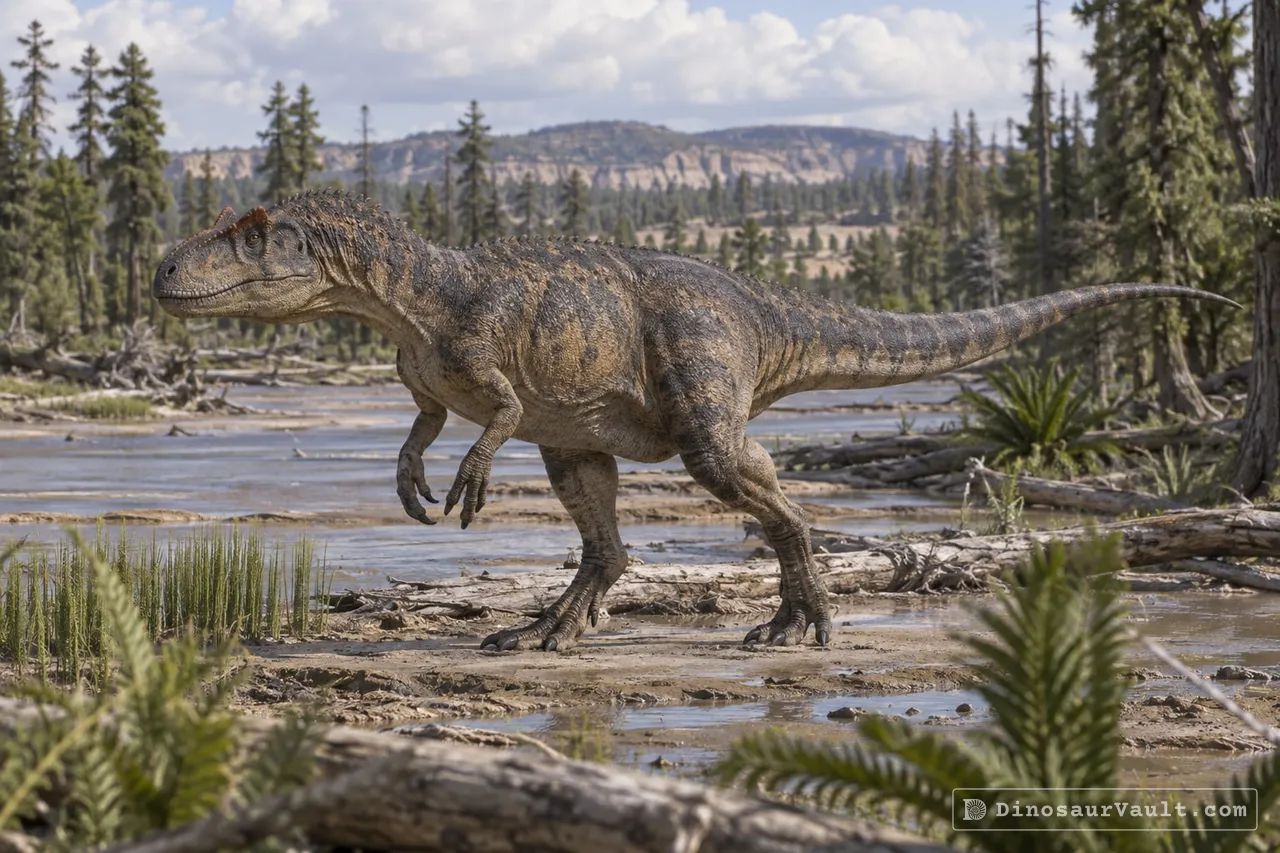
1 of 7
Lived alongside
Found in the same rock formations
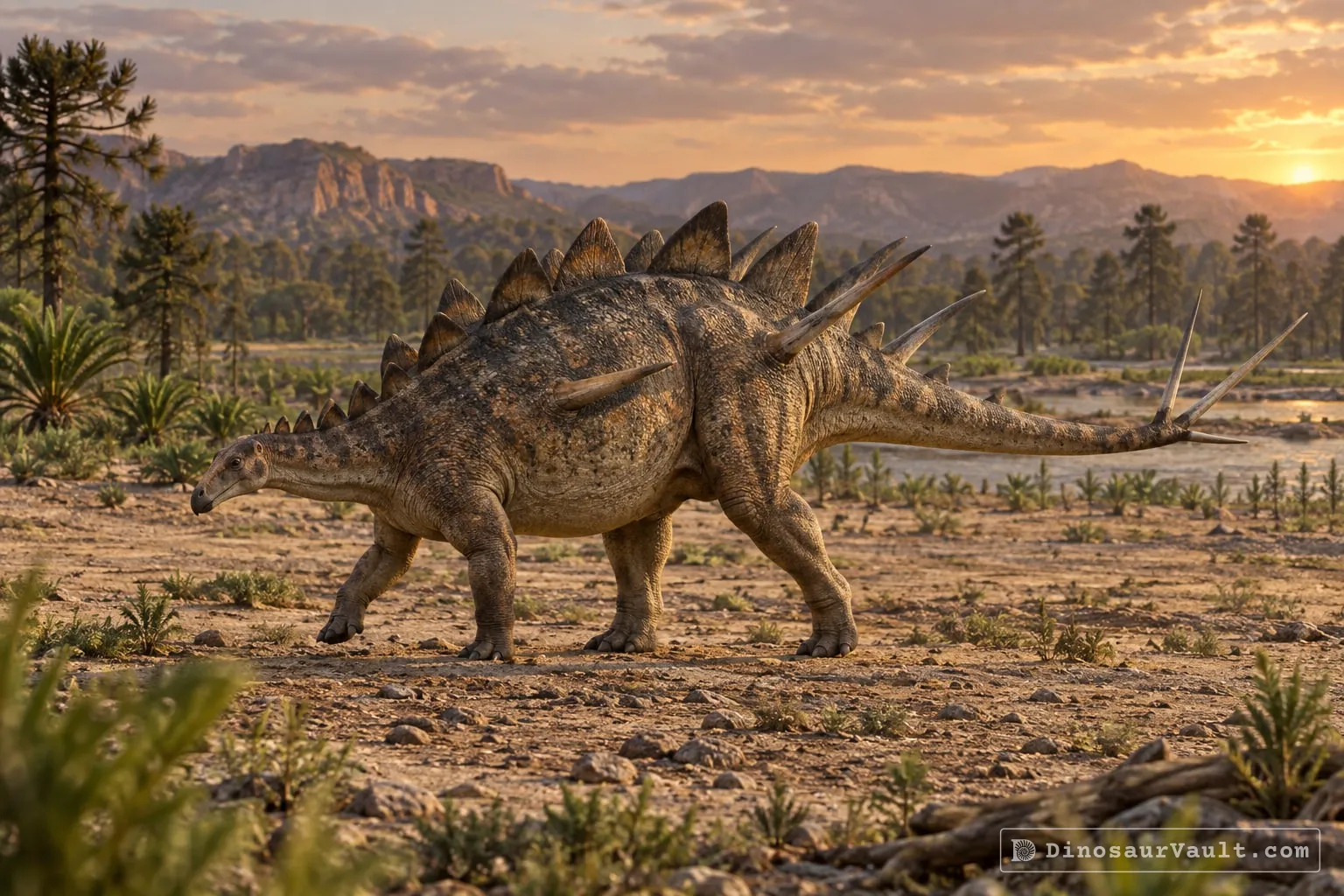
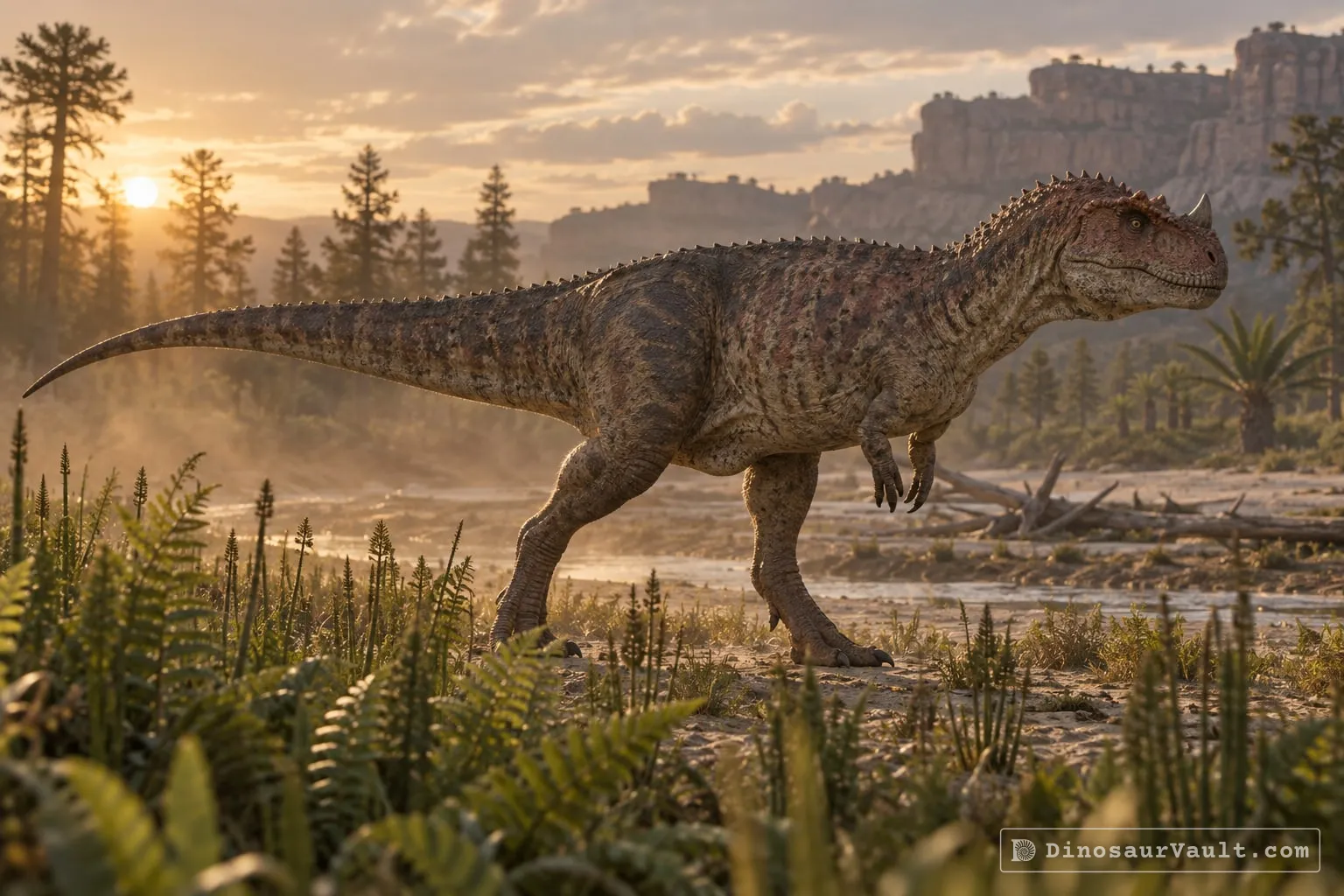
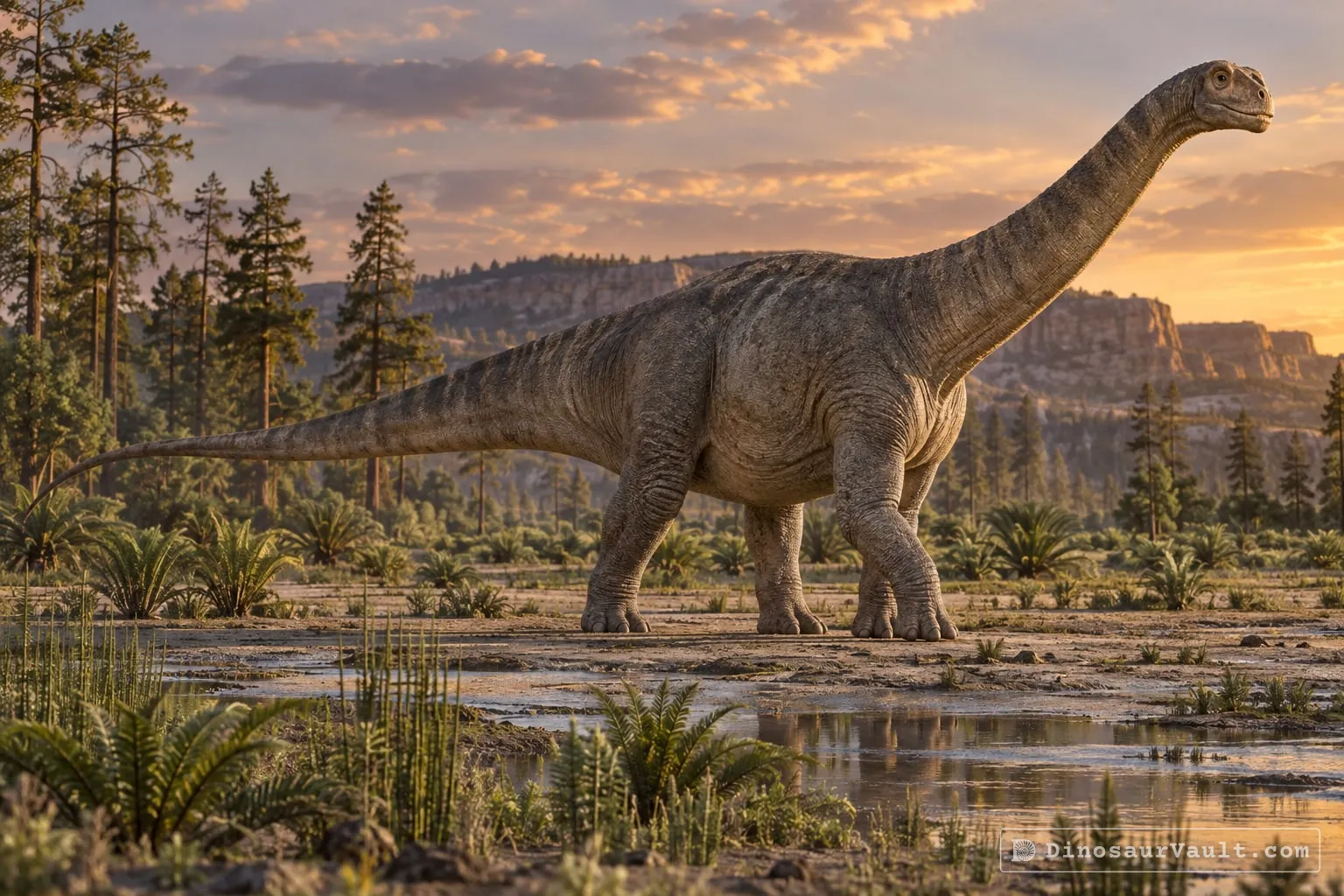
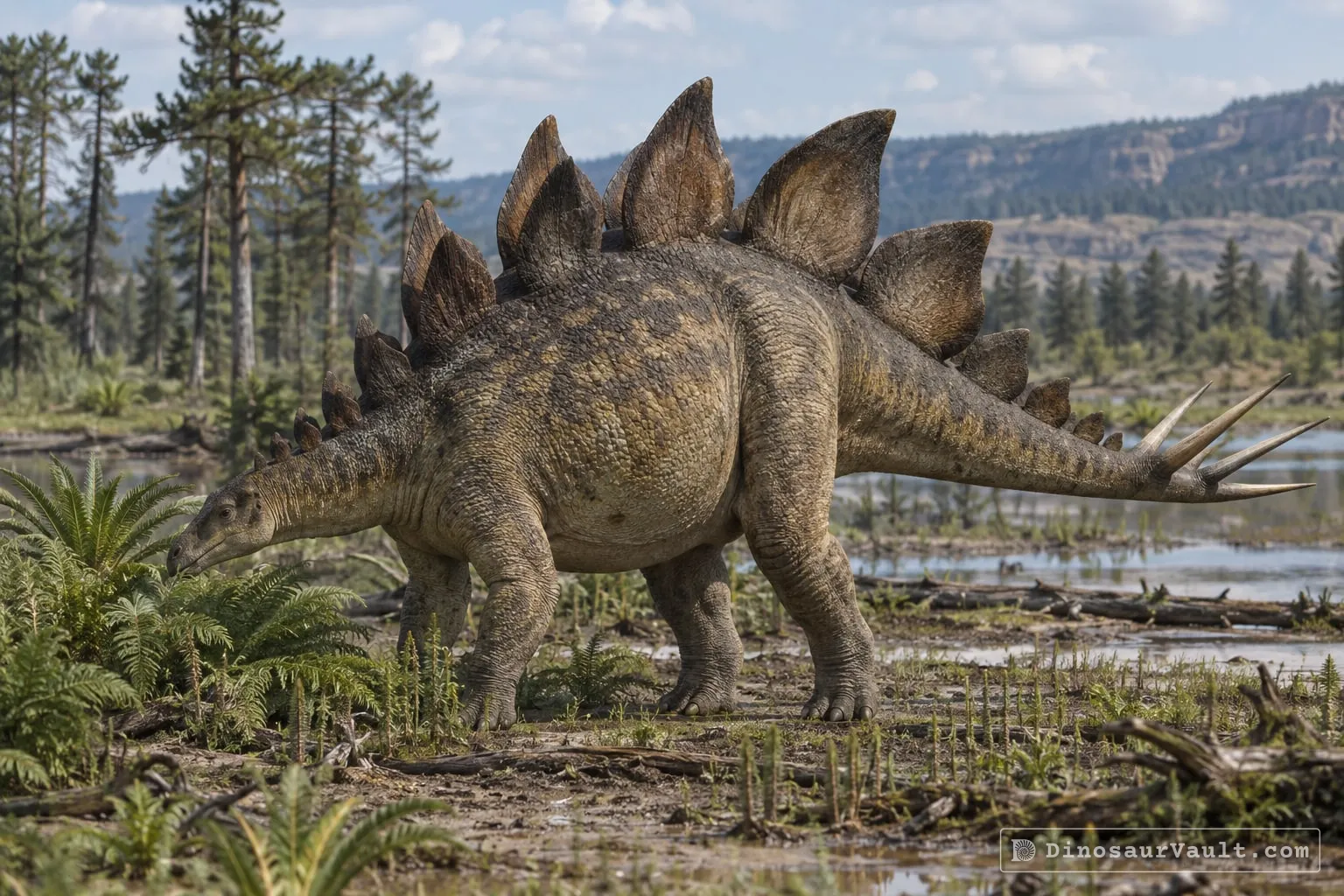
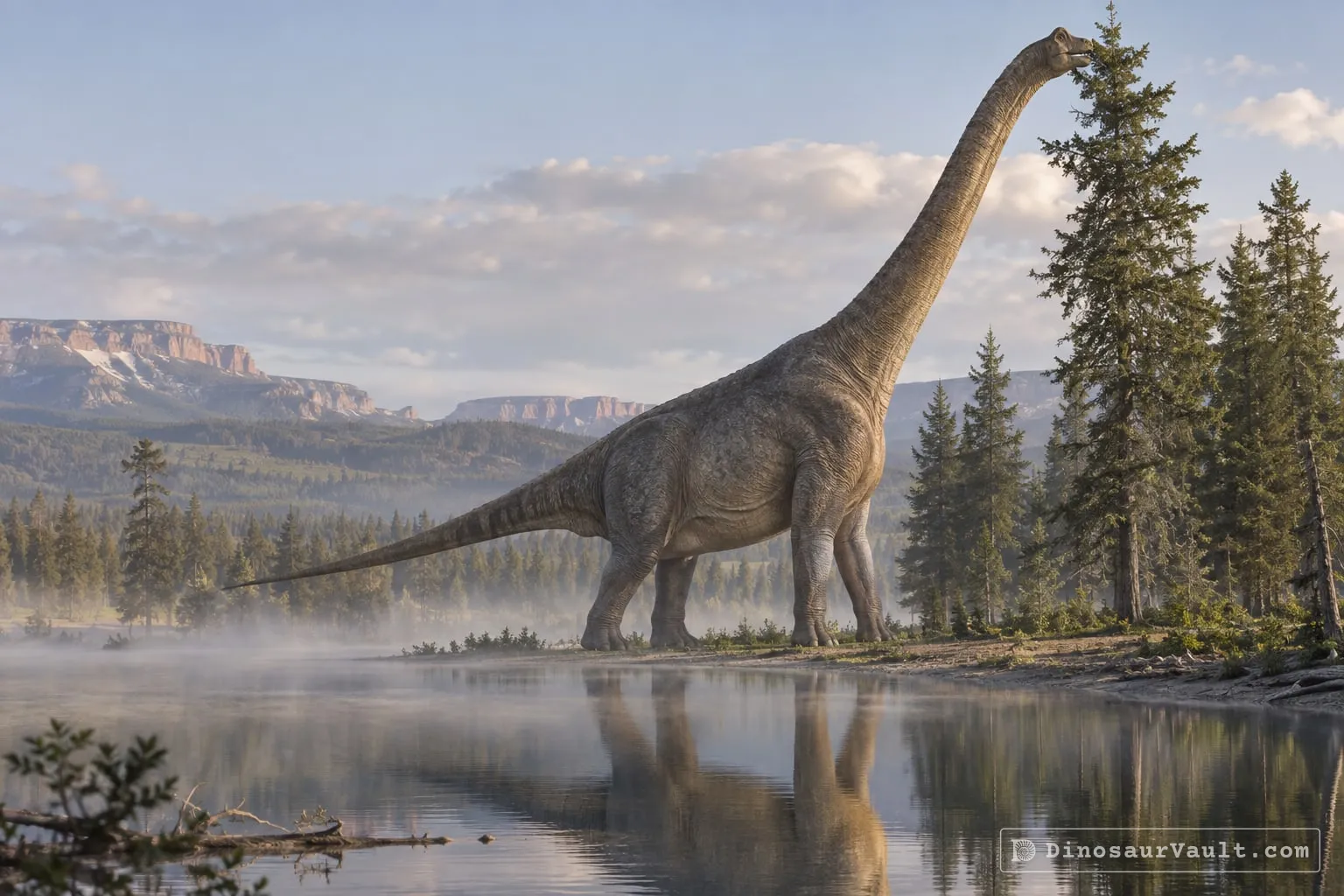
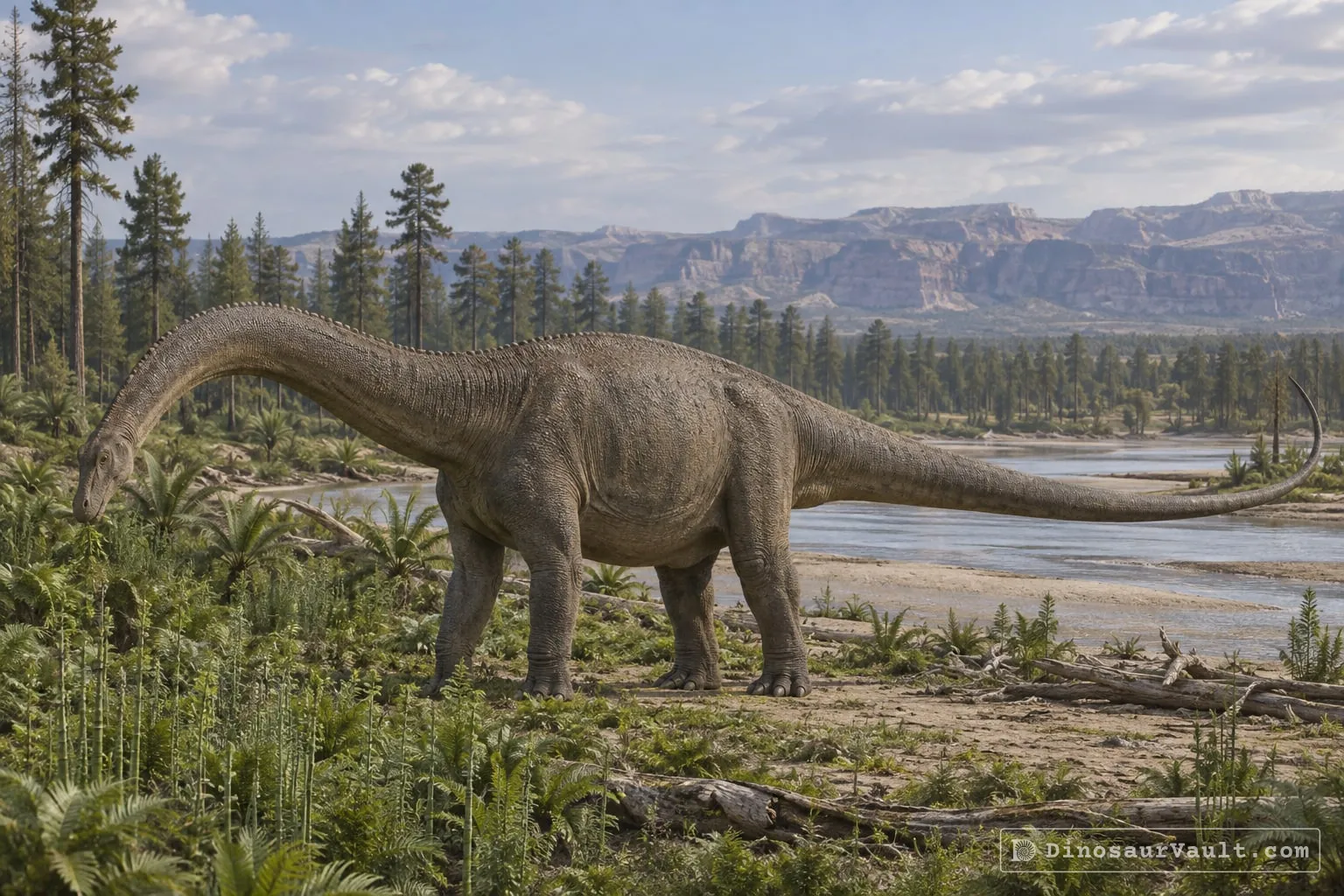
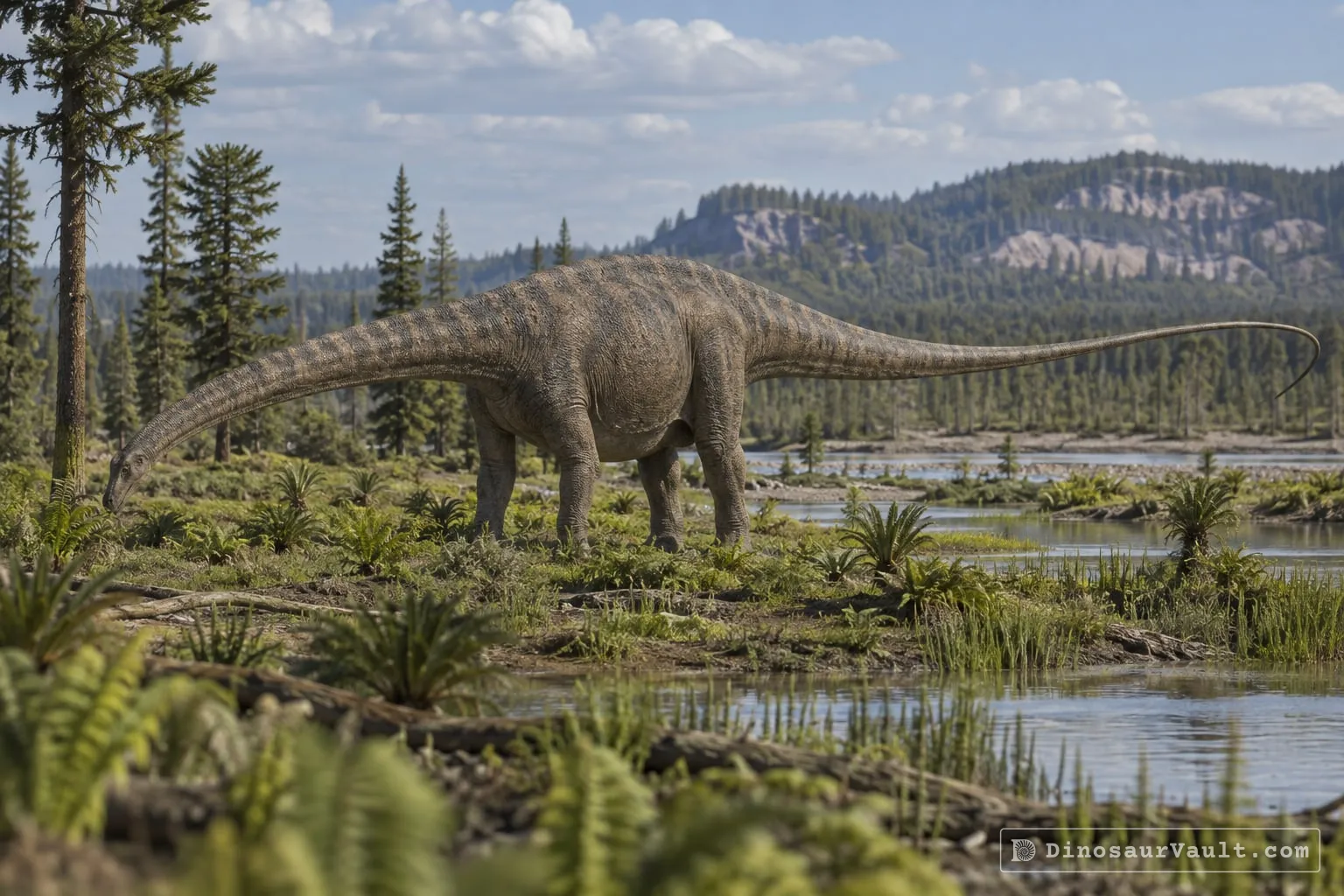


A rock formation can hold fossils laid down millions of years apart, so not every animal here met Allosaurus.
The evidence
The science behind Allosaurus
Which parts of the picture come from its own bones, and which come from its relatives.
From its own fossils
- Many skeletons preserve a light, deep skull with serrated teeth and low bony crests above the eyes.
- Its arms ended in grasping hands with three clawed fingers, and a long tail balanced the body.
- Young animals had relatively longer lower legs than adults.
Borrowed from relatives
- Almost the whole skeleton is known from its own bones.
- Lips covering the teeth are inferred from comparisons with other theropods, including Tyrannosaurus.
Still unknown
- Its color and the full extent of its skin covering.
- Whether it hunted alone or cooperated with others.
- The complete skull and body proportions of young Allosaurus fragilis.
Often drawn wrong
- The crests sat above the eyes, rather than forming a tall horn on the nose.
- Its palms faced inward, rather than downward.
- Its hands had three clawed fingers, rather than the pair seen in Tyrannosaurus.
Discovery timeline
- 1877Named itMarsh
- 2001How it fedRayfield et al.
- 2005Growing upRauhut & Fechner
- 2013How it fedSnively et al.
- 2020SkullChure & Loewen
- 2023Close relativeCullen et al.
Key papers
The research behind what we know of Allosaurus
Named it
Named Allosaurus from fragmentary bones, including vertebrae whose unusual structure inspired its name.
Notice of new dinosaurian reptiles from the Jurassic formation. American Journal of Science s3-14: 514-516
Read the paper : Notice of new dinosaurian reptiles from the Jurassic formation (opens in a new tab)How it fed
A computer model found a skull built to withstand strong feeding loads despite relatively weak jaw muscles.
Cranial design and function in a large theropod dinosaur. Nature 409: 1033-1037
Read the paper : Cranial design and function in a large theropod dinosaur (opens in a new tab)Growing up
Described a tiny Allosaurus upper jaw from Portugal, showing that air spaces in the skull developed very early.
Early development of the facial region in a non-avian theropod dinosaur. Proceedings of the Royal Society B: Biological Sciences 272: 1179-1183
Read the paper : Early development of the facial region in a non-avian theropod dinosaur (opens in a new tab)How it fed
A moving head and neck model favored pulling flesh from carcasses with backward head movements over shaking the head sideways.
Multibody dynamics model of head and neck function in Allosaurus (Dinosauria, Theropoda). Palaeontologia electronica 16
Read the paper : Multibody dynamics model of head and neck function in Allosaurus (Dinosauria, Theropoda) (opens in a new tab)Skull
Named Allosaurus jimmadseni and described skull features that distinguish it from Allosaurus fragilis.
Cranial anatomy ofAllosaurus jimmadseni, a new species from the lower part of the Morrison Formation (Upper Jurassic) of Western North America. PeerJ 8: e7803
Read the paper : Cranial anatomy ofAllosaurus jimmadseni, a new species from the lower part of the Morrison Formation (Upper Jurassic) of Western North America (opens in a new tab)Close relative
Comparisons of theropod teeth and living reptiles support lips that covered the teeth when the mouth was closed.
Theropod dinosaur facial reconstruction and the importance of soft tissues in paleobiology. Science 379: 1348-1352
Read the paper : Theropod dinosaur facial reconstruction and the importance of soft tissues in paleobiology (opens in a new tab)
Close relatives
Other members of Allosauroidea


Sources: Wikidata