Diplodocus
dih-PLOD-uh-kus
"double beam"
Type species Diplodocus longus
- Lived
- 155 to 143 million years ago, Late Jurassic
- Diet
- Herbivore
- Length
- about 26 m (85 ft)
- Weight
- about 13 metric tons (14 short tons)
- Group
- Sauropods, Diplodocidae
- Found in
- United States
- Named by
- Marsh 1878
Size comparison
To scale
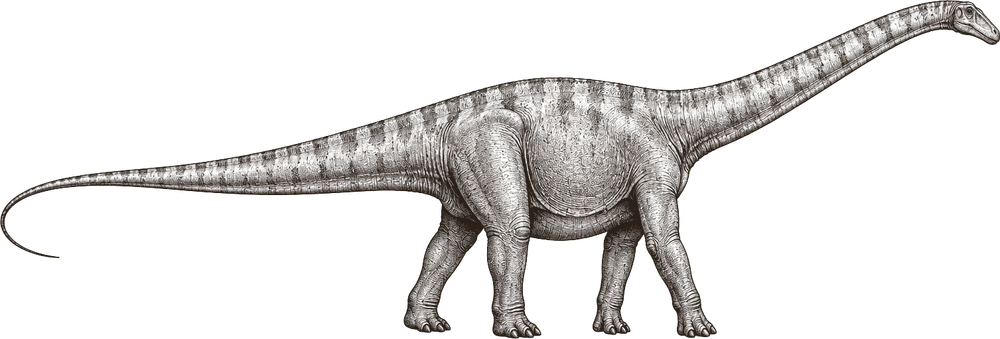


Scale in meters
Where its fossils were found
The evidence
Today

150 million years ago
Habitat
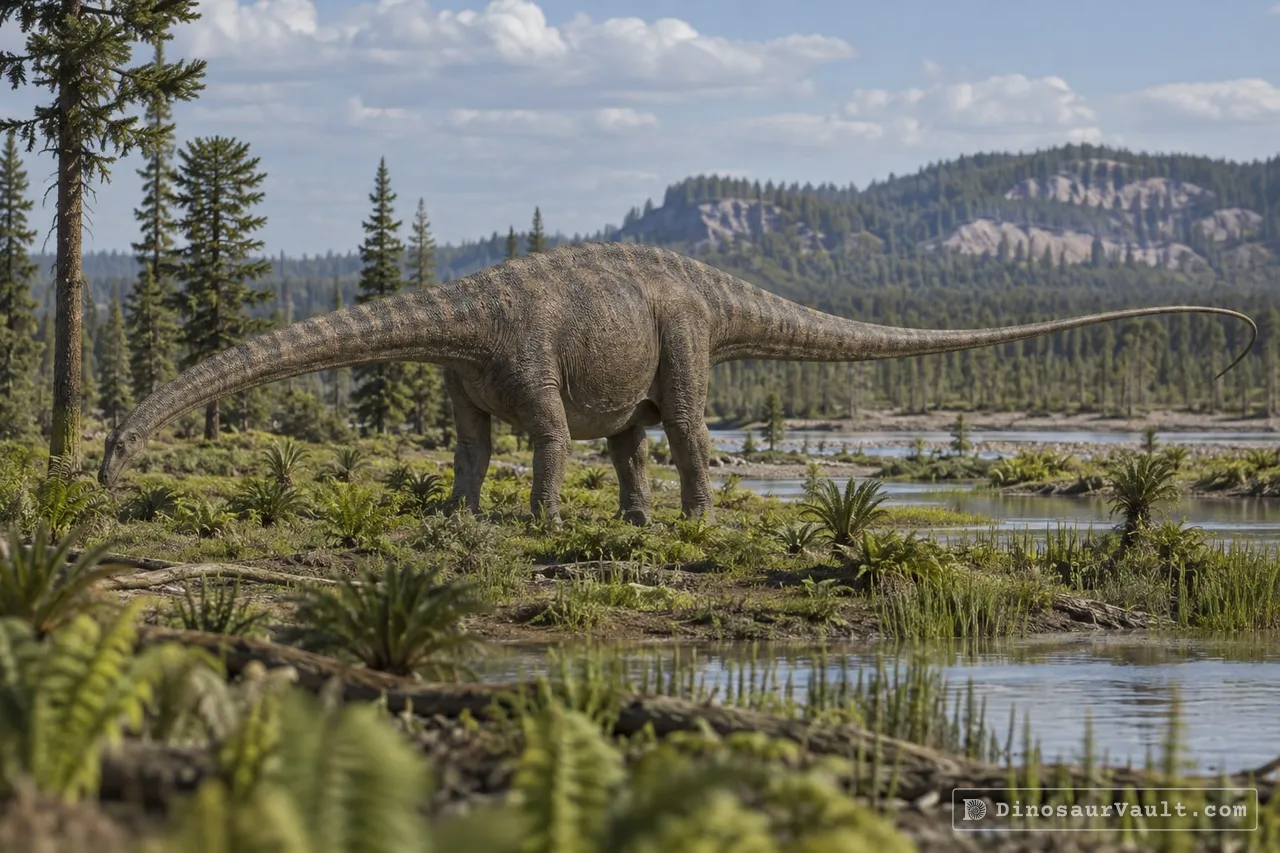
Rivers crossed broad Morrison floodplains, with conifers, ferns and horsetails. Stegosaurus, Camptosaurus and Dryosaurus lived in the same region.
Field notes
About Diplodocus
A body built for length
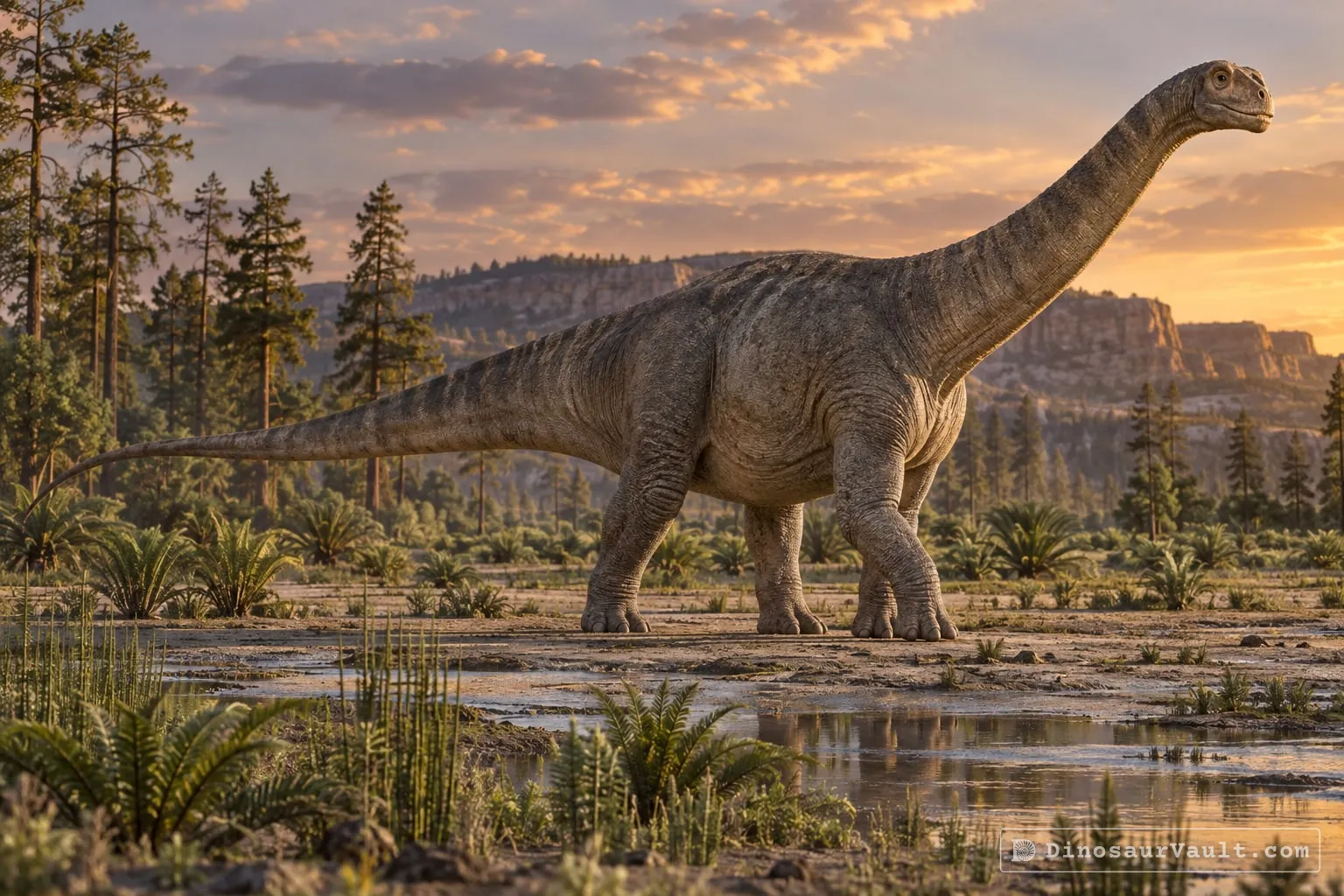
Diplodocus was one of the longest dinosaurs known, stretching about 26 meters, or roughly 85 feet, from its small head to the tip of its whip-like tail. It may have weighed around 13,000 kilograms, but most of its length was neck and tail rather than body. Its skull was long and low, with peg-shaped teeth at the front for stripping leaves off branches, and its nostrils sat high on its head. Despite its size, its bones were lightly built, with air spaces that kept the skeleton lighter than it looks.
Its world
Diplodocus lived during the Late Jurassic, between about 155 and 143 million years ago, across what is now Wyoming, Colorado, Utah, Oklahoma, Montana, and New Mexico. It is known from 62 separate fossil finds, most of them from the Morrison Formation, one of the richest fossil beds from this period. Diplodocus shared its world with fellow sauropods Brontosaurus, Apatosaurus, Brachiosaurus, and Camarasaurus, the armored Stegosaurus, and predators such as Allosaurus, Ceratosaurus, and Torvosaurus.
How it was found
Marsh named Diplodocus in 1878, taking the name from the double-beamed chevron bones under its tail. The type species is Diplodocus longus. With dozens of fossil finds to work from, Diplodocus is among the best-studied sauropods known today.
Field gallery
More views of Diplodocus
Scenes reconstructed from the available fossil evidence.
1 of 7
Lived alongside
Found in the same rock formations
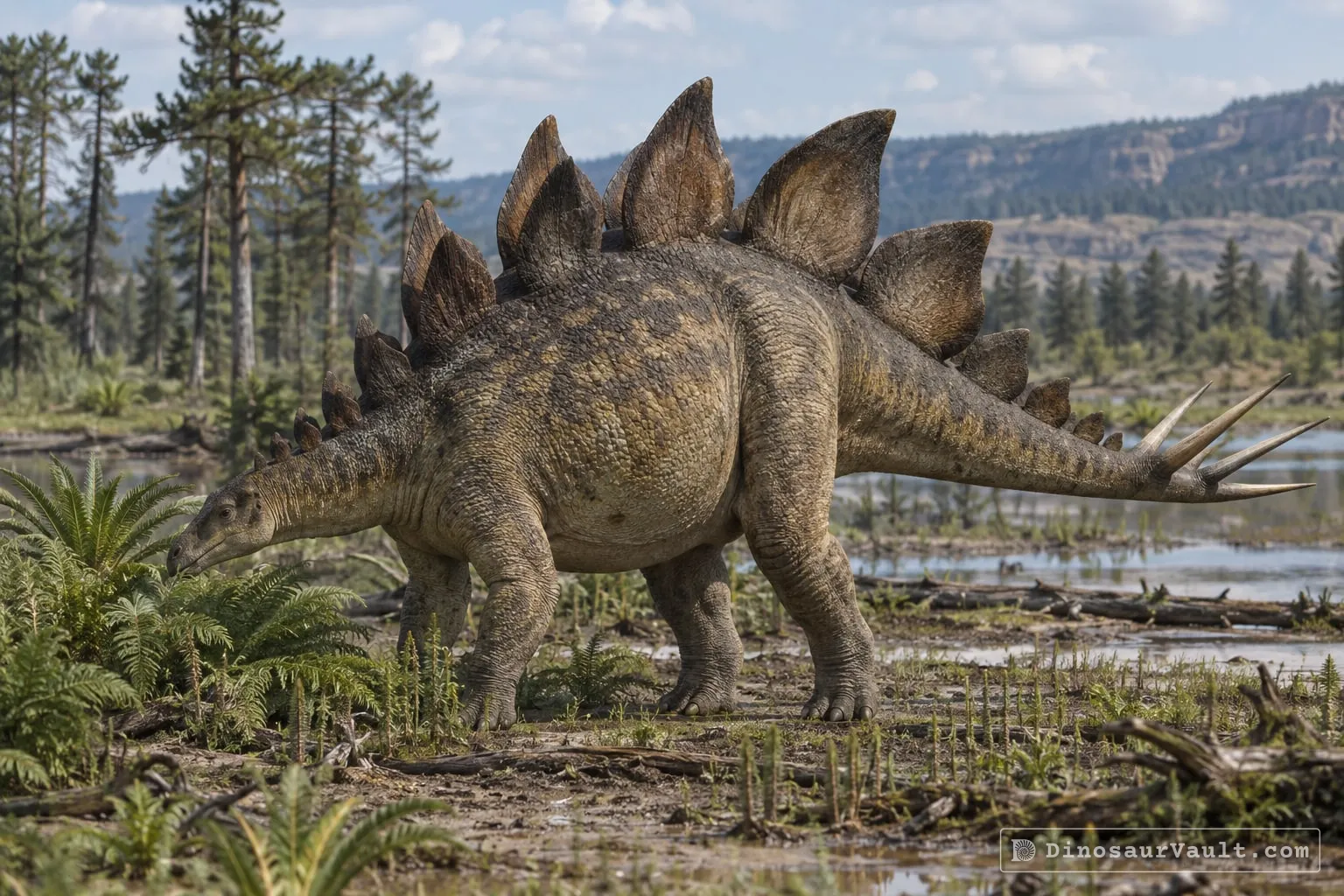
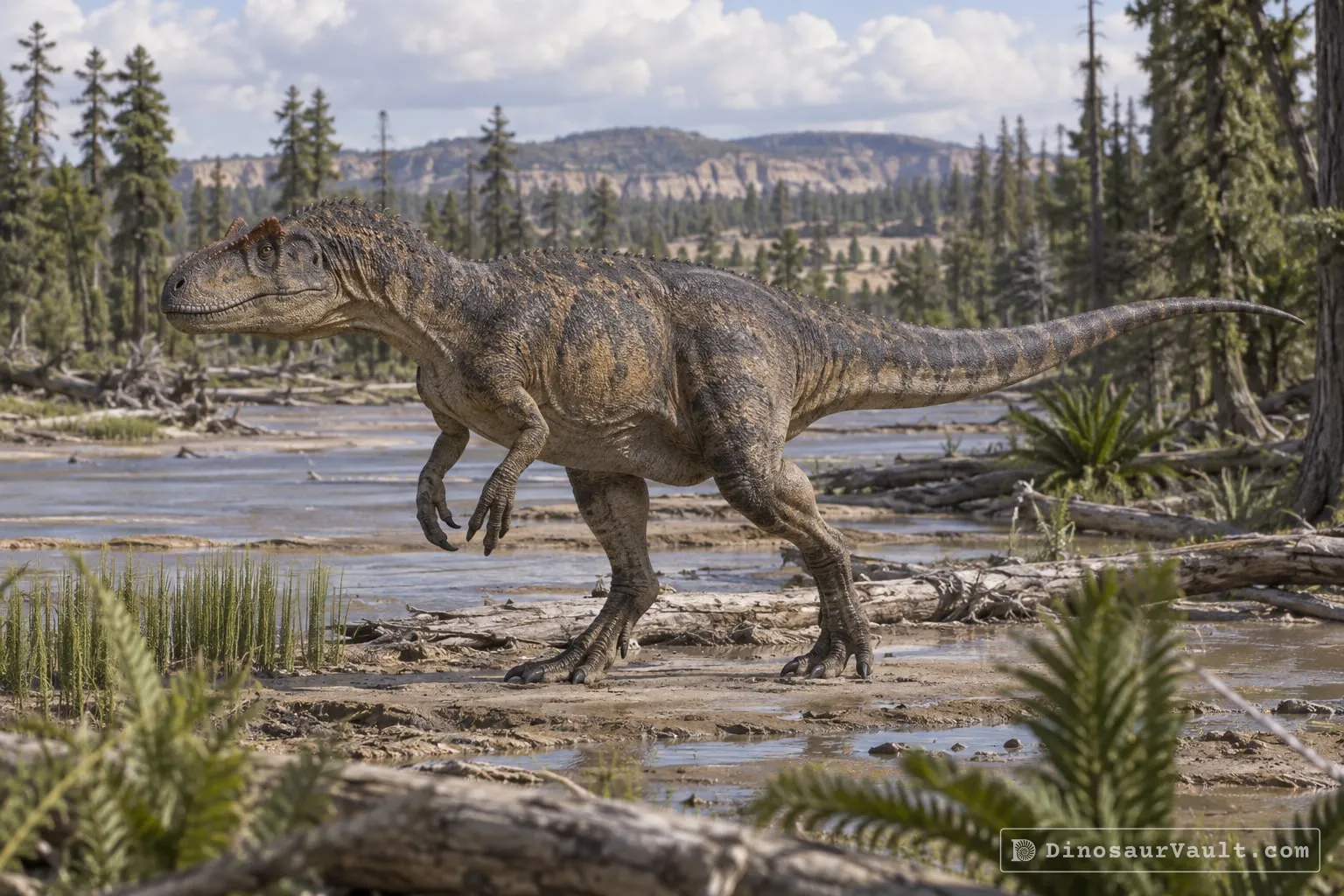
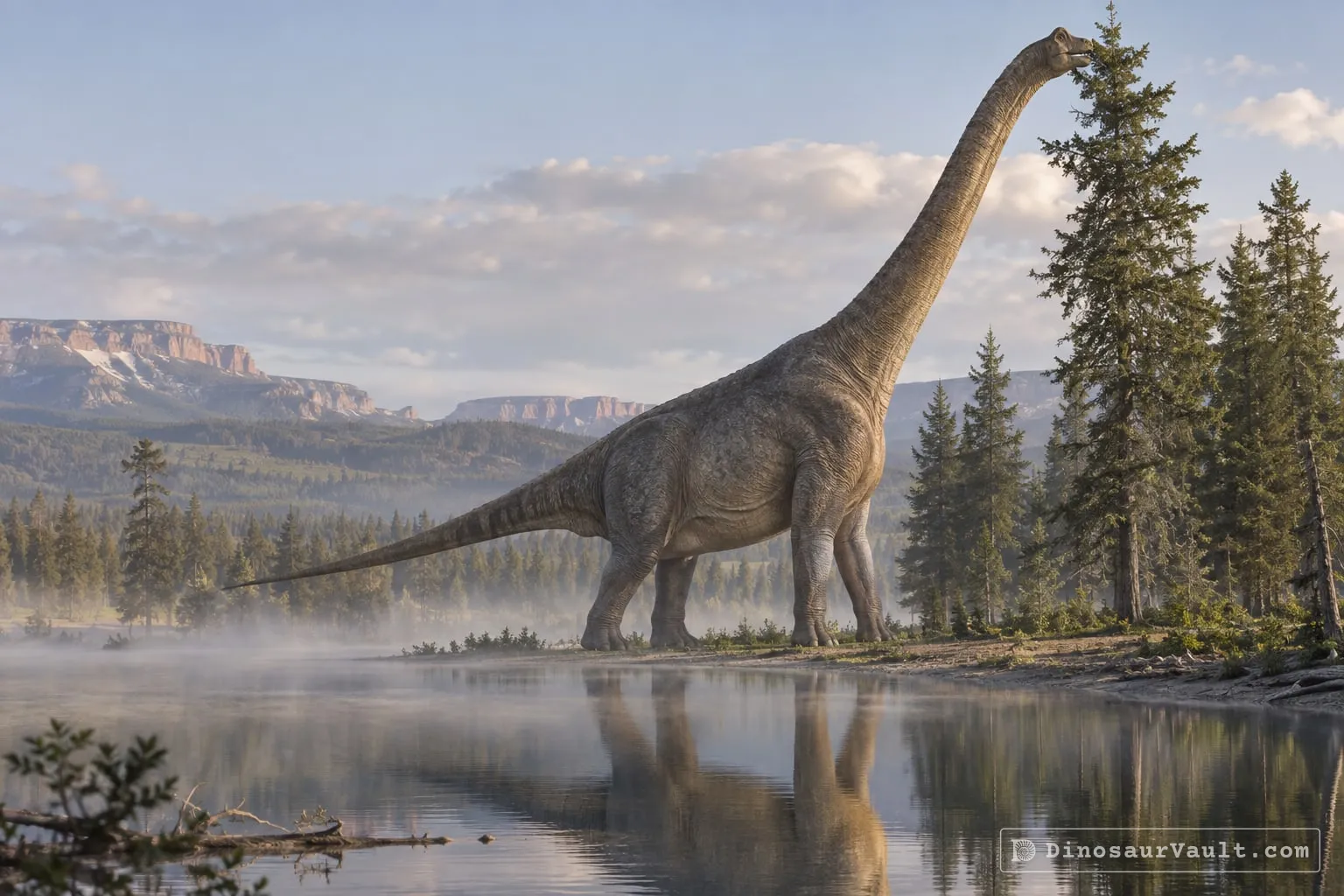
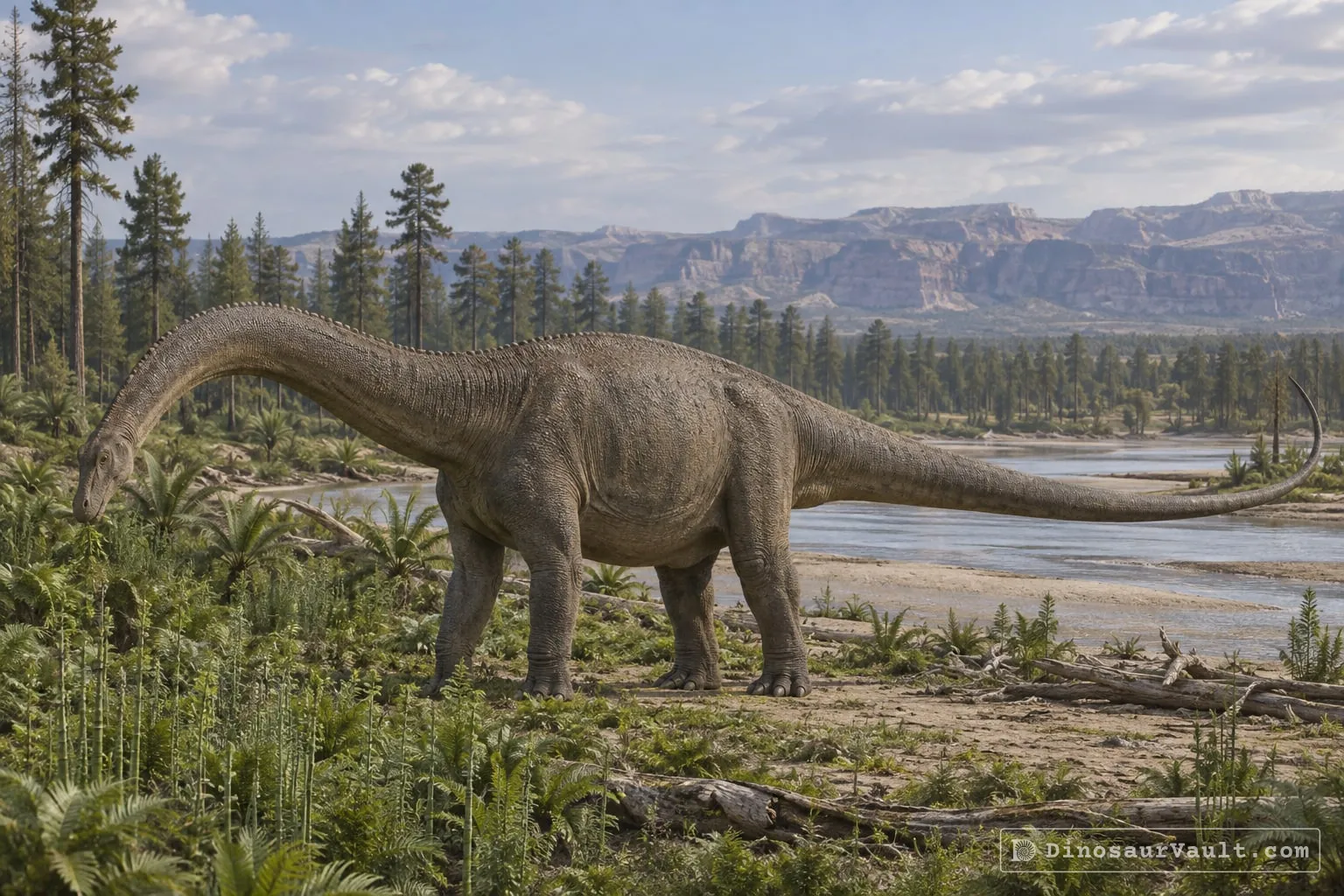
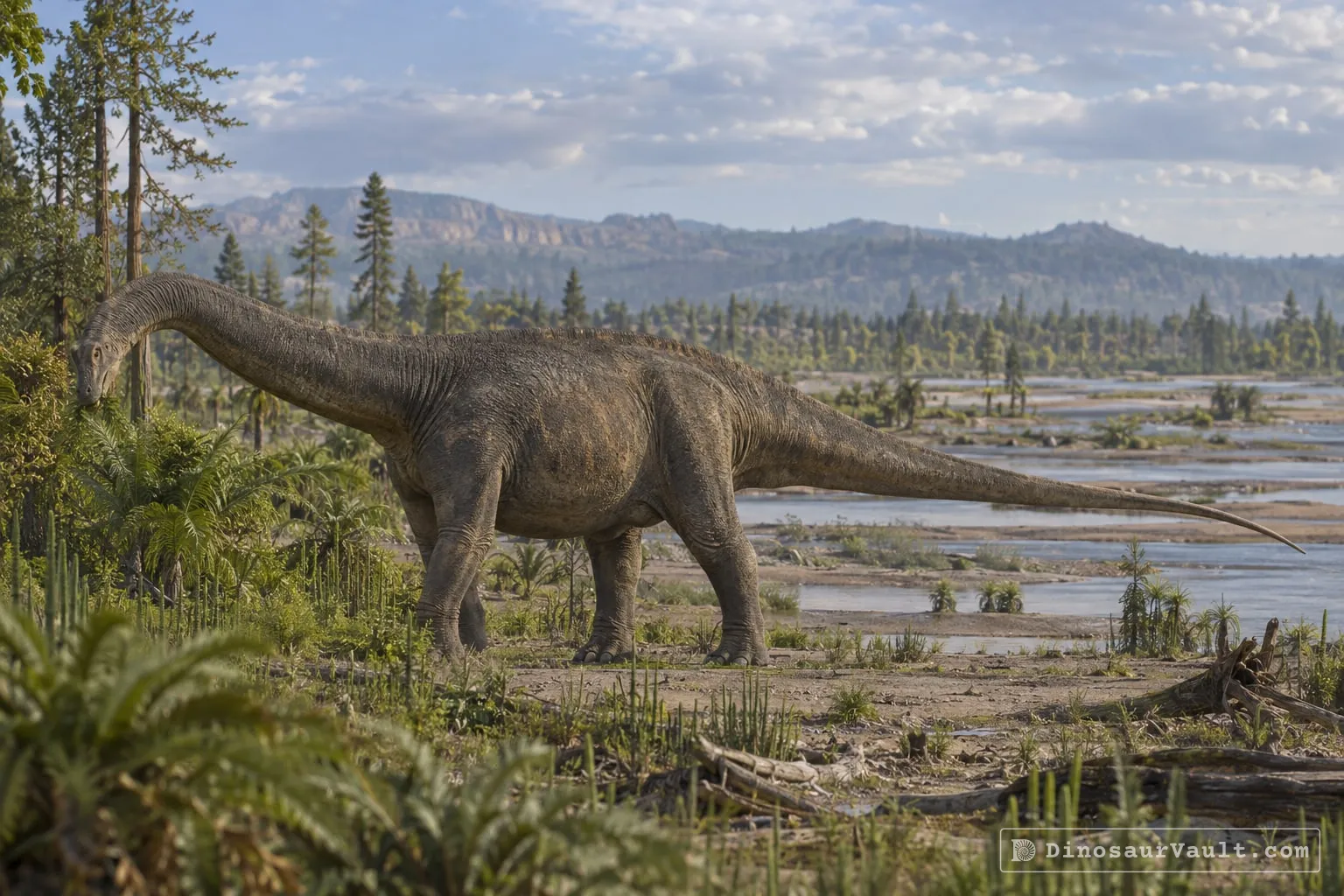
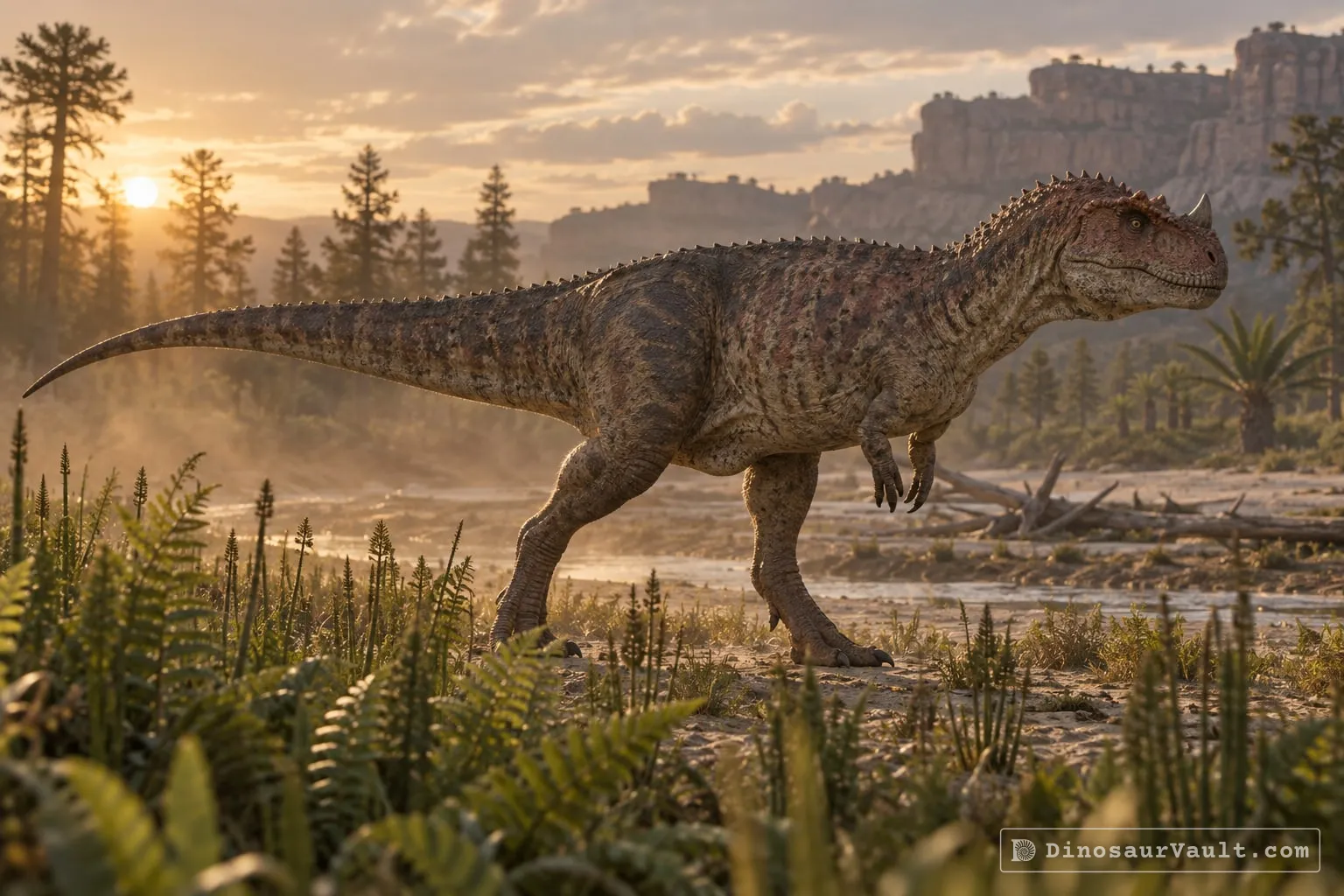
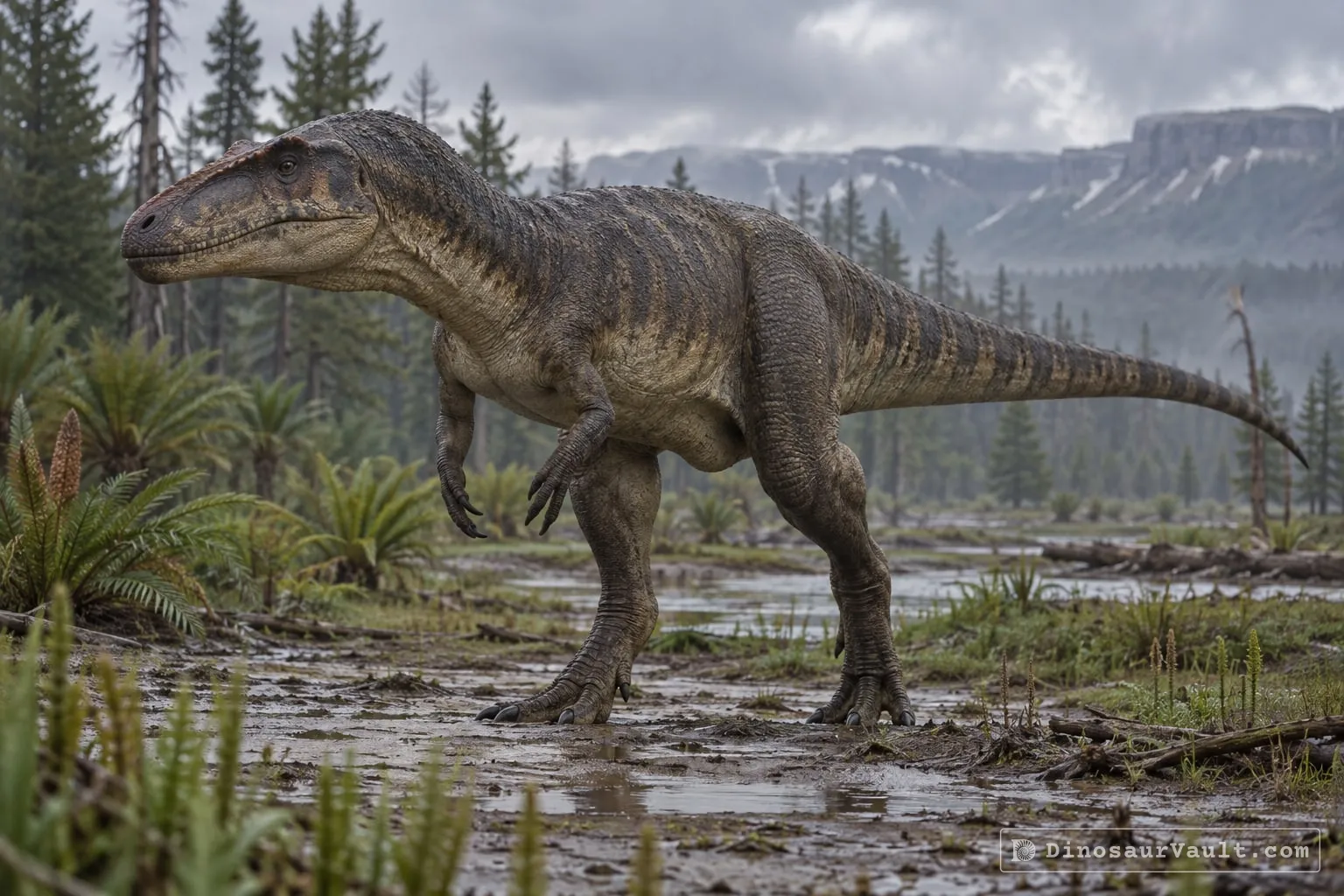


A rock formation can hold fossils laid down millions of years apart, so not every animal here met Diplodocus.
The evidence
The science behind Diplodocus
Which parts of the picture come from its own bones, and which come from its relatives.
From its own fossils
- Skeletons show a long neck, a low trunk and a tail that narrows into a whip-like tip.
- The small skull carries slender teeth at the front of the jaws.
- Forked bones beneath the tail form the double beams that gave Diplodocus its name.
Borrowed from relatives
- Very little of the skeleton needs borrowing: almost the whole body is known from its own bones.
- Missing bones in individual skeletons can be compared with Barosaurus and Apatosaurus.
Still unknown
- The species identity and complete body proportions of the youngest skulls.
- The size and extent of any small spines along its back.
- Its color and usual neck position.
Often drawn wrong
- Its tail was held above the ground, rather than dragged behind it.
- Its front feet were compact columns, rather than elephant feet with a row of nails.
- Tall spikes along its back have no fossil support.
Discovery timeline
- 1878Named itMarsh
- 1999PostureStevens & Parrish
- 2012How it fedYoung et al.
- 2015Family treeTschopp, Mateus & Benson
- 2018Growing upWoodruff et al.
Key papers
The research behind what we know of Diplodocus
Named it
Named Diplodocus from fossil bones and drew attention to the double-beamed bones beneath its tail.
Principal characters of American Jurassic dinosaurs. American Journal of Science s3-16: 411-416
Read the paper : Principal characters of American Jurassic dinosaurs (opens in a new tab)Posture
Digital neck models suggested low browsing in Diplodocus and Apatosaurus, with less neck flexibility than many older pictures showed.
Neck Posture and Feeding Habits of Two Jurassic Sauropod Dinosaurs. Science 284: 798-800
Read the paper : Neck Posture and Feeding Habits of Two Jurassic Sauropod Dinosaurs (opens in a new tab)How it fed
Tested feeding motions with a skull model and found support for stripping leaves and cropping plants with the front teeth.
Cranial biomechanics of Diplodocus (Dinosauria, Sauropoda): testing hypotheses of feeding behaviour in an extinct megaherbivore. Naturwissenschaften 99: 637-643
Read the paper : Cranial biomechanics of Diplodocus (Dinosauria, Sauropoda): testing hypotheses of feeding behaviour in an extinct megaherbivore (opens in a new tab)Family tree
Compared individual skeletons to revise the species and relationships of Diplodocus and its relatives.
A specimen-level phylogenetic analysis and taxonomic revision of Diplodocidae (Dinosauria, Sauropoda). PeerJ 3: e857
Read the paper : A specimen-level phylogenetic analysis and taxonomic revision of Diplodocidae (Dinosauria, Sauropoda) (opens in a new tab)Growing up
Described a young skull referred to Diplodocus, showing changes in snout shape and teeth during growth.
The Smallest Diplodocid Skull Reveals Cranial Ontogeny and Growth-Related Dietary Changes in the Largest Dinosaurs. Scientific Reports 8
Read the paper : The Smallest Diplodocid Skull Reveals Cranial Ontogeny and Growth-Related Dietary Changes in the Largest Dinosaurs (opens in a new tab)
Close relatives
Other members of Diplodocidae


Sources: Wikidata