Athenar
Type species Athenar bermani
- Lived
- 149 to 145 million years ago, Late Jurassic
- Diet
- Herbivore
- Group
- Sauropods, Dicraeosauridae
- Found in
- United States
- Named by
- Whitlock et al. 2025
Where its fossils were found
The evidence
Today

145 million years ago
Habitat
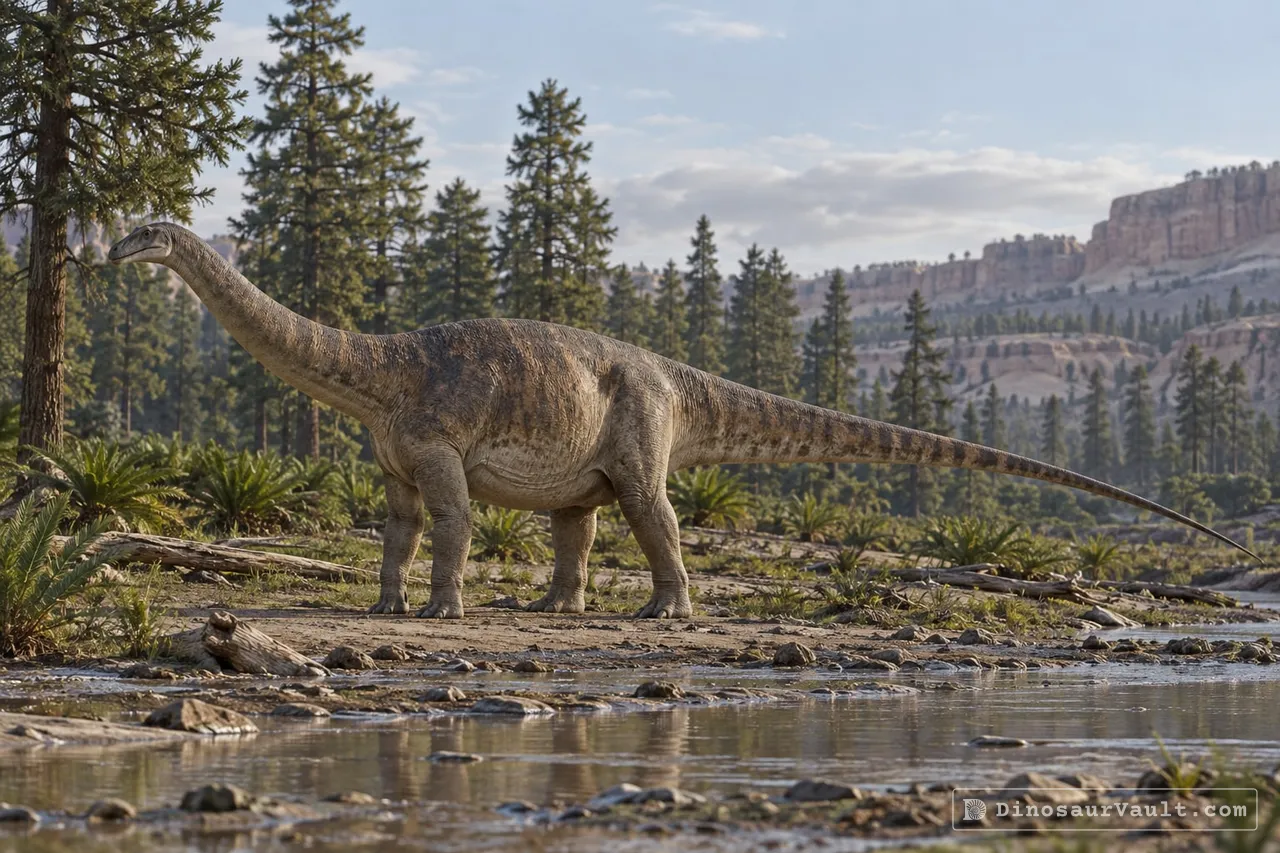
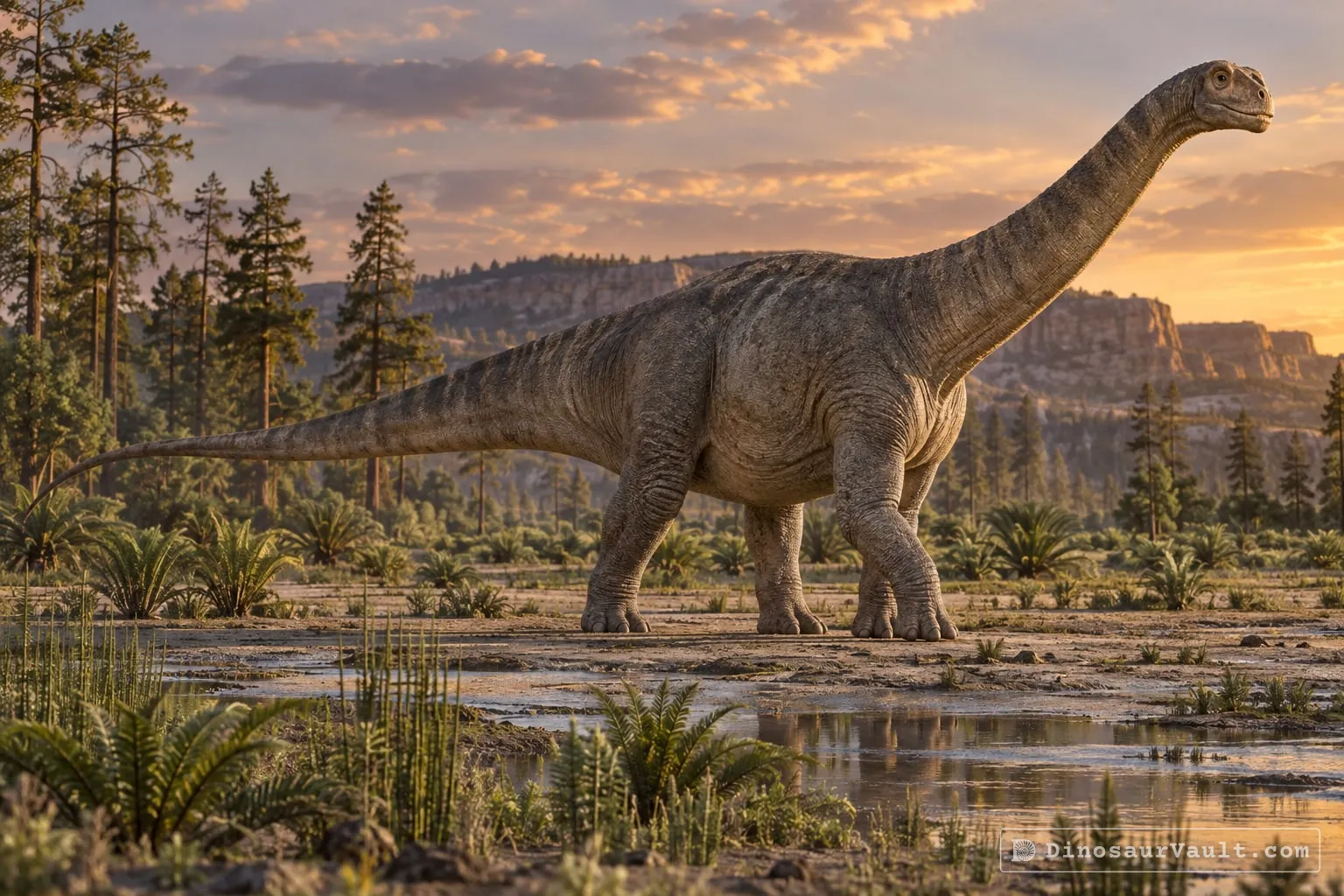
The Morrison Formation preserves river channels and floodplains with conifers, ferns and horsetails. Athenar shared this region with Diplodocus, Allosaurus and Stegosaurus.
Field notes
About Athenar
What it was like
Athenar was a long-necked plant eater from the dicraeosaurid family, a group of sauropods with fairly short necks for their kind. It is known from a braincase and the roof of the skull.
Its world
It lived about 149 to 145 million years ago, in the Late Jurassic, in what is now Utah. Its bones come from the Morrison Formation, where it lived alongside Diplodocus, Allosaurus and Stegosaurus.
How it was found
The skull pieces were dug up long ago and were long thought to belong to Diplodocus. Whitlock and colleagues showed they were different and named Athenar in 2025. The type species is Athenar bermani.
Field gallery
More views of Athenar
Scenes reconstructed from the available fossil evidence.
Lived alongside
Found in the same rock formations
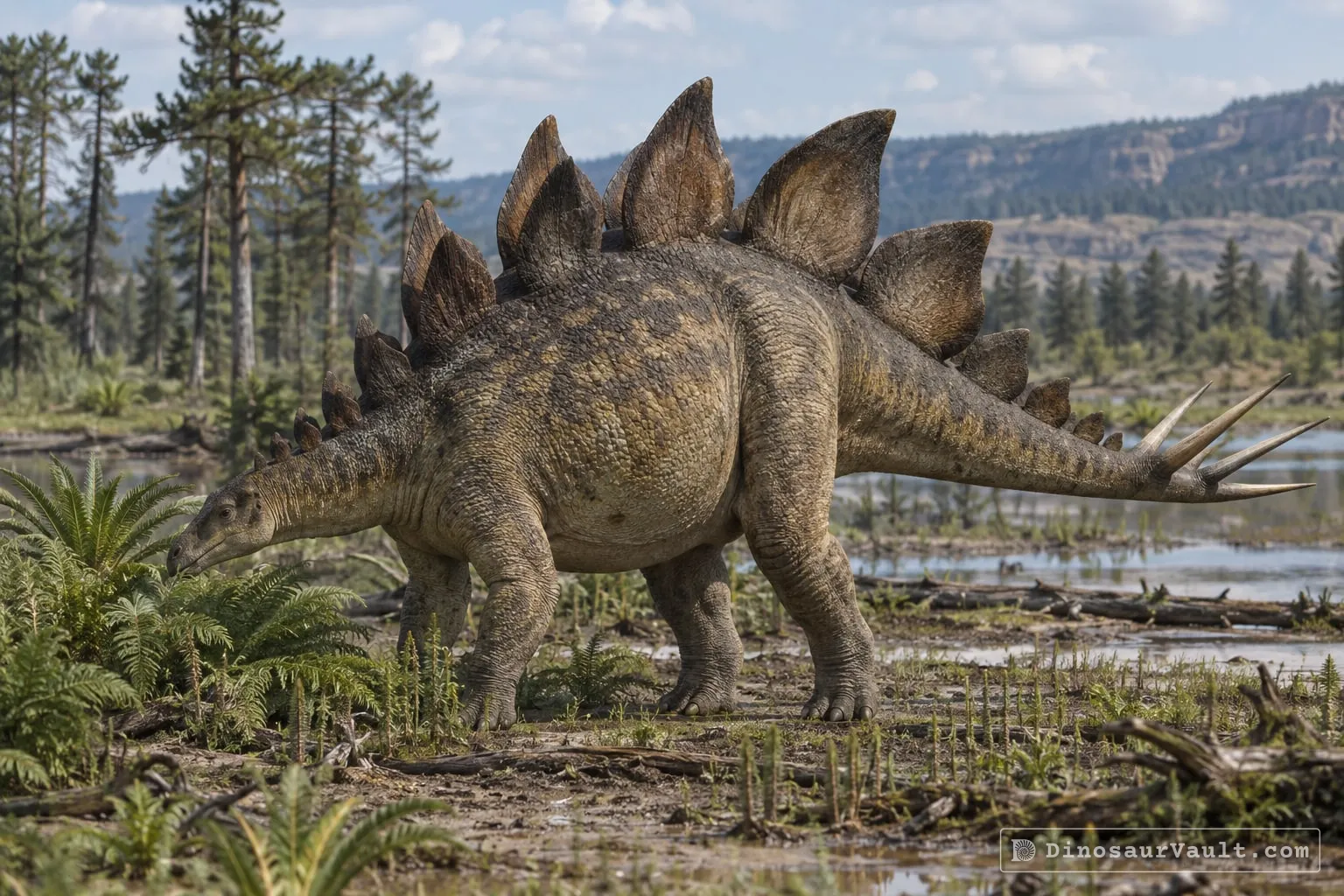
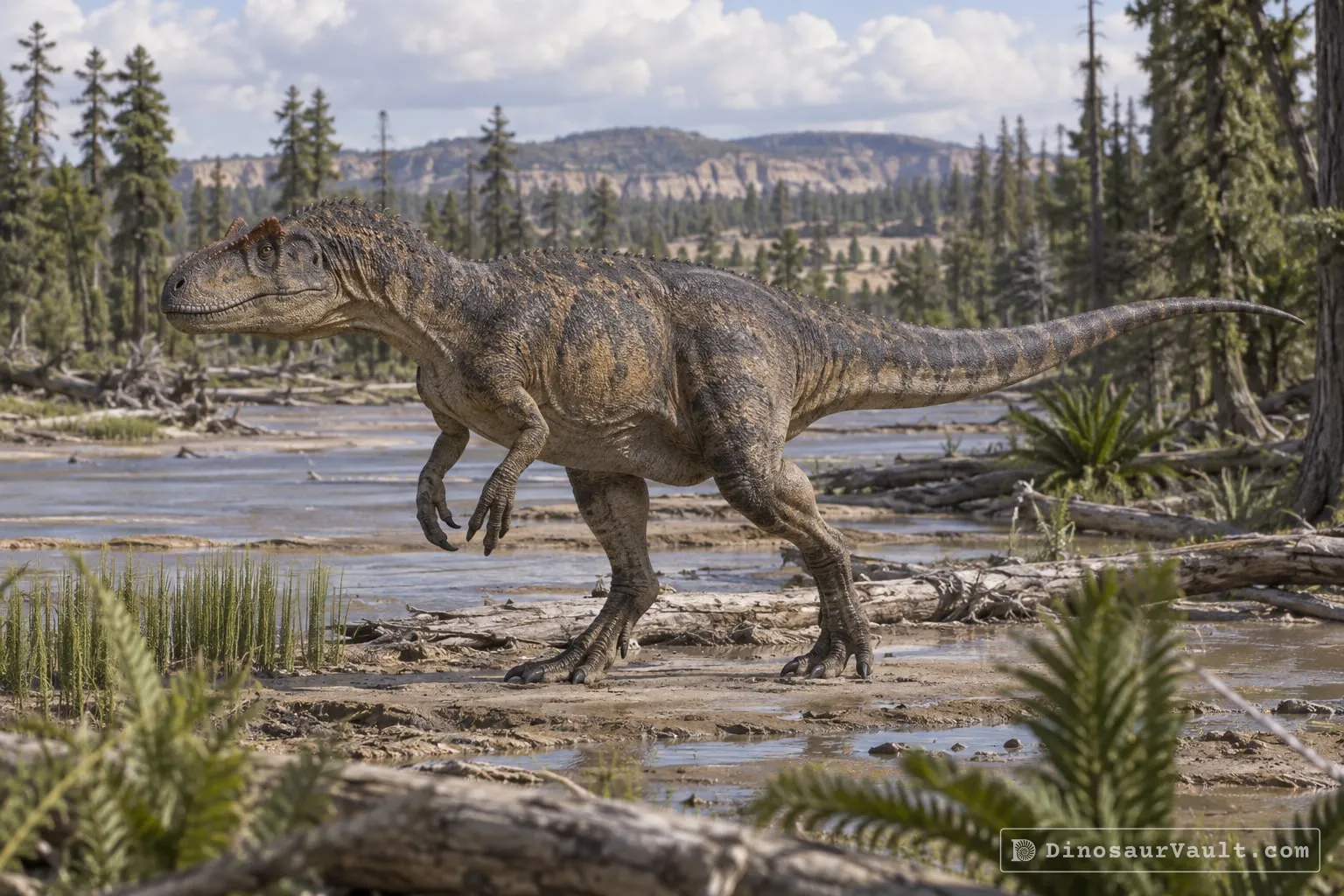
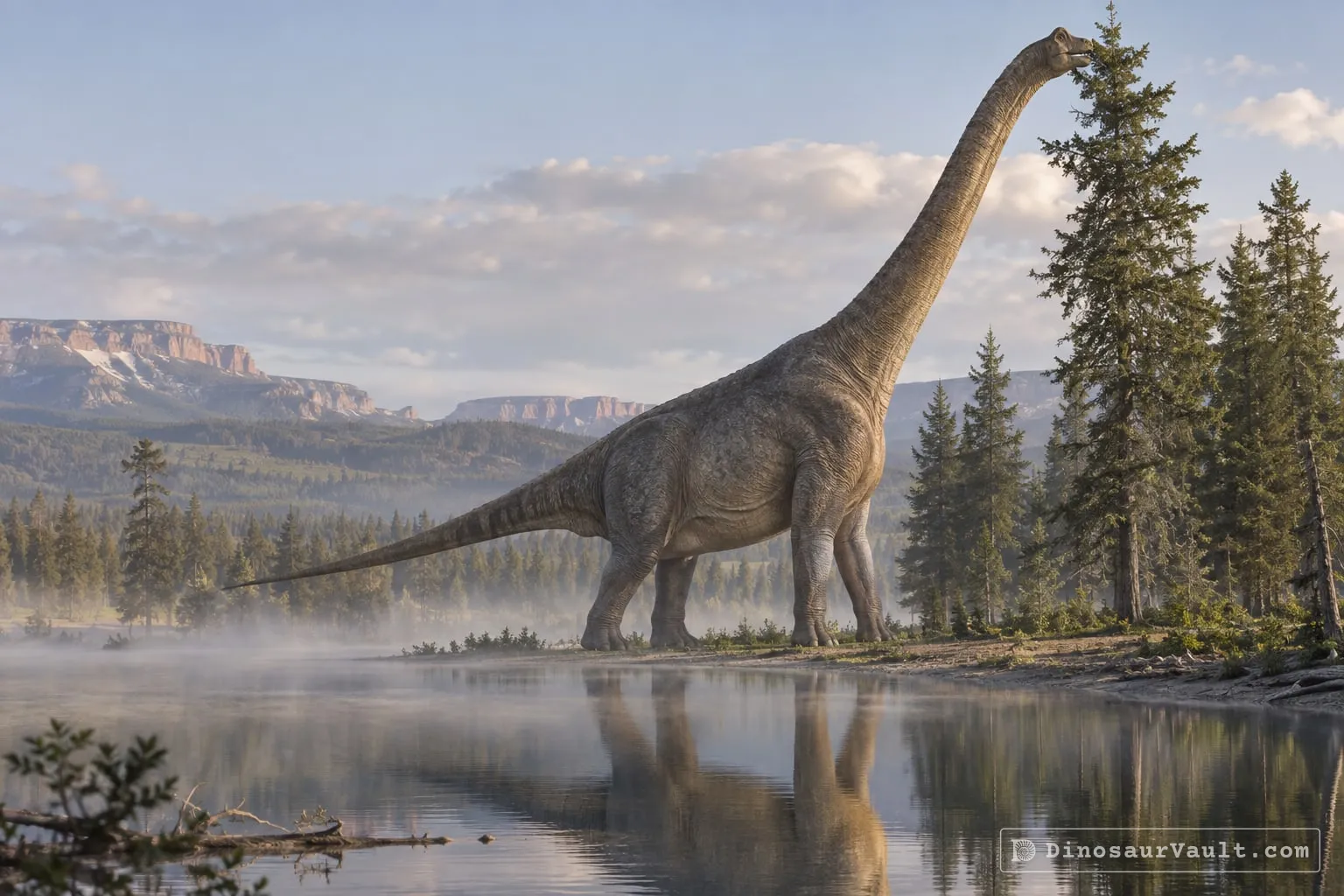
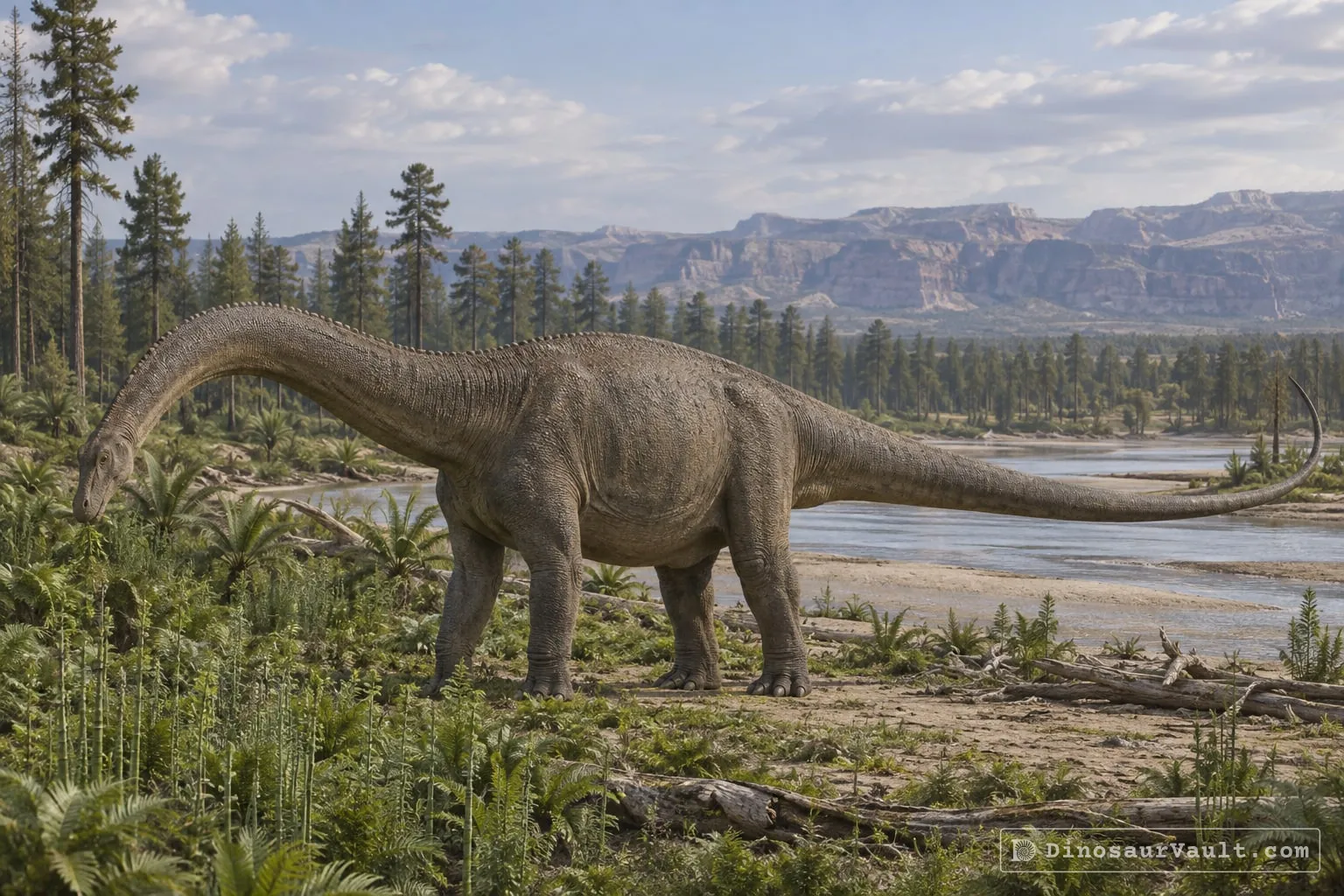
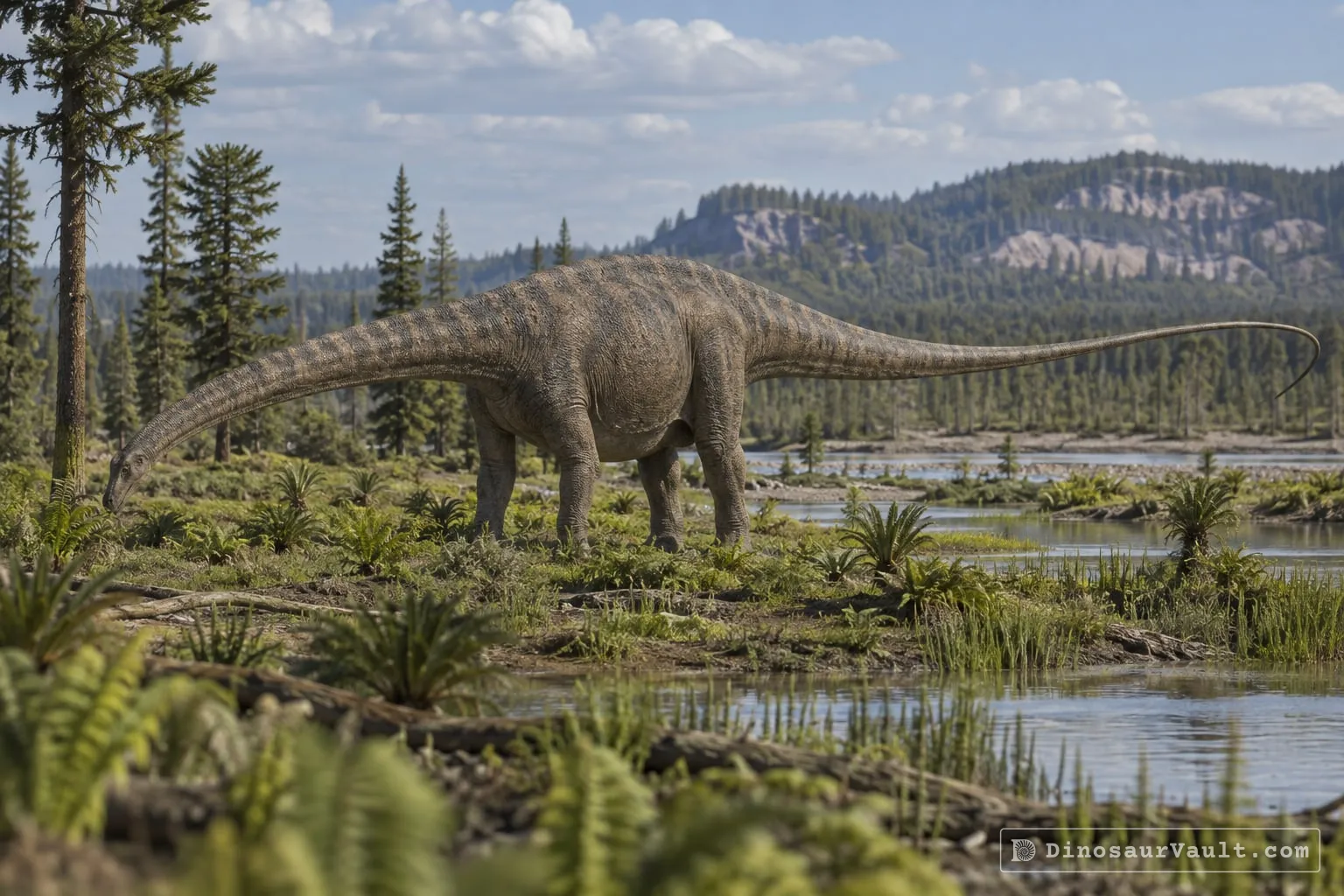
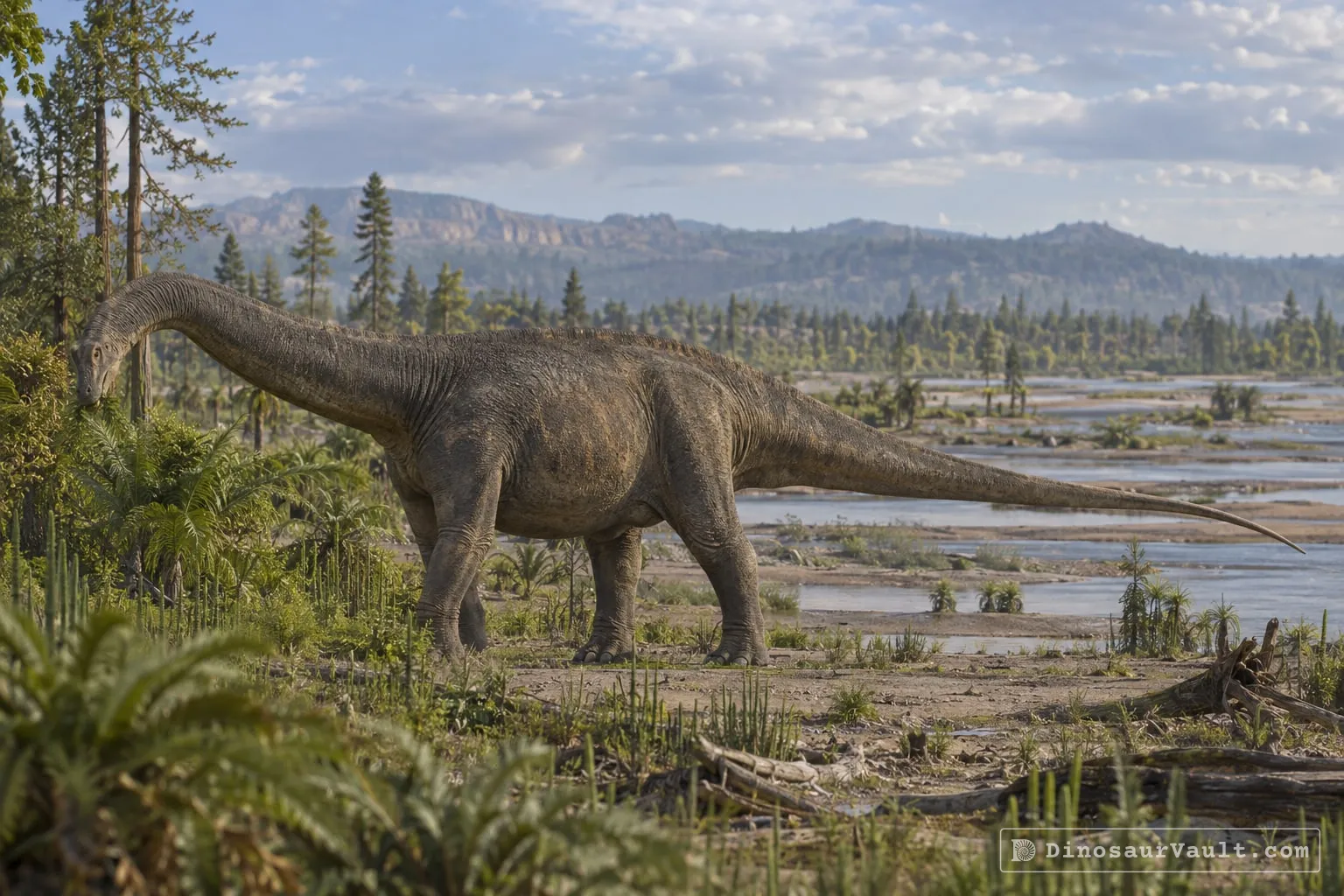
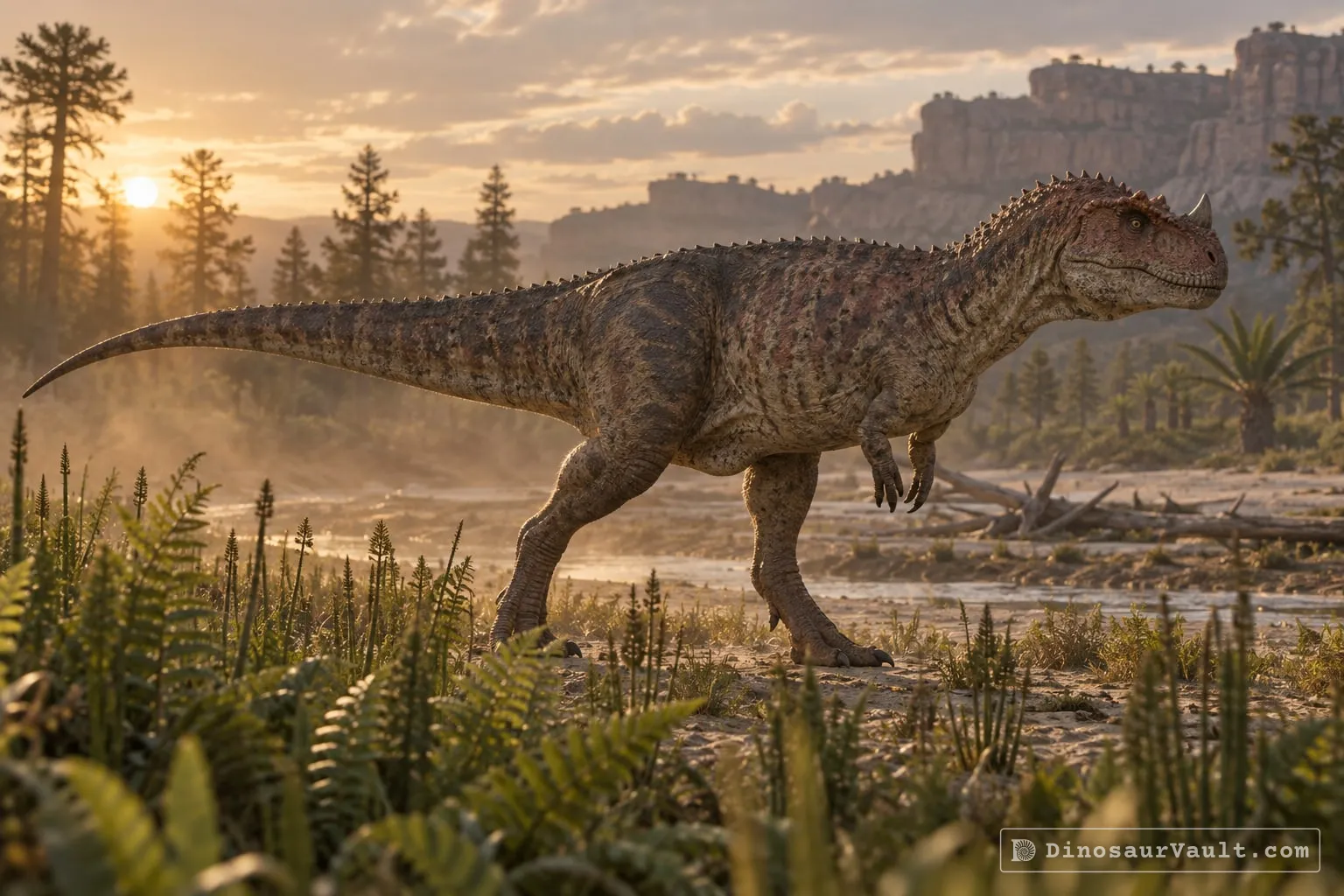


A rock formation can hold fossils laid down millions of years apart, so not every animal here met Athenar.
The evidence
The science behind Athenar
Which parts of the picture come from its own bones, and which come from its relatives.
From its own fossils
- A braincase and part of the skull roof, with a broad crest at the back of the head.
- A tooth-shaped projection locks together bones near the back of the skull.
Borrowed from relatives
- Dicraeosaurus guides the missing face, with a narrow, rounded snout.
- The relatively short neck and sturdy body are inferred from Dicraeosaurus.
- Apatosaurus provides a broader comparison for the compact supporting hands and clawed hindfeet.
Still unknown
- Its full size, neck length and tail length.
- The height and shape of the spines along its back.
- Its skin texture and color.
Discovery timeline
- 2011Close relativeWhitlock
- 2012Close relativeSchwarz-Wings & Böhm
- 2025Named itWhitlock et al.
Key papers
The research behind what we know of Athenar
Close relative
Compared sauropod snouts and tooth wear, documenting the narrow muzzle of Dicraeosaurus that helps restore the missing face of Athenar.
Inferences of Diplodocoid (Sauropoda: Dinosauria) Feeding Behavior from Snout Shape and Microwear Analyses. PLoS ONE 6: e18304
Read the paper : Inferences of Diplodocoid (Sauropoda: Dinosauria) Feeding Behavior from Snout Shape and Microwear Analyses (opens in a new tab)Close relative
Distinguished the limb bones of different Dicraeosaurus species, providing comparisons for the missing limbs of Athenar.
A morphometric approach to the specific separation of the humeri and femora of Dicraeosaurus from the Late Jurassic of Tendaguru,Tanzania. Acta Palaeontologica Polonica
Read the paper : A morphometric approach to the specific separation of the humeri and femora of Dicraeosaurus from the Late Jurassic of Tendaguru,Tanzania (opens in a new tab)Named it
Reexamined skull pieces once assigned to Diplodocus and named a different sauropod belonging to the dicraeosaurid family.
Athenar bermani, a new species of dicraeosaurid sauropod from Dinosaur National Monument, Utah, U.S.A. Palaeontologia Electronica
Read the paper : Athenar bermani, a new species of dicraeosaurid sauropod from Dinosaur National Monument, Utah, U.S.A. (opens in a new tab)
Close relatives
Other members of Dicraeosauridae


Sources: Wikidata