Brontosaurus
BRON-tuh-SORE-us
"thunder lizard"
- Lived
- 155 to 143 million years ago, Late Jurassic
- Diet
- Herbivore
- Length
- about 22 m (72 ft)
- Weight
- about 15 metric tons (17 short tons)
- Group
- Sauropods, Diplodocidae
- Found in
- United States
- Named by
- Marsh 1879
Size comparison
To scale
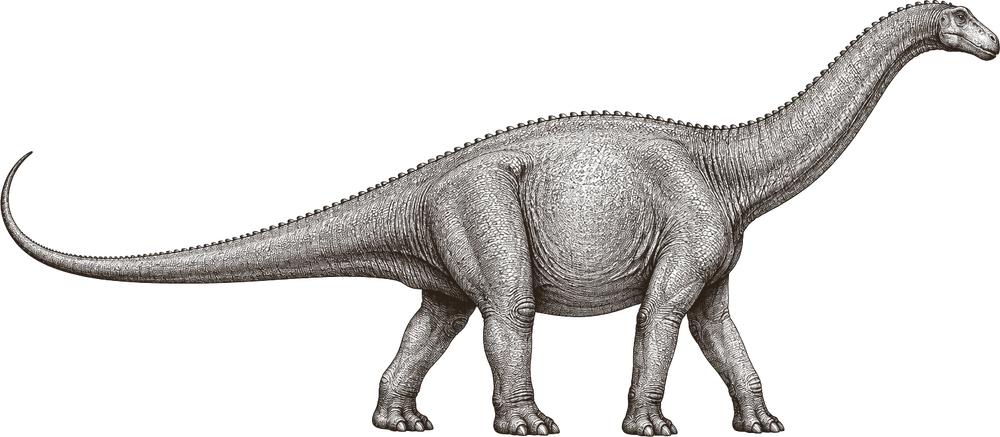


Scale in meters
Where its fossils were found
The evidence
Today

150 million years ago
Habitat
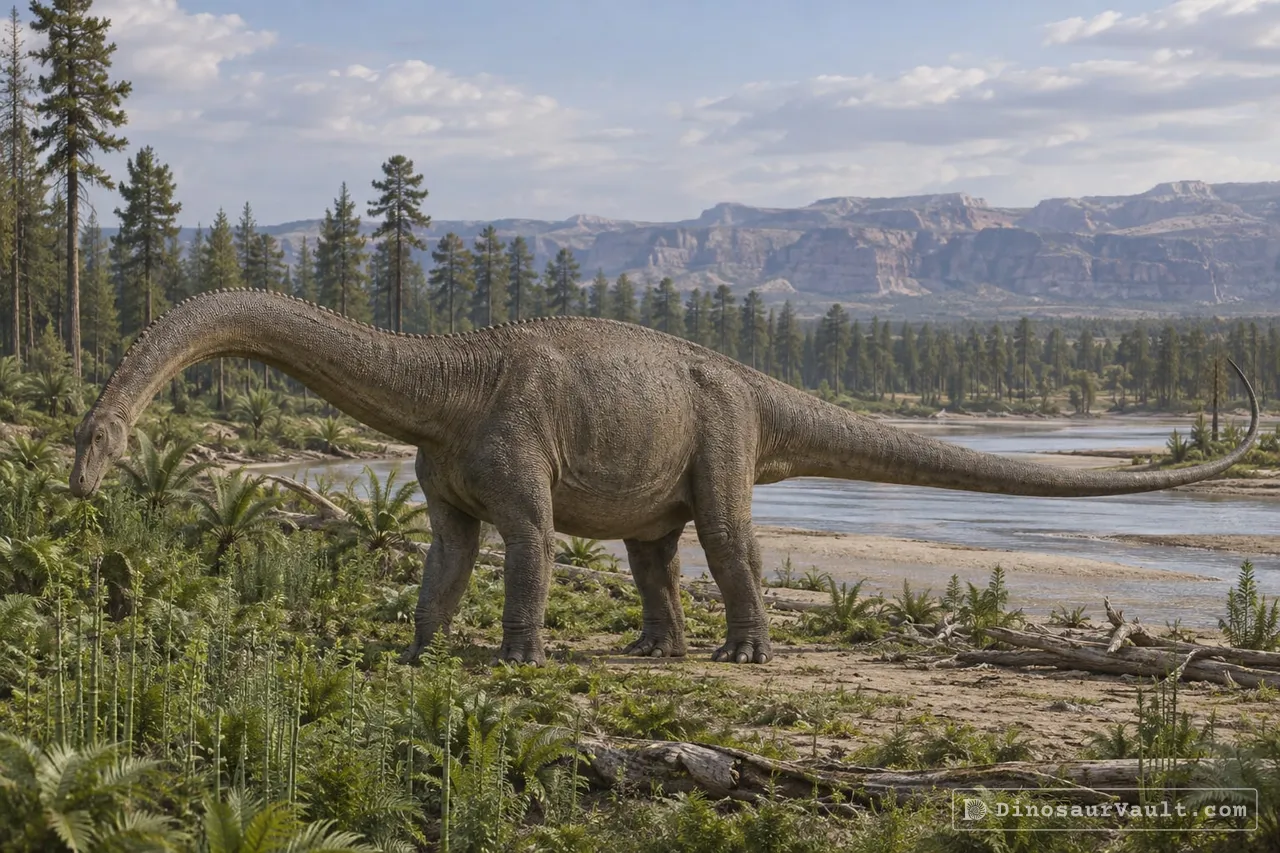
Brontosaurus inhabited the Morrison floodplains, with river channels and ponds in a landscape that dried seasonally. Regional neighbors included Stegosaurus, Dryosaurus and Camarasaurus.
Field notes
About Brontosaurus
A giant on four legs
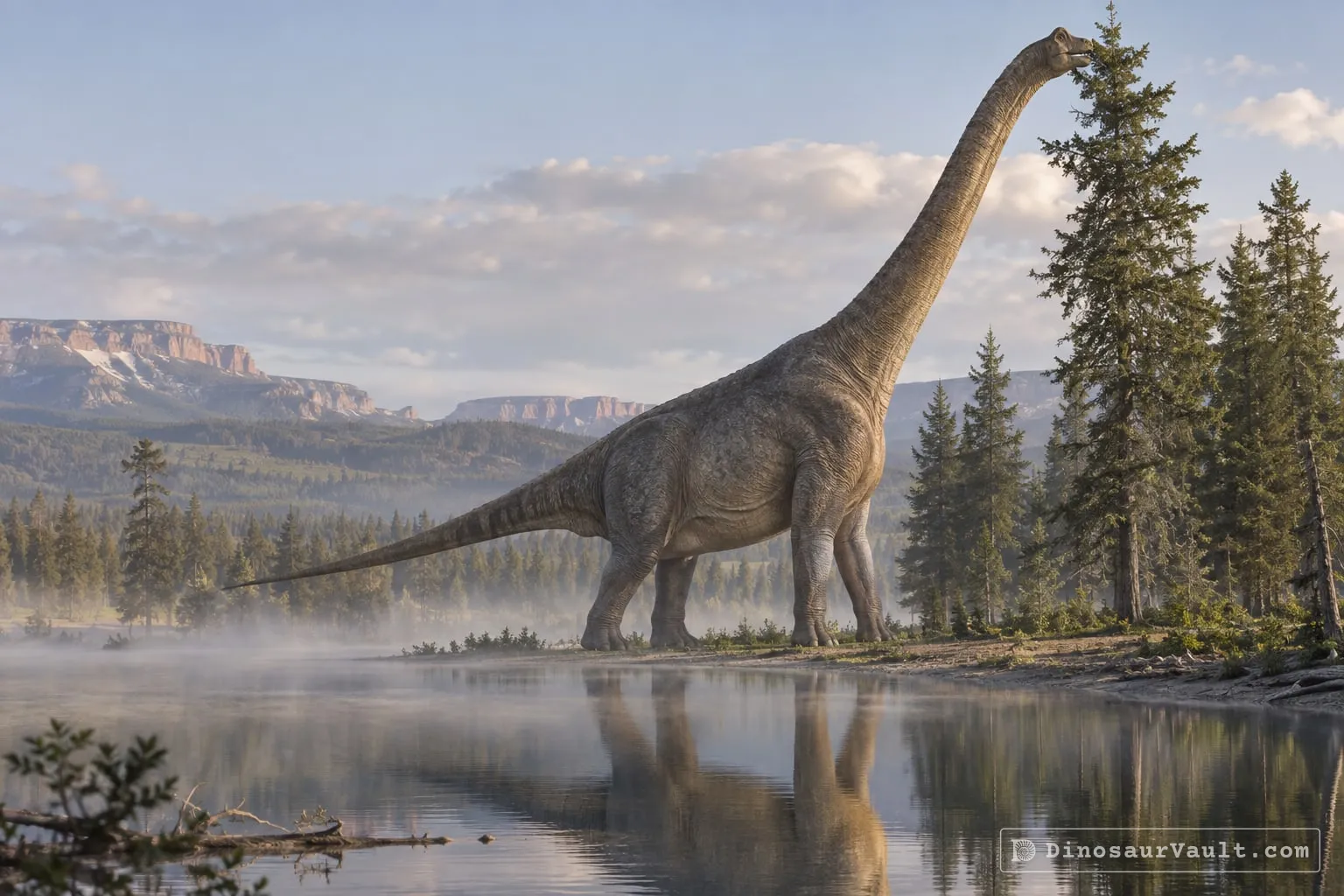
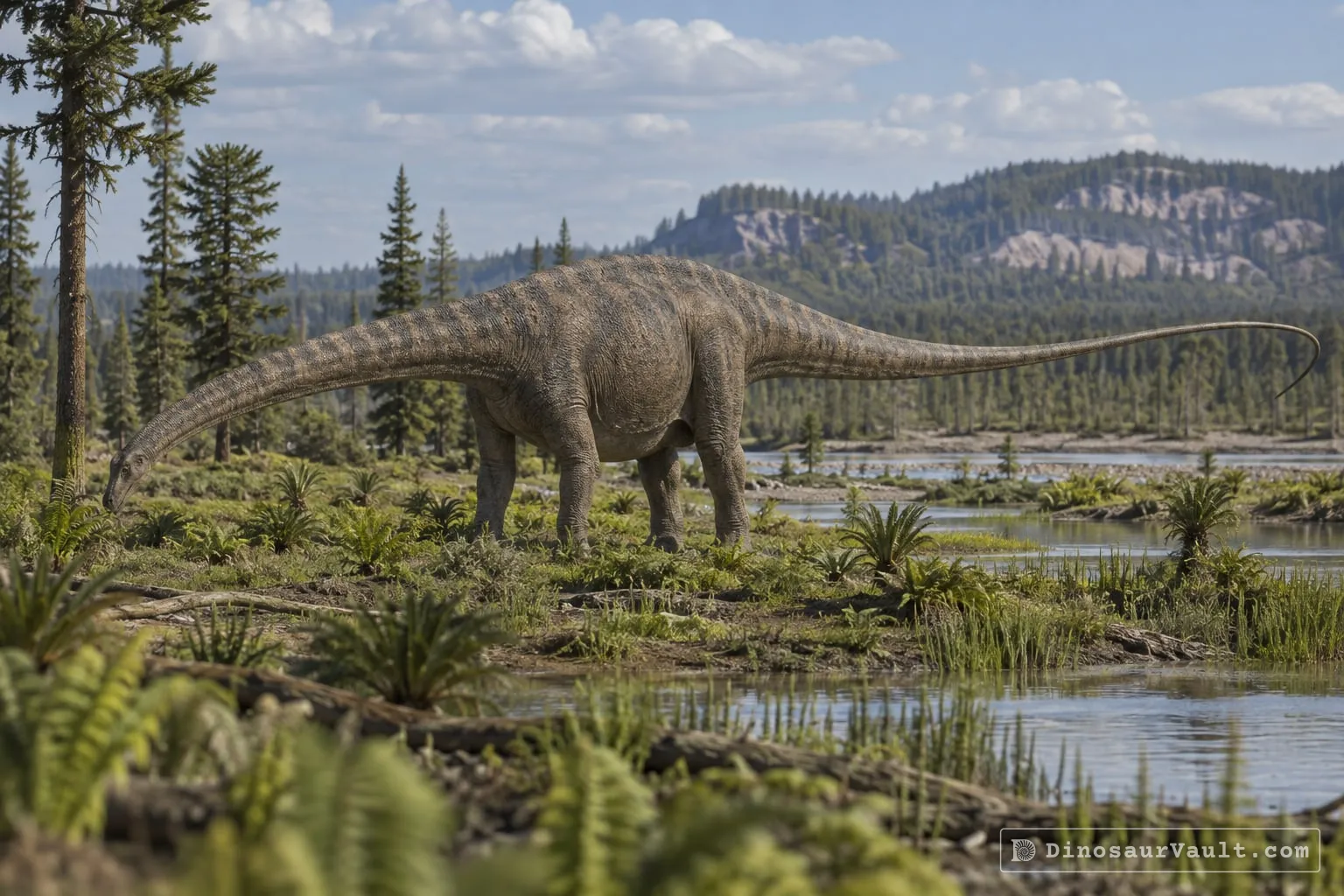
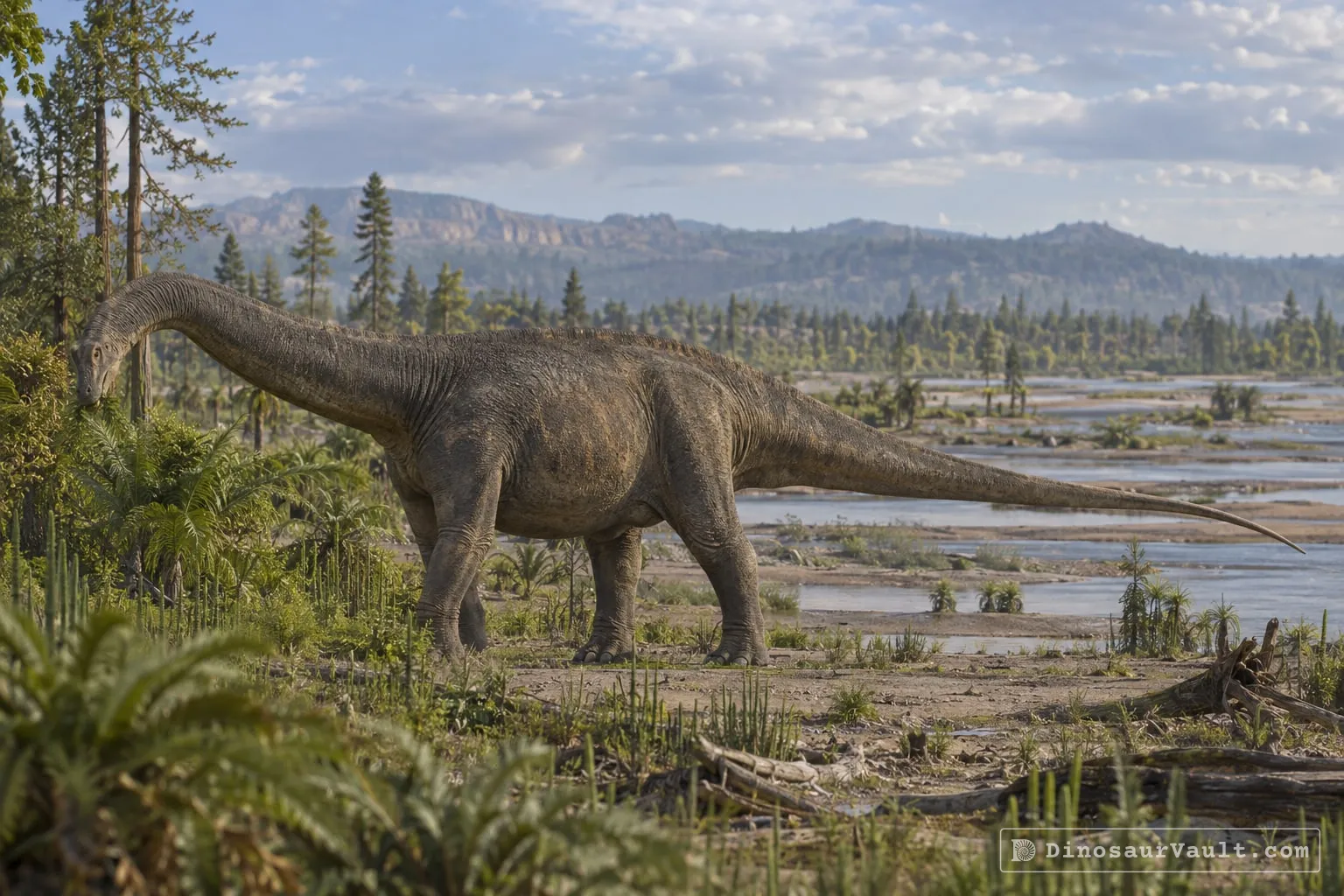
Brontosaurus was a huge, long-necked plant-eater that walked on four thick, pillar-like legs and trailed a long, whip-thin tail. Its neck bones were noticeably thicker than those of its close relatives Diplodocus and Apatosaurus. Like other sauropods, it carried a small head and peg-shaped teeth suited to stripping leaves rather than chewing them, and it likely swallowed plant material whole.
Its world
Brontosaurus lived in the Late Jurassic, roughly between 155 and 143 million years ago, in what is now the western United States. Fossils come from Wyoming, Colorado, Oklahoma, and Utah, all part of the Morrison Formation, a band of rock famous for its dinosaur remains. It shared this landscape with other sauropods such as Diplodocus, Apatosaurus, Brachiosaurus, and Camarasaurus, the plated Stegosaurus, and hunters including Allosaurus, Ceratosaurus, and Torvosaurus.
A name in dispute
Marsh named Brontosaurus in 1879. For most of the twentieth century, scientists treated it as the same animal as Apatosaurus, just described twice under different names. A later study of sauropod skeletons argued the two were different enough to count as separate genera, placing Brontosaurus close to Apatosaurus within the group Apatosaurinae. Not everyone agrees. Some paleontologists still consider Brontosaurus a synonym of Apatosaurus, and the question remains open.
Field gallery
More views of Brontosaurus
Scenes reconstructed from the available fossil evidence.
1 of 7
Lived alongside
Found in the same rock formations
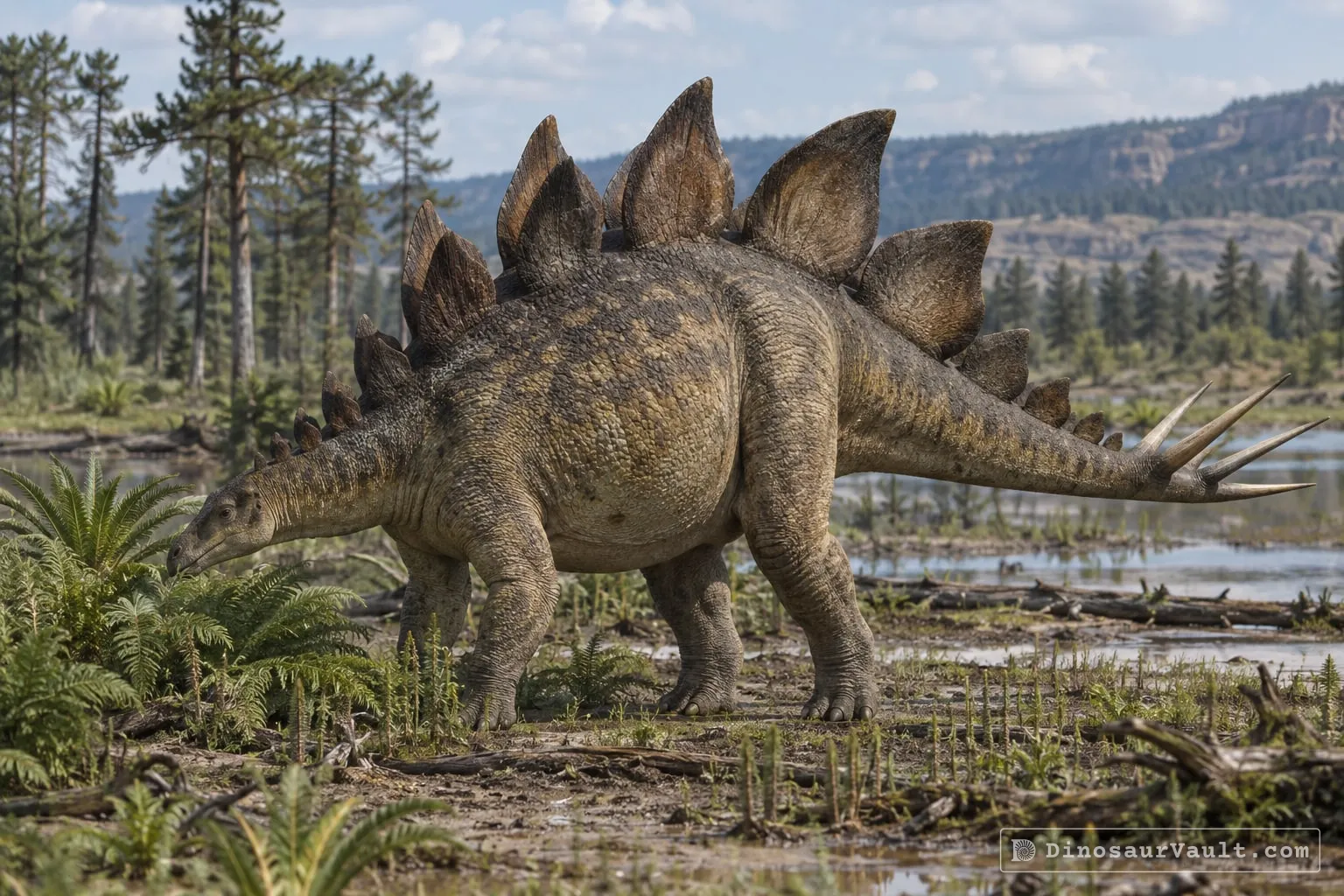
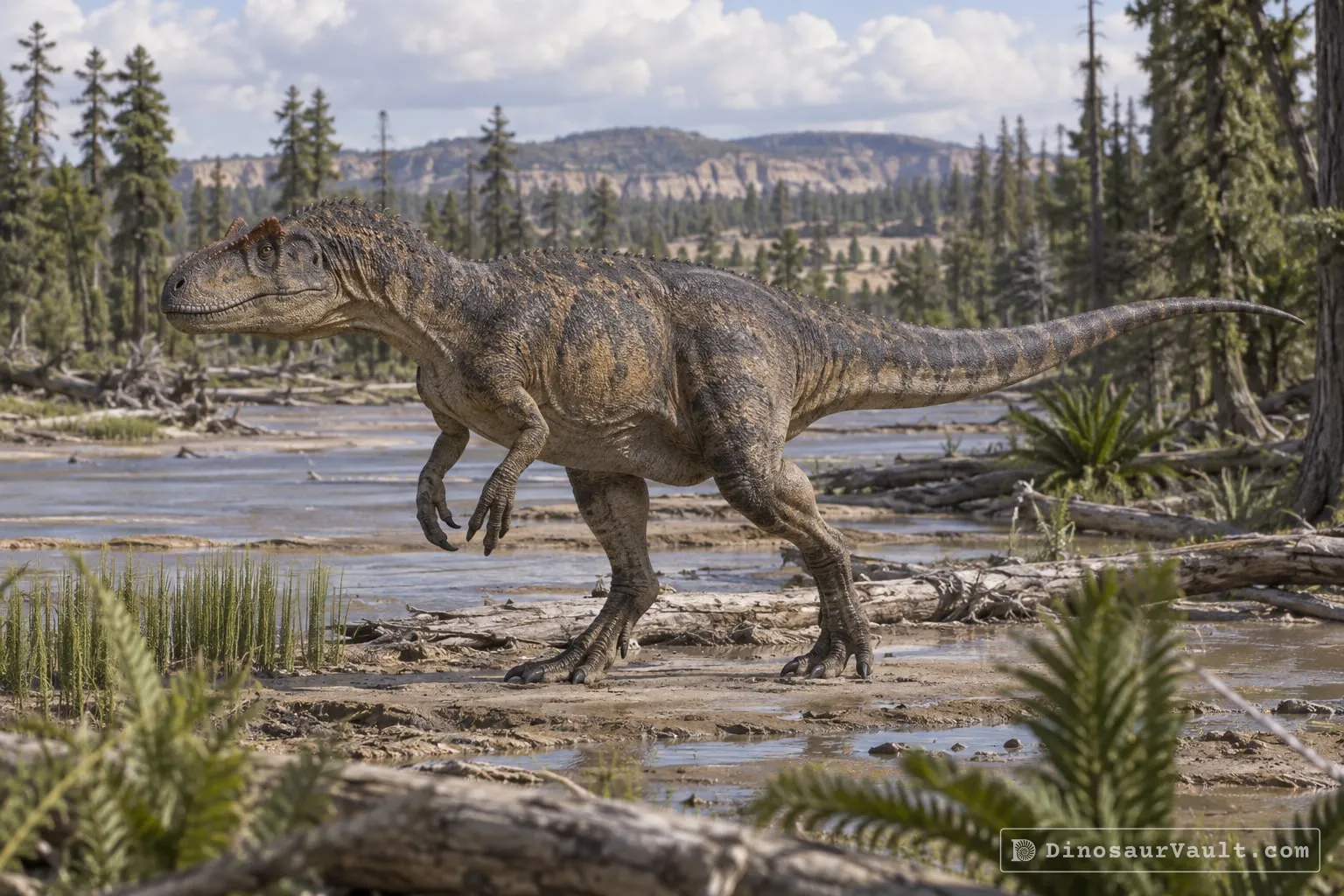
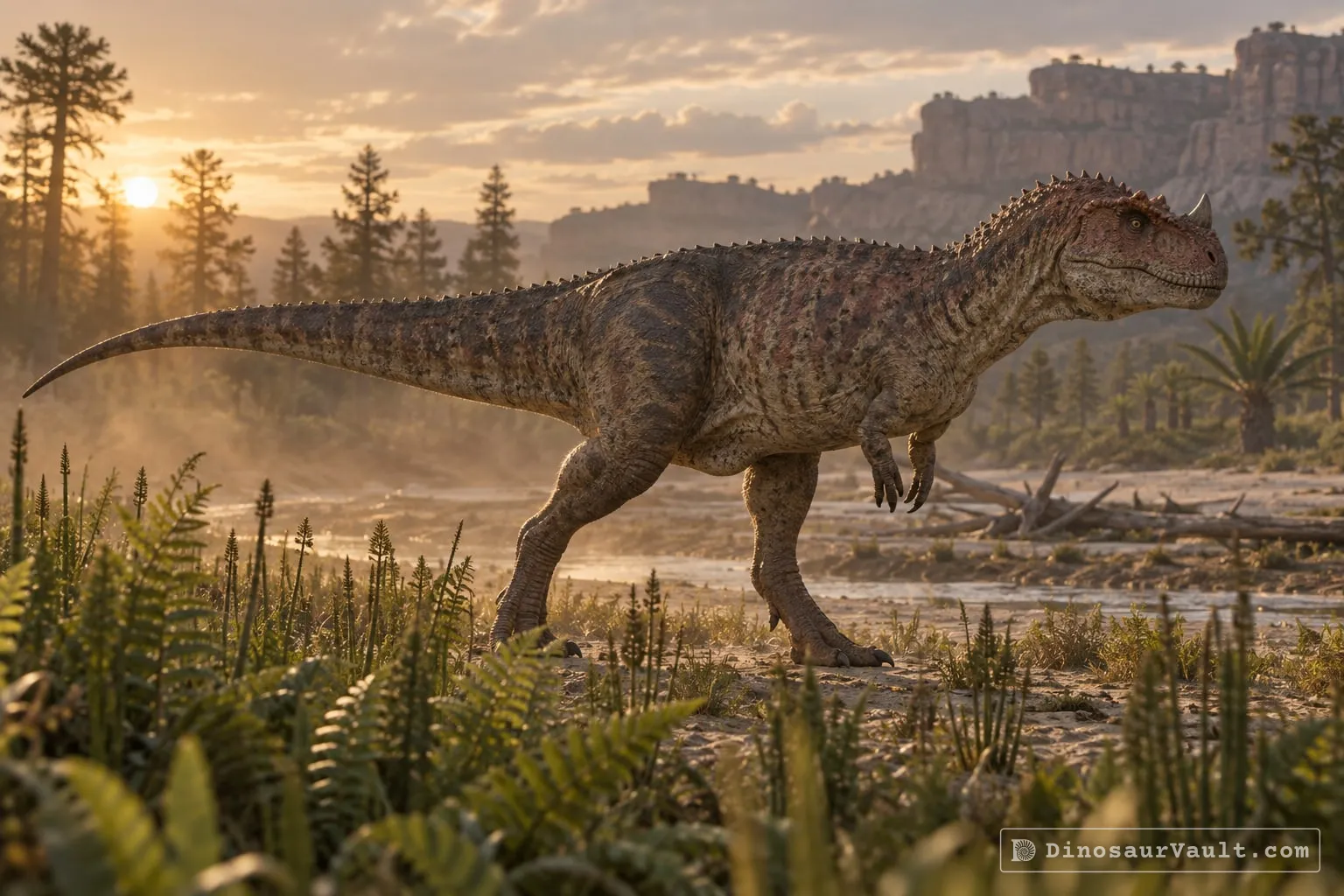
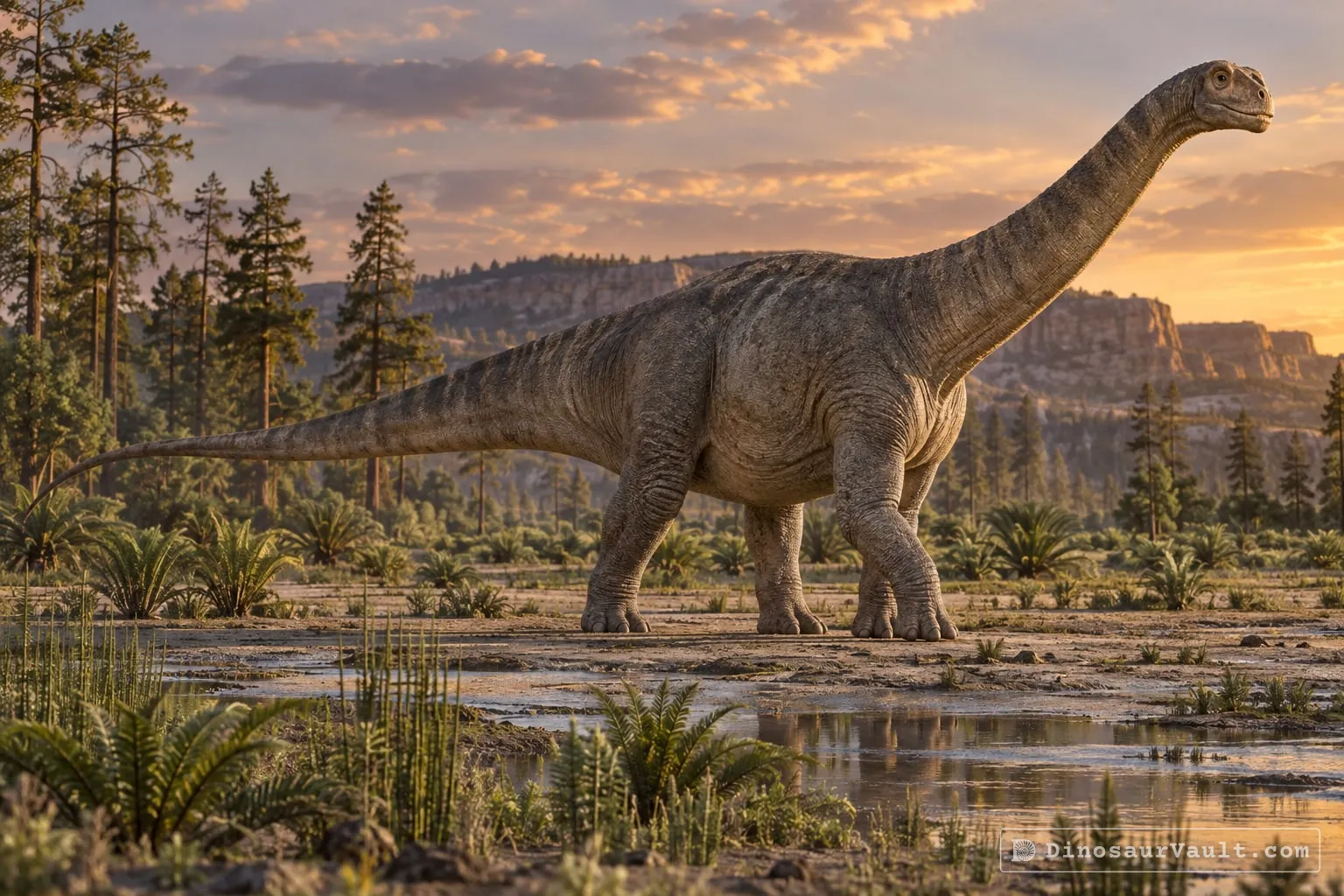
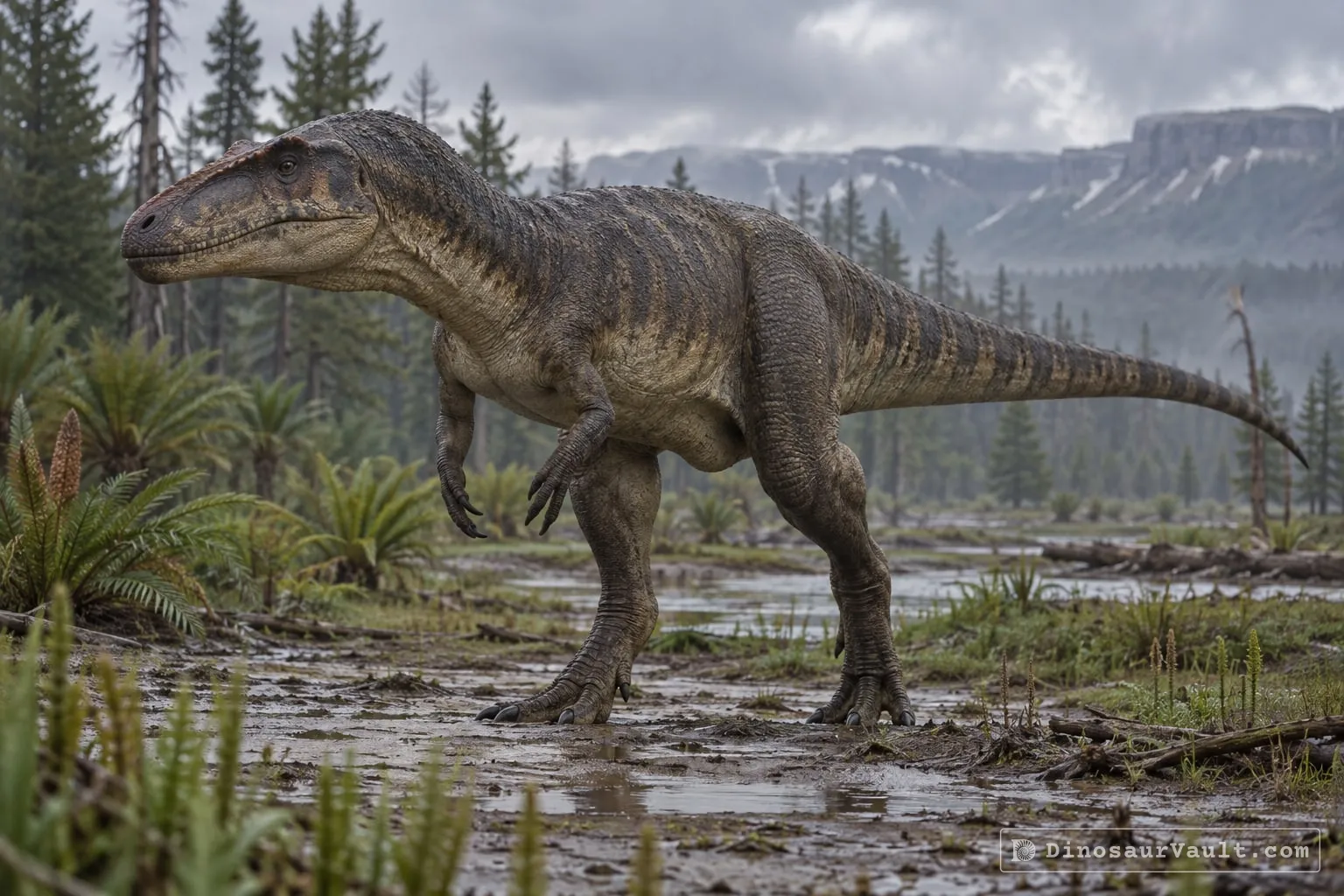


A rock formation can hold fossils laid down millions of years apart, so not every animal here met Brontosaurus.
The evidence
The science behind Brontosaurus
Which parts of the picture come from its own bones, and which come from its relatives.
From its own fossils
- Skeletons preserve a deep chest, a thick neck and a long, tapering tail.
- Neck vertebrae have strong projecting supports for the ribs and muscles.
- Differences across the skeleton led a detailed comparison to separate Brontosaurus from Apatosaurus.
Borrowed from relatives
- Much of the body is known from its own bones.
- Skulls of Apatosaurus and other diplodocids guide the restoration of its small, low head.
- Scaly skin follows impressions preserved in other sauropods.
Still unknown
- Its skin color and the full covering of its body.
- What young animals of the species excelsus looked like.
- How high it usually held its neck while feeding.
Often drawn wrong
- Older restorations gave it a deep, box-shaped head like Camarasaurus instead of a low diplodocid head.
- Its forefeet formed upright columns rather than spreading elephant-like fingers and toenails.
Discovery timeline
- 1879Named itMarsh
- 1999Close relativeStevens & Parrish
- 2013PostureTaylor & Wedel
- 2013Family treeSander
- 2015Family treeTschopp, Mateus & Benson
Key papers
The research behind what we know of Brontosaurus
Named it
Named Brontosaurus from a large sauropod skeleton found in the western United States.
Notice of new Jurassic reptiles. American Journal of Science s3-18: 501-505
Read the paper : Notice of new Jurassic reptiles (opens in a new tab)Close relative
Digital models of Apatosaurus and Diplodocus explored low browsing and neck movement, offering comparisons for the feeding posture of Brontosaurus.
Neck Posture and Feeding Habits of Two Jurassic Sauropod Dinosaurs. Science 284: 798-800
Read the paper : Neck Posture and Feeding Habits of Two Jurassic Sauropod Dinosaurs (opens in a new tab)Posture
Explained how light heads, air-filled vertebrae and a large supporting body allowed sauropods to carry long necks.
Why sauropods had long necks; and why giraffes have short necks. PeerJ 1: e36
Read the paper : Why sauropods had long necks; and why giraffes have short necks (opens in a new tab)Family tree
Combined feeding, breathing, growth and reproduction into an explanation for the enormous size of sauropods such as Brontosaurus.
An Evolutionary Cascade Model for Sauropod Dinosaur Gigantism - Overview, Update and Tests. PLoS ONE 8: e78573
Read the paper : An Evolutionary Cascade Model for Sauropod Dinosaur Gigantism - Overview, Update and Tests (opens in a new tab)Family tree
Compared individual diplodocid skeletons and revived Brontosaurus as a distinct genus closely related to Apatosaurus.
A specimen-level phylogenetic analysis and taxonomic revision of Diplodocidae (Dinosauria, Sauropoda). PeerJ 3: e857
Read the paper : A specimen-level phylogenetic analysis and taxonomic revision of Diplodocidae (Dinosauria, Sauropoda) (opens in a new tab)
Close relatives
Other members of Diplodocidae


Sources: Wikidata