Shuvuuia
"bird"
- Lived
- 84 to 72 million years ago, Late Cretaceous
- Diet
- Carnivore
- Length
- about 0.6 m (2 ft)
- Group
- Theropods, Alvarezsauridae
- Found in
- Mongolia
- Named by
- Chiappe et al. 1998
Size comparison
To scale

Scale in metersOutline: typical theropod shape
Where its fossils were found
The evidence
Today

80 million years ago
Habitat
Sand dunes stood beside temporary ponds in a dry part of Mongolia. Protoceratops, Citipati and Velociraptor lived in the same sandy region.
A Dinosaur Vault film
This Tiny Dinosaur Was Built to Hunt in the Dark
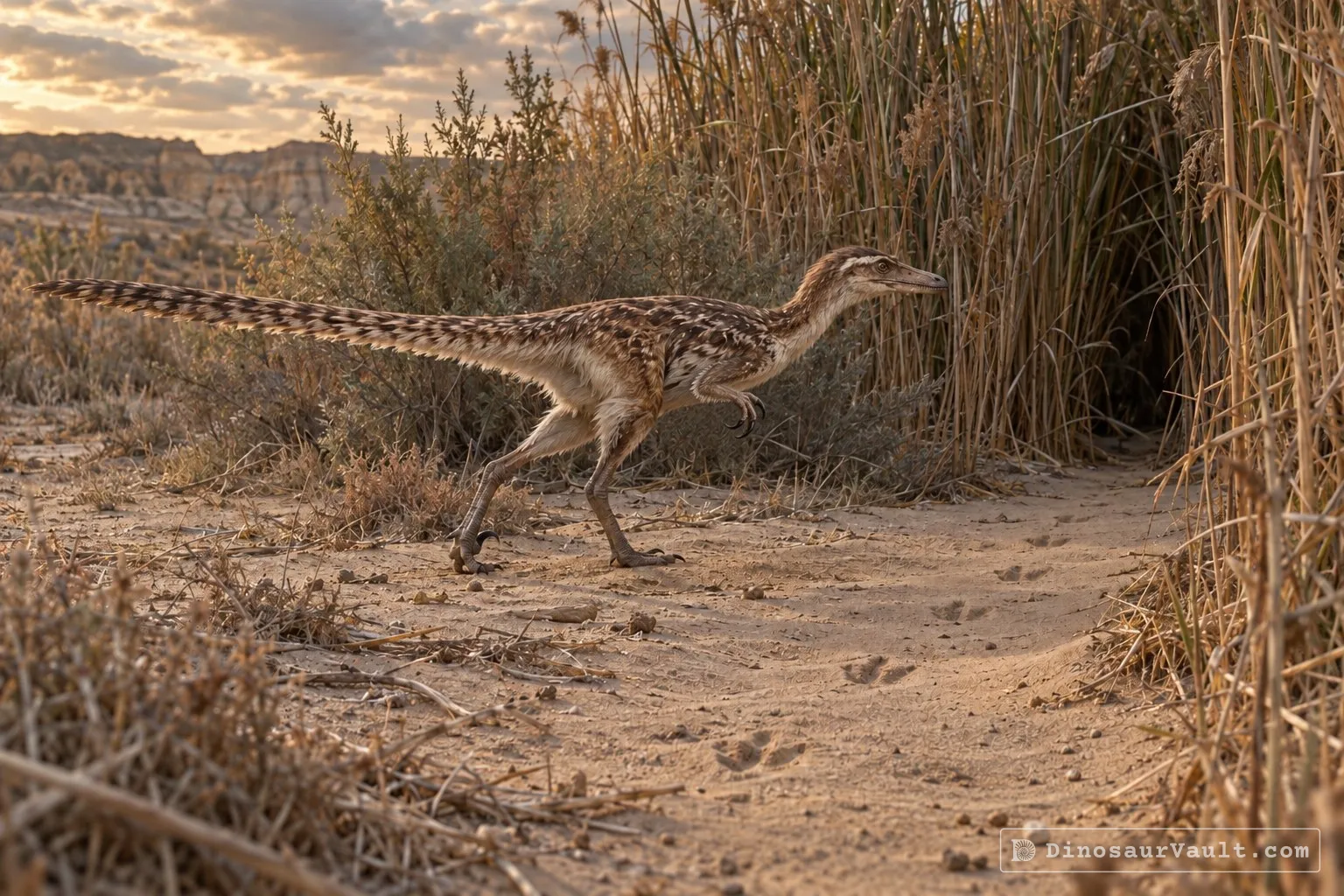
Shuvuuia was a tiny dinosaur with remarkable night senses. Its eyes and inner ears point to a nocturnal hunter with sensitive vision and exceptional hearing.
Subscribe on YouTubeField notes
About Shuvuuia
What it was like
Shuvuuia was a small alvarezsaur, a bird-like theropod about 0.6 meters (2 feet) long. It had long legs, a light skull, tiny teeth and very short, strong arms with one large claw. That claw may have been used to break into insect nests.
Its world
It lived in the Late Cretaceous, in what is now Mongolia. It comes from the Djadokhta Formation, a sandy land shared with Velociraptor, Protoceratops, the oviraptorid Citipati and the armored Pinacosaurus.
Its eyes and ears suggest it could see in dim light and hear very well, so it may have hunted at night.
How it was found
Chiappe and colleagues named Shuvuuia in 1998. The name comes from the Mongolian word for bird. Well preserved skulls have made it one of the best known alvarezsaurs.
Field gallery
More views of Shuvuuia
Scenes reconstructed from the available fossil evidence.
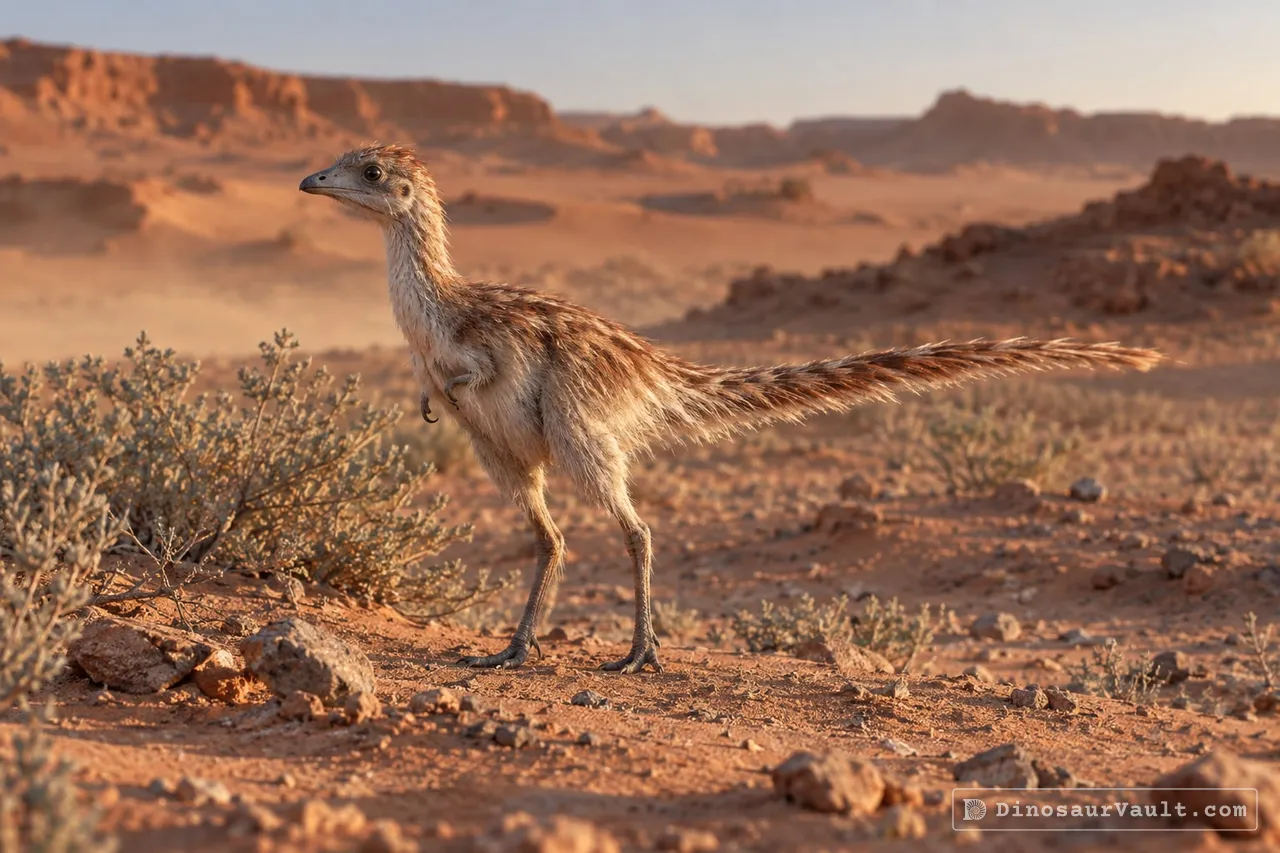
1 of 3
Lived alongside
Found in the same rock formations
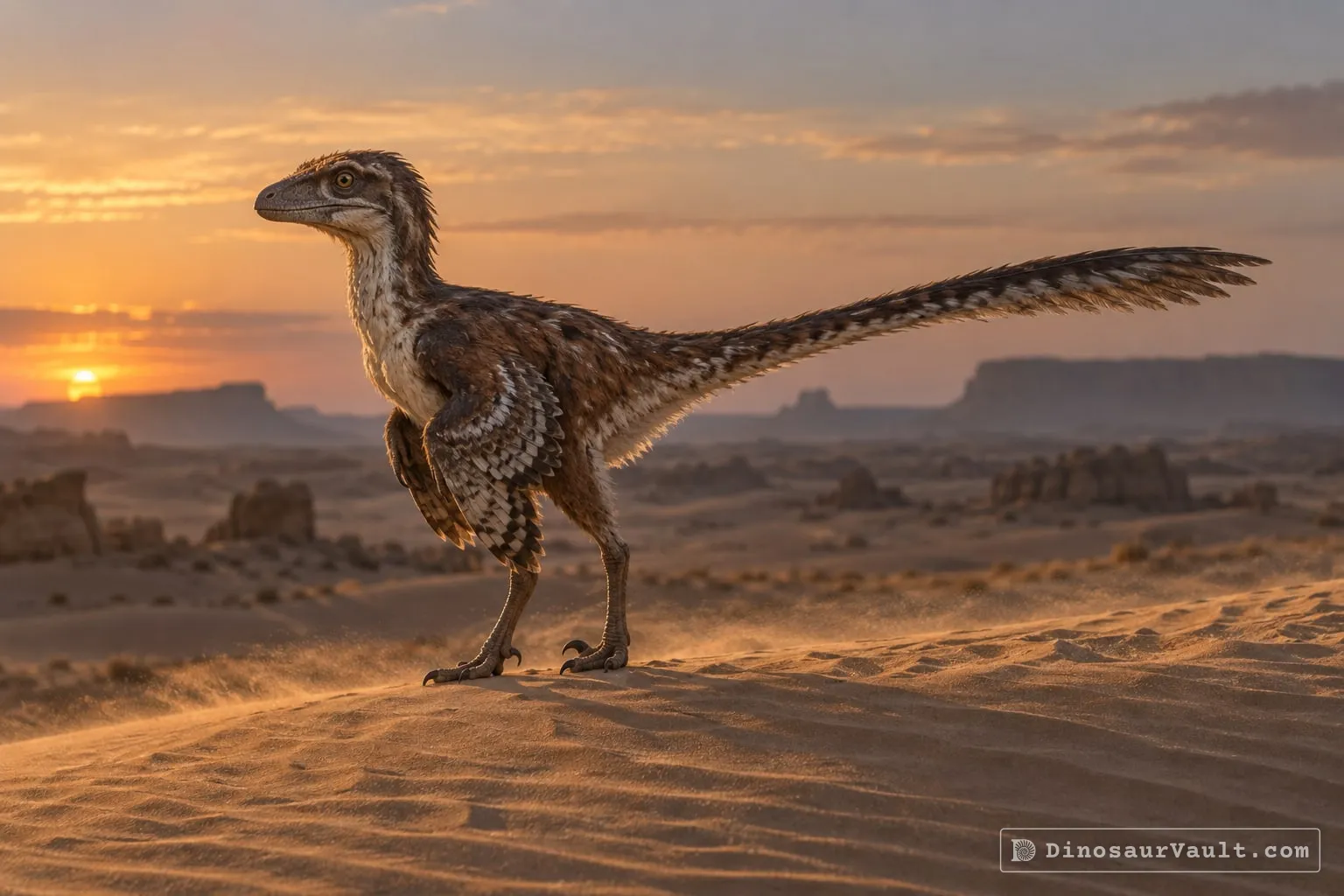
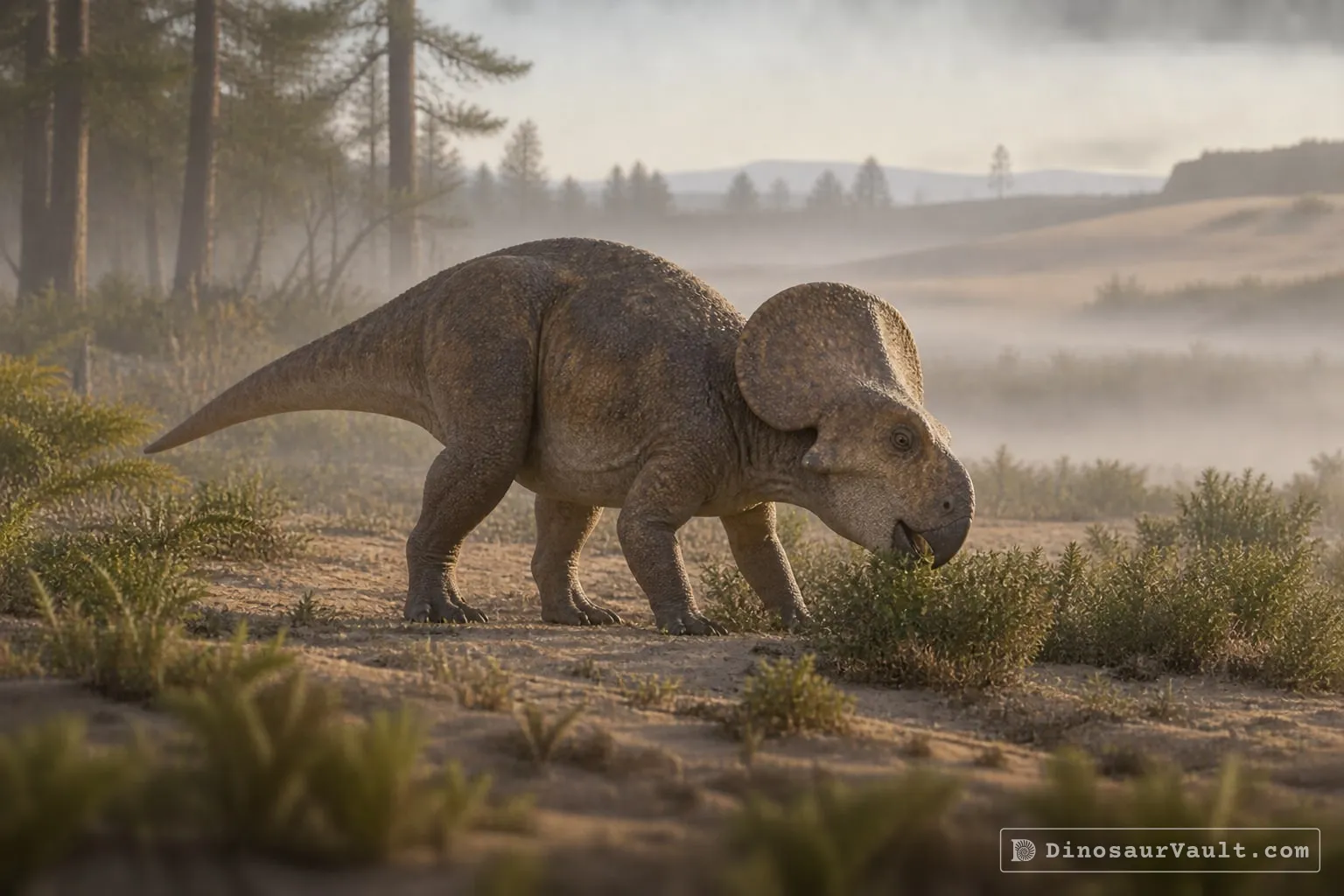
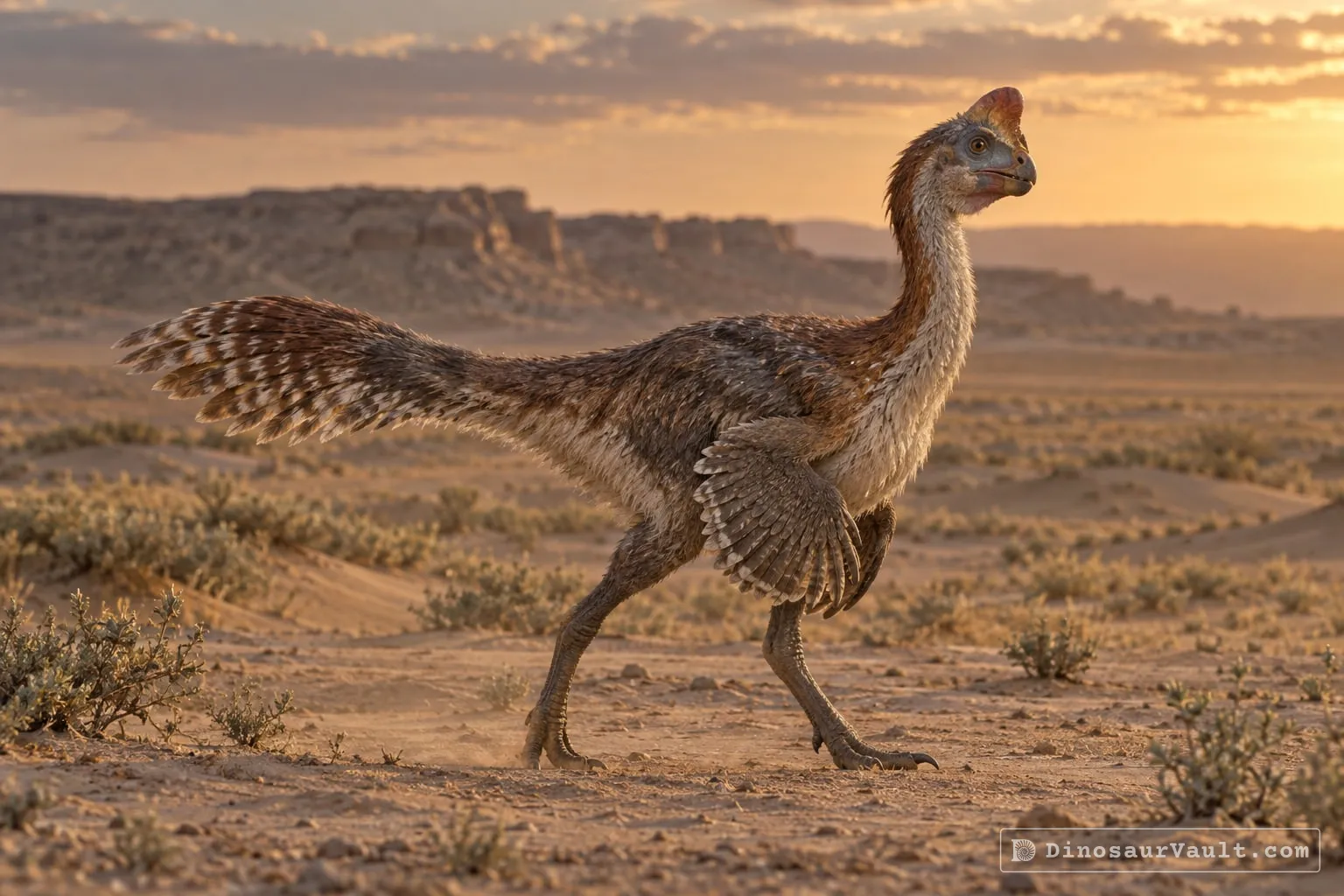
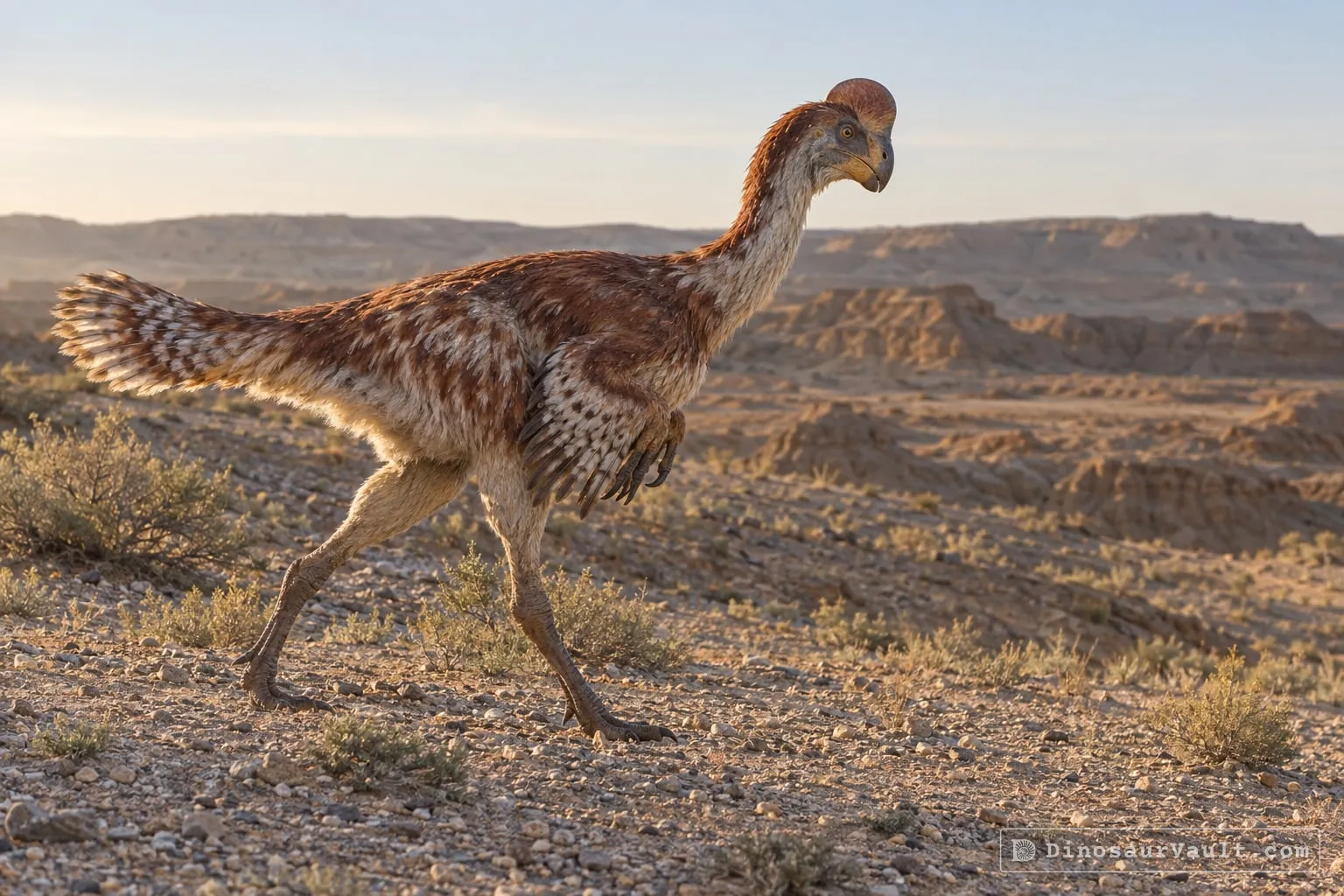
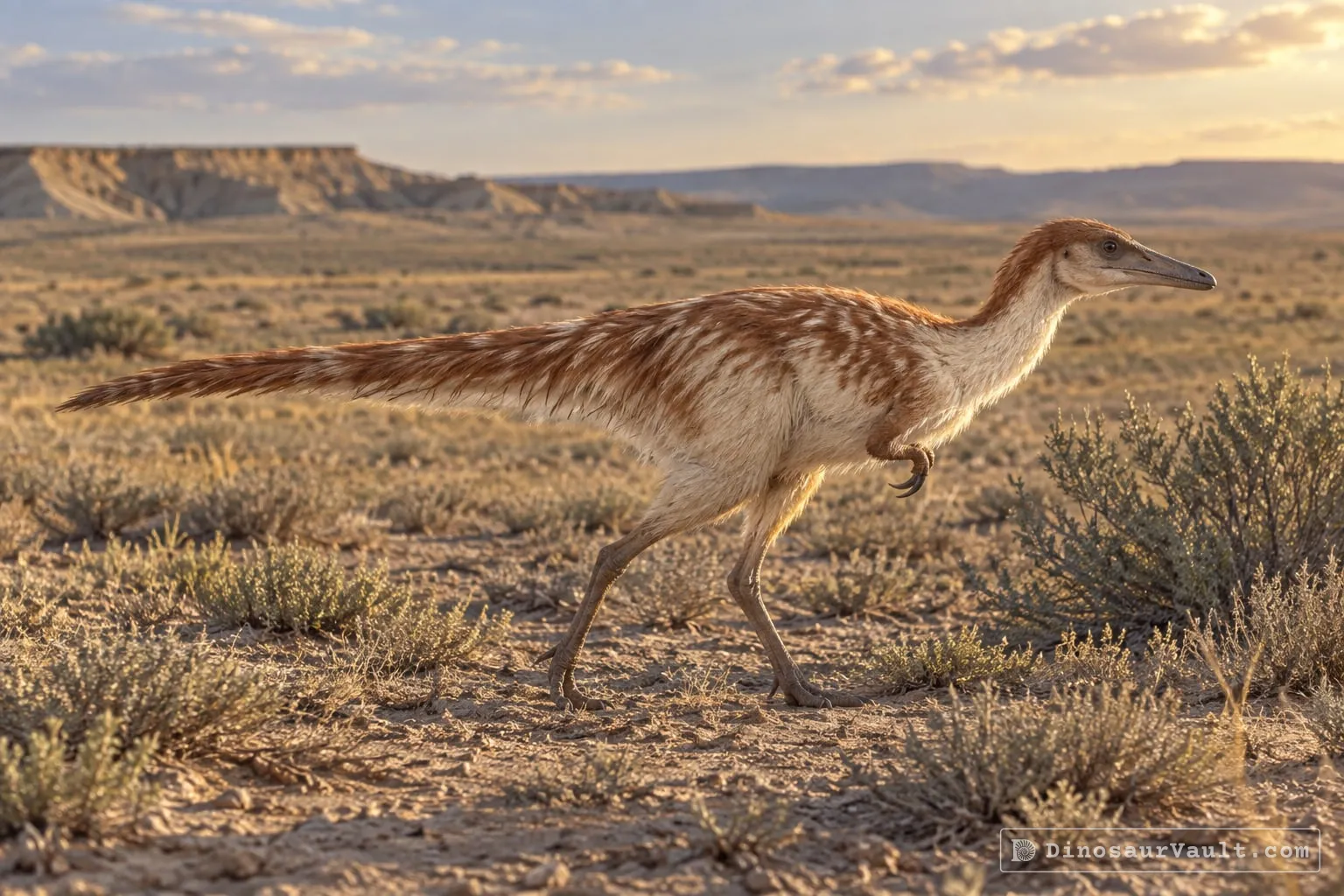
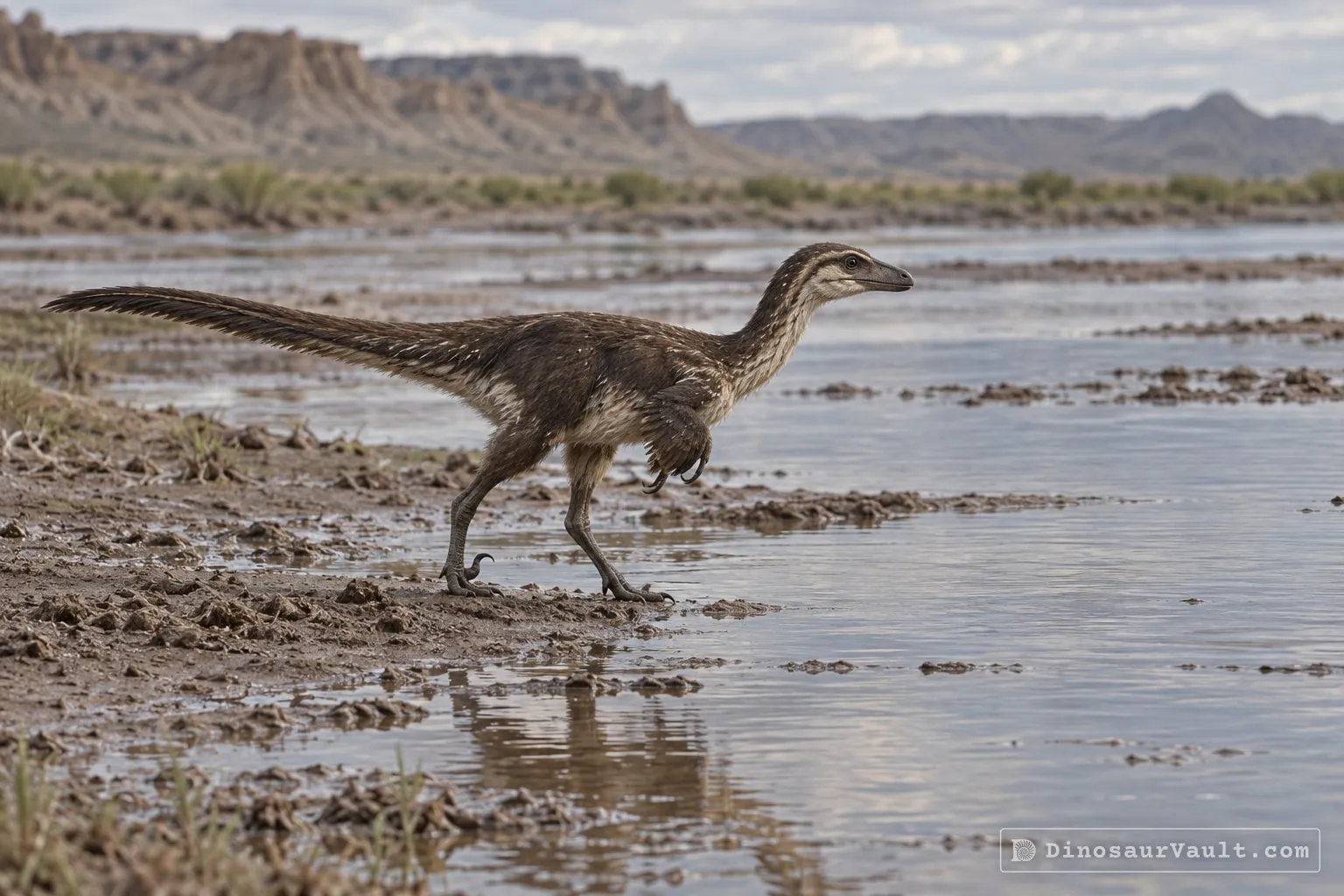
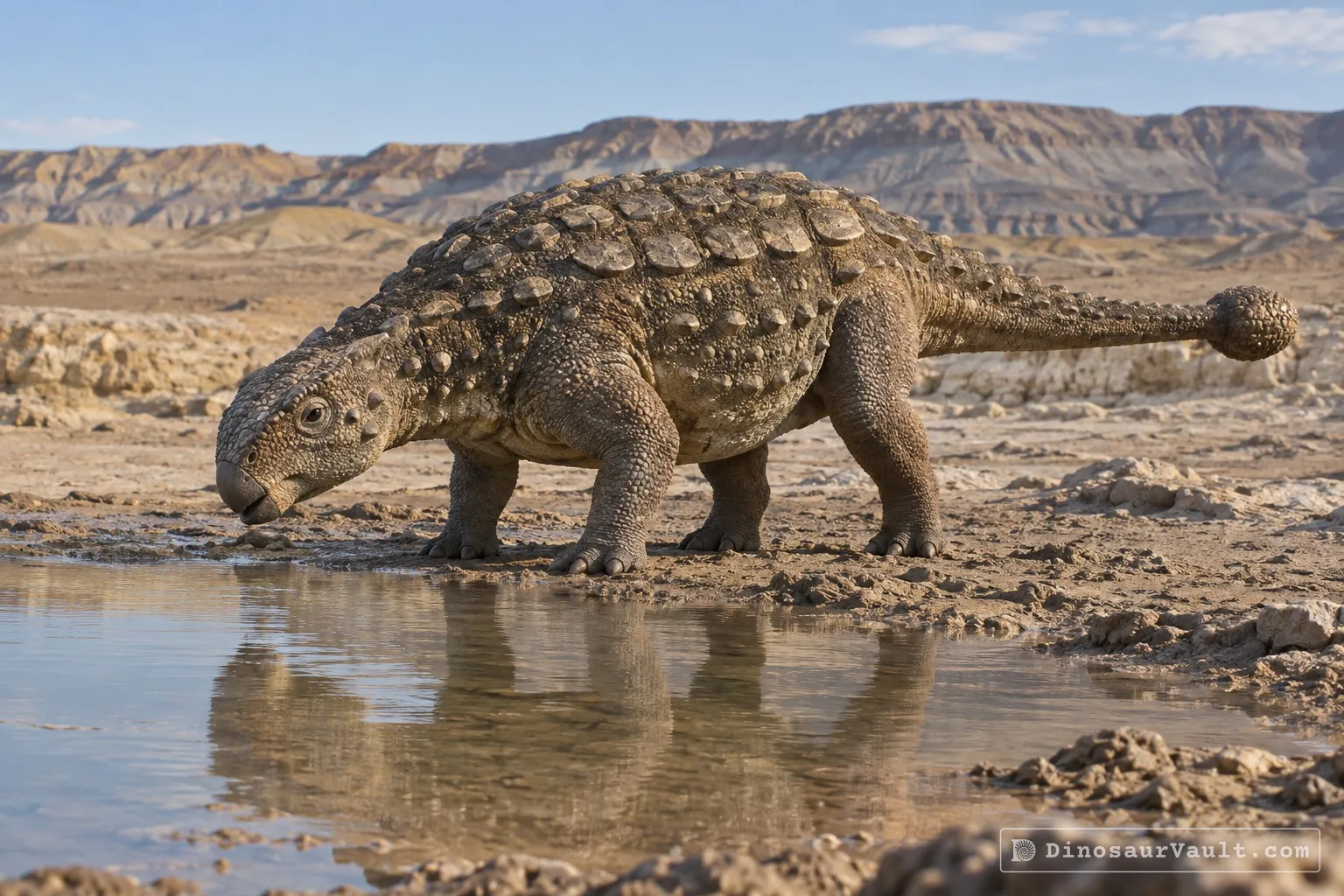


A rock formation can hold fossils laid down millions of years apart, so not every animal here met Shuvuuia.
The evidence
The science behind Shuvuuia
Which parts of the picture come from its own bones, and which come from its relatives.
From its own fossils
- Well-preserved skulls have long, slender jaws and tiny teeth.
- The skeleton has long hind legs and very short, powerful arms with a large hand claw.
- The bony rings around its eyes suggest it could see in very dim light.
Borrowed from relatives
- Missing skeletal details are compared with other alvarezsaurs such as Mononykus.
Still unknown
- Whether it could locate prey by sound.
- Exactly what it ate and how it used its large claw.
- Its color and the full arrangement of its body covering.
Discovery timeline
- 1998Named itChiappe, Norell & Clark
- 2008Its worldDingus et al.
- 2021How it fedChoiniere et al.
- 2025RedescriptionManley & Köppl
Key papers
The research behind what we know of Shuvuuia
Named it
Named Shuvuuia from well-preserved skulls with slender jaws and a joint that allowed the snout to move relative to the braincase.
The skull of a relative of the stem-group bird Mononykus. Nature 392: 275-278
Read the paper : The skull of a relative of the stem-group bird Mononykus (opens in a new tab)Its world
Described dune sands, sandslides and temporary ponds in the rocks that preserve Shuvuuia.
The Geology of Ukhaa Tolgod (Djadokhta Formation, Upper Cretaceous, Nemegt Basin, Mongolia). American Museum Novitates 3616: 1
Read the paper : The Geology of Ukhaa Tolgod (Djadokhta Formation, Upper Cretaceous, Nemegt Basin, Mongolia) (opens in a new tab)How it fed
Interpreted the eye and inner-ear anatomy as adaptations for nocturnal hunting, including a proposed comparison with owl hearing.
Evolution of vision and hearing modalities in theropod dinosaurs. Science 372: 610-613
Read the paper : Evolution of vision and hearing modalities in theropod dinosaurs (opens in a new tab)Redescription
Challenged the owl-hearing comparison by reexamining how inner-ear size and structure had been interpreted.
When dinosaurs hear like barn owls: pitfalls and caveats in assessing hearing in dinosaurs. Biology Letters 21
Read the paper : When dinosaurs hear like barn owls: pitfalls and caveats in assessing hearing in dinosaurs (opens in a new tab)
Close relatives
Other members of Alvarezsauridae


Sources: Wikidata