Saurornithoides
saw-ROR-nih-THOY-deez
"lizard bird form"
- Lived
- 84 to 72 million years ago, Late Cretaceous
- Diet
- Omnivore
- Length
- about 3 m (10 ft)
- Group
- Theropods, Troodontidae
- Found in
- Mongolia
- Named by
- Osborn 1924
Size comparison
To scale

Scale in metersOutline: typical theropod shape
Where its fossils were found
The evidence
Today

80 million years ago
Habitat
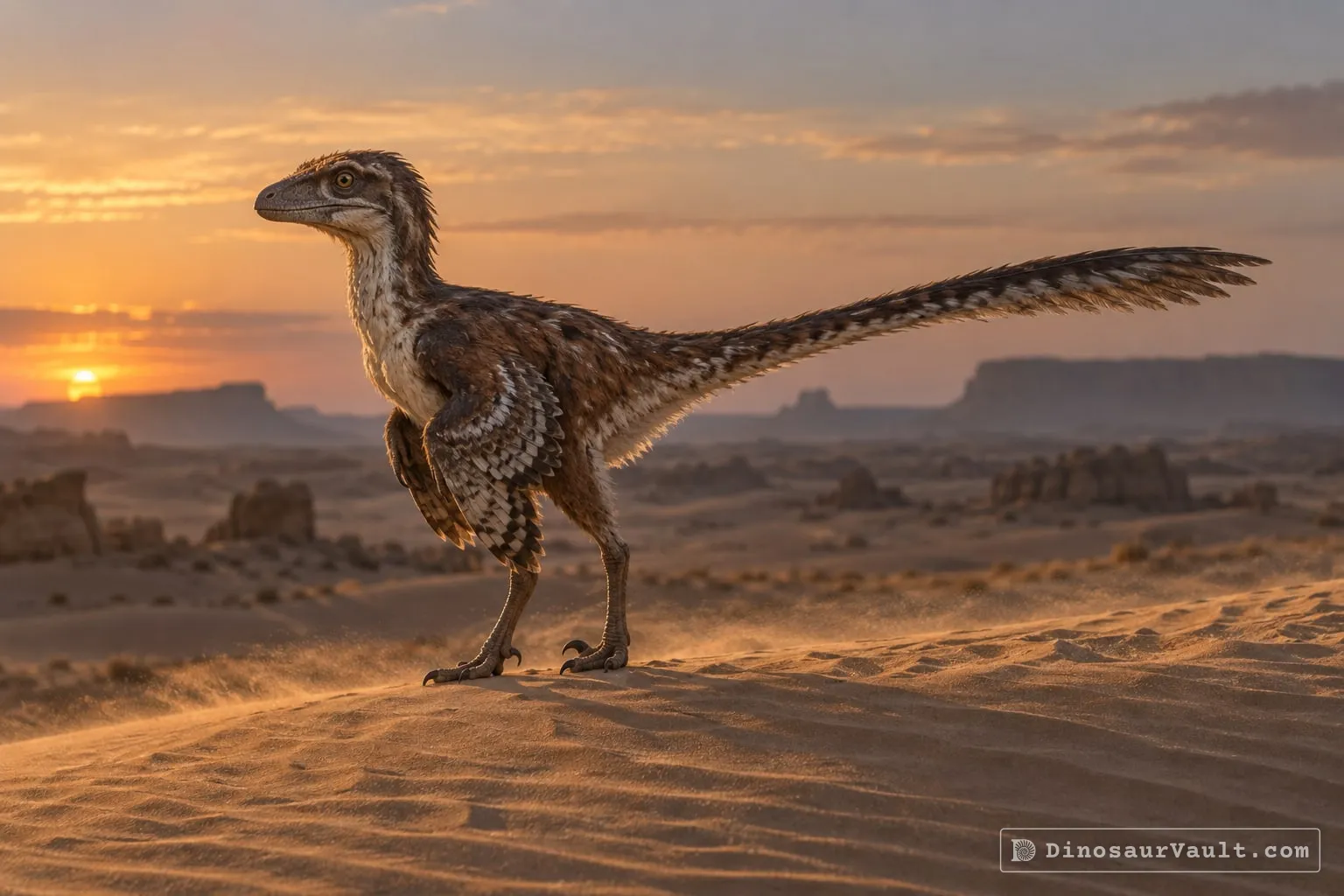
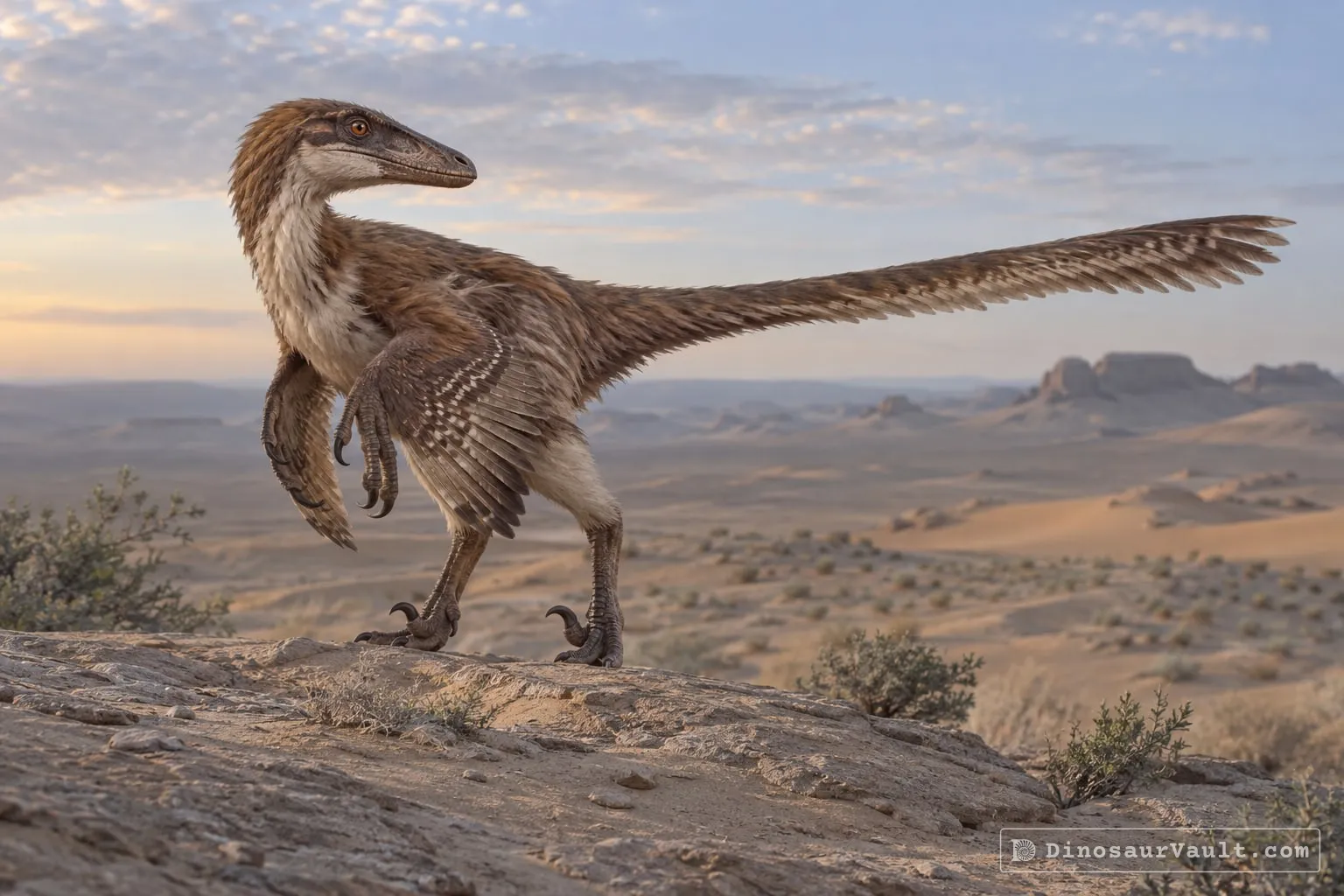
A dry landscape of dunes in the Djadokhta Formation of Mongolia. Protoceratops, Velociraptor and Pinacosaurus lived in the same region.
Field notes
About Saurornithoides
What it was like
Saurornithoides was a slender, feathered theropod from the troodontid family. It had large eyes, a long narrow snout full of small teeth, and long legs for running. Like its relatives, it probably hunted small animals and may have eaten some plants too.
Its world
It lived in the Late Cretaceous in what is now Mongolia. Its first bones come from the Djadokhta Formation, a dry land of dunes where Protoceratops, Velociraptor and the armored Pinacosaurus also lived.
How it was found
Osborn named Saurornithoides in 1924. The name refers to its bird-like skull. A second species once placed here is now often treated as a separate genus.
Field gallery
More views of Saurornithoides
Scenes reconstructed from the available fossil evidence.
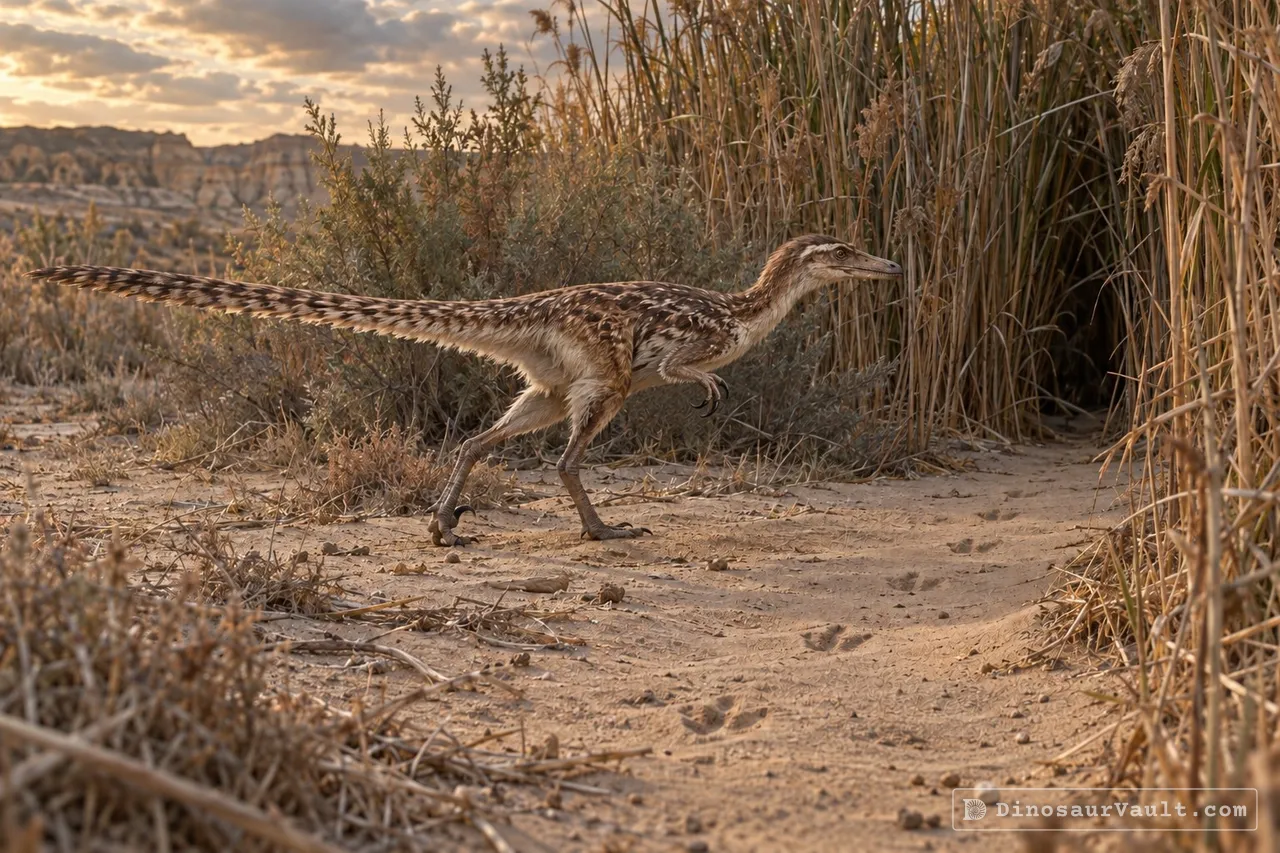
1 of 3
Lived alongside
Found in the same rock formations
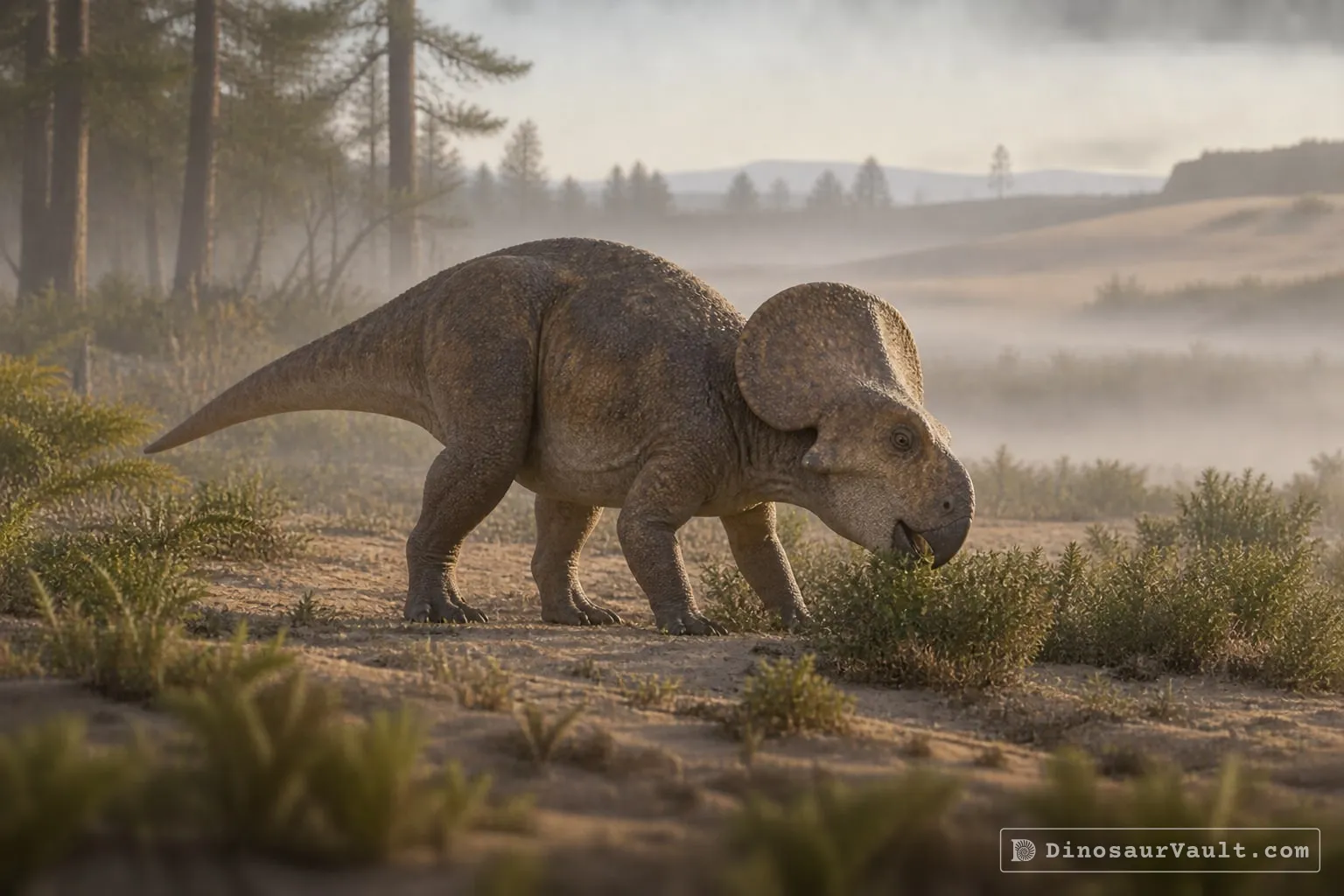
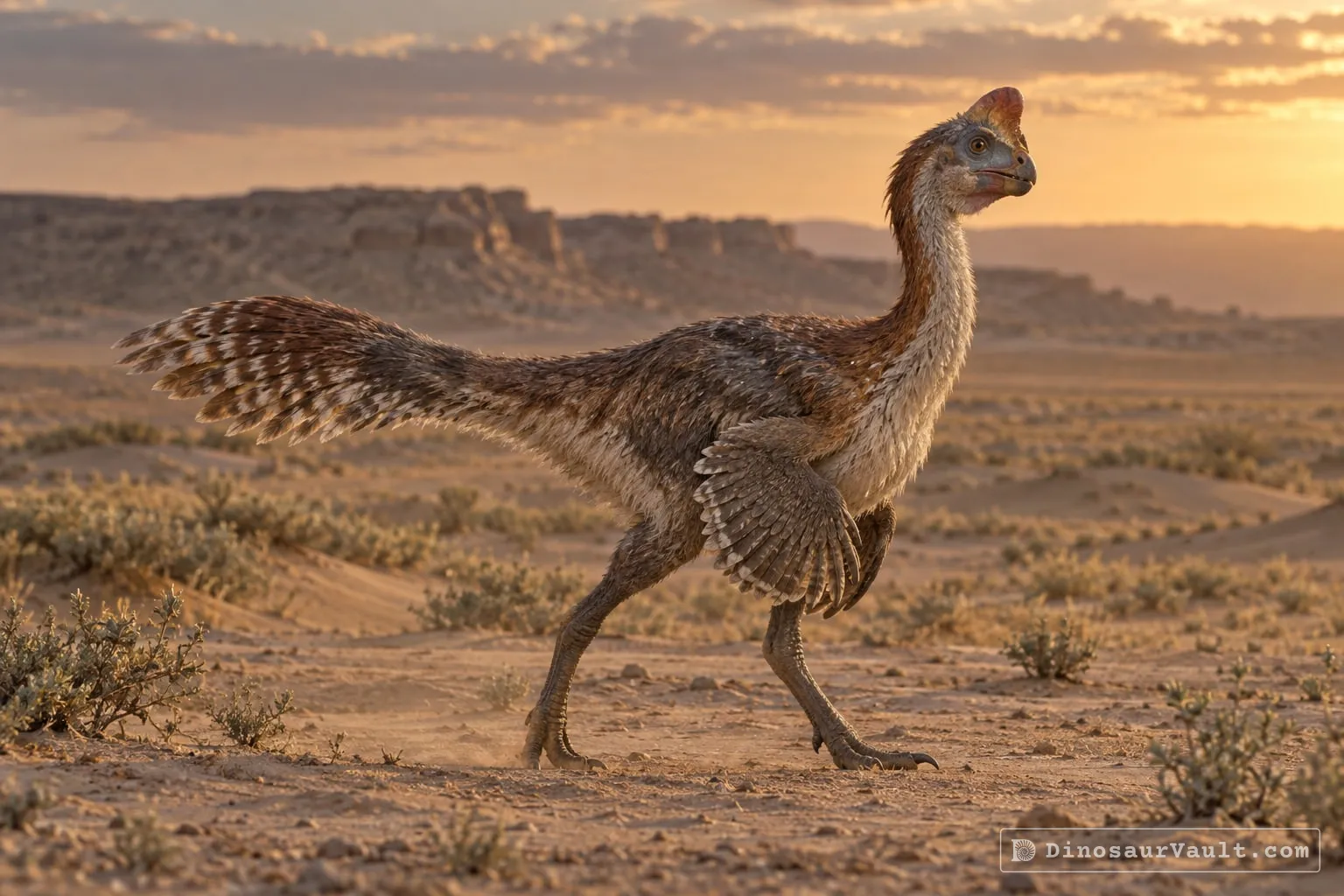
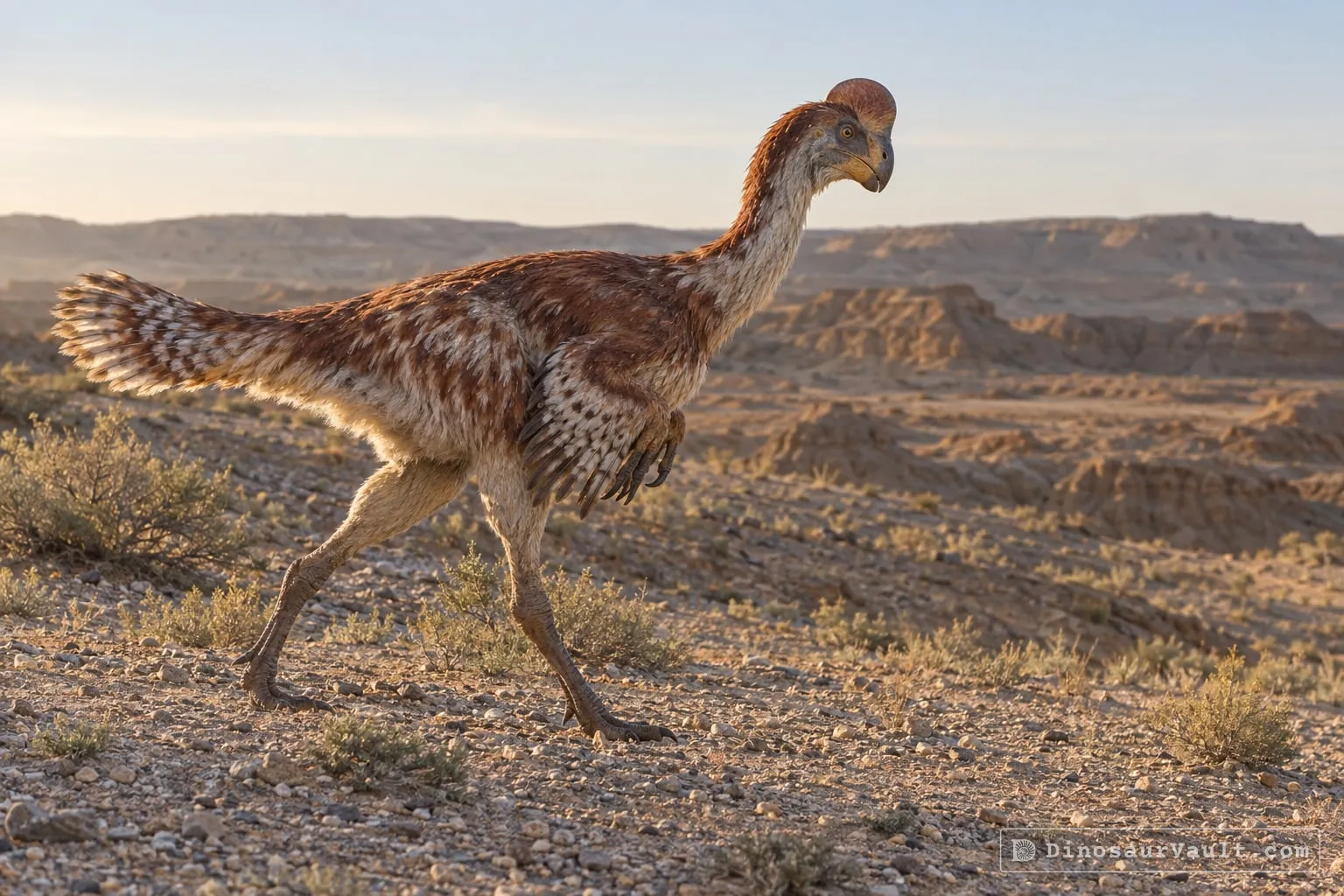
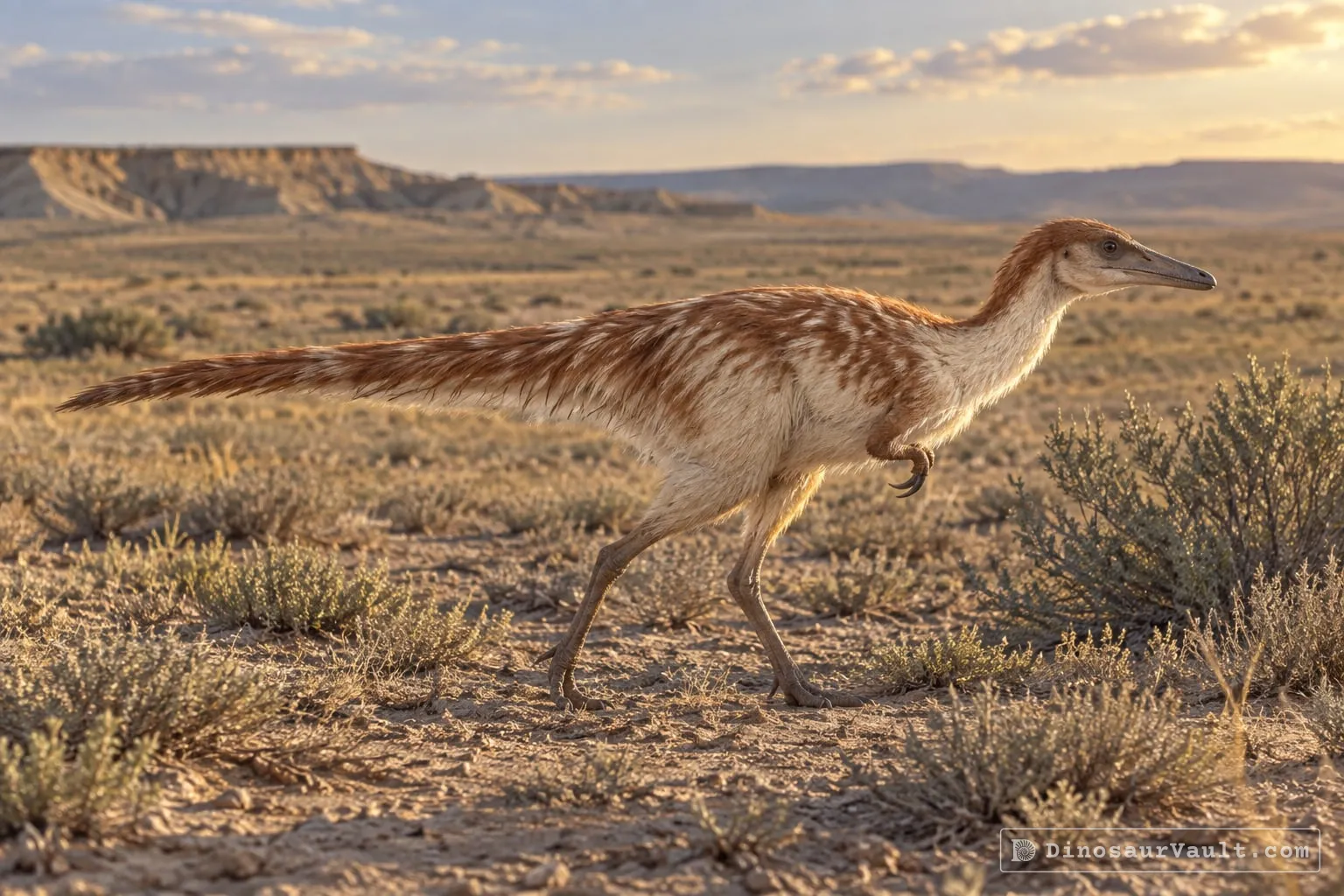
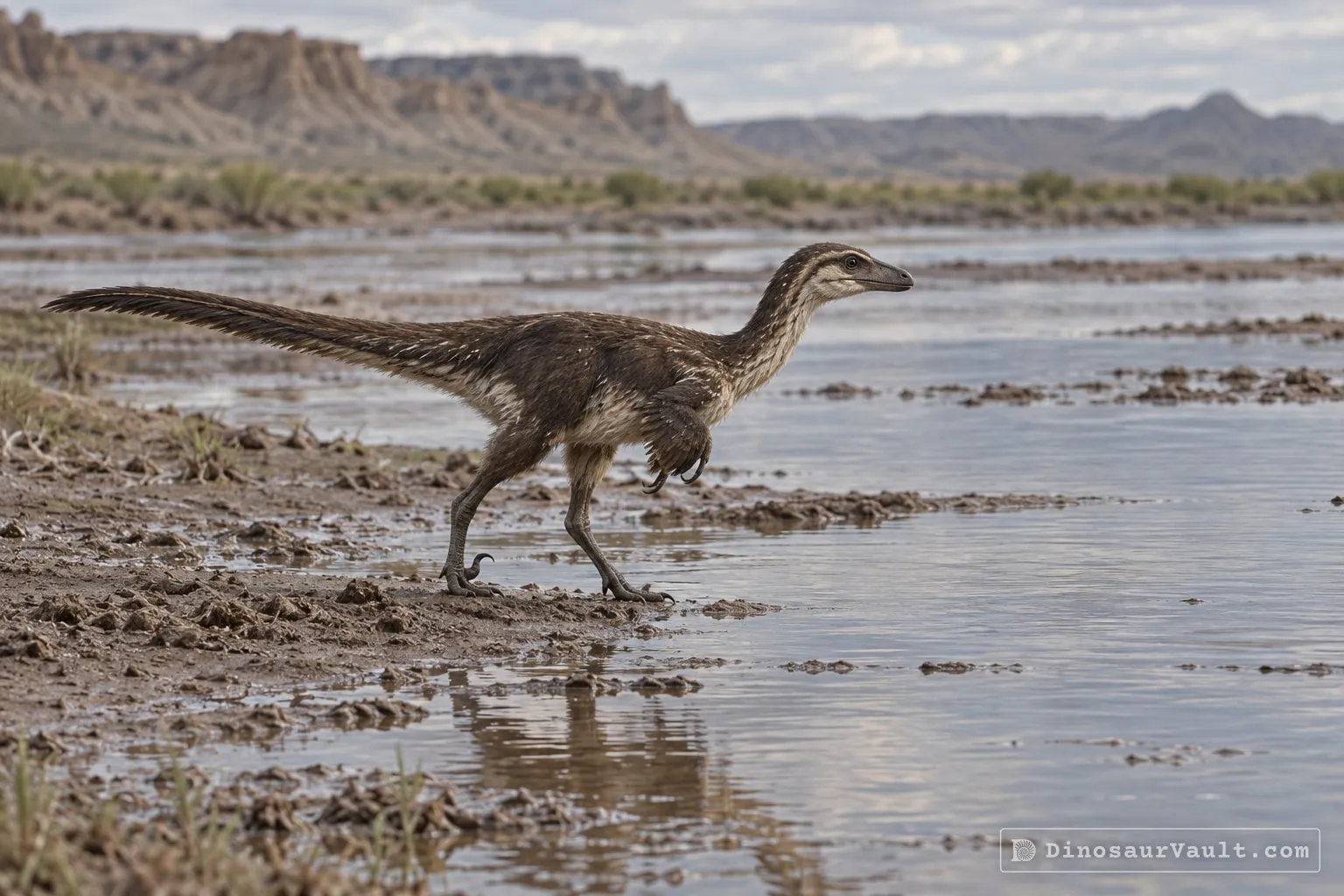
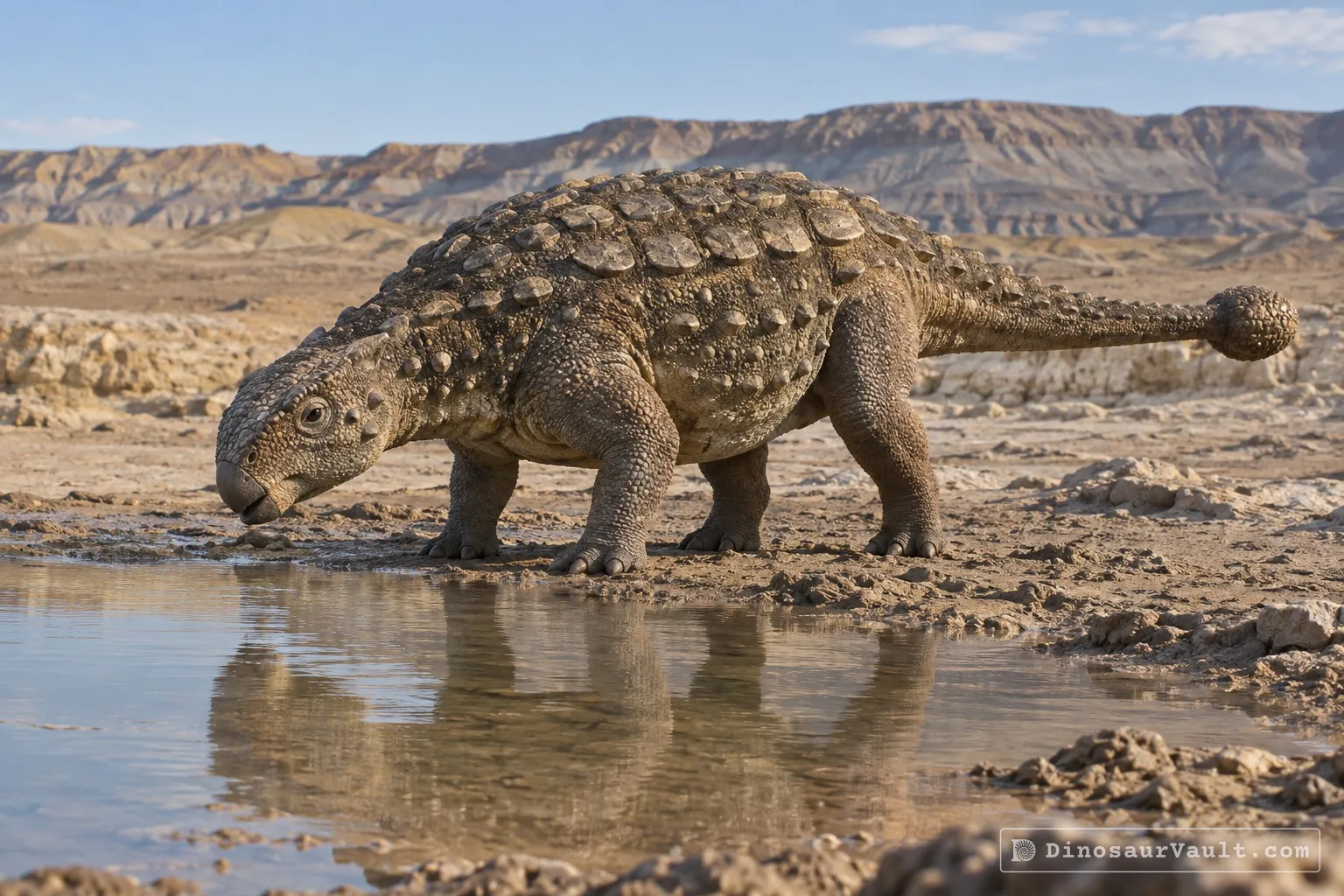


A rock formation can hold fossils laid down millions of years apart, so not every animal here met Saurornithoides.
The evidence
The science behind Saurornithoides
Which parts of the picture come from its own bones, and which come from its relatives.
From its own fossils
- The type specimen is a weathered skull and lower jaws with back vertebrae, the hip vertebrae, the base of the tail, part of the hips, a thigh bone, the impression of a long, slender shin bone and part of a foot.
- The skull has a long, narrow snout and large eye sockets. The teeth become larger toward the back of the jaws and carry coarse serrations on their rear edges.
- The second toe carries an enlarged, curved claw, whose bony core is damaged.
Borrowed from relatives
- Feathers on the body, arms, lower legs and tail follow Jianianhualong, a feathered troodontid, which also guides the missing skull roof and neck.
- The arms, hands and the rest of the tail are restored by comparison with the troodontid Sinornithoides.
Still unknown
- Its neck, arms and hands, and the end of its tail.
- Its feather colors and patterns.
- Exactly which animals and plants it ate.
Discovery timeline
- 1924Named itOsborn
- 2009RedescriptionNorell et al.
- 2017Close relativeXu et al.
- 2023Close relativeLee et al.
Key papers
The research behind what we know of Saurornithoides
Named it
Named Saurornithoides from a skull and partial skeleton, noting its narrow, bird-like snout.
Three new Theropoda, Protoceratops zone, central Mongolia. American Museum Novitates 144: 1-12
No link available
Redescription
Restudied the original skeleton, found that only it can be firmly assigned to the genus, and moved the species junior into the separate genus Zanabazar.
A Review of the Mongolian Cretaceous Dinosaur Saurornithoides (Troodontidae: Theropoda). American Museum Novitates 3654: 1-63
Read the paper : A Review of the Mongolian Cretaceous Dinosaur Saurornithoides (Troodontidae: Theropoda) (opens in a new tab)Close relative
Described Jianianhualong, a troodontid preserving feathers on its body, arms, lower legs and tail.
Mosaic evolution in an asymmetrically feathered troodontid dinosaur with transitional features. Nature Communications 8
Read the paper : Mosaic evolution in an asymmetrically feathered troodontid dinosaur with transitional features (opens in a new tab)Close relative
Named a new troodontid from Mongolia and told it apart from Saurornithoides partly by the foot, including the second toe claw.
The first troodontid (Dinosauria: Theropoda) from the Upper Cretaceous Baruungoyot Formation of Mongolia. Journal of Vertebrate Paleontology 43
Read the paper : The first troodontid (Dinosauria: Theropoda) from the Upper Cretaceous Baruungoyot Formation of Mongolia (opens in a new tab)
Close relatives
Other members of Troodontidae


Sources: Wikidata