Moros
"doom"
Type species Moros intrepidus
- Lived
- 101 to 94 million years ago, Late Cretaceous
- Diet
- Carnivore
- Group
- Theropods
- Found in
- United States
- Named by
- Zanno et al. 2019
Where its fossils were found
The evidence
Today

95 million years ago
Habitat
Its fossil site was a coastal mudflat with small channels and lakes. Siats and the plant eaters Eolambia and Iani lived in the same part of the Cedar Mountain Formation.
Field notes
About Moros
What it was like
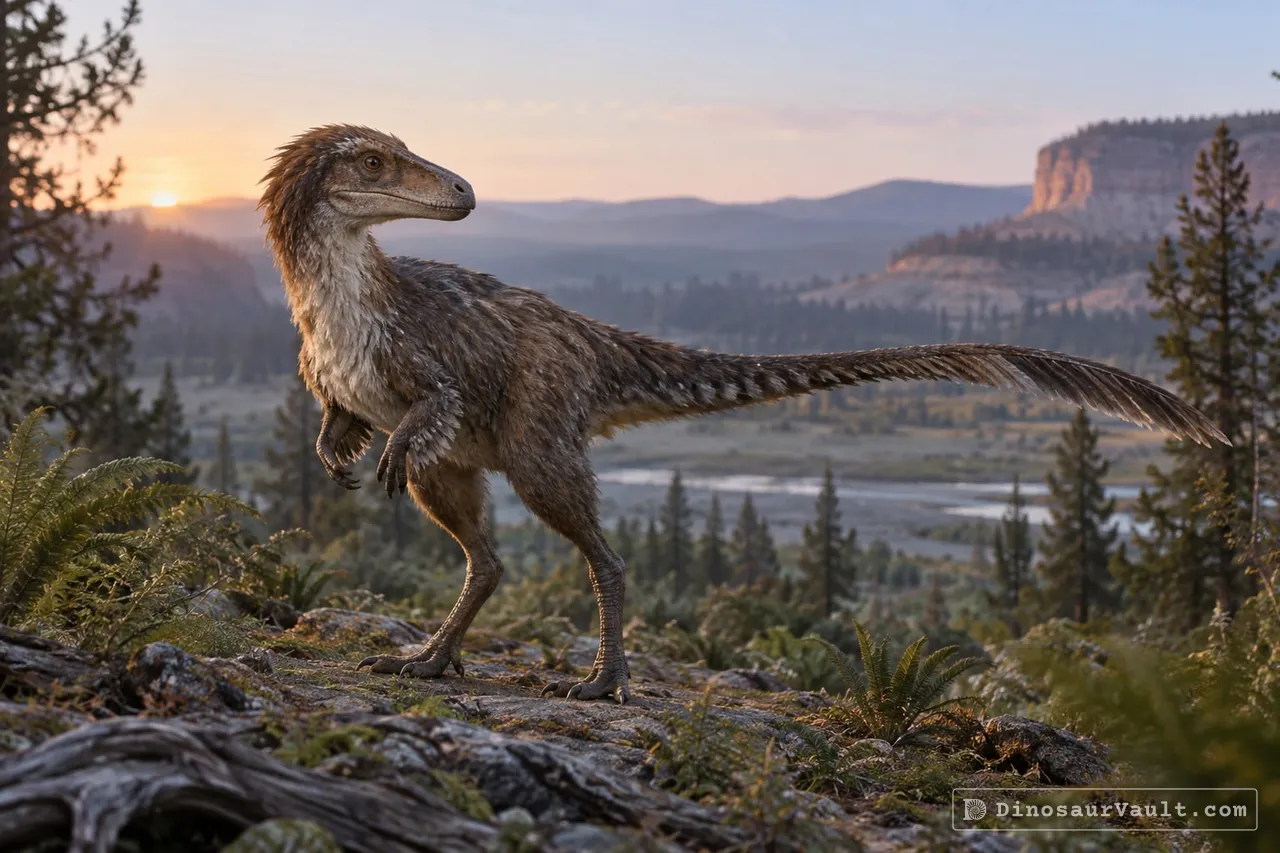
Moros was a small tyrannosaur relative, about the size of a deer. It had long, slender legs built for speed. It shows that tyrannosaurs were still small in North America before they grew into giants.
Its world
It lived about 101 to 94 million years ago, in the Late Cretaceous, in what is now Utah. It comes from the Cedar Mountain Formation, where larger predators such as Siats were the top hunters.
How it was found
Zanno and colleagues named Moros in 2019, from a hind leg. The type species is Moros intrepidus.
Field gallery
More views of Moros
Scenes reconstructed from the available fossil evidence.
Lived alongside
Found in the same rock formations
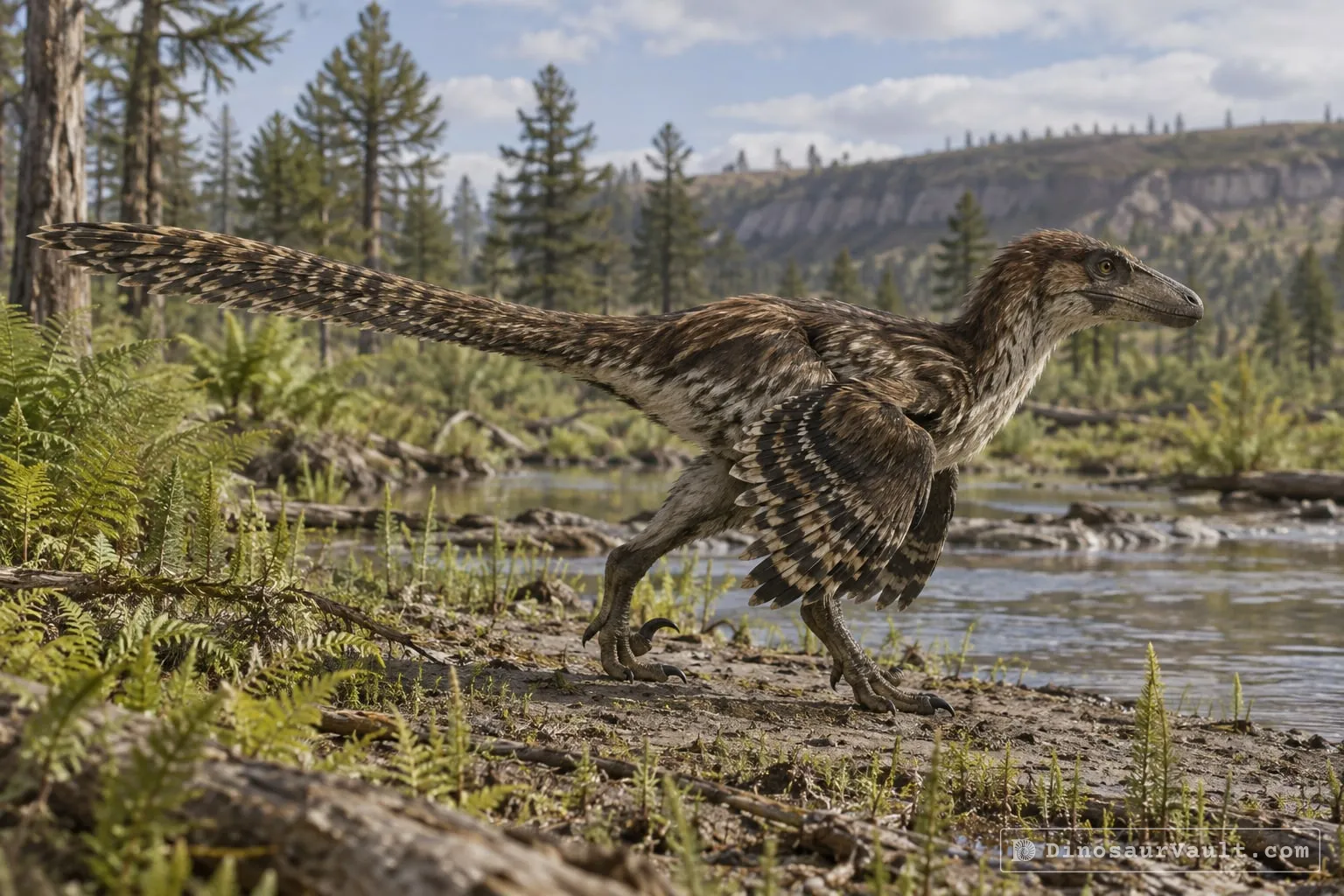
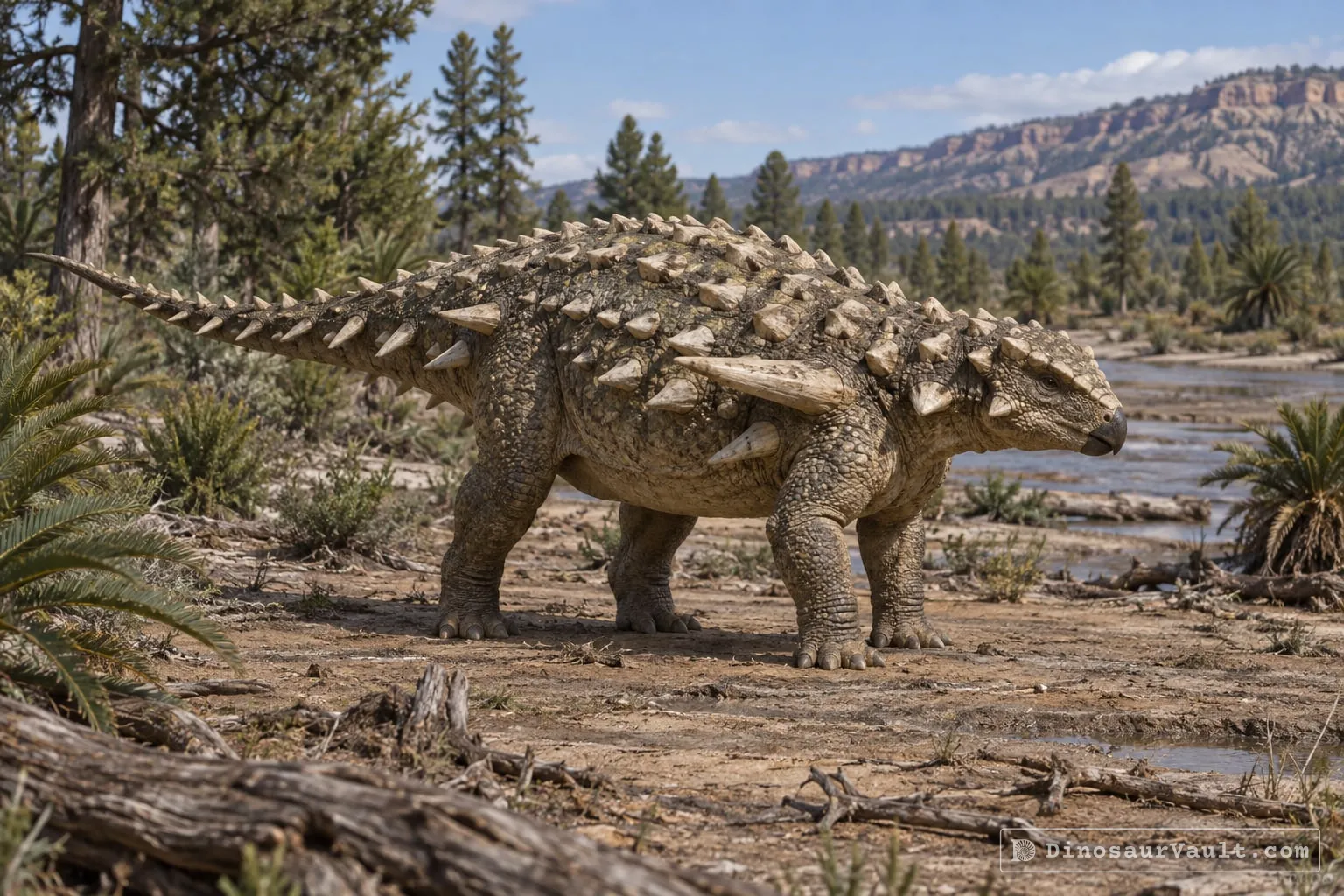
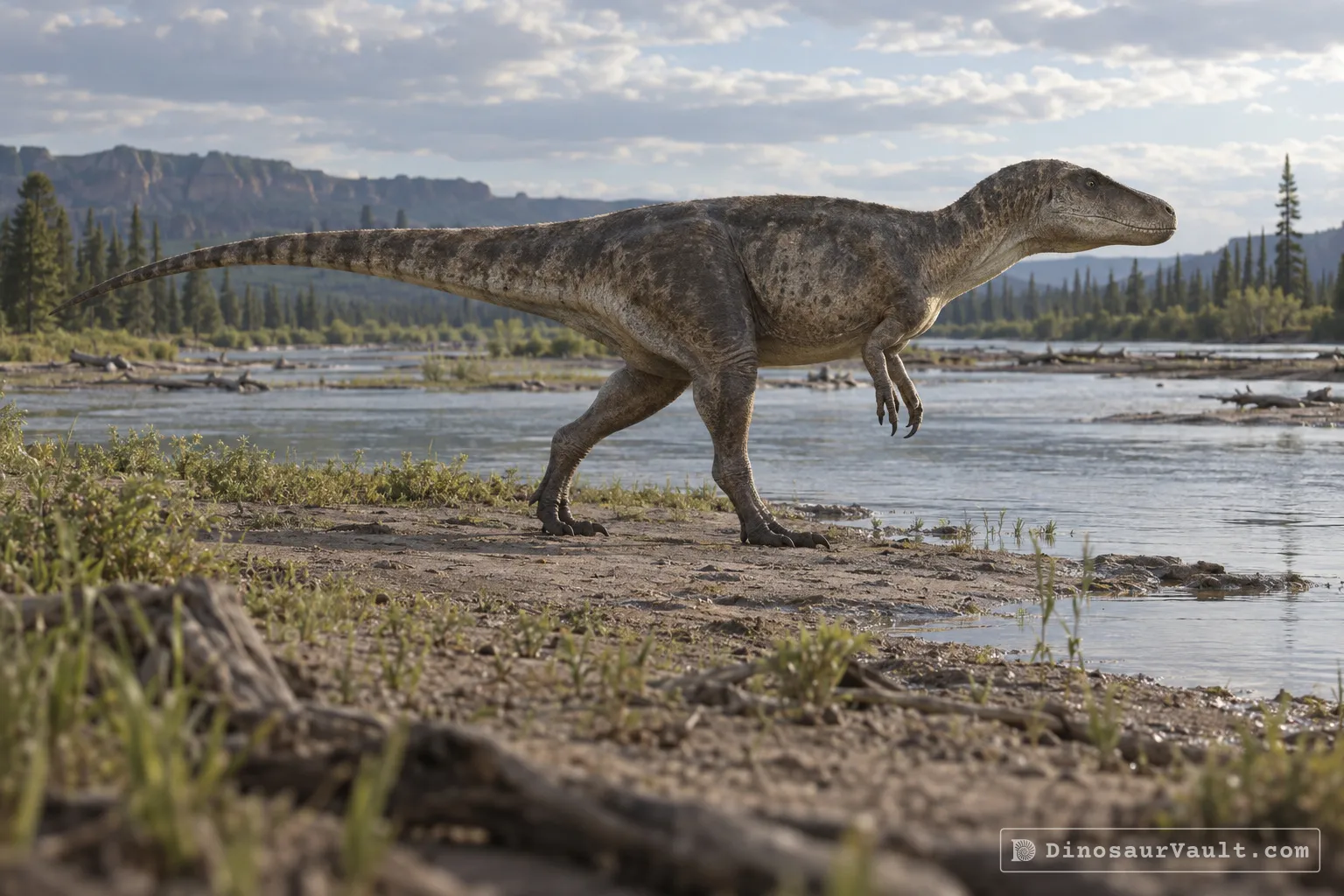
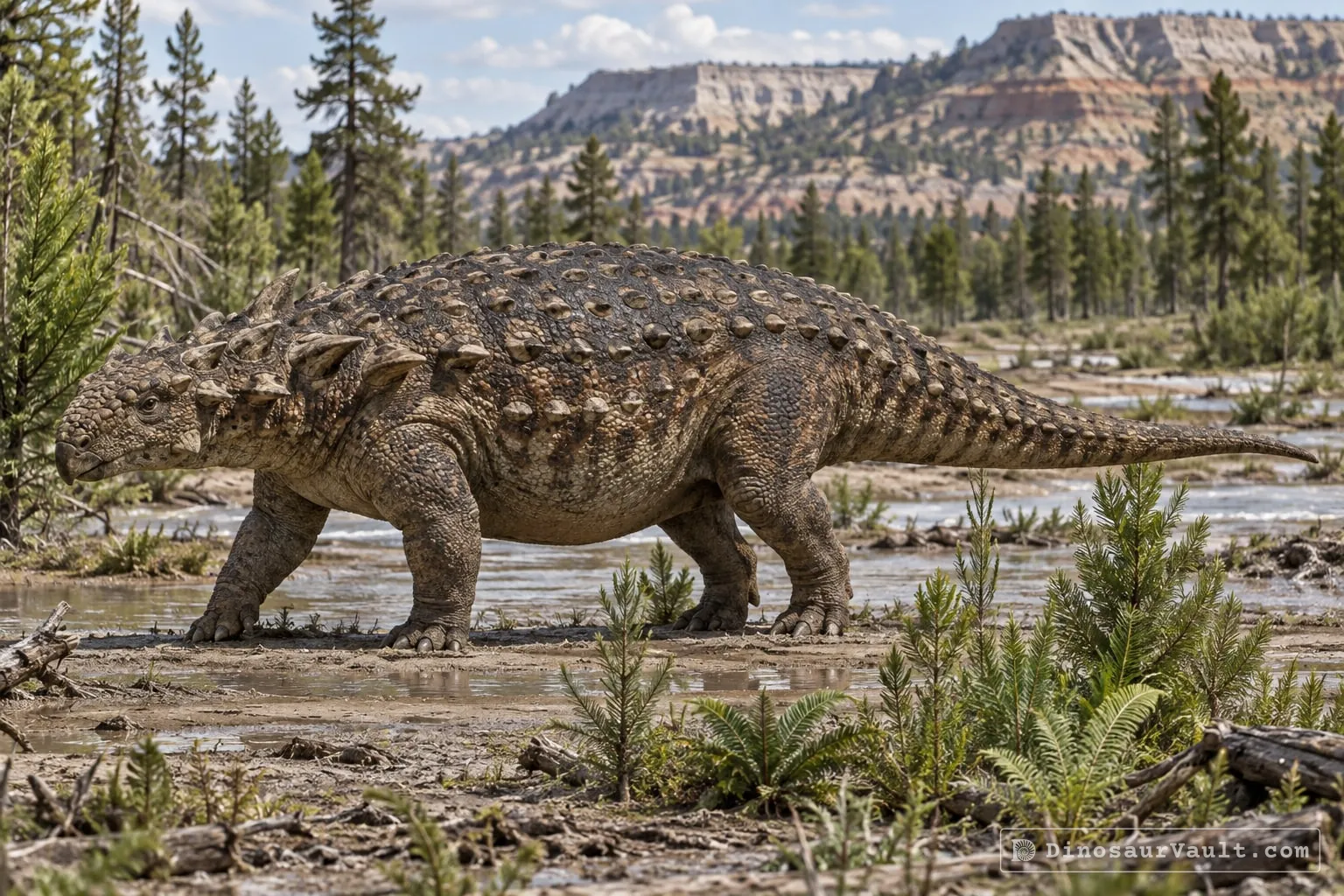
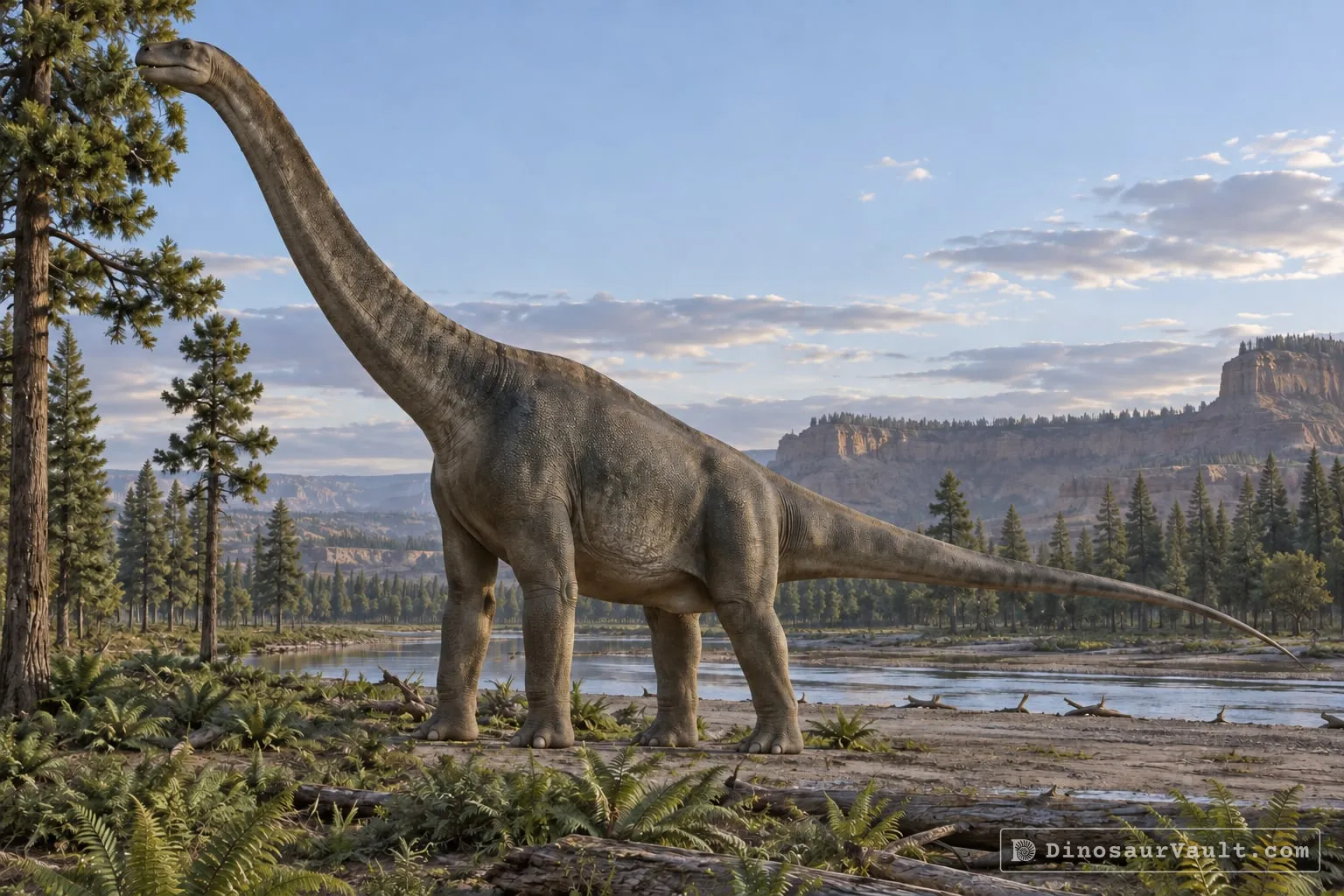
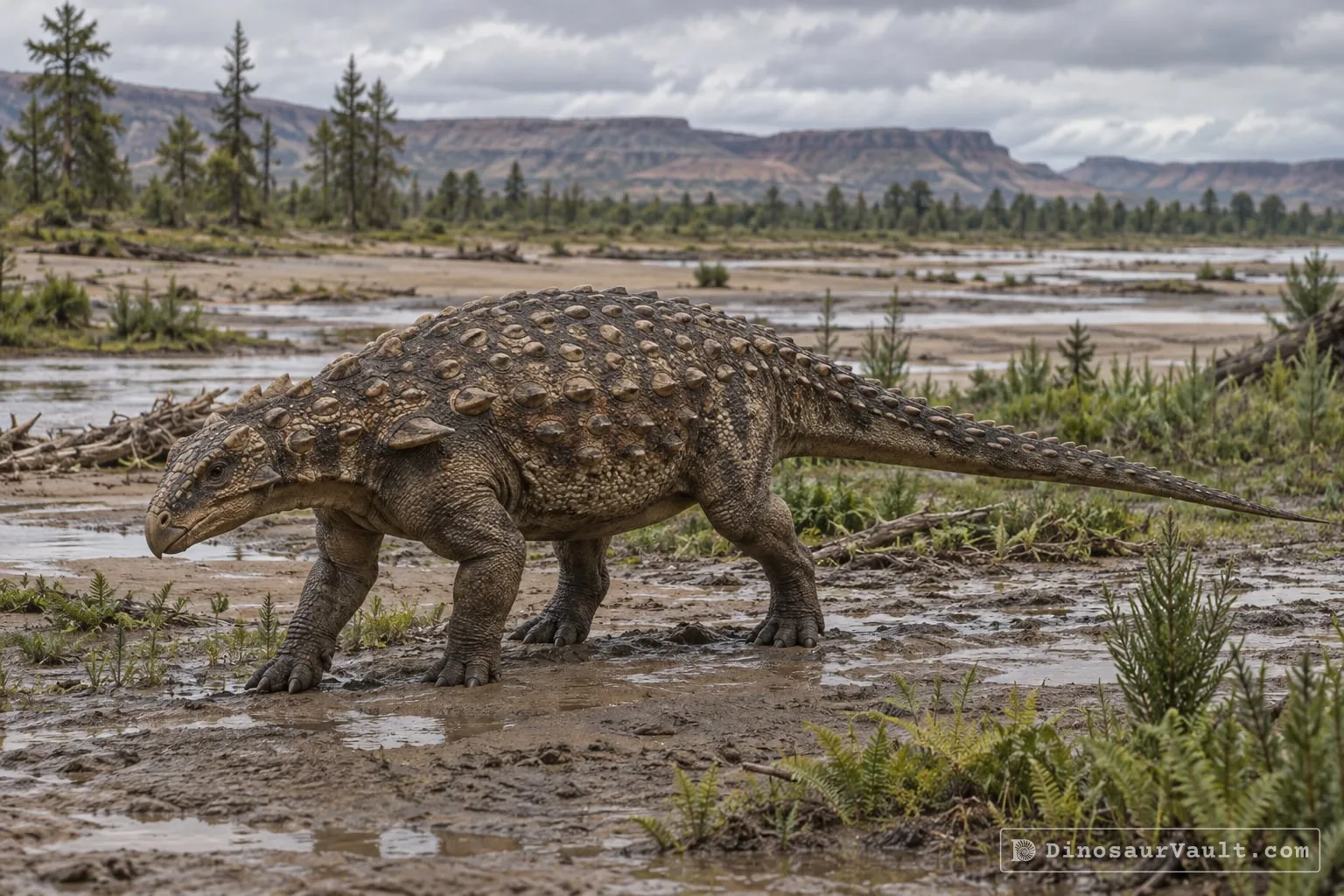
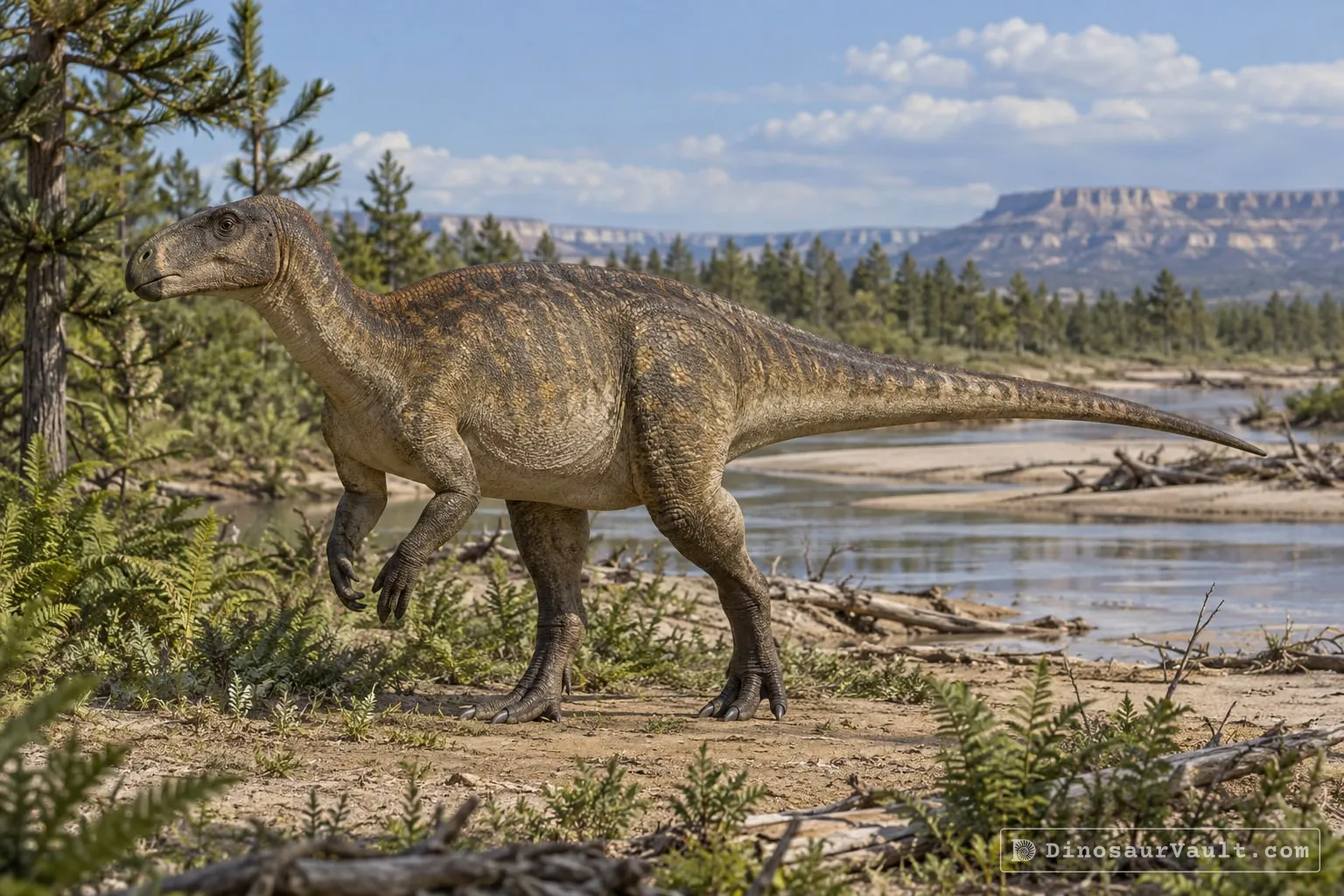
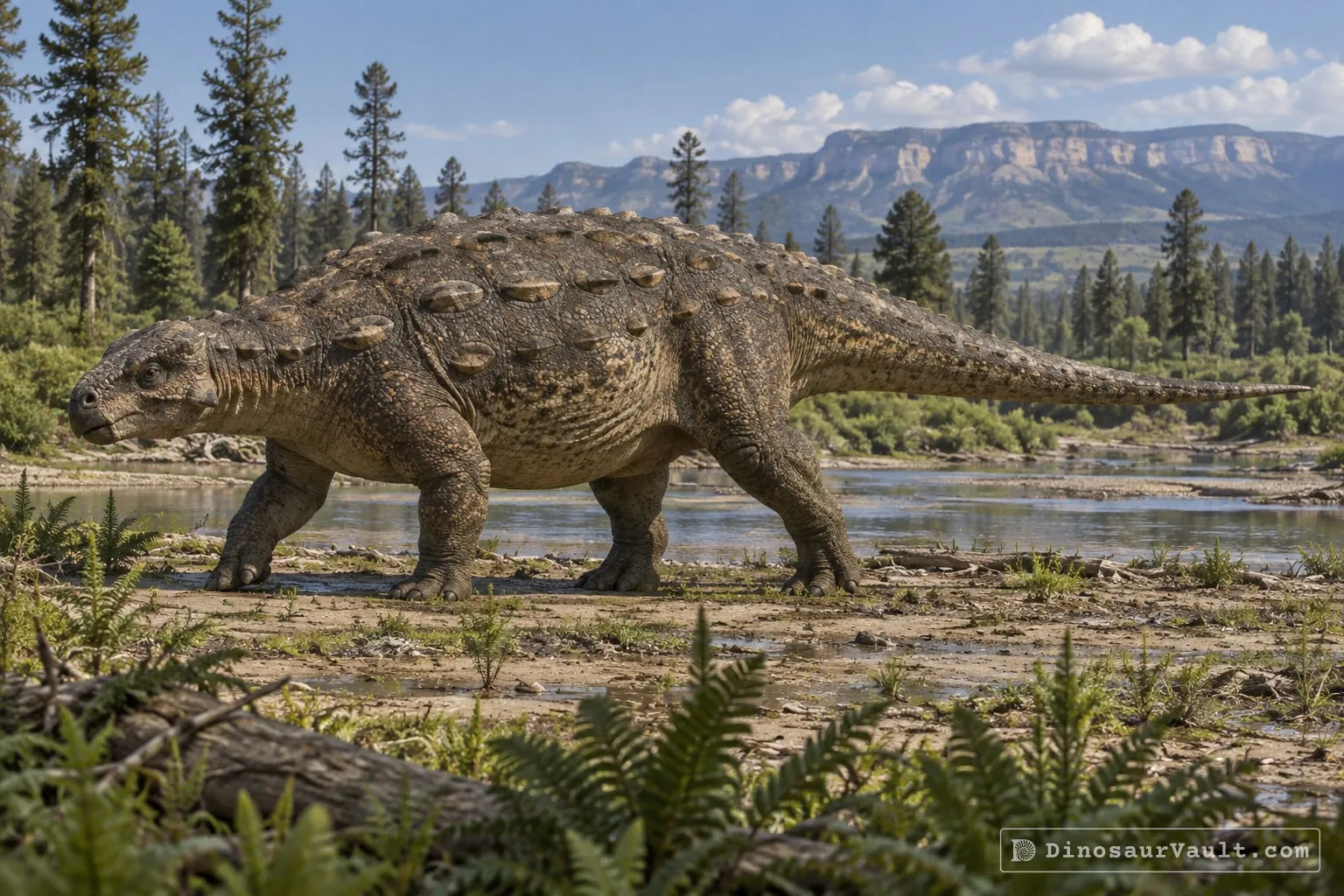


A rock formation can hold fossils laid down millions of years apart, so not every animal here met Moros.
The evidence
The science behind Moros
Which parts of the picture come from its own bones, and which come from its relatives.
From its own fossils
- The type specimen is part of one right hind leg, found together: pieces of the thigh bone and shin bone, two foot bones and toe bones.
- The shin bone is longer than the thigh bone, and the shape of the two foot bones shows that the missing middle one was pinched between them, a build the naming study linked to fast running.
- Growth marks in the thigh bone show that this small animal was nearing adulthood.
Borrowed from relatives
- The missing head, neck, body, arms and hips are restored after Eotyrannus, an early tyrannosauroid from England.
- A feather covering is plausible by comparison with the feathered tyrannosauroid Dilong.
Still unknown
- The shape of its head and arms. Isolated teeth described alongside it belong to some tyrannosauroid but are not assigned to Moros.
- Its exact place among tyrannosaur relatives. In one recent study its position was unstable under one method, so it was left out of one summary tree.
- Its feather covering and color.
Discovery timeline
- 2004Close relativeXu et al.
- 2013Same rocksZanno & Makovicky
- 2019Named itZanno et al.
- 2022Close relativeNaish & Cau
- 2025Family treeZanno & Napoli
Key papers
The research behind what we know of Moros
Close relative
Described Dilong with feather-like coverings, supporting feathered restorations of small early tyrannosauroids.
Basal tyrannosauroids from China and evidence for protofeathers in tyrannosauroids. Nature 431: 680-684
Read the paper : Basal tyrannosauroids from China and evidence for protofeathers in tyrannosauroids (opens in a new tab)Same rocks
Described Siats, a large predator from the same rocks, showing that small tyrannosauroids shared their world with much larger hunters.
Neovenatorid theropods are apex predators in the Late Cretaceous of North America. Nature Communications 4
Read the paper : Neovenatorid theropods are apex predators in the Late Cretaceous of North America (opens in a new tab)Named it
Described a small, fast-running tyrannosauroid from a hind leg whose growth marks showed an animal nearing adulthood.
Diminutive fleet-footed tyrannosauroid narrows the 70-million-year gap in the North American fossil record. Communications Biology 2
Read the paper : Diminutive fleet-footed tyrannosauroid narrows the 70-million-year gap in the North American fossil record (opens in a new tab)Close relative
A full description of Eotyrannus, an early tyrannosauroid, including bones of the skull, neck, shoulder, arm and hip.
The osteology and affinities of Eotyrannus lengi , a tyrannosauroid theropod from the Wealden Supergroup of southern England. PeerJ 10: e12727
Read the paper : The osteology and affinities of Eotyrannus lengi , a tyrannosauroid theropod from the Wealden Supergroup of southern England (opens in a new tab)Family tree
A study of Nanotyrannus whose family-tree analysis included Moros; under one method Moros was too unstable to place and was left out of the summary tree.
Nanotyrannus and Tyrannosaurus coexisted at the close of the Cretaceous. Nature 648: 357-367
Read the paper : Nanotyrannus and Tyrannosaurus coexisted at the close of the Cretaceous (opens in a new tab)
Close relatives
Other members of Tyrannosauroidea


Sources: Wikidata