Animantarx
an-ih-MAN-tarks
"living citadel"
- Lived
- 121 to 101 million years ago, Early Cretaceous
- Diet
- Herbivore
- Group
- Ankylosaurs, Nodosauridae
- Found in
- United States
- Named by
- Carpenter et al. 1999
Where its fossils were found
The evidence
Today

110 million years ago
Habitat
It lived on a floodplain crossed by rivers in what is now Utah. Eolambia and Siats are also known from the same part of the Cedar Mountain Formation.
Field notes
About Animantarx
What it was like
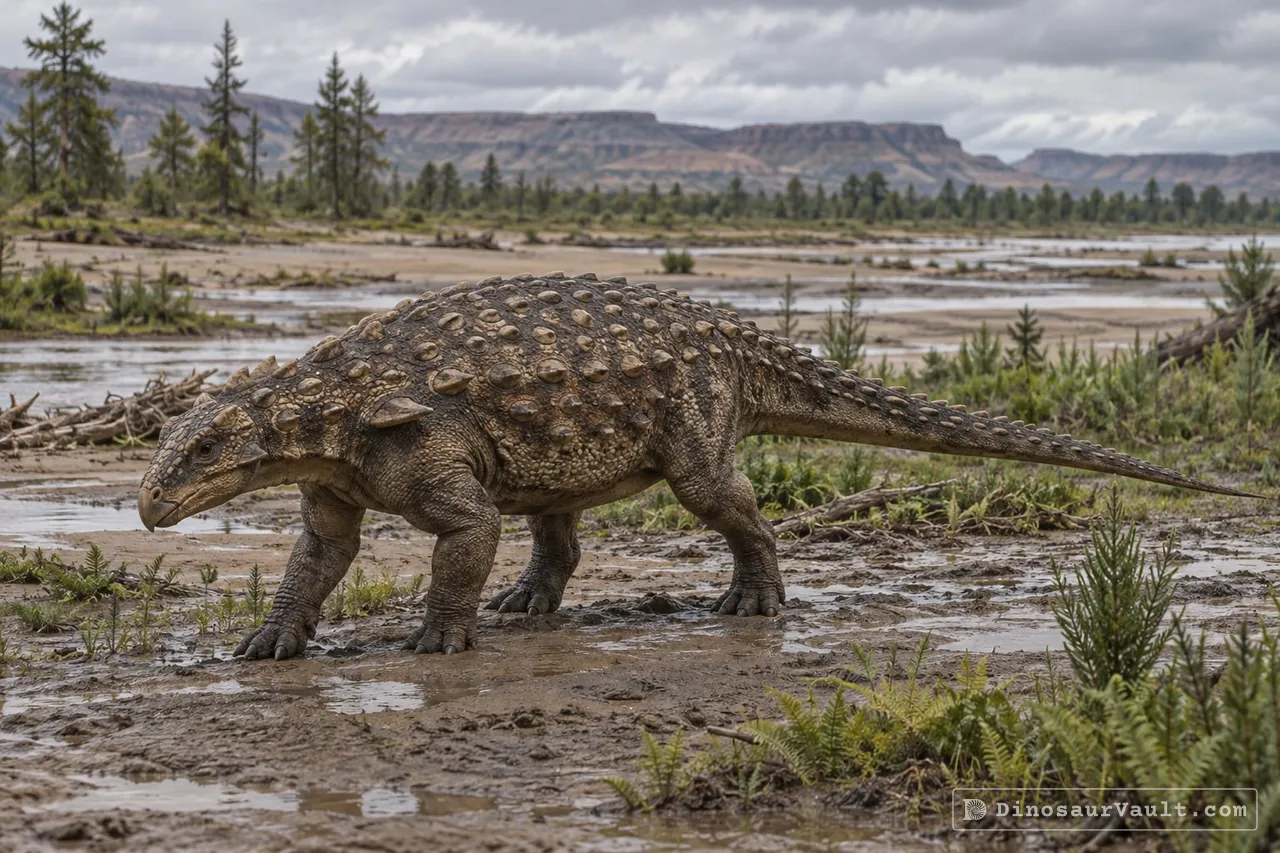
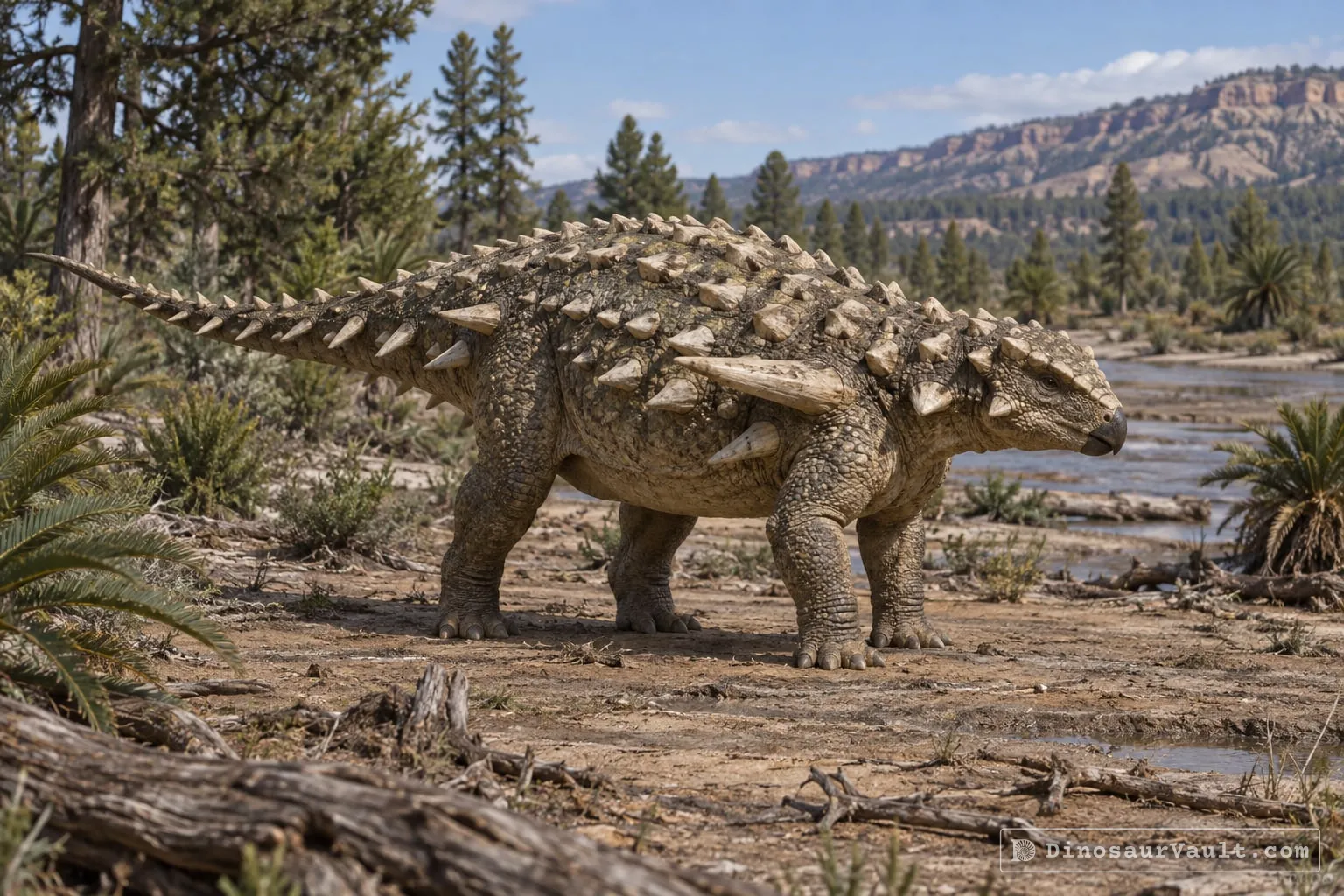
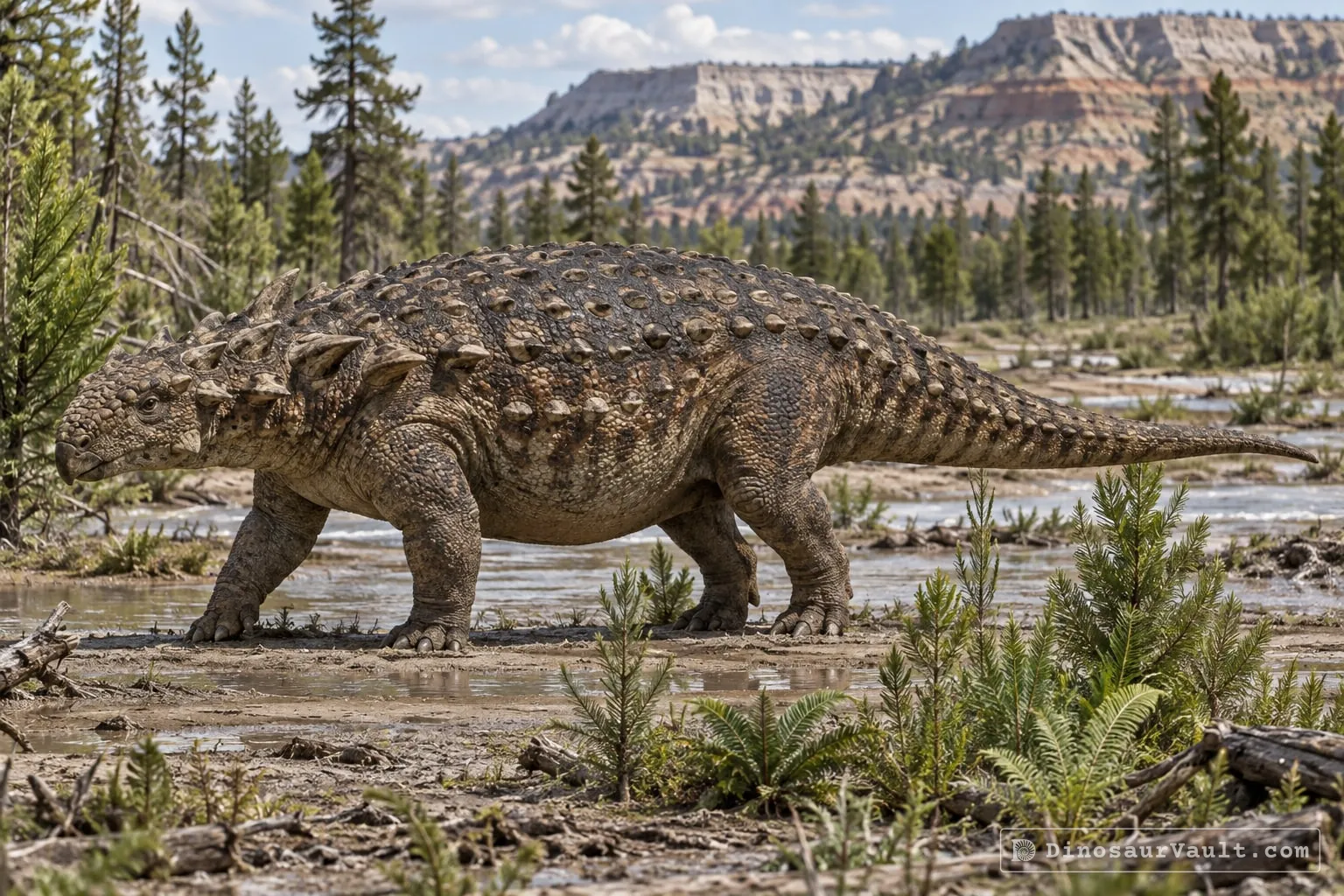
Animantarx was a small nodosaur, an armored plant eater with plates across its back but no tail club. It is known from part of the skull and skeleton, and was probably no more than a few meters long.
Its world
It lived in the Cretaceous in what is now Utah, in the United States. Its bones come from the Cedar Mountain Formation.
How it was found
Carpenter and colleagues named Animantarx in 1999. Its bones were found in an unusual way: a scientist spotted them with a radiation detector, since the bones had picked up traces of radioactive minerals from the rock.
Field gallery
More views of Animantarx
Scenes reconstructed from the available fossil evidence.
1 of 3
Lived alongside
Found in the same rock formations
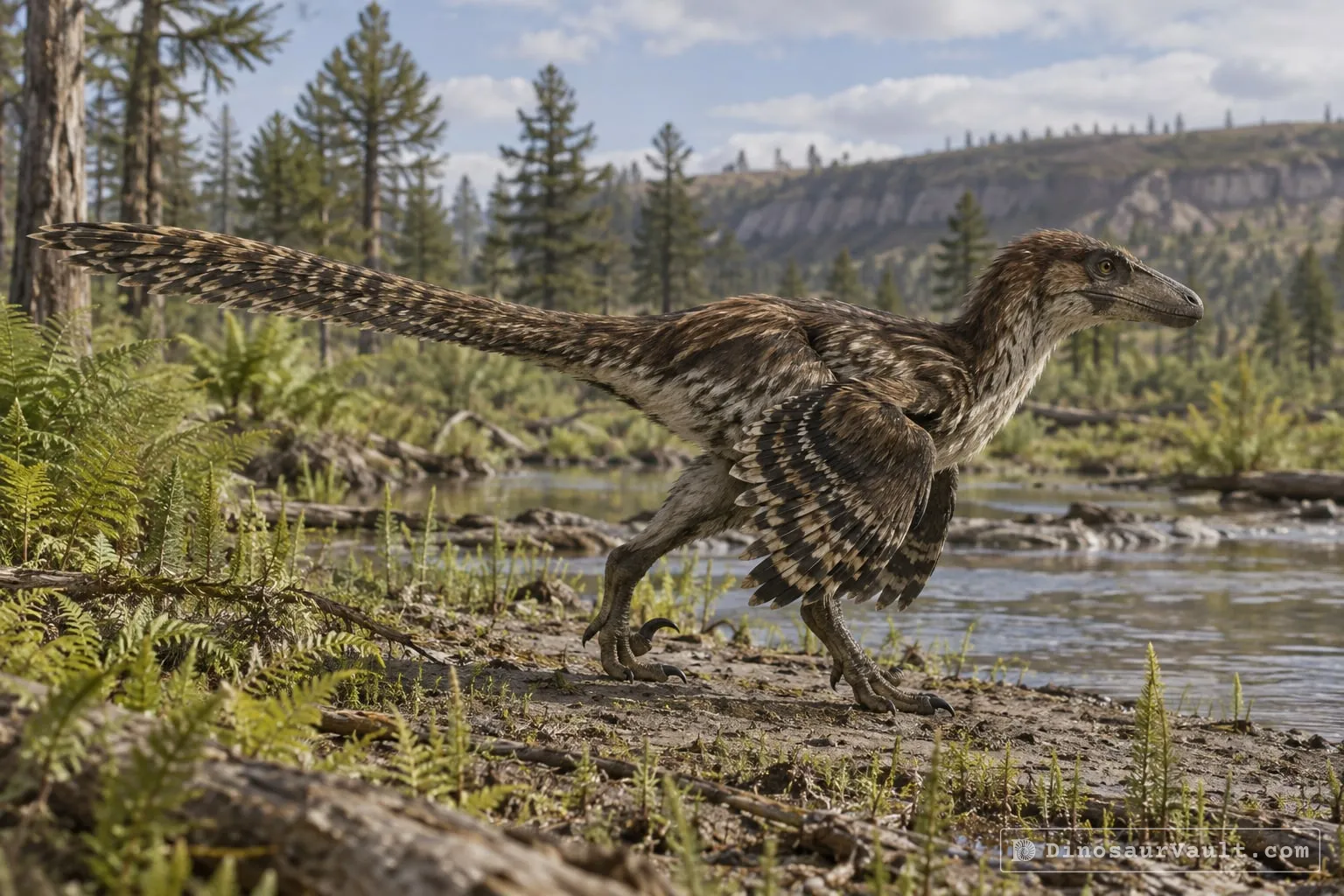
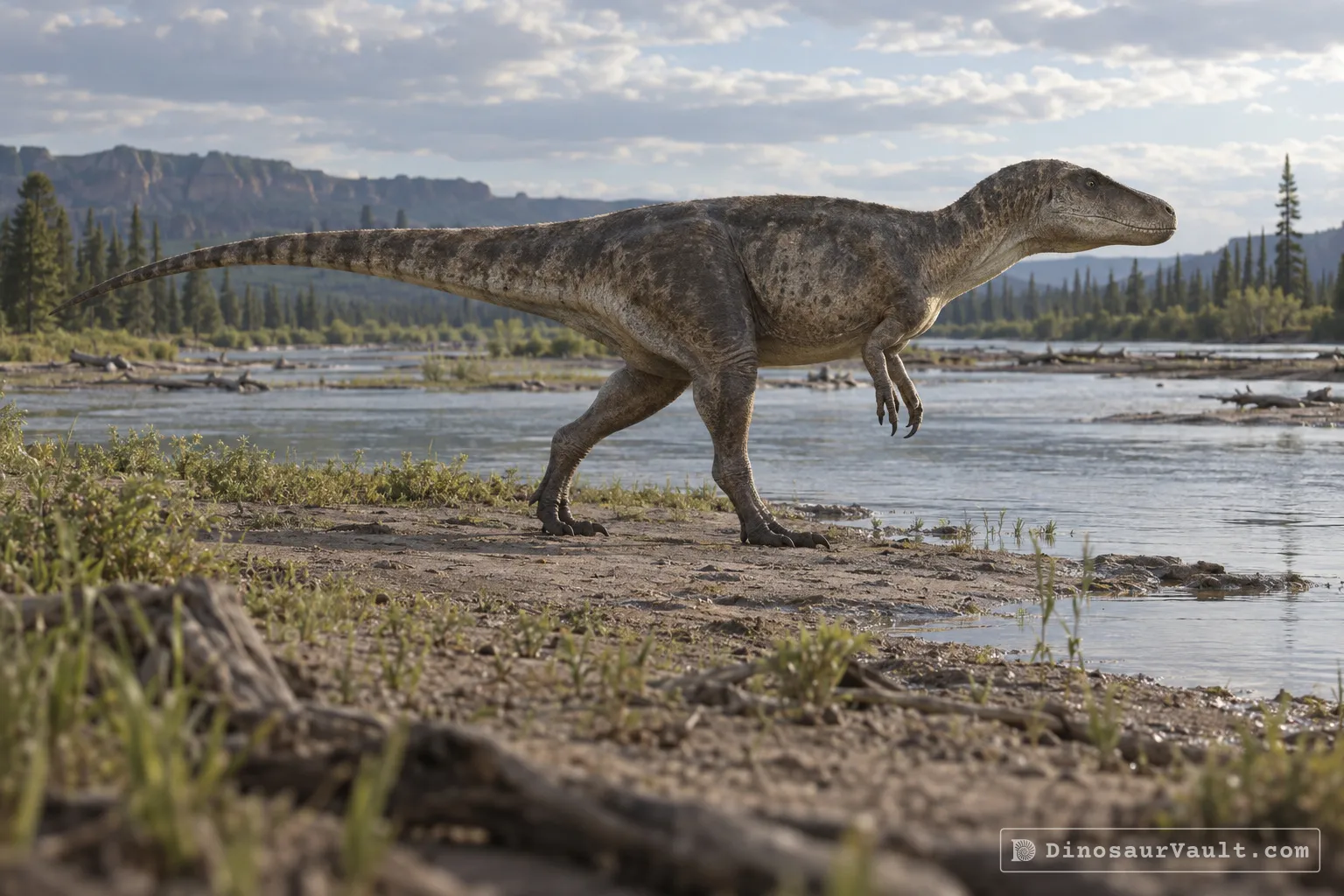
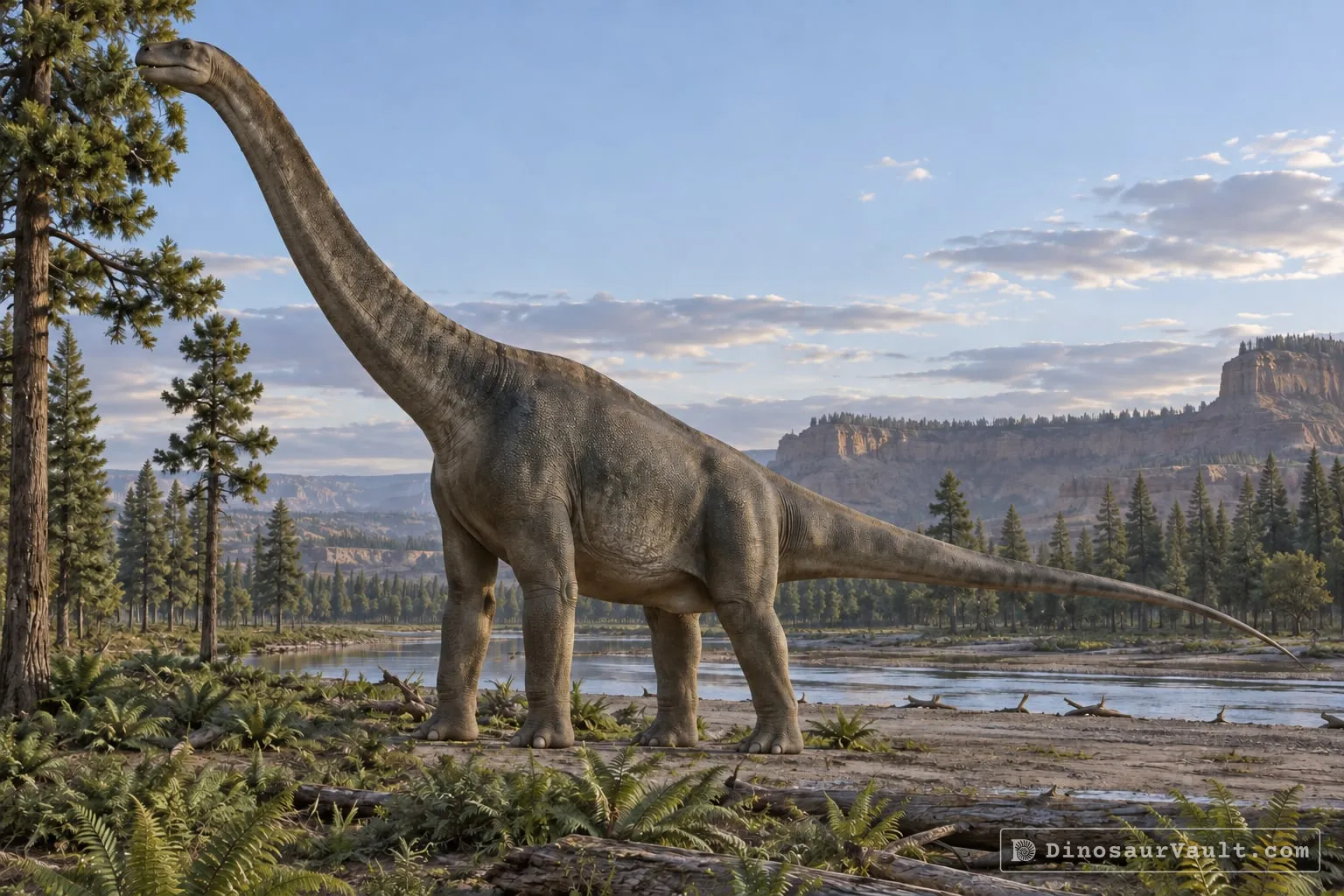
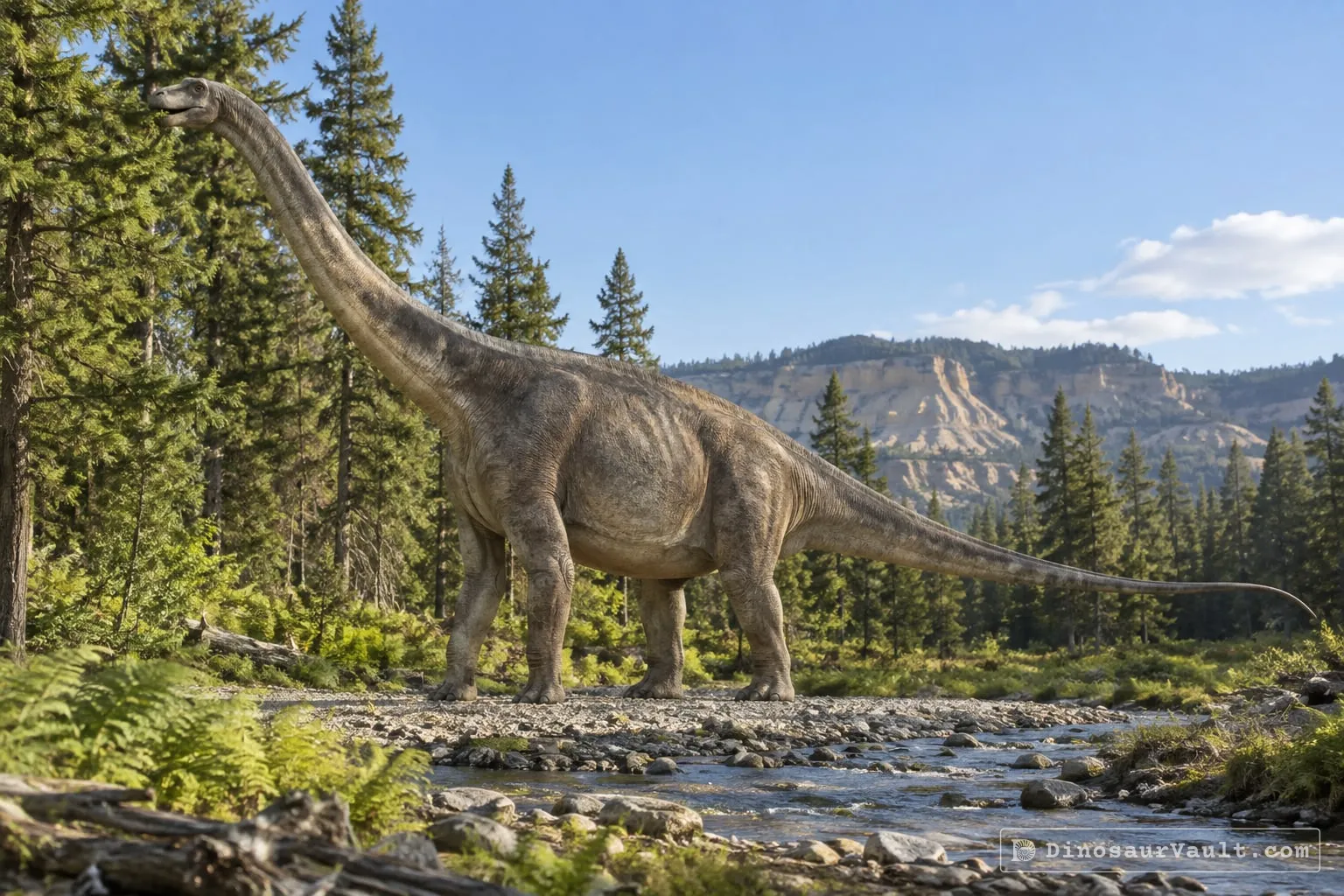
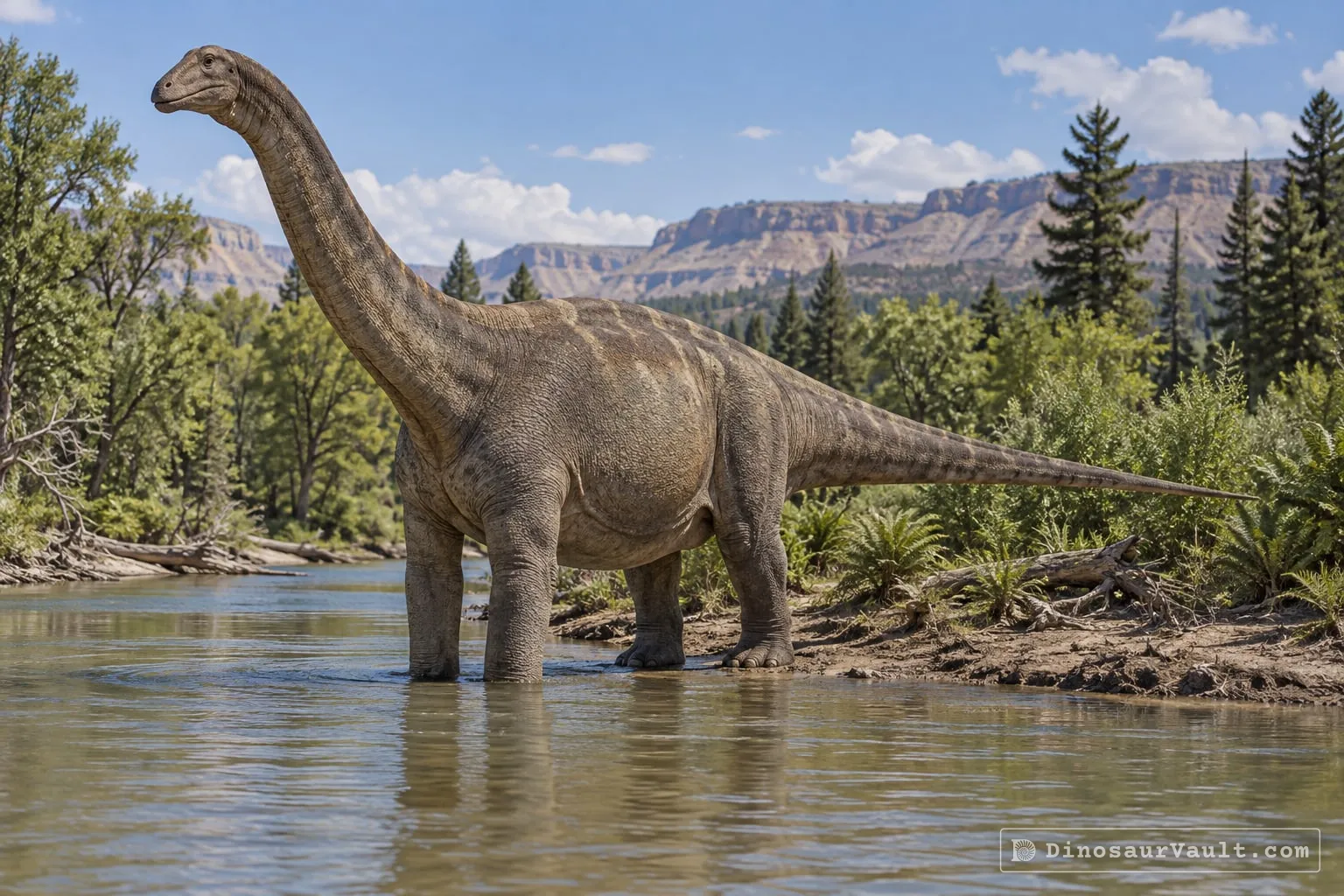
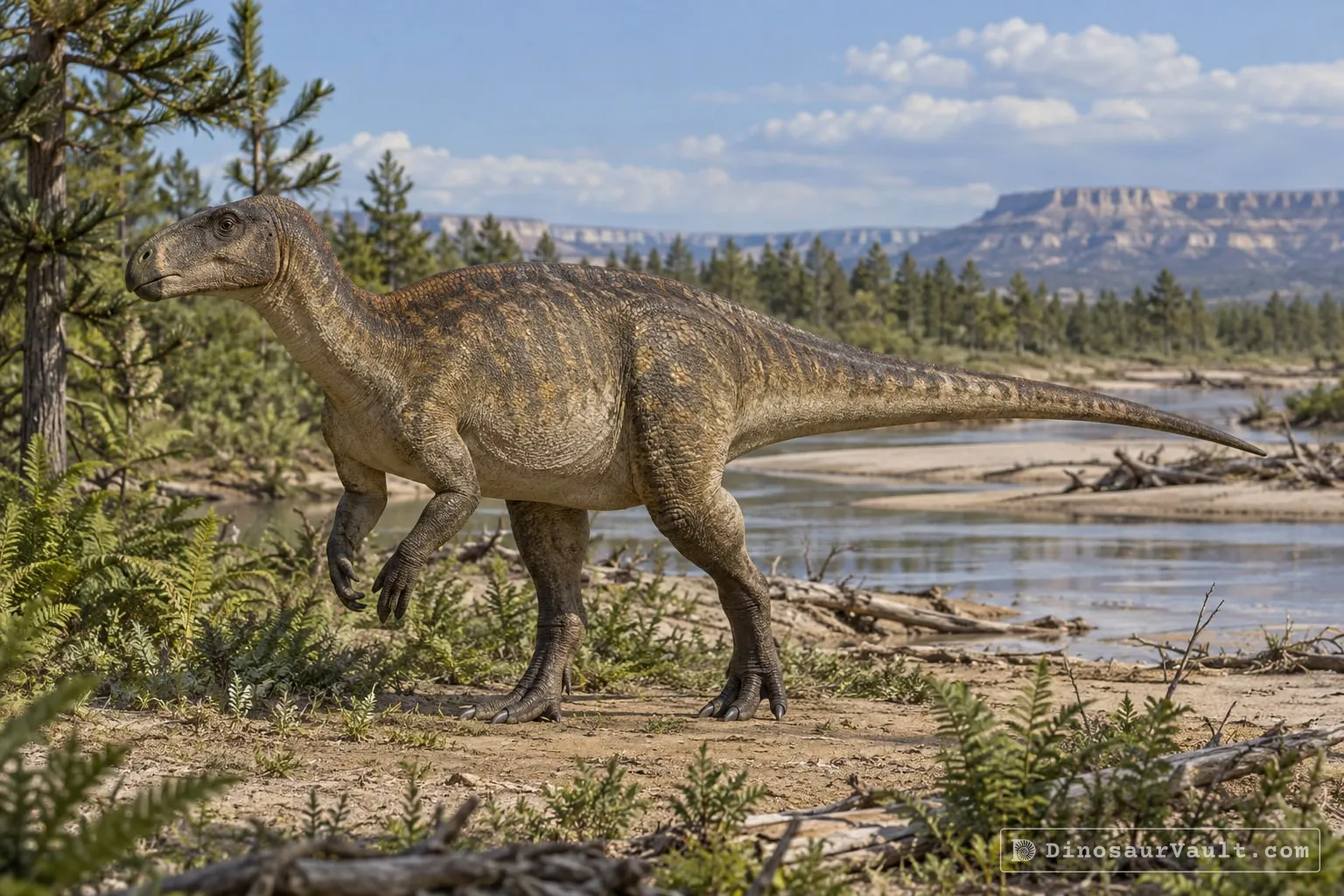


A rock formation can hold fossils laid down millions of years apart, so not every animal here met Animantarx.
The evidence
The science behind Animantarx
Which parts of the picture come from its own bones, and which come from its relatives.
From its own fossils
- The partial skeleton includes the rear of the skull, a lower jaw, vertebrae and parts of the shoulders, hips and limbs.
- The back of the skull is strongly domed, with small horns near the eyes and cheeks.
- A tooth is preserved in the lower jaw.
Borrowed from relatives
- Panoplosaurus helps restore the missing front of the face and low, keeled armor plates.
- Peloroplites provides a comparison for short supporting fingers and broad, blunt claws.
- A tapering tail without a club follows other nodosaurs.
Still unknown
- The full arrangement of its armor.
- Its exact body proportions and finger and toe counts.
- Its color and how its appearance changed as it grew.
Often drawn wrong
- A flat skull roof or large horns above the eyes replace its domed rear skull and small horns with the wrong shapes.
Discovery timeline
- 1999Named itCarpenter et al.
- 2008Close relativeCarpenter et al.
- 2026Close relativeLivius et al.
Key papers
The research behind what we know of Animantarx
Named it
Named Animantarx from a partial skeleton with a domed rear skull and small horns near the eyes and cheeks.
Ankylosaurs (Dinosauria: Ornithischia) of the Cedar Mountain Formation, Utah, and their stratigraphic distribution. Vertebrate Paleontology in Utah, D. D. Gillette (ed.), Utah Geological Survey Miscellaneous Publication 99-1:243-251.
No link available
Close relative
Described Peloroplites, whose short fingers and broad, blunt claws help restore the missing feet of other nodosaurs.
Ankylosaurs from the Price River Quarries, Cedar Mountain Formation (Lower Cretaceous), east-central Utah. Journal of Vertebrate Paleontology 28: 1089-1101
Read the paper : Ankylosaurs from the Price River Quarries, Cedar Mountain Formation (Lower Cretaceous), east-central Utah (opens in a new tab)Close relative
Scans revealed the palate and winding nasal passages of Panoplosaurus, a comparison for restoring missing parts of nodosaur skulls.
Redescription of the Panoplosaurus mirus (Ankylosauria: Nodosauridae) holotype skull using computed tomography, and a new comparative scheme for panoplosaurin cranial ornamentation. Journal of Vertebrate Paleontology 46
Read the paper : Redescription of the Panoplosaurus mirus (Ankylosauria: Nodosauridae) holotype skull using computed tomography, and a new comparative scheme for panoplosaurin cranial ornamentation (opens in a new tab)
Close relatives
Other members of Nodosauridae


Sources: Wikidata