Peloroplites
"monstrous heavy one"
- Lived
- 121 to 101 million years ago, Early Cretaceous
- Diet
- Herbivore
- Group
- Ankylosaurs, Nodosauridae
- Found in
- United States
- Named by
- Carpenter et al. 2008
Where its fossils were found
The evidence
Today

110 million years ago
Habitat
River plains in what is now Utah supported Peloroplites and other large plant eaters. Cedarpelta and Abydosaurus are also known from the Cedar Mountain Formation.
Field notes
About Peloroplites
What it was like
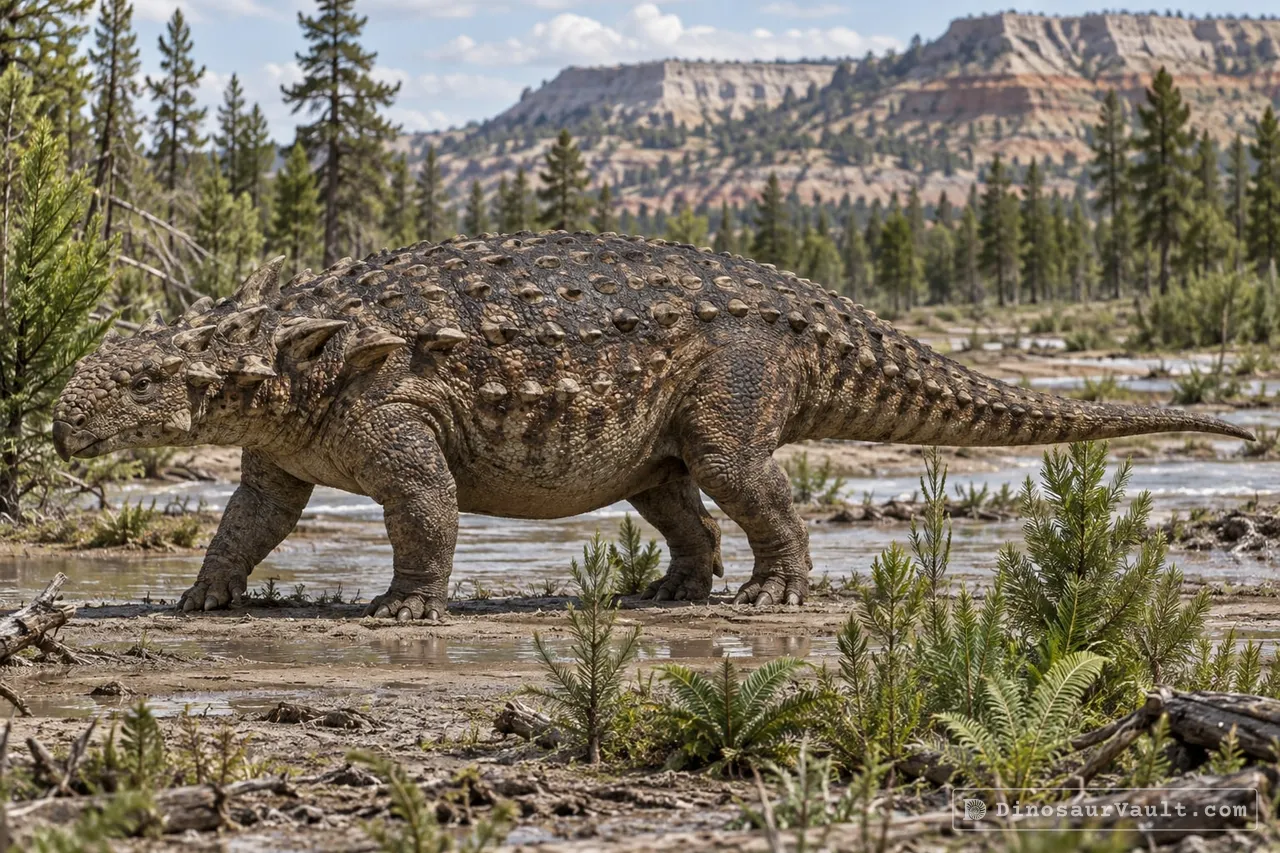
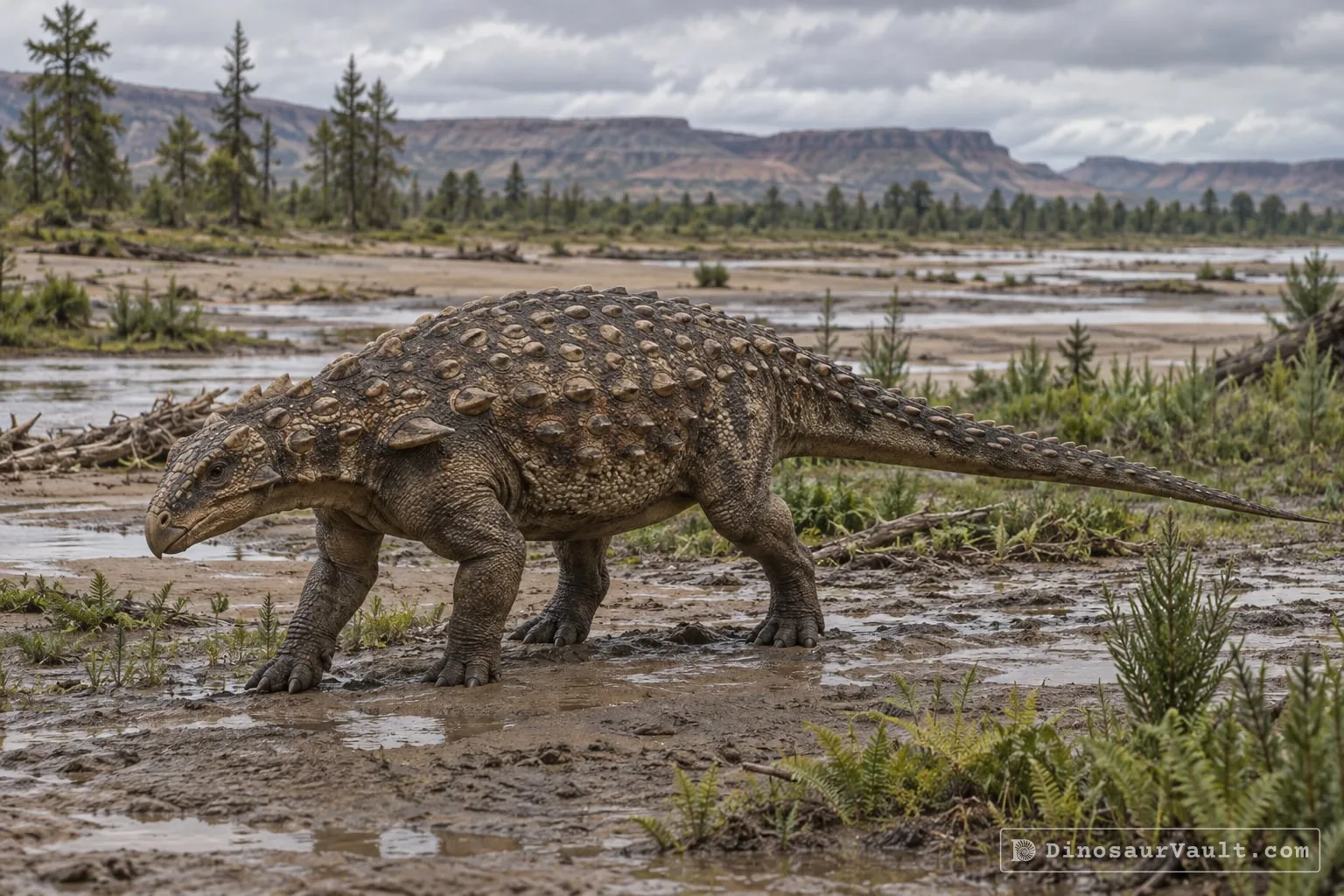
Peloroplites was a large nodosaur, an armored plant eater with bony plates across its back but no tail club. It is known from a partial skull and skeleton, and was one of the biggest members of its family.
Its world
It lived in the Cretaceous in what is now Utah, in the United States. Its bones come from the Cedar Mountain Formation.
How it was found
Carpenter and colleagues named Peloroplites in 2008, from a single find.
Field gallery
More views of Peloroplites
Scenes reconstructed from the available fossil evidence.
1 of 3
Lived alongside
Found in the same rock formations
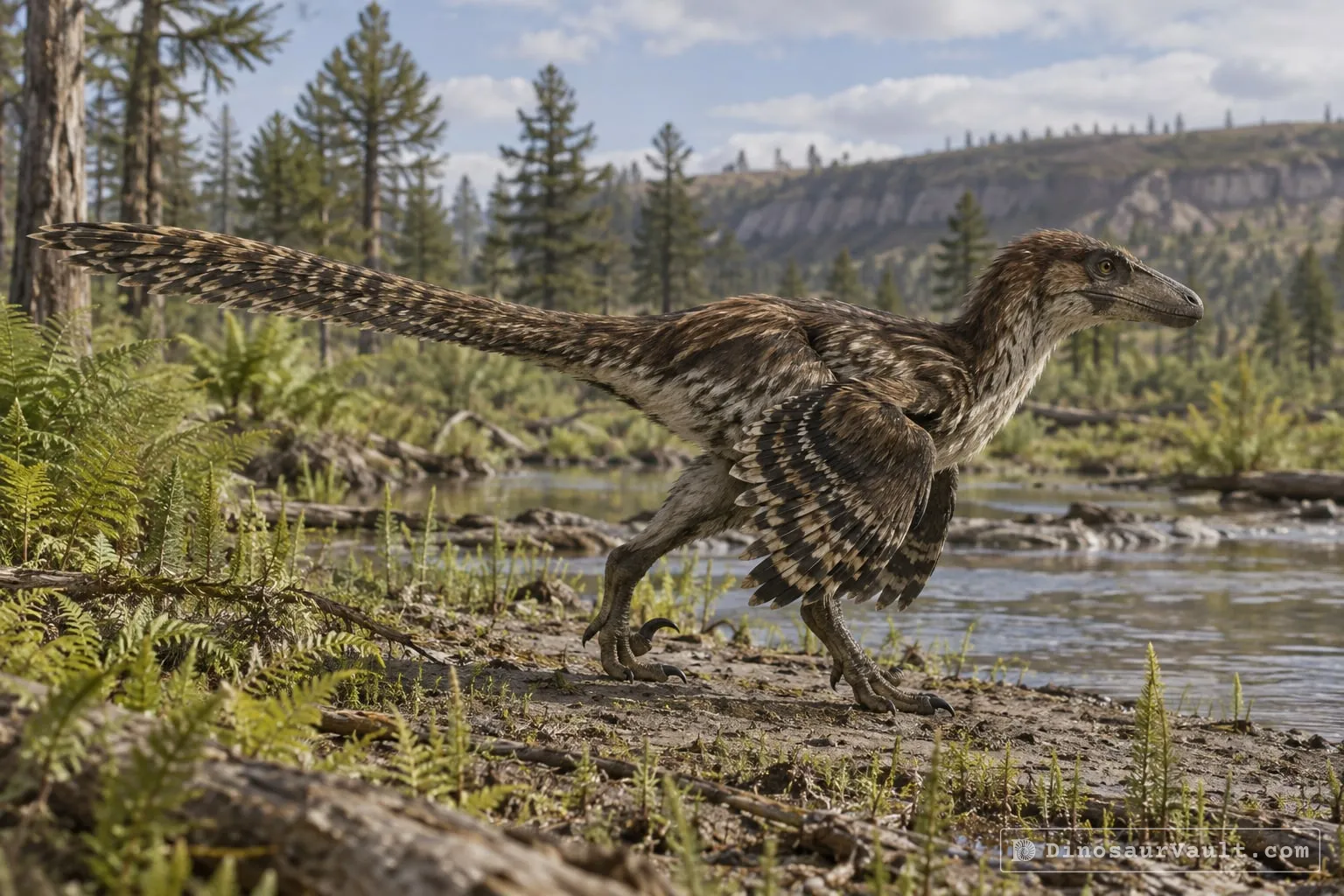
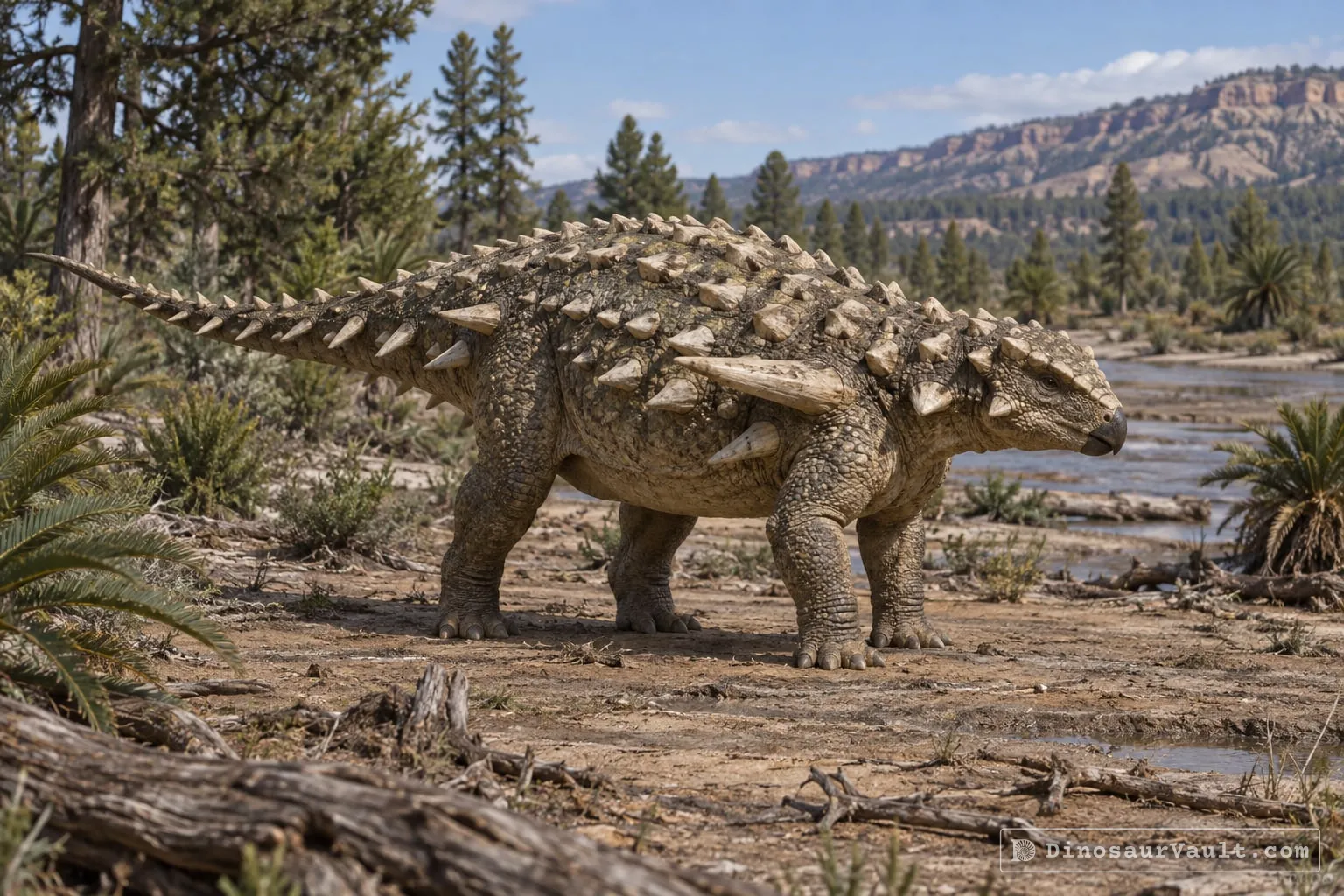
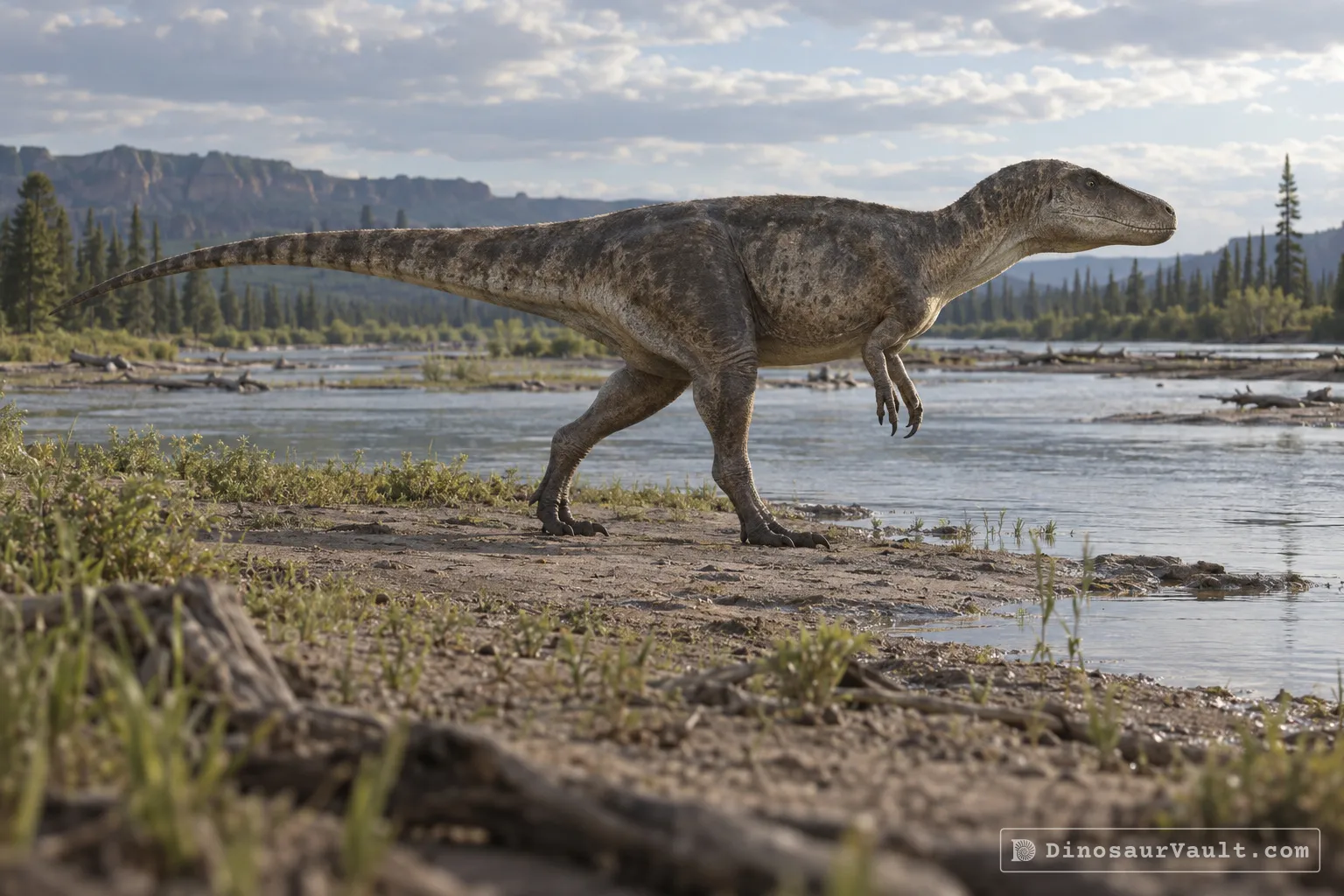
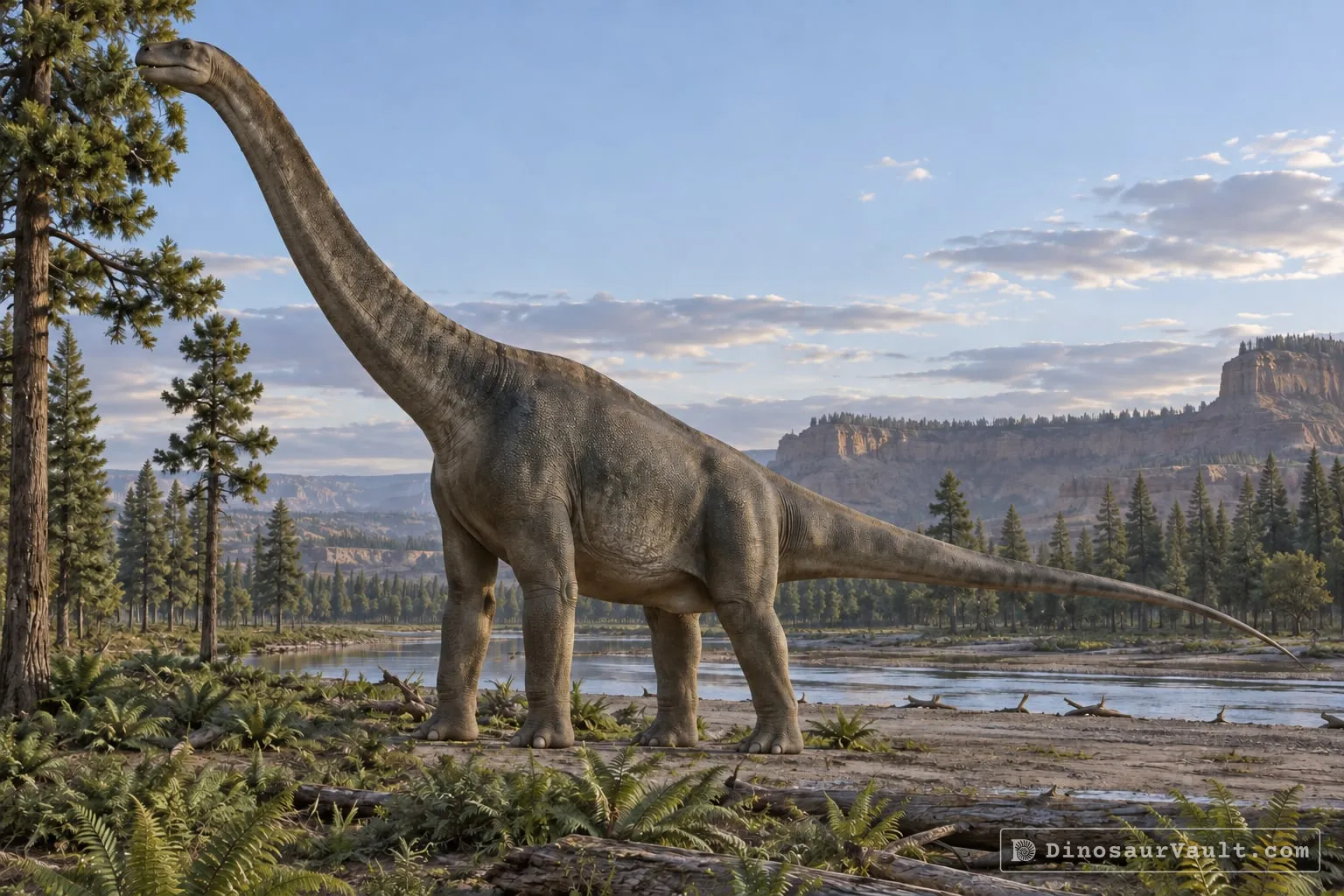
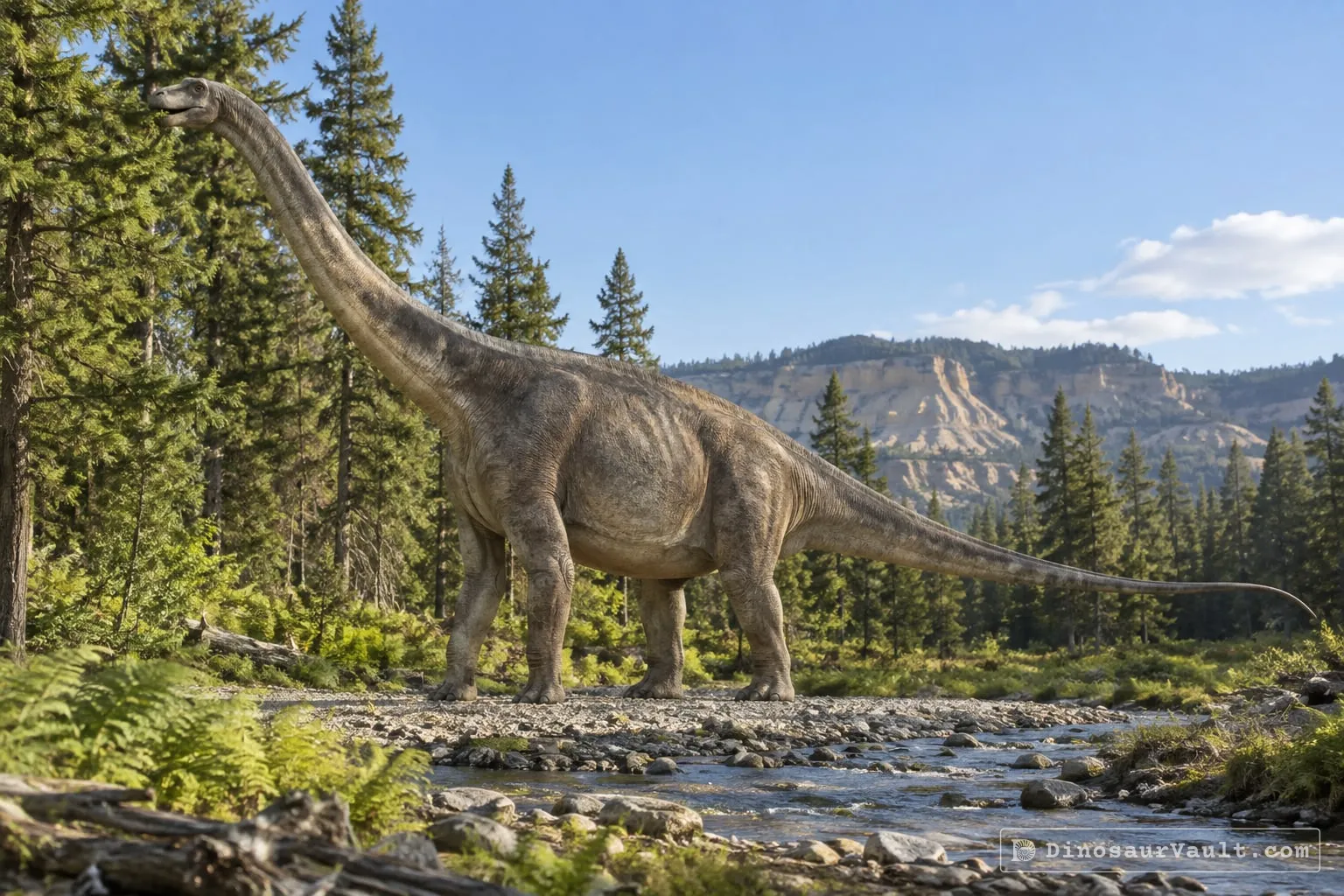
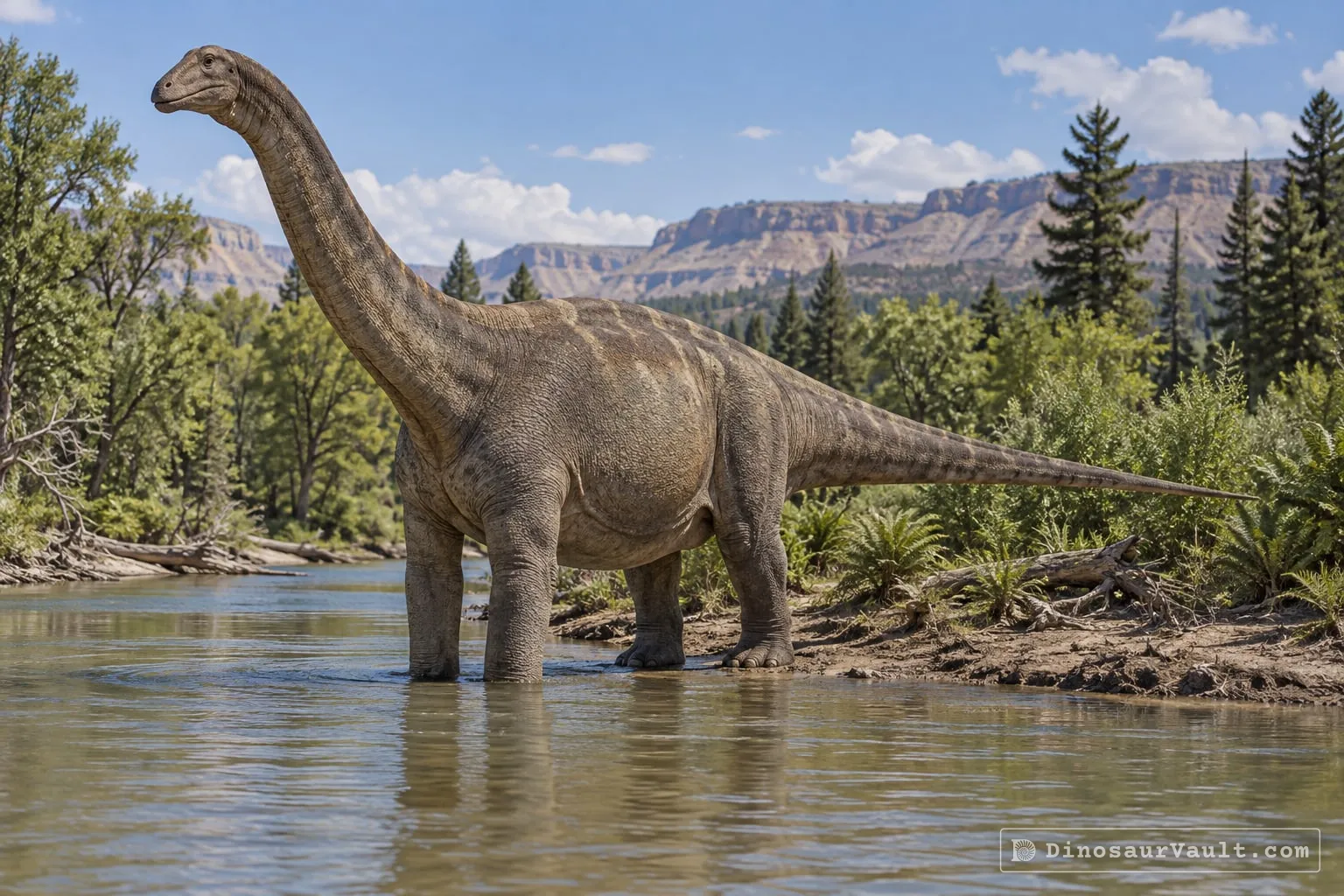
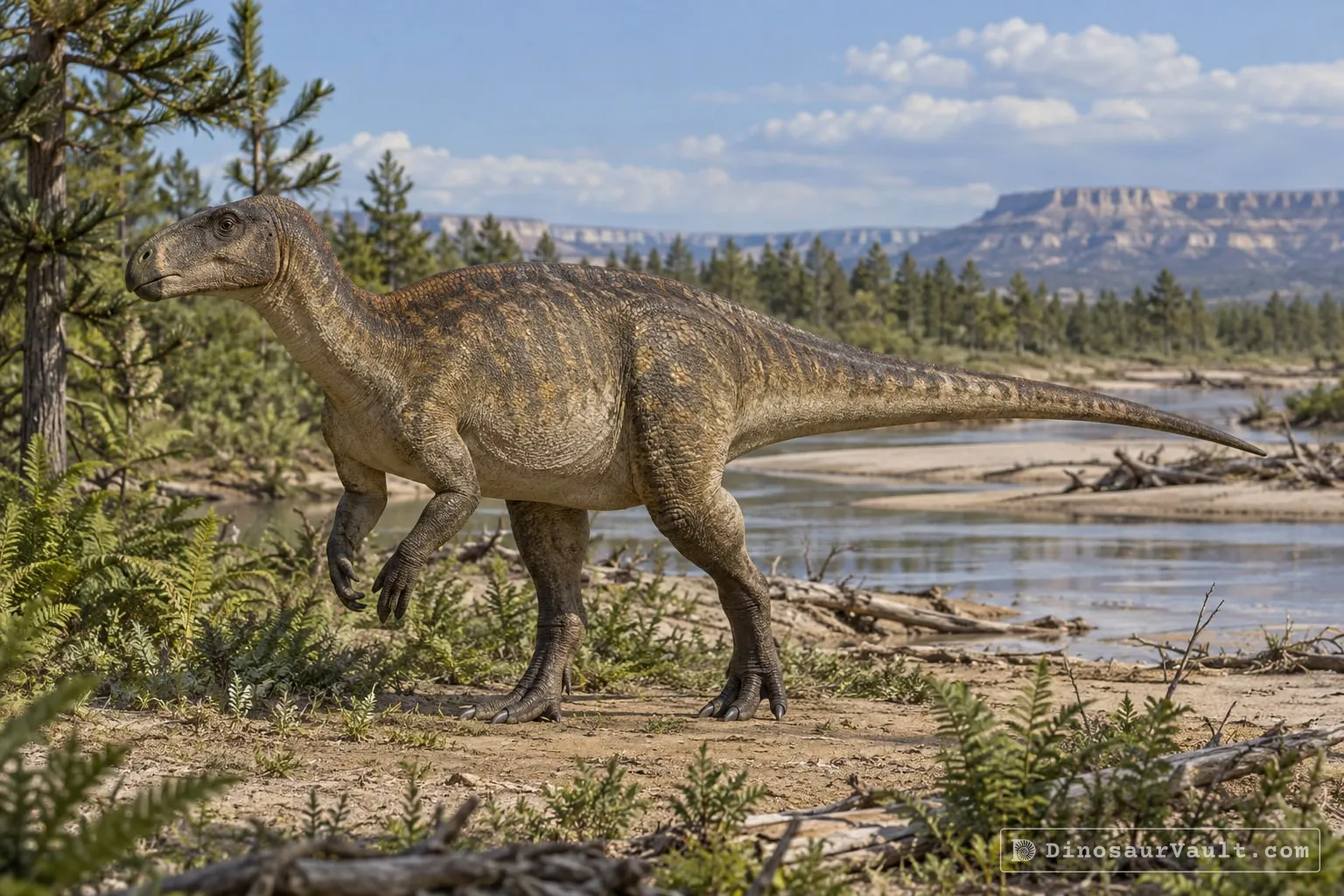


A rock formation can hold fossils laid down millions of years apart, so not every animal here met Peloroplites.
The evidence
The science behind Peloroplites
Which parts of the picture come from its own bones, and which come from its relatives.
From its own fossils
- The partial skull preserves a broad, thick upper beak and small, blunt horns behind the eyes.
- Separate body bones show sturdy limbs and short, broad hands with rounded, disc-shaped claw bones.
- Bony armor pieces are also known.
Borrowed from relatives
- Sauropelta guides the missing parts of the face, broad body and long, tapering tail.
- Low plates and small bony nodules between them follow the armor of Sauropelta.
- Broad padded hind feet are inferred from Sauropelta and other nodosaurids.
Still unknown
- The exact arrangement of its armor.
- The shape of the front of its lower jaw and the missing middle of its face.
- The full arrangement of its hind toes and its skin color.
Often drawn wrong
- A heavy tail club copies ankylosaurids; Peloroplites belonged to the nodosaurids, which lacked that club.
- Huge shoulder spikes copy Sauropelta's distinctive armor rather than a known Peloroplites feature.
- Hooked, raptor-like hand claws replace its broad, rounded claw bones.
Discovery timeline
- 1984Close relativeCarpenter
- 2008Named itCarpenter et al.
- 2010PostureSenter
Key papers
The research behind what we know of Peloroplites
Close relative
Reconstructed Sauropelta from partial skeletons with armor still in place, providing a comparison for the body and armor of Peloroplites.
Skeletal reconstruction and life restoration of Sauropelta (Ankylosauria: Nodosauridae) from the Cretaceous of North America. Canadian Journal of Earth Sciences 21: 1491-1498
Read the paper : Skeletal reconstruction and life restoration of Sauropelta (Ankylosauria: Nodosauridae) from the Cretaceous of North America (opens in a new tab)Named it
Named a large nodosaurid from a partial skull and separate body bones, distinguishing its broad beak and low skull horns.
Ankylosaurs from the Price River Quarries, Cedar Mountain Formation (Lower Cretaceous), east-central Utah. Journal of Vertebrate Paleontology 28: 1089-1101
Read the paper : Ankylosaurs from the Price River Quarries, Cedar Mountain Formation (Lower Cretaceous), east-central Utah (opens in a new tab)Posture
Compared compact stegosaur hands with Peloroplites hand bones, suggesting that ankylosaur hand bones also formed an upright arc.
Evidence for a Sauropod-Like Metacarpal Configuration in Stegosaurian Dinosaurs. Acta Palaeontologica Polonica 55: 427-432
Read the paper : Evidence for a Sauropod-Like Metacarpal Configuration in Stegosaurian Dinosaurs (opens in a new tab)
Close relatives
Other members of Nodosauridae


Sources: Wikidata