Abydosaurus
"Abydos lizard"
- Lived
- 101 to 94 million years ago, Late Cretaceous
- Diet
- Herbivore
- Group
- Sauropods, Brachiosauridae
- Found in
- United States
- Named by
- Chure et al. 2010
Where its fossils were found
The evidence
Today

95 million years ago
Habitat
Its bones were buried in river sand in what is now Utah. Siats and Peloroplites are other dinosaurs from the Cedar Mountain Formation.
Field notes
About Abydosaurus
What it was like
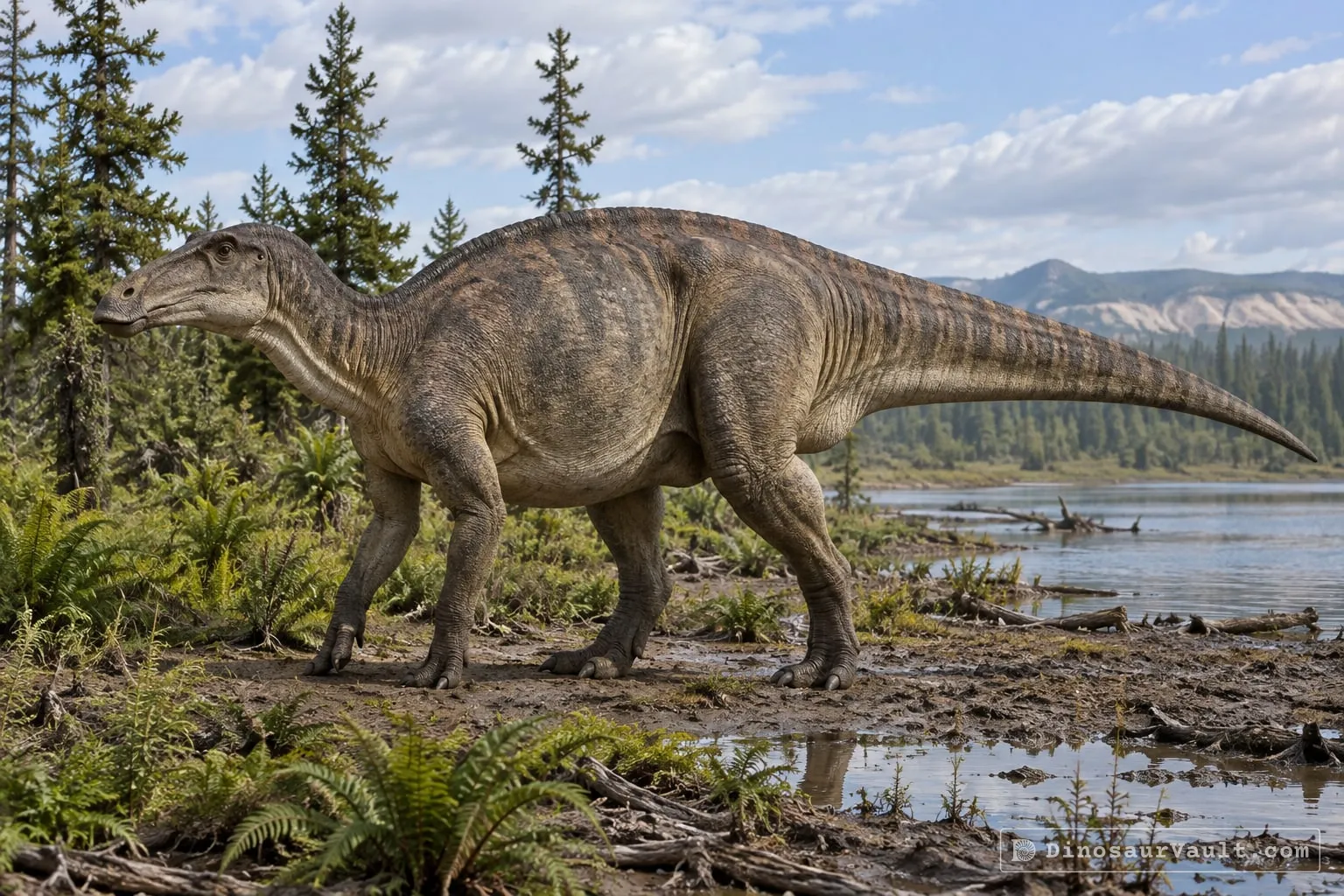
Abydosaurus was a brachiosaur, a long-necked plant eater with front legs longer than its back legs, related to Brachiosaurus. It is best known for its skulls, which are rare finds for sauropods.
It had narrow teeth for cropping leaves, narrower than those of its older relatives.
Its world
It lived in the Cretaceous in what is now Utah, in the United States. Its bones come from the Cedar Mountain Formation.
How it was found
Chure and colleagues named Abydosaurus in 2010. Its bones came from a quarry near a national monument famous for fossils. Four skulls were found, two of them nearly complete.
Field gallery
More views of Abydosaurus
Scenes reconstructed from the available fossil evidence.
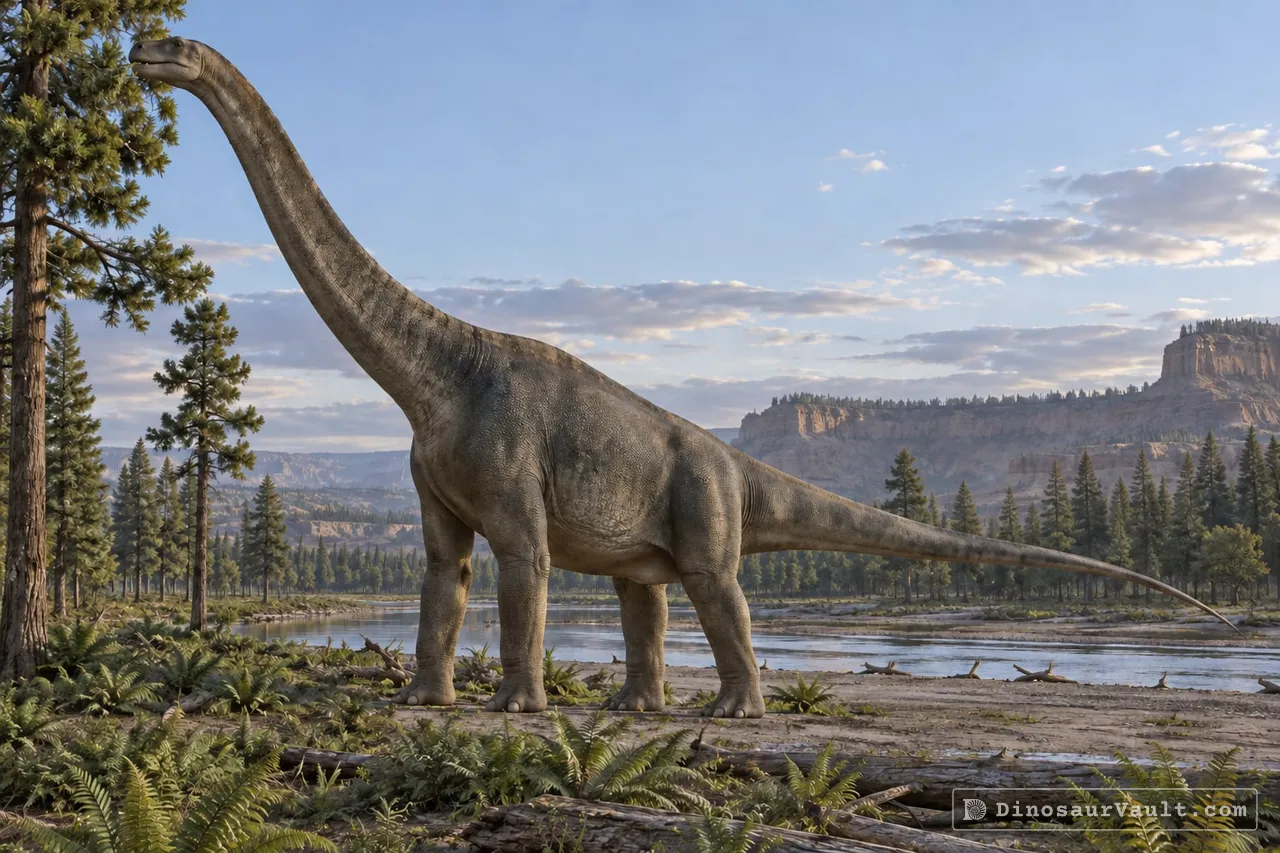
1 of 3
Lived alongside
Found in the same rock formations
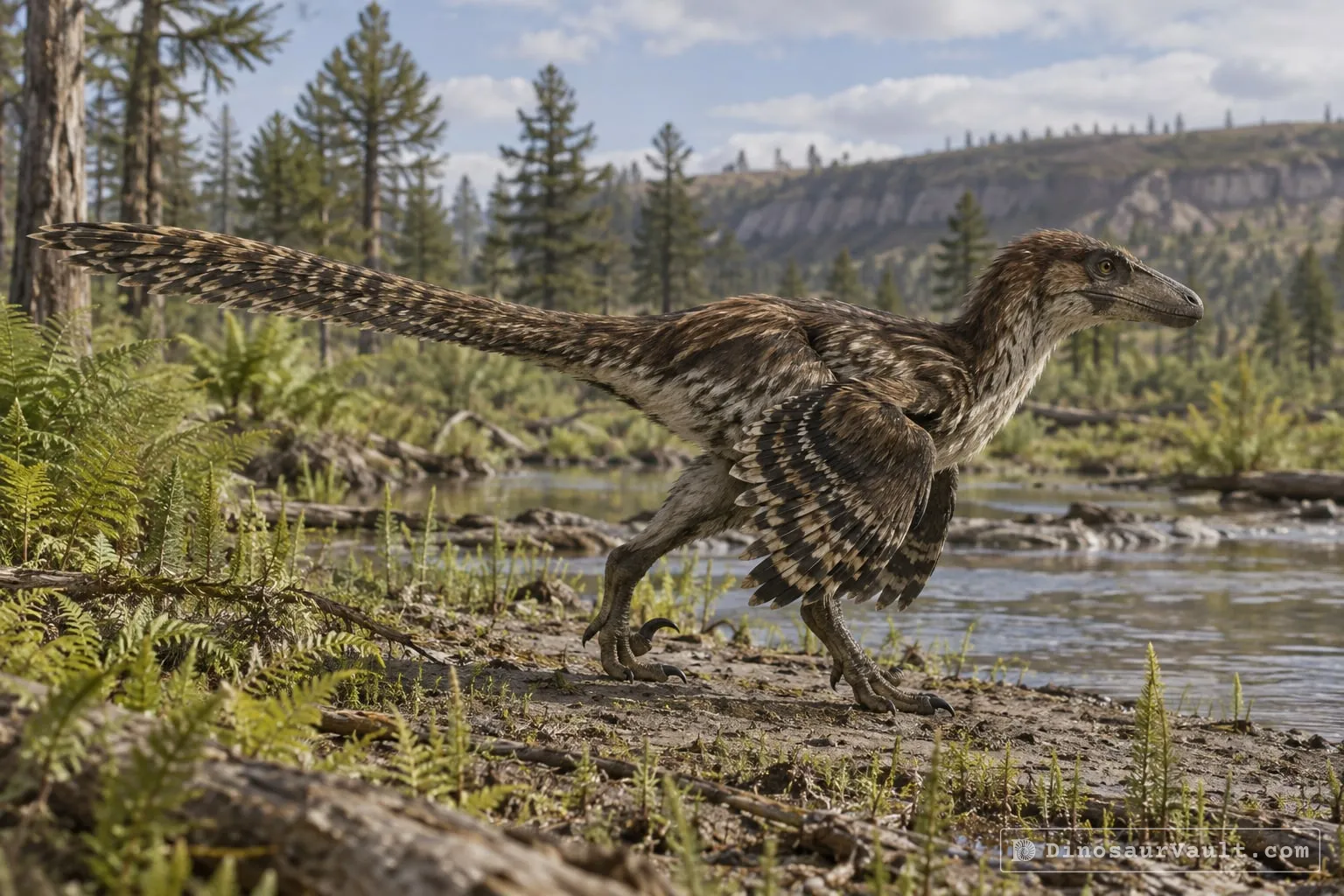
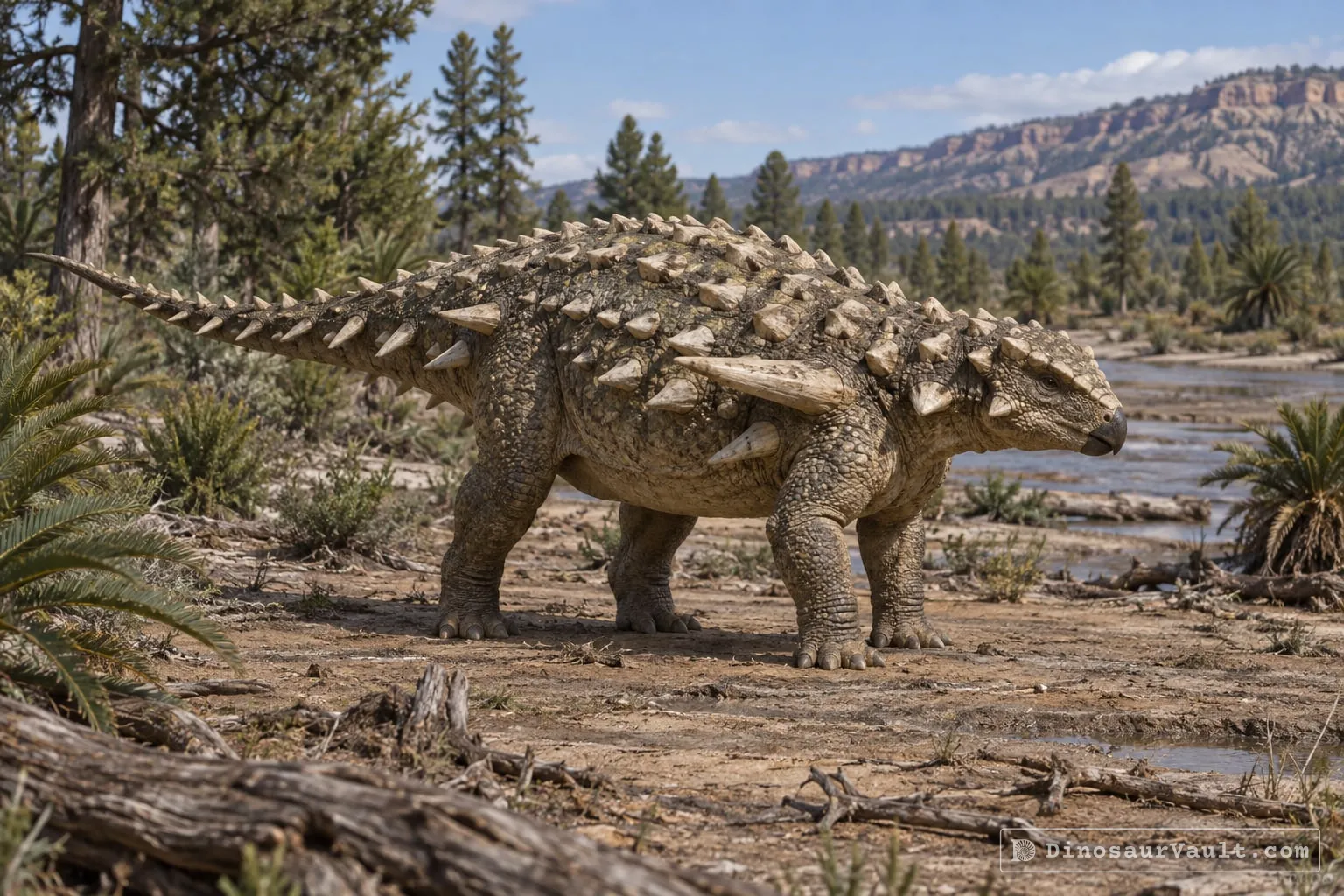
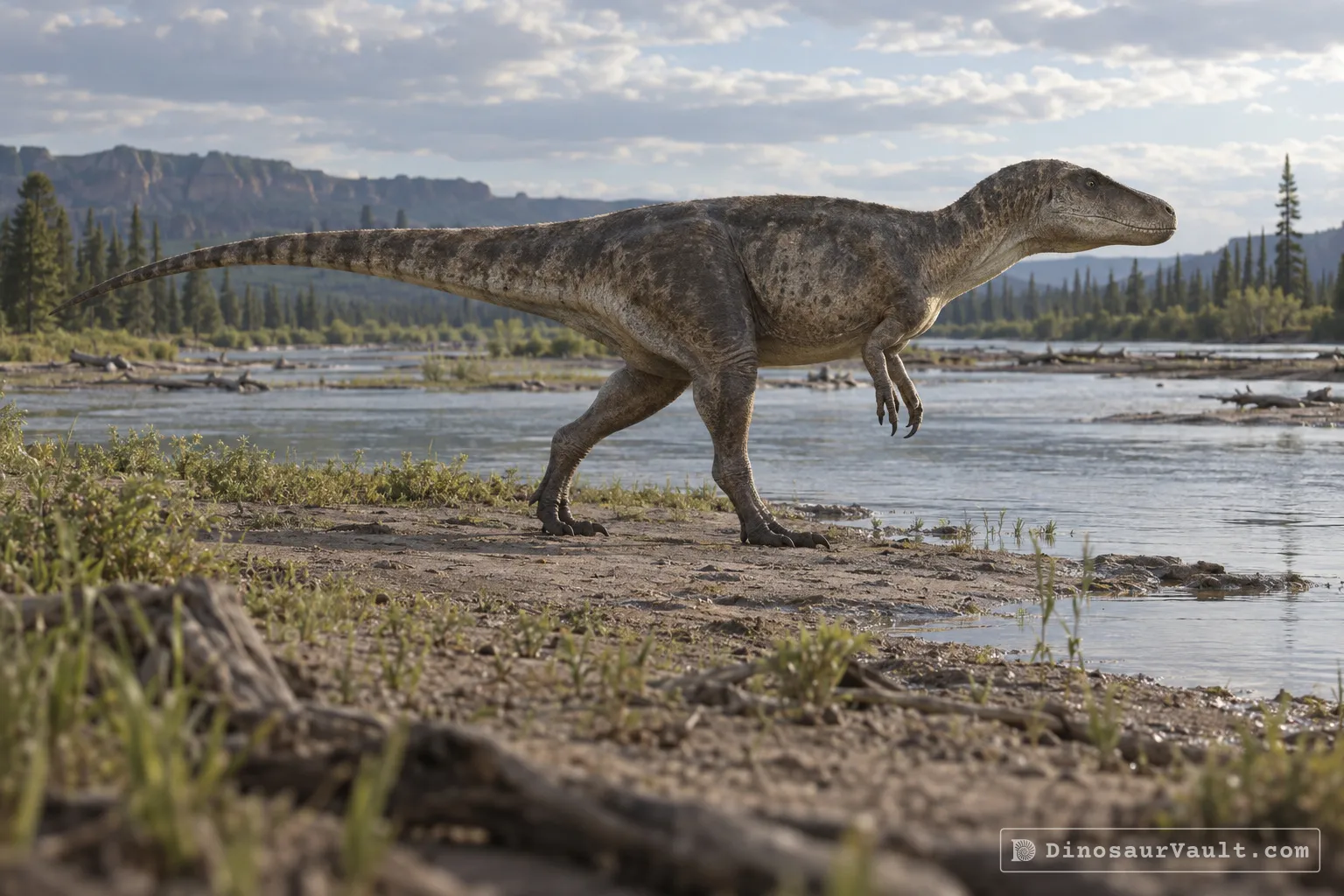
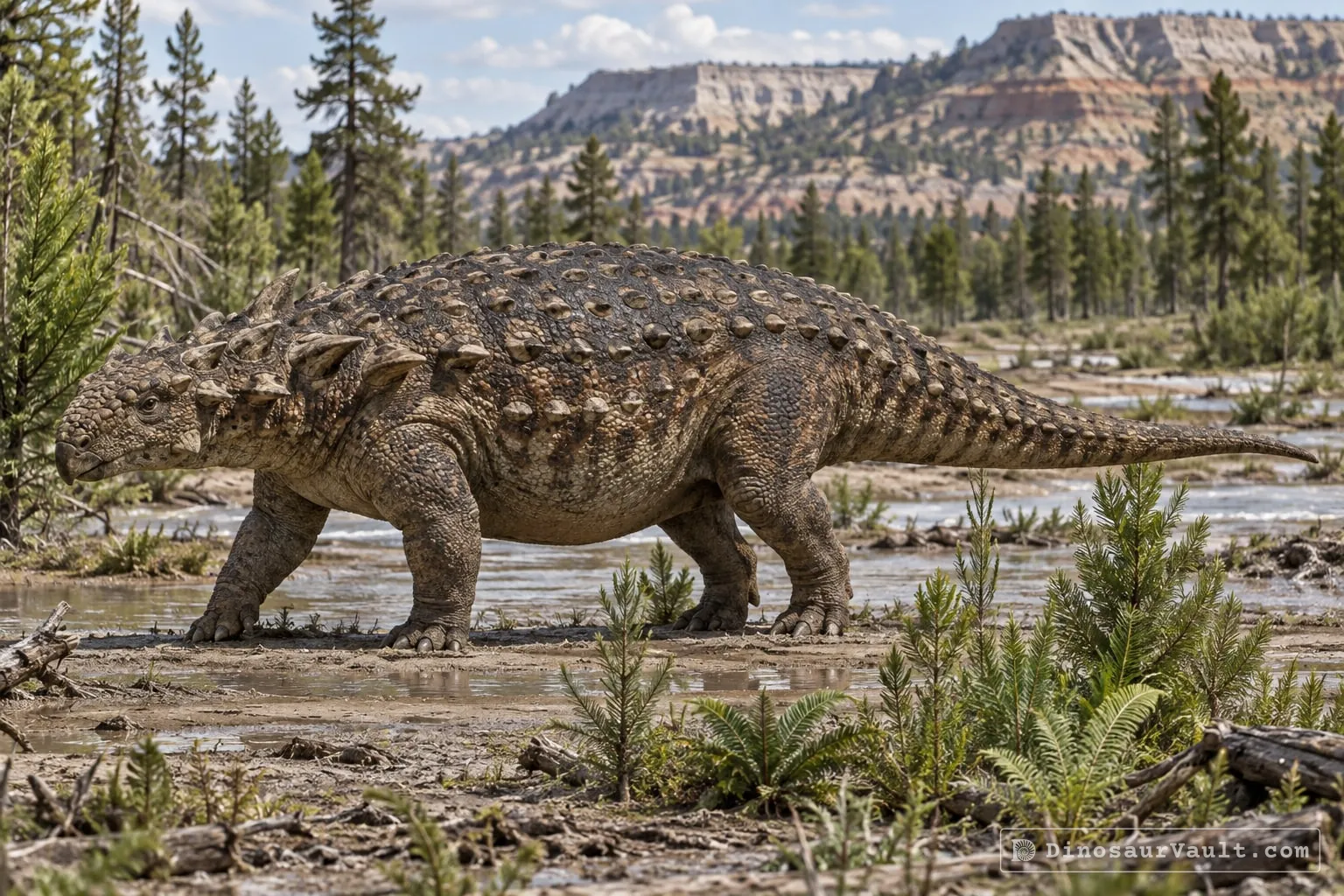
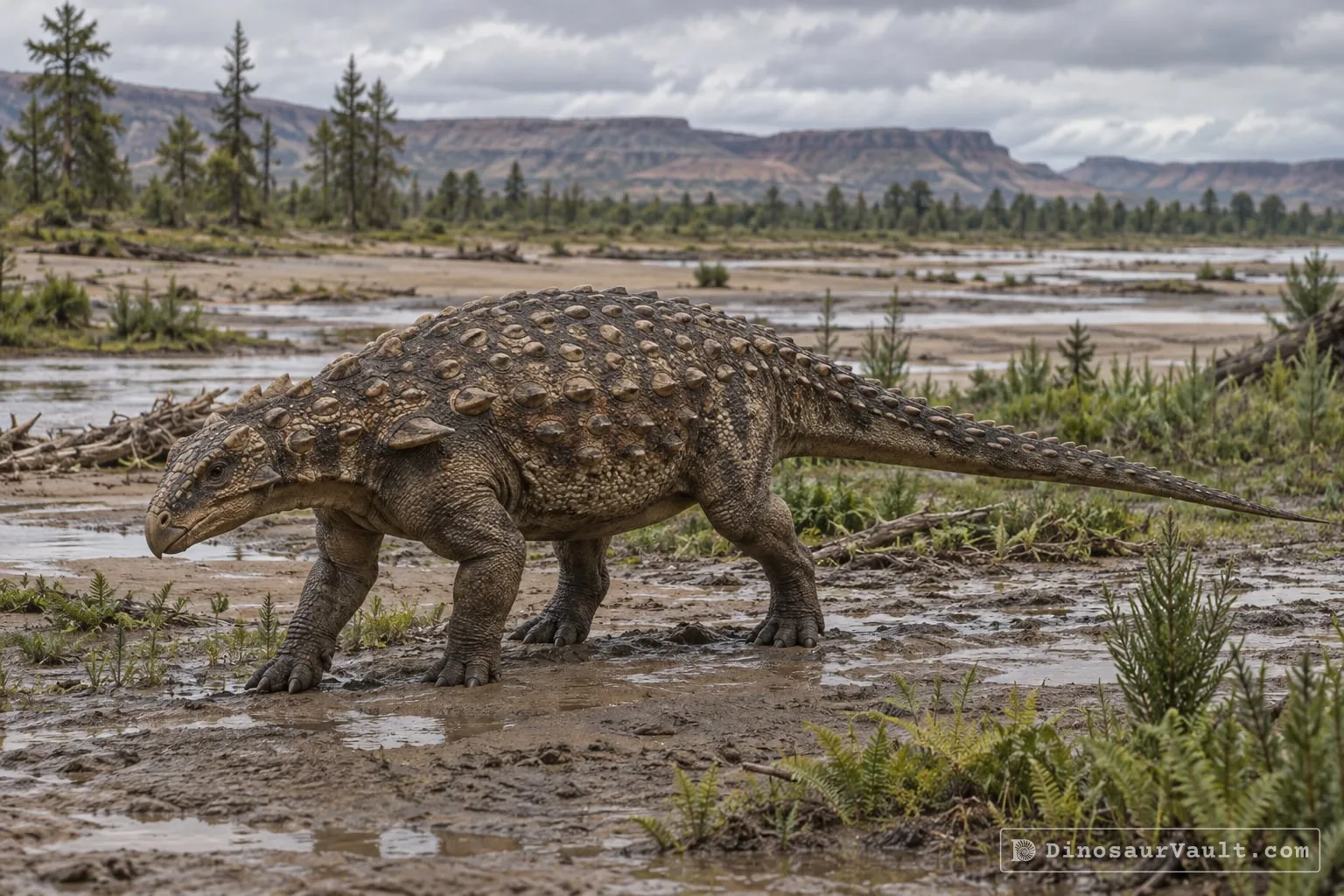
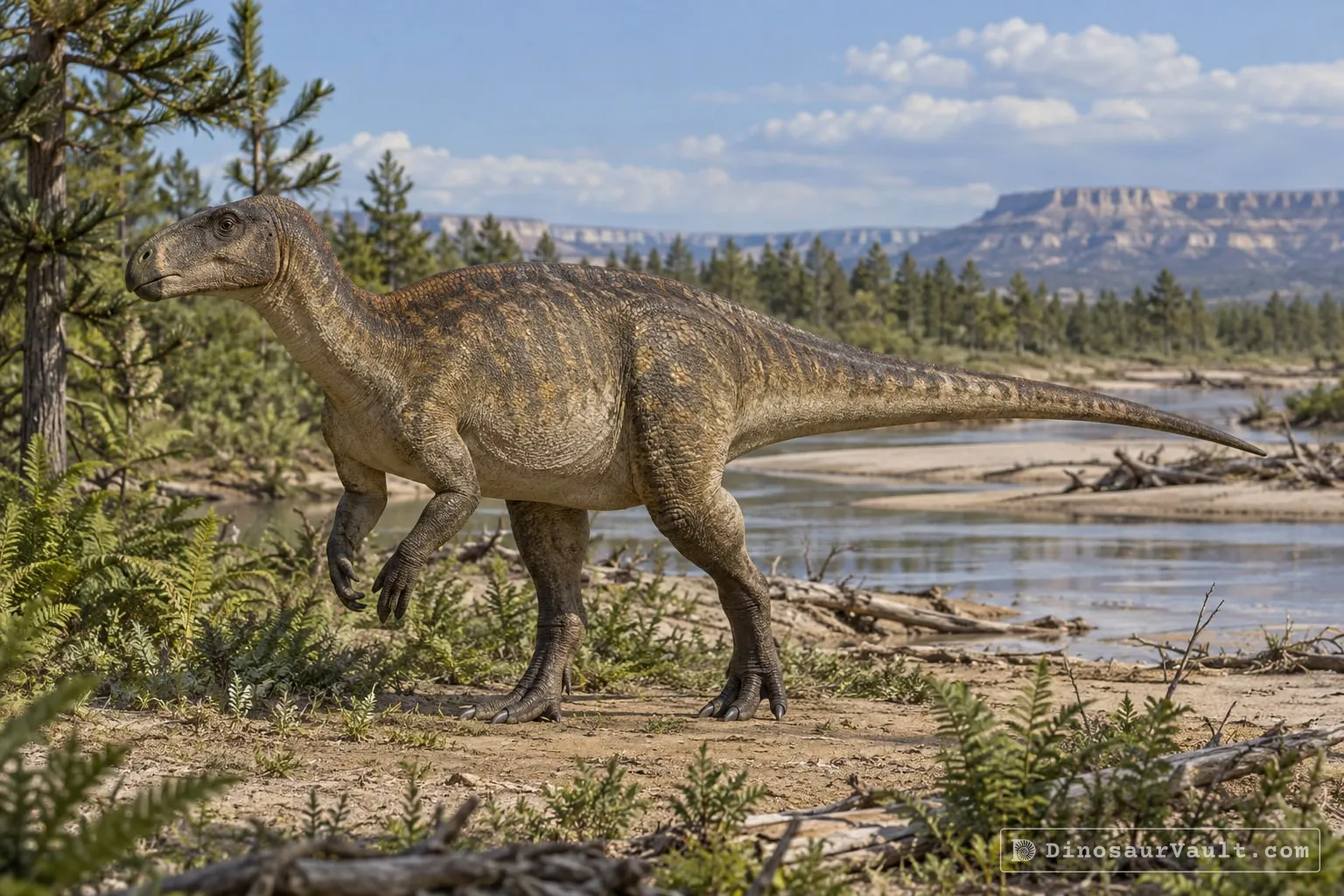
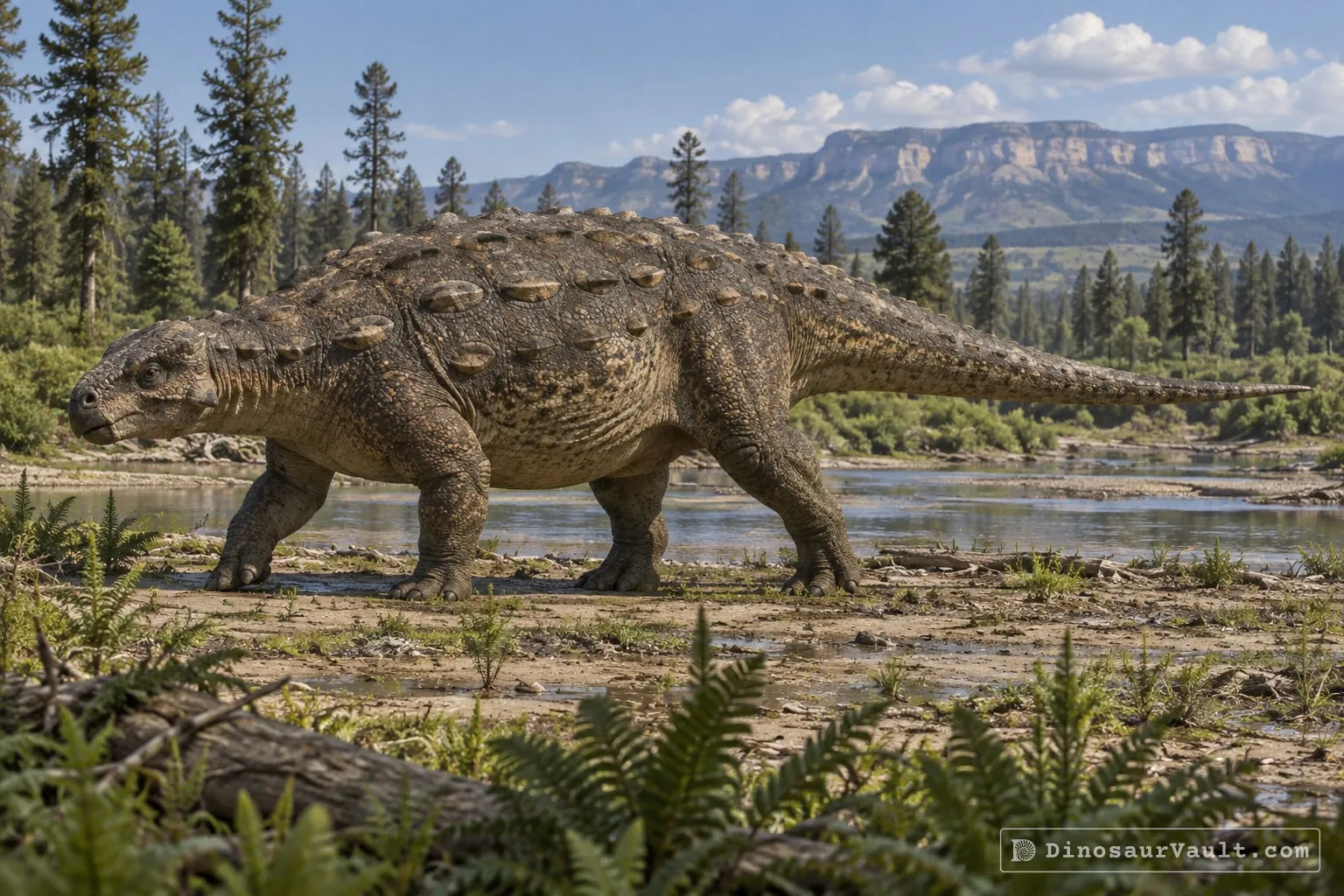


A rock formation can hold fossils laid down millions of years apart, so not every animal here met Abydosaurus.
The evidence
The science behind Abydosaurus
Which parts of the picture come from its own bones, and which come from its relatives.
From its own fossils
- Several skulls preserve a broad muzzle and teeth narrower than those of Brachiosaurus.
- Neck bones contain a network of small air chambers.
- Microscopic growth lines show that its teeth took a long time to form.
Borrowed from relatives
- The missing parts of its neck, trunk and legs are restored by comparison with brachiosaurs such as Brachiosaurus and Giraffatitan.
Still unknown
- Its complete body proportions.
- Whether the animal represented by the first skull was fully grown.
- Its color.
Discovery timeline
- 2010Named itChure et al.
- 2012Family treeD'EMIC
- 2024How it fedD'Emic et al.
Key papers
The research behind what we know of Abydosaurus
Named it
Described the skulls and neck bones of Abydosaurus, revealing a brachiosaur with unusually narrow teeth.
First complete sauropod dinosaur skull from the Cretaceous of the Americas and the evolution of sauropod dentition. Naturwissenschaften 97: 379-391
Read the paper : First complete sauropod dinosaur skull from the Cretaceous of the Americas and the evolution of sauropod dentition (opens in a new tab)Family tree
Compared early titanosauriform skeletons to test relationships within the group that includes Abydosaurus and other brachiosaurs.
The early evolution of titanosauriform sauropod dinosaurs. Zoological Journal of the Linnean Society 166: 624-671
Read the paper : The early evolution of titanosauriform sauropod dinosaurs (opens in a new tab)How it fed
Examined tooth tissues and found that Abydosaurus had thin daily growth layers and prolonged tooth formation.
Increased sampling reveals the complex evolution of sauropod dinosaur tooth replacement rates. Journal of Anatomy 247: 728-735
Read the paper : Increased sampling reveals the complex evolution of sauropod dinosaur tooth replacement rates (opens in a new tab)
Close relatives
Other members of Brachiosauridae


Sources: Wikidata