Maraapunisaurus
- Lived
- 149 to 143 million years ago, Late Jurassic
- Diet
- Herbivore
- Group
- Sauropods, Rebbachisauridae
- Found in
- United States
- Named by
- Carpenter 2018
Where its fossils were found
The evidence
Today

145 million years ago
Habitat
The Morrison Formation preserves rivers and floodplains that dried out seasonally, with conifers, ferns and horsetails. Regional neighbors included Stegosaurus, Allosaurus and Diplodocus.
Field notes
About Maraapunisaurus
What it was like
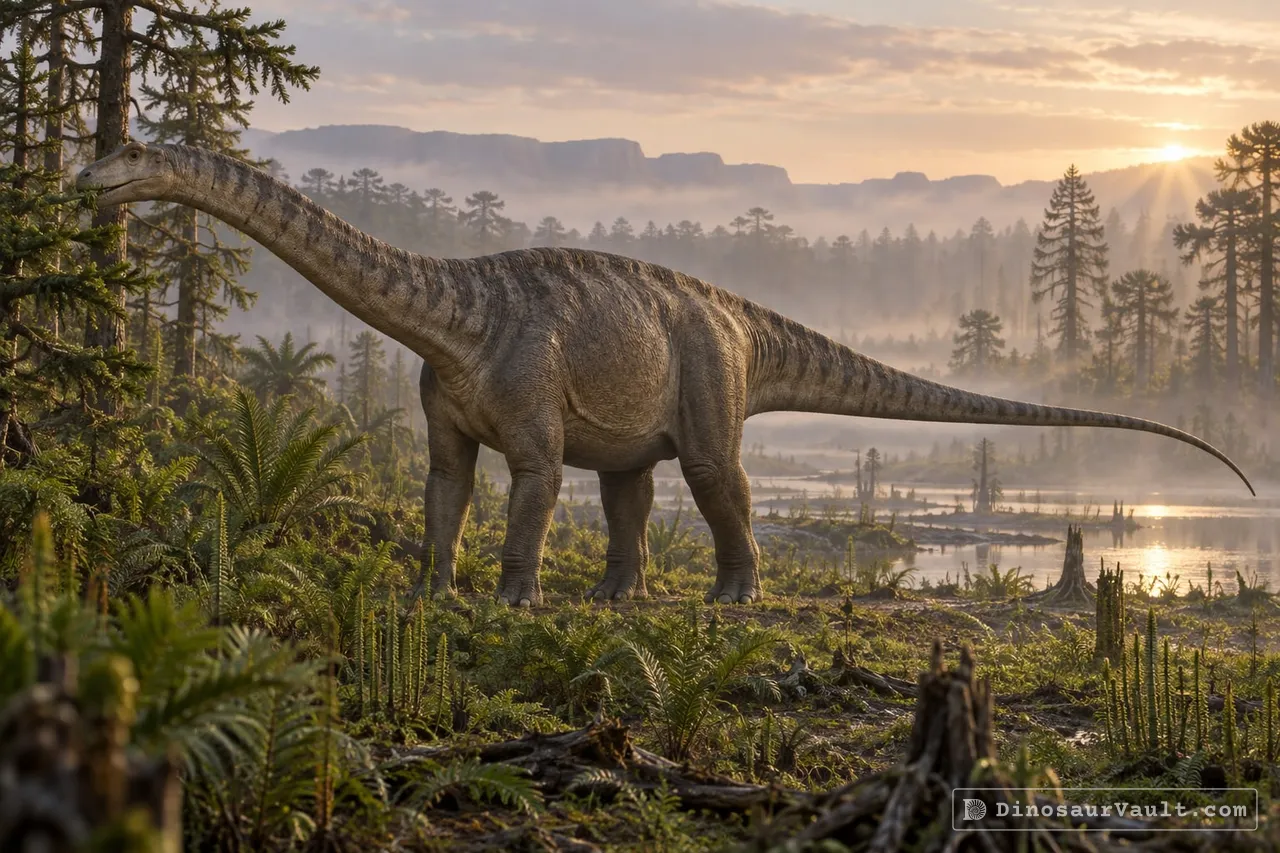
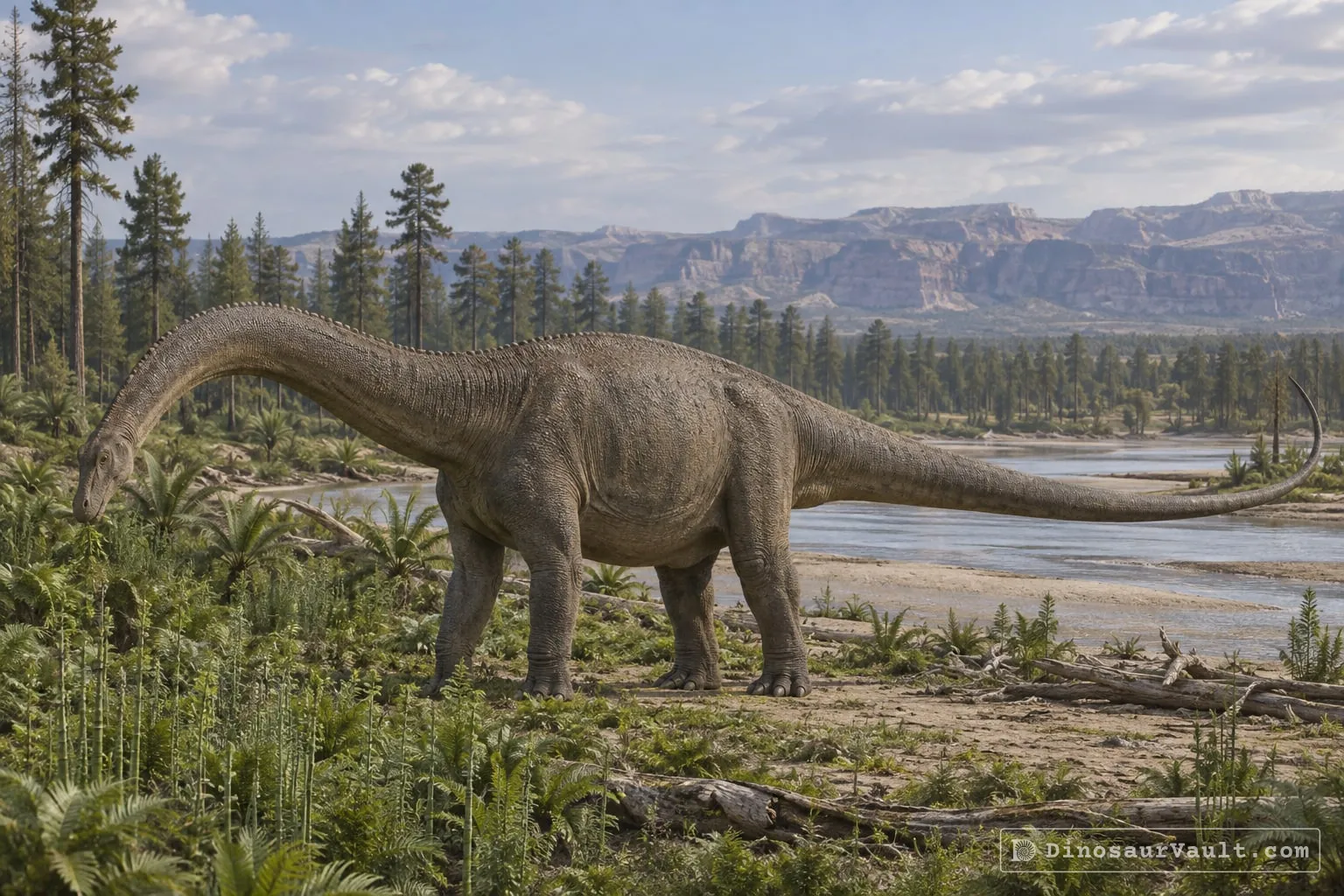
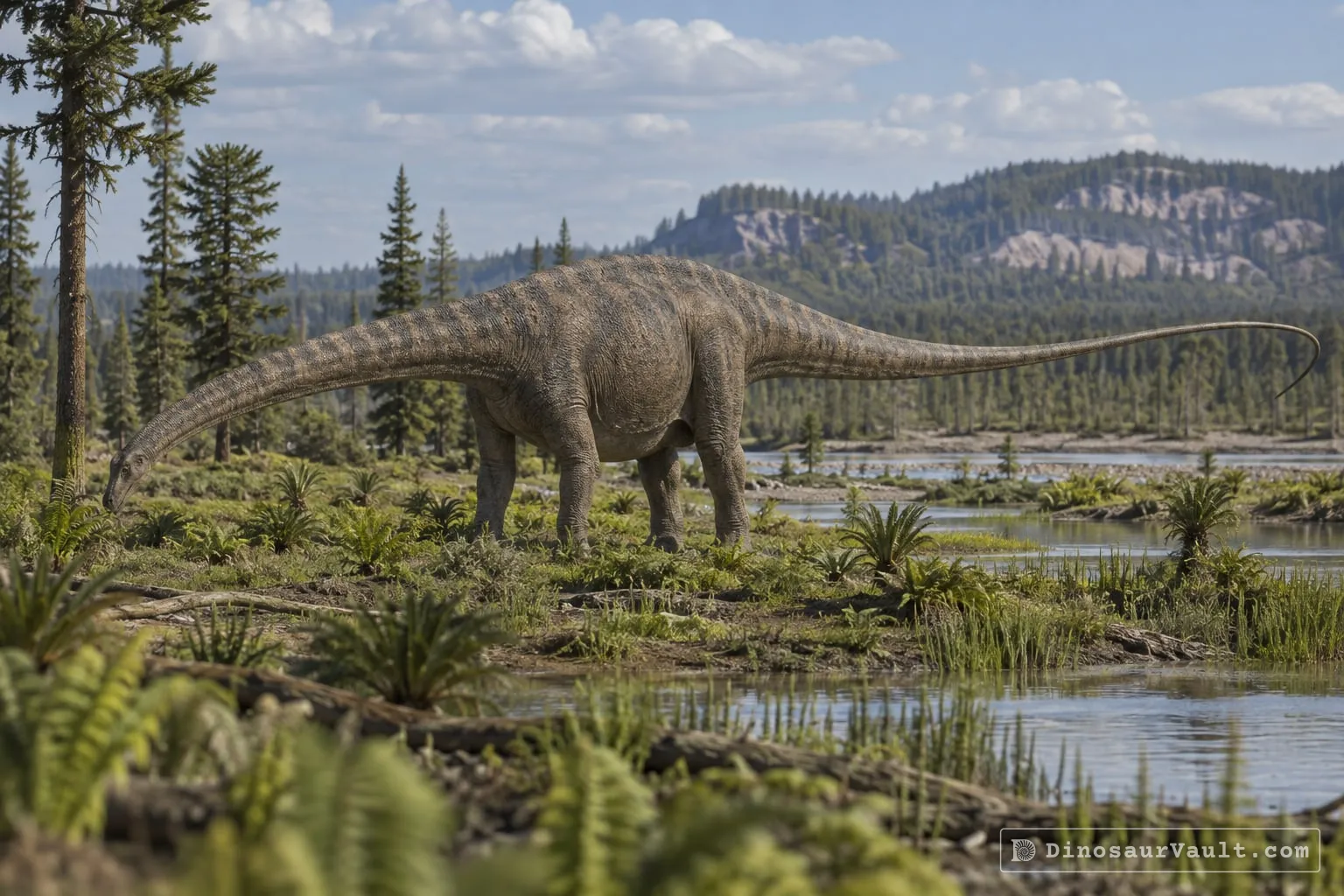
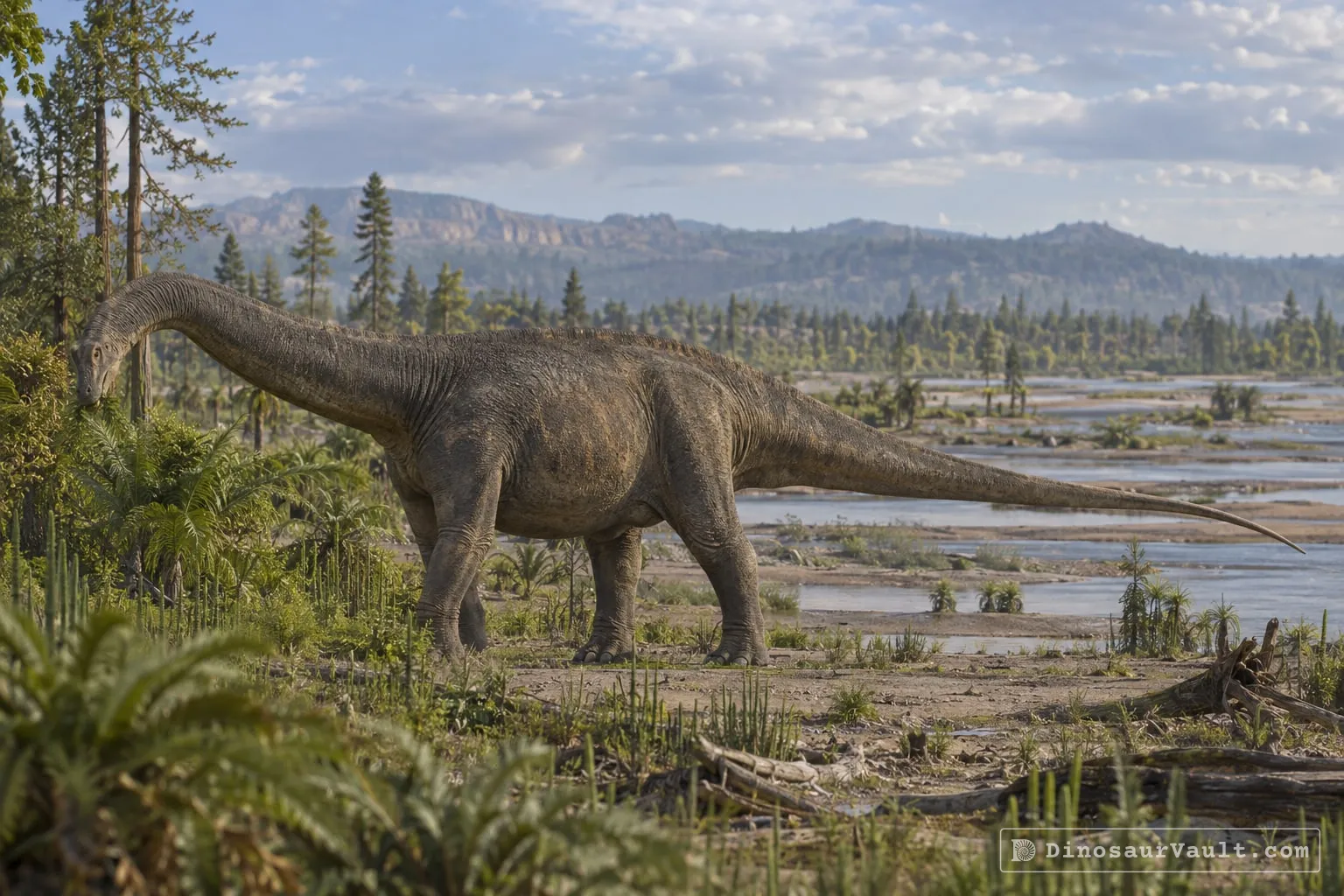
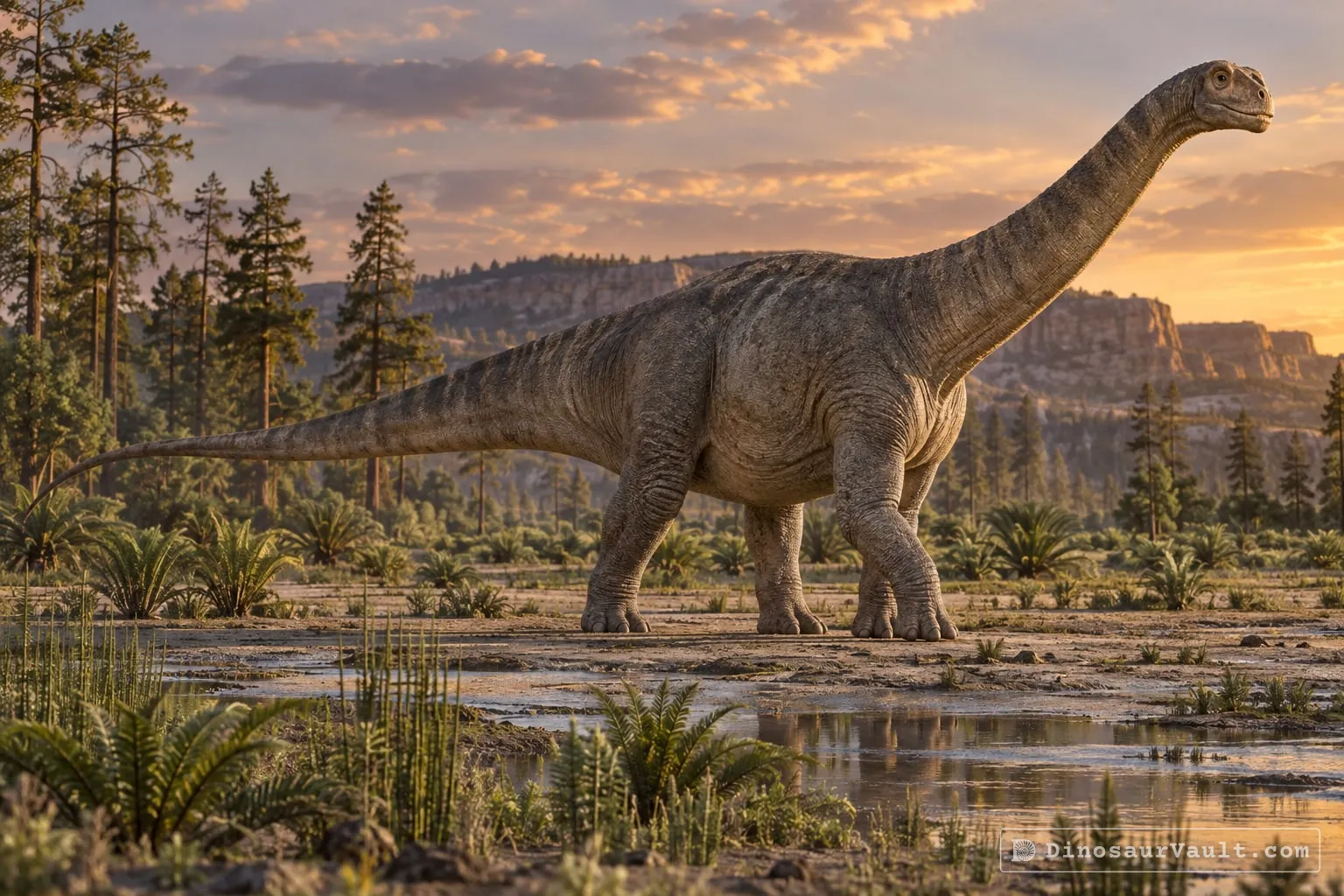
Maraapunisaurus is known only from a single fossil bone, and even that bone no longer exists, so its size remains famously uncertain. Descriptions and drawings made when the bone was first studied suggested an enormous sauropod, possibly one of the longest animals ever to have lived, but without the original fossil to check, scientists cannot be sure how accurate those early estimates were. What is clear is that it was a plant eater with the long neck and tail typical of its group.
Its world
Maraapunisaurus lived in what is now Colorado, in the western United States, sometime between the Late Jurassic and Early Cretaceous. It shared the Morrison Formation with some of the best known dinosaurs of the age, including Stegosaurus, Allosaurus, Brachiosaurus, and Diplodocus, as well as fellow long-necked giants like Brontosaurus, Apatosaurus, and Camarasaurus.
How it was found
The original bone was collected and described more than a century ago, then lost. Carpenter named Maraapunisaurus in 2018 using the surviving notes and illustrations, and argued that the animal was a rebbachisaurid rather than the type of sauropod first assumed. Because no fossil material survives to study directly, debate over its size and true identity continues.
Field gallery
More views of Maraapunisaurus
Scenes reconstructed from the available fossil evidence.
Lived alongside
Found in the same rock formations
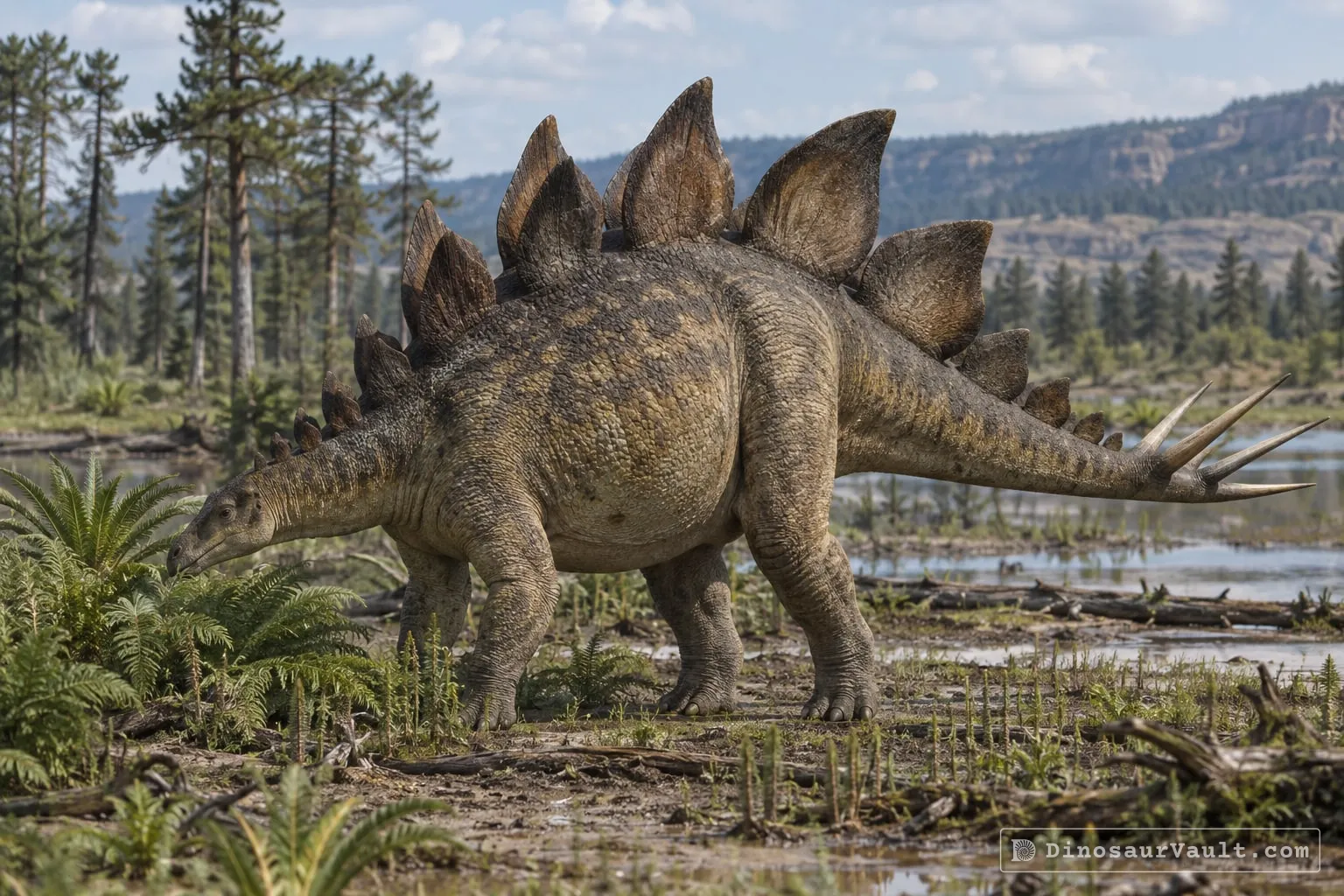
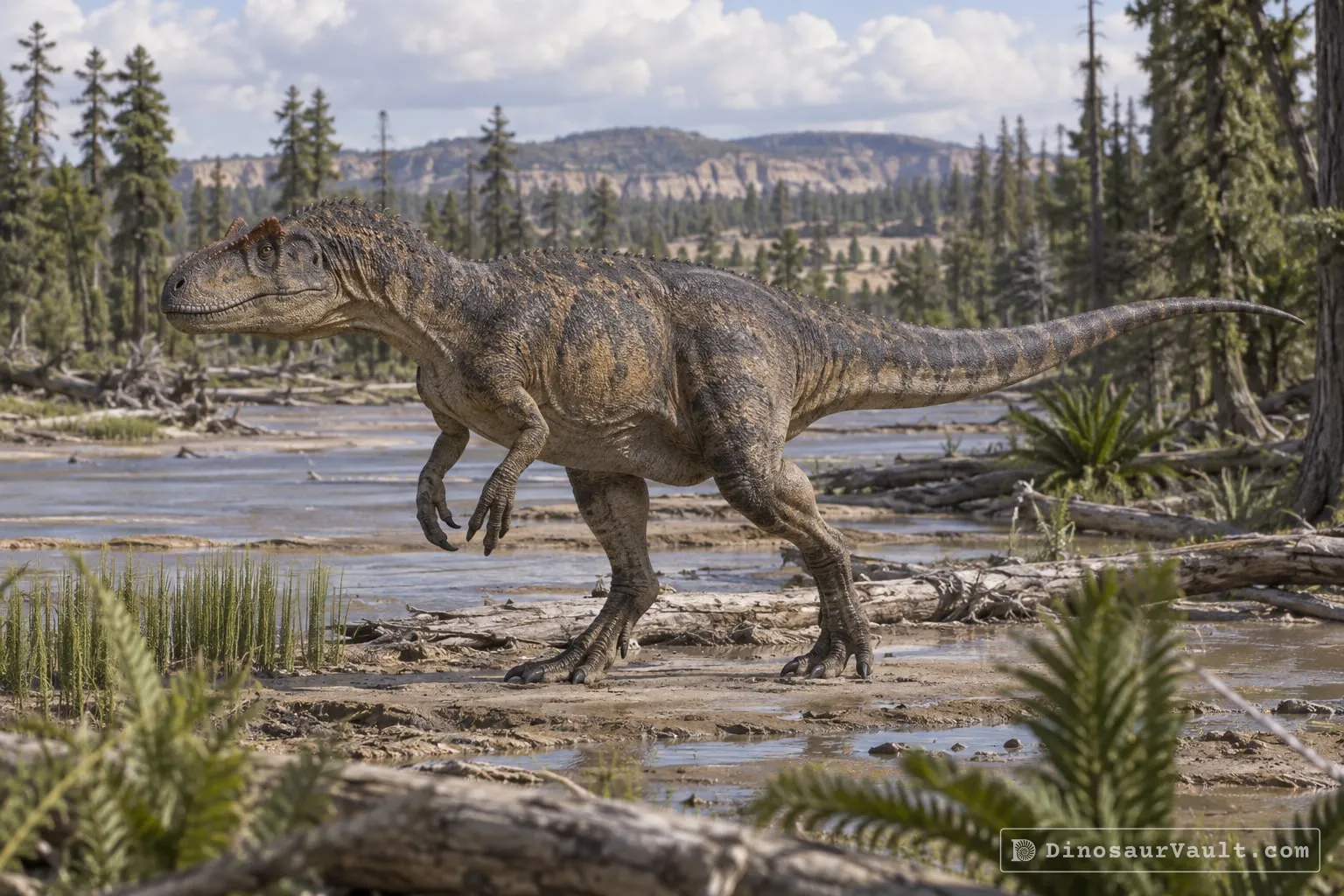
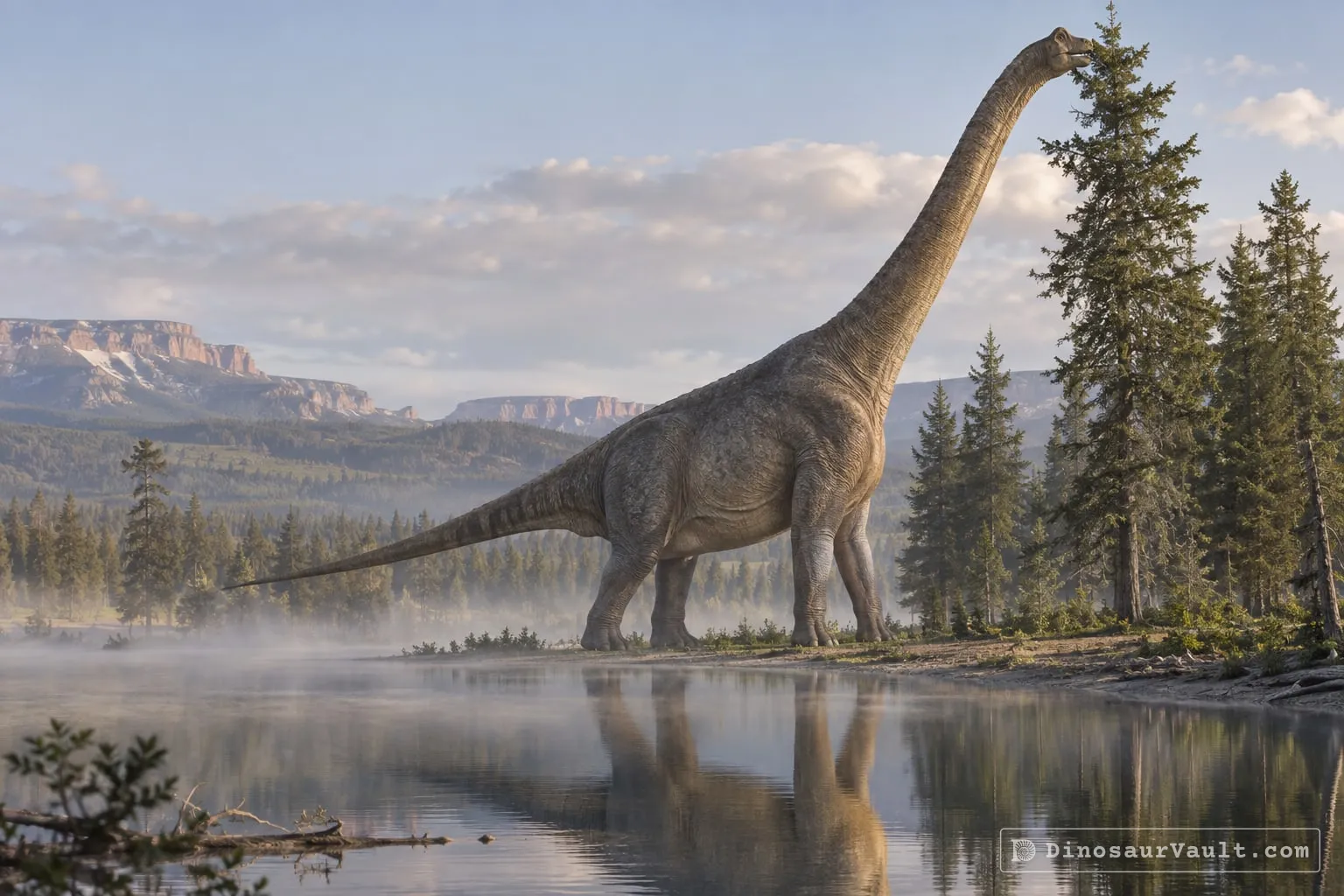
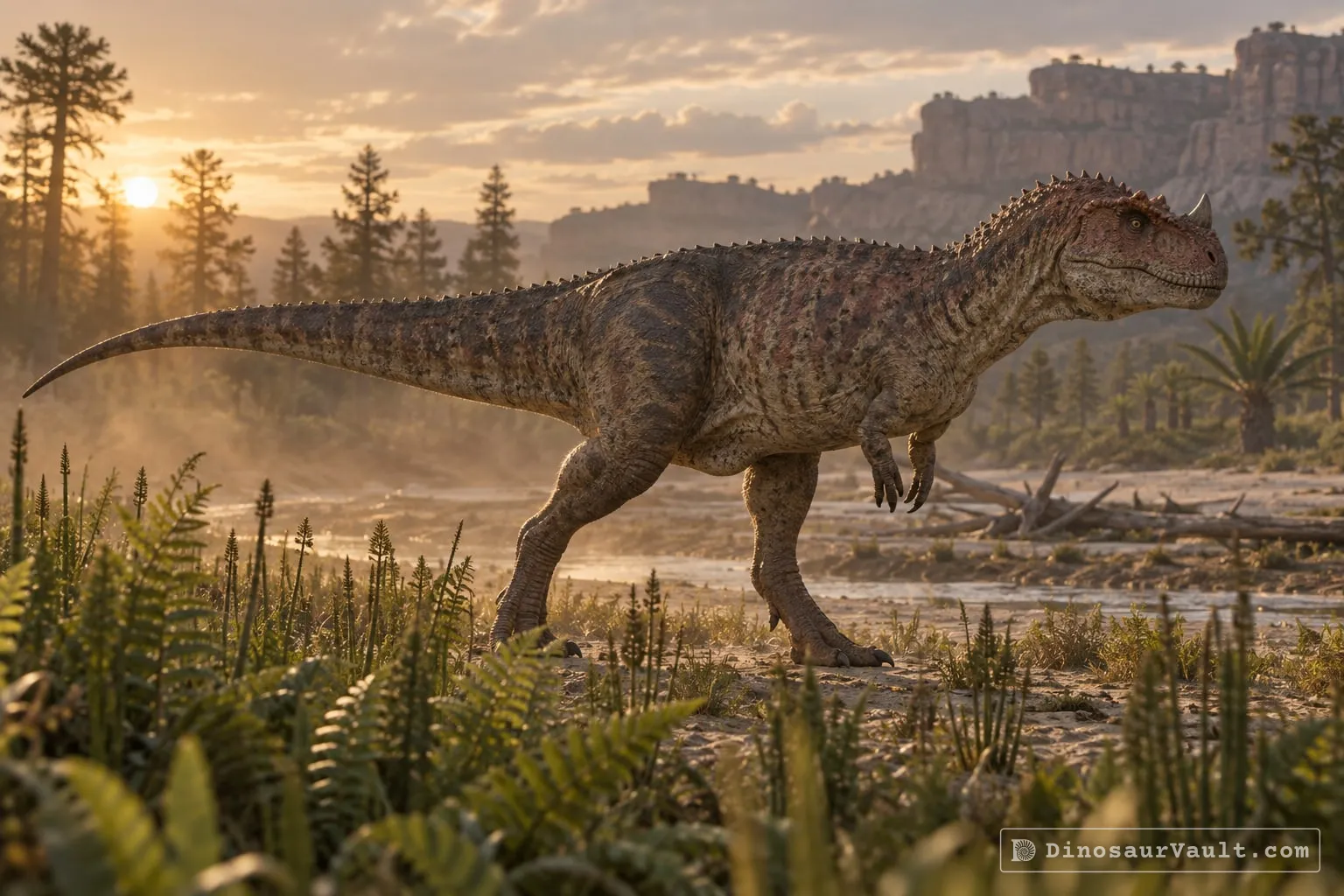


A rock formation can hold fossils laid down millions of years apart, so not every animal here met Maraapunisaurus.
The evidence
The science behind Maraapunisaurus
Which parts of the picture come from its own bones, and which come from its relatives.
From its own fossils
- The original description records part of a back vertebra with a very tall spine.
- The fossil was lost; its shape survives in an old drawing and written description.
Borrowed from relatives
- The neck, head, limbs and tail are reconstructed by comparison with sauropods such as Limaysaurus.
- Its proposed rebbachisaurid body shape follows the interpretation of the surviving vertebra drawing.
Still unknown
- Its total length and body proportions.
- Whether a new fossil would confirm its proposed place among rebbachisaurids.
- Its skin covering and color.
Often drawn wrong
- Pictures that give it a precise record-breaking size turn a disputed estimate into a fixed measurement.
Discovery timeline
- 1980Its worldDodson et al.
- 2018Named itCarpenter
- 2025Family treeMannion & Moore
Key papers
The research behind what we know of Maraapunisaurus
Its world
Described a landscape of rivers, lakes and floodplains, with seasonal water shortages across the Morrison Formation.
Taphonomy and Paleoecology of the Dinosaur Beds of the Jurassic Morrison Formation. Paleobiology 6: 208-232
Read the paper : Taphonomy and Paleoecology of the Dinosaur Beds of the Jurassic Morrison Formation (opens in a new tab)Named it
Reinterpreted the lost vertebra as a rebbachisaurid and gave the animal its new genus name.
Maraapunisaurus fragillimus, N.G. (formerly Amphicoelias fragillimus), a basal Rebbachisaurid from the Morrison Formation (Upper Jurassic) of Colorado. Geology of the Intermountain West 5: 227-244
Read the paper : Maraapunisaurus fragillimus, N.G. (formerly Amphicoelias fragillimus), a basal Rebbachisaurid from the Morrison Formation (Upper Jurassic) of Colorado (opens in a new tab)Family tree
Reassessed diplodocoid relationships and discussed the surviving drawing as consistent with a rebbachisaurid interpretation of Maraapunisaurus.
Critical reappraisal of a putative dicraeosaurid sauropod dinosaur from the Middle Jurassic of Gondwana and a revised view of diplodocoid evolutionary relationships and biogeography. Journal of Systematic Palaeontology 23
Read the paper : Critical reappraisal of a putative dicraeosaurid sauropod dinosaur from the Middle Jurassic of Gondwana and a revised view of diplodocoid evolutionary relationships and biogeography (opens in a new tab)
Close relatives
Other members of Rebbachisauridae


Sources: Wikidata