Astigmasaura
Type species Astigmasaura genuflexa
- Lived
- Early Cretaceous
- Diet
- Herbivore
- Group
- Sauropods, Rebbachisauridae
- Found in
- Argentina
- Named by
- Bellardini et al. 2025
Where its fossils were found
The evidence
Today

Habitat
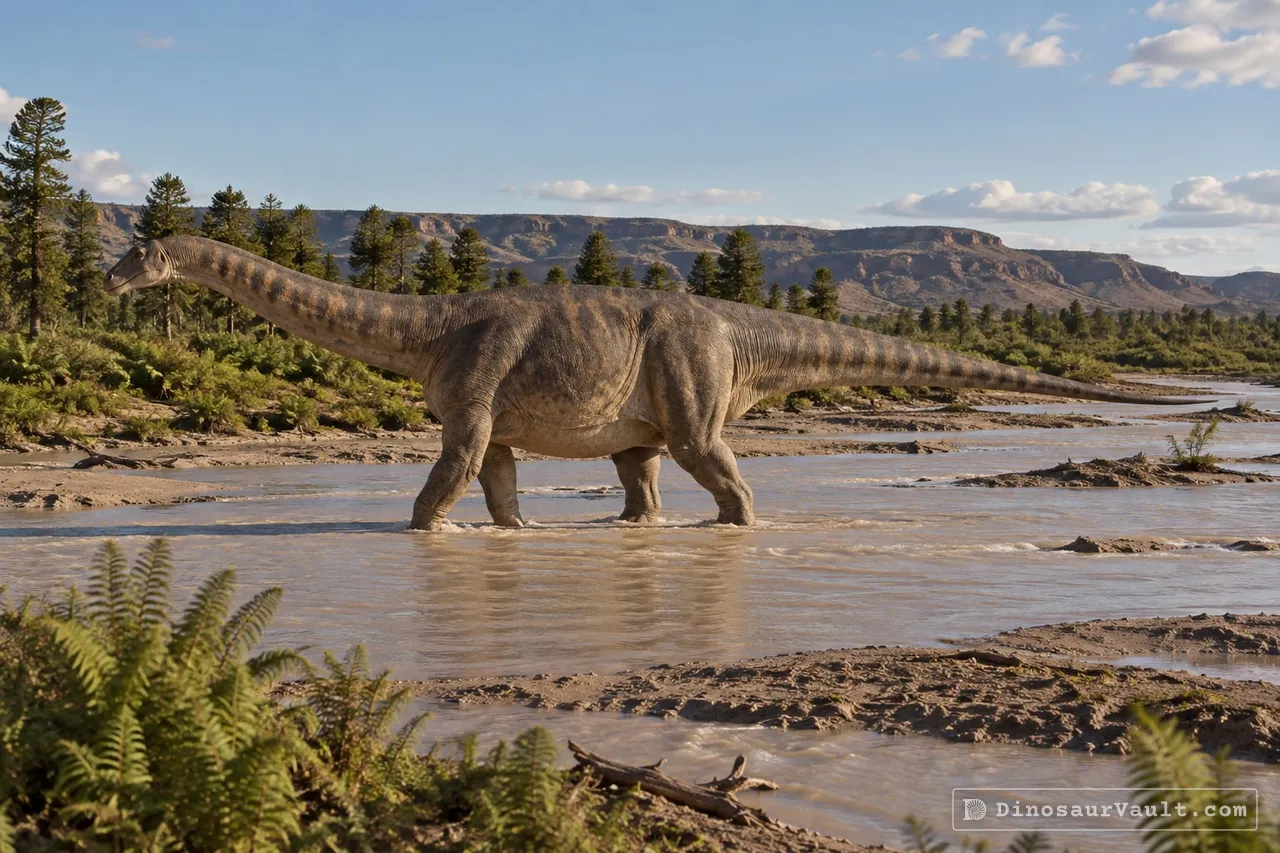
Rivers crossed the floodplains recorded in the Huincul Formation. Argentinosaurus, Mapusaurus and Limaysaurus also lived in this landscape.
Field notes
About Astigmasaura
What it was like
Astigmasaura was a rebbachisaur, a long-necked plant eater from a family related to Diplodocus. It is known from part of a skeleton found with its bones still joined together.
Its species name refers to its bent knee, the way its leg was preserved.
Its world
It lived in the Cretaceous in what is now Argentina. Its bones come from the Huincul Formation, where it shared the land with the giant Argentinosaurus, the hunters Mapusaurus, Meraxes and Skorpiovenator, and another rebbachisaur, Limaysaurus.
How it was found
Bellardini and colleagues named Astigmasaura in 2025, from a single find.
Field gallery
More views of Astigmasaura
Scenes reconstructed from the available fossil evidence.
The evidence
The science behind Astigmasaura
Which parts of the picture come from its own bones, and which come from its relatives.
From its own fossils
- The rear of an adult skeleton preserves the hips, hind legs and much of the front of the tail, with many bones still joined together.
- The front tail vertebrae have tall spines, and the thigh bones have knee joints angled inward.
- Its hind feet have fewer toe bones than those of most sauropods.
Borrowed from relatives
- The missing head and neck follow the general body plan of other rebbachisaurids, such as Limaysaurus.
Still unknown
- The shape of its skull and teeth.
- The length and proportions of its neck.
- Its skin texture and color.
Discovery timeline
- 2023Full descriptionBellardini et al.
- 2024Close relativeLerzo et al.
- 2025Named itBellardini et al.
Key papers
The research behind what we know of Astigmasaura
Full description
Described the hind limbs before the animal was named, including feet with fewer toe bones than most sauropods.
Exploring rebbachisaurid hind-limb anatomy on the basis of a new articulated specimen from the Huincul Formation (upper Cenomanian) of Neuquén Basin, Patagonia, Argentina. Historical Biology 36: 2587-2603
Read the paper : Exploring rebbachisaurid hind-limb anatomy on the basis of a new articulated specimen from the Huincul Formation (upper Cenomanian) of Neuquén Basin, Patagonia, Argentina (opens in a new tab)Close relative
Described Sidersaura from the same formation, showing another branch of rebbachisaurids surviving late in the family's history.
The last of the oldies: a basal rebbachisaurid (Sauropoda, Diplodocoidea) from the early Late Cretaceous (Cenomanian–Turonian) of Patagonia, Argentina. Historical Biology 37: 208-233
Read the paper : The last of the oldies: a basal rebbachisaurid (Sauropoda, Diplodocoidea) from the early Late Cretaceous (Cenomanian–Turonian) of Patagonia, Argentina (opens in a new tab)Named it
Named a rebbachisaurid from an adult skeleton's hips, hind limbs and tail, adding detail about this family's rear half.
Side by side with titans: A new rebbachisaurid dinosaur from the Huincul Formation (upper Cenomanian) of Patagonia, Argentina. Cretaceous Research 176: 106188
Read the paper : Side by side with titans: A new rebbachisaurid dinosaur from the Huincul Formation (upper Cenomanian) of Patagonia, Argentina (opens in a new tab)
Close relatives
Other members of Rebbachisauridae


Sources: Wikidata