Xenoposeidon
"strange Poseidon"
Type species Xenoposeidon proneneukos
- Lived
- 139 to 133 million years ago, Early Cretaceous
- Diet
- Herbivore
- Group
- Sauropods, Rebbachisauridae
- Found in
- United Kingdom
- Named by
- Taylor and Naish 2007
Where its fossils were found
The evidence
Today

135 million years ago
Habitat
The Ashdown Formation records floodplains with conifers in what is now England. Iguanodon and Hylaeosaurus are among the plant eaters reported from these rocks.
Field notes
About Xenoposeidon
What it was like
Xenoposeidon was a sauropod known from a single back bone. That bone is so unusual in shape that it clearly came from a new kind of sauropod. It was probably a rebbachisaurid, the family of Rebbachisaurus.
Its world
It lived in the Early Cretaceous, in what is now England. It comes from the Ashdown Formation, where early relatives of Iguanodon and the armored Hylaeosaurus also lived.
How it was found
Taylor and Naish named Xenoposeidon in 2007. The type species is Xenoposeidon proneneukos. The bone had sat in a museum collection for over a century before it was studied.
Field gallery
More views of Xenoposeidon
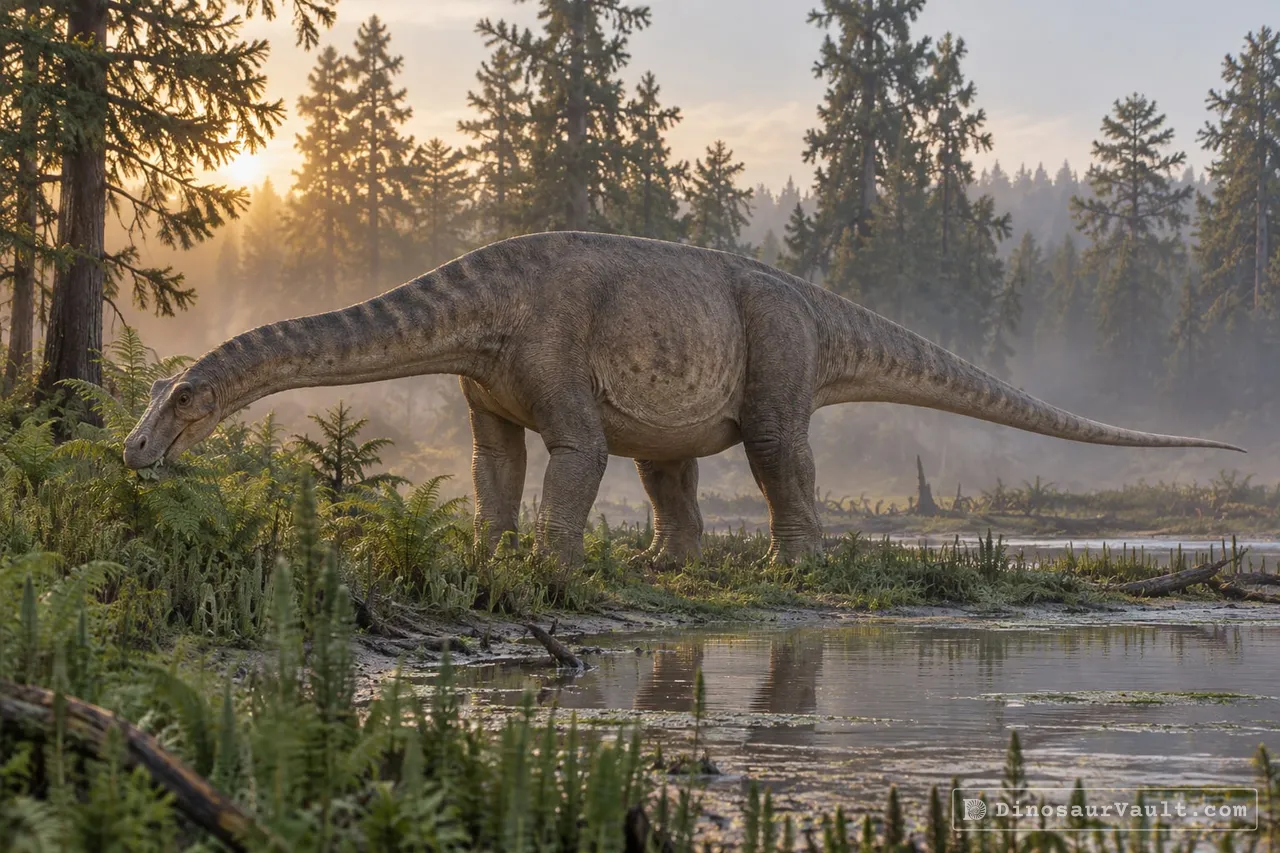
Scenes reconstructed from the available fossil evidence.
Lived alongside
Found in the same rock formations


A rock formation can hold fossils laid down millions of years apart, so not every animal here met Xenoposeidon.
The evidence
The science behind Xenoposeidon
Which parts of the picture come from its own bones, and which come from its relatives.
From its own fossils
- A single incomplete back vertebra preserves deep hollows and a network of thin bony ridges.
- The tall arch above the vertebra slopes forward and stretches across the whole top of the bone.
Borrowed from relatives
- The missing neck, limbs and tail are restored using rebbachisaurids such as Rebbachisaurus.
- Its skull is usually modeled on other rebbachisaurids, such as Nigersaurus.
Still unknown
- Its total length and body proportions.
- The shape of its skull and teeth.
- Its skin and color.
Discovery timeline
- 2007Named itTAYLOR & NAISH
- 2015Close relativeWilson & Allain
- 2018Family treeTaylor
Key papers
The research behind what we know of Xenoposeidon
Named it
Named Xenoposeidon from a back vertebra with an unusually tall, forward-sloping arch and a distinctive arrangement of bony ridges.
AN UNUSUAL NEW NEOSAUROPOD DINOSAUR FROM THE LOWER CRETACEOUS HASTINGS BEDS GROUP OF EAST SUSSEX, ENGLAND. Palaeontology 50: 1547-1564
Read the paper : AN UNUSUAL NEW NEOSAUROPOD DINOSAUR FROM THE LOWER CRETACEOUS HASTINGS BEDS GROUP OF EAST SUSSEX, ENGLAND (opens in a new tab)Close relative
Described the vertebral ridges of Rebbachisaurus that later helped identify the family relationships of Xenoposeidon.
Osteology ofRebbachisaurus garasbaeLavocat, 1954, a diplodocoid (Dinosauria, Sauropoda) from the early Late Cretaceous–aged Kem Kem beds of southeastern Morocco. Journal of Vertebrate Paleontology 35: e1000701
Read the paper : Osteology ofRebbachisaurus garasbaeLavocat, 1954, a diplodocoid (Dinosauria, Sauropoda) from the early Late Cretaceous–aged Kem Kem beds of southeastern Morocco (opens in a new tab)Family tree
Compared the vertebra with Rebbachisaurus and identified Xenoposeidon as an early member of the rebbachisaurid family.
Xenoposeidon is the earliest known rebbachisaurid sauropod dinosaur. PeerJ 6: e5212
Read the paper : Xenoposeidon is the earliest known rebbachisaurid sauropod dinosaur (opens in a new tab)
Close relatives
Other members of Rebbachisauridae


Sources: Wikidata