Cienciargentina
Type species Cienciargentina sanchezi
- Lived
- 110 to 106 million years ago, Early Cretaceous
- Diet
- Herbivore
- Group
- Sauropods, Rebbachisauridae
- Found in
- Argentina
- Named by
- Simón and Salgado 2025
Where its fossils were found
The evidence
Today

110 million years ago
Habitat
The Huincul Formation records a landscape crossed by rivers in what is now Argentina. Argentinosaurus, Mapusaurus and Meraxes are other dinosaurs from these rocks.
Field notes
About Cienciargentina
What it was like
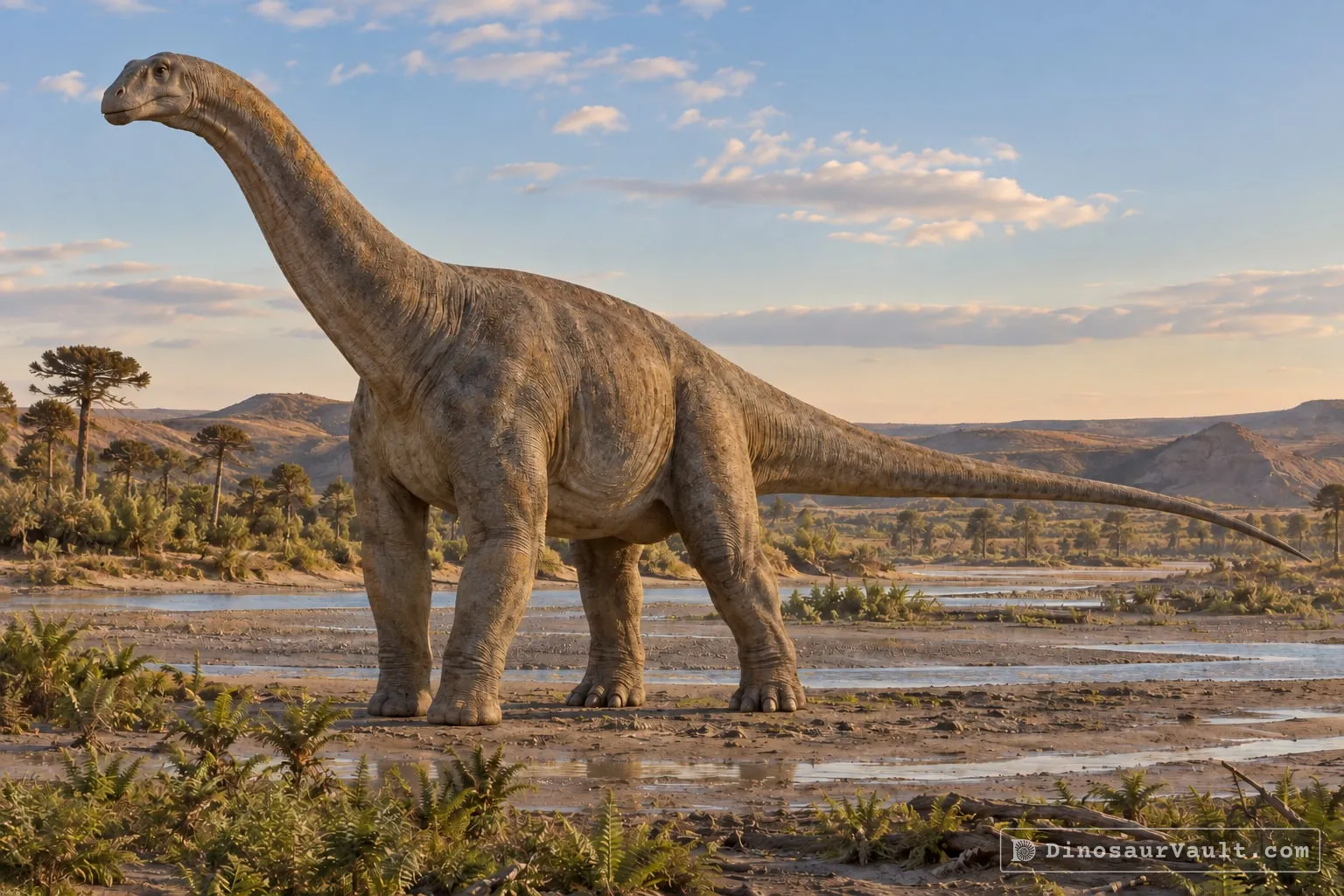
Cienciargentina was a rebbachisaurid, a long-necked plant eater. Its own skull and teeth are unknown. It is known from partial skeletons of animals of different sizes.
Its world
It lived in the Cretaceous in what is now Argentina. Recent radiometric dating of its formation supports an Early Cretaceous age, revising older estimates. Its bones come from the Huincul Formation, home to the giant titanosaur Argentinosaurus, the rebbachisaurid Limaysaurus and the predators Mapusaurus and Meraxes.
How it was found
It was named in 2025. The type species is Cienciargentina sanchezi. Its name honors science in Argentina.
Field gallery
More views of Cienciargentina
Scenes reconstructed from the available fossil evidence.
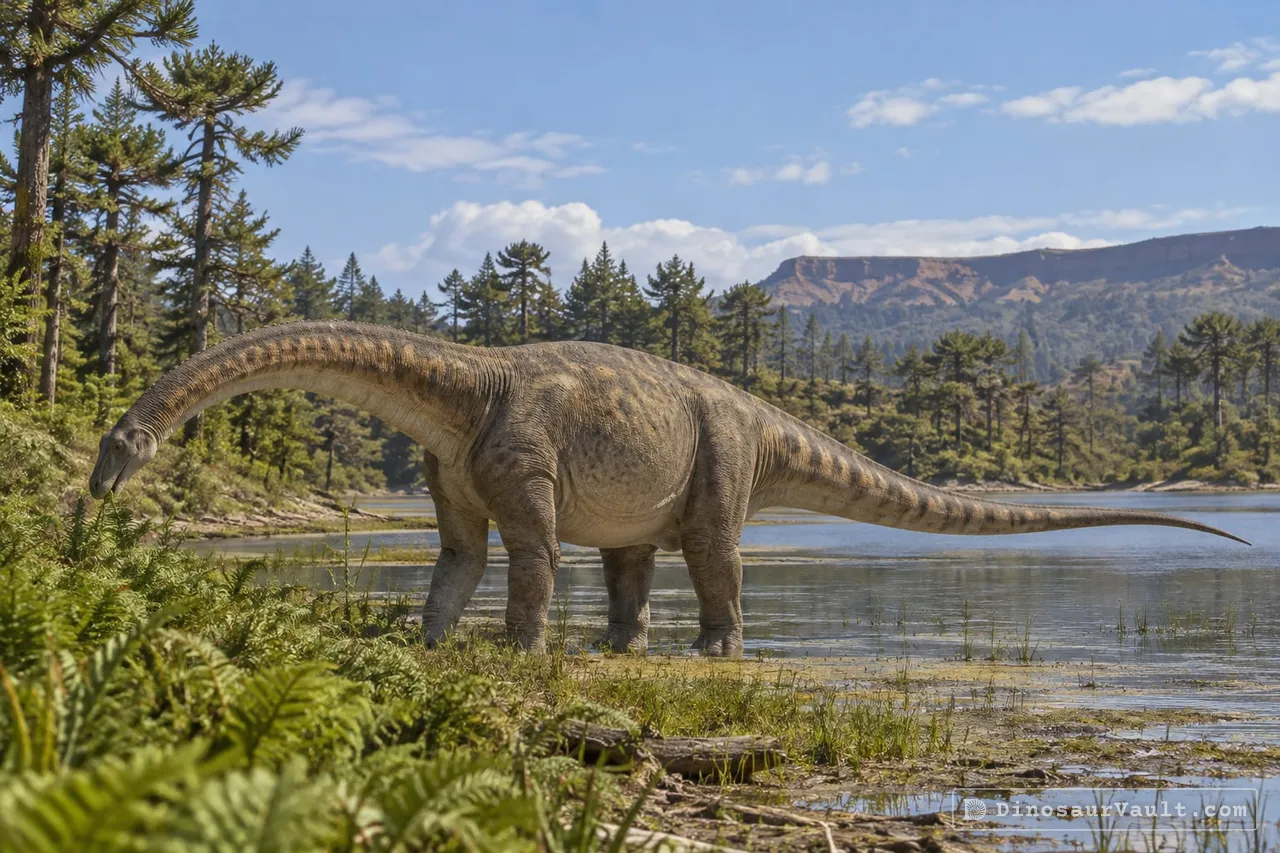
Lived alongside
Found in the same rock formations
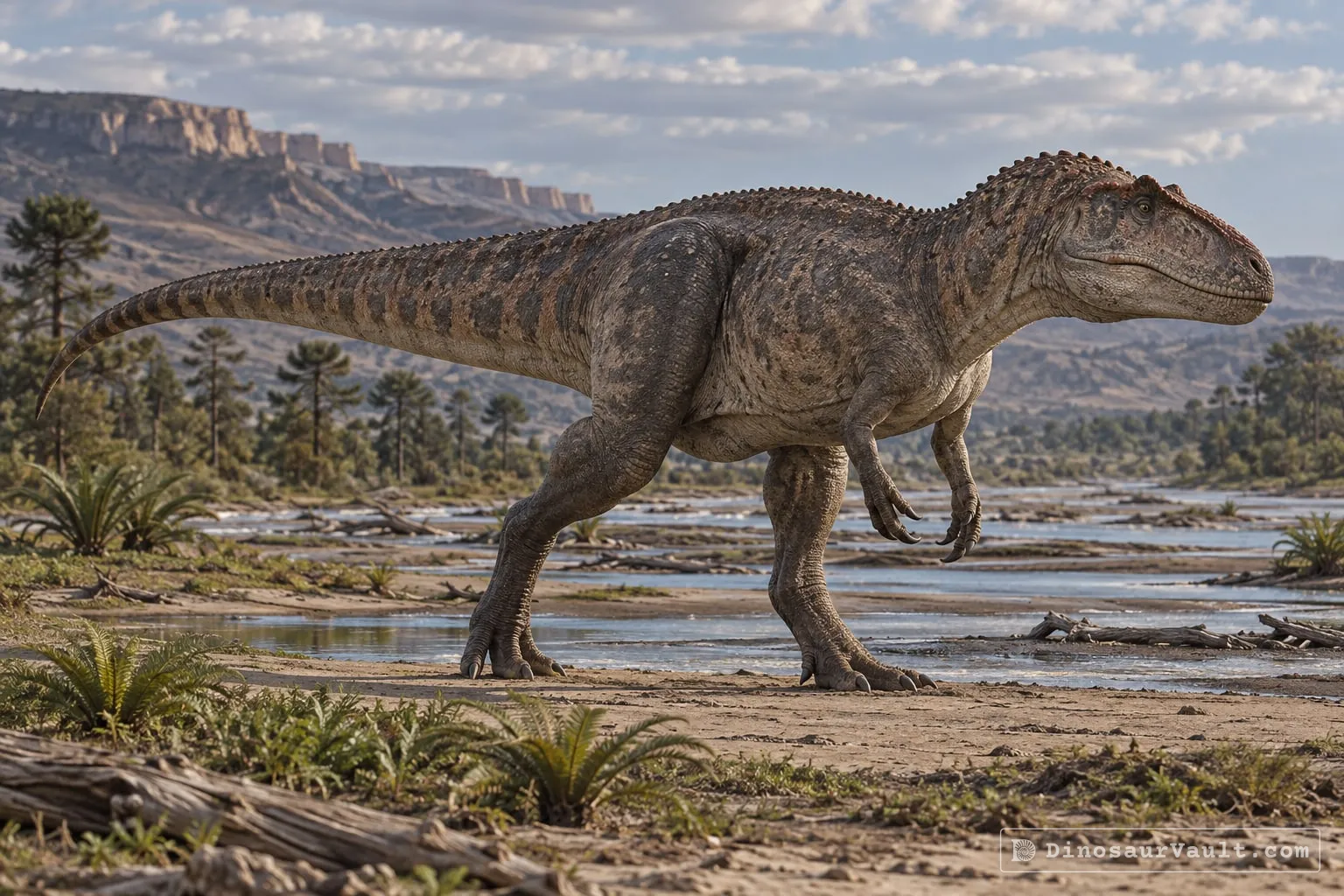
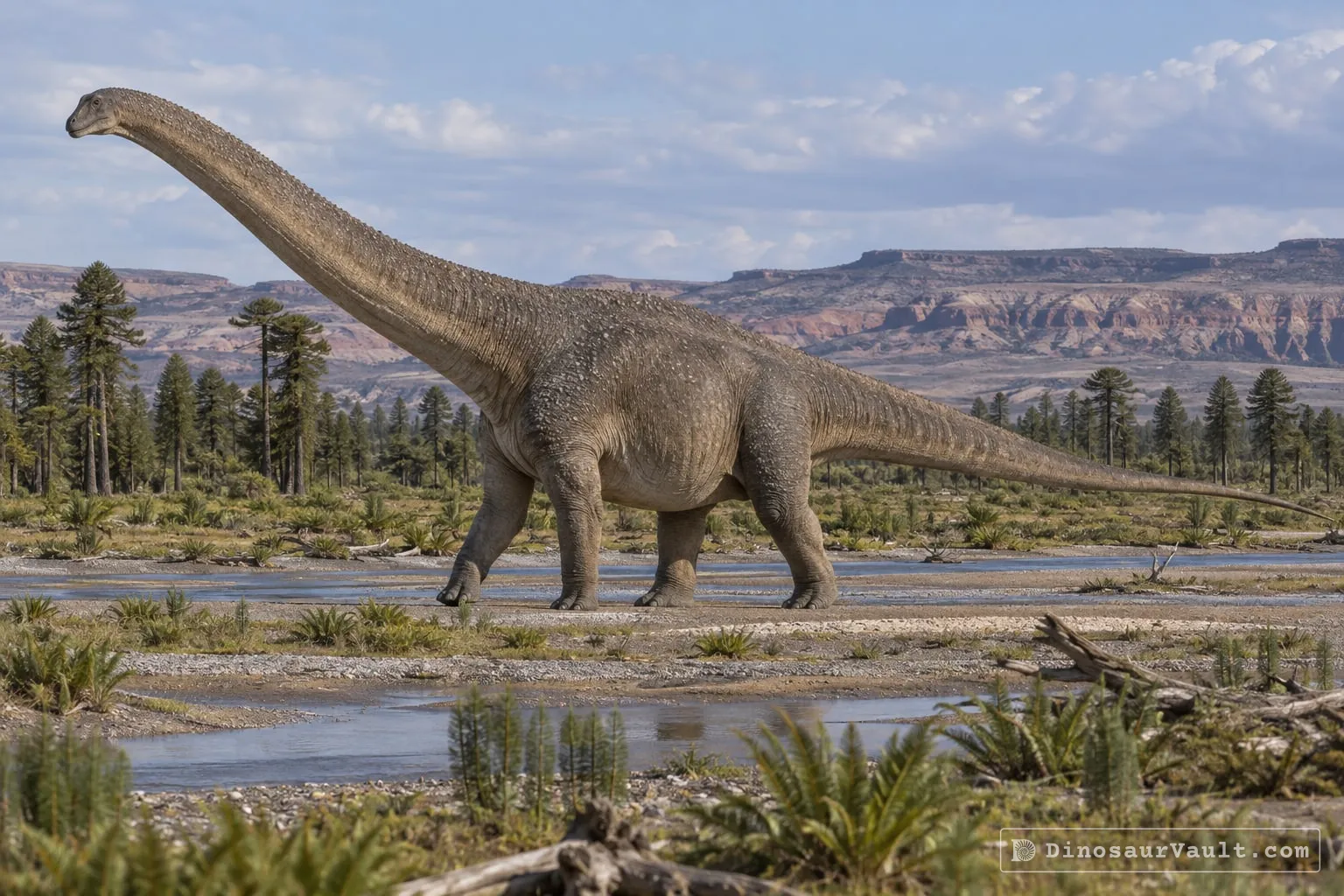
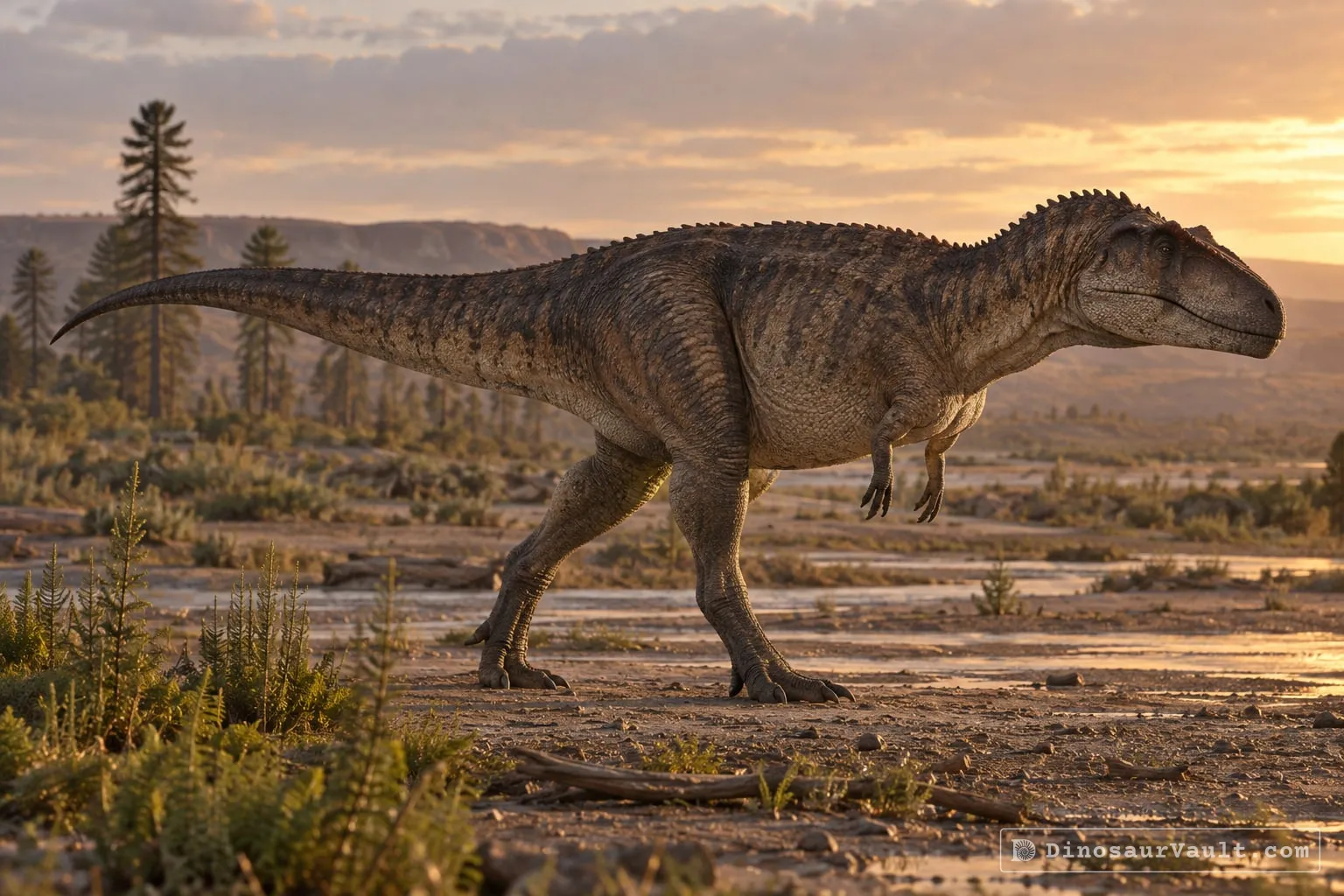
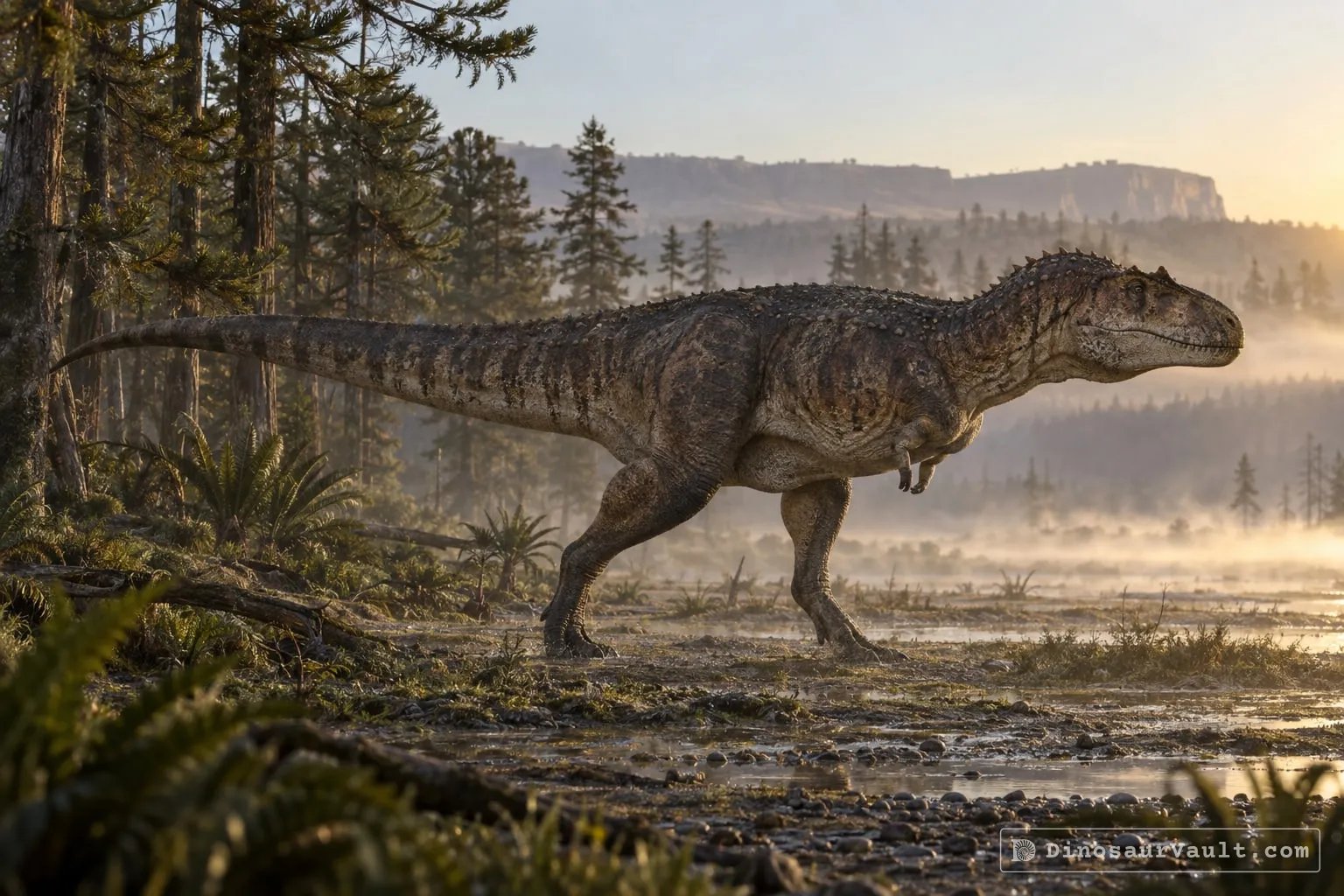
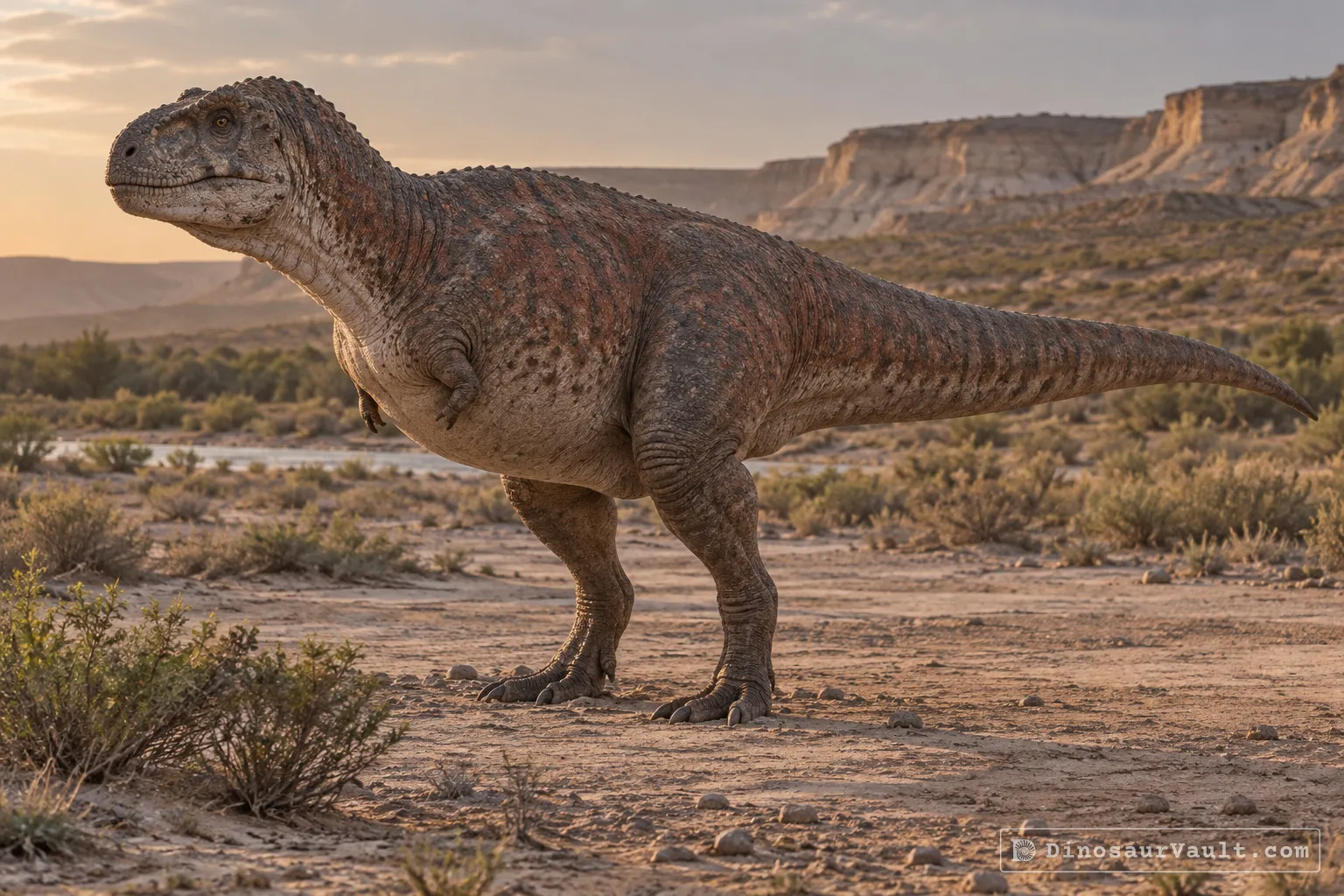
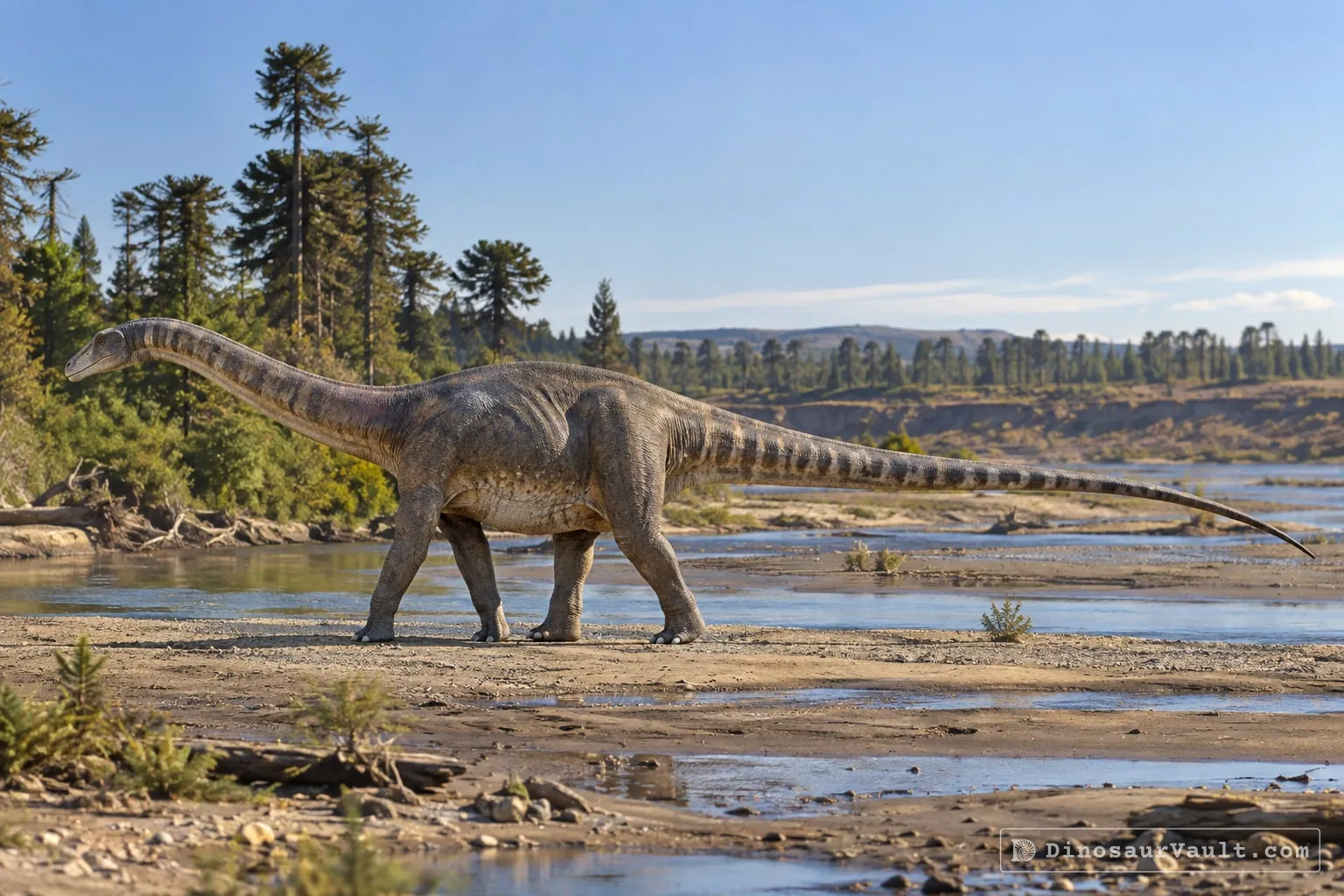
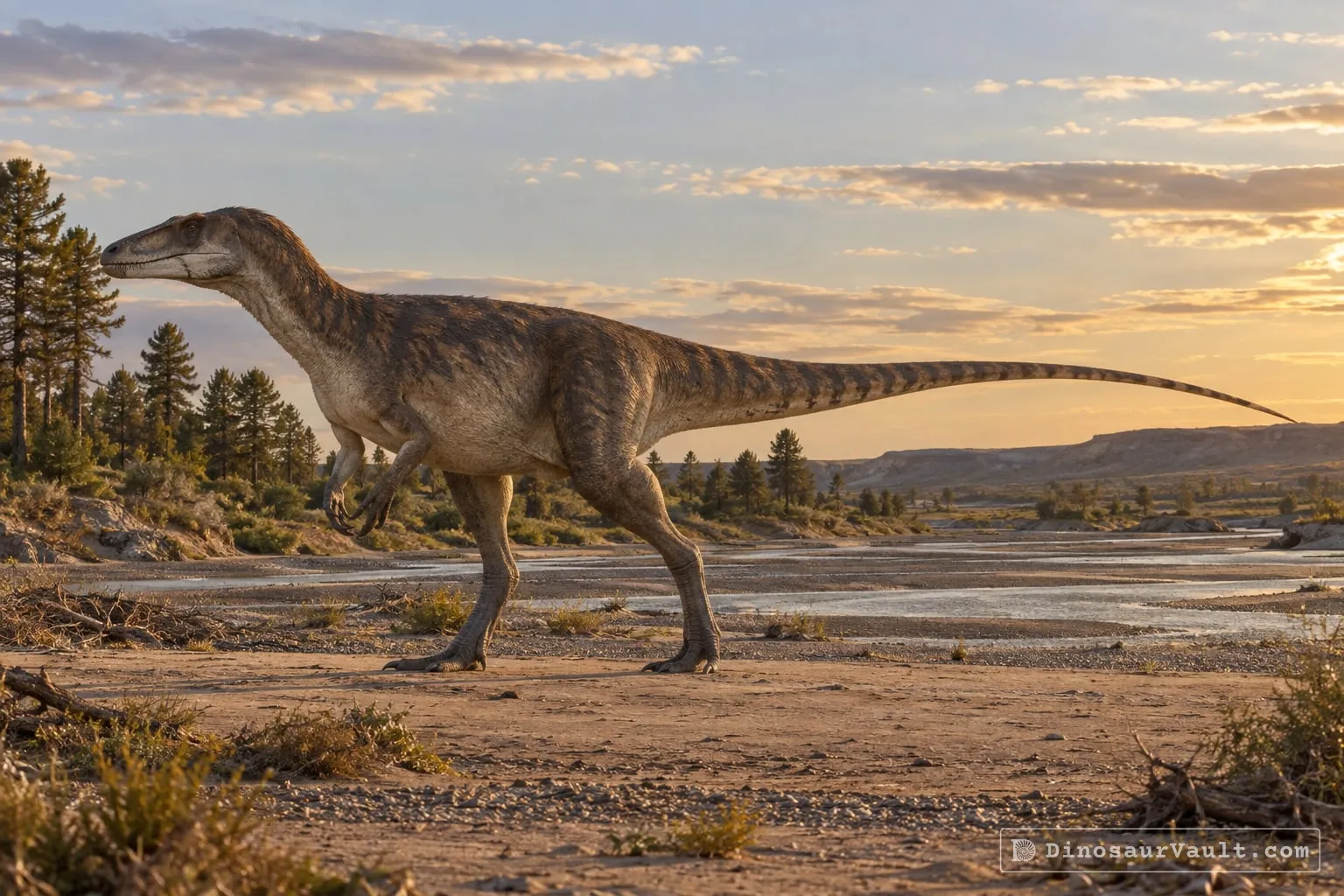


A rock formation can hold fossils laid down millions of years apart, so not every animal here met Cienciargentina.
The evidence
The science behind Cienciargentina
Which parts of the picture come from its own bones, and which come from its relatives.
From its own fossils
- The type partial skeleton and paratypes from differently sized individuals preserve neck, back and tail vertebrae, ribs, parts of the shoulder girdle and hip, and thigh, shin and calf bones.
- The shin bone is relatively short compared with the thigh bone.
Borrowed from relatives
- Its missing muzzle and lower jaw are restored after Lavocatisaurus, and the back of the skull after Limaysaurus.
- Its missing hands are restored after Apatosaurus and its feet after Camarasaurus.
Still unknown
- Its own skull shape and teeth.
- The precise ages of the differently sized individuals.
- Its skin and color.
Discovery timeline
- 2003PostureBonnan
- 2015PostureTschopp et al.
- 2018SkullCanudo et al.
- 2025Named itSimón & Salgado
Key papers
The research behind what we know of Cienciargentina
Posture
Examined the supporting hand structure of sauropods, including Apatosaurus, a comparison for the missing hands of Cienciargentina.
The evolution of manus shape in sauropod dinosaurs: implications for functional morphology, forelimb orientation, and phylogeny. Journal of Vertebrate Paleontology 23: 595-613
Read the paper : The evolution of manus shape in sauropod dinosaurs: implications for functional morphology, forelimb orientation, and phylogeny (opens in a new tab)Posture
Described articulated hand and foot bones of Camarasaurus, a comparison for the missing feet of Cienciargentina.
Articulated bone sets of manus and pedes of Camarasaurus (Sauropoda, Dinosauria). Palaeontologia Electronica
Read the paper : Articulated bone sets of manus and pedes of Camarasaurus (Sauropoda, Dinosauria) (opens in a new tab)Skull
Described Lavocatisaurus skull bones and teeth, providing a comparison for the missing muzzle and jaw of Cienciargentina.
A new rebbachisaurid sauropod from the Aptian–Albian, Lower Cretaceous Rayoso Formation, Neuquén, Argentina. Acta Palaeontologica Polonica 63
Read the paper : A new rebbachisaurid sauropod from the Aptian–Albian, Lower Cretaceous Rayoso Formation, Neuquén, Argentina (opens in a new tab)Named it
Named Cienciargentina from partial skeletons distinguished by features of their neck, back and tail vertebrae and thigh bones.
New rebbachisaurid (Dinosauria, Sauropoda) from the Huincul Formation (upper Cenomanian-Turonian) of Villa El Chocón (Neuquén Province, Argentina). Cretaceous Research 173: 106137
Read the paper : New rebbachisaurid (Dinosauria, Sauropoda) from the Huincul Formation (upper Cenomanian-Turonian) of Villa El Chocón (Neuquén Province, Argentina) (opens in a new tab)
Close relatives
Other members of Rebbachisauridae


Sources: Wikidata