Mahuidacursor
"mountain runner"
- Lived
- 86 to 84 million years ago, Late Cretaceous
- Diet
- Herbivore
- Group
- Ornithopods
- Found in
- Argentina
- Named by
- Cruzado-Caballero et al. 2019
Where its fossils were found
The evidence
Today

80 million years ago
Habitat
Rivers crossed a muddy floodplain in what is now Argentina. Velocisaurus, Neuquensaurus and Bonitasaura lived in the same formation.
Field notes
About Mahuidacursor
What it was like
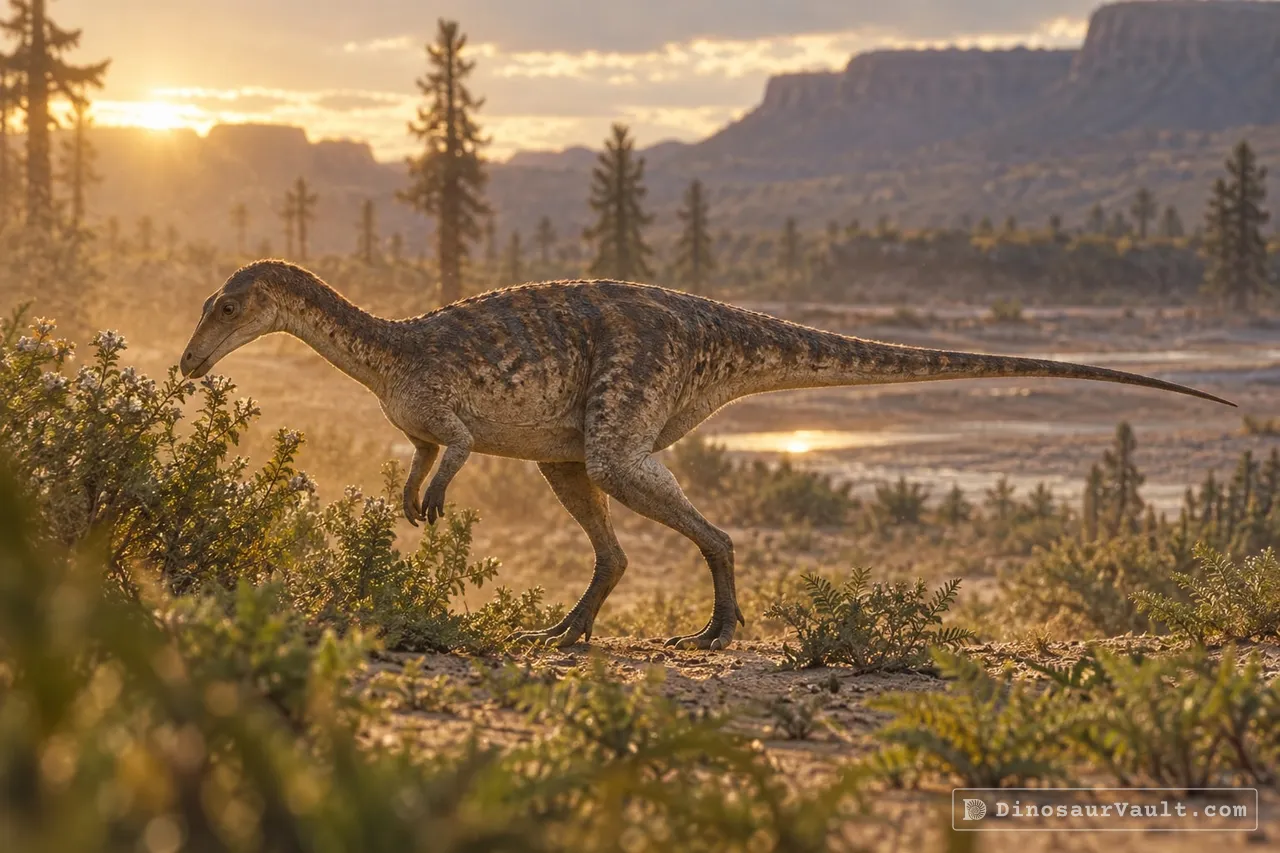
Mahuidacursor was a small, two-legged plant eater known from a partial skeleton, including bones of the shoulder, arms and backbone.
Its world
It lived about 86 to 84 million years ago, in the Late Cretaceous, in what is now Argentina. Its bones come from the Bajo de la Carpa Formation, where it lived alongside the small predator Velocisaurus and the titanosaur Neuquensaurus.
How it was found
Cruzado-Caballero and colleagues named it in 2019. The first part of its name comes from a local language.
Field gallery
More views of Mahuidacursor
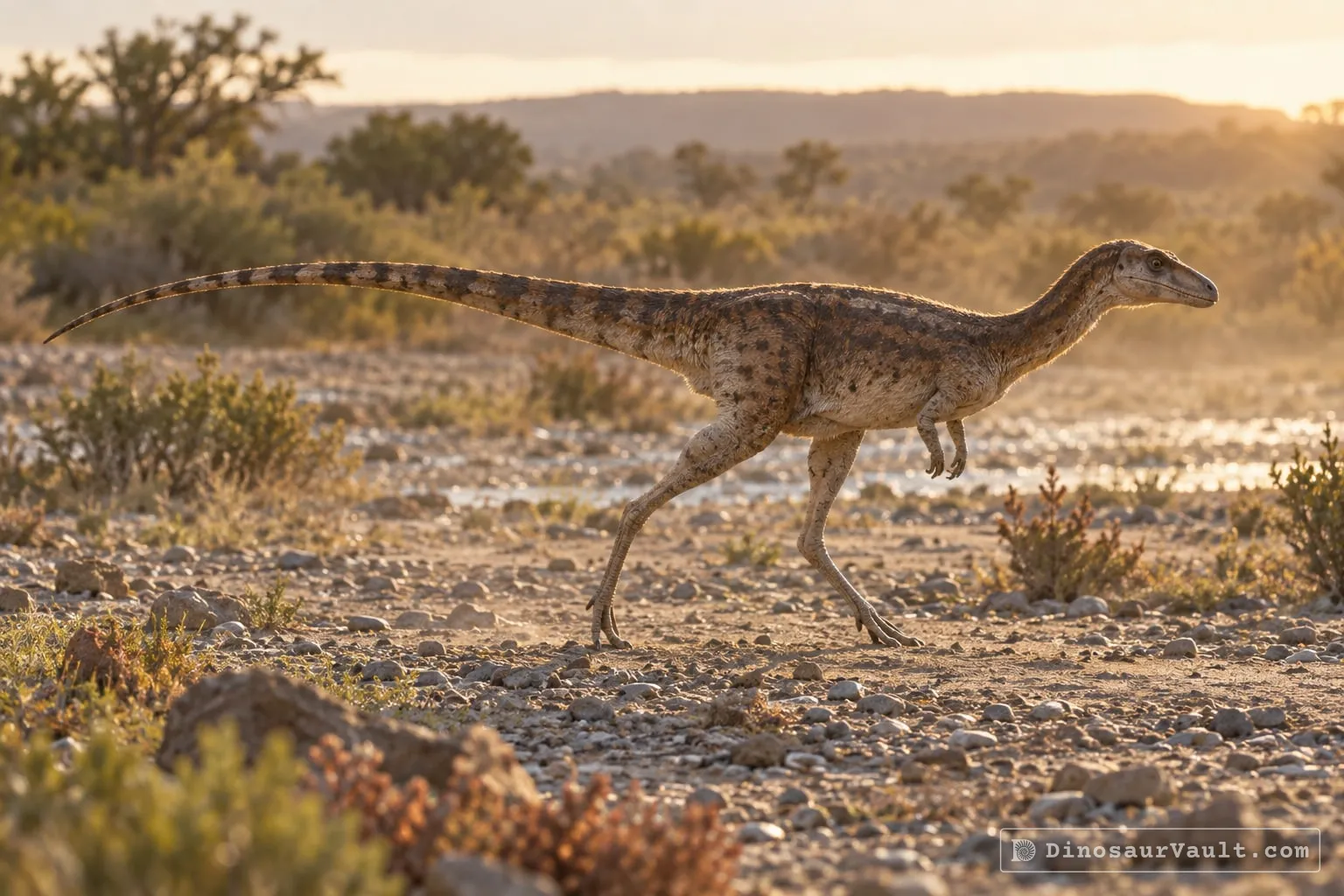
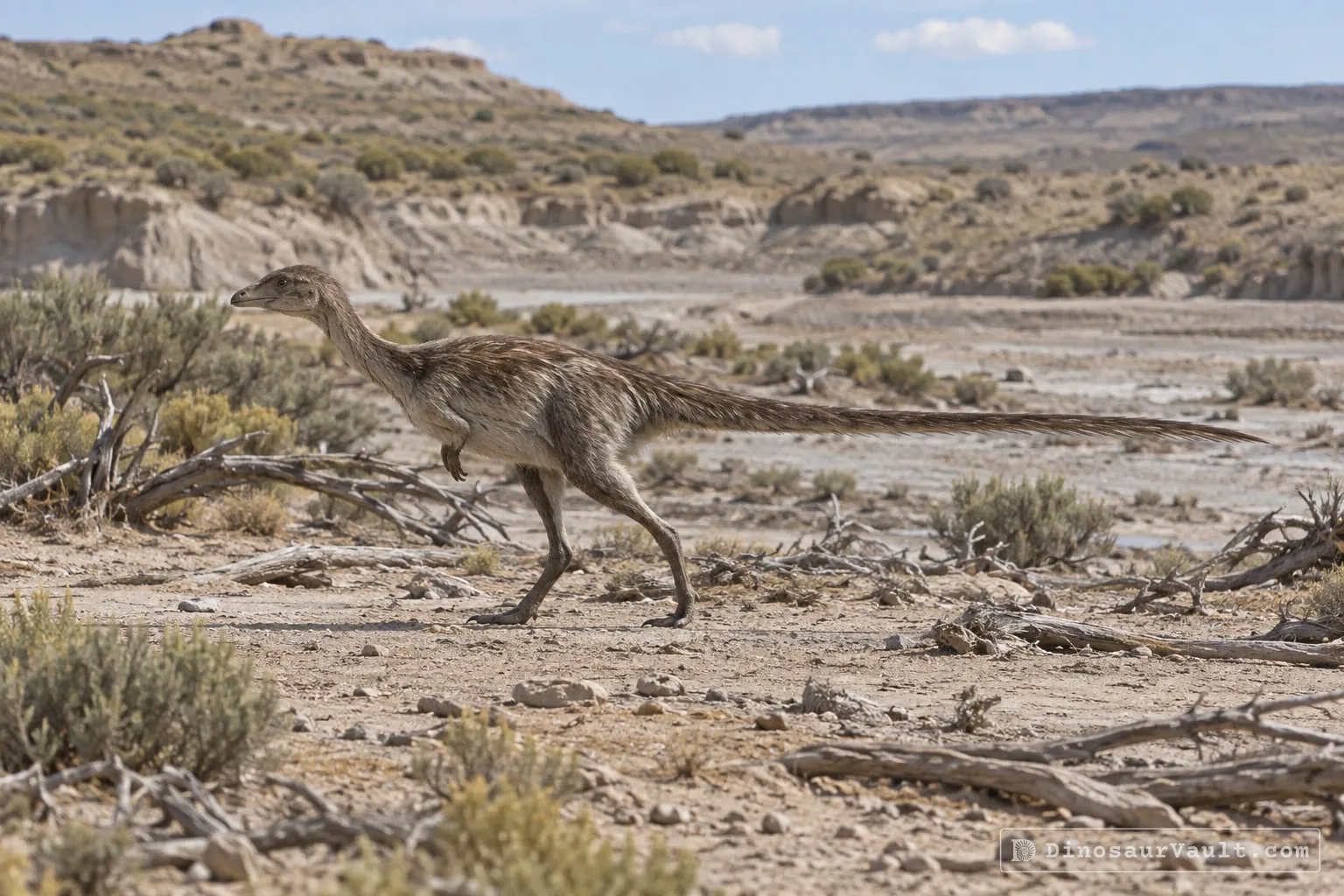
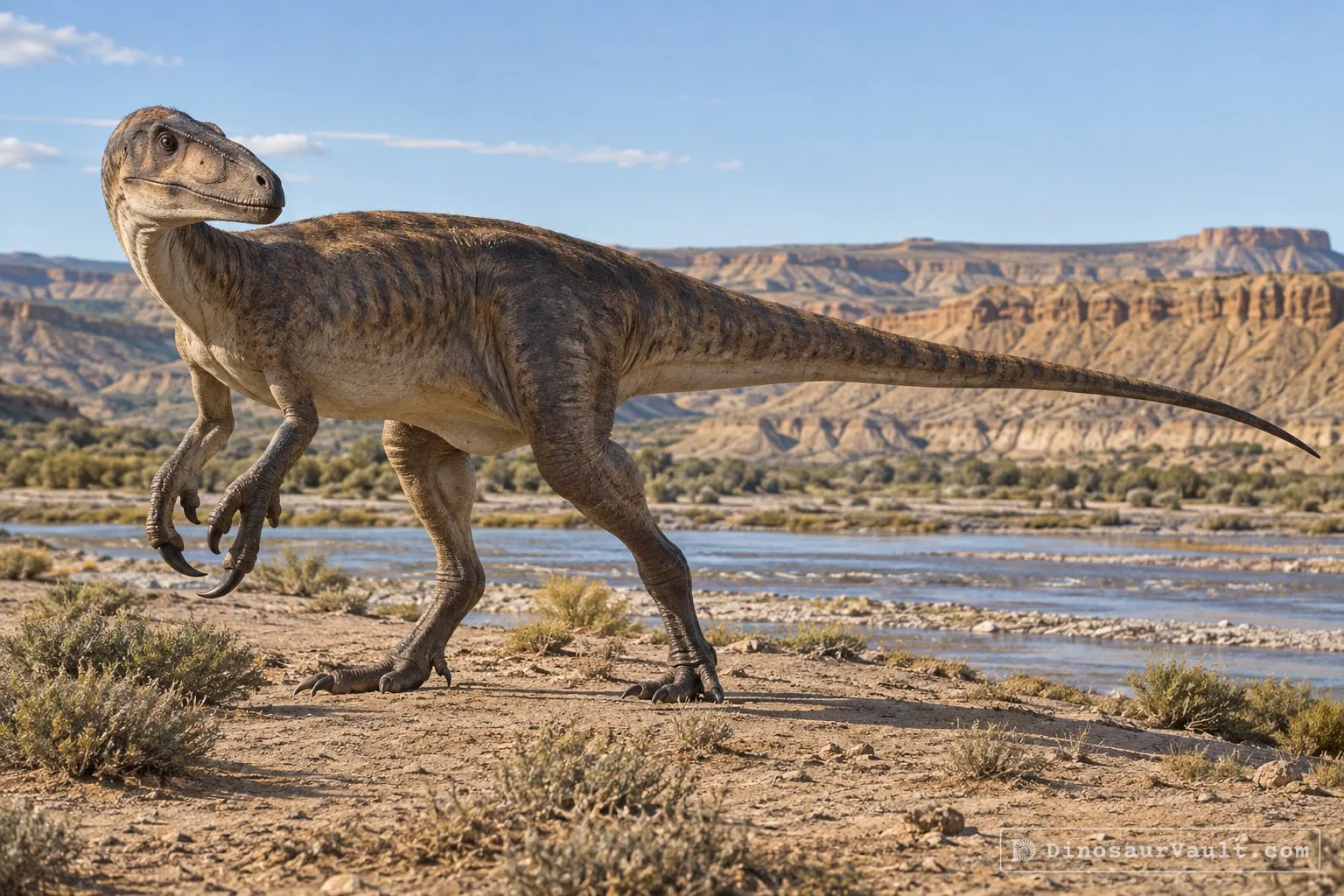
Scenes reconstructed from the available fossil evidence.
1 of 3
Lived alongside
Found in the same rock formations
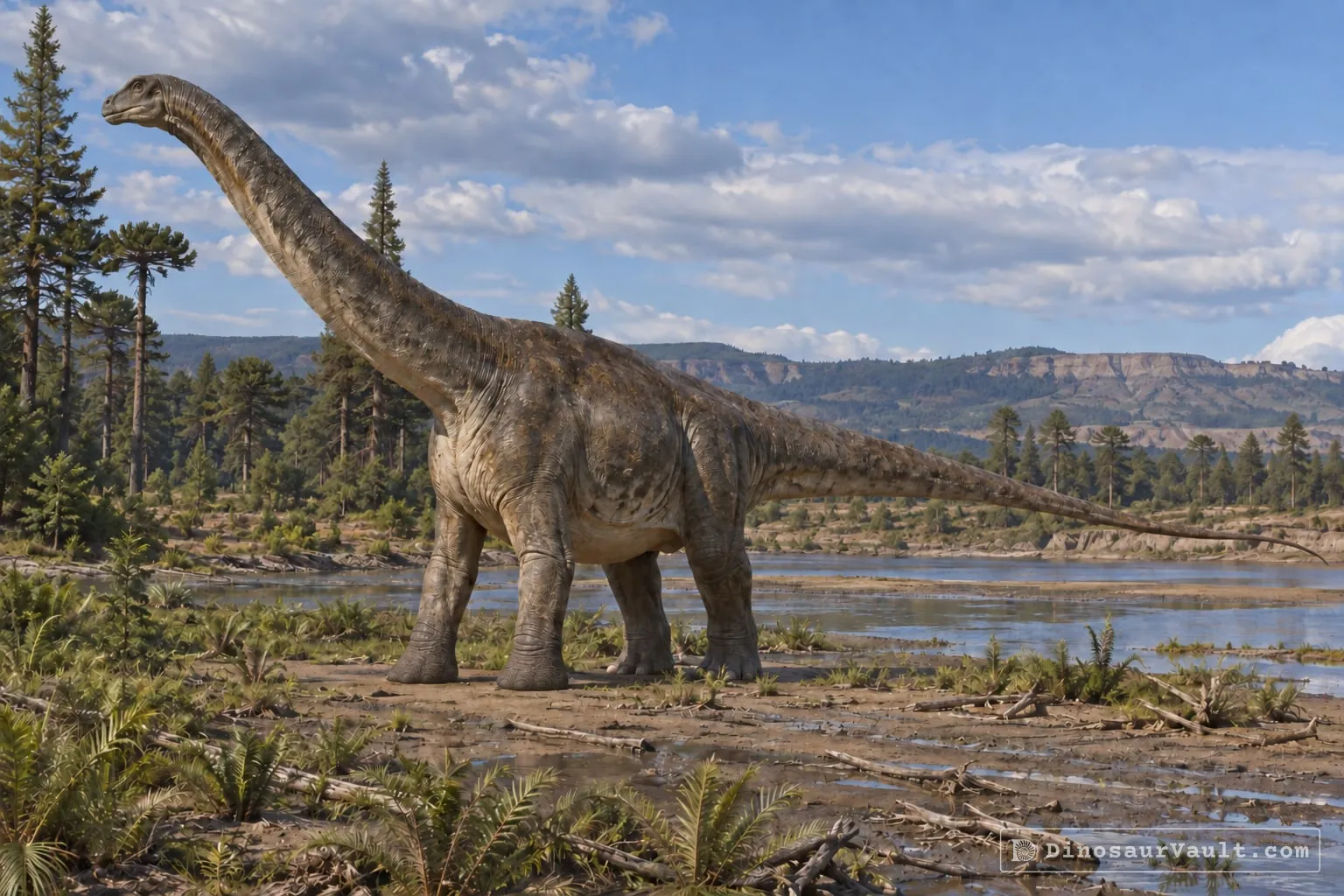
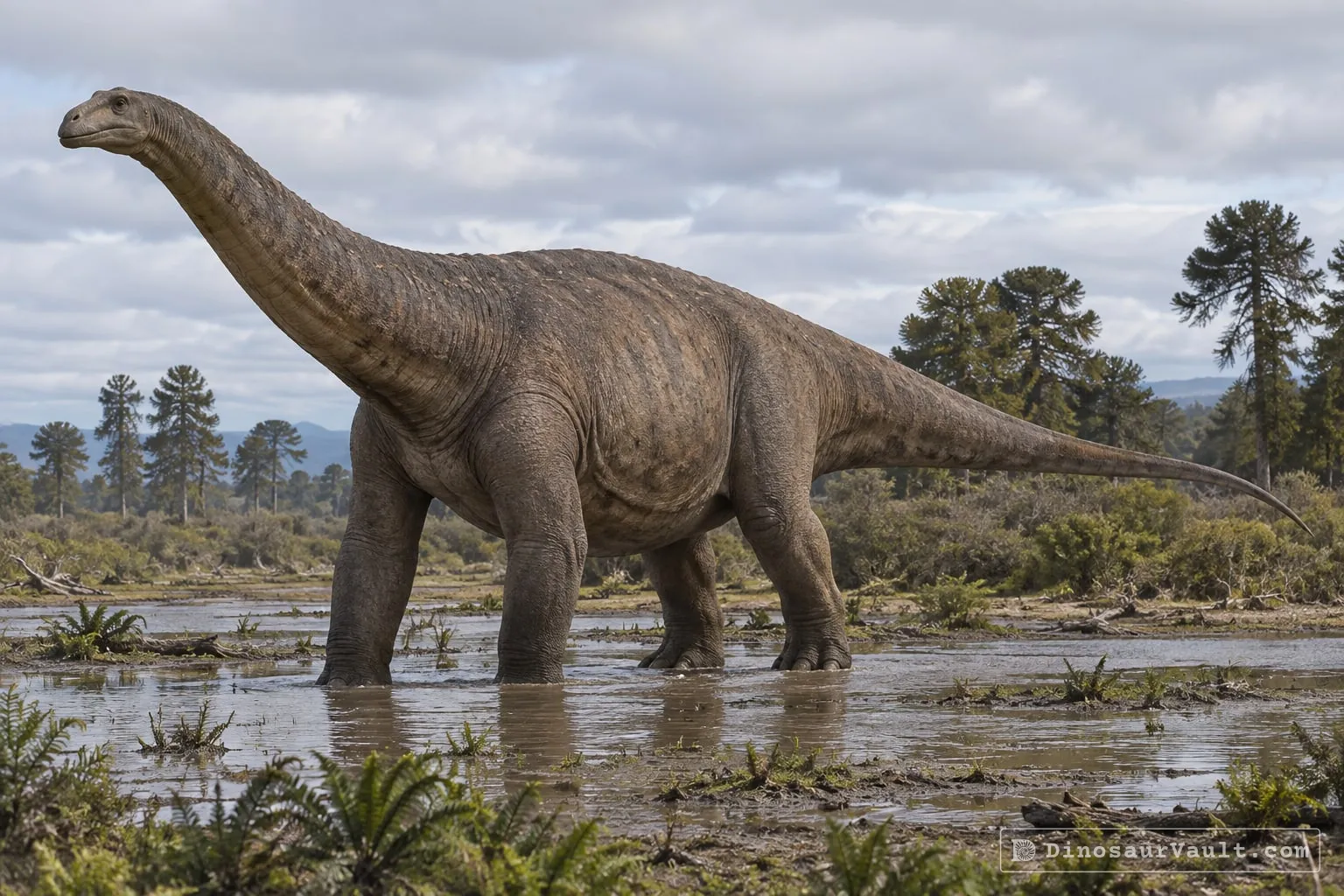
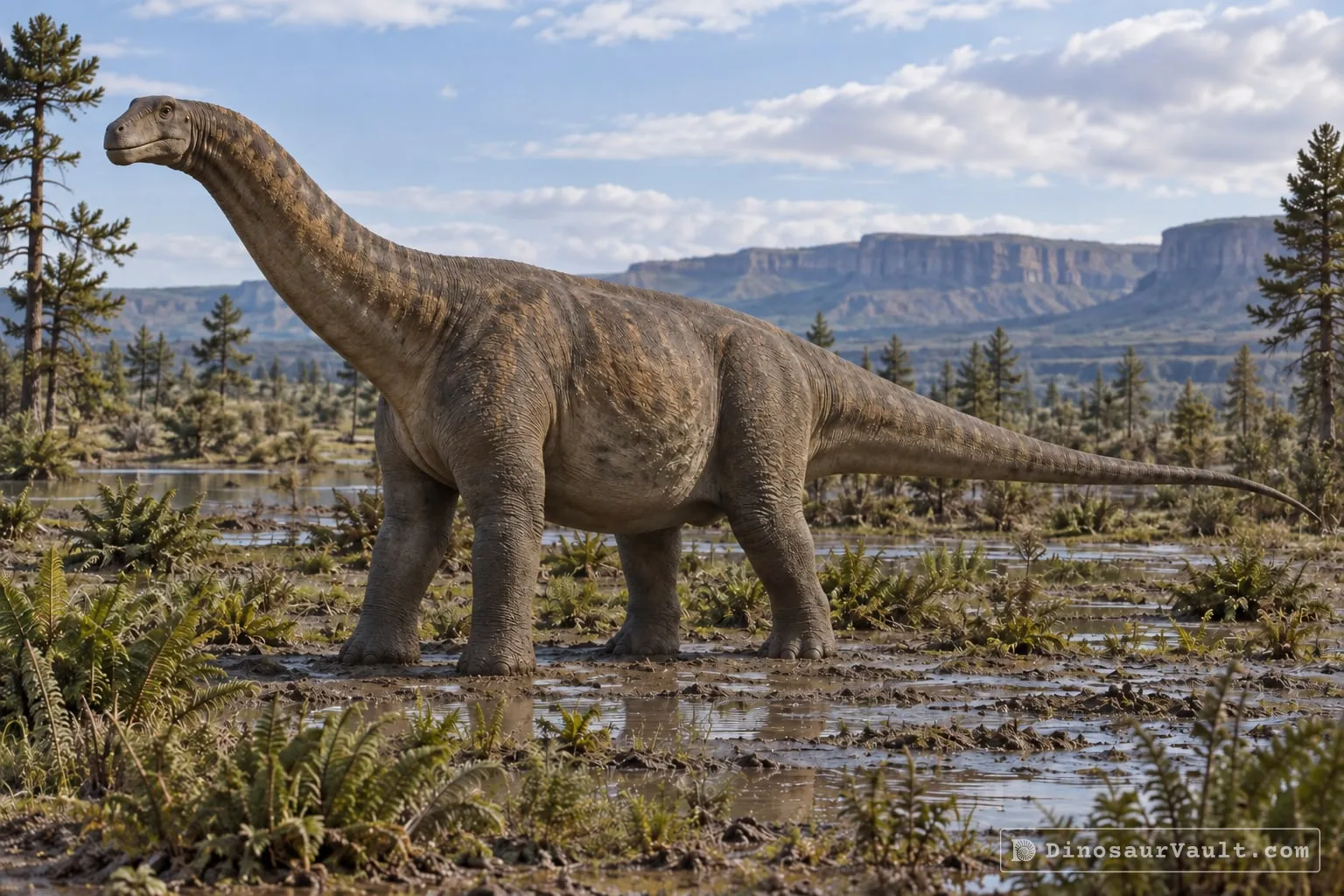
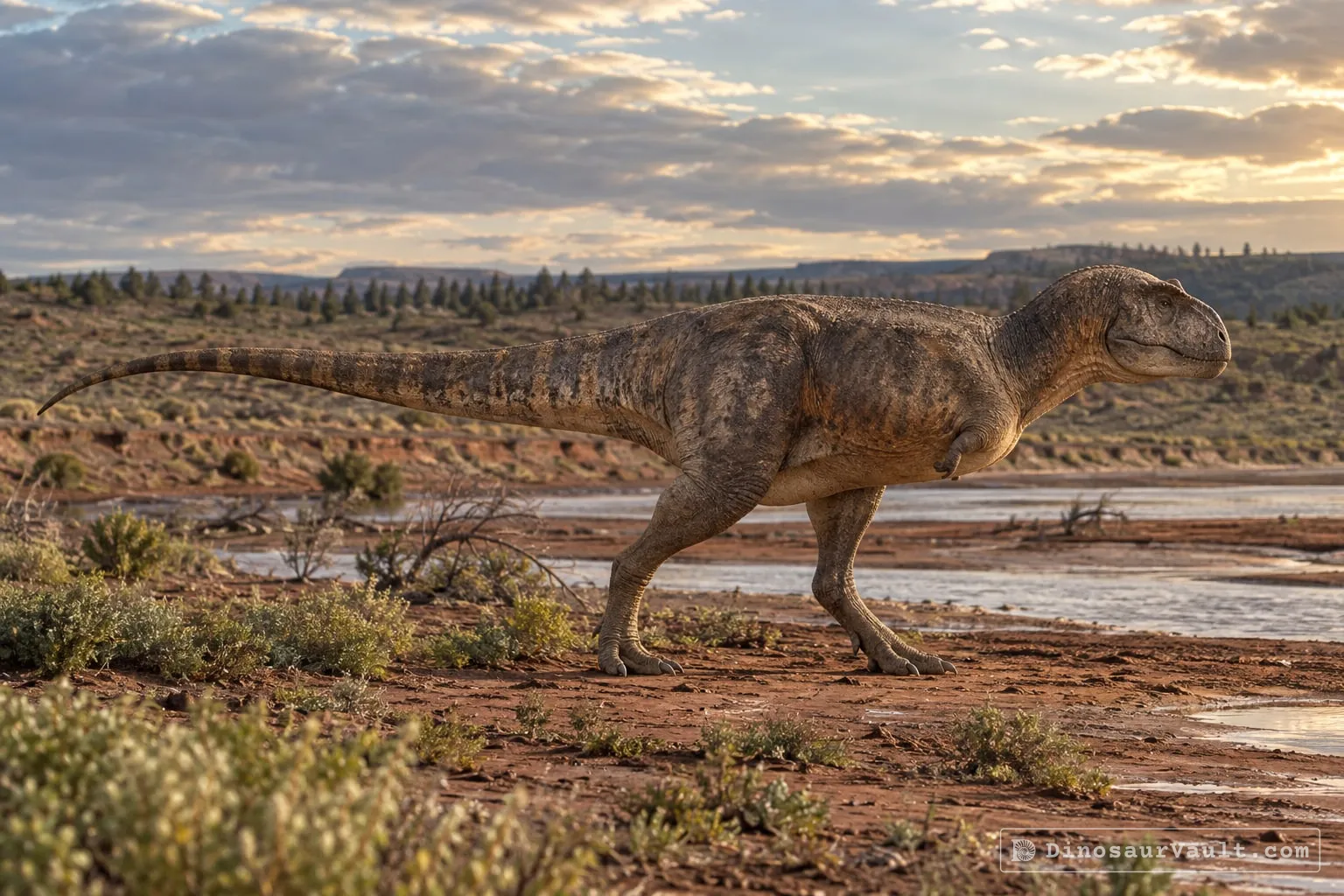
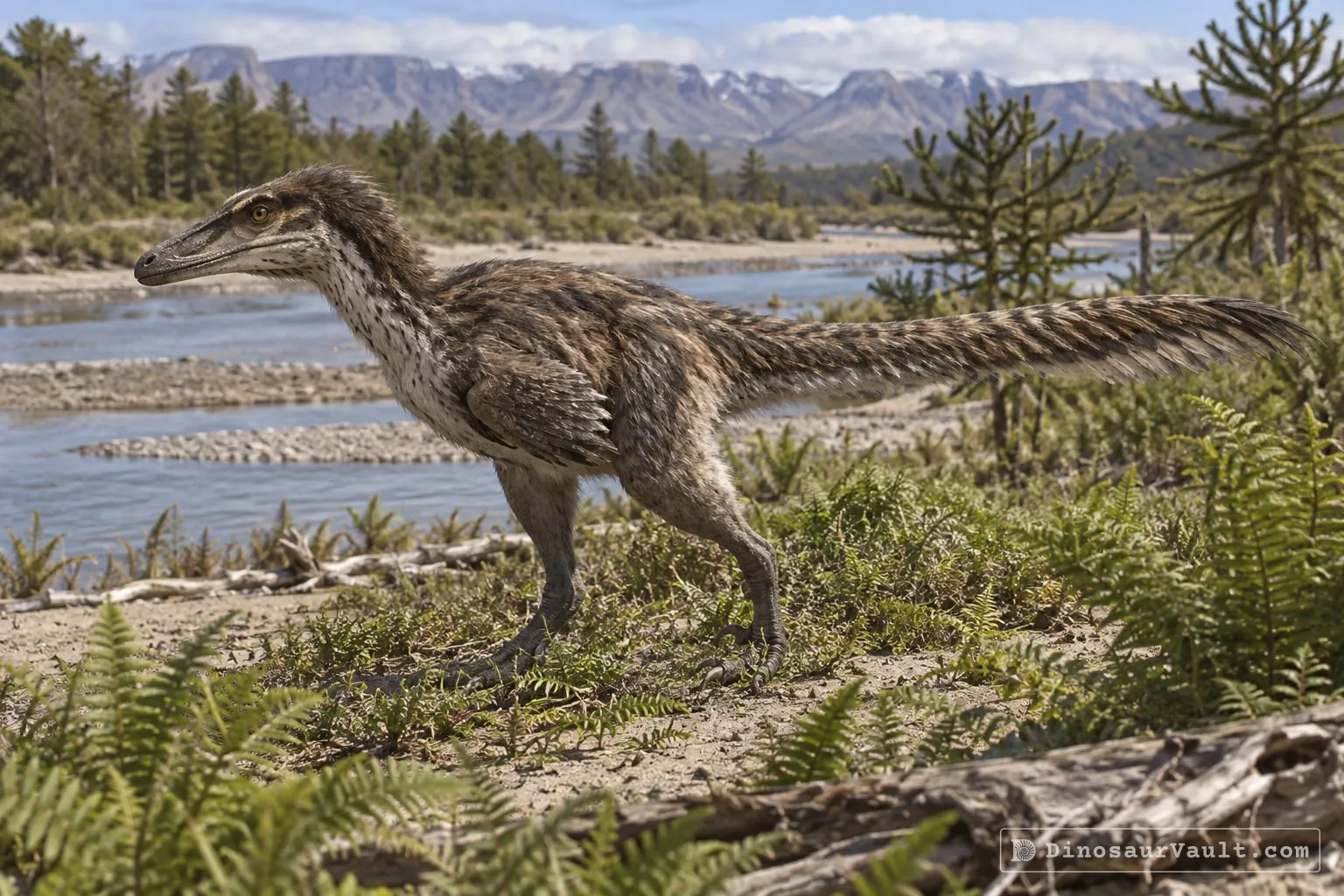


A rock formation can hold fossils laid down millions of years apart, so not every animal here met Mahuidacursor.
The evidence
The science behind Mahuidacursor
Which parts of the picture come from its own bones, and which come from its relatives.
From its own fossils
- A partial skeleton with its bones still joined preserves the last neck vertebrae, the first back vertebrae and ribs, both shoulder blades, breastbone plates and the right arm with a nearly complete hand.
- Its neck vertebrae are long, with a keel underneath, and its upper arm bone is strongly bowed, with only a small ridge for muscle attachment.
- Thin bony plates lie between the ribs, and the lower end of each rib touches the plate in front only along its outer front edge, a feature that may be unique to it.
Borrowed from relatives
- The original family-tree analysis placed it among early ornithopods with Notohypsilophodon, Talenkauen and Macrogryphosaurus, without settling which is closest.
- The missing head, front of the neck and hips are restored by comparison with Talenkauen, and the hind legs and tail with other early ornithopods such as Gasparinisaura.
Still unknown
- The shape of its skull.
- Whether it was built for fast running, since its hind legs and tail are unknown.
- Its full adult size and its skin covering.
Discovery timeline
- 2013Its worldFernández et al.
- 2018Same rocksCruzado-Caballero et al.
- 2019Named itCruzado-Caballero et al.
- 2019Close relativeRozadilla, Agnolín & Novas
Key papers
The research behind what we know of Mahuidacursor
Its world
Bird eggs from the same formation show nesting on sandy ground beside seasonal streams, with eggs partly buried upright.
A Large Accumulation of Avian Eggs from the Late Cretaceous of Patagonia (Argentina) Reveals a Novel Nesting Strategy in Mesozoic Birds. PLoS ONE 8: e61030
Read the paper : A Large Accumulation of Avian Eggs from the Late Cretaceous of Patagonia (Argentina) Reveals a Novel Nesting Strategy in Mesozoic Birds (opens in a new tab)Same rocks
Described scattered ornithopod bones from the same formation and fossil area, including vertebrae and parts of the shoulder and pelvis.
First ornithopod remains from the Bajo de la Carpa Formation (Santonian, Upper Cretaceous), northern Patagonia, Argentina. Cretaceous Research 83: 182-193
Read the paper : First ornithopod remains from the Bajo de la Carpa Formation (Santonian, Upper Cretaceous), northern Patagonia, Argentina (opens in a new tab)Named it
Described the partial skeleton, its slender forelimb and rib tissue showing that the animal was still growing.
A new ornithopod dinosaur from the Santonian of Northern Patagonia (Rincón de los Sauces, Argentina). Cretaceous Research 98: 211-229
Read the paper : A new ornithopod dinosaur from the Santonian of Northern Patagonia (Rincón de los Sauces, Argentina) (opens in a new tab)Close relative
Described the skeleton of Talenkauen, a related Patagonian ornithopod, including its skull, neck, hips and thigh bone.
Osteology of the Patagonian ornithopod Talenkauen santacrucensis (Dinosauria, Ornithischia). Journal of Systematic Palaeontology 17: 2043-2089
Read the paper : Osteology of the Patagonian ornithopod Talenkauen santacrucensis (Dinosauria, Ornithischia) (opens in a new tab)
Close relatives
Other members of Elasmaria


Sources: Wikidata