Outline: a typical ornithopod
Gasparinisaura
"Gasparini's lizard"
- Lived
- 84 to 72 million years ago, Late Cretaceous
- Diet
- Herbivore
- Length
- about 0.8 m (3 ft)
- Group
- Ornithopods
- Found in
- Argentina
- Named by
- Coria and Salgado 1996
Size comparison
To scale

Scale in metersOutline: typical ornithopod shape
Where its fossils were found
The evidence
Today
80 million years ago
Field notes
About Gasparinisaura
What it was like
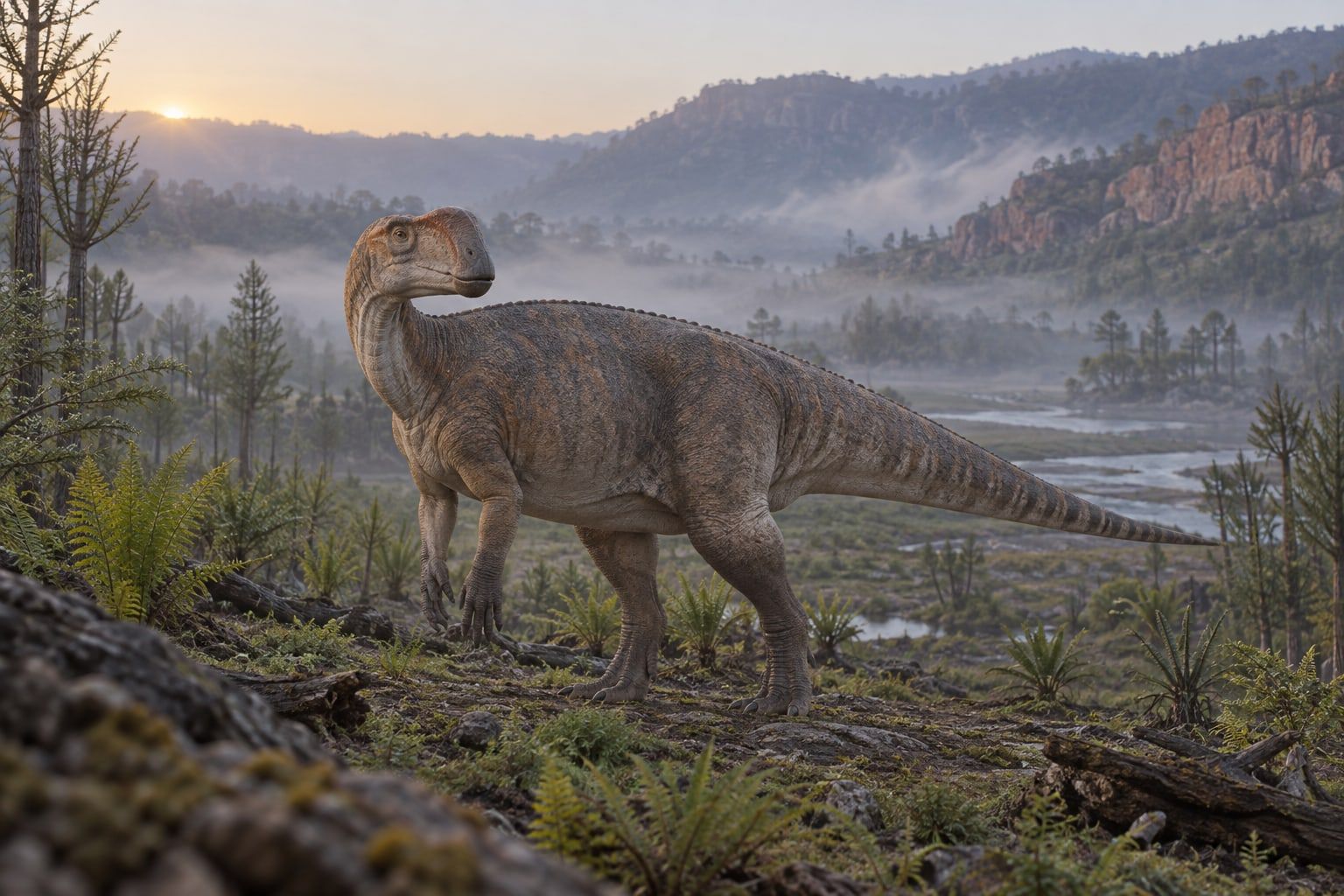
Gasparinisaura was a small, two-legged plant eater, known mostly from young animals only about 0.8 meters (3 feet) long. It had a short head, a beak and long legs for running.
Small stones found in the belly area of some skeletons suggest it swallowed pebbles to help grind its food.
Its world
It lived in the Late Cretaceous in what is now Argentina. Its bones come from the Anacleto Formation, where it shared the land with the abelisaur Aucasaurus, the megaraptor Aerosteon and titanosaurs such as Neuquensaurus.
How it was found
Coria and Salgado named Gasparinisaura in 1996, for a paleontologist from Argentina. Several animals were found together, which suggests they may have lived in groups.
Lived alongside
Found in the same rock formations
Close relatives
Other members of Elasmaria
Sources: WikidataNamed in: R. A. Coria and L. Salgado. 1996. A basal iguanodontian (Ornithischia: Ornithopoda) from the Late Cretaceous of South America. Journal of Vertebrate Paleontology 16(3):445-457