Gualicho
- Lived
- 110 to 106 million years ago, Early Cretaceous
- Diet
- Carnivore
- Group
- Theropods
- Found in
- Argentina
- Named by
- Apesteguia et al. 2016
Where its fossils were found
The evidence
Today

110 million years ago
Habitat
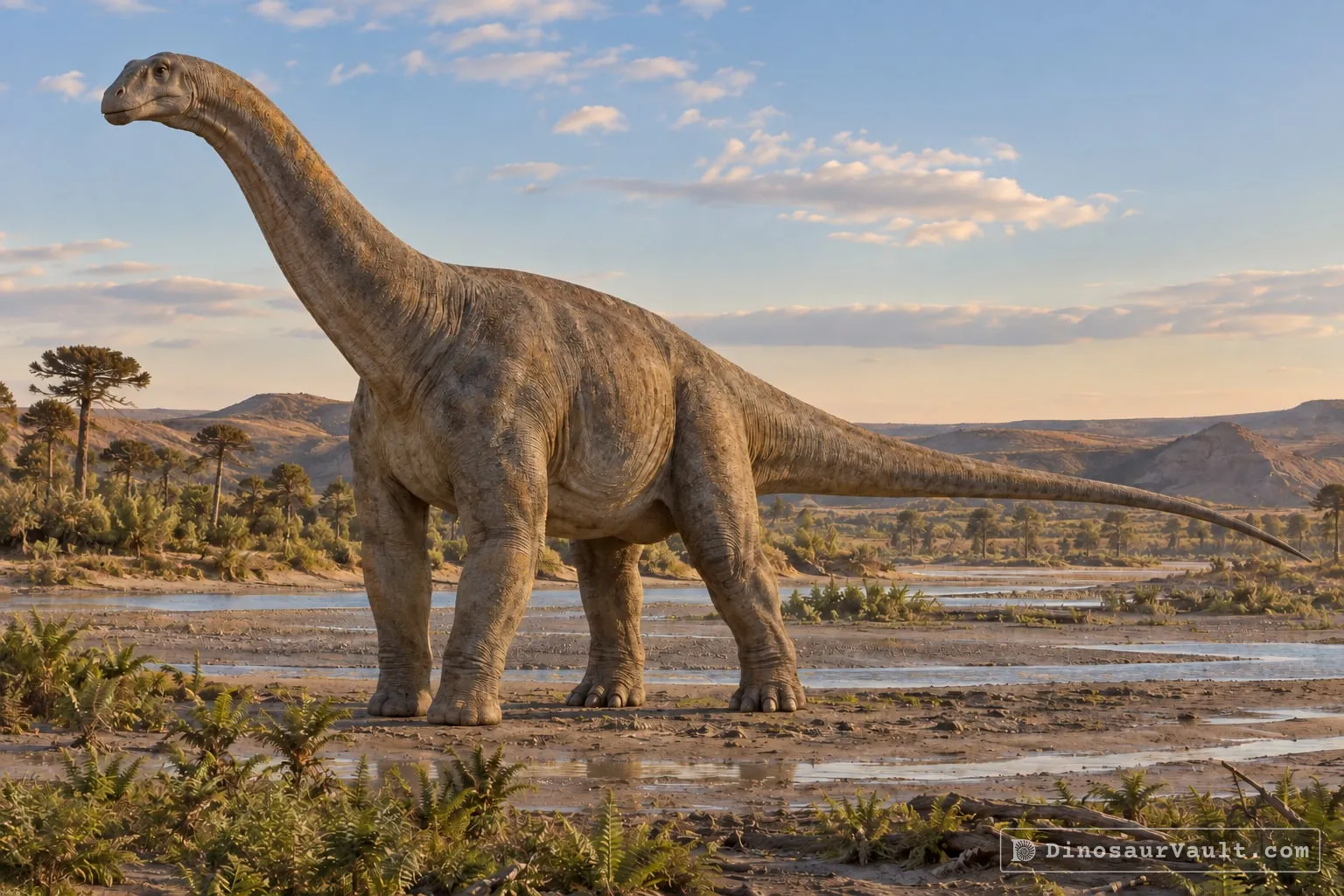
Meandering rivers crossed the landscape in what is now Argentina. Mapusaurus, Argentinosaurus and Skorpiovenator also occur in the Huincul Formation.
A Dinosaur Vault film
What If Argentinosaurus Walked Down Your Street?
One of the largest animals ever to walk on land, on a street like yours. Then back to the river plains of Patagonia, where hunters like Mapusaurus and Gualicho lived beside it.
Subscribe on YouTubeField notes
About Gualicho
What it was like
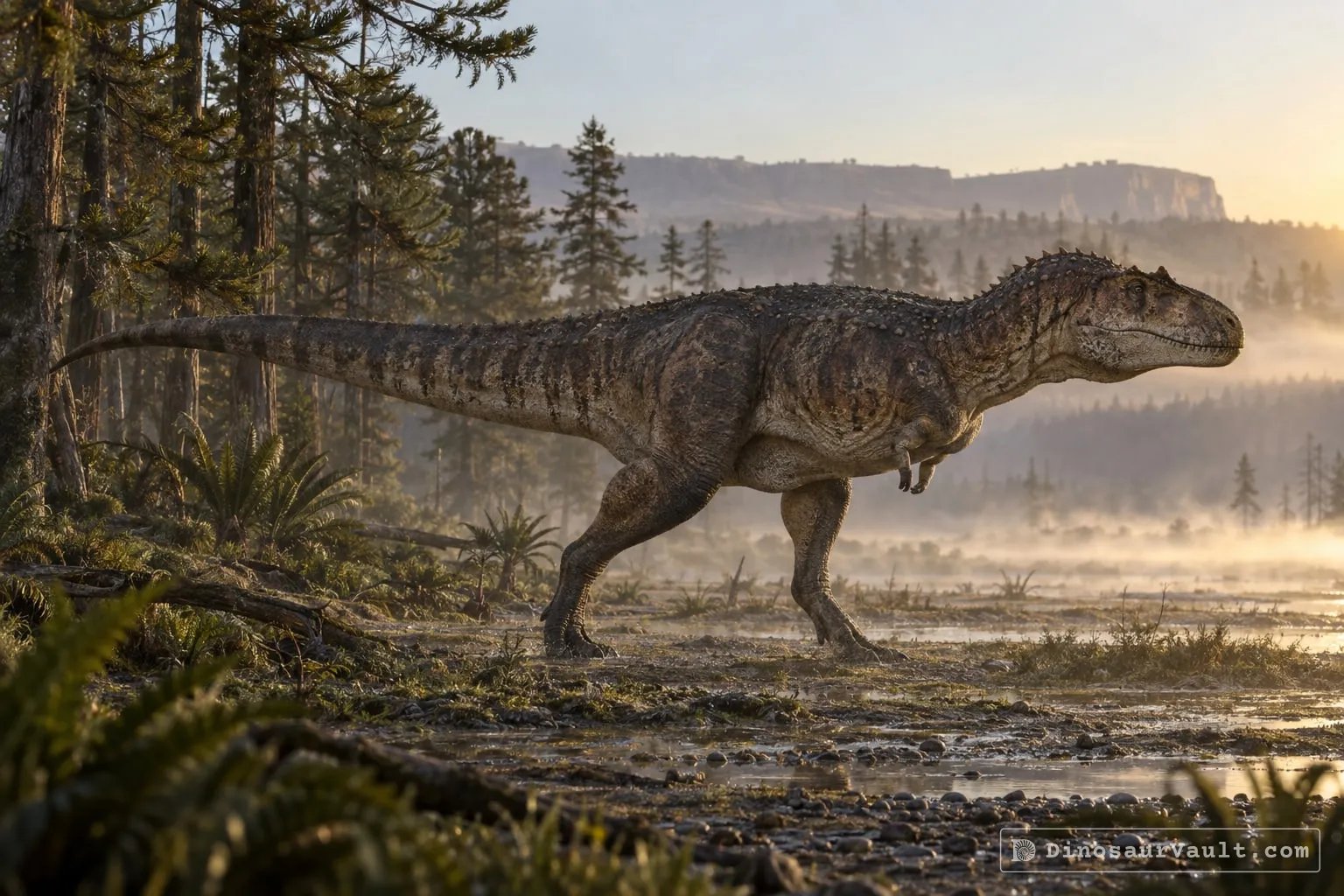
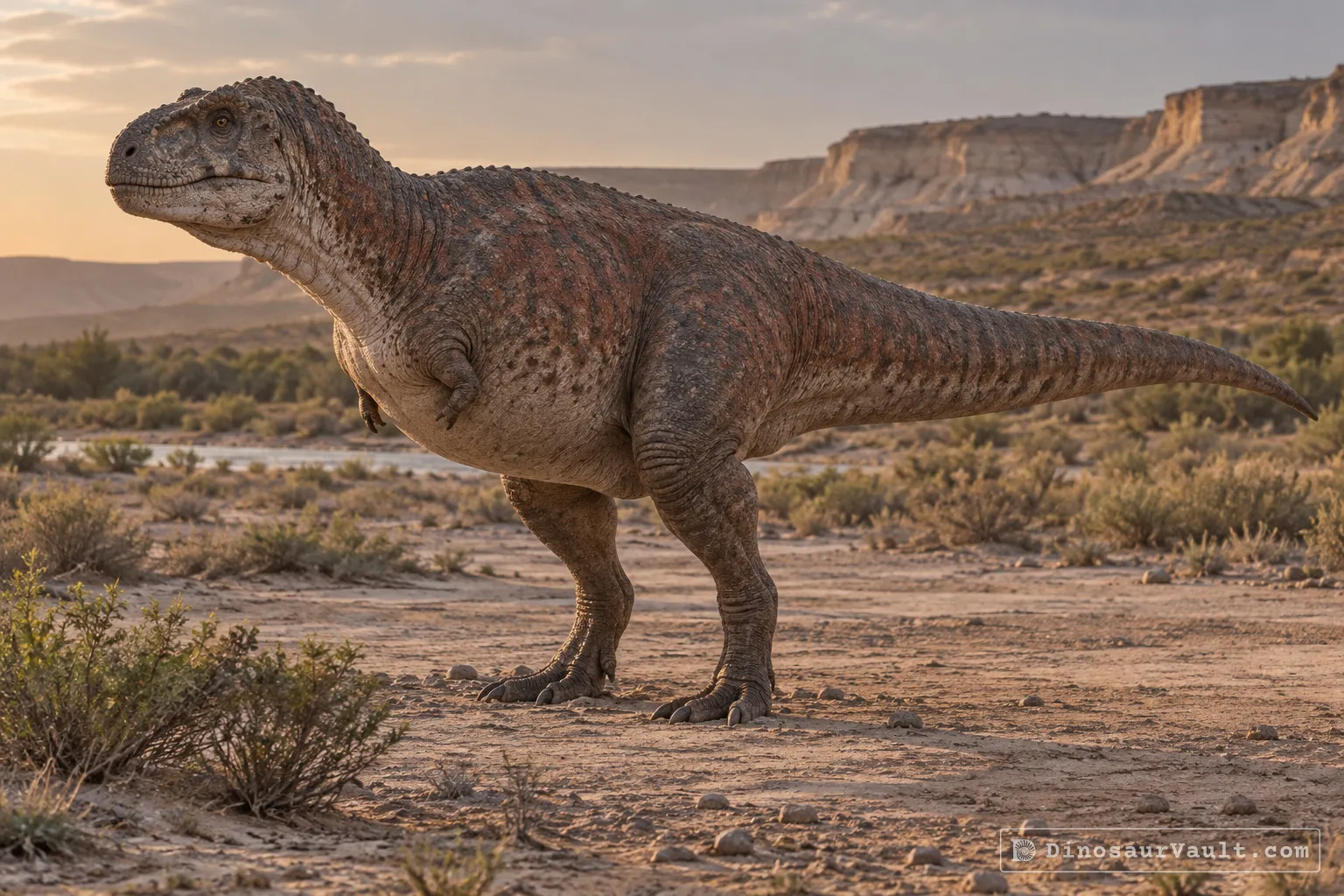
Gualicho was a large two-legged predator with very short arms and only two fingers, much like a tyrannosaur. It was not a close relative of the tyrannosaurs, so short arms seem to have evolved several times.
Its world
It lived in the Cretaceous, in what is now Argentina. It comes from the Huincul Formation, where it shared the land with the giant predators Mapusaurus and Meraxes, the abelisaur Skorpiovenator and the huge sauropod Argentinosaurus.
How it was found
Apesteguia and colleagues named Gualicho in 2016. Its name comes from a spirit of local folklore, since the dig had bad luck.
Field gallery
More views of Gualicho
Scenes reconstructed from the available fossil evidence.
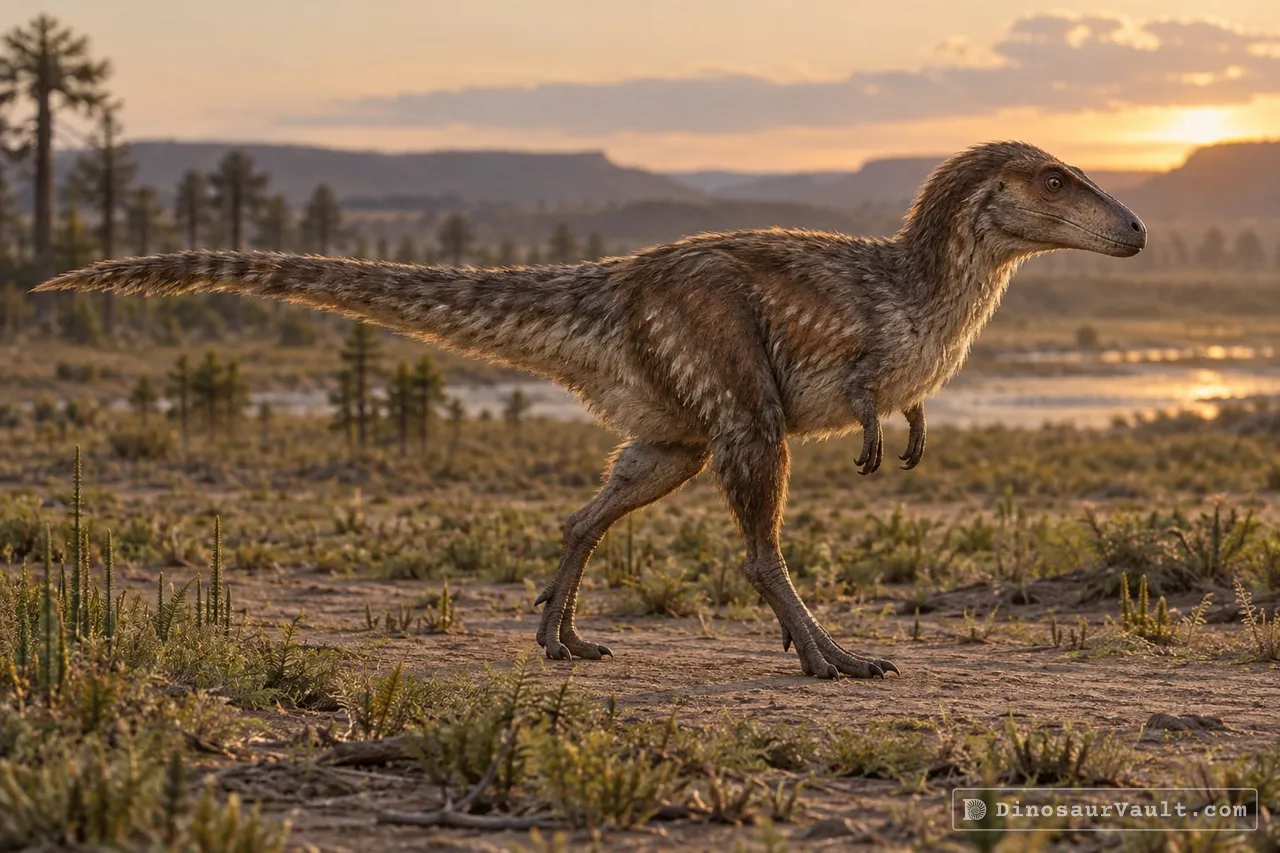
1 of 3
Lived alongside
Found in the same rock formations
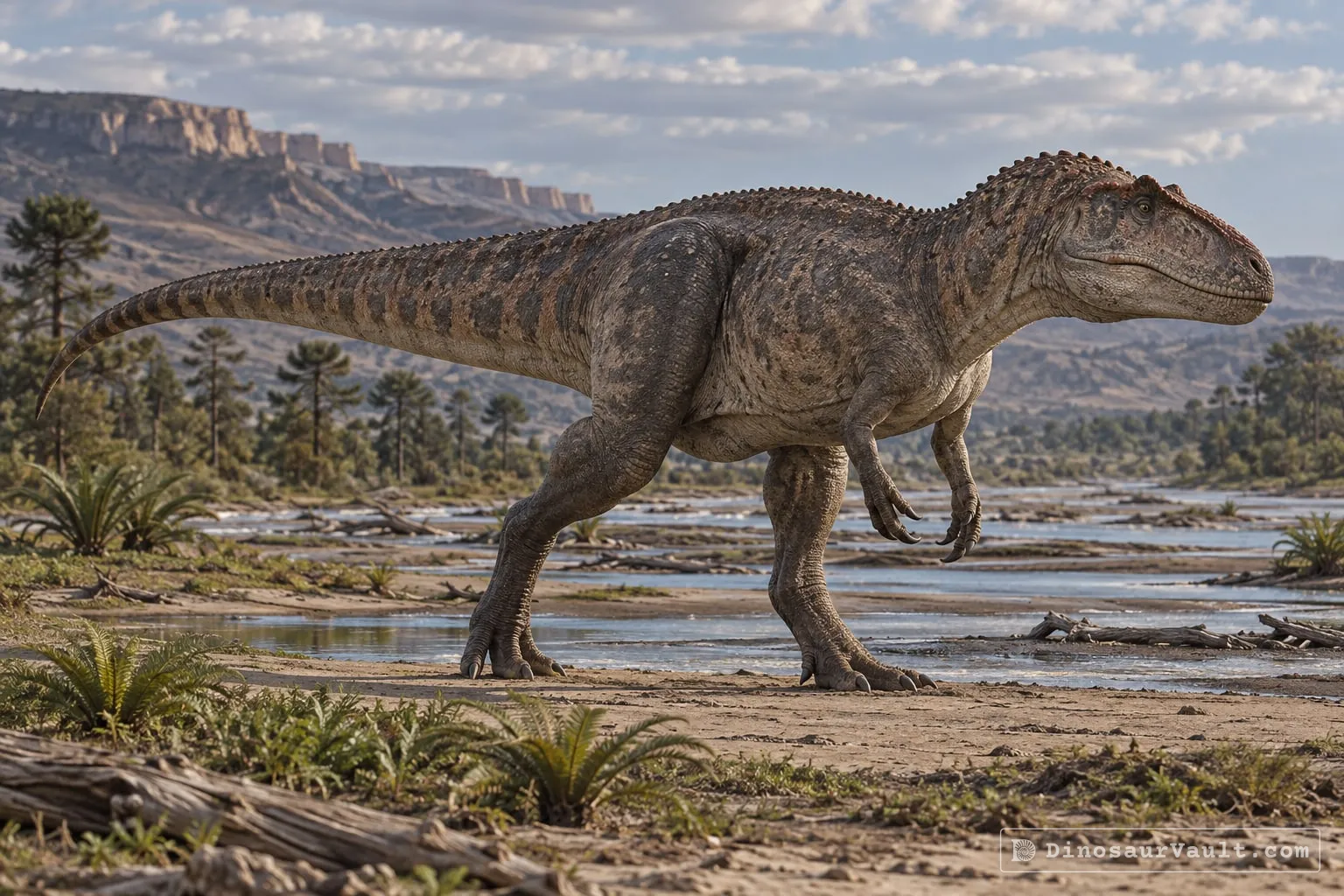
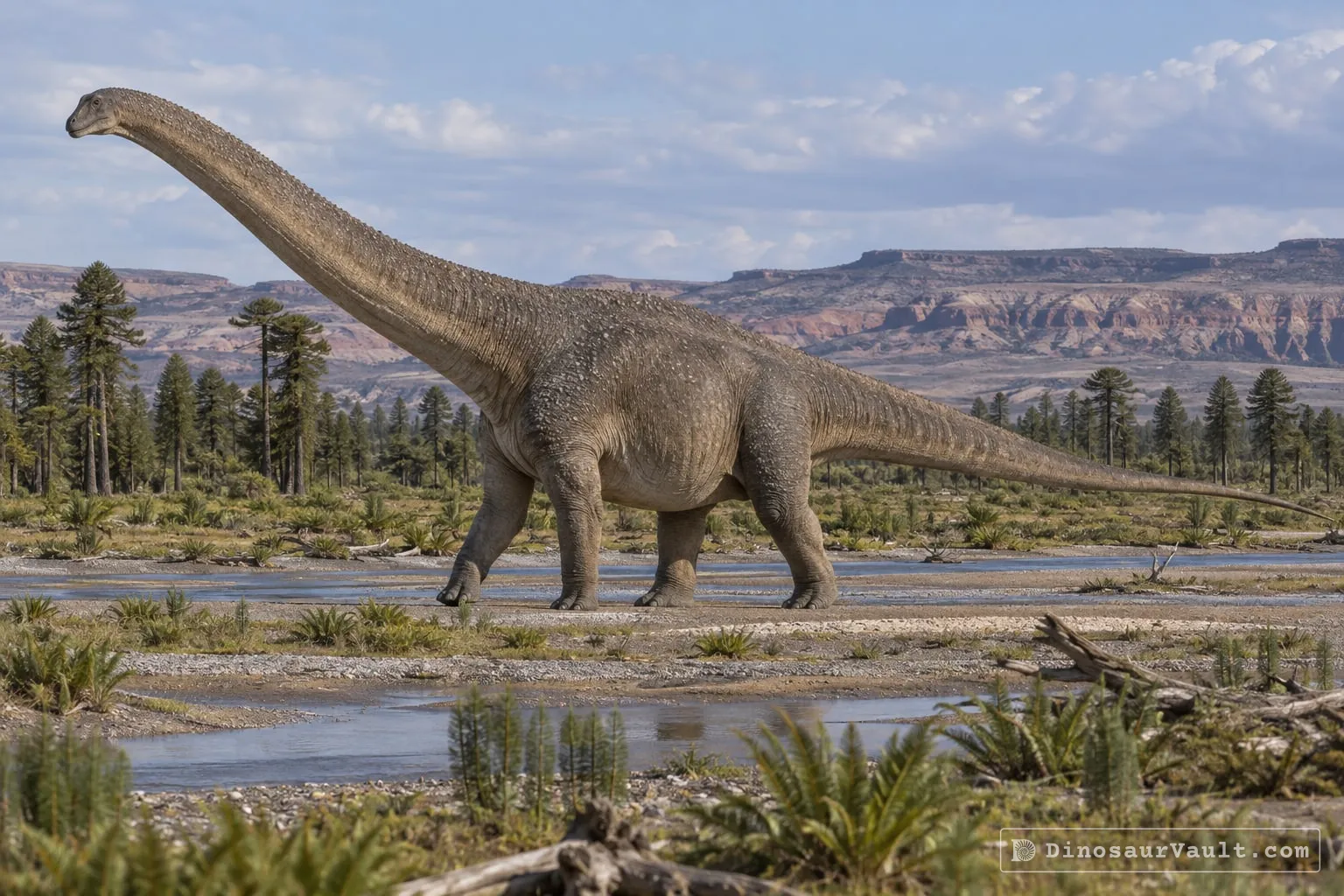
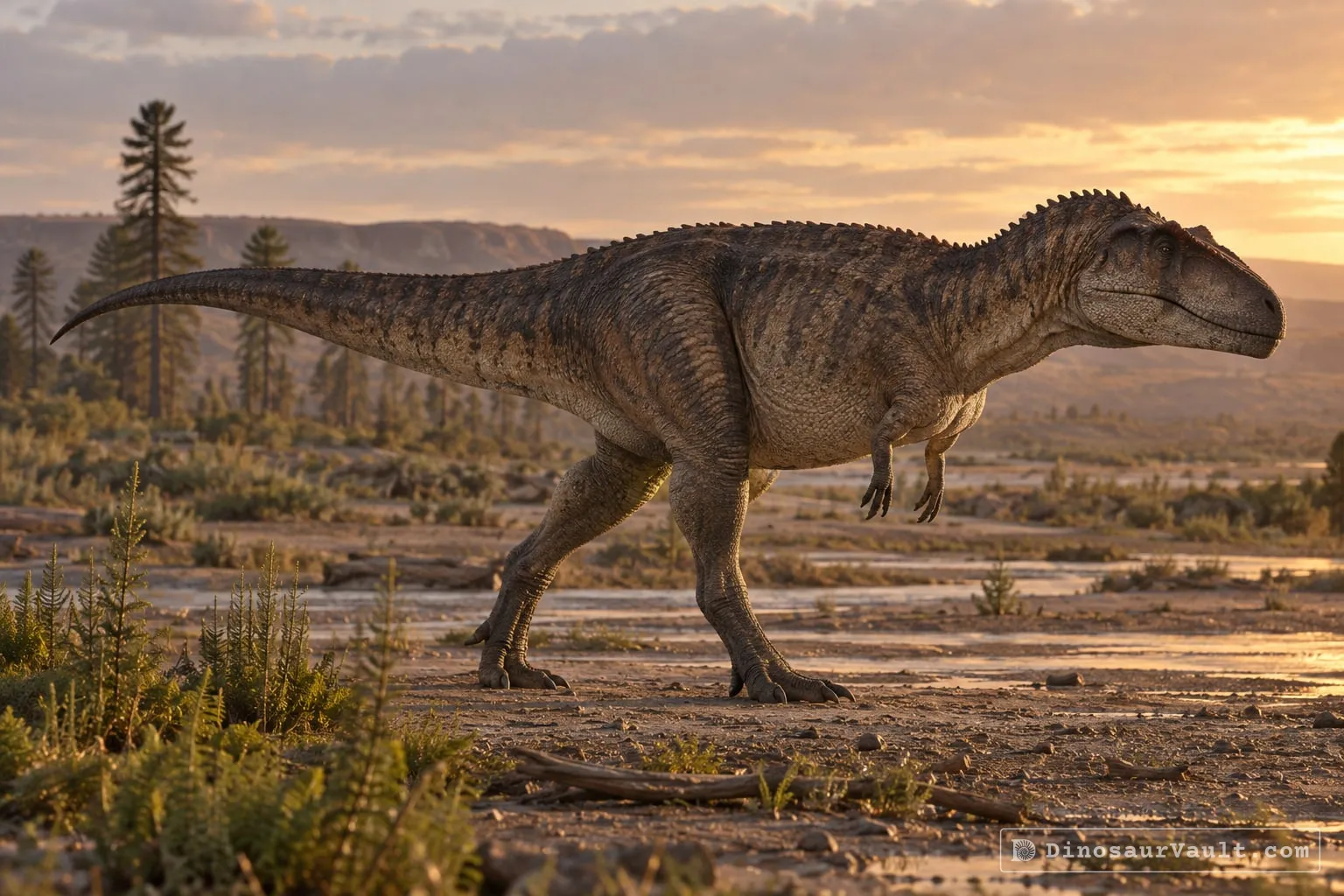
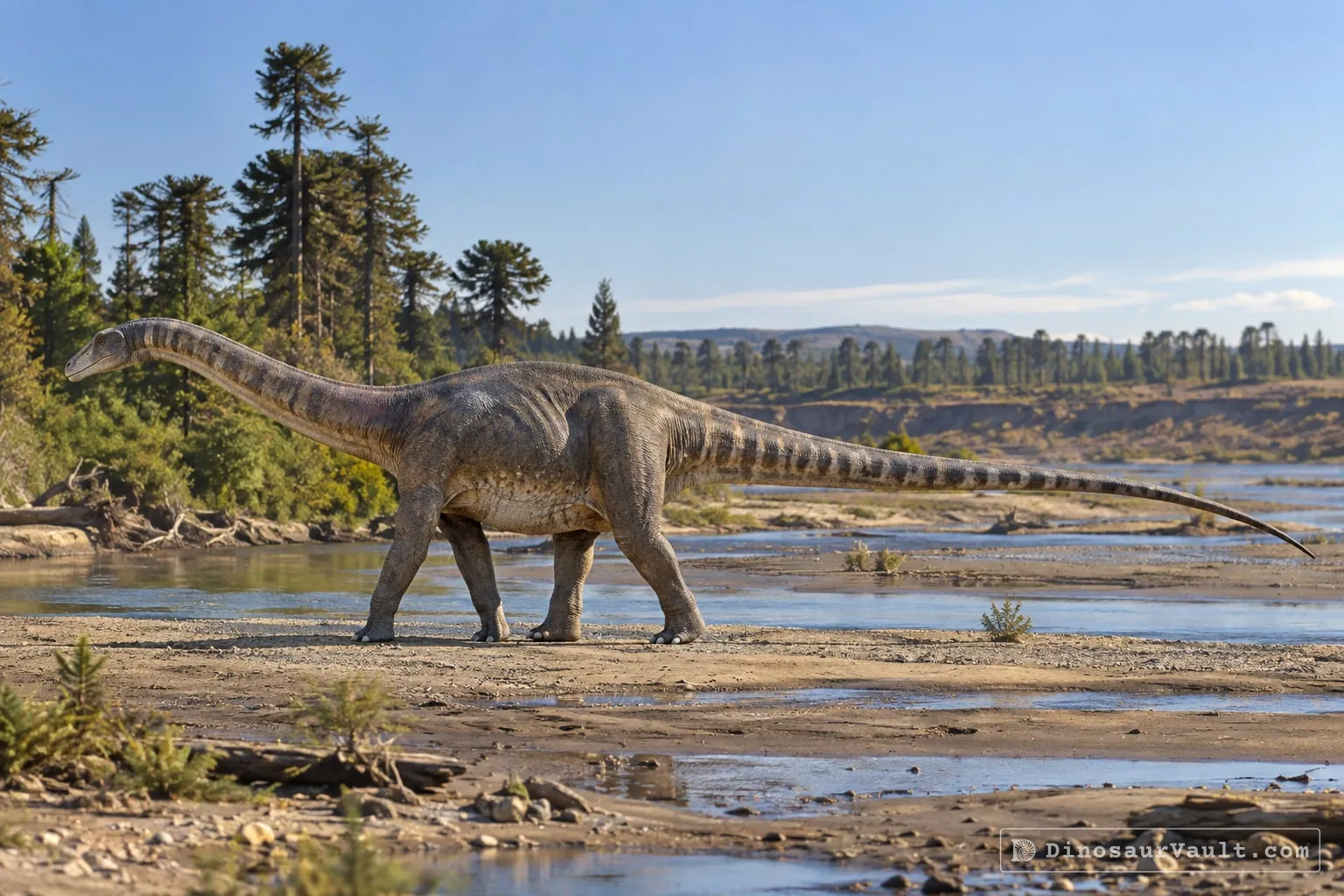
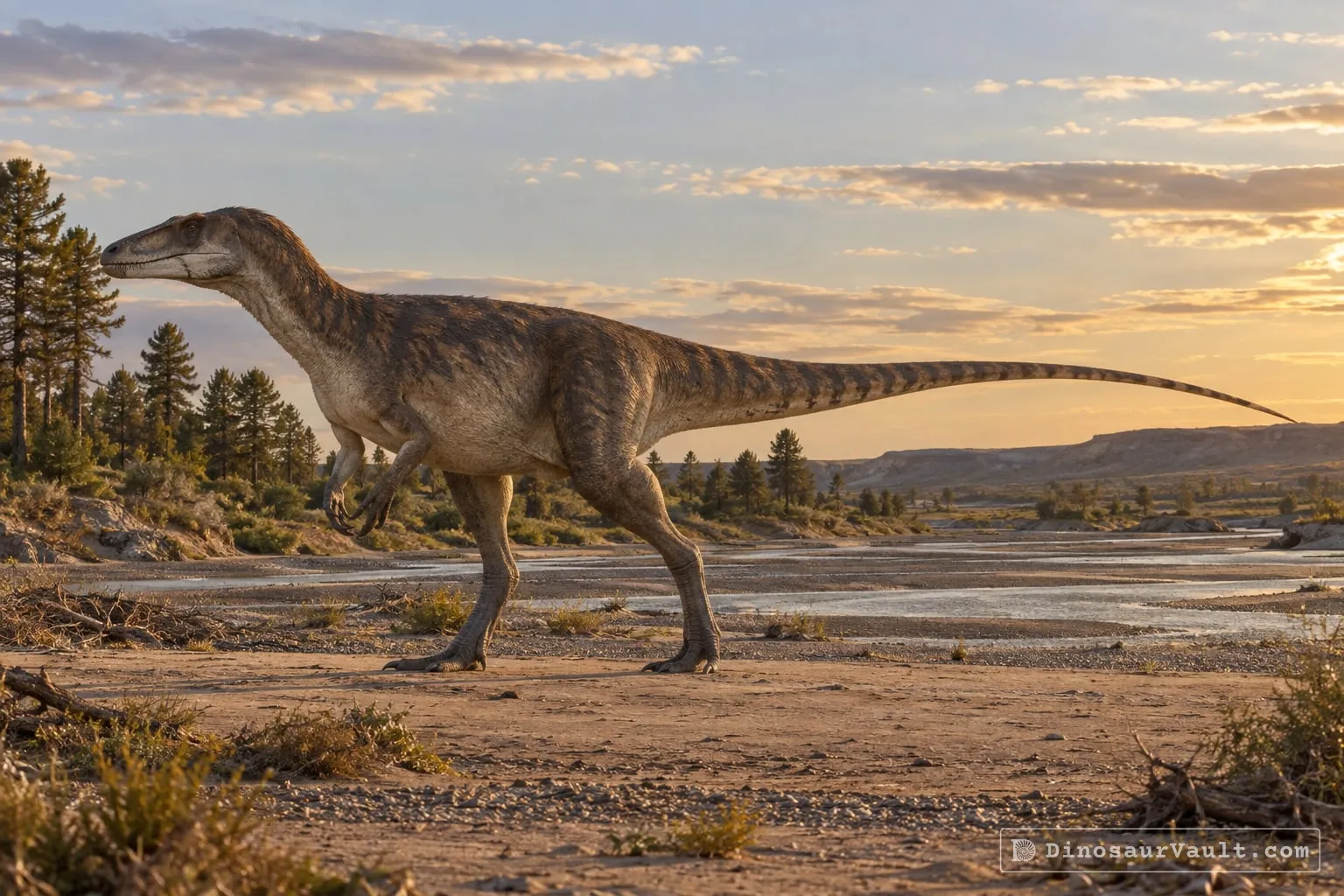


A rock formation can hold fossils laid down millions of years apart, so not every animal here met Gualicho.
The evidence
The science behind Gualicho
Which parts of the picture come from its own bones, and which come from its relatives.
From its own fossils
- The partial skeleton includes back and tail vertebrae, belly ribs, a shoulder and arm, and parts of both hind legs.
- The short arm ends in a hand with two working fingers and a third reduced to a small splint of bone. The first finger carries a large, strongly curved claw, and the second a smaller, less curved one.
- The thigh bone is slender and slightly bowed, and the toe claws are short, curved and triangular.
Borrowed from relatives
- The missing skull and neck are restored by comparison with other large theropods.
- Comparisons with Deltadromeus help interpret the shoulder and hind legs.
Still unknown
- The shape and size of its skull.
- Its closest relatives. Recent studies disagree, some placing it among the megaraptorans and others near the earliest ornithomimosaurs.
- What it used its short arms for.
Discovery timeline
- 1996Close relativeSereno et al.
- 2016Named itApesteguía et al.
- 2022Same rocksCanale et al.
- 2025Family treeDelcourt et al.
Key papers
The research behind what we know of Gualicho
Close relative
Described the slender-limbed Deltadromeus, later compared closely with Gualicho.
Predatory Dinosaurs from the Sahara and Late Cretaceous Faunal Differentiation. Science 272: 986-991
Read the paper : Predatory Dinosaurs from the Sahara and Late Cretaceous Faunal Differentiation (opens in a new tab)Named it
Described a predator whose short arms and two-fingered hands evolved separately from those of tyrannosaurs.
An Unusual New Theropod with a Didactyl Manus from the Upper Cretaceous of Patagonia, Argentina. PLOS ONE 11: e0157793
Read the paper : An Unusual New Theropod with a Didactyl Manus from the Upper Cretaceous of Patagonia, Argentina (opens in a new tab)Same rocks
Described Meraxes from the same formation and showed that short arms evolved independently in several groups of large predators.
New giant carnivorous dinosaur reveals convergent evolutionary trends in theropod arm reduction. Current Biology 32: 3195-3202.e5
Read the paper : New giant carnivorous dinosaur reveals convergent evolutionary trends in theropod arm reduction (opens in a new tab)Family tree
A new family-tree analysis that included Gualicho found it close to the base of the ostrich-like ornithomimosaurs.
The coelurosaur theropods of the Romualdo formation, early Cretaceous (Aptian) of Brazil: Santanaraptor placidus meets Mirischia asymmetrica. The Anatomical Record 309: 2752-2789
Read the paper : The coelurosaur theropods of the Romualdo formation, early Cretaceous (Aptian) of Brazil: Santanaraptor placidus meets Mirischia asymmetrica (opens in a new tab)
Close relatives
Other members of Tyrannosauroidea


Sources: Wikidata