Skorpiovenator
"scorpion hunter"
Type species Skorpiovenator bustingorryi
- Lived
- 110 to 106 million years ago, Early Cretaceous
- Diet
- Carnivore
- Group
- Theropods, Abelisauridae
- Found in
- Argentina
- Named by
- Canale et al. 2008
Where its fossils were found
The evidence
Today

110 million years ago
Habitat
Rivers crossed the landscape preserved in the Huincul Formation of Argentina. Argentinosaurus, Mapusaurus and Meraxes also lived in this region.
Field notes
About Skorpiovenator
What it was like
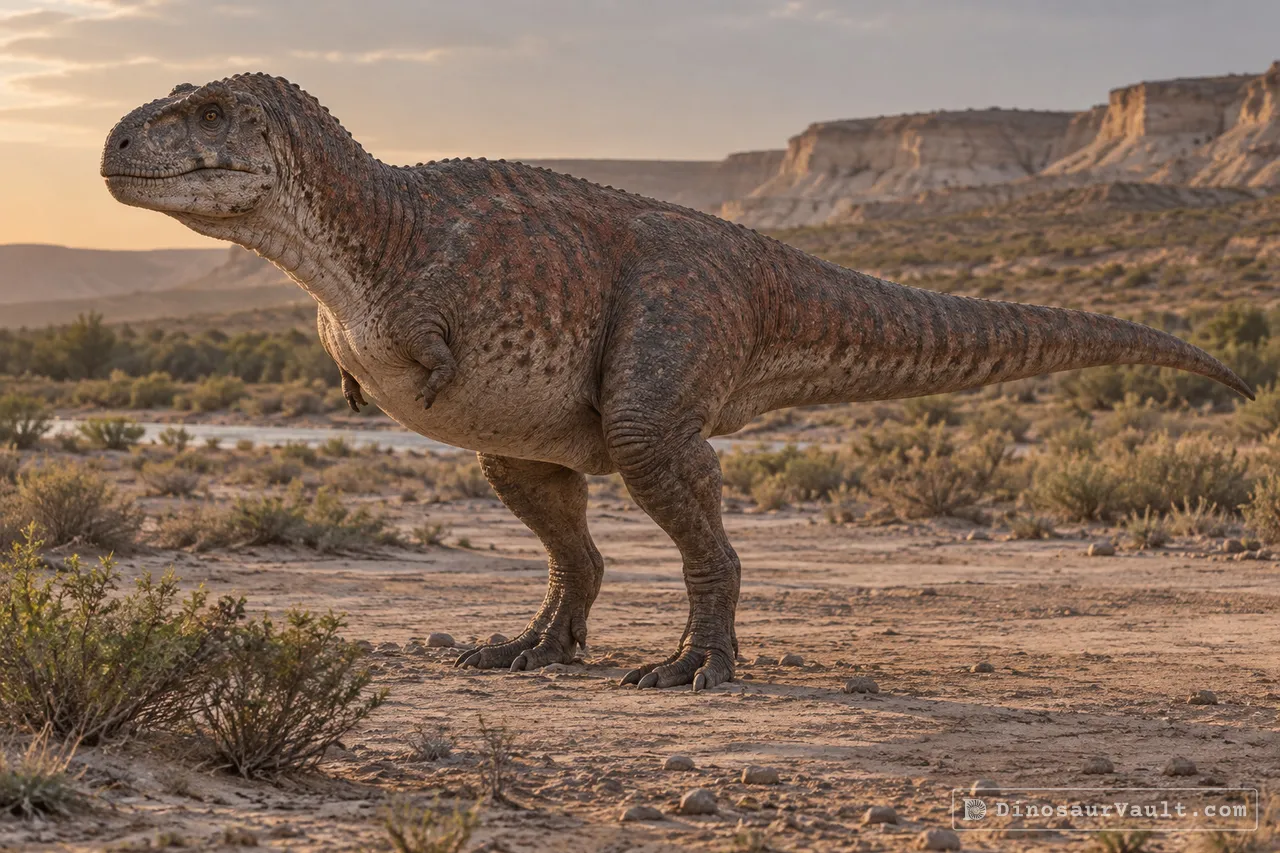
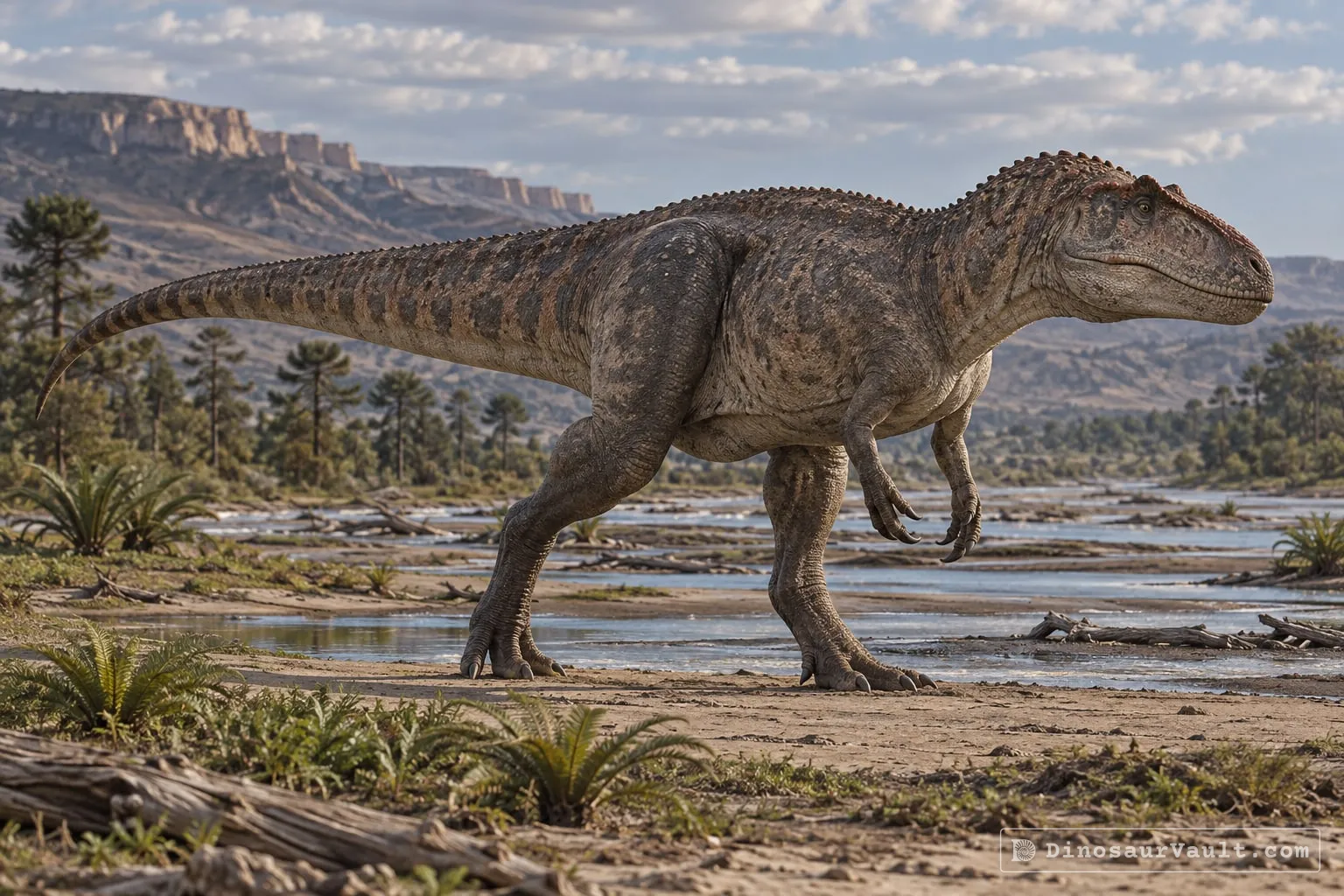
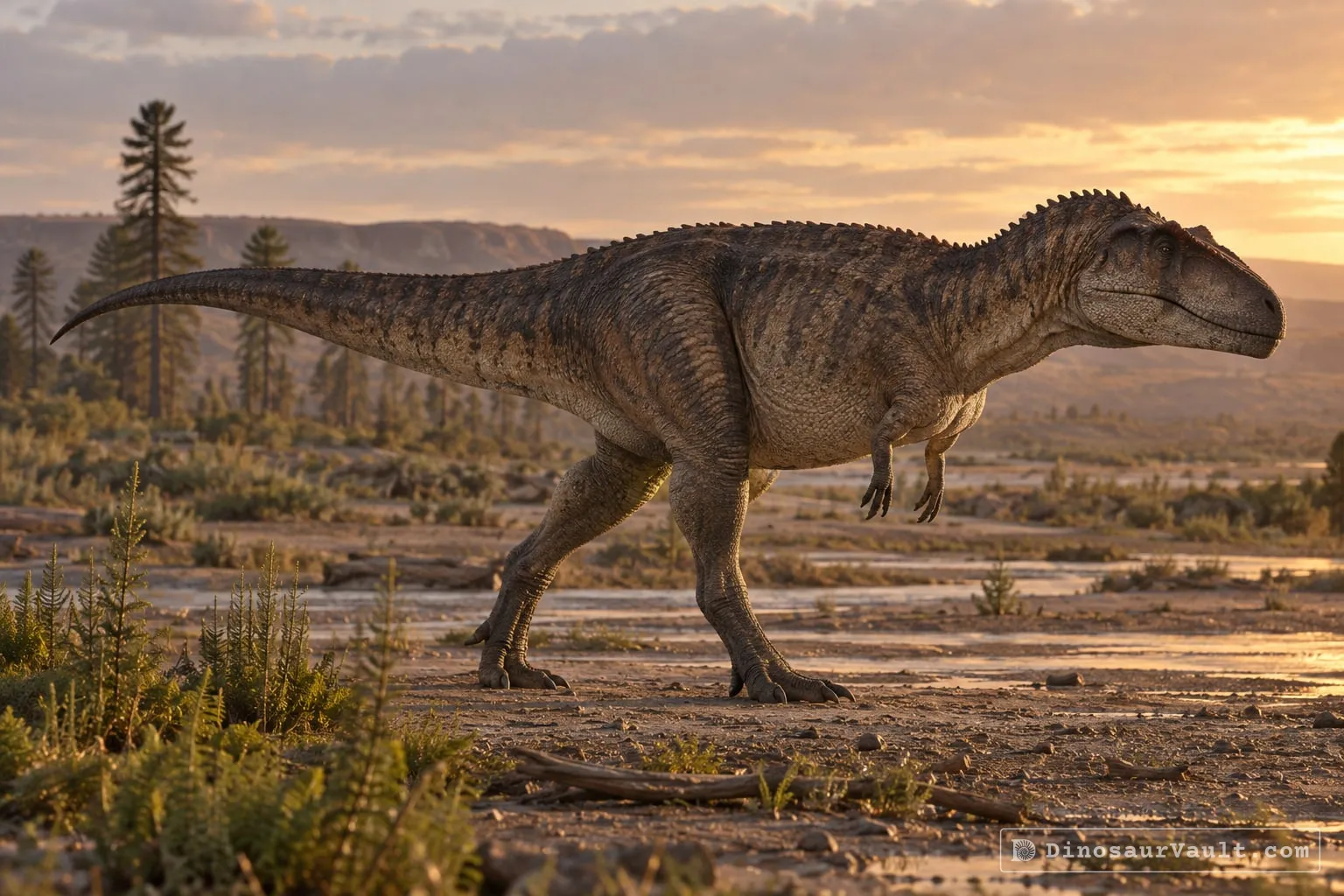
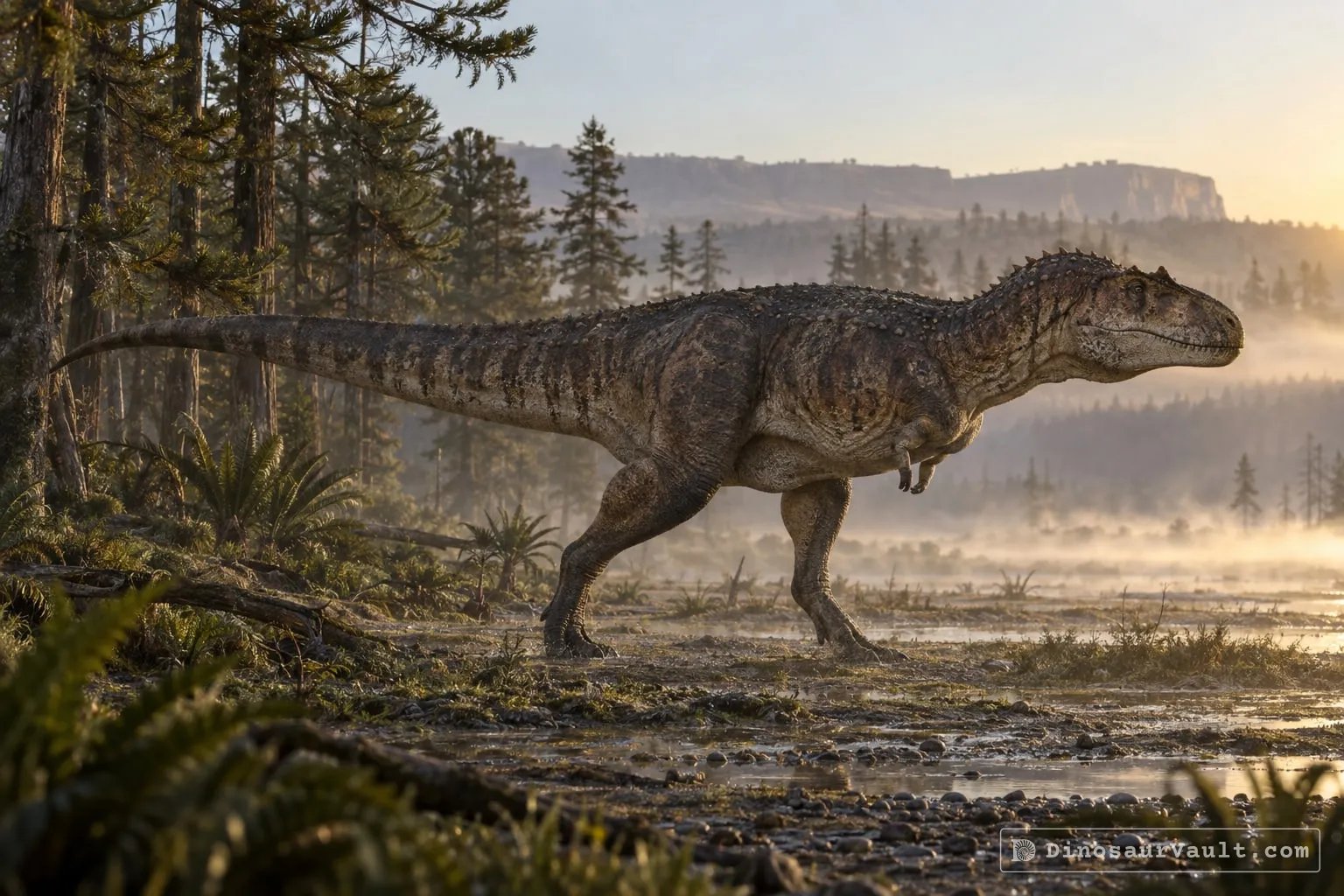
Skorpiovenator was an abelisaur, a big predator with a short, deep skull covered in bumps and grooves, and tiny arms. It is known from a nearly complete skeleton, which makes it one of the best understood members of its family.
Its world
It lived in the Cretaceous, in what is now Argentina. Its bones come from the Huincul Formation, home to some of the largest dinosaurs known: the giant hunters Mapusaurus and Meraxes and the huge sauropod Argentinosaurus.
How it was found
Canale and colleagues named Skorpiovenator in 2008. The type species is Skorpiovenator bustingorryi. The name comes from the many scorpions around the dig site.
Field gallery
More views of Skorpiovenator
Scenes reconstructed from the available fossil evidence.
1 of 3
Lived alongside
Found in the same rock formations
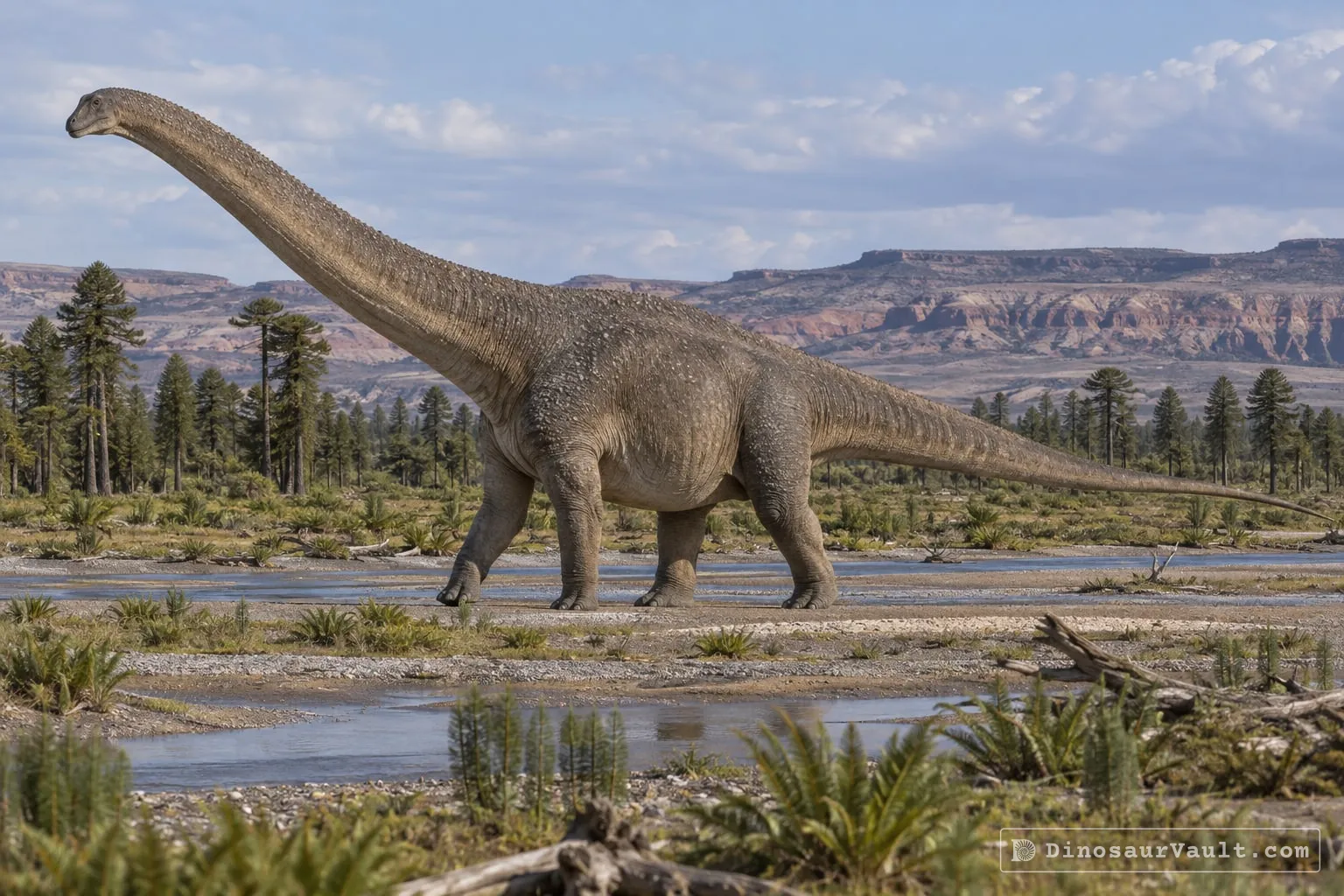
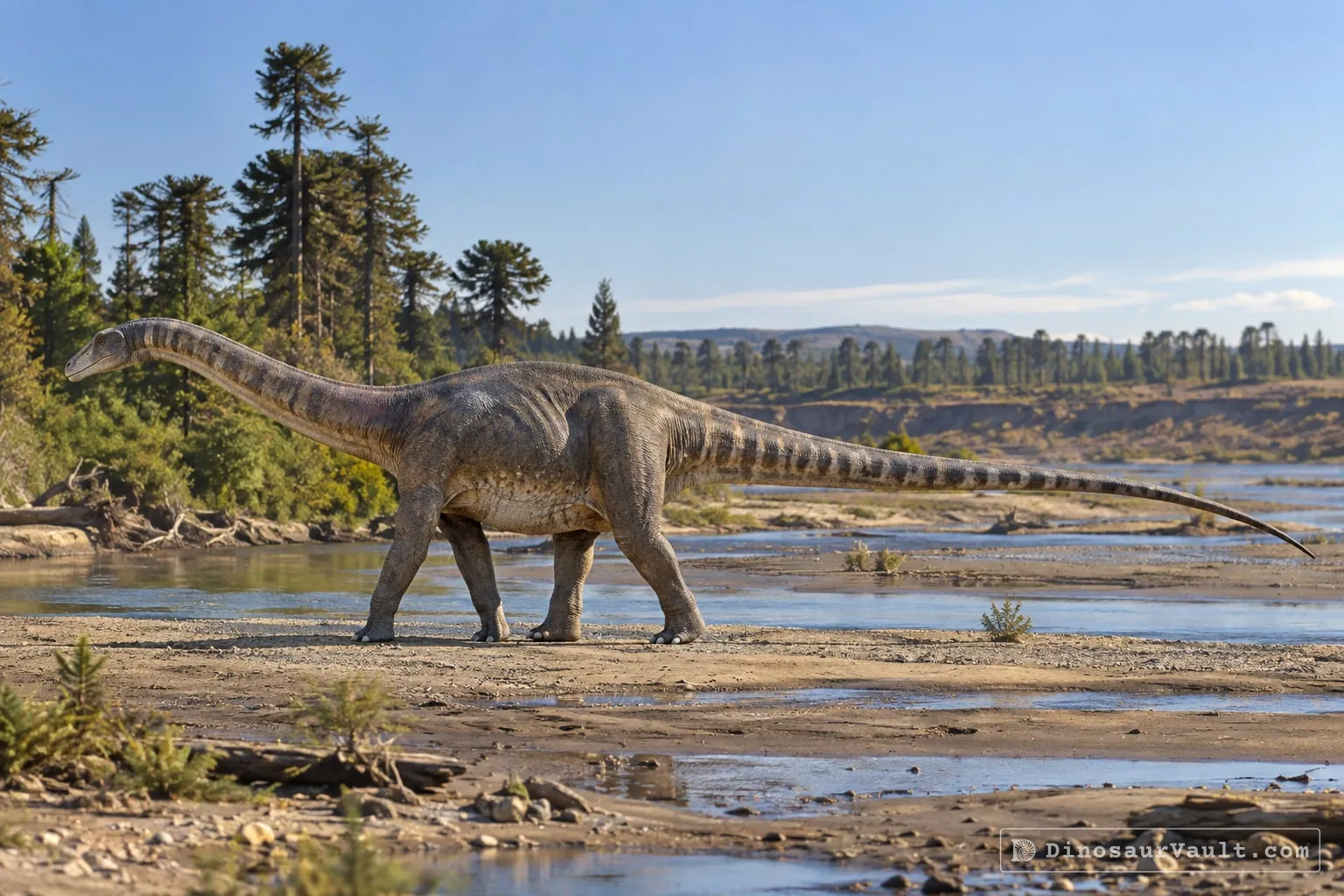
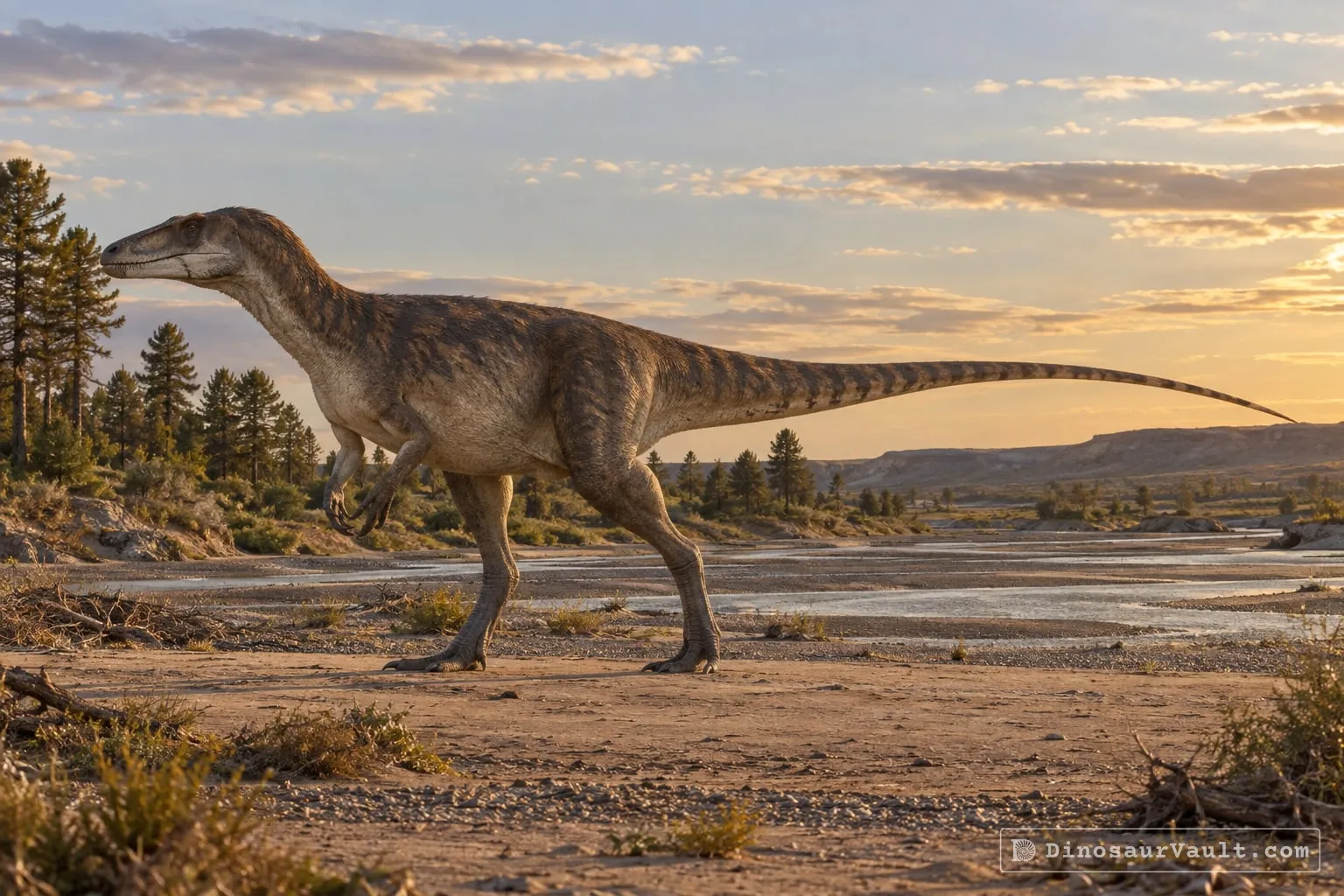
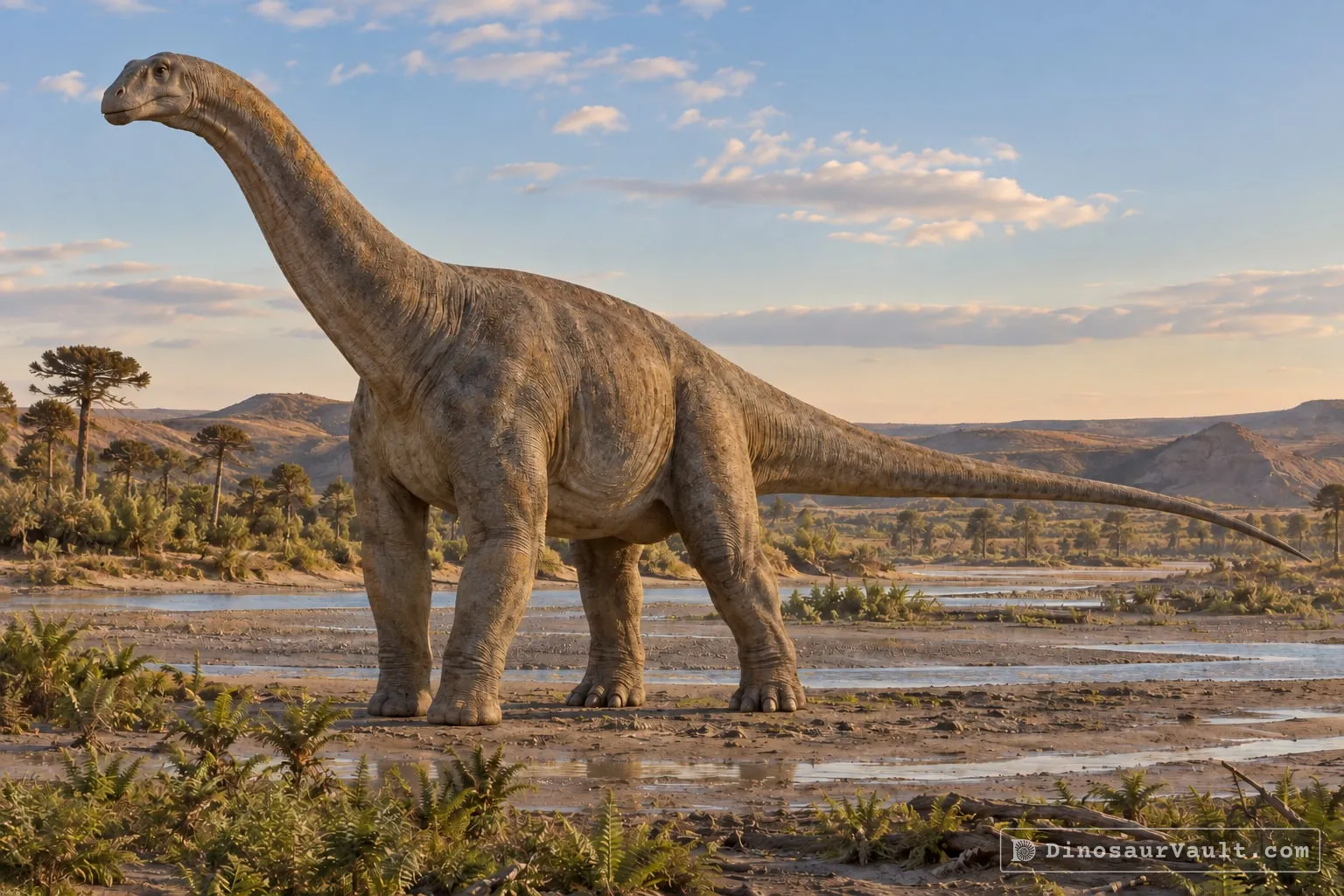
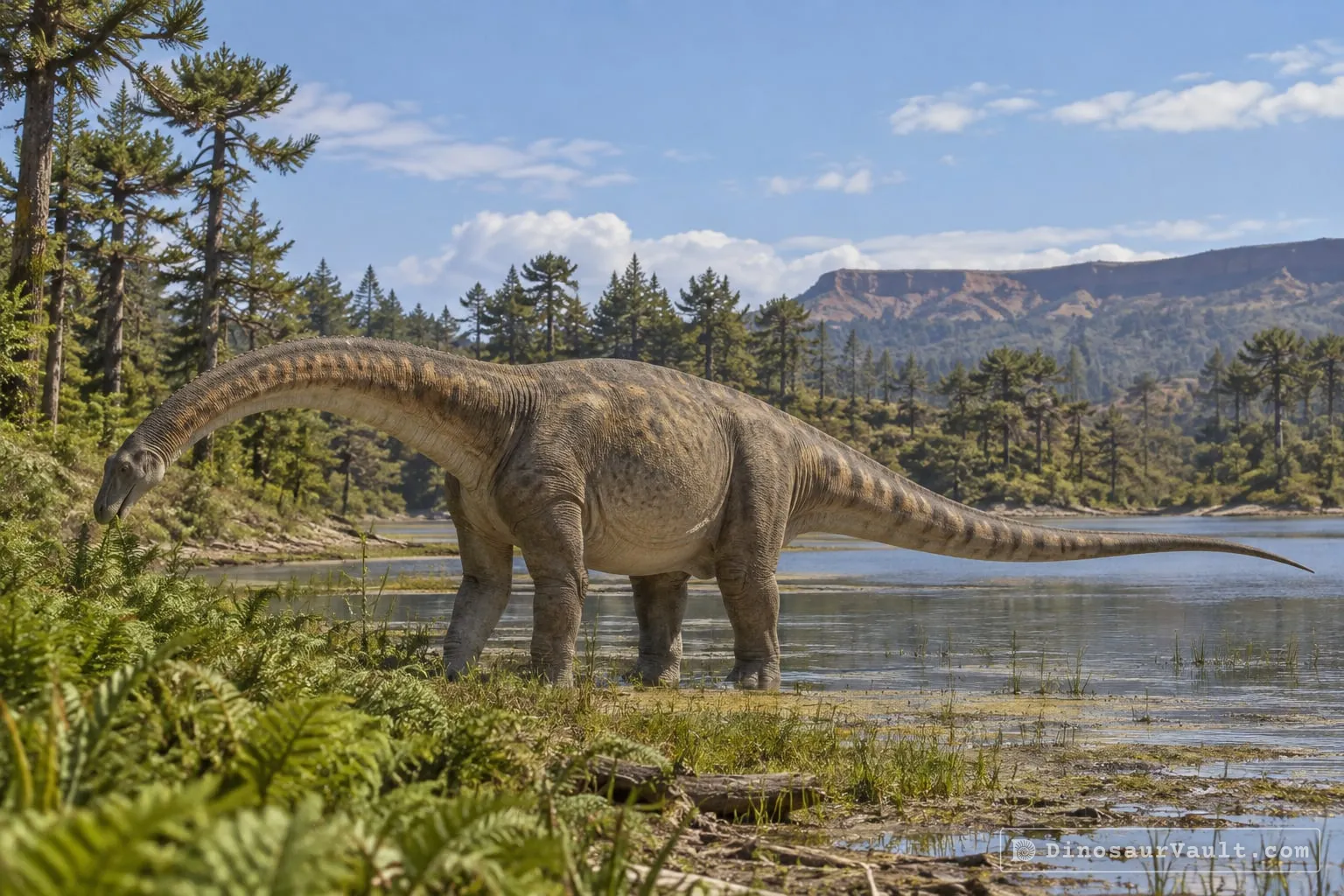


A rock formation can hold fossils laid down millions of years apart, so not every animal here met Skorpiovenator.
The evidence
The science behind Skorpiovenator
Which parts of the picture come from its own bones, and which come from its relatives.
From its own fossils
- A nearly complete skeleton with a short, deep skull and much of the backbone and hind limbs.
- The bones on top of its snout have rough surfaces, low ridges and rows of openings.
- Scans reveal an internal canal linking openings along the snout, probably carrying nerves and blood vessels.
Borrowed from relatives
- Much of its body shape comes from its own skeleton.
- Missing parts of the arms are restored by comparison with other abelisaurids, such as Carnotaurus and Aucasaurus.
Still unknown
- Its color and the pattern of scales across its body.
- Whether the channels in its snout helped control heat, sense touch or both.
- Which animals it usually hunted.
Discovery timeline
- 2008Named itCanale et al.
- 2020SkullCerroni et al.
- 2022Full descriptionCerroni et al.
Key papers
The research behind what we know of Skorpiovenator
Named it
Described a nearly complete skeleton and placed Skorpiovenator in a branch of short-snouted South American abelisaurids.
New carnivorous dinosaur from the Late Cretaceous of NW Patagonia and the evolution of abelisaurid theropods. Naturwissenschaften 96: 409-414
Read the paper : New carnivorous dinosaur from the Late Cretaceous of NW Patagonia and the evolution of abelisaurid theropods (opens in a new tab)Skull
Found internal channels connecting openings in the snout, probably carrying nerves and blood vessels to the face.
An exceptional neurovascular system in abelisaurid theropod skull: New evidence from Skorpiovenator bustingorryi. Journal of Anatomy 240: 612-626
Read the paper : An exceptional neurovascular system in abelisaurid theropod skull: New evidence from Skorpiovenator bustingorryi (opens in a new tab)Full description
Described the limb and hip bones, identifying new features that distinguish Skorpiovenator from its relatives.
Appendicular osteology of Skorpiovenator bustingorryi (Theropoda, Abelisauridae) with comments on phylogenetic features of abelisaurids. Journal of Systematic Palaeontology 20: 1-32
Read the paper : Appendicular osteology of Skorpiovenator bustingorryi (Theropoda, Abelisauridae) with comments on phylogenetic features of abelisaurids (opens in a new tab)
Close relatives
Other members of Abelisauridae


Sources: Wikidata