Argentinosaurus
ar-jen-TEEN-oh-SORE-us
"lizard from Argentina"
- Lived
- 110 to 106 million years ago, Early Cretaceous
- Diet
- Herbivore
- Length
- about 35 m (115 ft)
- Weight
- about 70 metric tons (77 short tons)
- Group
- Sauropods
- Found in
- Argentina
- Named by
- Bonaparte and Coria 1993
Size comparison
To scale
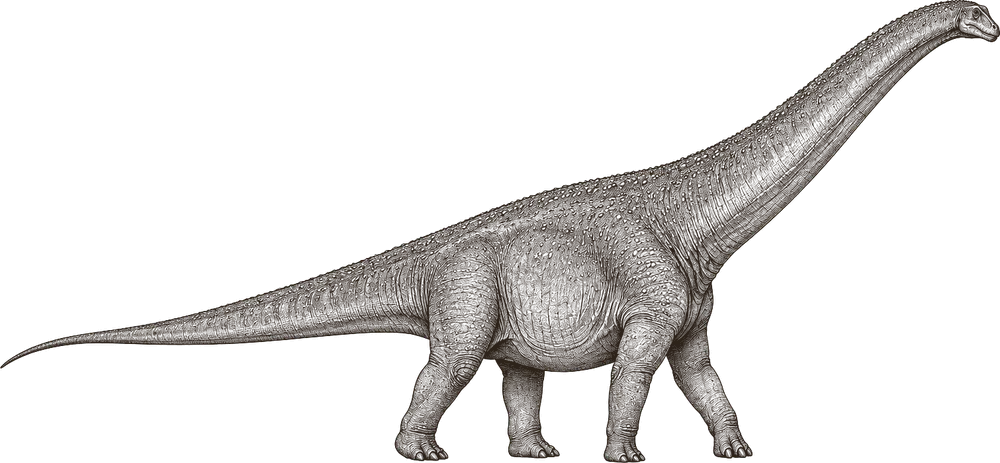


Scale in meters
Where its fossils were found
The evidence
Today

110 million years ago
Habitat
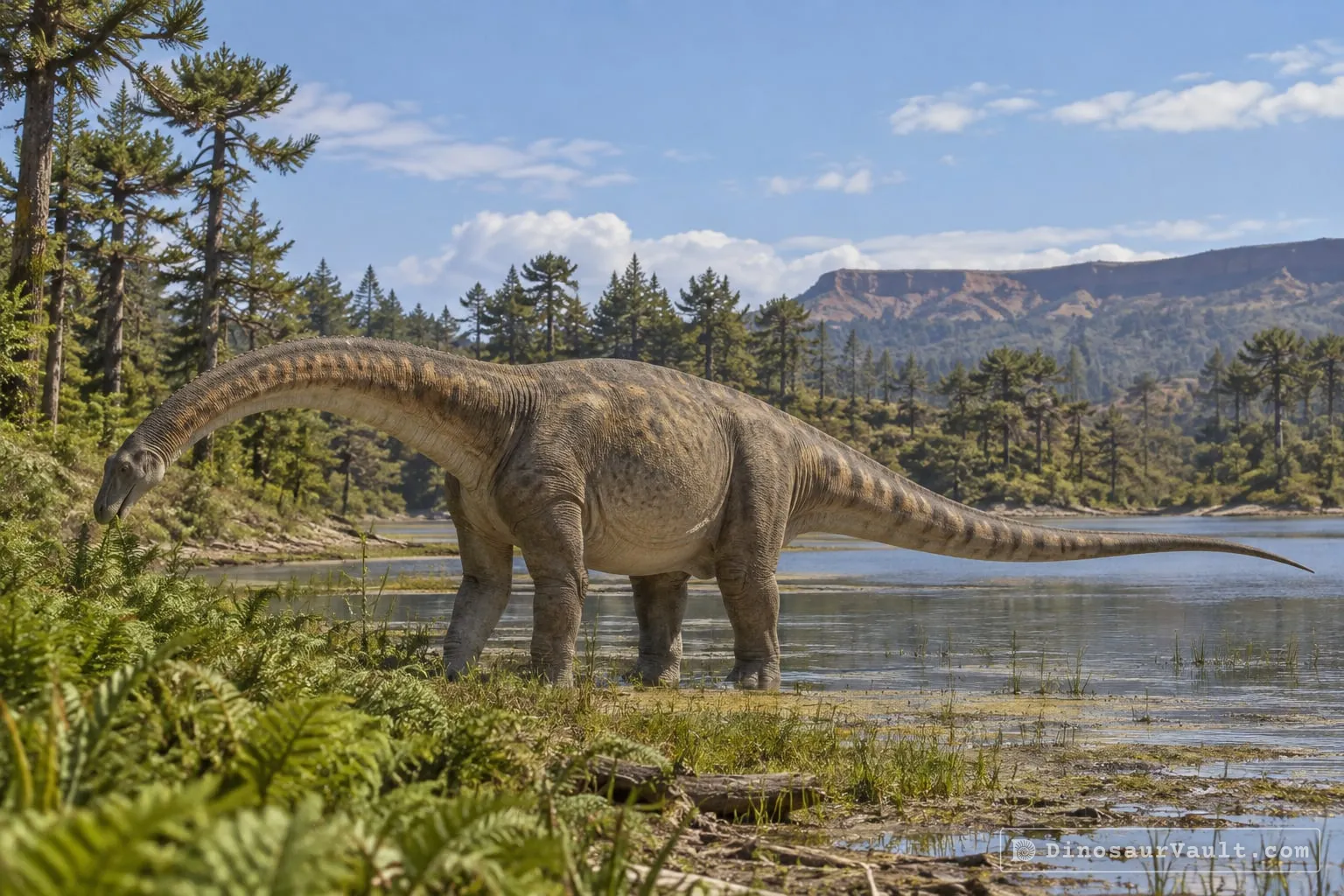
River channels crossed the Huincul floodplains in Argentina. Other dinosaurs from this region included Mapusaurus, Meraxes and Limaysaurus.
A Dinosaur Vault film
What If Argentinosaurus Walked Down Your Street?
One of the largest animals ever to walk on land, on a street like yours. Then back to the river plains of Patagonia, where hunters like Mapusaurus and Gualicho lived beside it.
Subscribe on YouTubeField notes
About Argentinosaurus
What it was like
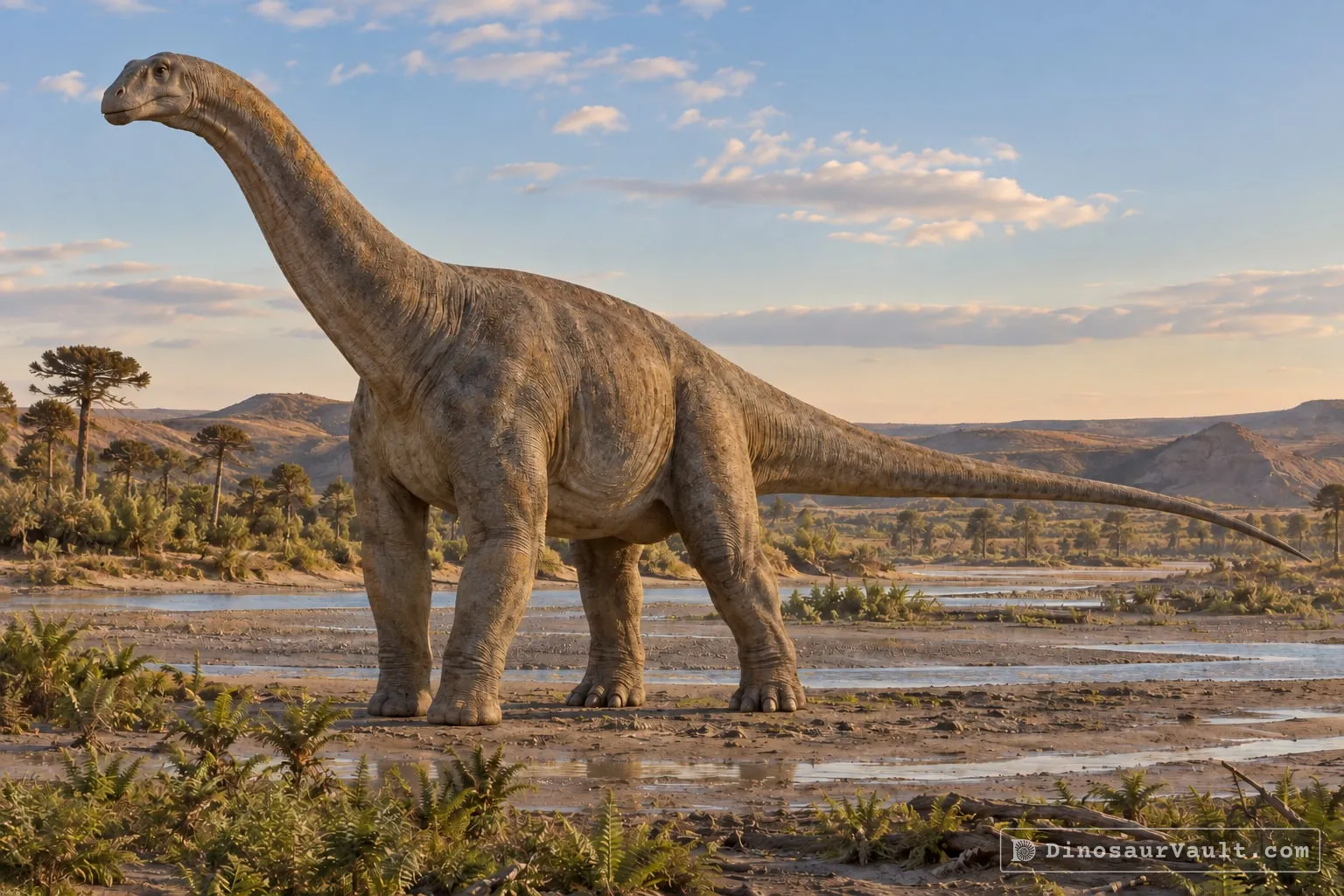
Argentinosaurus was a giant among giants, a long-necked plant eater that ranks among the largest land animals ever known. Estimates put it at around 35 meters long and about 70 metric tons in weight, supported by thick, pillar-like legs and a long tail that balanced its equally long neck.
Only a small part of its skeleton has ever been found, including huge back bones and a massive thigh bone, so much of what scientists know about its full size comes from comparing these bones with more complete relatives. Its sheer bulk would have made a full-grown Argentinosaurus nearly impossible for most predators to bring down.
Its world
Argentinosaurus lived in what is now Argentina. Its remains come from the Huincul Formation. Recent radiometric dating supports an Early Cretaceous age for these rocks, revising the Late Cretaceous age used in older studies.
The same formation also preserves Mapusaurus and Limaysaurus. Fossils from different levels need not represent animals that lived together.
How it was found
Argentinosaurus was named by Bonaparte and Coria in 1993, based on fossils found in Argentina. Only one find of the genus has been recorded, which is why its exact size is still debated, with estimates sometimes revised as scientists compare it with better-known relatives such as Patagotitan and Dreadnoughtus.
Field gallery
More views of Argentinosaurus
Scenes reconstructed from the available fossil evidence.
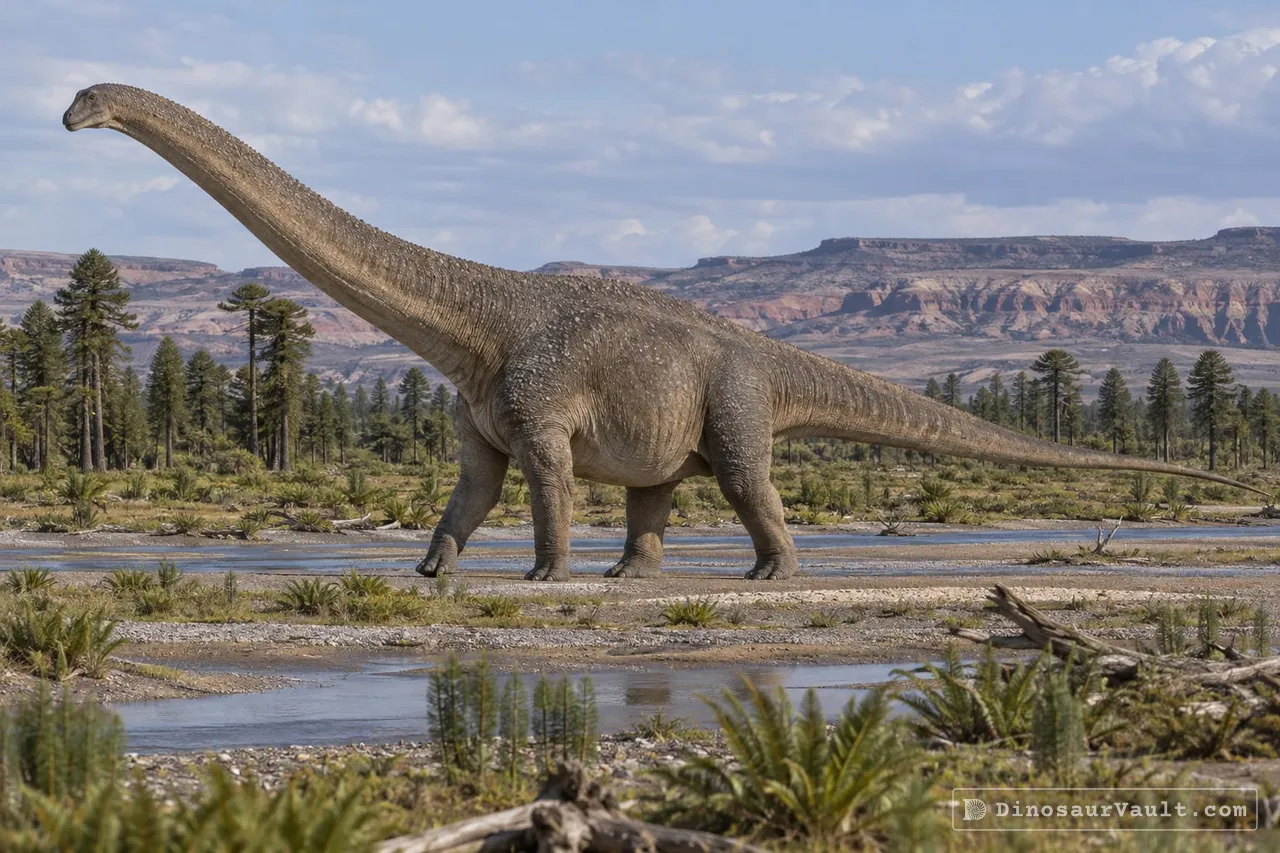
1 of 7
Lived alongside
Found in the same rock formations
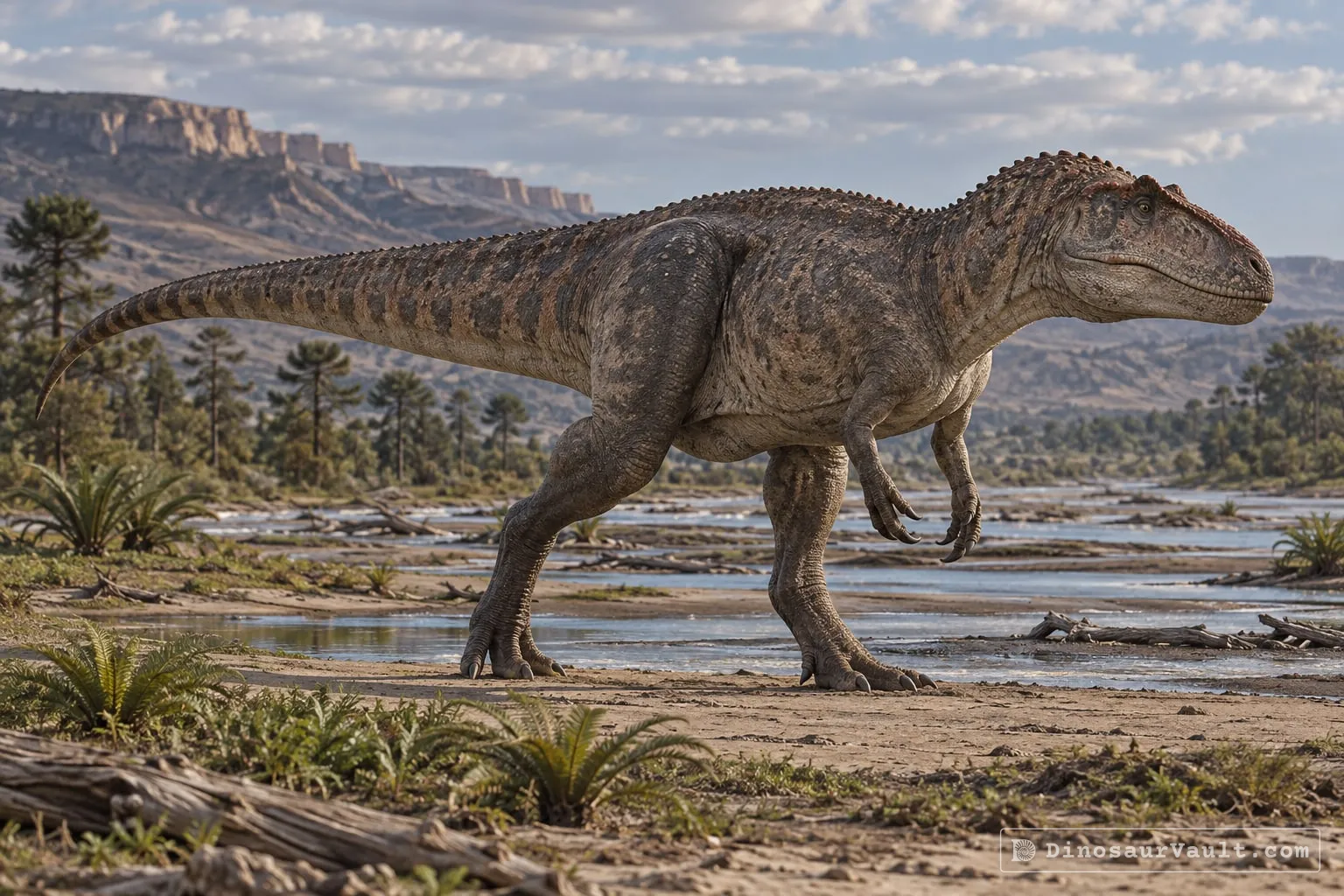
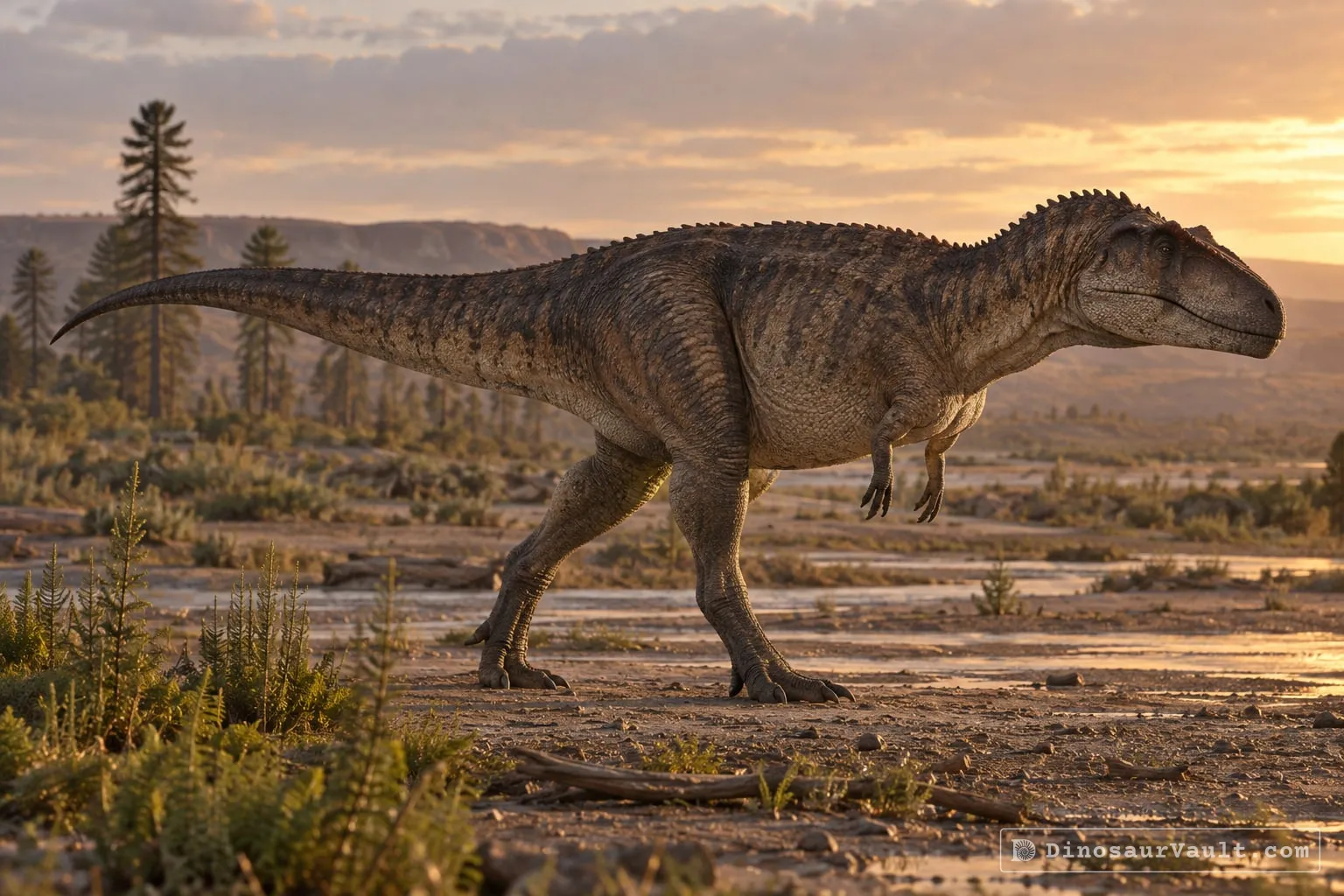
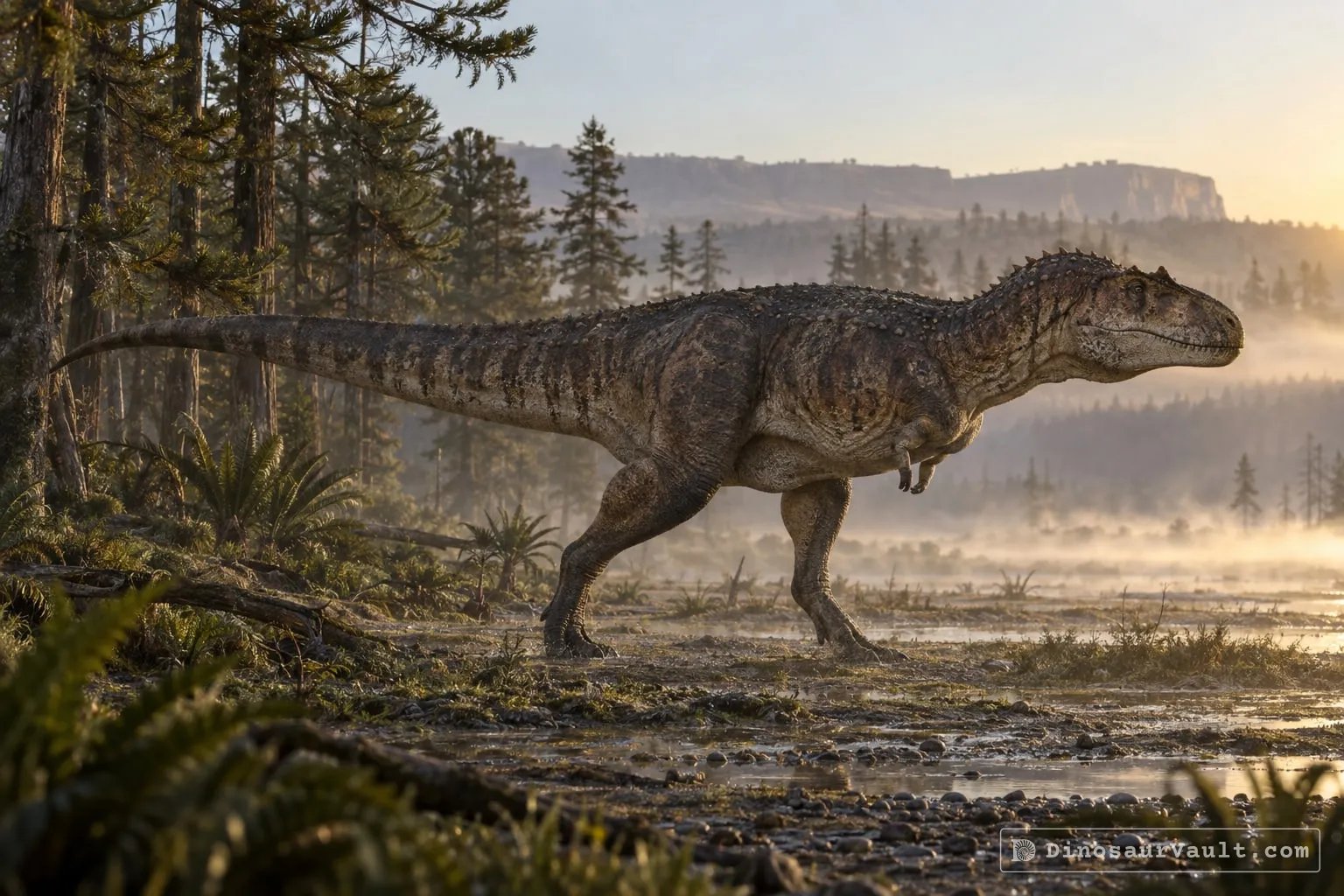
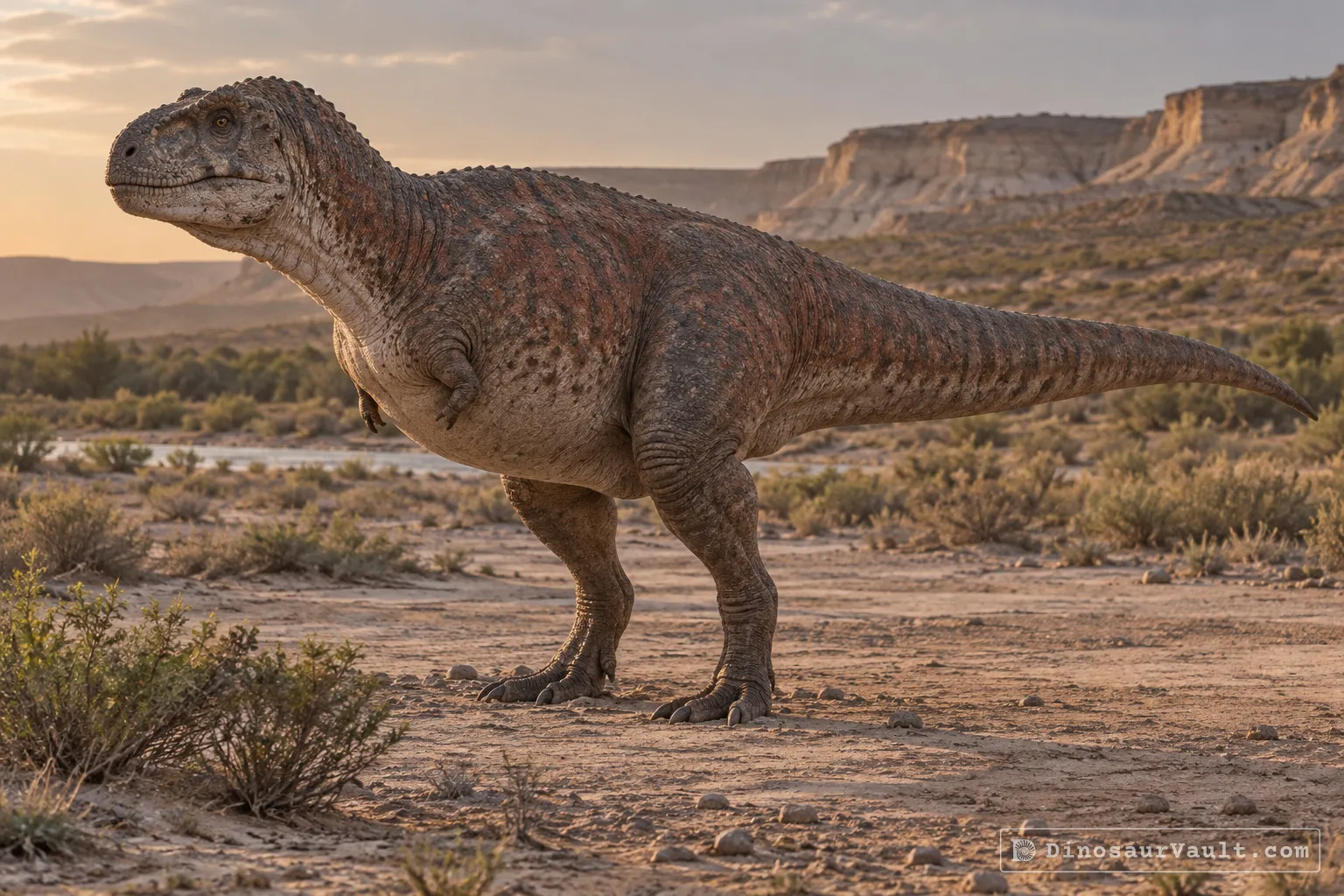
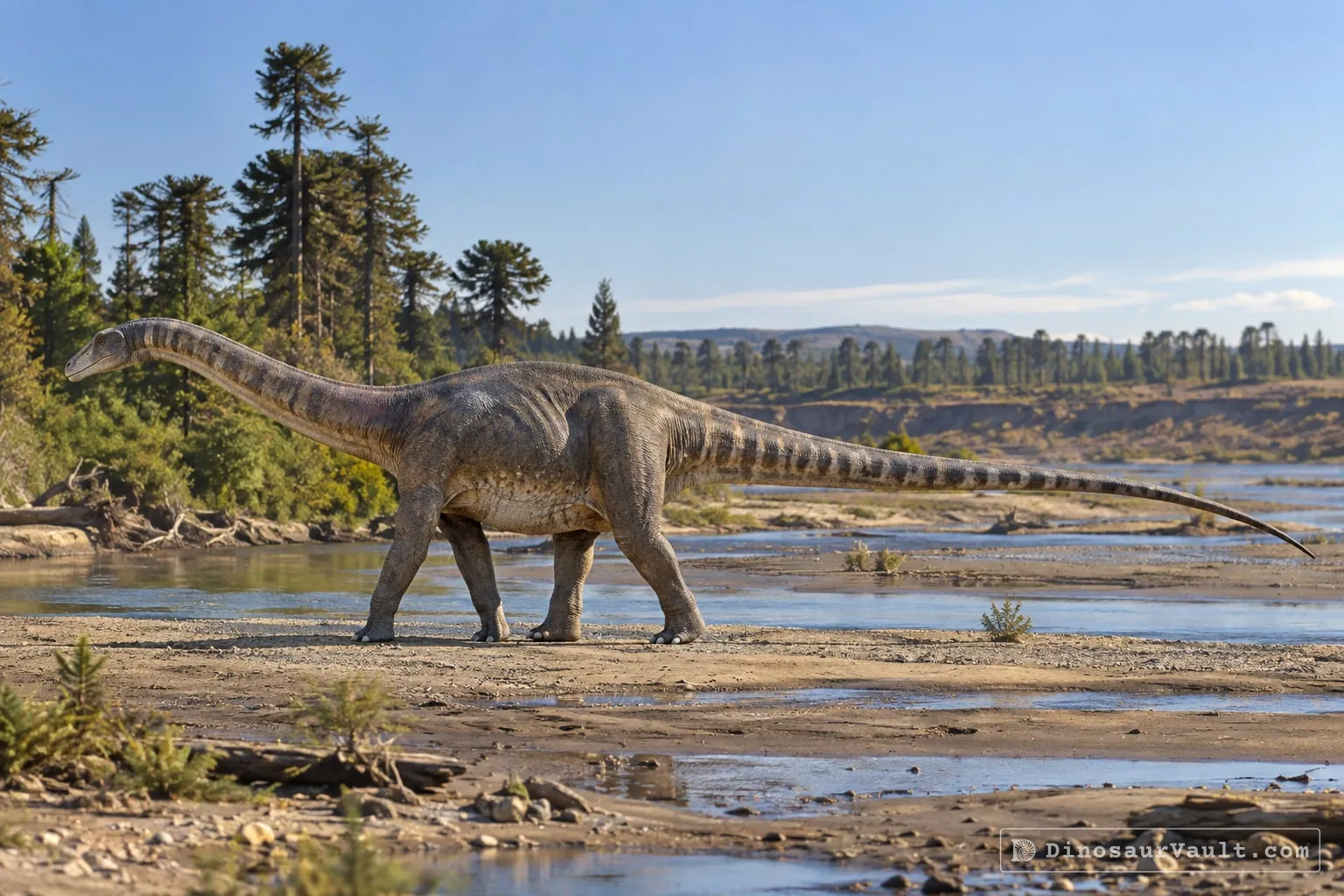
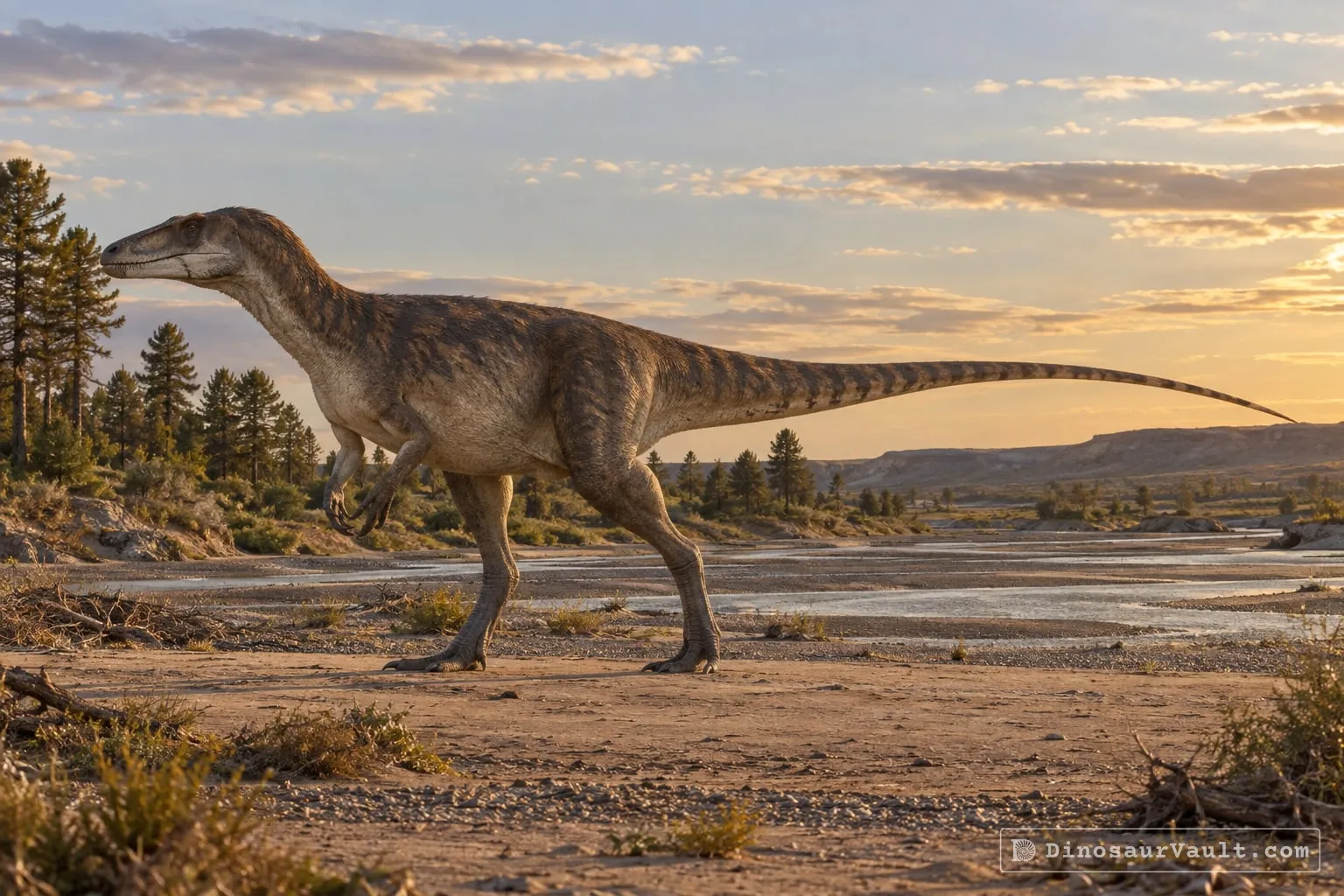


A rock formation can hold fossils laid down millions of years apart, so not every animal here met Argentinosaurus.
The evidence
The science behind Argentinosaurus
Which parts of the picture come from its own bones, and which come from its relatives.
From its own fossils
- Huge back vertebrae, parts of the hip backbone and limb material reveal an immense sauropod.
- The back vertebrae contain many internal air spaces, lightening these enormous bones.
Borrowed from relatives
- More complete titanosaurs such as Patagotitan and Dreadnoughtus help restore the broad trunk and pillar-like limbs.
- The missing head, neck and tail are restored by comparison with other titanosaurs.
- Scaly skin and compact, column-like forefeet follow other titanosaurs.
Still unknown
- Its exact length and weight, and how it ranked against other giant sauropods.
- The shape of its head and the full proportions of its neck and tail.
- Its color and what its young looked like.
Often drawn wrong
- Rows of elephant-like toenails on the front feet differ from the compact forefeet of titanosaurs.
- Rows of tall armor spikes have no fossil support for Argentinosaurus.
Discovery timeline
- 1993Named itBonaparte & Coria
- 2013PostureSellers et al.
- 2013Family treeSander
- 2014Close relativeLacovara et al.
- 2017Family treeCarballido et al.
Key papers
The research behind what we know of Argentinosaurus
Named it
Named Argentinosaurus from enormous vertebrae and limb material found in Argentina.
Un nuevo y gigantesco saurópodo titanosaurio de la Formación Rio Limay (Albanio-Cenomaniano) de la Provincia del Neuquén, Argentina [A new and huge titanosaur sauropod from the Rio Limay Formation (Albian-Cenomanian) of Neuquén Province, Argentina]. Ameghiniana 30: 271-282
No link available
Posture
A computer model of a reconstructed Argentinosaurus tested how its muscles could support walking under its immense weight.
March of the Titans: The Locomotor Capabilities of Sauropod Dinosaurs. PLoS ONE 8: e78733
Read the paper : March of the Titans: The Locomotor Capabilities of Sauropod Dinosaurs (opens in a new tab)Family tree
Explained how feeding, breathing, growth and reproduction together may have allowed sauropods such as Argentinosaurus to reach enormous sizes.
An Evolutionary Cascade Model for Sauropod Dinosaur Gigantism - Overview, Update and Tests. PLoS ONE 8: e78573
Read the paper : An Evolutionary Cascade Model for Sauropod Dinosaur Gigantism - Overview, Update and Tests (opens in a new tab)Close relative
Described a much more complete Dreadnoughtus skeleton, adding a comparison for the proportions and size of fragmentary giants such as Argentinosaurus.
A Gigantic, Exceptionally Complete Titanosaurian Sauropod Dinosaur from Southern Patagonia, Argentina. Scientific Reports 4
Read the paper : A Gigantic, Exceptionally Complete Titanosaurian Sauropod Dinosaur from Southern Patagonia, Argentina (opens in a new tab)Family tree
Described Patagotitan and placed it close to Argentinosaurus in a group of giant titanosaurs.
A new giant titanosaur sheds light on body mass evolution among sauropod dinosaurs. Proceedings of the Royal Society B: Biological Sciences 284: 20171219
Read the paper : A new giant titanosaur sheds light on body mass evolution among sauropod dinosaurs (opens in a new tab)
Close relatives
Other members of Eutitanosauria


Sources: Wikidata