Chucarosaurus
"untamed lizard"
Type species Chucarosaurus diripienda
- Lived
- 110 to 106 million years ago, Early Cretaceous
- Diet
- Herbivore
- Group
- Sauropods
- Found in
- Argentina
- Named by
- Agnolin et al. 2023
Where its fossils were found
The evidence
Today

110 million years ago
Habitat
Its bones come from river deposits in Argentina. Argentinosaurus, Mapusaurus and Meraxes also occur in the Huincul Formation.
Field notes
About Chucarosaurus
What it was like
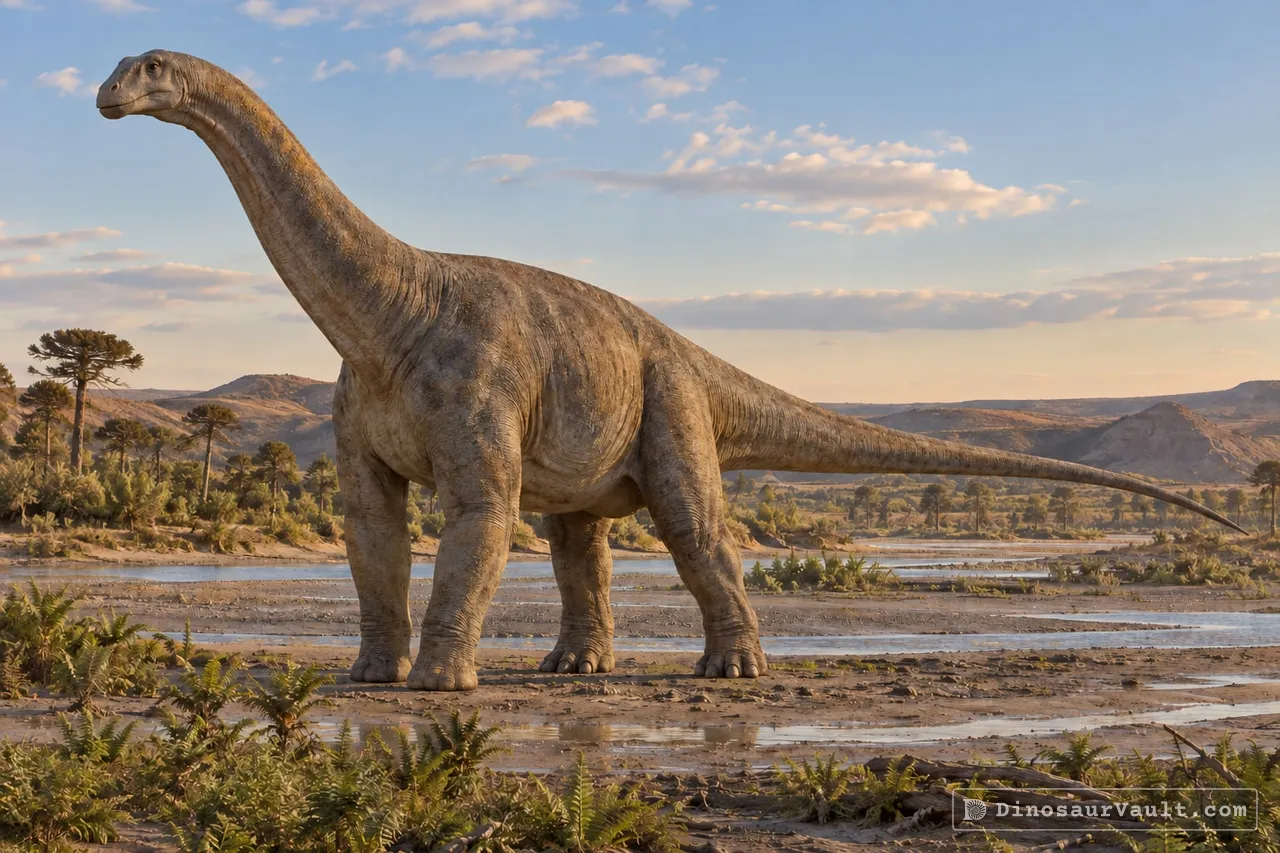
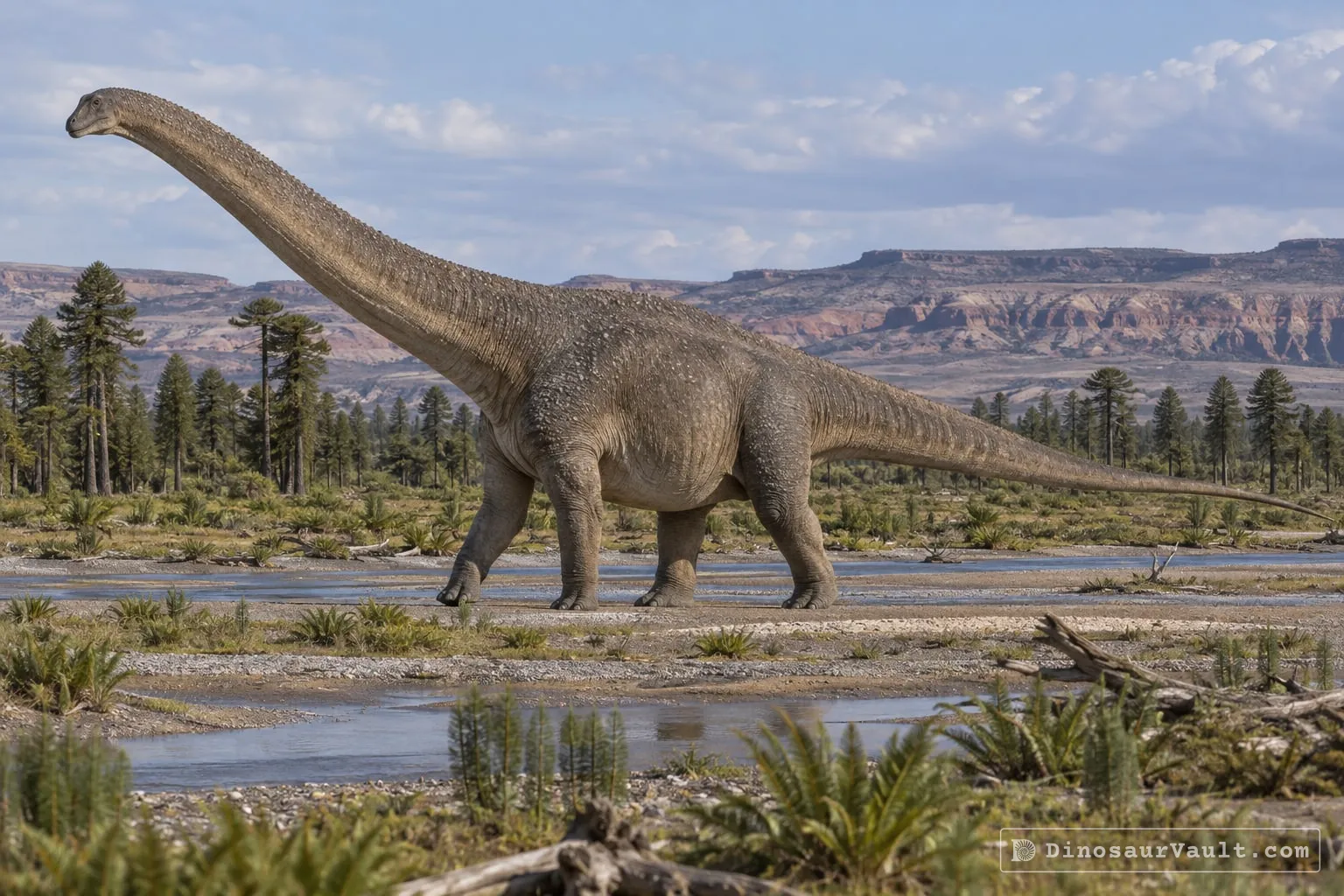
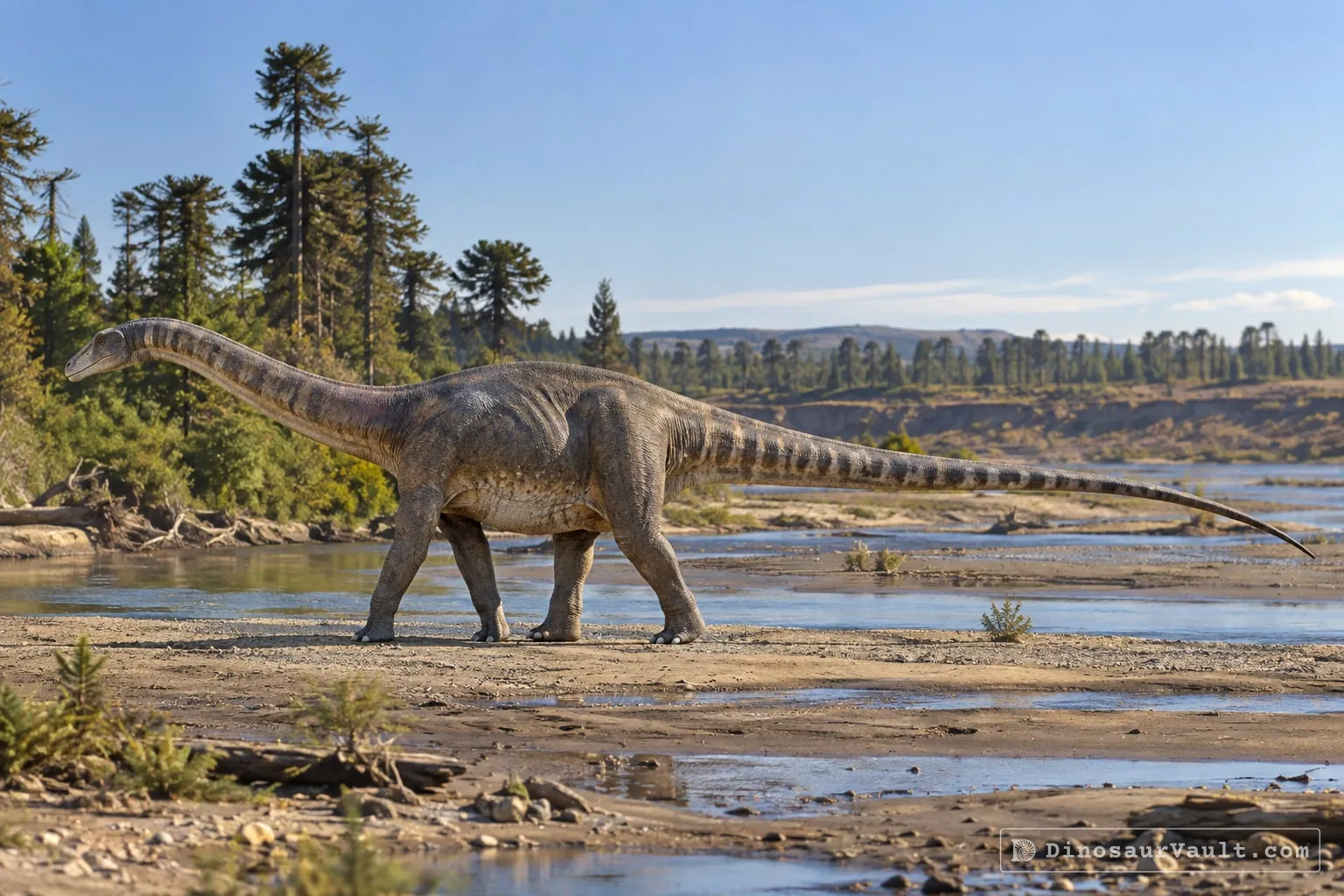
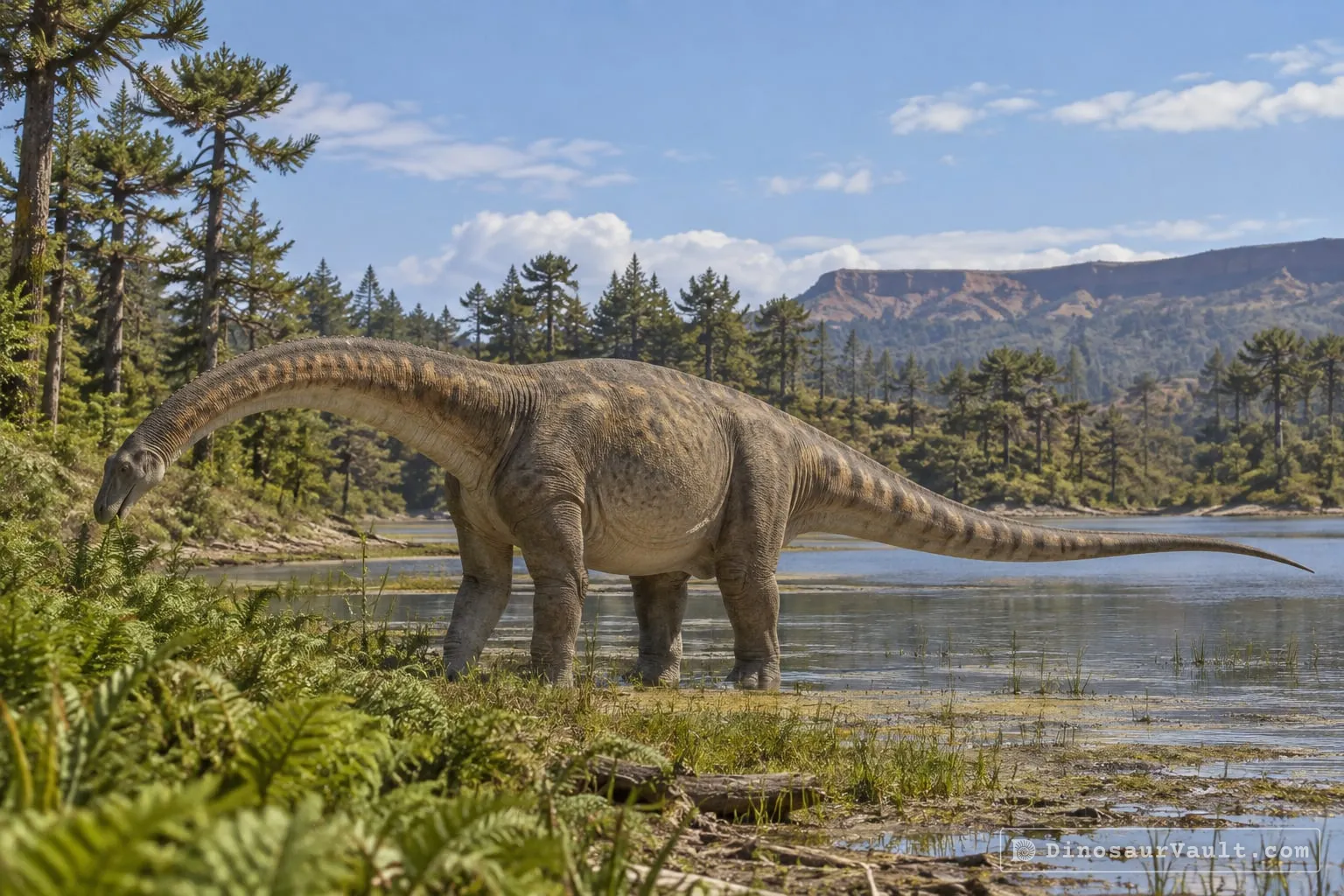
Chucarosaurus was a large titanosaur, a long-necked plant eater. It is known from limb and hip bones, which were long and slender for such a big animal. Its closest relatives include Notocolossus and Puertasaurus.
Its world
It lived about 110 to 106 million years ago, in the Cretaceous, in what is now Argentina. Its bones come from the Huincul Formation, home to giants such as Argentinosaurus and predators such as Mapusaurus, Meraxes and Skorpiovenator.
How it was found
Agnolin and colleagues named it in 2023. The type species is Chucarosaurus diripienda.
Field gallery
More views of Chucarosaurus
Scenes reconstructed from the available fossil evidence.
Lived alongside
Found in the same rock formations
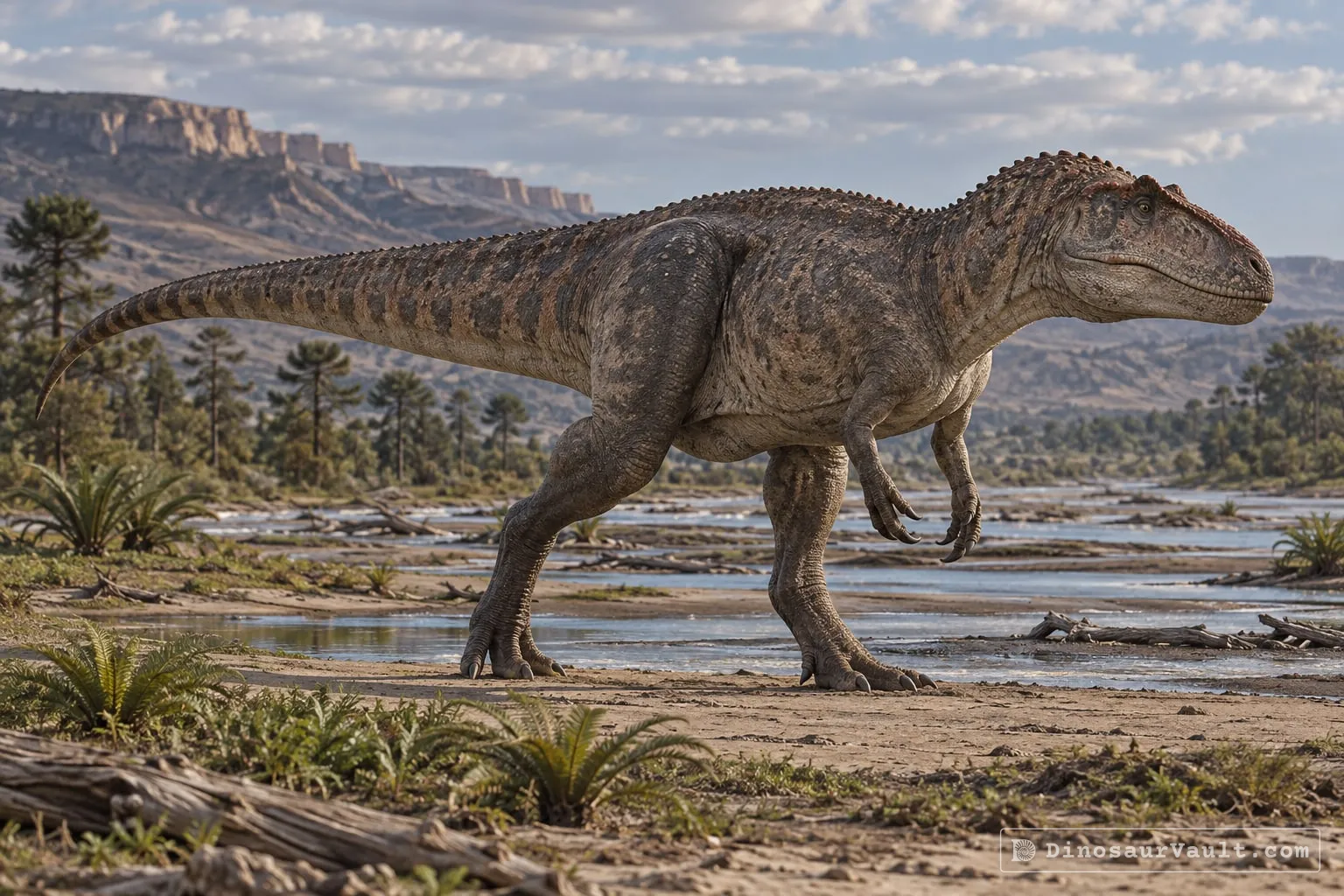
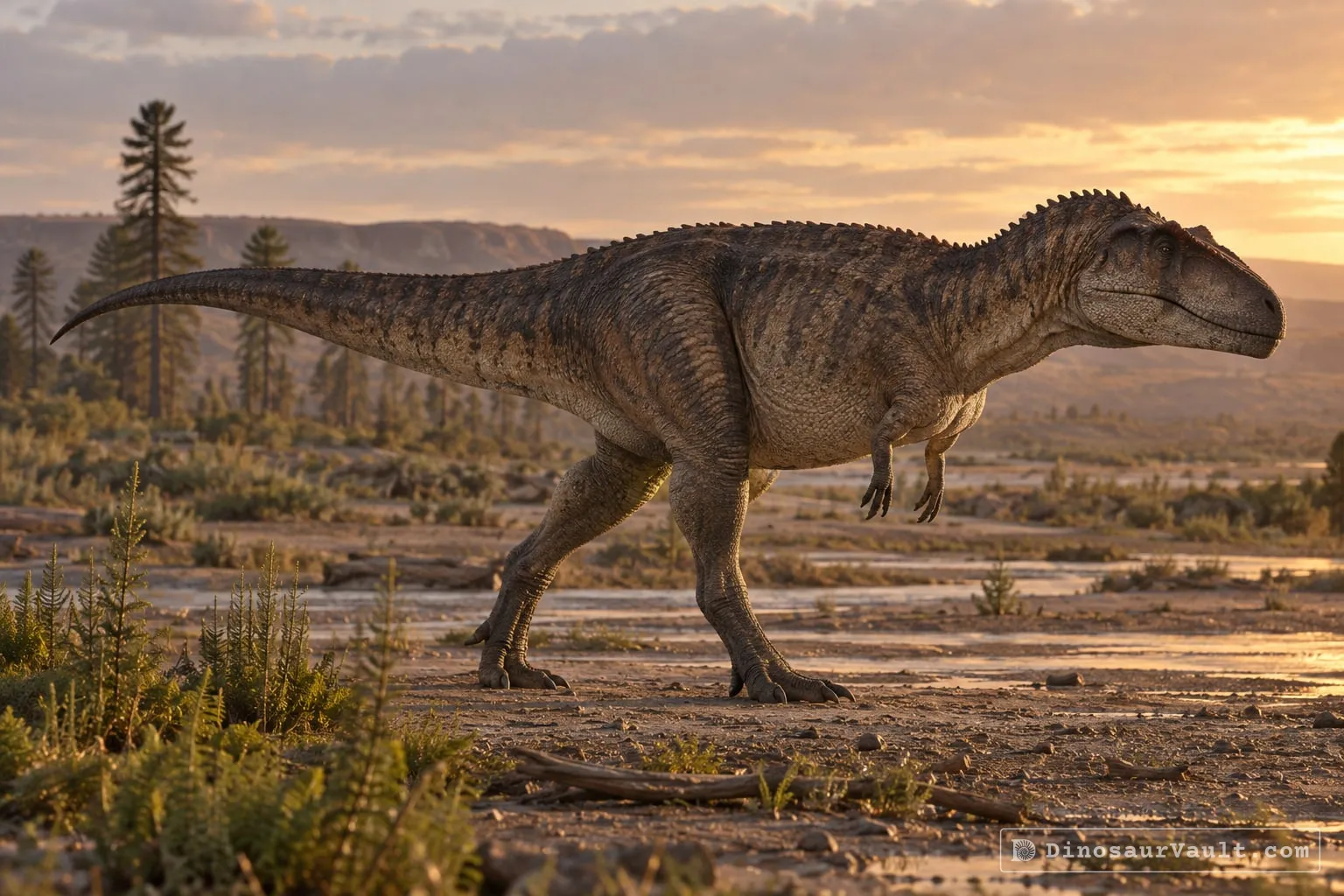
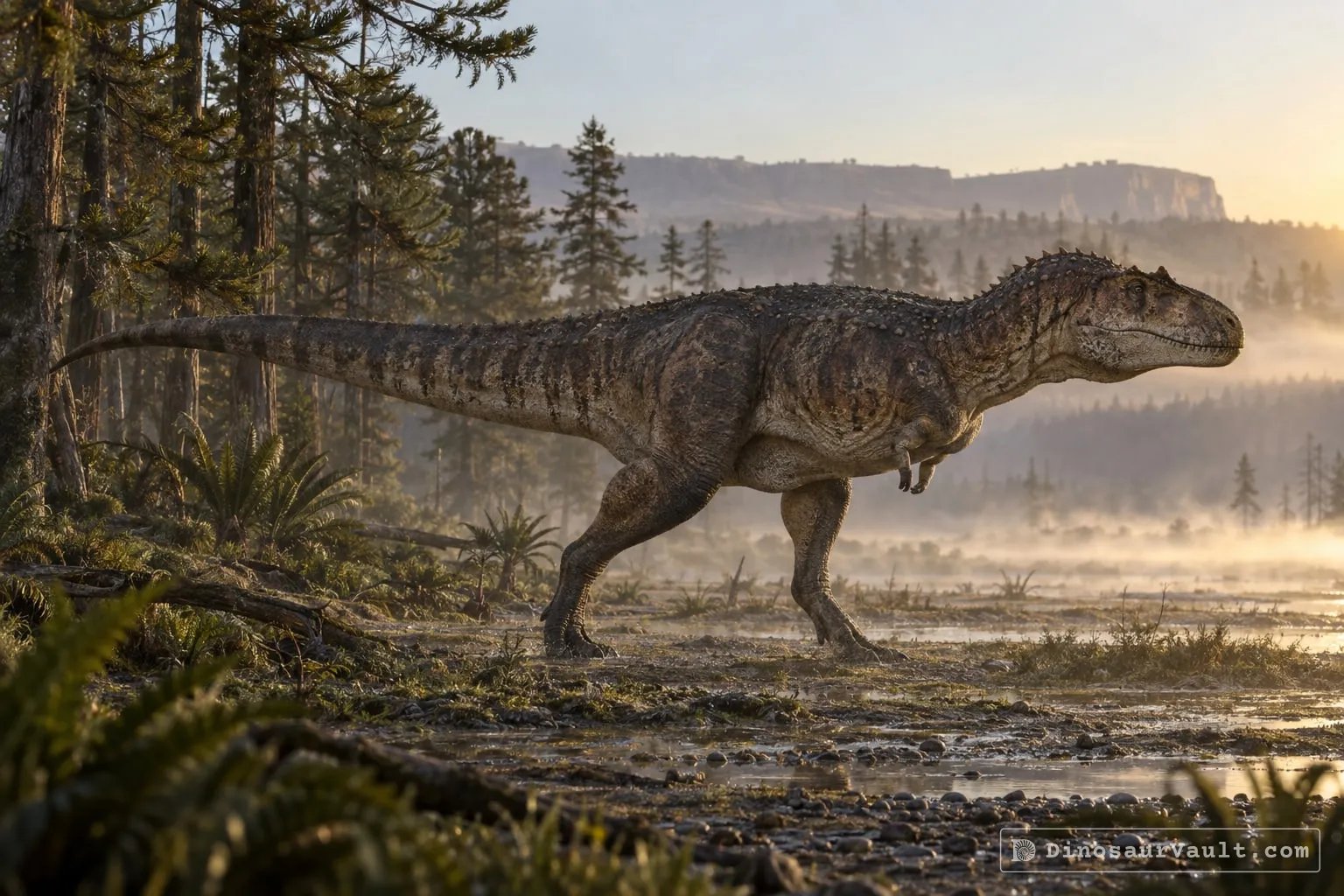
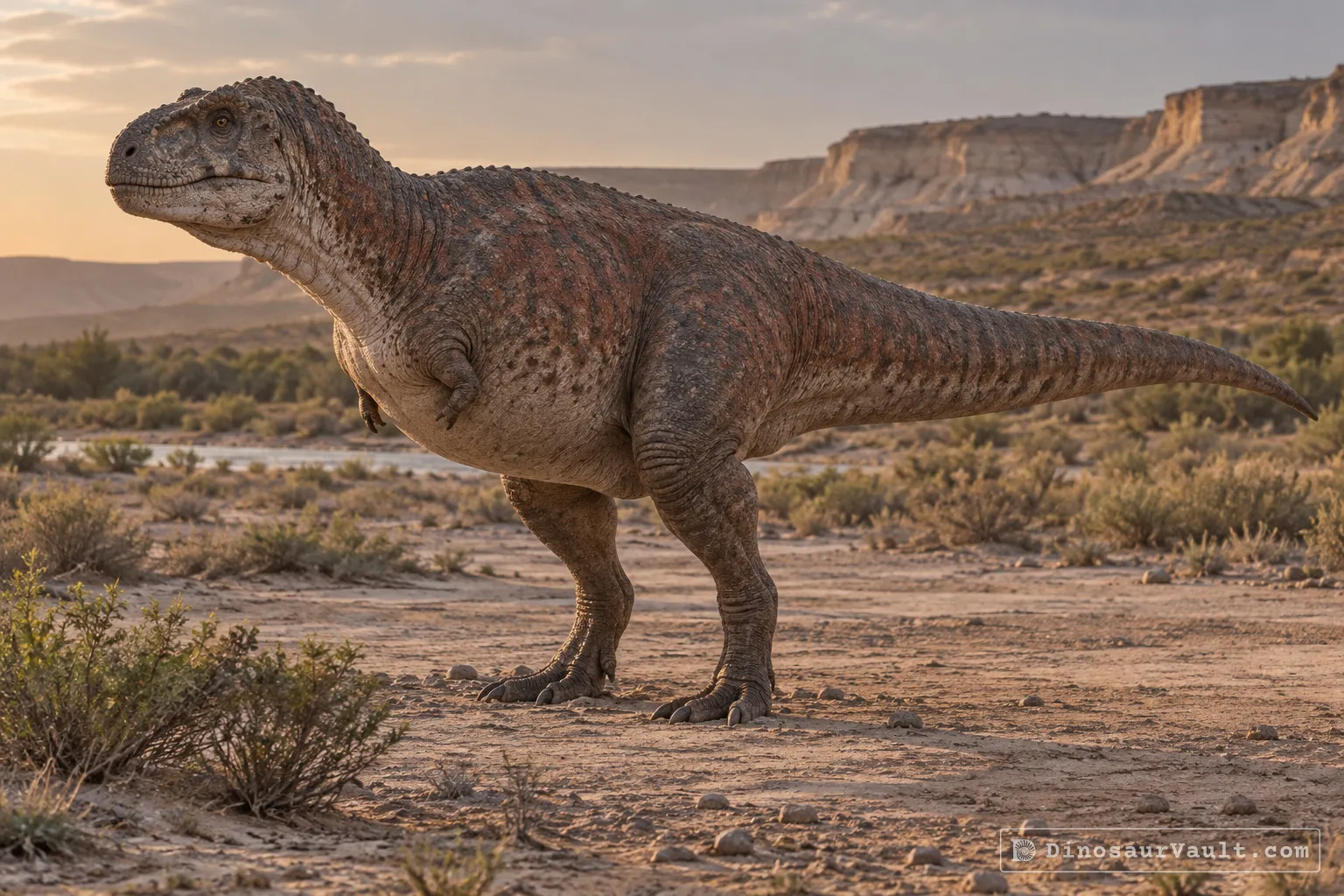
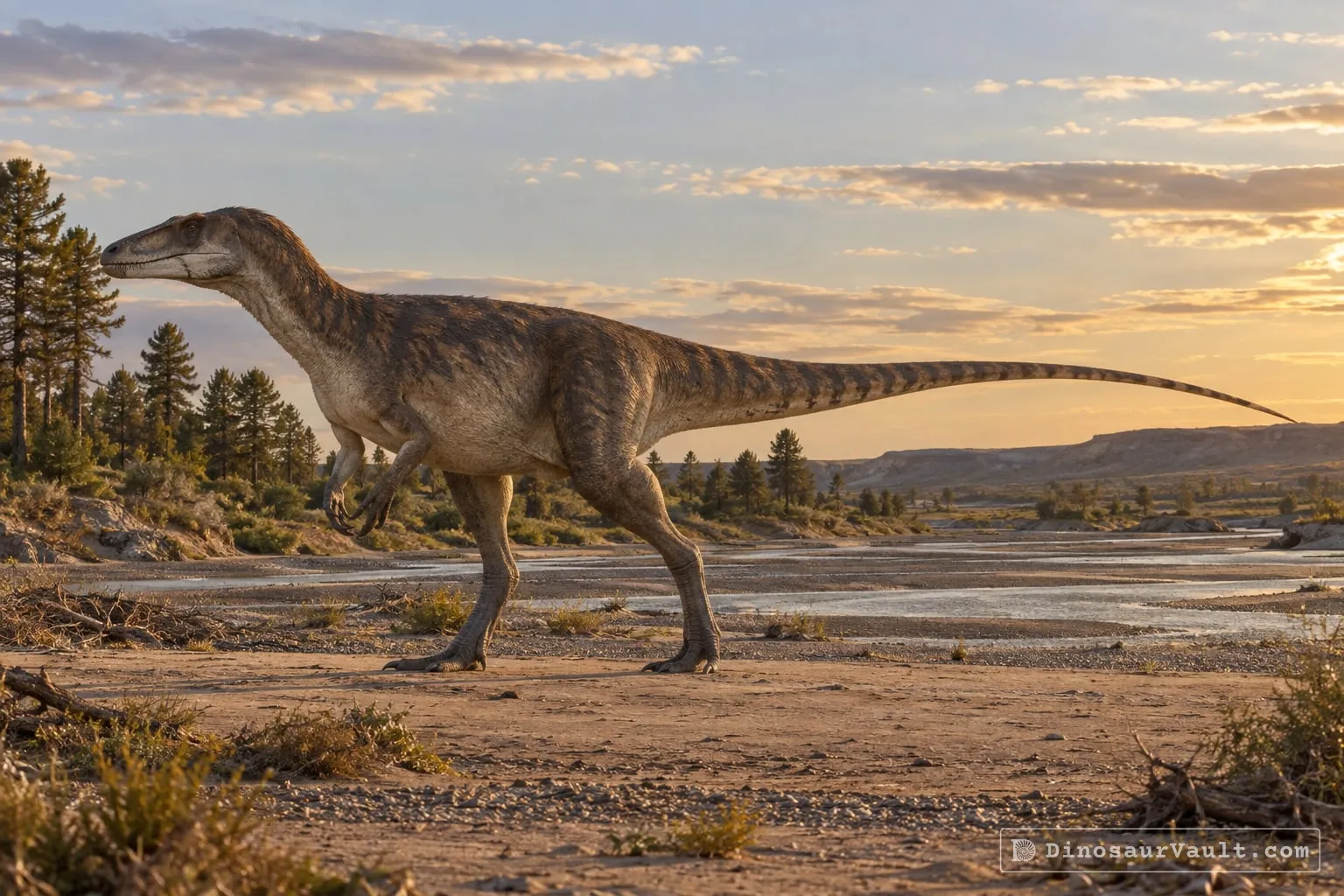


A rock formation can hold fossils laid down millions of years apart, so not every animal here met Chucarosaurus.
The evidence
The science behind Chucarosaurus
Which parts of the picture come from its own bones, and which come from its relatives.
From its own fossils
- Limb bones and part of the hip show a large sauropod with relatively slender legs.
- The upper arm bone was shorter than the thigh bone.
- A stout bone from the forefoot probably belonged to the hand's supporting arch.
Borrowed from relatives
- Mendozasaurus provides a comparison for the missing backbone, neck and trunk.
- Tapuiasaurus supplies a comparison for the missing head, while Rapetosaurus helps restore the supporting forefeet.
Still unknown
- The shape of its skull and the length of its neck.
- The complete arrangement of its toes and claws.
- Its color and whether it carried bony armor in its skin.
Discovery timeline
- 2016Close relativeWilson et al.
- 2018Close relativeGonzàlez Riga et al.
- 2023Named itAgnolin et al.
Key papers
The research behind what we know of Chucarosaurus
Close relative
Described the long, low skull of Tapuiasaurus, a broader titanosaur comparison for the missing head of Chucarosaurus.
The skull of the titanosaurTapuiasaurus macedoi(Dinosauria: Sauropoda), a basal titanosaur from the Lower Cretaceous of Brazil. Zoological Journal of the Linnean Society 178: 611-662
Read the paper : The skull of the titanosaurTapuiasaurus macedoi(Dinosauria: Sauropoda), a basal titanosaur from the Lower Cretaceous of Brazil (opens in a new tab)Close relative
Described the backbone and limbs of Mendozasaurus, providing a comparison for the missing neck, trunk and feet of Chucarosaurus.
Osteology of the Late Cretaceous Argentinean sauropod dinosaur Mendozasaurus neguyelap: implications for basal titanosaur relationships. Zoological Journal of the Linnean Society 184: 136-181
Read the paper : Osteology of the Late Cretaceous Argentinean sauropod dinosaur Mendozasaurus neguyelap: implications for basal titanosaur relationships (opens in a new tab)Named it
Named a large titanosaur from limb and hip bones, with relatively slender legs and a stout forefoot bone.
A new giant titanosaur (Dinosauria, Sauropoda) from the Upper Cretaceous of Northwestern Patagonia, Argentina. Cretaceous Research 146: 105487
Read the paper : A new giant titanosaur (Dinosauria, Sauropoda) from the Upper Cretaceous of Northwestern Patagonia, Argentina (opens in a new tab)
Close relatives
Other members of Colossosauria


Sources: Wikidata